
Reviewed · HISTORICAL TOURS
Salvador Historic Walking Tour – Pelourinho
Salvador’s old center makes much more sense when someone connects its grand buildings, Afro-Brazilian culture, colonial past, and living streets. This 2.5-hour walking tour begins at Praça Castro Alves, then leads you toward Pelourinho, the city’s best-known historic quarter.
I like the small group, limited to 10 people, and the range of guides who have earned strong praise, including Maria, Eduardo, Lara, and Aldison. I also like that the walk includes both major sights and smaller cultural details, with food and drink tastings possible on some departures. The main drawback is value: two reviews felt the route covered too little for the price, so this tour suits you best if you want context and orientation rather than a long checklist of monuments.
Key points before you book
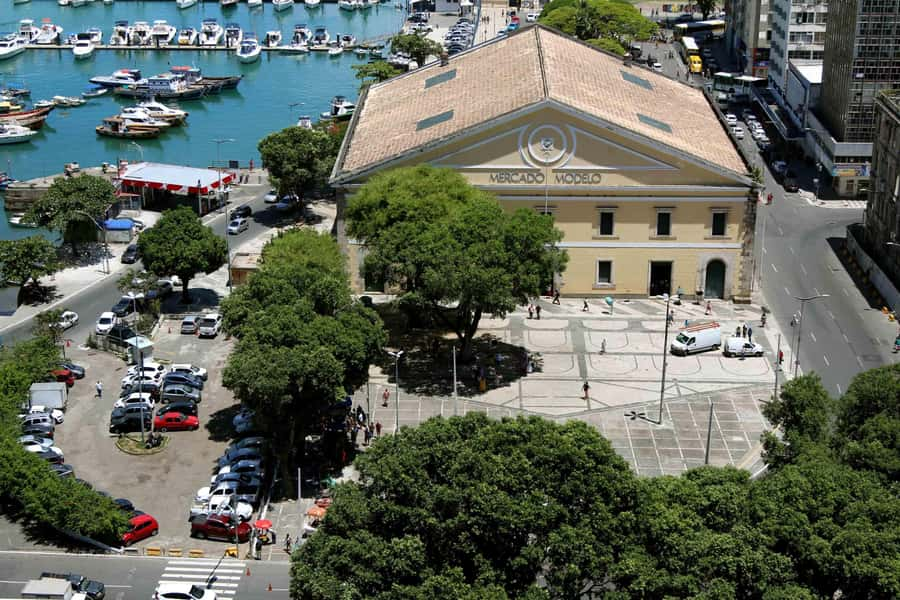
- Starts at Praça Castro Alves: Meet in front of Cine Metha, at the square’s central location.
- Covers Salvador’s historic center and Pelourinho: Expect colonial buildings, major landmarks, churches, squares, and city history.
- Includes four strong photo stops: Rio Branco Palace, the Lacerda Elevator, Cruz Caída Square, and Largo do Pelourinho.
- Small groups of up to 10: You get a better chance to ask questions and request a focus on your interests.
- Three guide languages: Tours are offered in English, Spanish, and Portuguese.
- A gentle pace with limited coverage: The walk gives you a useful introduction, but it may feel short if you want every major sight in central Salvador.
Why Pelourinho is best understood on foot
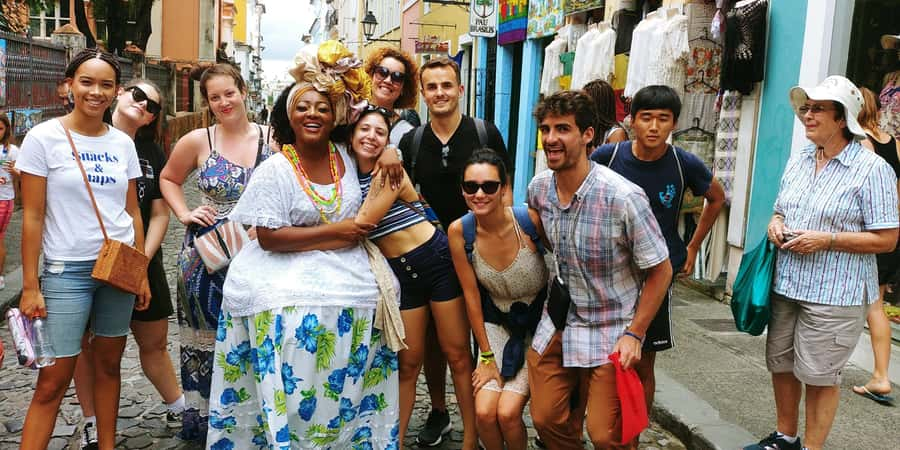
Pelourinho is not just a pretty collection of colored façades. It is a compact part of Salvador where Brazil’s Portuguese colonial past, African heritage, Catholic traditions, and local daily life meet in a relatively small area.
That mix is the main reason to choose a guide. On your own, you can admire the 17th and 18th-century mansions, photograph the squares, and step into a church. A good guide helps explain why these places matter, how Salvador developed, and how culture and religion shaped the city.
The route also begins outside the heart of Pelourinho. That is useful. One of the strongest parts of the walk is the transition into the old quarter, where you can see how the area changes as you move through the historic center. You get a sense of Salvador as a living city, not just a preserved heritage zone.
The tour has a small-group format, with no more than 10 participants. That matters in a place where questions can quickly become more useful than a fixed speech. Guides have adjusted parts of the walk to individual interests, and Maria is particularly praised for combining explanations with tastes of local food and drinks. Those tastings are not described as a guaranteed part of every departure, so treat them as a possible extra rather than the core promise.
More Historical Tours in Brazil
- Maria Fumaça – Wines and History
★ 4.0 · 242 reviews - Rio de Janeiro: Historic Rio and Santa Teresa Half-Day Tour
★ 4.4 · 228 reviews - São Paulo: Downtown Historical Bike Tour
★ 4.9 · 191 reviews
Starting at Praça Castro Alves and Cine Metha
The meeting point is in front of Cine Metha at Praça Castro Alves. The coordinates are -12.977218627929688, -38.51432800292969, which can help if you are arranging a taxi or checking the location on a map.
Starting at Praça Castro Alves gives the walk a sensible beginning. You are not dropped straight into Pelourinho with no context. Instead, the guide can frame Salvador’s historic center before leading you toward its most famous streets.
This is also a point where careful timing matters. One booking involved a delayed cruise ship, and Maria waited for the participants. That was a generous response, but you should not assume every late arrival can be accommodated. If you are coming from a ship, allow extra time for disembarkation and finding the meeting point.
At the start, expect an introduction to Salvador’s history and the importance of its central districts. The city’s ethnic mix, cultural practices, and beliefs are central to the tour. The strongest guides do not treat these subjects as decoration. They explain how different influences remain visible in buildings, worship, food, music, and neighborhood life.
Rio Branco Palace and the Lacerda Elevator
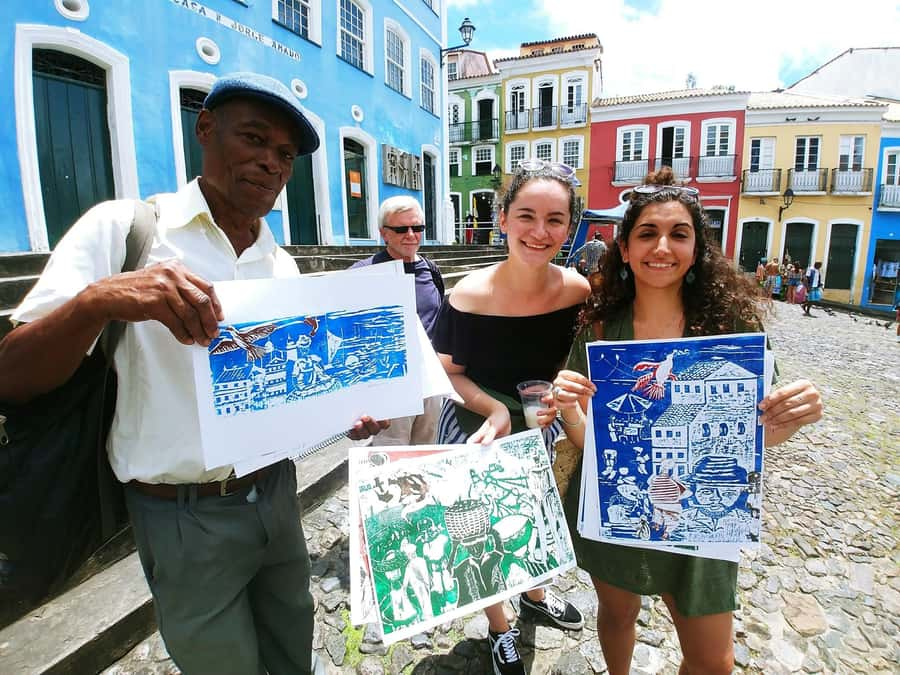
The route includes Rio Branco Palace and the Lacerda Elevator, two of the city’s most recognizable landmarks.
Rio Branco Palace is an impressive symbol of Salvador’s civic and political past. Its setting helps you understand the importance of the upper historic city, where government buildings, churches, and public spaces helped shape the city’s colonial center.
The Lacerda Elevator is one of Salvador’s defining pieces of urban infrastructure. It connects the upper and lower parts of the city and gives the historic center a strong vertical character. Even if you do not ride it during this walk, seeing it in context makes the city easier to understand. Salvador is not a flat old town built around one plaza. Its historic areas are linked by a dramatic change in level.
This part of the walk is especially useful on your first day in Salvador. You can ask your guide how the upper and lower areas relate to one another and use that information when planning the rest of your visit. One participant specifically found the tour helpful for making the most of a short stay, which is exactly where a compact orientation walk earns its keep.
The limitation is that the tour does not promise an extended visit inside every building. This is primarily an outdoor walking route with explanations at important sites. If you want a museum-heavy experience or detailed architectural study, you may need a separate tour.
Cruz Caída Square and the Atlantic view
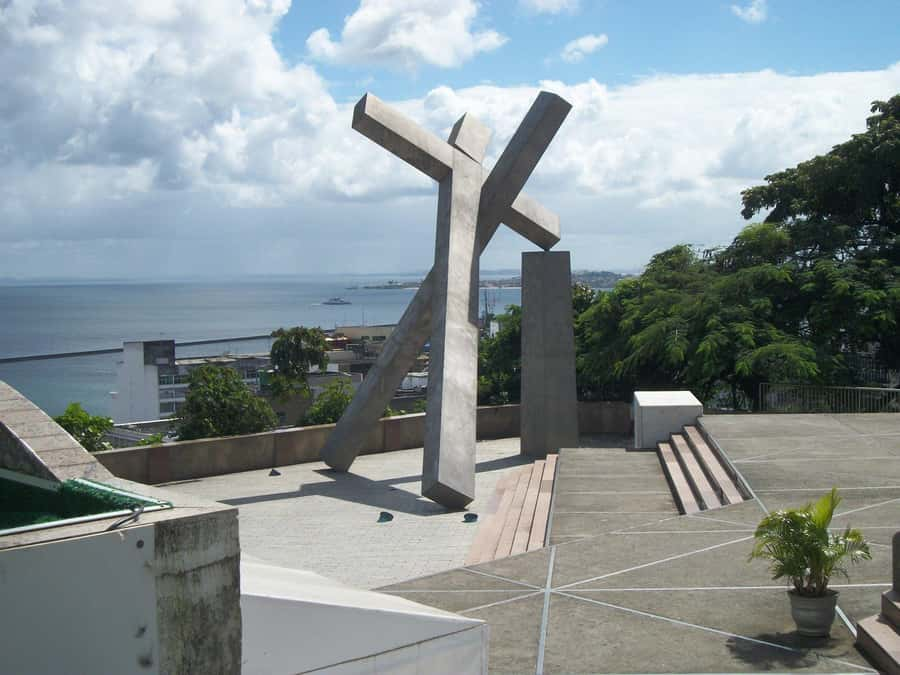
The group stops at Praça da Cruz Caída, or Cruz Caída Square, where you can look toward the ocean. This is one of the route’s welcome pauses. Salvador’s old center can feel dense, with façades, narrow streets, churches, and busy public spaces competing for your attention. The open view gives you a chance to pause and see the city in relation to the coast.
It is also a good place to connect Salvador’s history to its geography. The city’s relationship with the water is not an abstract detail. The coastal setting helped shape its role and character, while the upper city offered a strong position for civic and religious buildings.
Bring a camera, but do not treat this as only a photo stop. Listen to the guide’s explanation of the area and ask questions about what you can see from the square. A guide can point out details that are easy to miss when you are simply looking at the view.
The route description does not promise a long break here, so think of Cruz Caída as a scenic stop within a continuous walk rather than a place for a leisurely sit-down. Comfortable shoes and water are sensible for any 2.5-hour city walk, though the activity information does not specify the exact walking surface or accessibility arrangements.
More Walking Tours in Brazil
- Salvador: Walking Tour Through Pelourinho
★ 5.0 · 49 reviews - Rio de Janeiro: Rocinha Favela Walking Tour with Local Guide
★ 4.8 · 3,052 reviews - Rio De Janeiro: Half-Day Rocinha Favela Walking Tour
★ 4.7 · 2,272 reviews - Sunrise and Sunrise Walk Two Brothers with Local Guide
★ 5.0 · 193 reviews
Pelourinho’s colonial mansions
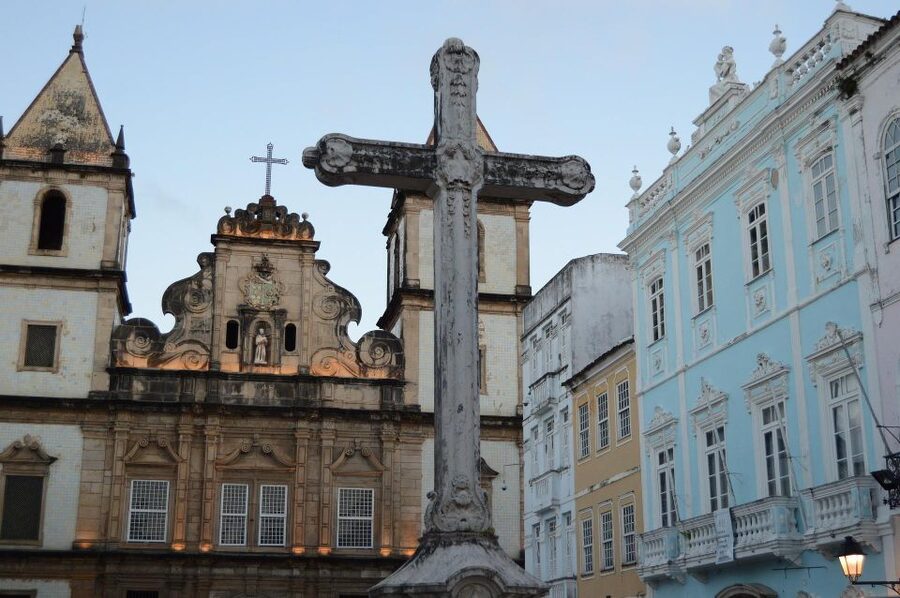
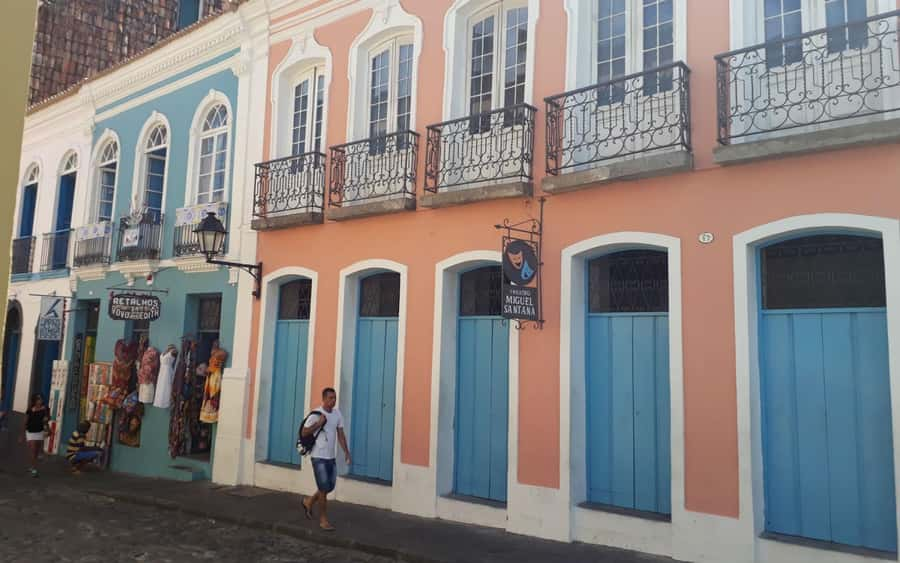
From the wider historic center, the tour moves into Pelourinho. The quarter is known for its 17th and 18th-century mansions, many with colorful façades and carefully detailed exteriors.
This is the part most people picture when they think of Salvador’s old town. Yet the buildings are more than a backdrop. Their scale, arrangement, and decoration show the importance of this area during the colonial period. Your guide can help separate genuine historical detail from the quick photo impression.
The value of walking here with a local guide is strongest when the explanation links architecture to people. The tour places emphasis on Salvador’s ethnic mix, culture, and beliefs. That means you are not simply shown a row of old houses. You are given a way to think about who lived in this part of the city, how power was displayed, and how African and European influences continue to shape Salvador.
The route can also help you notice change. One reviewer particularly valued the section before Pelourinho because it showed how the neighborhood was evolving in real time. That makes the walk more honest than a purely postcard-focused tour. Historic areas are not frozen displays. They are working parts of a city, and the route gives some attention to that tension.
At the same time, the walk is not presented as an exhaustive survey of every street. One critical assessment found the number of sights too limited for the price. If you want to inspect every church, courtyard, and mansion, you may leave wishing for more time.
Largo do Pelourinho and São Francisco Church
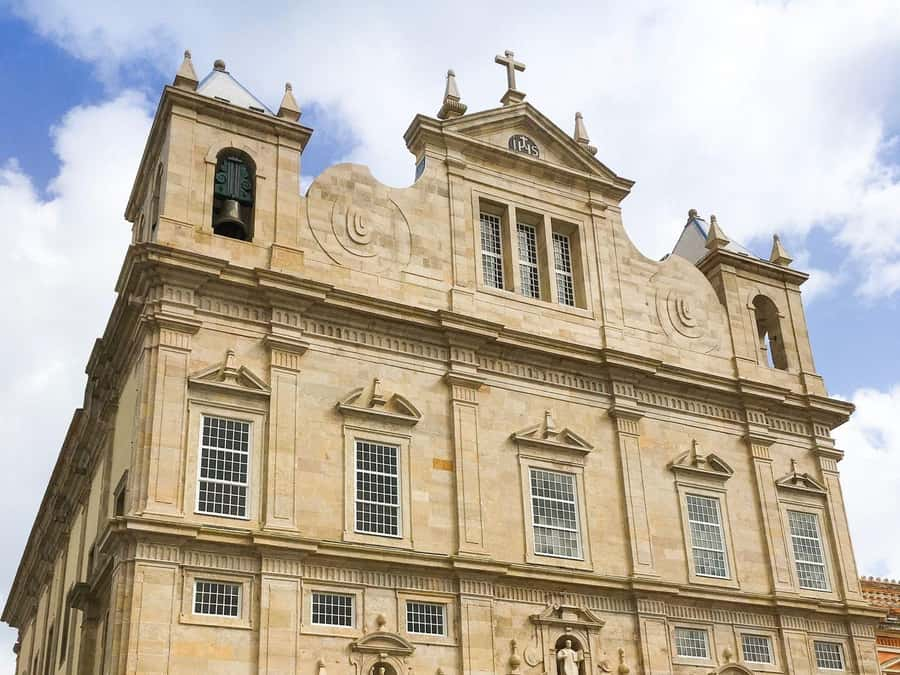
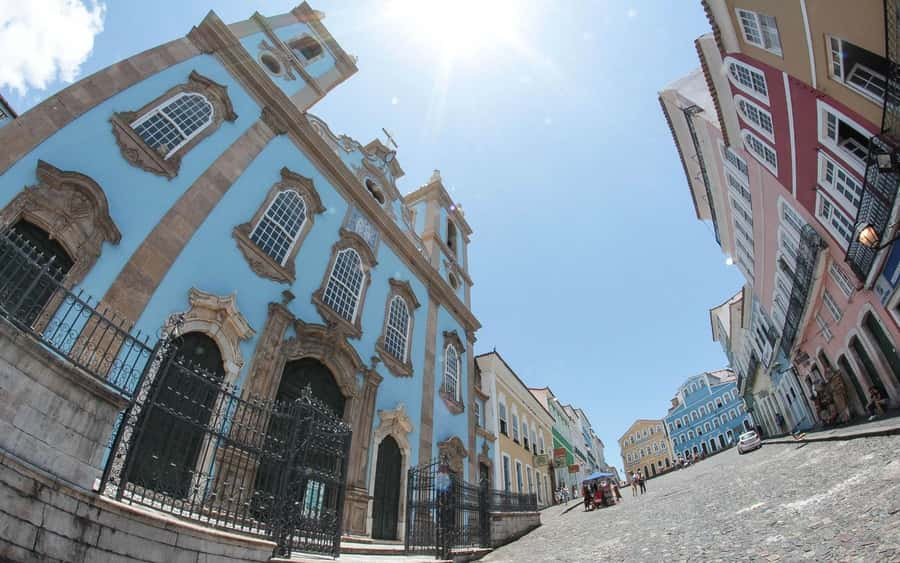
The tour continues to Largo do Pelourinho, one of Salvador’s most famous squares. This is the visual center of the experience, surrounded by colonial buildings and linked to the neighborhood’s name.
The square has also appeared in popular culture. You may recognize parts of these streets from Michael Jackson’s video for They Don’t Care About Us. That connection is a fun detail, but it should not overshadow the older and more complicated history of the area.
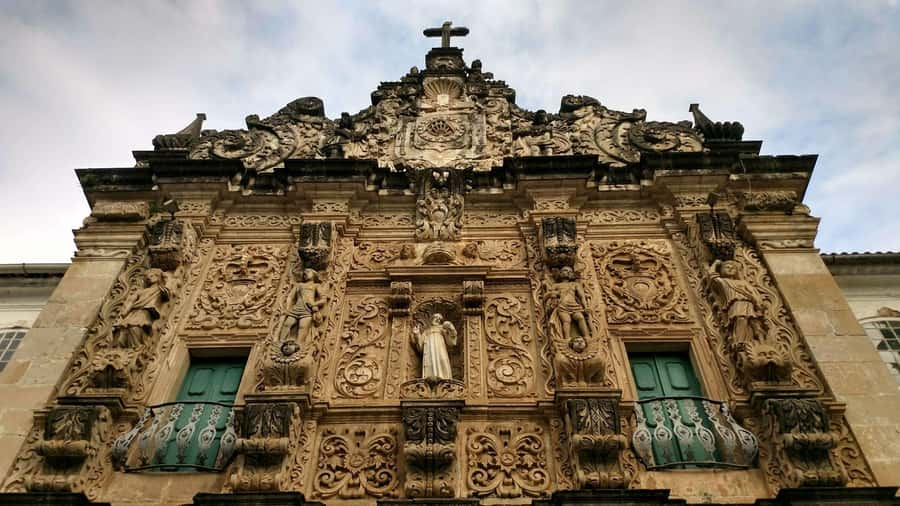
The route then brings you to São Francisco Church, a celebrated baroque church. The church is an important stop because it shows the scale and decorative ambition of Salvador’s religious architecture. Your guide’s explanation is valuable here, especially if you are unfamiliar with Brazilian colonial art or Catholic traditions.
The activity information does not say that an interior visit is guaranteed, so ask your guide what access is possible on your departure. Even from outside, the church adds a strong architectural focus to the walk. If you are especially interested in sacred art, confirm the visit details before booking or plan extra time in the area afterward.
For many people, this is the point where the tour brings together its main themes: architecture, religion, colonial power, African influence, and modern popular culture. The church and square are visually memorable, but the story behind them is what gives the stop weight.
Guides who shape the experience
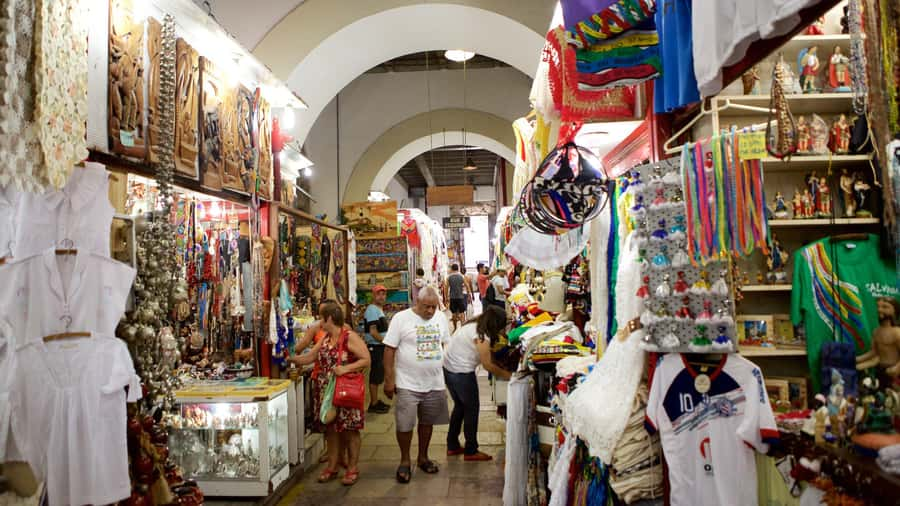
The guide can make a large difference on a short city walk. Several guides have been praised by name, including Maria, Eduardo, Lara, Edval, Aldison, and others.
Maria has been described as attentive and flexible, including waiting during a delayed cruise arrival and adapting the tour to personal interests. She also included several food and drink tastings on one departure. Eduardo has been valued for practical suggestions about what to do in Salvador, as well as an easy manner and willingness to show individual preferences.
Lara led a particularly detailed tour for one participant who wanted a clearer understanding of Salvador’s place in Brazilian history. Aldison was noted for clear English explanations about history, culture, and religion. Edval also received a direct five-star mention in Spanish.
These details point to a useful pattern: the tour is not only about memorizing dates. The best version appears to be conversational, with room for questions and local recommendations. One guide even helped a participant again the following day, which suggests that some guides are willing to offer practical help beyond the scheduled walk.
Language is another advantage. You can book in English, Spanish, or Portuguese. Still, guide assignments can vary, so you should not book expecting one specific person unless the reservation system confirms that guide.
The pace, group size, and amount you see
The tour lasts 2.5 hours and limits the group to 10 participants. That is long enough for a useful introduction without taking over an entire day in Salvador.
I like this length for a first visit. You can learn the basic layout, see the most important historic areas, and still have time afterward to return to a church, explore Pelourinho on your own, or follow one of the guide’s suggestions.
The small group should make the experience more personal than a large coach excursion. You can ask about food, religion, local customs, safety concerns, or places to visit next. It also makes it easier for the guide to notice when the group needs to slow down or when someone wants more explanation.
The tradeoff is coverage. Two reviews felt the service was expensive for the number of sights included, with one calling the amount of ground covered too limited. That criticism is fair if you expect a fast-paced city highlights tour. The route is better understood as an introduction to the historic center and Pelourinho, not a complete tour of Salvador.
Think about what you are paying for. The value is strongest if you want history, interpretation, and local orientation. It is weaker if you mainly want transportation between many landmarks or a long list of photo stops.
Who should book this walk
I would recommend this tour to first-time visitors who want to understand Salvador before exploring it alone. It is also a good match for anyone staying only a few days, since the guide can suggest what to do next.
The experience should suit you if you enjoy architecture, local culture, religion, and city history. It is especially useful if you want to see Pelourinho through more than its colorful façades.
It may also work well for cruise passengers, provided you can reach Praça Castro Alves on time. The meeting point is central to the historic route, and one guide handled a delayed arrival with patience.
You may want another option if your priority is Afro-Brazilian heritage as a single theme, a private custom itinerary, a nighttime samba experience, or a broader city tour by vehicle. Salvador has separate experiences focused on African culture, private city highlights, and evening life. This walk keeps its attention on the historic center and Pelourinho.
Booking flexibility and practical details
The tour offers free cancellation up to 24 hours before departure, and you can reserve now while paying later. Starting times depend on availability, so check the date carefully when booking.
The guide languages are English, Spanish, and Portuguese. The group is capped at 10 participants, and the meeting point is in front of Cine Metha at Praça Castro Alves.
Because the walk lasts 2.5 hours, plan for a continuous outing rather than a quick introduction. The supplied information does not state whether hotel pickup, admission fees, or guaranteed church entry are included. Check those points before you reserve, especially if the interior of São Francisco Church is a priority.
Should you book the Salvador Pelourinho walking tour?
Book it if you want a small, guided introduction to Salvador’s historic center, with clear attention to Pelourinho, colonial architecture, religion, and local culture. The guide quality appears to be the biggest strength, and the best departures add personal suggestions, cultural explanation, and occasional food or drink tastes.
Do not book it expecting to cover every major sight in Salvador or receive a full-day historical survey. The route is compact, and the price may feel high if your main goal is simply to walk through Pelourinho and take photographs.
For most first-time visitors, I think the tour makes sense early in a Salvador stay. You get the layout, the main landmarks, the ocean view from Cruz Caída, the mansions of Pelourinho, and São Francisco Church. Then you can decide what deserves a second look. The 4.8 rating from 62 reviews reflects strong overall satisfaction, but the mixed value comments are worth taking seriously. Choose it for interpretation and personal guidance, not for maximum sightseeing mileage.
FAQ
Where does the Salvador Historic Walking Tour meet?
The meeting point is in front of Cine Metha at Praça Castro Alves in Salvador. The coordinates are -12.977218627929688, -38.51432800292969.
How long does the walking tour last?
The tour lasts 2.5 hours.
What languages are available?
The live guide can conduct the tour in English, Spanish, or Portuguese.
How many people are in the group?
The tour is limited to 10 participants, making it a small-group experience.
Which landmarks are included?
The route includes Rio Branco Palace, the Lacerda Elevator, Cruz Caída Square, Largo do Pelourinho, Pelourinho’s historic mansions, and São Francisco Church.
Can I cancel the booking?
Yes. You can cancel up to 24 hours before the tour for a full refund. You can also reserve now and pay later.
More Walking Tours in Salvador
- Buenos Aires Hop-On Hop-Off Bus, Free Walking Tours & Discounts
★ 4.5 · 2,218 reviews - Buenos Aires: La Boca Guided Walking Tour in English
★ 4.8 · 1,587 reviews - Bogotá: Guided La Candelaria Walking Tour
★ 4.8 · 1,229 reviews - La Paz and El Alto: Cable Car Rides and Walking Tour
★ 4.8 · 790 reviews
More Historical Tours in Salvador
- Cartagena: Historic Center and Getsemaní Shared Walking Tour
★ 4.9 · 2,716 reviews - Lima’s Vibrant Heritage: Exploring the City’s Landmarks Half-day
★ 4.5 · 581 reviews - Santiago: Guided Walking Tour of the Historical Old Town
★ 4.8 · 459 reviews - Lima: Historic Center Street Food, Market, and Eateries Tour
★ 4.9 · 216 reviews
Just added around Salvador
- 2 AMAZING DAYS! Booking from 2 people – Chapada Diamantina by Zentur★ 5.0 · 63 reviews
- 3 DAYS OF CHARM! Booking from 2 people – Chapada Diamantina by Zentur★ 5.0 · 59 reviews
- Salvador: Walking Tour Through Pelourinho★ 5.0 · 49 reviews
- Salvador de Bahia African Culture Tour★ 4.5 · 60 reviews
- Salvador: Cultural Treasure – Samba de Roda.★ 4.9 · 51 reviews
- Salvador: Praia Do Forte and Guarajuba Beach Day Trip★ 4.1 · 56 reviews
- 4h Cooking Class in Salvador with 9 Recipes & Bottomless Drinks★ 5.0 · 73 reviews
- Tour Praia do Forte and Guarajuba, Leaving Salvador-Bahia.★ 4.5 · 97 reviews
Historical Tours, compared.
Historic Center and Getsemaní Shared Walking Tour
Read our review →
Lima’s Vibrant Heritage: Exploring the City’s Landmarks Half-day
Read our review →

Lima: Historic Center Street Food, Market, and Eateries Tour
Read our review →
Nazis in Buenos Aires: a historical walking tour
Read our review →
Browse the lists this tour appears in