
Reviewed · CABLE CAR RIDES
La Paz and El Alto: Cable Car Rides and Walking Tour
La Paz is easiest to understand from above. The city climbs steep hills and ravines, while the cable cars glide over rooftops, traffic, markets, and brick neighborhoods toward El Alto. This tour combines those panoramic cable car rides with a walking route through some of the city’s best-known historic and cultural spots.
I like two things in particular: you get a useful first look at La Paz without wrestling with its traffic, and you reach El Alto, a place many short city tours skip. Guides including Carolina, Luis, Fernando, Marcia, and Nickey have been praised for clear English, local insight, and practical advice about food and safe areas.
The main consideration is pace. In 150 minutes, you cover a lot of ground, with several rides, steep streets, markets, and short stops. Altitude, heights, and crowded cable cars can also make this a poor fit if you are feeling unwell or uncomfortable in enclosed spaces.
Key points to know before booking
- Four cable car lines may be part of the route: The exact sequence can vary, but the experience uses several sections of La Paz’s cable car network to connect the city with El Alto and return.
- Two witches’ markets offer different moods: La Paz’s market is geared toward visitors and shopping, while the El Alto market may include a witch doctor carrying out a ritual.
- San Pedro Square adds a serious historical stop: Your guide explains the infamous San Pedro Prison and its place in La Paz’s story.
- The walking includes hills and open-air markets: Wear shoes with good grip and expect city streets rather than a gentle, flat stroll.
- The tour is good for orientation: It links San Francisco Church, Jaen Street, Plaza Murillo, markets, and cable car stations in one compact outing.
- The price is unusually low for the coverage: At $10 per person, cable car tickets and a live English or Spanish guide are included.
Why the cable cars are the heart of the tour
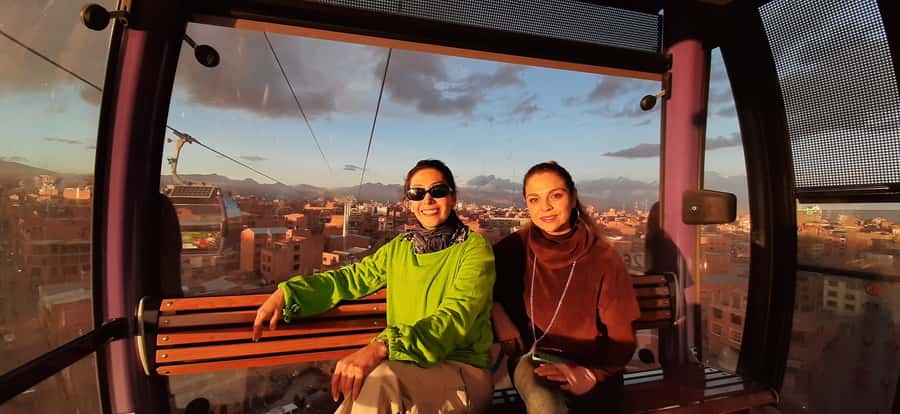
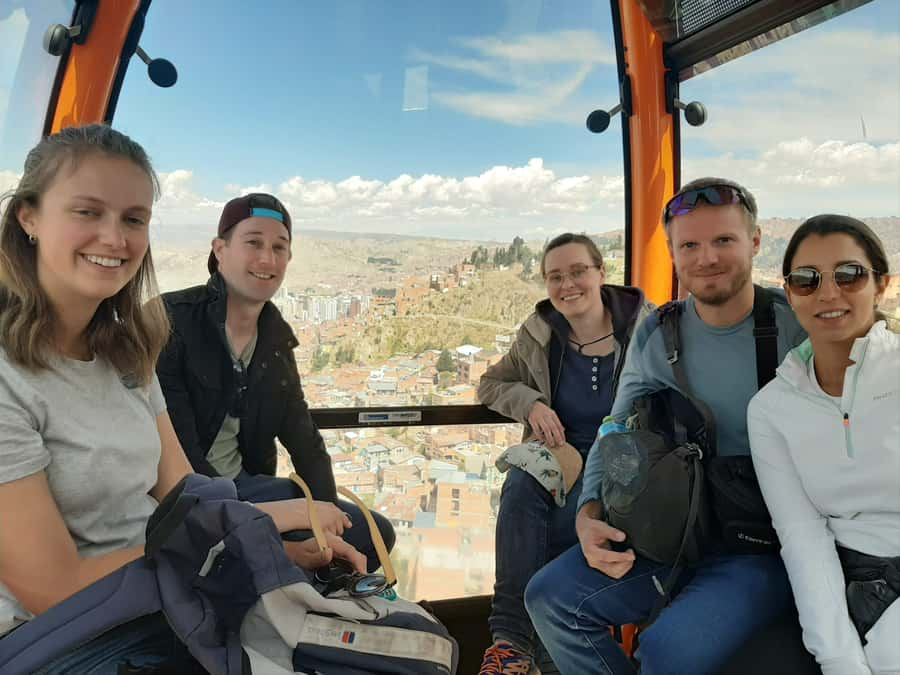
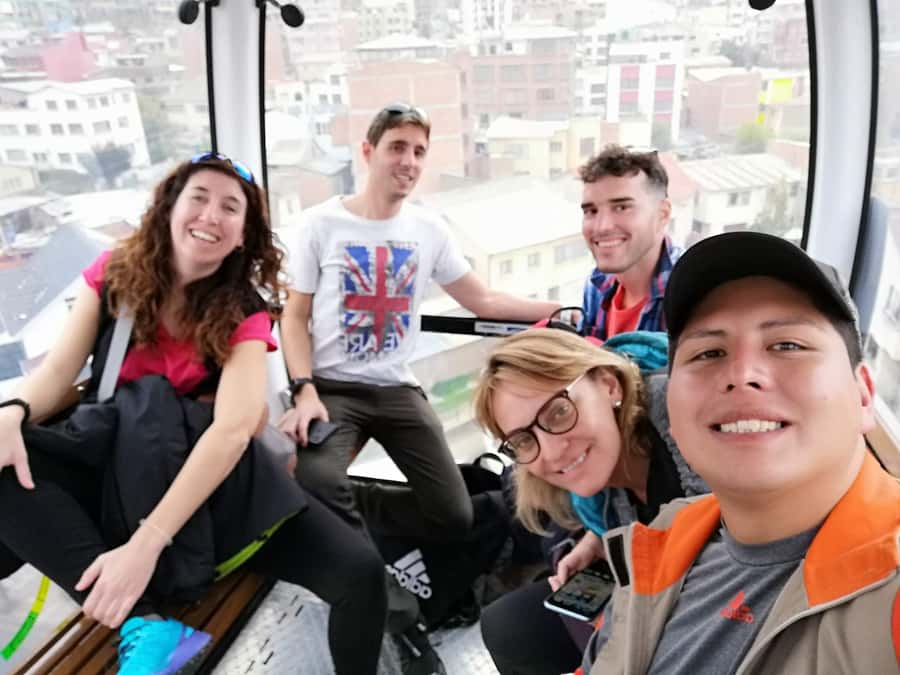
The La Paz cable car system is not just a sightseeing ride. It is part of daily city transport, and that gives the experience a more useful feel than a ride designed only for tourists. From the cabin, you see how La Paz occupies a steep basin, with neighborhoods climbing the sides and El Alto spreading across the high plateau above.
The views change quickly. One moment you look down on dense streets and low roofs. Soon the cabin rises over steep slopes, busy roads, and long stretches of brick construction. The height gives you a clear sense of why road travel across La Paz can be slow and tiring.
I especially like this part for a first visit. A map may show La Paz and El Alto as close neighbors, but the cable car makes their physical relationship easier to grasp. Your guide can point out areas as you pass, explain what you are seeing, and answer questions between stations.
Several people who have taken this route have covered four cable car lines. The supplied description confirms a ride from La Paz to El Alto followed by another cable car route back toward the city, so you should expect more than one short trip. The exact lines and timing can change, but the overhead views are the main payoff.
The cabins are enclosed, so you should be comfortable with heights and small shared spaces. You also need to keep your attention on the guide and the route rather than treating each ride as a private photo stop. If the cabin is crowded, finding the perfect window position may not be possible.
More Cable Car Rides in La Paz:
- La Paz: Private City Tour with Cable Car & Moon Valley Visit
★ 4.9 · 508 reviews - La Paz: Cable Car, Cemetery, Shaman, and El Alto Tour
★ 4.7 · 218 reviews - Medellin: Comuna 13 Graffiti Tour, Cable Car & Street Food
★ 4.8 · 9,046 reviews
Starting at San Francisco Church
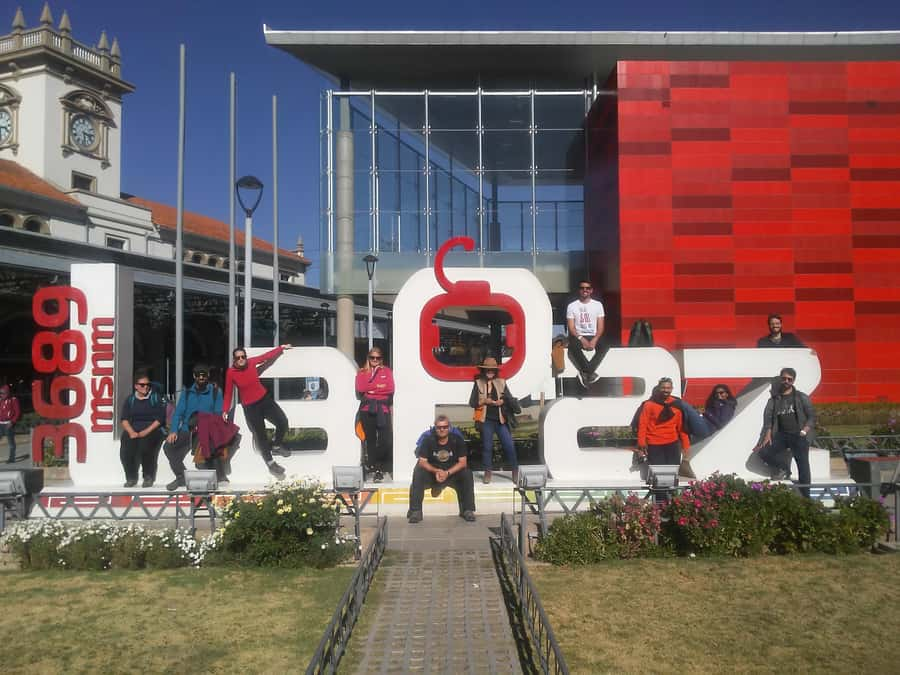
Meet your guide by the main door of San Francisco Church. Look for a beige vest with orange pockets and the HanaqPacha Travel logo on the back. This detail matters in a busy central area, where several groups may gather near the church.
San Francisco Church is a practical starting point because it places you in the middle of La Paz’s historic center. From here, you can move directly into the walking portion rather than spending time on a hotel transfer. Hotel pickup and drop-off are not included, so you need to make your own way to the meeting point.
Guides such as Carolina, Luis, Fernando, Fabian, Marcia, Nickey, and others have led this route. You are not guaranteed a particular person, but the guide is available in English or Spanish. Several English-speaking guides have been praised for being easy to understand and willing to answer questions about history, politics, food, and daily life.
This is also where you should make sure you have what you need for the next two and a half hours. Bring sunglasses, a sun hat, comfortable clothing, and walking shoes. Large bags and luggage are not allowed, and food and drinks are not permitted in the vehicle.
La Paz’s Witches’ Market, with context instead of just souvenirs
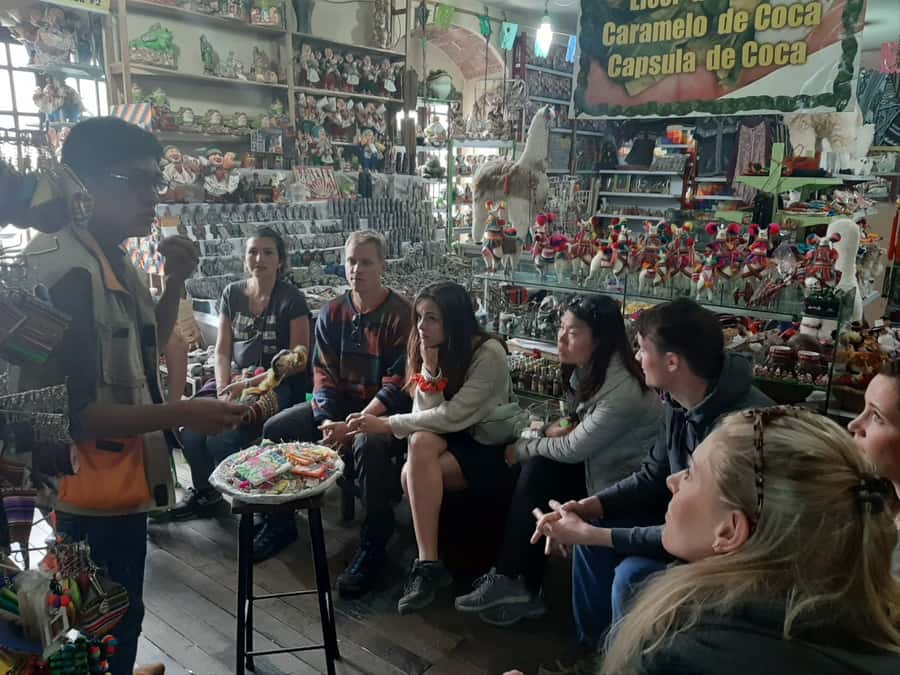
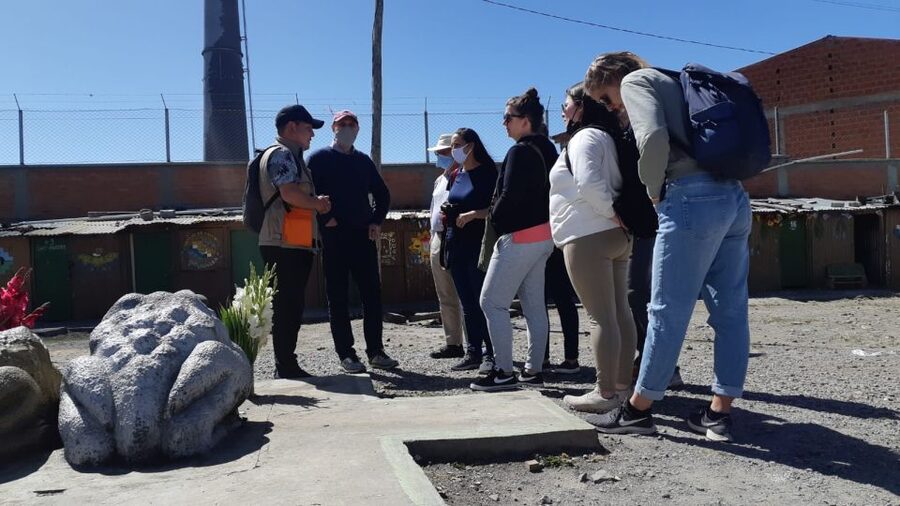
The first major stop is La Paz’s Witches’ Market. Shops here sell items connected with Andean beliefs and household rituals, and the market is one of the city’s most recognizable visitor stops. The most useful part is not simply seeing the objects on display. It is having a guide explain what they mean and how the market fits into local culture.
This can be an unusual introduction to Bolivia. Some items may surprise you, and the market is easy to misunderstand if you walk through alone and treat it as a novelty shop. A good guide can add the cultural setting that makes the stop more respectful and much more interesting.
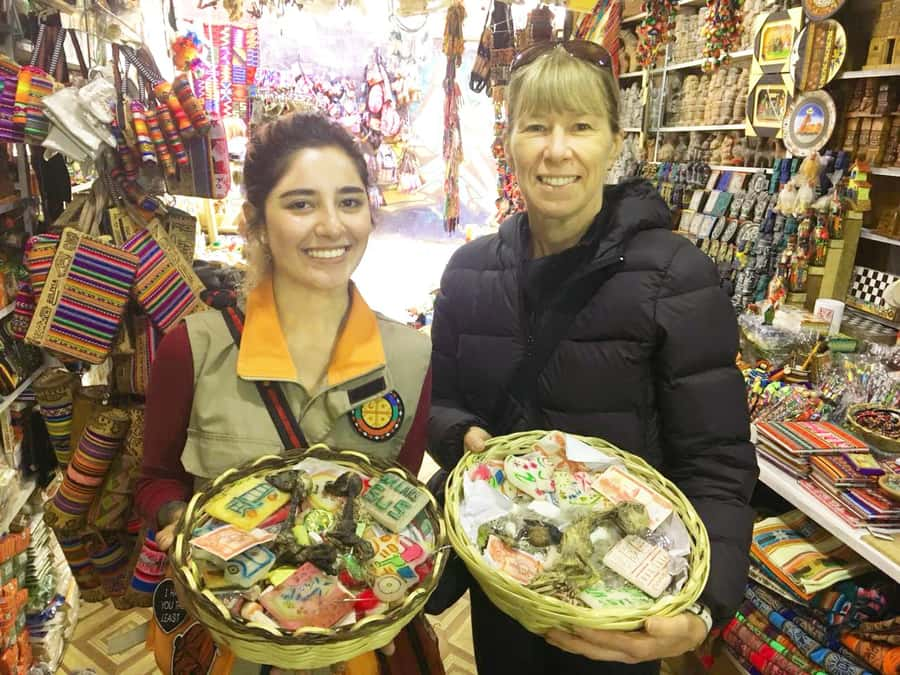
You may have time to look closely at merchandise and buy souvenirs, but do not expect a long shopping session. The tour has several other stops, so the market works best as a quick orientation to a tradition rather than a dedicated shopping excursion.
If you want to buy something, ask your guide for help. One guide has been praised for assisting with souvenirs and taking photos, and several have offered suggestions about where to eat and which parts of the city to avoid. Those small conversations can be as useful as the formal explanation.
San Pedro Square and the prison story
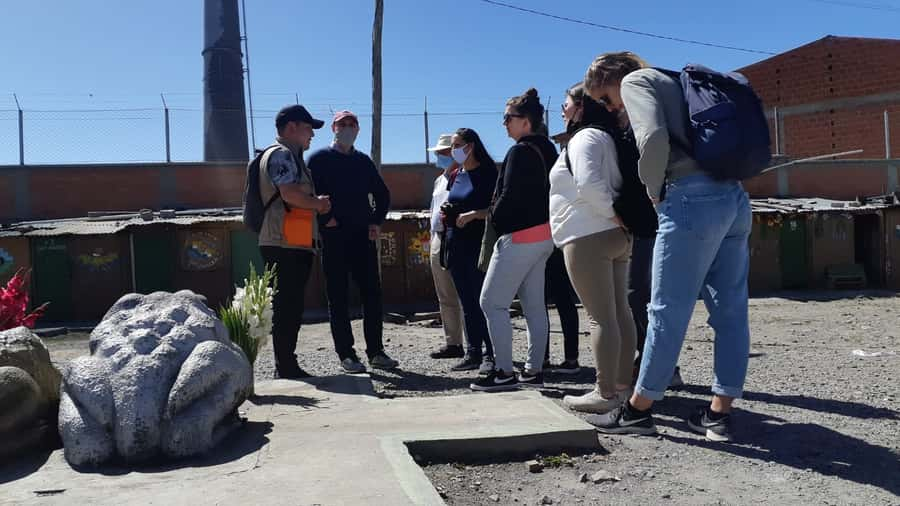
From the market, the route heads toward San Pedro Square. This stop is tied to the infamous San Pedro Prison, and your guide explains its history and reputation. It gives the walking tour a darker edge and shows that La Paz’s stories are not limited to churches, colonial buildings, and markets.
The prison discussion is best understood as a historical and social explanation, not as a visit inside the prison. You remain on the city route, and the guide provides the context. For some people, this will be one of the most memorable parts because it reveals an aspect of La Paz that is easy to miss in a standard sightseeing loop.
The stop also breaks up the cable car rides with a grounded view of the city. You are walking through an ordinary urban area, hearing about an institution connected with Bolivian public life, then moving on toward the transport network that links La Paz and El Alto.
More Walking Tours in La Paz:
- La Paz Half-Day Walking Tour
★ 4.8 · 591 reviews - Rio de Janeiro: Rocinha Favela Walking Tour with Local Guide
★ 4.8 · 3,052 reviews - Cartagena: Historic Center and Getsemaní Shared Walking Tour
★ 4.9 · 2,716 reviews - Rio De Janeiro: Half-Day Rocinha Favela Walking Tour
★ 4.7 · 2,272 reviews
Riding up to El Alto
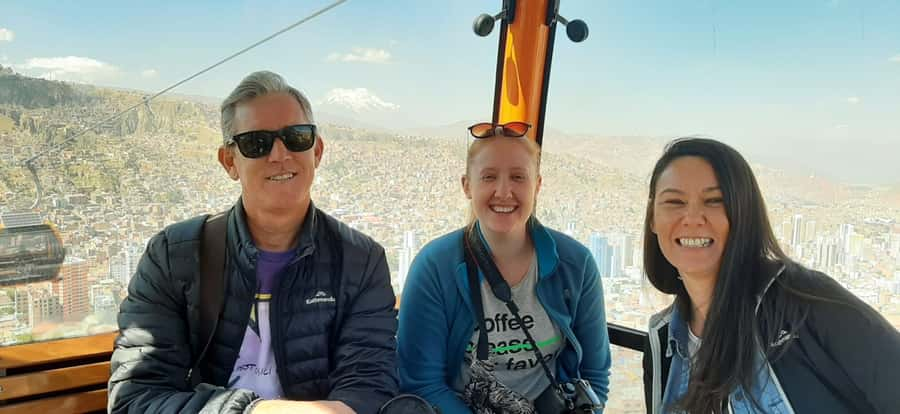
At the first cable car station, you board for El Alto. This is where the tour shifts from street-level detail to broad views. The cabin climbs away from La Paz, and you get a sense of the city’s steep topography without the noise and delays of road traffic.
El Alto is not presented as a distant excursion. It is part of the connected urban area, and the cable car shows how people move between the high plateau and the lower city. That makes the ride useful beyond the scenery. You see a practical piece of local infrastructure while learning how the two cities relate to one another.
The view from above can be startling. La Paz’s dense center gives way to the broad, high setting of El Alto. The contrast helps explain why the city feels so layered, with dramatic changes in elevation and urban form over a short distance.
Keep your camera ready, but do not spend the whole journey looking through it. Your guide may point out buildings, neighborhoods, and features that are hard to identify later from photographs. If you are prone to altitude problems, take this section seriously. The activity is not suitable for people with altitude sickness.
El Alto’s witches’ market and a more active ritual setting
The El Alto Witches’ Market differs from the better-known market in central La Paz. It may feel less polished and more closely tied to active ritual practice. The description specifically notes that a witch doctor may be performing a ritual during your visit.
That possibility makes this stop more than a repeat of the first market. You may see a live ceremony rather than only goods laid out for sale. Your guide can help explain what is taking place, but you should remain respectful and avoid treating a ritual as a stage show.
There is also less certainty here than at a fixed museum stop. A ritual may be happening, or it may not be happening during your visit. The market remains part of the planned route, but the exact scene can change from day to day.
This is one of the tour’s best cultural contrasts. La Paz’s market gives you an accessible first introduction, while El Alto offers a chance to see how similar beliefs may appear in a different urban setting. It is a good reason to choose this tour instead of one that stays only in the central streets.
Returning through Jaen Street and Plaza Murillo
After El Alto, you take another cable car route back toward La Paz. The return journey gives you another angle on the city, and the changing light can make the views look different from the outward ride. Some departures cover multiple lines, so you may spend a substantial part of the tour above the streets.
Back in La Paz, the route continues along Jaen Street. This is one of the city’s more attractive historic streets, with colonial character and a calmer feel than the main commercial areas. It provides a welcome change after the open views and transport stations.
The final major stop is Plaza Murillo, La Paz’s main square and Kilometer 0. Here you can look at the cathedral and government buildings while your guide explains the square’s role in the city. This is the place to connect the earlier street scenes, markets, and cable car views with the political center of Bolivia.
The tour then continues through open-air markets and shops before finishing at San Francisco Church. Ending where you started is convenient, especially if you are using the activity to get your bearings on your first day.
How much walking and altitude to expect
The activity lasts 150 minutes, but it packs in a substantial amount. You walk through markets and historic streets, climb to cable car stations, stand during parts of the route, and move between several stops. One person described the hills as steep but manageable because the walking was broken into shorter sections.
That is a fair way to think about it. This is not a hard hike, but it is not a flat promenade either. Comfortable shoes matter, and loose, practical clothing will serve you better than dress clothes.
La Paz sits at high altitude, and the tour is not suitable for people with altitude sickness. The listing also excludes people who are afraid of heights or have claustrophobia. You should take those warnings seriously, since the cable cars are central to the experience, not a minor add-on.
The tour operates rain or shine. Bring sun protection, but be prepared for changing conditions. Large bags are not allowed, so carry only what you need for a short walking outing.
Is $10 good value?
At $10 per person, this is strong value if you want both transport and interpretation. The price includes a live guide and cable car tickets, which means you are not paying separately for each ride. You also cover several parts of La Paz and El Alto in a little over two hours.
The value comes from the route design. You could walk to the Witches’ Market or Plaza Murillo alone, and you could use the cable cars without a guide. What is harder to reproduce is the connection between those pieces: the explanation of the markets, the story of San Pedro Prison, the practical route through the stations, and the commentary while the city passes below.
There are limits. The short duration means no stop receives a very deep treatment. If you want long museum visits, extensive shopping time, or a relaxed meal, choose a slower activity. The walking route is designed as an overview, not as a full-day study of La Paz.
The price also makes this a low-risk choice for a first orientation. If you decide you want more time in the markets, historic center, or El Alto, you will know where to return later.
Who will get the most from this tour?
I would choose this for a first afternoon in La Paz, especially if you want a quick sense of how the city fits together. It also suits solo visitors, couples, and families with older children who can manage hills and altitude. One family with children aged 10, 13, and 15 found the pace workable, with enough variety to keep the outing moving.
It is a good match for anyone who wants local explanation rather than a ride with no context. Guides have discussed Bolivian history, culture, politics, social issues, food, and safe areas, so you can use the time to ask practical questions.
You may want another type of outing if your main goal is photography, shopping, or a long visit at one site. You should also skip it if heights, enclosed cabins, or altitude sickness are concerns.
Free cancellation up to 24 hours before the start and a reserve-now, pay-later option add flexibility. Those terms are useful if your plans in La Paz are still shifting.
Should you book the La Paz and El Alto cable car tour?
Book it if you want an affordable city introduction that combines views, local transport, markets, history, and a short walk. The cable cars are the clear highlight, but the El Alto stop and the guide’s explanations give the ride purpose.
I would book this early in a La Paz visit. It helps you understand the city’s shape, identify places to revisit, and get practical advice about food and areas to approach with care. Just arrive ready for hills, sun, altitude, and a brisk schedule.
If you are comfortable with cable cars and want to see more than the postcard center, this $10 outing is an easy recommendation. If you need a slow, flat, indoor tour, choose something less demanding.
FAQ
Where does the tour meet?
Meet your guide by the main door of San Francisco Church in La Paz. Look for a beige vest with orange pockets and the HanaqPacha Travel logo on the back.
How long does the tour last?
The tour lasts 150 minutes, or two and a half hours.
What languages are available?
The live guide is available in English or Spanish.
Are cable car tickets included?
Yes. Cable car tickets and the tour guide are included in the price.
Does the tour include hotel pickup?
No. Hotel pickup and drop-off are not included, so you need to reach San Francisco Church yourself.
What should I bring?
Bring comfortable shoes, sunglasses, a sun hat, and comfortable clothing. Large bags and luggage are not allowed.
Does the tour operate in bad weather?
Yes. The tour takes place rain or shine.
Just added around La Paz
- Private Tiwanaku and Titicaca Day Trip from La Paz★ 4.5 · 62 reviews
- Climbing Huayna Potosí★ 5.0 · 50 reviews
- Cholet Tour – Andean Architecture and Culture – El Alto★ 5.0 · 72 reviews
- Customizable Private City Tour – La Paz★ 5.0 · 69 reviews
- La Paz City Tour and Moon Valley★ 4.2 · 38 reviews
- La Paz: Andean Architecture Tour in El Alto★ 4.7 · 46 reviews
- From La Paz: Day Trip to Chacaltaya and Moon Valley★ 4.4 · 65 reviews
- From La Paz: 2-Day Tour to Isla del Sol & Lake Titicaca★ 4.3 · 54 reviews
Cable Car Rides, compared.

Comuna 13 Graffiti Tour, Cable Car & Street Food
Read our review →


Bogotá´s Barrios: El Paraíso Favela Tour with Cable Car
Read our review →
La Paz: Private City Tour with Cable Car & Moon Valley Visit
Read our review →

Medellín Coffee Farm Tour with Trolley and Cable Car Ride
Read our review →Browse the lists this tour appears in