
Reviewed · WALKING TOURS
Salvador: Walking Tour Through Pelourinho
Salvador’s old center is best understood on foot, one square and steep street at a time. This small-group walk follows the story of Brazil’s first capital through bay views, colonial churches, Afro-Brazilian culture, and difficult chapters of slavery. I especially like the seven-person group limit and the chance to see both the grand monuments and everyday streets such as Ladeira do Pelô.
I also like that guide Adriano brings local perspective and practical advice about food, nightlife, and places to avoid. The main drawback is the short 90-minute length: you cover a lot, but entrance fees are not included, and this is not a good fit if stairs, slopes, or extended walking are difficult.
Key points to know before booking
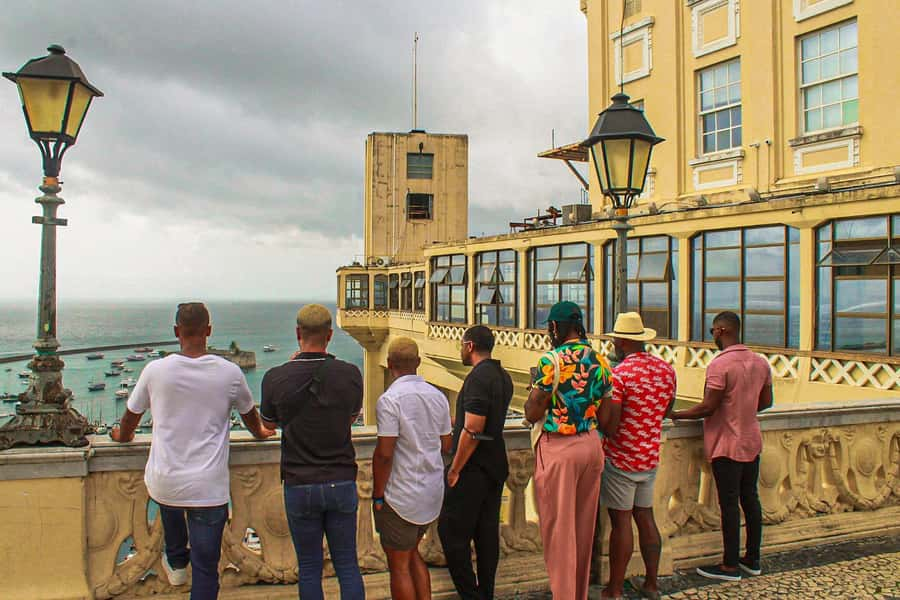
- Praça Castro Alves begins the story: You meet at one of Salvador’s best viewpoints, with Baía de Todos os Santos and its islands below.
- The route links Upper and Lower Salvador: The Lacerda Elevator gives you the clearest sense of how the city is divided by height and history.
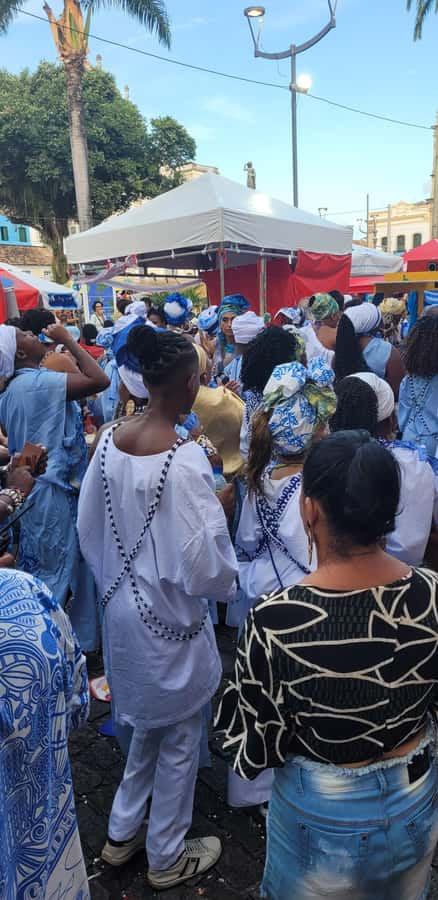
- Afro-Brazilian history receives proper attention: The walk includes Zumbi dos Palmares, the church and brotherhood connected with Black Brazilians, and Olodum’s house.
- Adriano is the guide to look for: His English, clear speaking voice, historical context, and personal recommendations are repeatedly praised.
- Expect a fast, outdoor visit: Bring water, sunscreen, a hat, light clothing, and shoes suited to Salvador’s uneven streets.
- The price reflects a private-feeling small group: At $80 per person, the value comes from the guide and focused route, not included admissions or meals.
Starting above the bay at Praça Castro Alves
Your meeting point is Praça Castro Alves, where the guide will be holding a credential. The square gives you an immediate visual introduction to Salvador. From here, Baía de Todos os Santos opens out below, with islands visible across the water.
I like this starting point because it places the city’s geography before its monuments. Salvador’s historic center has an upper and lower level, and the view helps you understand why the Lacerda Elevator matters later in the walk. You are not simply ticking off old buildings. You are seeing how the city was laid out.
The tour is conducted in English and limited to seven people. That size matters in a busy historic district. It should be easier to hear Adriano, ask questions, and keep the group together on narrow or crowded streets. Several people who took the tour particularly valued his clear volume, fluent English, and willingness to adjust explanations to individual interests.
This is also where I would ask Adriano for advice about the rest of your time in Salvador. His recommendations cover food, bars, sightseeing, and areas to approach with care. If this is your first visit, that practical conversation can be nearly as useful as the formal history.
More Walking Tours in Brazil
- Salvador Historic Walking Tour – Pelourinho
★ 4.8 · 62 reviews - Rio de Janeiro: Rocinha Favela Walking Tour with Local Guide
★ 4.8 · 3,052 reviews - Rio De Janeiro: Half-Day Rocinha Favela Walking Tour
★ 4.7 · 2,272 reviews
Rua Chile and the view from Pau da Bandeira
From Praça Castro Alves, the walk continues along Rua Chile, described as the first street in Brazil. The claim gives the road a special place in Salvador’s story, but its real value for you is that it connects several major sights in a short stretch.
There is a photo stop at Pau da Bandeira street, known for its sweeping view of the bay. Bring your camera, but do not treat this as a rushed snapshot. The stop offers another chance to read Salvador from above, with the water, islands, and lower city helping to explain the route ahead.
The pace is one of the tour’s strengths. Adriano has been praised for giving enough context without turning the walk into a lecture. He also keeps the group moving, which matters when 90 minutes must cover so much ground. The tradeoff is clear: you will hear an introduction to many places, but you will not have time for long visits inside every building.
Praça Thomé de Souza and the Lacerda Elevator
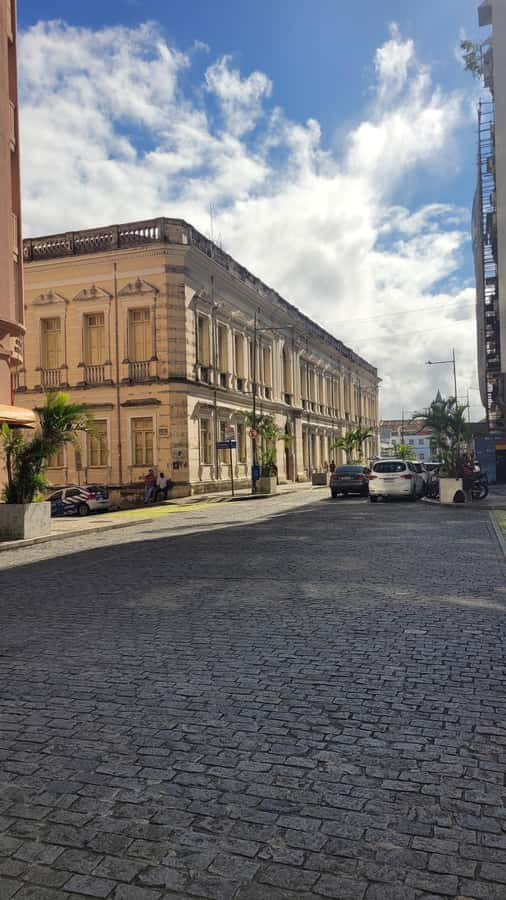
Next comes Praça Thomé de Souza, named for Brazil’s first General Governor. This square brings together several pieces of Salvador’s political and civic past.
Here you see the Palácio do Primeiro Governo, a building that was also used as Brazil’s first prison. That detail gives the square a harder edge. The colonial center is attractive, but its buildings were part of systems of government, punishment, religion, and forced labor. A good guide helps you hold those facts together rather than viewing the old center as a collection of pretty façades.
The Lacerda Elevator is the major landmark in this section. It connects Cidade Alta, the upper city, with Cidade Baixa, the lower city. Even if you do not ride it during the walk, seeing the elevator in place makes Salvador’s unusual two-level layout easy to grasp.
The elevator is also a reminder that the historic center is not flat. You will be walking on streets that can slope and may include uneven paving. The activity is specifically unsuitable for wheelchair users and people with mobility impairments. Anyone with knee, balance, or stamina concerns should take that warning seriously.
Praça da Sé and the Monument to the Fallen Cross
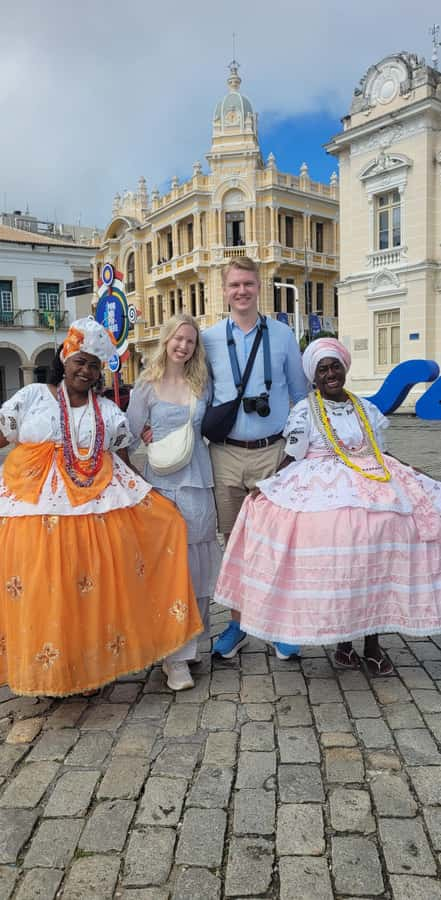
Continuing along Rua Chile, you pass the Museu da Misericórdia before reaching Praça da Sé. The square is one of the tour’s most thoughtful stops because it deals with loss as well as preservation.
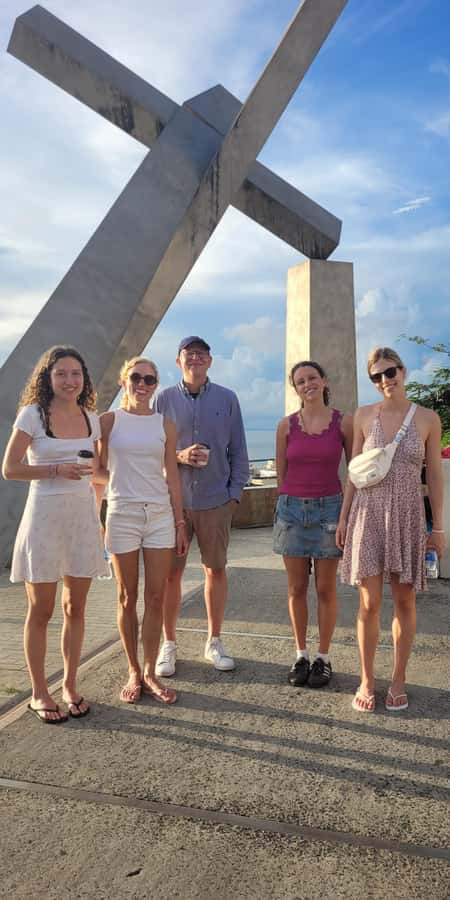
The Monument to the Fallen Cross was erected in protest after the demolition of Igreja da Sé. The monument asks you to consider what happens when urban change removes a building that carries religious and civic meaning. It is a useful counterpoint to the restored churches elsewhere on the route.
Adriano also stops at the statue of the first Bishop of Brazil and explains the tragic end associated with him. This part of the walk shows why a local guide is valuable. A plaque may give you a name and date, but the story behind a figure helps you understand how religion and power shaped early Salvador.
The square also contains a statue of Zumbi dos Palmares, a leader of resistance against slavery. His presence shifts the focus toward Black resistance and freedom. I appreciate that the tour does not reduce Salvador’s past to Portuguese architecture. It gives space to the people who resisted the system that built much of the colonial economy.
More Walking Tours in Salvador:
- Cartagena: Historic Center and Getsemaní Shared Walking Tour
★ 4.9 · 2,716 reviews - Buenos Aires Hop-On Hop-Off Bus, Free Walking Tours & Discounts
★ 4.5 · 2,218 reviews - Buenos Aires: La Boca Guided Walking Tour in English
★ 4.8 · 1,587 reviews - Bogotá: Guided La Candelaria Walking Tour
★ 4.8 · 1,229 reviews
Terreiro de Jesus and Brazil’s first Faculty of Medicine
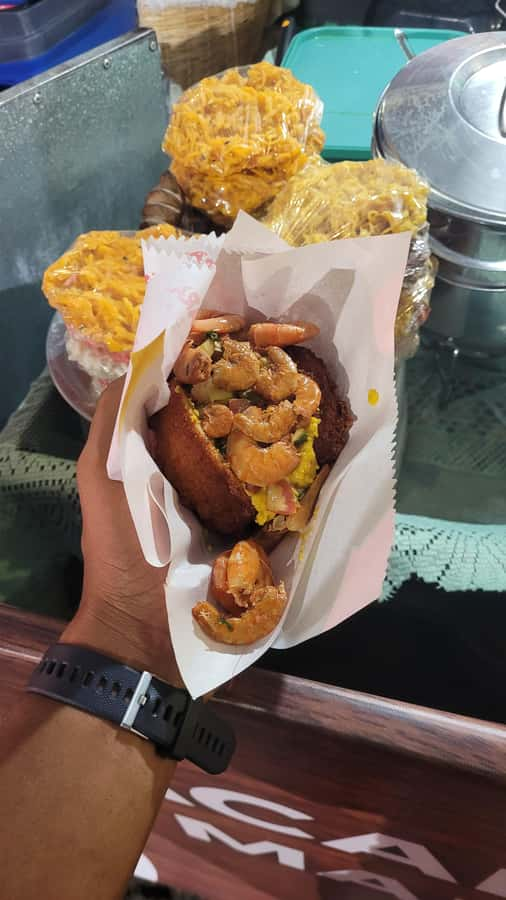
From Praça da Sé, you continue to Largo Terreiro de Jesus. The square is home to the first Faculty of Medicine in Brazil, one of the tour’s most important stops for understanding Salvador’s role in the country.
The faculty also points to the city’s long connection with education, medicine, social class, and colonial power. The route does not ask you to admire the building without context. Adriano’s explanations connect the architecture to the larger story of Brazil and Bahia.
The square contains a group of churches, so this is another place where the 90-minute schedule becomes noticeable. You will see and discuss several important buildings, but entrance fees are not included. If you want to spend real time inside a church or museum, plan a separate visit after the walk and budget for any admission charges.
The tour works best as an orientation. It shows you what deserves a closer look, explains why it matters, and gives you a map in your head for returning later. That is a good use of a first morning or afternoon in Salvador.
Largo do Cruzeiro de São Francisco and Igreja de Ouro
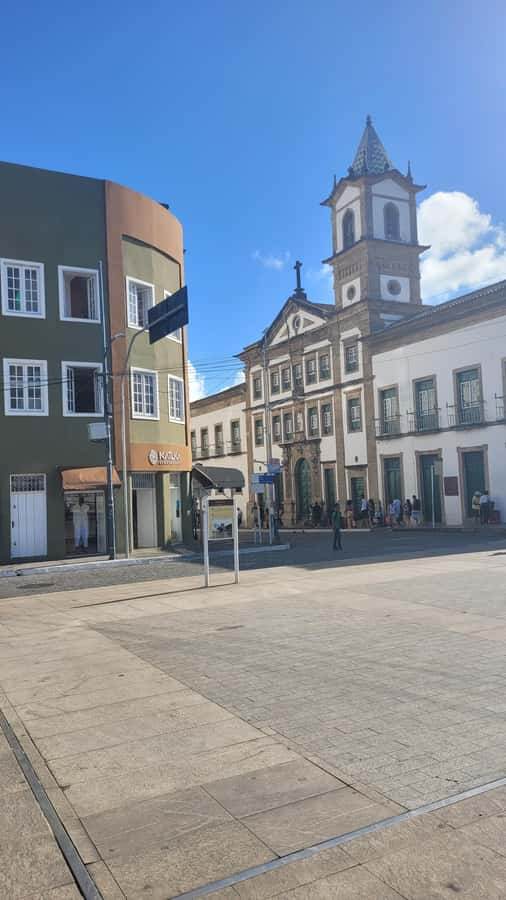
The route then reaches Largo do Cruzeiro de São Francisco, where the Igreja de Ouro is the visual high point. The name refers to the church’s lavish interior, and this is one of the places where Salvador’s wealth and religious display are hard to miss.
Igreja de Ouro is impressive, but I would pay attention to the contrast behind the decoration. Gold-covered church interiors were funded within a colonial society marked by slavery and sharp inequality. The strongest part of the tour is the way it places beauty beside the history that made such beauty possible.
Because entrance fees are not included, you should confirm whether you want to pay for entry separately. The walk still gives you an exterior view and historical explanation, but it is not a substitute for a full interior visit. If ornate church art is a priority, you may want to return with extra time.
The route also takes you past the church associated with Black Brazilians and the brotherhood of Black men in Brazil. This is an essential part of Salvador’s identity. It shows how religious organizations provided community and representation under a system that denied Black people equal power.
Olodum, Ladeira do Pelô, and Michael Jackson’s Salvador
Near the end, the walk passes Olodum’s house. Olodum is closely linked with Salvador’s music and cultural life, and this stop connects the old center with the city’s modern public identity.
You then reach the famous Ladeira do Pelô, where Michael Jackson filmed the music video for They Don’t Care About Us. Pop culture gives the street instant recognition, but the location matters for more than the music video. It is part of Pelourinho’s working streets, painted façades, steep paving, and complicated past.
This is a good place to remember that Pelourinho is not simply a preserved backdrop. It is a neighborhood with a strong Afro-Brazilian identity and a history tied to slavery, punishment, religion, music, and resistance. The route’s final stops bring those threads together.
You may also hear about places to eat, drink, or explore after the tour. Adriano has a reputation for tailoring suggestions to personal interests, so tell him if you want cultural activities, local food, nightlife, or a quieter plan. His advice is one reason I would take this early in a Salvador stay rather than at the very end.
What the 90-minute format really gives you
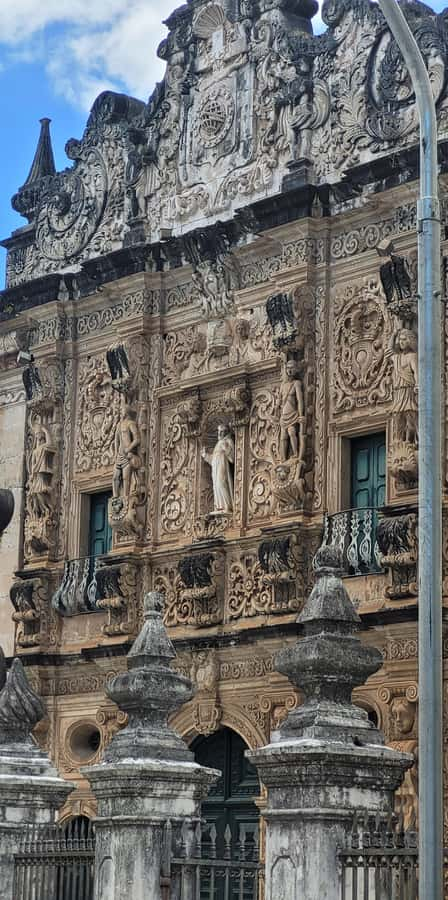
Ninety minutes is enough for a well-shaped introduction, not a full study of Pelourinho. You see a long list of major sites, hear the main historical links, and get advice for exploring on your own.
I like the efficient format for a first day. It gives you orientation without taking half a day, and the small group should make it easier to stop for questions. Several people who joined the walk wished it lasted longer, which tells you exactly how to use it: treat the tour as a foundation, then return to the places that interest you.
The pace may feel brisk if you want detailed photography at every stop. It may also be demanding in hot weather. Wear light clothing, comfortable walking shoes, a hat, and sunscreen. Carry water, since food and drinks are not included. Smoking is not allowed during the activity.
There is no hotel pickup or drop-off. You need to reach Praça Castro Alves on your own and meet the guide there. That is simple if you are already near the historic center, but it is worth allowing time to arrive at the square before the start.
Is $80 a fair price?
At $80 per person, this is not the cheapest way to see Pelourinho. You are paying for an English-speaking guide, a limited group of no more than seven, and a route that links the city’s key historical and cultural stops.
The price makes the most sense if you value explanation and local advice. Adriano’s strengths include clear English, a friendly manner, personal attention, and the ability to answer questions about history, food, nightlife, and practical safety. Those qualities can save you time and help you make better choices during the rest of your stay.
The value is weaker if you only want to photograph the buildings or plan to visit many interiors. The walking tour does not include meals, drinks, hotel transportation, or attraction entrance fees. In that case, you may spend more after the tour if you return to churches or museums.
The small group improves the comparison with a large bus excursion. You can ask about subjects that interest you, and the guide has more room to respond. For a first visit to Salvador, I consider that personal attention the main reason to pay the higher price.
Who should book this Pelourinho walk?
I would choose this experience if you want Salvador’s historic center explained through more than architecture. It suits first-time visitors, people interested in Afro-Brazilian history, and anyone who wants useful local suggestions for the rest of a stay.
It is also a good choice for solo visitors or couples who prefer a small group instead of a large organized outing. English speakers should benefit most, since English is the stated tour language and Adriano is repeatedly praised for speaking clearly.
I would hesitate if you have limited mobility, dislike hills and uneven streets, or want a slow church-by-church visit. You should also think twice if $80 feels high for an outdoor introduction with no admissions included.
Free cancellation is available up to 24 hours before the activity, and you can reserve now and pay later. Those terms make it easier to fit the walk into a changing Salvador schedule.
Should you book it?
Book this tour if you want a lively, well-explained first look at Pelourinho and practical guidance from Adriano. The strongest features are the small group, the clear English, the broad historical range, and the attention given to Black Brazilian history and Salvador’s difficult past.
Skip it if you need an accessible route, want hotel transportation, or plan to spend most of your time inside churches and museums. For everyone else, the walk offers a useful 90-minute introduction, with enough direction to help you explore Pelourinho more thoughtfully afterward.
FAQ
How long does the Salvador Pelourinho walking tour last?
The tour lasts 90 minutes.
What language is the tour conducted in?
The live tour guide speaks English.
Where do I meet the guide?
You meet the guide at Praça Castro Alves. The guide will be standing there with a credential.
Who is the guide?
The guide is Adriano, a local guide who leads the walk in English.
How many people are in the group?
The group is limited to seven participants.
Are attraction entrance fees included?
No. Entrance fees to attractions are not included in the tour price.
Is hotel pickup or drop-off included?
No. You need to make your own way to Praça Castro Alves, and hotel transportation is not included.
Is the tour suitable for wheelchair users?
No. The activity is not suitable for wheelchair users or people with mobility impairments.
Just added around Salvador
- 3 DAYS OF CHARM! Booking from 2 people – Chapada Diamantina by Zentur★ 5.0 · 59 reviews
- 2 AMAZING DAYS! Booking from 2 people – Chapada Diamantina by Zentur★ 5.0 · 63 reviews
- Salvador de Bahia African Culture Tour★ 4.5 · 60 reviews
- Salvador: Cultural Treasure – Samba de Roda.★ 4.9 · 51 reviews
- Salvador: Praia Do Forte and Guarajuba Beach Day Trip★ 4.1 · 56 reviews
- Salvador Historic Walking Tour – Pelourinho★ 4.8 · 62 reviews
- Trekking the valley of the pat 3 days/ GUIDE TUTY CHAPADA DIAMANTINA★ 5.0 · 78 reviews
- 4 FASCINATING DAYS! Reservations from 2 people -Chapada Diamantina by Zentur★ 5.0 · 71 reviews
Walking Tours, compared.
Historic Center and Getsemaní Shared Walking Tour
Read our review →

La Paz and El Alto: Cable Car Rides and Walking Tour
Read our review →
Punta Arenas: Walk with Penguins on Magdalena & Marta Island
Read our review →
Browse the lists this tour appears in