
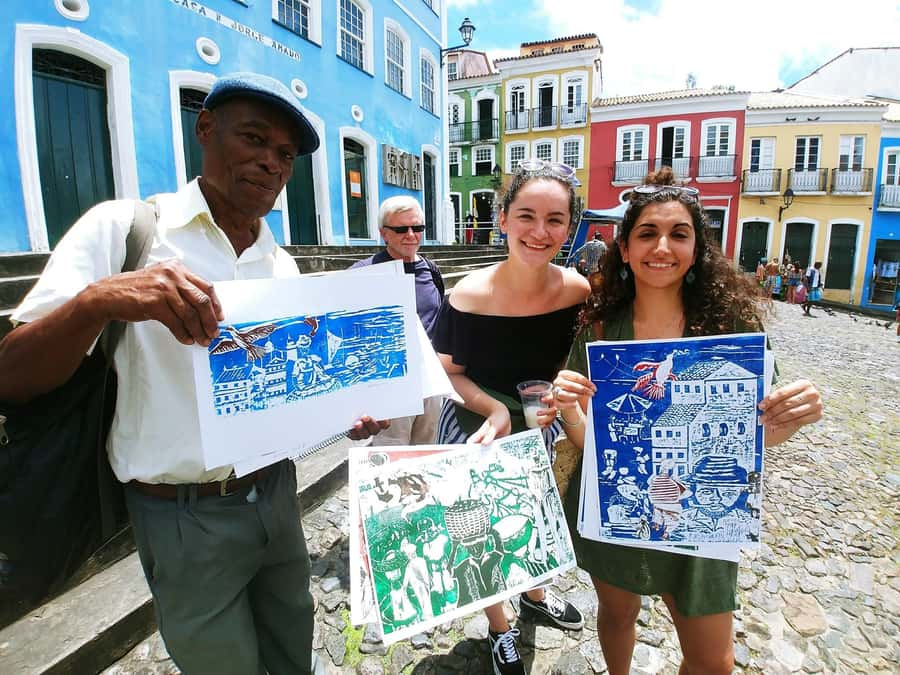
Reviewed · SALVADOR TOURS
Salvador de Bahia African Culture Tour
Salvador’s African heritage is not tucked away in a museum. It shapes the streets, music, faith, dance, and public life of the city. This walking tour connects those pieces in the historic center, from Terreiro de Jesus to the São Francisco Cross and the Escola do Olodum.
I like the private format, which lets the guide adjust the pace and answer your questions. I also like the clear focus on Afro-Brazilian culture, including samba, capoeira, Carnival, and the struggle for Black freedom. The main caution is value: one booking ended after about two hours instead of three, and the tour is entirely on foot, with mostly free cultural sights.
Key points
- Start at Salvador Cathedral: Meet at 2 pm in front of the Cathedral Basilica of San Salvador, at the heart of the old center.
- Terreiro de Jesus: Learn how Jesuit missions and Portuguese colonization shaped this part of Bahia.
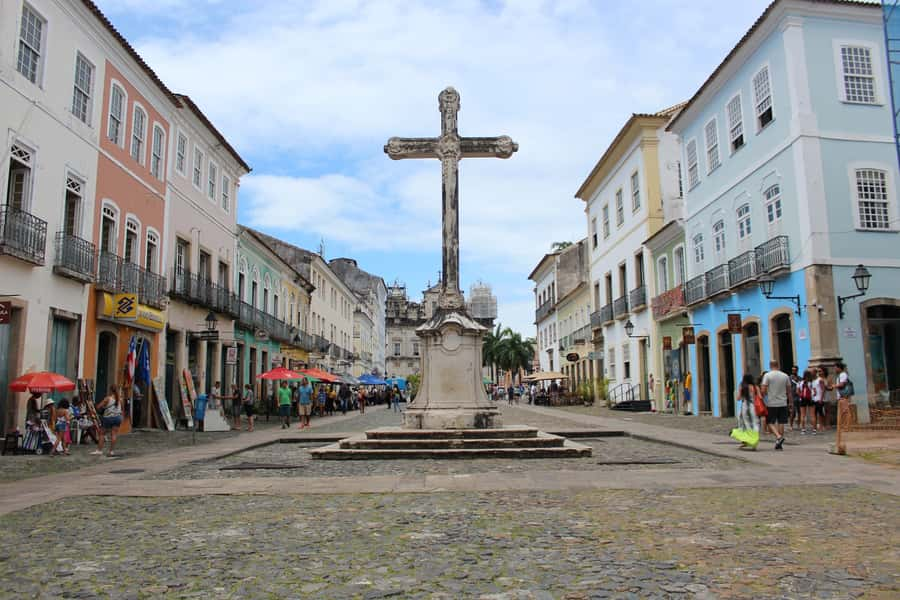
- São Francisco Cross: Hear about a 19th-century Black men’s organization and the fight for liberation.
- Samba and capoeira: The tour links music and movement to Afro-Brazilian identity and daily life.
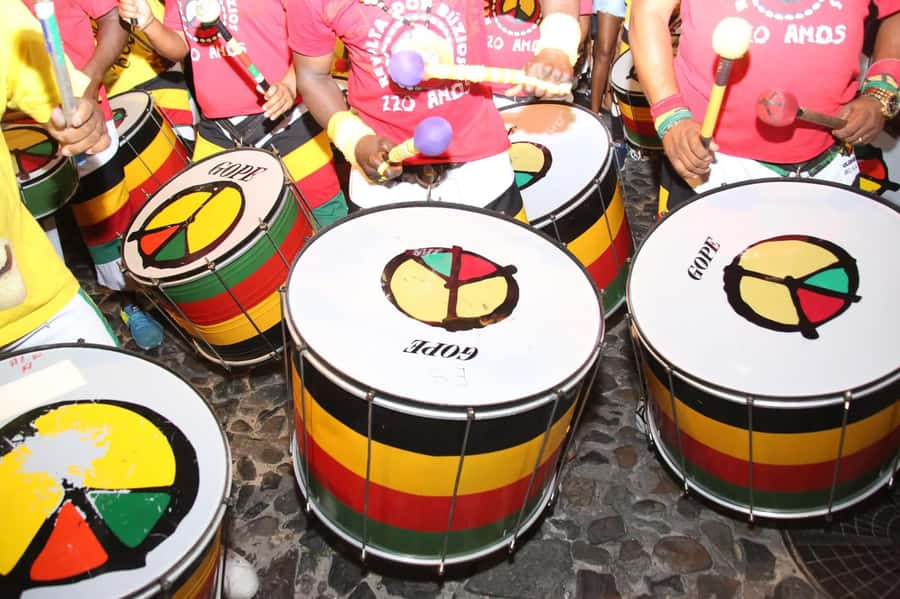
- Escola do Olodum: See why Olodum and Carnival matter so much to Salvador’s cultural life.
- Private, multilingual guiding: Tours are offered in English, Portuguese, and Spanish, with guides such as Eduardo, Sayuri, Adilson, and Nilza.
Why this Salvador walk matters
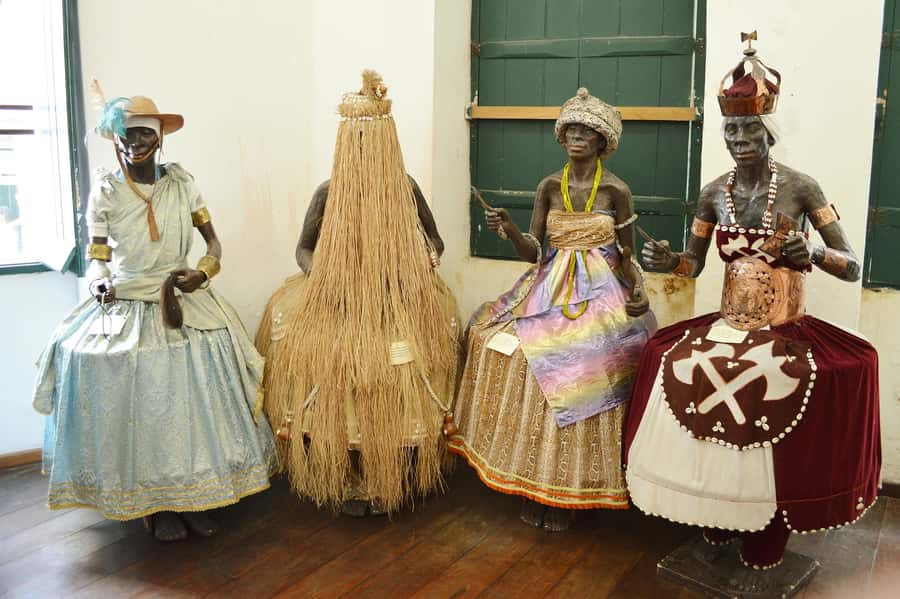
Many city tours treat Salvador’s African influence as one stop on a general sightseeing route. This one makes it the subject. That difference matters. You are not simply looking at decorated churches and colorful streets. You are asked to consider who built the city, who was forced to work there, and how African traditions survived and shaped modern Bahia.
The tour lasts three hours and begins at 2 pm. That gives you a focused afternoon in the historic center, without using an entire day. Since it is a private group, you can ask for more time on subjects that interest you, such as slavery, religion, Carnival, music, or the Black Brazilian experience.
The guides have different styles, but the strongest feedback points to their ability to explain difficult subjects in a clear and respectful way. Eduardo is praised for his grasp of both Salvador’s past and Brazilian history as a whole. Sayuri is noted for asking what the group wanted to learn and adapting the walk around those interests. Adilson is described as friendly and interactive. That flexibility is especially useful here because the subject reaches well beyond dates and monuments.
A few more Salvador days worth comparing
- Cooking class in Salvador, an authentic dinning experience
★ 5.0 · 132 reviews - Tour to the Frades Islands and Itaparica, from Salvador – Ba
★ 4.0 · 130 reviews - From Salvador: Schooner Tour to Frades Islands and Itaparica
★ 3.9 · 98 reviews
Starting at Terreiro de Jesus and Salvador Cathedral
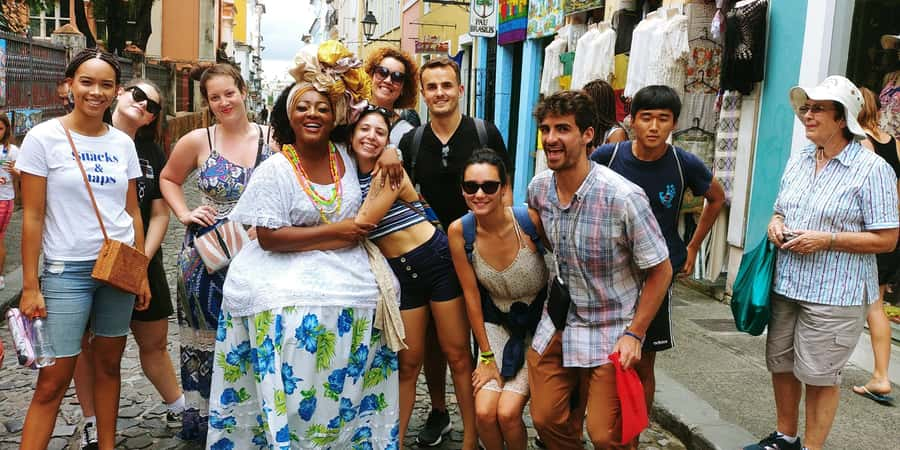
Meet in front of the Cathedral Basilica of San Salvador. The exact meeting point is at approximately -12.9728546, -38.5097046, in the central historic district. From there, the walk moves to Terreiro de Jesus, one of the key public spaces in old Salvador.
This is where the tour sets its historical base. You learn about Portuguese colonization and the role of Jesuit missions in the development of the area. That context helps you read the center with sharper eyes. The churches and grand buildings are not just pretty backdrops. They also reflect a colonial system built through power, religion, forced labor, and cultural conflict.
The tour also brings in notable African figures connected with Salvador. The supplied details do not name those figures in advance, so you should ask your guide which people will be covered. With a private group, you have room to follow up instead of simply moving along with a large crowd.
Terreiro de Jesus is a good first stop because it places several layers of Salvador in one setting. Colonial religion, public ceremony, African influence, and modern city life all meet here. I would arrive a few minutes early, since the cathedral square can be a busy place to locate a guide.
The São Francisco Cross and the fight for freedom
The walk continues through the historic center to the Cross of São Francisco. This stop shifts the focus from colonization to Black organization and liberation.
Here, the guide explains the creation of a 19th-century men’s organization formed to support Salvador’s Black community in its struggle for freedom. That story gives the tour a needed political edge. Afro-Brazilian culture is not presented only through food, drumming, dance, or Carnival. You also learn about solidarity, resistance, and the effort to protect Black lives and rights.
This is one of the best reasons to choose this tour over a standard old-town walk. The buildings provide the setting, but the guide explains the social forces behind them. The subject can include painful parts of Salvador’s past. A careful guide is important, and the strongest guide feedback describes a respectful approach to slavery, prostitution, and the Black Brazilian experience.
The São Francisco area is also where the tour connects history with living performance traditions. Samba and capoeira enter the story here. You may not receive a formal class or performance, since the activity is described as a walking tour, but the guide explains how these forms fit into Afro-Brazilian culture. The rhythms may even make you want to move along with them.
Olodum and the meaning of Carnival in Salvador
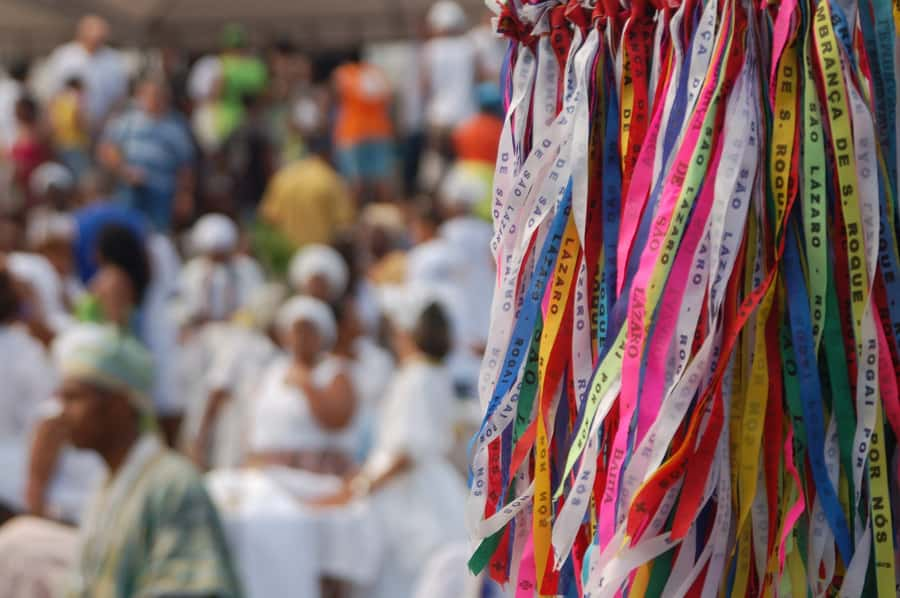
The final main stop is the Escola do Olodum, a cultural and educational center connected with African-descended culture. This is where the tour discusses Carnival and its importance to Salvador.
Olodum is more than a name associated with percussion. Within this tour, it represents the way music, public celebration, education, and Black identity meet in Bahia. Carnival becomes a useful way to understand the city because it is not treated as a short party season. It is tied to performance, community, visibility, and cultural pride.
This part should appeal to you if music is your main reason for booking. It also suits anyone planning a future visit during Carnival, since Sayuri has helped people understand how to navigate the event beyond the time spent on the tour. The activity itself does not promise Carnival dates or a live rehearsal, so think of Olodum as a cultural stop and conversation rather than a guaranteed show.
The title and highlights also refer to an Afro-Brazilian Mass. However, the detailed schedule specifically describes Terreiro de Jesus, the São Francisco Cross, and Escola do Olodum, ending at the São Francisco Cross. If attending a Mass is important to you, confirm whether one is included on your chosen date before booking.
Same trip, a completely different kind of day:
- Tour Praia do Forte and Guarajuba, Leaving Salvador-Bahia.
★ 4.5 · 97 reviews - Afro-Brazilian Roots Private City Tour in Salvador
★ 4.7 · 88 reviews - Transfer Salvador Airport / Hotel in Salvador
★ 5.0 · 78 reviews - Trekking the valley of the pat 3 days/ GUIDE TUTY CHAPADA DIAMANTINA
★ 5.0 · 78 reviews
A private tour with room for real questions
The private-group setup is one of the most useful features. You do not have to wait through a long line of questions from a large group, and the guide can shape the discussion around your interests. Sayuri, for example, is described as beginning by asking what the group wanted to learn, then adjusting the route and subjects to match.
That matters on a topic as broad as African culture in Salvador. One person may want more on slavery and the colonial economy. Another may care most about capoeira, samba, religion, art, or Carnival. A private walk gives you a better chance of getting a thoughtful answer instead of a fixed speech.
The guides work in English, Portuguese, and Spanish. Names connected with past bookings include Eduardo, Sayuri, Adilson, Nilza, Facundo, and Carlos. You may not receive a particular guide, but the range of positive feedback suggests that the provider uses several guides with different strengths.
The walk also appears to be conversational rather than rigid. One booking described the guide as allowing the group to guide parts of the tour, and another compared the experience to getting to know the city with a friend. That does not mean the tour lacks structure. It means you should prepare a few questions and use the private format well.
What three hours feels like on foot
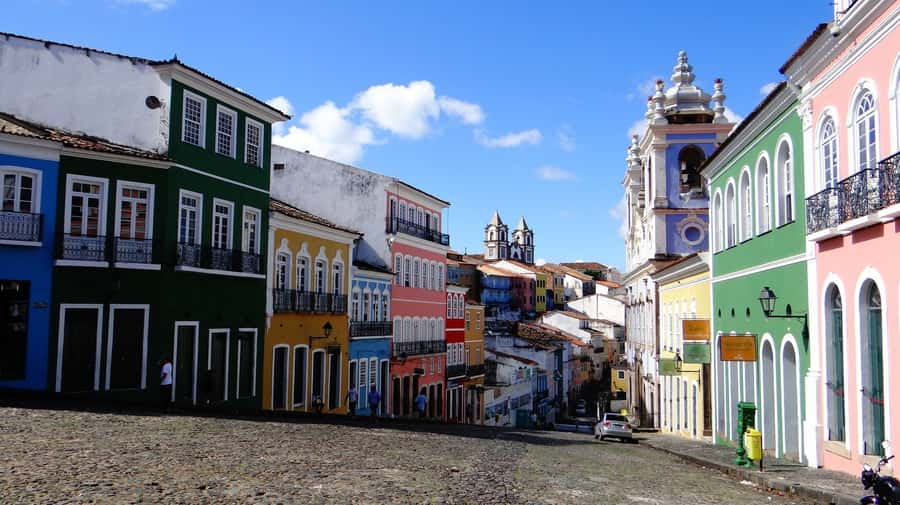
Three hours is enough time to cover the central historic sights without rushing through a quick photo stop. You move between the cathedral, Terreiro de Jesus, the São Francisco area, and Olodum while building a story that links each place.
The route is entirely described as a walking experience. Wear comfortable shoes and expect to spend the afternoon outdoors and on your feet. The activity information does not state the walking distance, terrain, museum admissions, food, or transportation arrangements, so ask before booking if any of those details affect your plans.
The advertised finish is at the Cross of São Francisco. That is useful when planning the rest of your day. You will not return to the cathedral unless your guide chooses to do so, and the exact final timing may vary with questions, stops, and pace.
There is one practical point to keep in mind. A booking from France reported that the guide ended the activity after roughly two hours, despite the stated three-hour duration. That appears to be an exception rather than the normal plan, but it affects the value calculation. If the full length matters to you, confirm the expected finish time at the start.
Is the price fair for a walking tour?
No price is provided here, so I cannot judge the exact cost. The value depends on what you want from the afternoon.
If you want transport, paid admissions, a meal, or a performance, this may not be the right comparison. The core experience is a private guided walk through public historic spaces and cultural locations, with the value resting mainly in the guide’s interpretation and your chance to ask questions.
For a first visit to Salvador, that can be worthwhile. The tour helps you understand why the center looks and sounds the way it does, rather than leaving you with a list of churches and plazas. A private guide can also save you time by connecting the stops into one clear story.
Still, compare the price with other walking tours in Salvador before you commit. One booking felt the cost was high because the route was on foot and included free museums. That is a fair concern, especially for budget-minded visitors. I would book this if the private format, language choice, and focused Afro-Brazilian subject matter are important to you. I would skip it if you mainly want paid attractions or a live music event.
Free cancellation up to 24 hours before the start and reserve-now, pay-later booking make it easier to keep plans flexible. Those policies do not change the tour’s content, but they are useful when your Salvador schedule is still moving.
Who should book this Salvador experience?
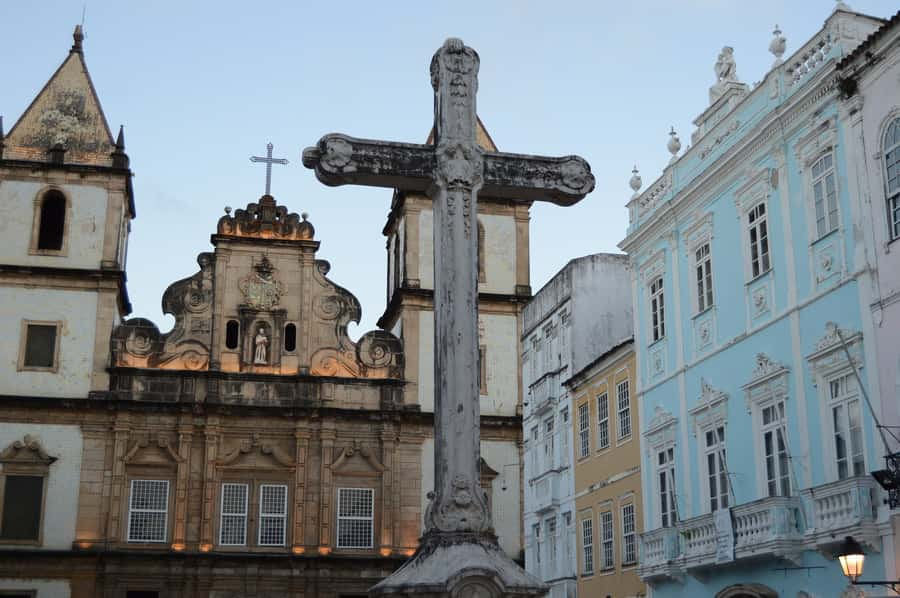
I would recommend it to first-time visitors who want more than postcard views of Pelourinho and the historic center. It is also a strong fit for anyone with a specific interest in African diaspora culture, Black Brazilian history, Carnival, samba, capoeira, or Salvador’s religious and social life.
The private format works well for families, couples, and small groups who like to ask questions. It is also useful for travelers who prefer Spanish or Portuguese, since the tour is offered in all three languages.
You should think twice if you dislike walking, want a fixed performance, or expect a long list of included attractions. The tour is based on explanation and place, not a packed schedule of admissions. It also covers difficult subjects, so it suits you best if you are willing to listen to a serious account of slavery, colonization, and racial inequality alongside the music and celebration.
Should you book the African Culture Tour?
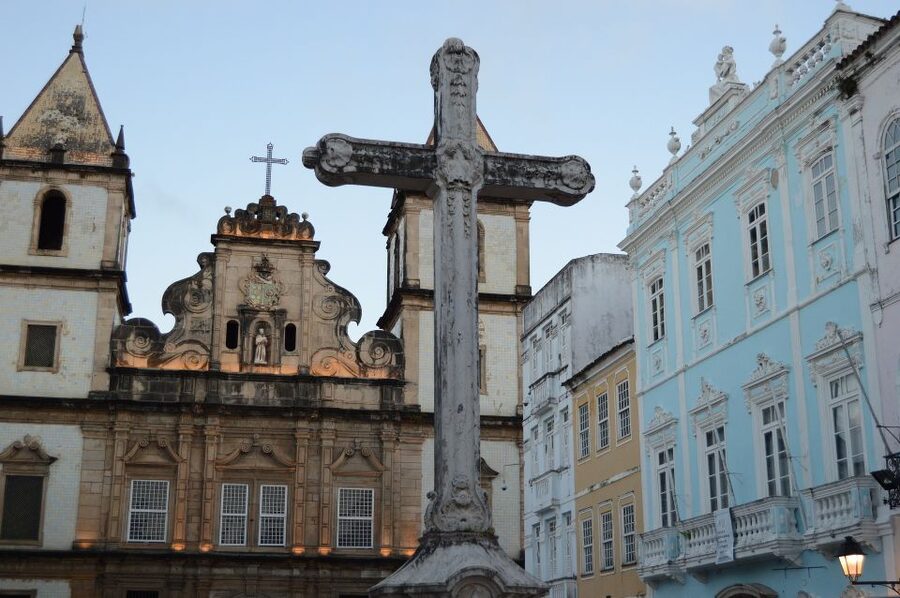
Book it if you want Salvador explained through its African roots, not just photographed for its colonial architecture. The most valuable parts are the links between Terreiro de Jesus, the São Francisco Cross, the history of Black resistance, and Olodum’s role in Carnival.
Before paying, confirm three things: the guide language, the full three-hour duration, and whether an Afro-Brazilian Mass is actually part of your date’s schedule. If those details line up, this is a focused and personal introduction to the culture that gives Salvador much of its character.
FAQ
Where does the tour start?
The meeting point is in front of the Cathedral Basilica of San Salvador. The listed coordinates are -12.972854614257812, -38.50970458984375.
What time does the tour begin?
The tour begins at 2 pm.
How long does the activity last?
The stated duration is three hours. The planned ending is at the Cross of São Francisco, although one booking reported finishing after about two hours.
Which languages are available?
You can book the tour with a guide speaking English, Portuguese, or Spanish.
Is this a private tour?
Yes. The activity is organized as a private group.
Which places are included?
The described route includes Terreiro de Jesus, the Cross of São Francisco, and Escola do Olodum. It begins at Salvador Cathedral.
Does the tour include an Afro-Brazilian Mass?
An Afro-Brazilian Mass is listed among the highlights, but the detailed schedule does not clearly state that attendance is included. Confirm this with the provider for your chosen date.
Can I cancel for a full refund?
You can cancel up to 24 hours in advance for a full refund. The activity also offers reserve-now, pay-later booking.
Just added around Salvador
- 3 DAYS OF CHARM! Booking from 2 people – Chapada Diamantina by Zentur★ 5.0 · 59 reviews
- 2 AMAZING DAYS! Booking from 2 people – Chapada Diamantina by Zentur★ 5.0 · 63 reviews
- Salvador: Walking Tour Through Pelourinho★ 5.0 · 49 reviews
- Salvador: Cultural Treasure – Samba de Roda.★ 4.9 · 51 reviews
- Salvador: Praia Do Forte and Guarajuba Beach Day Trip★ 4.1 · 56 reviews
- Salvador Historic Walking Tour – Pelourinho★ 4.8 · 62 reviews
- Afro-Brazilian Roots Private City Tour in Salvador★ 4.7 · 88 reviews
- Transfer Salvador Airport / Hotel in Salvador★ 5.0 · 78 reviews
Salvador Tours, compared.

Cooking class in Salvador, an authentic dinning experience
Read our review →
Tour to the Frades Islands and Itaparica, from Salvador – Ba
Read our review →
Tour Praia do Forte and Guarajuba, Leaving Salvador-Bahia.
Read our review →Afro-Brazilian Roots Private City Tour in Salvador
Read our review →
Trekking the valley of the pat 3 days/ GUIDE TUTY CHAPADA DIAMANTINA
Read our review →

Browse the lists this tour appears in