
Reviewed · HISTORICAL TOURS
Cartagena: Historic Center and Getsemaní Shared Walking Tour
Cartagena’s story comes alive when you follow it on foot, from the Clock Tower and the old slave-trade route to Getsemaní’s murals, umbrellas, salsa, and champeta. This tour does more than point at pretty balconies. It explains how conquest, slavery, religion, independence, African culture, and modern street life shaped the city you see today.
I like the clear two-part route: about two hours in the Walled City, followed by an hour in Getsemaní. I also like the way the guides connect major events with everyday culture, including dance, braiding traditions, street food advice, and local music. The main drawback is Cartagena’s heat. You will spend 150 minutes outside, so water, sunscreen, shade, and comfortable shoes matter.
Key points at a glance
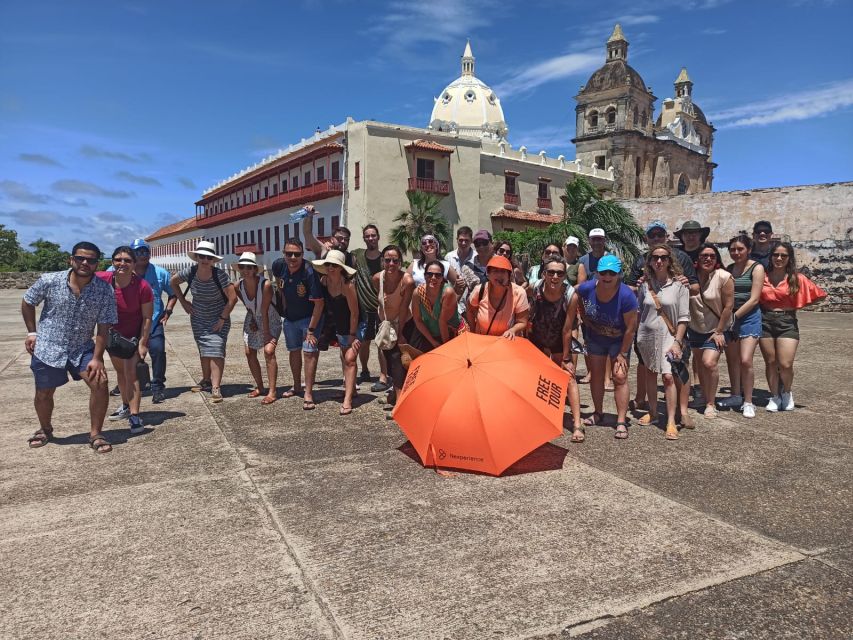
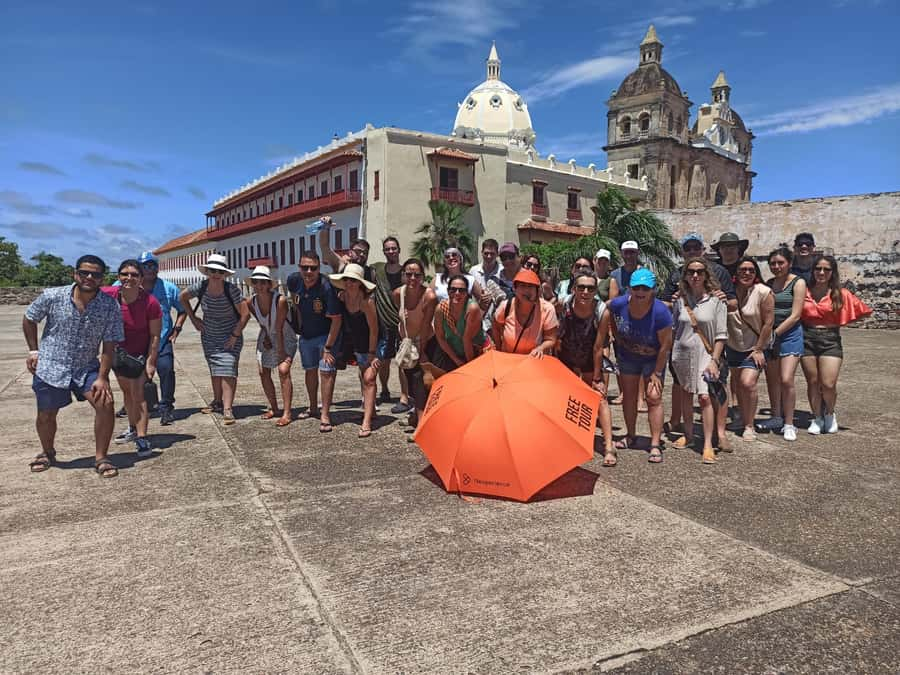
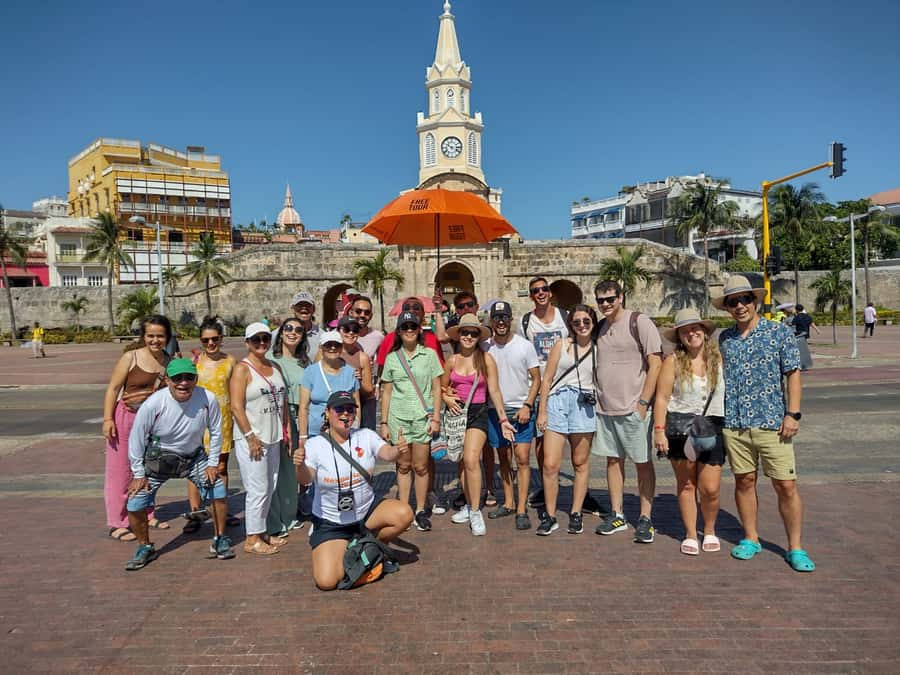
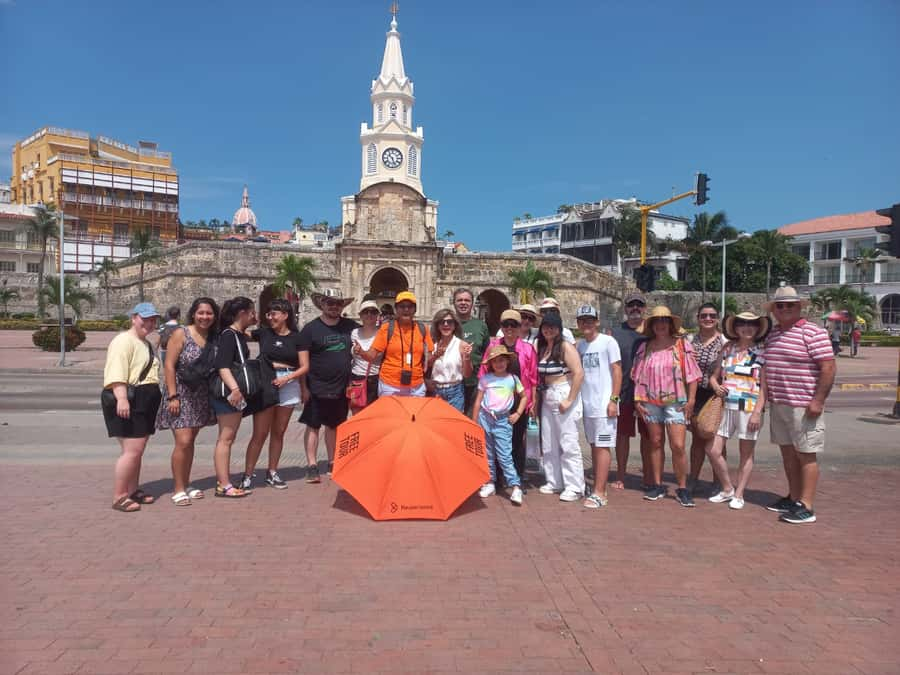
- Starts at the orange umbrella in Plaza Cervantes, directly in front of the Clock Tower.
- Follows the old route of power and slavery, including Plaza del Esclavo, Porto Carrero, Candilejo, Portal de los Dulces, and Plaza de la Aduana.
- Explains Cartagena’s defenses, with stories of pirates, corsairs, bastions, and the walls around the old city.
- Adds art and religion, including San Pedro Claver, the Gold Museum, the Museum of Modern Art, and the Emerald Museum.
- Visits Centennial Park, where you might spot sloths, squirrels, and iguanas among tropical dry-forest trees.
- Ends in Getsemaní with music and movement, including salsa, champeta, graffiti, colorful umbrellas, and sometimes a few dance steps.
Starting at Plaza Cervantes beside the Clock Tower
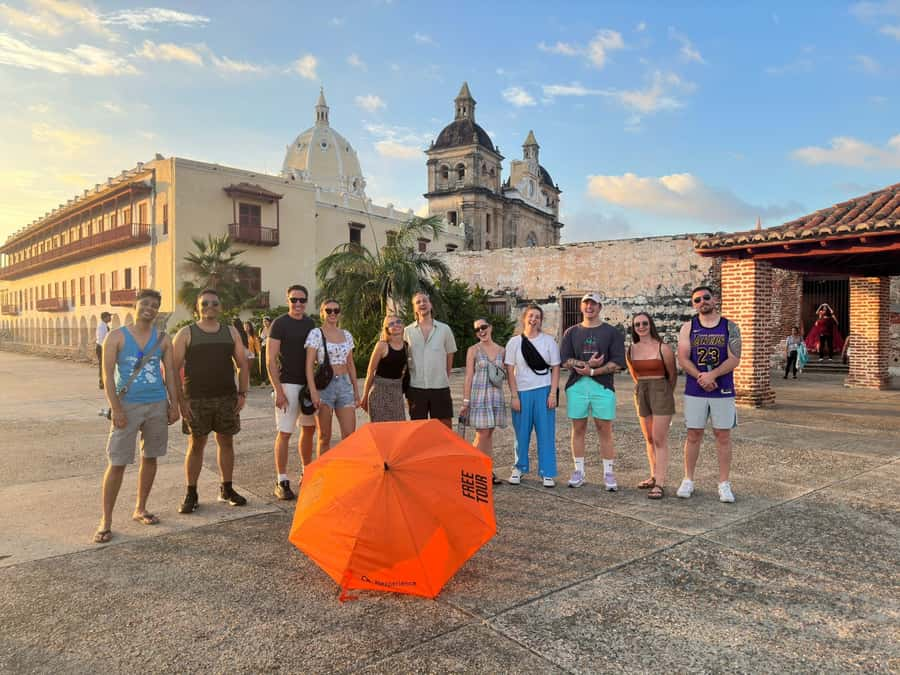
Meet at Plaza Cervantes, also called the Camellón de los Mártires, in front of Cartagena’s Clock Tower. Look for the orange umbrella. This is a useful meeting point because the tower is one of the easiest landmarks to find in the Historic Center.
The opening section sets the tone. Before the Spanish arrived, Indigenous people lived in this region, and the guide places their story alongside the arrival of Pedro de Heredia, the Spanish founder associated with Cartagena’s colonial beginning. That early context matters. The Walled City can look like a collection of churches, balconies, and plazas unless someone helps you see the people and power behind it.
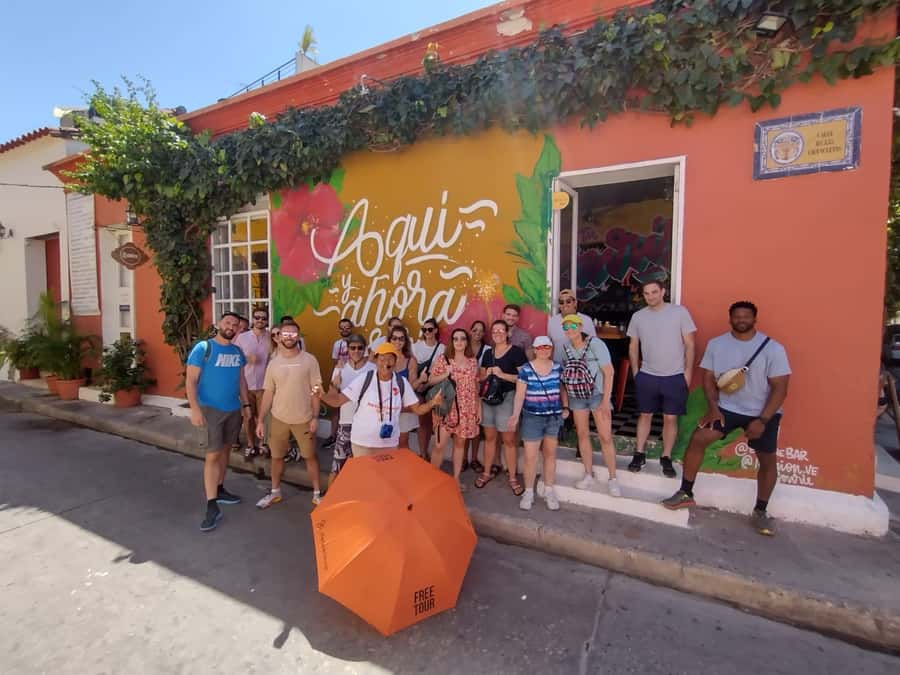
The walk is shared, so you will be part of a group rather than receiving a private tour. That keeps the price low, but it also means the pace and amount of conversation depend on the group and guide. The strongest guides use questions, humor, and movement to keep everyone involved. Dani and Legacy are especially good names to look for if the schedule gives you a choice, though guides can vary.
More Historical Tours in Colombia
- Visit Palenque with natives : history, culture and ancestral legacy
★ 5.0 · 53 reviews - Shared Tour Cali’s Historical Downtown
★ 4.8 · 143 reviews - Medellín: History & Local Life Essentials Tour on an E-Bike
★ 4.9 · 130 reviews
The Clock Tower and the route through slavery
The Clock Tower is known as Cartagena’s Golden Key. Passing through it brings you into Plaza del Ecuador, historically linked with the Plaza del Esclavo. From here, the tour follows part of the route connected with the enslavement and sale of African people through Porto Carrero and Candilejo streets.
This is one of the most important parts of the walk. Cartagena’s beauty can easily soften the harder facts of its past. A good guide does not let the painted facades hide the role the city played in Spanish colonial trade and the transatlantic slave system.
At Portal de los Dulces, you learn how women worked in the days of slavery and how descendants continue food traditions there. The stop links the past with something you can still see and taste in the present. It also gives you a way to read the street beyond its sweets and bright storefronts.
I appreciate that the tour presents slavery as part of the city’s central story, not as a side note. The history of African communities helps explain Cartagena’s music, dance, language, food, hairstyle traditions, and sense of identity. The discussion of African braids, including their associations with freedom and hope, is one of the more meaningful cultural details included along the route.
Plaza de la Aduana, museums, and the city’s public life
Plaza de la Aduana was once a major center for the sale and movement of merchandise, including enslaved people. Today, you see important colonial buildings such as the Municipal Hall. The contrast between the elegant architecture and the painful activity that took place around it is worth pausing over.
The tour also points out several cultural institutions. The Museum of Modern Art presents Caribbean and Latin American art from the 1950s onward. The Gold Museum focuses on Indigenous pieces from the Colombian Caribbean. The Emerald Museum explains the appeal of Colombia’s famous green stones, which have been worn by celebrities.
You should not expect a full museum visit during this walking tour. These stops are mainly about setting context and identifying places you can return to later. That is useful on a first afternoon, when you want orientation before deciding which museum deserves more of your time.
The stop at San Pedro Claver adds another layer. San Pedro Claver is remembered as the Slave of the Slaves for his work with enslaved Africans. The church, museum, and monastery named for him are important examples of colonial religious architecture, and the site now also serves as a headquarters for human rights.
The religious story is not treated as separate from the social story. You see how the Church shaped colonial life, how individual figures challenged parts of that system, and how the same buildings can carry several meanings at once.
Bastions, pirates, and the walls of Cartagena
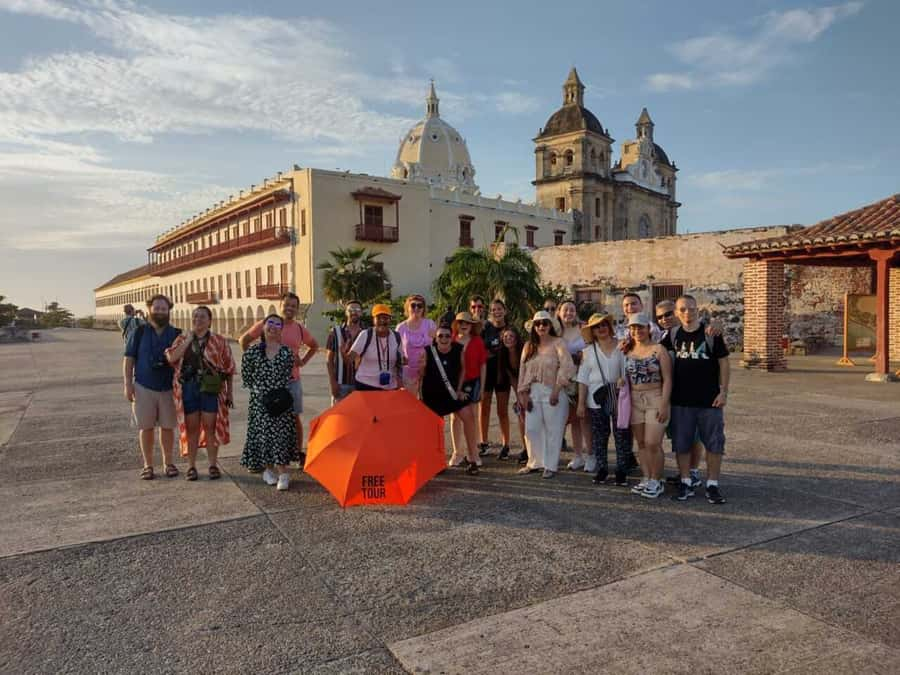
At the San Ignacio Bastion, the guide explains how Spanish military engineers protected the Bay of Souls from pirate attack. This is where the walls become more than a photo background.
Cartagena’s fortifications were built for strategy. Their shape, position, and view toward the water reflect the city’s need to defend its wealth from pirates and rival powers. The tour uses the bastion to explain the attacks, defenses, and military planning that helped define Cartagena.
I like this part because it gives you a practical way to understand the Walled City. Look outward from the walls and you can picture why this location mattered. Look back at the narrow streets and thick masonry, and you see a city built for protection as much as for trade and administration.
The route then reaches Plaza Bolívar, named for Simón Bolívar, a central figure in the movement for independence. It is also a sensible place to pause and cool down. Cartagena’s sun is strong, and the short stop helps break up the walking.
If you are interested in military history, colonial architecture, or independence movements, this section will probably be a highlight. If you prefer a slow architectural tour with long visits inside buildings, you may find the route too broad. It covers many subjects, but it does not offer extended time at any single site.
More Walking Tours in Colombia
- Cartagena: Walled City and Getsemani Shared Walking Tour
★ 4.5 · 352 reviews - Bogotá: Guided La Candelaria Walking Tour
★ 4.8 · 1,229 reviews - Comuna 4 Walking Tour Medellin
★ 5.0 · 217 reviews - Medellin Historic Walking Tour
★ 4.9 · 86 reviews
Centennial Park and Cartagena’s unexpected wildlife
The walk continues to Centennial Park, one of Cartagena’s important green spaces. The park occupies the site of a former railway station and preserves a patch of tropical dry forest inside the city.
This is a welcome change from stone streets and open plazas. Under the trees, you might see sloths, squirrels, iguanas, monkeys, or birds. The exact wildlife is not guaranteed, but the park gives the guide a chance to talk about the city’s natural side and lets you step into shade.
Several guides make a point of keeping the group out of direct sun when possible. That small decision can make a major difference, especially on a hot afternoon. Still, do not treat the park as a cool indoor break. Bring water, wear breathable clothing, and use sunscreen before you arrive.
The park is sometimes described casually as Cartagena’s city zoo because of the animals people notice there, but it is better understood as a public green space with wildlife. Keep your expectations realistic, and enjoy the chance to see a different side of the city.
Getsemaní, where history turns into street life
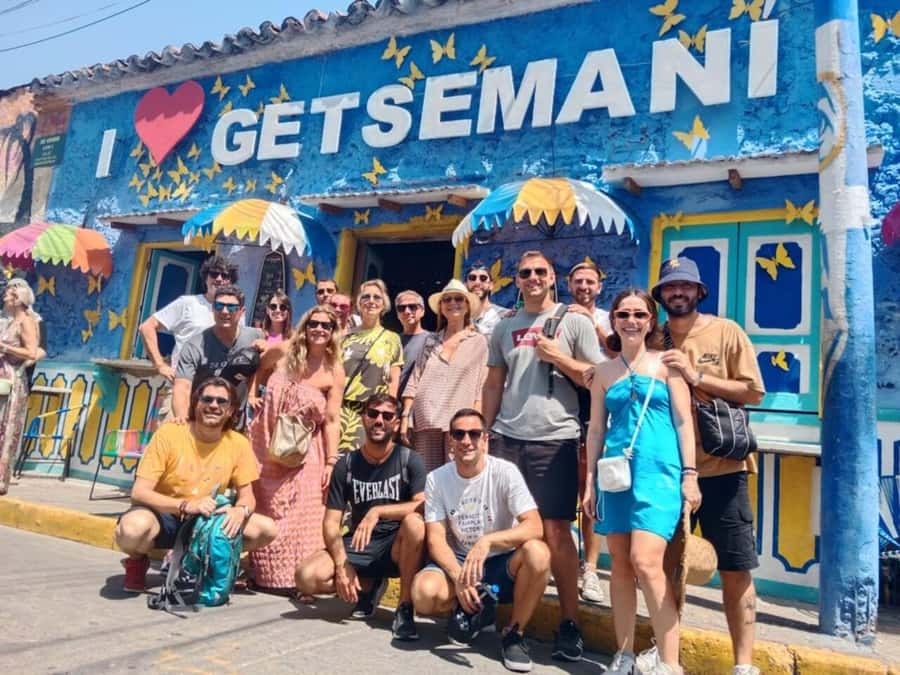
The final hour moves into Getsemaní. This neighborhood has a different feel from the polished colonial core. Its colorful corridors, graffiti, umbrellas, older buildings, and public art show a living district rather than a preserved historic zone.
The umbrellas are part of a well-known advertising display, but they have also become a recognizable visual feature. Your guide explains the architecture and the neighborhood’s changing social order while pointing out how local culture appears in public space.
This is where the tour becomes especially useful for first-time visitors. The Walled City can feel formal and grand. Getsemaní shows a more social, artistic, and street-level Cartagena. You see how music, murals, food, and neighborhood traditions help shape the city today.
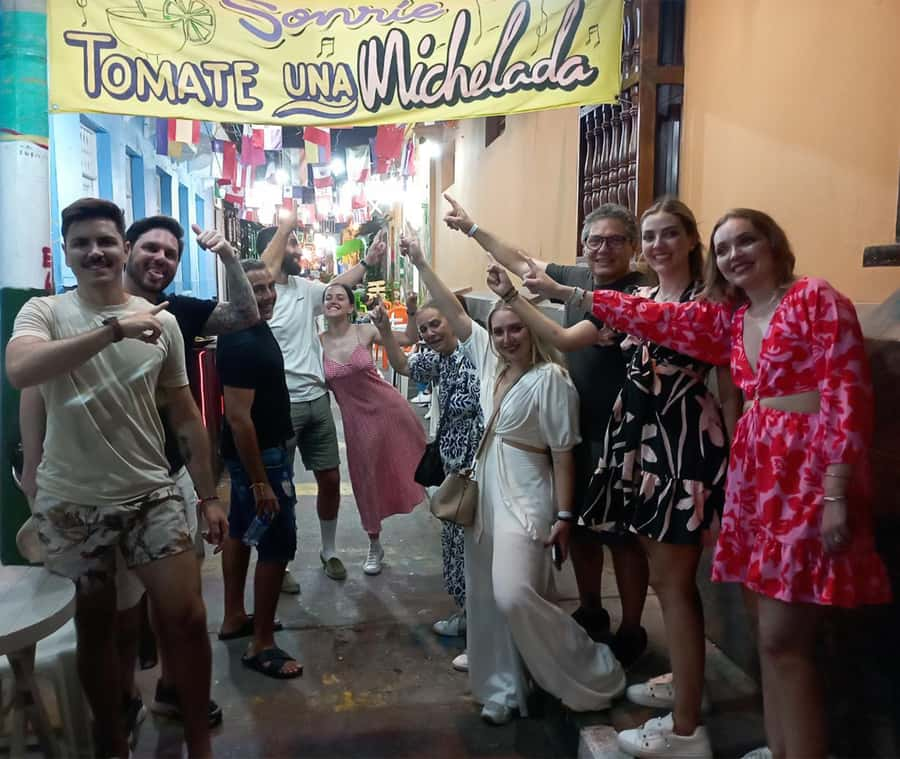
The route passes through Callejón Ancho and ends around Calle San Juan. The finish comes with salsa and African champeta. Some guides include simple dance moments during the tour, and Dani has been praised for teaching traditional steps. You do not need to be a dancer. The point is to feel how music works as part of the city’s identity, not to perform perfectly.
The cultural connection is important. Champeta grew from African and Caribbean influences, and its presence in Getsemaní helps connect Cartagena’s past with its present. A tour that explains only Spanish buildings gives you an incomplete picture. This final section supplies the sound and movement that architecture alone cannot provide.
The guides make the biggest difference
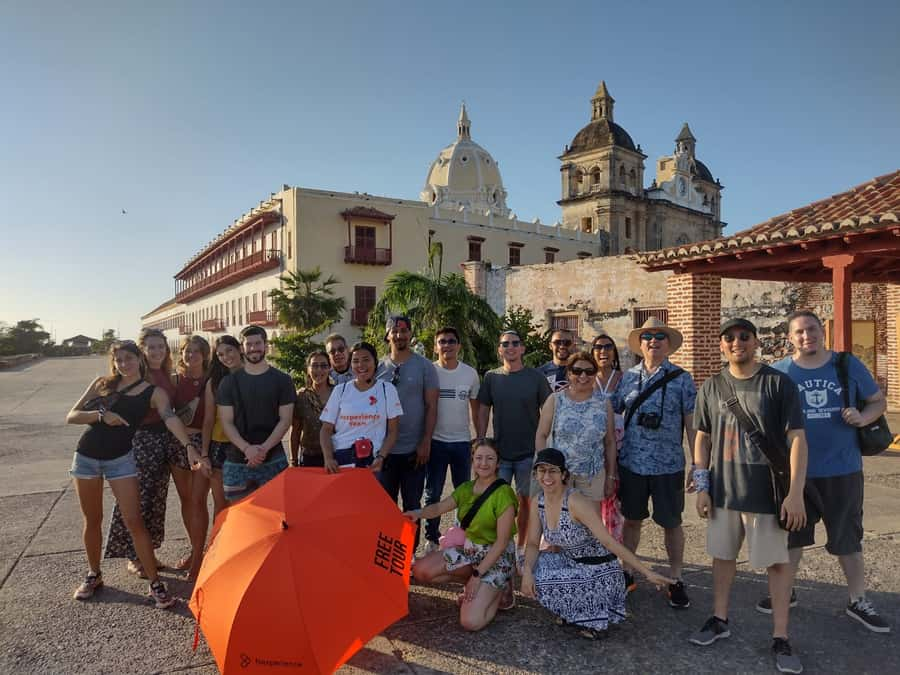
The tour is offered in English or Spanish, and guide style can vary. You may meet Dani, Legacy, Robert, Álvaro David, Ingrid, Rebeca, Daniela, Liz, or another member of the team.
The strongest guides combine facts with a personal connection to Cartagena. Legacy is known for high energy, humor, and plenty of interaction. Dani and Daniela bring pride in local culture and sometimes add dance instruction. Robert focuses on clear historical explanation, practical restaurant advice, and finding shade. Álvaro David is good at linking historic sites with local prices, food, and daily life. Ingrid and Rebeca are praised for patient explanations and strong command of the city’s story.
English is generally part of the offering, but one guide was noted for speaking quickly at times. If you need slower English, ask politely at the start. A good guide will usually adjust the pace.
The group may also include people from many countries and age groups. One family brought a two-year-old child, and the guide checked that the child and parents were doing well. That suggests the walk can work for families, though the heat and 150-minute duration still require planning.
Is the $12 price good value?
At $12 per person, this is an unusually inexpensive way to get a structured introduction to Cartagena. The price includes a professional guide, the Historic Center walk, the Getsemaní walk, and the tip. Hotel transport, food, and drinks are not included.
The note about the tip is worth understanding. This is presented as a free-walking-tour format, but the tip is already paid through the booking price. You should not feel that you must add another tip at the end, though you can choose to do so if you wish.
The value comes from coverage. In 150 minutes, you receive an overview of colonial history, slavery, religion, independence, military defenses, museums, wildlife, music, and present-day neighborhood life. You also receive advice about food and places to visit from guides such as Robert, Álvaro David, and Dani.
The tradeoff is depth. You will not have long interior visits or much time for private reflection at each stop. Think of this as a strong orientation walk. It helps you decide where to return later, rather than replacing a full museum visit or a specialized history tour.
Timing, clothing, and practical comfort
Check the available starting times when you book, because the tour duration is fixed at 150 minutes but the start time can vary. An early or later start may feel more comfortable than walking through the hottest part of the day.
Wear comfortable shoes and weather-appropriate clothes. Cartagena’s streets can be hard on your feet, and the route includes a long period outdoors. Sunscreen, a water bottle, and a hat are sensible additions even if shade is used whenever possible.
Rain can affect the experience. One person found the tour less enjoyable during rain, though the guide continued to do a good job. A light shower may simply change the mood, but wet streets and umbrellas can make group movement harder.
The tour is wheelchair accessible. Since it is a walking route through historic streets, you should still confirm any personal mobility needs when booking. No hotel pickup or drop-off is provided, so plan your own way to Plaza Cervantes.
Who should book this walk?
I would choose this tour early in a Cartagena stay. It gives you names, locations, historical context, food suggestions, and neighborhood orientation before you explore on your own.
It suits you best if you:
- Want a low-cost introduction to the Walled City and Getsemaní
- Like history explained through streets, buildings, and local stories
- Want to understand slavery and African influence as central parts of Cartagena
- Enjoy a social group walk with questions, humor, and occasional dancing
- Need restaurant and sightseeing suggestions for the rest of your stay
- Can manage 150 minutes outdoors in warm weather
You may want another type of tour if you prefer private guiding, air-conditioned transport, long museum visits, or a tightly focused architectural study. This route covers a lot, so it favors breadth and local context over quiet, detailed examination.
Should you book the Cartagena Historic Center and Getsemaní walk?
Yes, if you want to understand Cartagena before simply photographing it. The best part is the connection between colonial power, the slave trade, religious institutions, military walls, African traditions, music, and modern neighborhood life.
Book it near the beginning of your stay, bring water, and arrive ready to walk. At $12, the tour offers strong value, especially when your guide adds practical advice and finds shade along the way. Its only real limits are the heat, group format, and quick pace across many subjects. For a first look at Cartagena, those are reasonable compromises.
FAQ
Where does the tour start?
It starts at Plaza Cervantes, also called the Camellón de los Mártires, in front of the Clock Tower. Look for the orange umbrella.
How long does the tour last?
The full experience lasts 150 minutes. About two hours are spent in Cartagena’s Historic Center, followed by about one hour in Getsemaní.
What languages are available?
The tour is available in English and Spanish with a live guide.
Is the tour wheelchair accessible?
Yes, the activity is listed as wheelchair accessible.
Is hotel pickup included?
No. Hotel pickup and drop-off are not included, so you need to reach Plaza Cervantes on your own.
Are food and drinks included?
No. Food and drinks are not included.
Is the tip included in the price?
Yes. The tour information says the tip is already paid as part of the free-walking-tour format.
What should I bring?
Bring comfortable shoes, sunscreen, comfortable clothing, and weather-appropriate clothing. Water is also a practical choice for Cartagena’s heat.
What places does the tour visit?
The route includes Plaza Cervantes, the Clock Tower, Plaza del Ecuador, parts of the old enslavement route, Portal de los Dulces, Plaza de la Aduana, San Pedro Claver, the San Ignacio Bastion, Plaza Bolívar, Centennial Park, and Getsemaní.
Can I cancel the booking?
Yes. You can cancel up to 24 hours in advance for a full refund. You can also reserve now and pay later.
More Walking Tours in Cartagena
- Rio de Janeiro: Rocinha Favela Walking Tour with Local Guide
★ 4.8 · 3,052 reviews - Rio De Janeiro: Half-Day Rocinha Favela Walking Tour
★ 4.7 · 2,272 reviews - Buenos Aires Hop-On Hop-Off Bus, Free Walking Tours & Discounts
★ 4.5 · 2,218 reviews - Buenos Aires: La Boca Guided Walking Tour in English
★ 4.8 · 1,587 reviews
More Historical Tours in Cartagena
- Lima’s Vibrant Heritage: Exploring the City’s Landmarks Half-day
★ 4.5 · 581 reviews - Santiago: Guided Walking Tour of the Historical Old Town
★ 4.8 · 459 reviews - Maria Fumaça – Wines and History
★ 4.0 · 242 reviews - Rio de Janeiro: Historic Rio and Santa Teresa Half-Day Tour
★ 4.4 · 228 reviews
Just added around Cartagena
- Cartagena Fishing & Crabbing • Unique Local Experience with Lunch★ 5.0 · 90 reviews
- Tour a san Basilio de Palenque desde cartagena★ 5.0 · 123 reviews
- 5 islands tour to rosario Islands with snorkeling activity!★ 4.5 · 36 reviews
- Under a sea of adventures, unforgettable diving.★ 5.0 · 62 reviews
- Tour of the Rosario Islands, Cartagena★ 4.5 · 75 reviews
- Cartagena Unforgettable: Half Day Private City Tour (Also for Cruisers)★ 5.0 · 77 reviews
- 5 Island Tour with Lunch Snorkel in Cartagena Rosario Island★ 4.5 · 94 reviews
- Romantic Date Night in the Bay of Cartagena★ 5.0 · 47 reviews
Historical Tours, compared.
Lima’s Vibrant Heritage: Exploring the City’s Landmarks Half-day
Read our review →



Lima: Historic Center Street Food, Market, and Eateries Tour
Read our review →
Nazis in Buenos Aires: a historical walking tour
Read our review →

Scenic Train ride to historical cities of Morretes and Antonina
Read our review →Browse the lists this tour appears in