
Reviewed · HISTORICAL TOURS
Nazis in Buenos Aires: a historical walking tour
Argentina’s postwar relationship with Nazi fugitives is not a simple tale of secret escape routes and willing officials. This 2.5-hour walking tour with Max follows the evidence through central Buenos Aires, asking what the government knew, what it encouraged, and what remains disputed.
I like the way the tour uses real streets and buildings instead of treating history as a list of names. I also like Max’s reported habit of separating firm evidence from open questions. The main drawback is that the subject is serious and the discussion reaches well beyond Nazis on the run, so anyone wanting only a short Adolf Eichmann story may find the Argentine political background more extensive than expected.
Key points to know
- Adolf Eichmann’s Buenos Aires connection: Hear about the coffee stop and the spy-like work that led to his identification and capture.
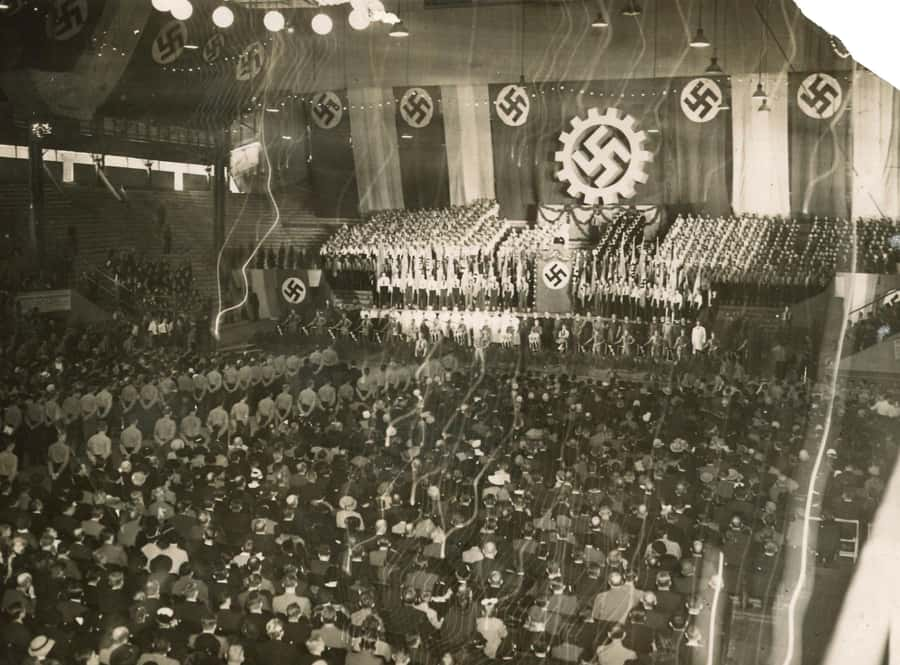
- A 15,000-seat political gathering: Visit Luna Park, a still-operating stadium linked to a major Nazi meeting.
- History tied to ordinary places: ABC Restaurant, museums, grand government buildings, and city squares become evidence in a larger story.
- A careful look at Perón-era Argentina: The walk examines political debates, postwar migration, and the Jewish community’s place in Buenos Aires.
- The route ends at a memorial site: Finish at Plaza Embajada de Israel, connected to one of Latin America’s worst terrorist attacks.
- Best for curious adults and older children: The tour is in English, asks for some basic World War II background, and is not suitable for children under 10 or wheelchair users.
Why this Buenos Aires history walk is different
Many city walks point out façades, give you a date, and move on. This one asks you to connect places with questions that still carry political weight. How did Nazi war criminals reach Argentina after 1945? Were their arrivals known or promoted by officials? What role did Perón’s government play? How did the Jewish community respond, and how did later attacks shape public memory?
You will not spend the entire time looking for Nazi symbols or dramatic hideouts. Much of the story comes through politics, immigration, intelligence work, antisemitism, and the way Argentina dealt with its past. That gives the tour more substance, but it also means you should arrive ready for a serious history lesson rather than a sensational crime walk.
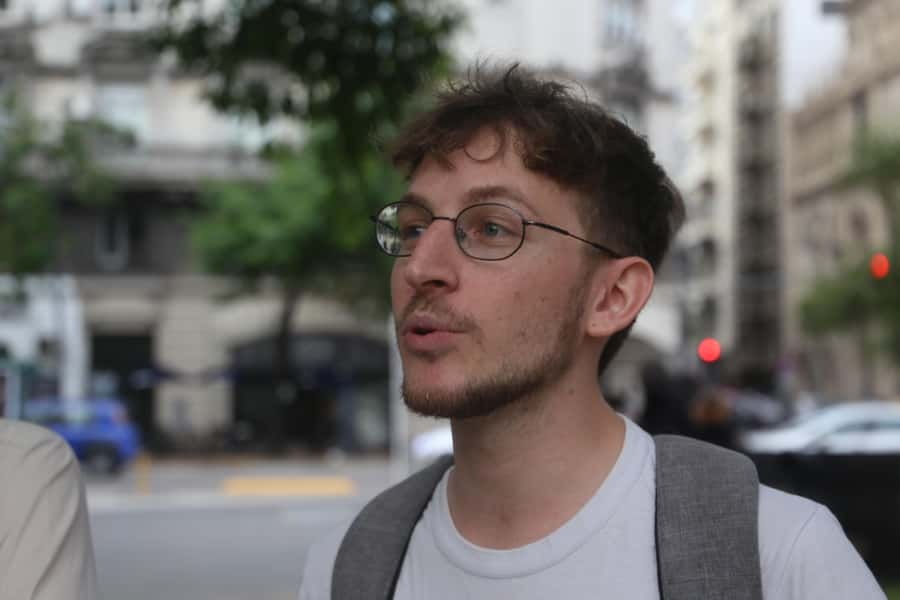
Max is described as a history teacher from the University of Buenos Aires, and the tour’s strongest feature is his teaching style. He uses photographs and other visual material at stops, answers questions, and keeps the tone approachable while dealing with painful subjects. The best guides in this field know when the evidence is solid and when historians still disagree. Max’s willingness to identify uncertainty is especially useful here.
The tour is conducted in English. A basic grasp of World War II and the Holocaust will help you follow the names and events, but you do not need an academic background. The guide provides the setting and is prepared to answer questions about Nazism, Judaism, the war, and Argentine history.
More Walking Tours in Argentina
- Buenos Aires Hop-On Hop-Off Bus, Free Walking Tours & Discounts
★ 4.5 · 2,218 reviews - Buenos Aires: La Boca Guided Walking Tour in English
★ 4.8 · 1,587 reviews - Buenos Aires: Personalized 2 to 8-Hour Private Walking Tour
★ 4.7 · 149 reviews
Starting at Monumento a Juana Azurduy
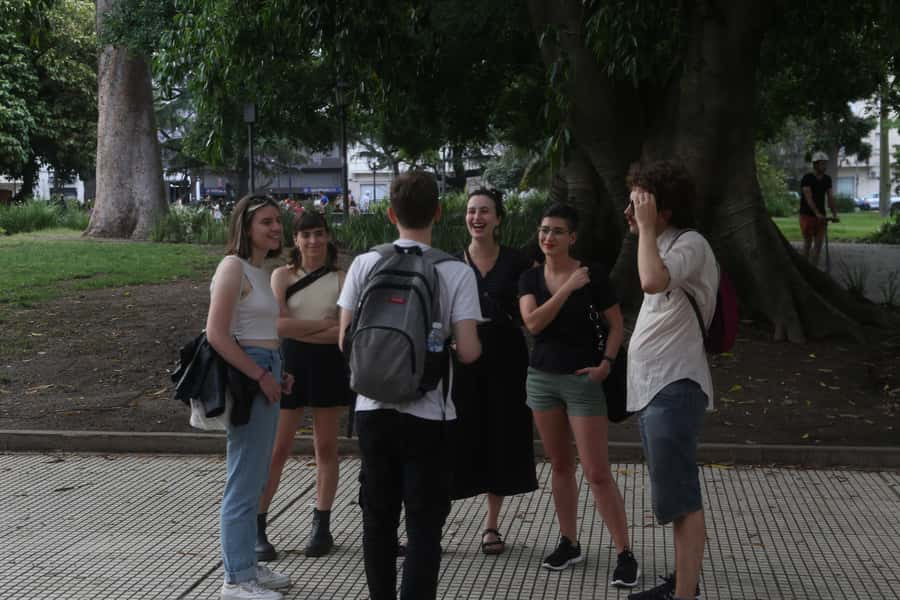
The meeting point is a few meters from the Monument to Juana Azurduy, near the benches facing Palacio Libertad, formerly known as the CCK. Max wears a black cap, which should make the group easier to spot.
This is a useful starting place because the tour begins with orientation rather than dropping you into a shocking anecdote. The surrounding central Buenos Aires setting lets the guide establish Argentina’s prewar and postwar political world before the group moves into the individual stories.
Give yourself enough time to reach the meeting point. The tour covers several neighborhoods and has a planned ten-minute pause for a restroom stop. Wear comfortable shoes and carry water. Buenos Aires sidewalks can make any two-hour walk feel longer than the clock suggests.
Luna Park and the 15,000-seat Nazi meeting
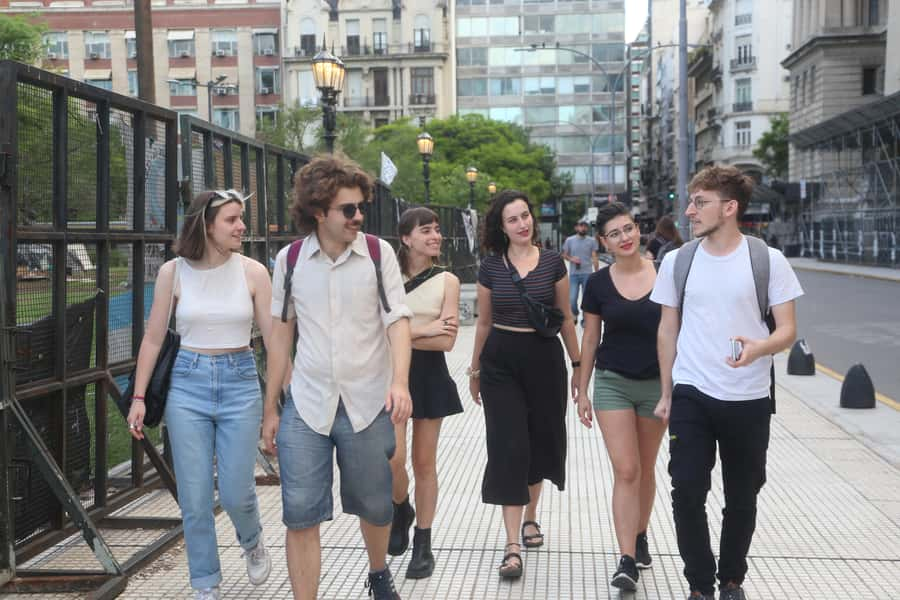
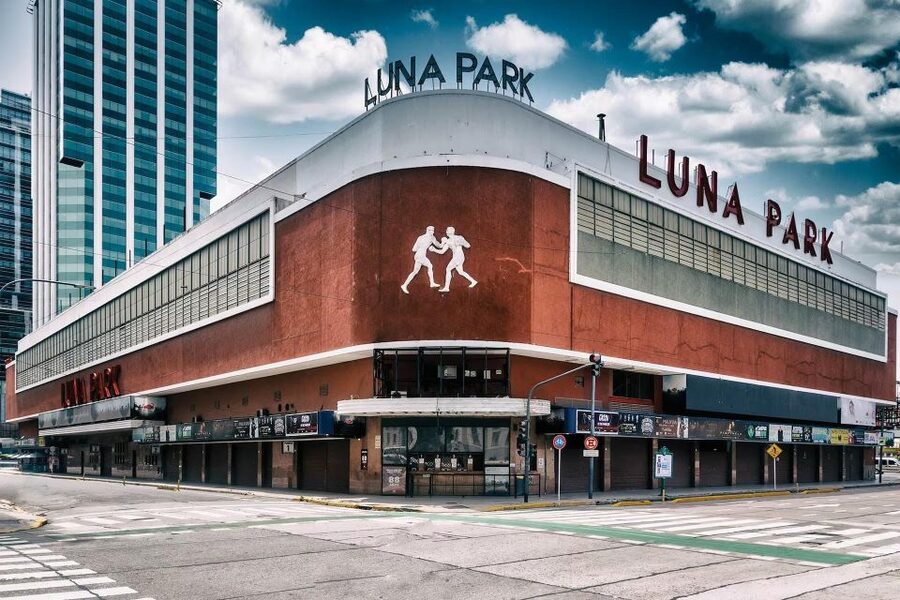
The first listed stop is Luna Park, where you spend about 20 minutes. This still-operating stadium is not simply a sports venue. It is connected to a Nazi meeting attended by as many as 15,000 people, an uncomfortable reminder that pro-Nazi politics were visible in Buenos Aires rather than limited to private back rooms.
The value of this stop is scale. A large public gathering changes the question from Could this have happened? to How public was this political activity, and who allowed it to take place? The building provides a strong physical backdrop for that discussion.
You should not expect a stadium tour or guaranteed entry. Admission to Luna Park is not included, so the experience focuses on the site and the explanation outside or around it. If you care about entering the venue itself, check the day’s arrangements before booking.
ABC Restaurant and the Eichmann story
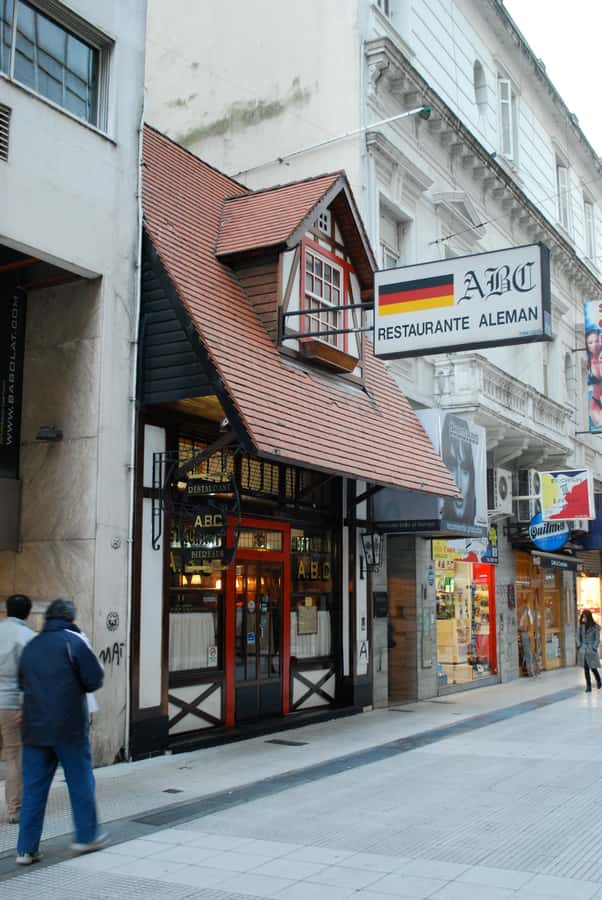
At ABC Restaurant, the guide spends about 20 minutes connecting an ordinary dining place with Adolf Eichmann. The tour presents the striking detail that Eichmann sat there for a cup of coffee, then uses it as a doorway into the much larger story of how he was identified and captured.
This is where the walk takes on a spy-story quality, but the point is not merely suspense. Eichmann’s presence in Argentina raises questions about aliases, intelligence work, international justice, and the difficulty of finding people who had disappeared into postwar society.
The stop works because it brings a famous historical figure down to human scale without softening his crimes. A restaurant table and a cup of coffee can seem harmless, yet the surrounding story is anything but. Max’s evidence-based approach matters here, since popular accounts often turn Eichmann’s capture into a neat thriller and leave out the disputed or less certain parts.
More Walking Tours in Buenos Aires
- Buenos Aires: San Telmo and Market Guided Walking Tour
★ 4.8 · 102 reviews - Buenos Aires Walking Tour with Local Guide and Optional Rooftop
★ 4.5 · 87 reviews - Best of Buenos Aires Private Walking Tour
★ 4.5 · 73 reviews - Full Day Private Walking Tour of Buenos Aires Neighborhoods
★ 5.0 · 55 reviews
Museo de Armas de La Nación
The Museo de Armas de La Nación Tte. Gral. Pablo Riccheri is the third stop, with roughly 20 minutes set aside. The tour uses the museum as part of the discussion about military culture, weapons, power, and Argentina’s postwar political setting.
Entry to the museum is not listed as included, so treat this as a stop connected to the building and its historical meaning, not as a guaranteed museum visit. That distinction matters when you compare this experience with a museum-focused tour.
This part may appeal most to people who want the broader Argentine context. The subject is not only the arrival of European fugitives. It is also the political and military environment in which their stories were received, ignored, or debated. If you prefer a narrow focus on escape networks, this stop may feel less direct. If you want to understand why the subject cannot be separated from Argentine politics, it earns its place.
Palacio San Martin and the official side of the story
The walk continues to Palacio San Martin, another 20-minute stop. Here the emphasis shifts toward state institutions, diplomacy, and the question of what Argentine authorities knew about postwar arrivals.
This is one of the places where the tour’s careful tone becomes important. The central question is not simply if Nazi war criminals entered Argentina. It is also whether their migration was known, tolerated, organized, or promoted by parts of the government. Those are different claims, and the guide works through the distinctions rather than presenting one sweeping answer.
The setting helps you think about official decisions rather than only individual fugitives. You are looking at a formal building while discussing the informal networks, political choices, and international tensions that shaped the period. That contrast gives the stop more weight than a basic list of government facts.
The Italian Circle and the wider immigrant story
The Italian Circle of Buenos Aires receives another 20-minute visit. The name points toward Argentina’s large European immigrant world, and the stop helps place postwar arrivals within the broader pattern of migration and organized communities.
This is also where the tour can move beyond the title’s most obvious subject. Argentina’s postwar connections with Europe involved more than Nazi fugitives. To understand how people arrived, found contacts, and built new lives, you need to consider the country’s existing social and political networks.
The stop may feel less immediately dramatic than Luna Park or the Eichmann story. That is part of the tradeoff. The walk gives you a framework for understanding the systems around the famous cases, not just the cases themselves.
Perón, the Jewish community, and the unresolved debates
A major strength of the tour is its attention to Juan Domingo Perón, arguably the most important Argentine political figure of the 20th century. The discussion looks at the arguments surrounding his presidency and the disputed questions about Argentina’s wartime and postwar posture.
You will also learn about the Jewish community in Buenos Aires, described as the second largest in the continent. That community’s experience provides an essential counterpoint to the story of Nazi immigration. A tour about fugitives can easily focus so much on the criminals that Jewish life, fear, resilience, and political consequences disappear. This walk keeps those human effects in view.
The subject is not presented as a clean moral equation. Argentina’s government, political movements, immigrant groups, Jewish institutions, and foreign intelligence services all fit into a story with competing explanations. The guide’s use of photographs and supporting material helps keep the conversation tied to specific evidence.
If you want the tour to spend more time on the fugitives themselves, you should know that the political material takes up a meaningful share of the walk. One piece of feedback specifically wished for more about Nazis on the run and less about the political situation. That is a fair warning, not a flaw for everyone. The focus is broad by design.
Plaza Embajada de Israel and the cost of memory
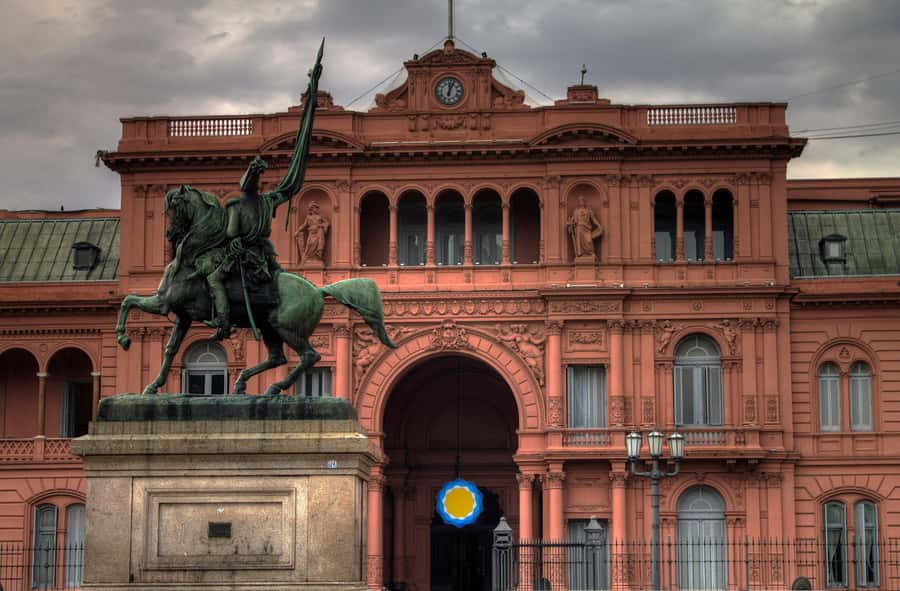
The final listed stop is Plaza Embajada de Israel, the memorial site of the former Israeli embassy. The tour connects this location with the worst terrorist attack in the history of Latin America, making the final section a shift from the postwar Nazi story to later antisemitic and political violence.
You will also hear about a neo-Nazi attack in the 1960s. Together, these events show that the subject did not end when war criminals left Europe or when Eichmann was captured. Ideologies and hatred continued to affect people in Argentina, with consequences that reached into the city’s public spaces.
Ending at a memorial site gives the walk a serious final note. It also makes the topic current without forcing a simple comparison between different crimes and periods. The point is continuity of memory and the danger of forgetting, not that every event was identical.
The activity information describes the walk as ending at this memorial site. A separate meeting-point note says the activity ends back at the meeting point, so I would confirm the exact finishing arrangement when you reserve. Either way, the advertised route covers central Buenos Aires rather than returning you to the original spot by default.
Is $25 a fair price?
At $25 per person, this is good value if you want a guided historical discussion rather than a quick city stroll. You receive an English-language guide for about two and a half hours, several carefully chosen locations, visual material, and access to a subject that is difficult to piece together on your own while sightseeing.
The value comes from the connections. Luna Park, ABC Restaurant, Palacio San Martin, the Italian Circle, and the Israeli embassy memorial would not automatically form a coherent story if you visited them separately. Max provides the link between them and explains why each place matters.
The price does not include entry to Casa Rosada, Libertad Synagogue, or Luna Park Stadium. Those exclusions are worth noting because the tour passes through an area with major buildings and institutions, but the experience is primarily an outdoor walking tour. You are paying for interpretation and route design, not a package of interior admissions.
Free cancellation up to 24 hours before the start and the option to reserve now and pay later make the booking less rigid. The experience is not suitable for wheelchair users, and children under 10 are not allowed. Anyone with limited walking stamina should also consider the duration and the central-city route.
Who should book this walk?
I would choose this tour if you like political history, World War II, Holocaust studies, intelligence stories, or the less polished chapters of national history. It is particularly useful if you want to understand Buenos Aires beyond its famous cafés, architecture, and tango venues.
The tour also suits people who appreciate a guide who welcomes questions. The strongest descriptions of Max focus on his clear English, careful preparation, engaging delivery, and willingness to distinguish facts from uncertain claims. That matters when the subject is contested and emotionally charged.
You should think twice if you want a light activity or a purely architectural walk. The material includes terrorism, Nazi crimes, antisemitism, and the Holocaust. It is also not the best fit for very young children, wheelchair users, or anyone hoping to remain indoors.
Practical advice before you go
Plan on two and a half hours, even though the included-tour description also refers to two hours. The longer estimate is the safer one, especially if the group asks questions.
Wear comfortable shoes and bring water. There is a ten-minute restroom pause, but you should not treat the walk as a series of long indoor visits. Some stops are about the outside setting and the history attached to it.
A basic World War II and Holocaust background will help you get more from the tour. You do not need to know every name, though. The guide is prepared to answer questions about Judaism, Nazism, the war, and Argentine politics.
Finally, keep your expectations clear. This is not a tour that gives you a single final answer to the question of whether Argentina served as a refuge for Nazi war criminals. It gives you places, evidence, political context, and competing interpretations so you can understand why the debate remains disputed.
Should you book it?
Book it if you want a serious, well-structured walk led by Max, with real Buenos Aires locations serving as the classroom. The high rating of 4.9 from 193 reviews fits the experience described here: strong preparation, clear storytelling, visual aids, and a balanced approach to difficult material.
Skip it if you want only a short account of Eichmann or a tour focused on Nazi escape routes. The wider discussion of Perón, Jewish Buenos Aires, government responsibility, and later attacks is central to the experience. For history-minded visitors who want to understand how Argentina’s past still shapes its public memory, $25 is a sensible price.
FAQ
How long does the tour last?
The activity is scheduled for 2.5 hours. The included-tour details also refer to a two-hour walking tour, so allow the full two and a half hours.
What language is the tour in?
The live guided tour is conducted in English.
Who leads the walking tour?
The guide is Max, a history teacher from the University of Buenos Aires.
Where does the tour begin?
It begins near the Monumento a Juana Azurduy, by the benches facing Palacio Libertad, formerly known as the CCK.
Where does the route finish?
The listed route finishes at Plaza Embajada de Israel, at the memorial site of the former Israeli embassy. The meeting information also says the activity ends back at the meeting point, so confirm the final arrangement when booking.
Is entry to Luna Park included?
No. Entry to Luna Park Stadium is not included.
Are other admissions included?
No. Entry to Casa Rosada, Libertad Synagogue, and Luna Park Stadium is not included.
Is the tour suitable for children or wheelchair users?
It is not suitable for children under 10 or wheelchair users. Comfortable shoes and water are recommended.
More Historical Tours in Buenos Aires
- San Telmo: Historical Guided Tour with Street Food & Drinks
★ 5.0 · 87 reviews - Buenos Aires: La Boca Art and History Walking Tour
★ 4.8 · 55 reviews - Recoleta Cemetery – Small Group Tour of History & Secrets
★ 5.0 · 53 reviews - Cartagena: Historic Center and Getsemaní Shared Walking Tour
★ 4.9 · 2,716 reviews
Just added around Buenos Aires
- Private Airport Transfer In or Out: Aeroparque (AEP)–Buenos Aires★ 5.0 · 73 reviews
- Sailing with Wine Tasting in Buenos Aires★ 5.0 · 50 reviews
- Traditional Argentine FoodTour with optional Michelin Experience★ 4.5 · 56 reviews
- Unique Tailored Tours – The Hummingbird Trip★ 5.0 · 69 reviews
- Experience The Essence of Buenos Aires in San Telmo★ 5.0 · 51 reviews
- Tigre Speedboat – The Delta s Captain – CITYSAILING TIGRE★ 5.0 · 75 reviews
- Tango Porteño Show with Optional Dinner in Buenos Aires★ 4.5 · 58 reviews
- La Ventana Tango Show & Dinner with Optional Classic Bus Ride★ 4.5 · 77 reviews
Historical Tours, compared.
Historic Center and Getsemaní Shared Walking Tour
Read our review →
Lima’s Vibrant Heritage: Exploring the City’s Landmarks Half-day
Read our review →
Lima: Historic Center Street Food, Market, and Eateries Tour
Read our review →
Scenic Train ride to historical cities of Morretes and Antonina
Read our review →Browse the lists this tour appears in