
Reviewed · HISTORICAL TOURS
Arequipa, Historic and Colonial City and Santa Catalina Monastery
Santa Catalina Monastery is the heart of this tour. Behind its thick walls, you walk through a small city of painted courtyards, narrow lanes, gardens, and former convent rooms. The visit gives Arequipa a human story, not just a pretty colonial façade. The monastery admission is included, which matters because it is the tour’s most costly and memorable stop.
I like the way the tour begins outside the center, with Carmen Alto and Yanahuara viewpoints before the walking portion starts. I also like having a vehicle connect these scattered sights, saving you a taxi ride and a good deal of uphill walking. The main caution is time: three and a half hours goes quickly, and a long monastery explanation can leave less room for the Cathedral or its tower.
A second consideration is the religious focus. The monastery, Cathedral, and Jesuit church make up a large part of the afternoon. If you enjoy architecture and church art, that is a strength. If religious sites are not your interest, the tour may feel weighted in one direction.
Key points to know before booking
- Carmen Alto opens the tour with volcano views: You look across farmland and terraces toward Misti, Chachani, and Pichu Pichu.
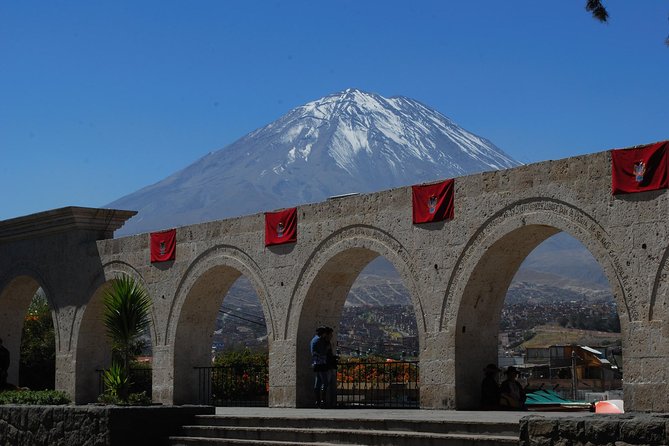
- Yanahuara shows off Arequipa’s sillar stone: The colonial district has an Andalusian-style church and a famous arcade viewpoint.
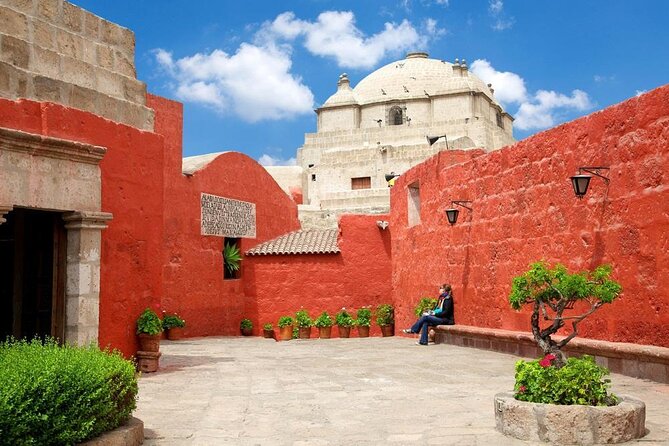
- Santa Catalina is the main event: Narrow streets, quiet plazas, gardens, and painted walls make the former convent feel like a town within the city.
- The vehicle saves valuable time: You cover outlying viewpoints and the historic center without arranging separate taxis.
- Included admission improves the $61 value: Santa Catalina admission is included, along with the air-conditioned vehicle, guide, and hotel transfers.
- The tour is limited to 15 people: That is small enough for questions, though the guide may still need to manage different languages.
Why Santa Catalina makes this Arequipa tour worthwhile
Arequipa is often called the White City because many of its historic buildings use sillar, a pale volcanic rock. The stone gives the center a clean, bright look, but the city is more than polished façades. Its setting beneath three volcanoes and its mix of Spanish, Andean, and religious traditions give the afternoon plenty to explain.
This tour works well because it links three parts of Arequipa that do not sit neatly in one short walk. You begin with views beyond the center, move through Yanahuara, then spend the latter part of the afternoon among the city’s main colonial buildings.
The price is $61 per person. That is not the cheapest way to see Arequipa, since you can reach many central sights on foot or by taxi. But the value improves when you count the private transport between viewpoints, hotel pickup and drop-off, a professional guide, and admission to Santa Catalina. For a first afternoon in town, it is a practical way to get oriented.
The experience usually lasts about three hours and 30 minutes, beginning at 2:00 pm. It is a small-group tour with a maximum of 15 people, although the exact feel can depend on the language needs of the group. Past departures have included English, Spanish, Portuguese, French, and German support, but language arrangements can vary.
More City Tours in Peru
- Arequipa: Walk through the Historic Center of the City
★ 4.9 · 87 reviews - Arequipa Walking Tour city center and drinks experience
★ 5.0 · 72 reviews - Cusco: Half-Day City Tour with Sacsayhuaman and Q’enco
★ 4.6 · 1,129 reviews
Carmen Alto gives you the broad Arequipa view

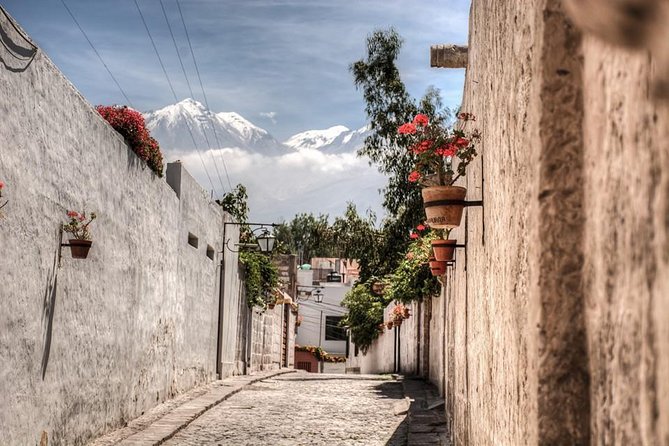
The tour begins at the Carmen Alto viewpoint, in the area where Arequipa’s city edges meet farmland. From here, you look across cultivated terraces toward Misti, Chachani, and Pichu Pichu. The three volcanoes act like natural markers, helping you understand Arequipa’s location before you begin examining its buildings.
This is a good first stop because it gives scale to the city. From street level, Arequipa’s center can feel like a compact group of churches and plazas. From Carmen Alto, you see how the urban area sits beside open land and beneath high volcanic peaks.
Bring your camera, but keep your expectations tied to the weather. February falls in the rainy season, and volcano views can be hidden by cloud. A sunny day gives you the best chance of seeing Misti clearly, though the tour still works if the mountains disappear.
The stop is mainly for views and explanation rather than a long walk. You get time for photographs, then return to the vehicle. That makes it easy on your legs, especially if you are still adjusting to Arequipa’s altitude.
Yanahuara pairs white stone with old-world design
Next comes Yanahuara, a colonial district known for its church and viewpoint. The architecture has an Andalusian influence, and the famous arches at El Mirador de Yanahuara frame the city and volcanoes in a distinctly Arequipeño way.
The sillar is the star here. This volcanic stone is not simply a building material. It shapes Arequipa’s visual identity, catching the light and giving churches, homes, and arcades their pale color. Your guide can help you notice how the stone appears in both grand religious buildings and ordinary historic homes.
The Yanahuara viewpoint is also useful for photography because the arches create a ready-made frame. The city view can change with the weather, so this stop and Carmen Alto complement each other. If clouds block one angle, the other may still offer something worthwhile.
One advantage of arriving by vehicle is that you do not have to spend your limited afternoon walking between the center and Yanahuara. A solo visitor could arrange this with taxis, but the tour removes that planning and keeps the route moving.
Santa Catalina feels like a town behind a wall
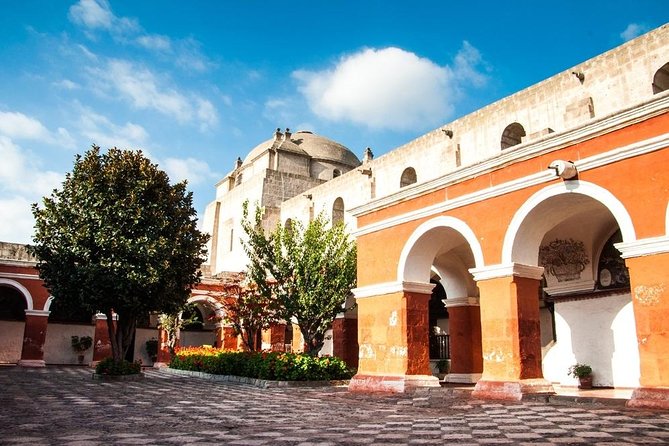
Santa Catalina Monastery is the tour’s main reason to book. The Dominican religious complex was closed to the public for nearly four centuries, and its interior feels separate from the streets outside. Once inside, you walk through plazas, narrow passageways, gardens, and colorful sections of the former nunnery.
The layout is easier to appreciate with a guide. This is not one single church room followed by a quick exit. It is a large complex with its own streets and courtyards, so the meaning of each section can blur if you only wander without context.
The painted walls and quiet spaces make the monastery visually different from the open Plaza de Armas. You move from Arequipa’s public face into a place built around religious life, privacy, and routine. The contrast is one of the best parts of the afternoon.
Expect a fair amount of walking inside the complex. The route uses narrow lanes and courtyards rather than broad, modern paths. Wear sensible shoes and allow yourself time to look around instead of rushing from room to room.
One practical issue is pacing. A detailed explanation can be fascinating, but some people may find the monastery portion repetitive after several similar courtyards. If you already have a strong interest in religious architecture, you may want to linger. If not, listen for the main story and save energy for the final stops.
Many departures use a separate guide inside Santa Catalina, sometimes in the group’s language. That can be helpful, since the monastery deserves more than a rushed introduction. It also means the overall experience may involve a change of guide or a translated explanation.
More Historical Tours in Peru
- Walking tour in the Historic Center of Arequipa
★ 4.4 · 180 reviews - Lima’s Vibrant Heritage: Exploring the City’s Landmarks Half-day
★ 4.5 · 581 reviews - Lima: Historic Center Street Food, Market, and Eateries Tour
★ 4.9 · 216 reviews - Historic Downtown, Miraflores & Catacombs Private Tour
★ 5.0 · 100 reviews
Plaza de Armas shows the city’s grand public face
After Santa Catalina, the tour heads to Arequipa’s Main Square, or Plaza de Armas. This is the city’s ceremonial center, framed by arcades and the Basilica Cathedral. The square offers a sharp contrast to the enclosed lanes of Santa Catalina.
Your guide explains the Cathedral’s place in Arequipa’s development and points out details that are easy to miss if you only stop for a photograph. The building dates from the 16th century, though the city’s churches and structures have faced the effects of earthquakes over time.
The timing deserves attention. One useful tower view closes at 4:00 pm, while the Cathedral is scheduled near the end of the tour, sometimes around 5:00 pm. If seeing Arequipa from the tower is important to you, ask the guide early if the order can be adjusted, or plan a separate visit.
This is one area where the tour’s fixed schedule can work against you. The vehicle makes the route efficient, but a late start at the Cathedral may limit what you can enter or see. You still get the plaza and the building’s exterior, but the exact interior access may depend on the day and timing.
The Jesuit church adds a surprising final detail
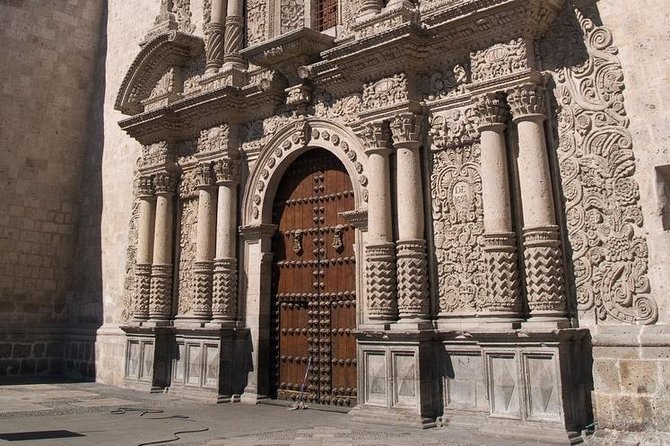
The last major stop is the Church of the Society of Jesus, also called Iglesia de la Compañía or Iglesia de los Jesuitas. Founded by the Jesuits in the 17th century, it is known for its cloisters and the San Ignacio Chapel.
The chapel’s decoration is especially unusual. Tropical birds and jungle-inspired designs bring a strong South American note to an otherwise Spanish colonial religious setting. It is the kind of detail a guide can make memorable, since it is easy to walk through a church while focusing only on the main altar.
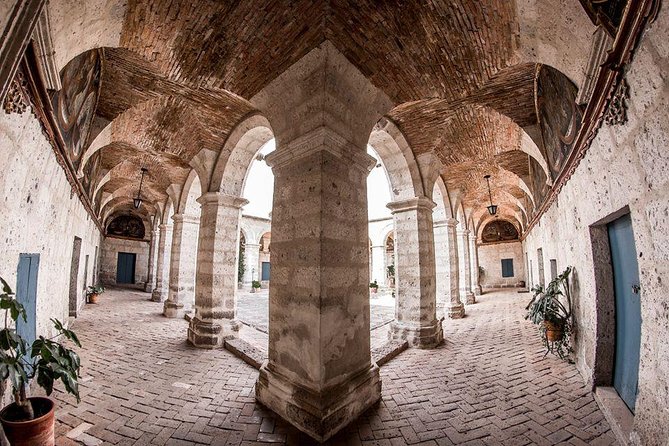
The cloisters offer a quieter architectural moment after the open square. Look for the carved stonework and the way the sillar construction carries through the religious complex. Admission has been included on departures, though access can always depend on local opening arrangements.
This stop is a good fit for anyone who likes art, architecture, and small visual surprises. It is less appealing if you have already had enough churches by this point. The afternoon gives you three religious sites, so your interests should guide your decision.
How the guide affects the experience
The guide is important here because the tour covers more than a list of buildings. Strong guides such as Charo, Jeymi, Sline, Kaitlin, and Victor have been praised for clear English, local insight, patience, and enthusiasm for Arequipa.
Good guiding is particularly useful at Santa Catalina and the Jesuit church. A short explanation can connect the rooms, symbols, and architecture, while a long one can slow the group. One departure involved a multilingual group, with the guide speaking three languages and checking that everyone understood. That is considerate, but it can also mean pauses and longer explanations.
If you need English, Portuguese, French, German, or Spanish, confirm the language when booking. The tour may accommodate several languages, but a multilingual group can affect the pace. One English-language departure was difficult for a participant to follow, while other guides were praised for very clear English.
The group limit of 15 people is useful. You have a better chance to ask questions than on a large bus tour, and the vehicle should feel less crowded. Still, the guide must keep the group together through narrow monastery lanes and busy central streets.
Is $61 a fair price for three and a half hours?
For a fully independent visitor, $61 is a significant price for an afternoon in Arequipa. The Plaza de Armas, Cathedral exterior, Yanahuara, and the historic center can be explored without a tour. Taxis to the viewpoints are also possible.
The calculation changes if you want one organized route and a proper visit to Santa Catalina. The price includes hotel pickup and drop-off, an air-conditioned vehicle, a professional guide, and admission to the monastery. That saves you time, reduces transport decisions, and brings historical context to the places you see.
I would judge the tour by your schedule. If you have only one afternoon in Arequipa, it gives you a useful first look. If you have several days and enjoy wandering slowly, you may prefer to visit the center yourself and spend longer at fewer sites.
The tour also has practical value for solo visitors. Getting to Yanahuara without arranging a taxi is convenient, and the small group gives you company without the scale of a large coach excursion.
What to wear and how to prepare
Religious sites do not allow shorts. Wear long trousers or a long skirt, and choose comfortable shoes for the monastery’s lanes and courtyards.
The tour starts at 2:00 pm and includes hotel pickup in Arequipa. Confirm your pickup details carefully, especially if you are staying in a private home rather than a hotel. One serious problem involved a missed pickup after a date mix-up, so do not wait silently if the vehicle is late. Contact the local operator promptly.
Plan for changing weather around the viewpoints. February can bring rain and cloud, which may hide the volcanoes. You can still enjoy the architecture and monastery, but clear mountain views are never guaranteed.
Free cancellation is available when you cancel at least 24 hours before the local start time. Cancellations or changes inside that period are not refunded.
Who should book this Arequipa city tour?
I would recommend it to a first-time visitor who wants to see the main sights in one afternoon. It is especially useful if you value transport, want a guide to explain the city, or consider Santa Catalina a priority.
It also suits visitors who enjoy colonial architecture and religious art. The Cathedral, Jesuit church, monastery, and two viewpoints make a full program, with little empty time.
I would hesitate if you dislike churches or prefer a slow, self-guided day. Roughly two-thirds of the experience may feel tied to religious buildings, depending on how long the explanations run. The monastery itself can also feel lengthy if you prefer quick visits.
Book it if you want an efficient introduction to Arequipa and the admission-inclusive convenience. Skip it if you have several days, prefer independent exploration, or want to spend more time on volcano views than on colonial religious sites.
FAQ
How long is the Arequipa city tour?
The tour lasts approximately three hours and 30 minutes.
What time does the tour begin?
The stated start time is 2:00 pm.
Does the tour include hotel pickup and drop-off?
Yes. Hotel pickup and drop-off in Arequipa are included.
Is transportation provided during the tour?
Yes. You travel in an air-conditioned vehicle between the main stops.
Is admission to Santa Catalina Monastery included?
Yes. Admission to Monastery of Saint Catherine is included.
What places does the tour visit?
The route includes Carmen Alto, Yanahuara and its viewpoint, Santa Catalina Monastery, Plaza de Armas, the Basilica Cathedral of Arequipa, and the Church of the Society of Jesus.
Are food and drinks included?
No. Food and drinks are not included.
Can I wear shorts at the religious sites?
No. Shorts are not allowed at the religious places. Wear long pants or a long skirt.
How many people can join the tour?
The maximum group size is 15 people.
What happens if I cancel?
You can receive a full refund if you cancel at least 24 hours before the local start time. Cancellations or changes made less than 24 hours before the start are not refunded.
More City Tours in Arequipa
- Bogota: Bicycle City Tour
★ 4.9 · 2,156 reviews - Buenos Aires: City Highlights Guided Tour with Transfer
★ 4.7 · 1,946 reviews - Buenos Aires: Hop-On Hop-Off City Bus Tour
★ 4.2 · 1,855 reviews - Bogotá: Private City Tour, Monserrate, Emerald and Botero
★ 4.9 · 798 reviews
More Historical Tours in Arequipa
- Cartagena: Historic Center and Getsemaní Shared Walking Tour
★ 4.9 · 2,716 reviews - Santiago: Guided Walking Tour of the Historical Old Town
★ 4.8 · 459 reviews - Maria Fumaça – Wines and History
★ 4.0 · 242 reviews - Rio de Janeiro: Historic Rio and Santa Teresa Half-Day Tour
★ 4.4 · 228 reviews
Just added around Arequipa
- Turist Bus Colca Canyon (Chivay) To Puno★ 5.0 · 83 reviews
- 3-Day Colca Canyon trek with Professional Guide★ 5.0 · 40 reviews
- Trekking, Waterfalls and Thermal Baths★ 4.5 · 47 reviews
- Salinas National Reserve PRIVATE TOUR★ 5.0 · 81 reviews
- Sillar Route in Arequipa and viewpoint of the Volcanoes★ 4.0 · 71 reviews
- Sillar Route and Culebrillas Petroglyphs★ 4.5 · 89 reviews
- Colca Full Day★ 5.0 · 57 reviews
- Private 3 Day Colca Canyon Trekking tour (superior Service)★ 5.0 · 58 reviews
Historical Tours, compared.
Historic Center and Getsemaní Shared Walking Tour
Read our review →
Lima’s Vibrant Heritage: Exploring the City’s Landmarks Half-day
Read our review →


Lima: Historic Center Street Food, Market, and Eateries Tour
Read our review →
Nazis in Buenos Aires: a historical walking tour
Read our review →
Browse the lists this tour appears in