
Reviewed · HISTORICAL TOURS
Arequipa: Walk through the Historic Center of the City
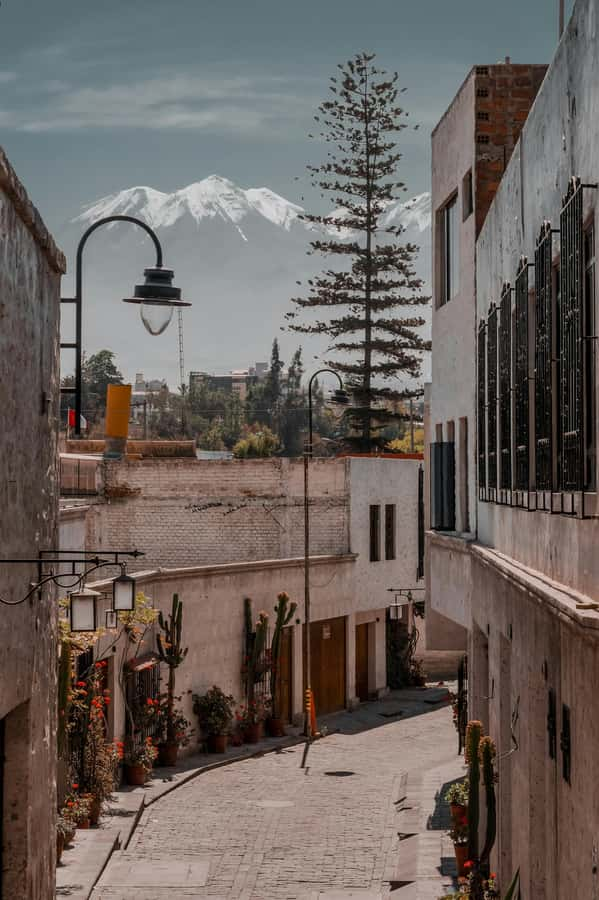
Arequipa’s best introduction may be found on foot, moving from the grand Cathedral and colonial cloisters into old tambos, cobbled lanes, and less obvious corners of the White City. The final stop is a lookout with views toward Misti, Chachani, and Pichu Pichu, giving the walk a fine finish.
I like the small groups of no more than six and the local guides, especially Joss, Jose, and Joseph, who explain architecture, geography, customs, and daily life rather than simply naming buildings. I also like the practical advice, from restaurants and bars to things worth doing elsewhere in Peru. The main drawback is that one visitor found the price high for the amount of commentary and felt some stretches involved too much walking without enough information.
Key points to know before booking
- The route begins at Campo Redondo in San Lázaro, a useful starting point for exploring the historic center.
- Five historical sites are included, with the Cathedral, colonial cloisters, and tambos forming the main cultural stops.
- The group is limited to six people, and smaller bookings may become private tours.
- The ending viewpoint is a real highlight, with views toward Arequipa’s surrounding volcanoes and, in some cases, a rooftop drink at sunset.
- English and Spanish guides are available, with Joss, Jose, and Joseph named in recent tour experiences.
- The tour suits first-time visitors, thanks to its city tips, restaurant suggestions, legends, and orientation to Arequipa.
Starting at Campo Redondo in San Lázaro
The walk begins at Campo Redondo San Lázaro, at coordinates -16.3934138, -71.5336117. This matters because you are not being collected at your hotel. You need to make your own way to the meeting point and arrive ready to walk.
San Lázaro is a fitting place to begin. The experience is designed to show you Arequipa from street level, not through a bus window. From the start, you can expect a local guide to set the city in context and point out details that are easy to miss when you explore alone.
The group limit is six people. That is a strong feature for a walking tour. You can usually hear the guide without straining, ask questions, and stop for photographs without holding up a large crowd. Several small bookings have turned into private tours when other participants cancelled. That is not guaranteed, but it can give the experience a more personal feel.
The guides named in the tour experiences include Joss, Jose, and Joseph. Their strengths are not limited to dates and building names. They explain Arequipa’s architecture, geography, cultural influences, local customs, and places to eat and drink. If you want an introduction that feels like a conversation with a local rather than a lecture, this format should suit you.
More City Tours in Peru
- Arequipa Walking Tour city center and drinks experience
★ 5.0 · 72 reviews - Arequipa, Historic and Colonial City and Santa Catalina Monastery
★ 4.5 · 42 reviews - Cusco: Half-Day City Tour with Sacsayhuaman and Q’enco
★ 4.6 · 1,129 reviews
The Cathedral and Arequipa’s grand center
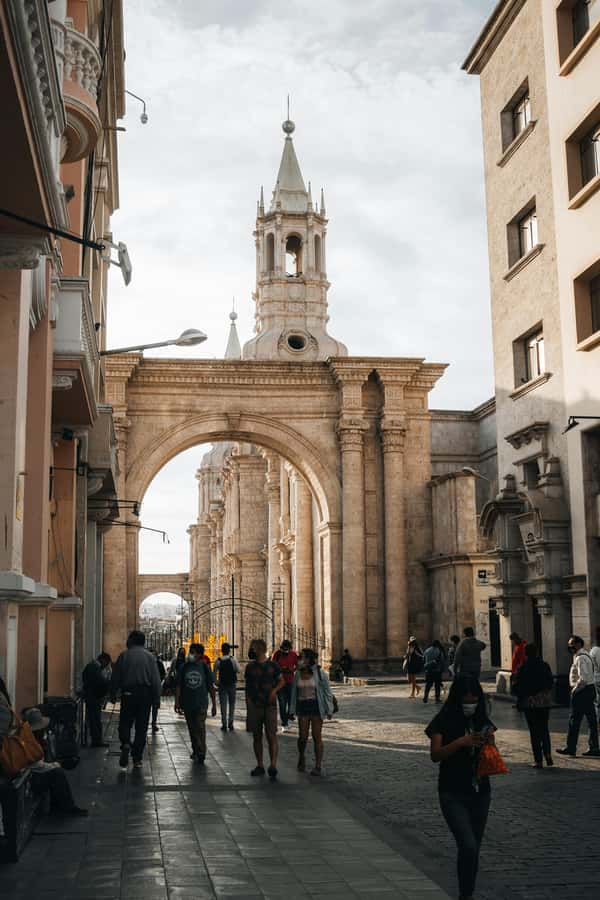
The first major stop is the Cathedral, one of Arequipa’s most recognizable buildings. It gives the tour a clear starting point because it introduces the scale and style of the historic center before the route moves into smaller and more intimate places.
You will learn about the building and its place in the city, though the information supplied for this experience does not promise a full guided interior visit. One person later took a separate Cathedral tour on the guide’s recommendation. If the church is a major priority for you, ask the guide what is included on the day and whether a separate visit makes sense.
The Cathedral is also useful for orientation. It helps you understand how Arequipa’s main civic and religious spaces fit together. The guide can connect what you see here with the city’s wider story, including its Spanish colonial influence and the local materials that give central Arequipa its pale appearance.
This is one point where the quality of the guide matters. The strongest accounts describe explanations that move beyond basic facts into architecture, geography, and cultural change. One critical assessment felt that more detail could have been offered about some streets and buildings passed along the way. That is worth keeping in mind: the tour is shaped by the guide’s storytelling, and the amount of commentary may vary from one section to another.
Colonial cloisters and the details between buildings
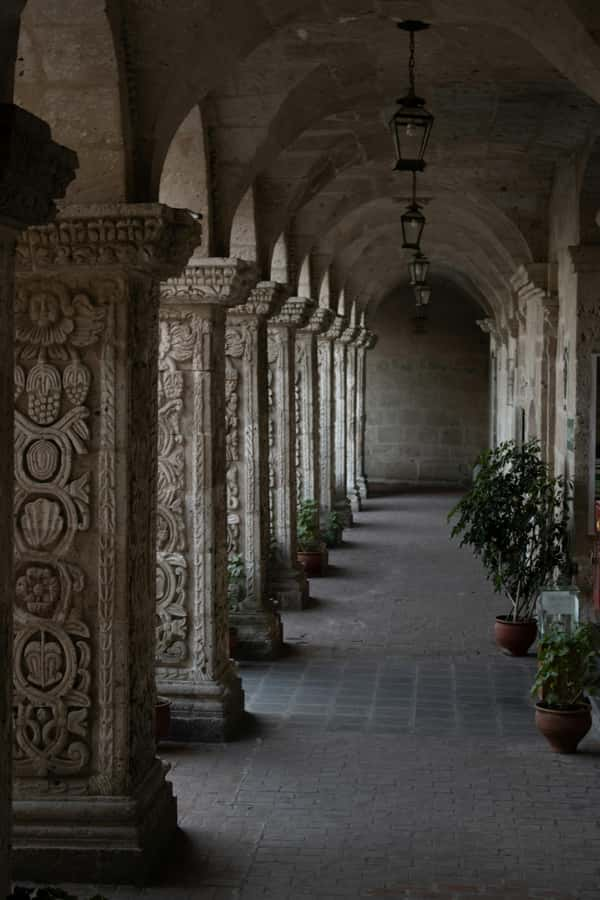
The route continues through colonial cloisters. These spaces are valuable because they slow the tour down. Instead of only seeing Arequipa’s most famous facades, you get a look at courtyards, arches, passageways, and the design choices that shaped daily life in the colonial city.
Your guide explains the history behind these places and points out architectural details. The cloisters also provide a change of pace from the open streets. Their enclosed courtyards can make the city feel quieter and more reflective, even though the main center is close by.
I like this part of the route because it adds texture to the Cathedral visit. Big monuments tell you how a city wanted to be seen. Cloisters reveal something about how people lived, worked, prayed, and moved through the city. You are not simply checking off another historic building.
The route includes five historical sites in total, but the exact names and order of every stop are not specified. That gives the guide some freedom to respond to the group and the day. It also means you should not expect a fixed museum-style itinerary with every minute mapped out.
Tambos, old lodgings, and local life
One of the more distinctive stops is at the tambos, old lodgings that have played a part in Arequipa’s life for centuries. These are more revealing than a standard monument because they connect the historic center with movement, trade, and ordinary accommodation.
The tambos help explain how people used the city, not just how its grand buildings looked. Your guide shares the story behind these places and puts them into the wider development of Arequipa.
This is the sort of stop I value on a city walk. A famous church is easy to find. Ancient lodging places are less obvious, and their importance can be missed if you wander without local help. The experience promises hidden corners, curious facts, and local stories, and the tambos are a good example of that promise.
Still, the route is not a museum visit with a large collection and detailed labels. The information comes through the guide. If you want long periods inside formal attractions, this may feel too light. If you prefer a walk that links buildings, streets, traditions, and daily life, the tambos add something unusual.
More Historical Tours in Peru
- Walking tour in the Historic Center of Arequipa
★ 4.4 · 180 reviews - Lima’s Vibrant Heritage: Exploring the City’s Landmarks Half-day
★ 4.5 · 581 reviews - Lima: Historic Center Street Food, Market, and Eateries Tour
★ 4.9 · 216 reviews - Historic Downtown, Miraflores & Catacombs Private Tour
★ 5.0 · 100 reviews
Cobblestone streets, legends, and small discoveries
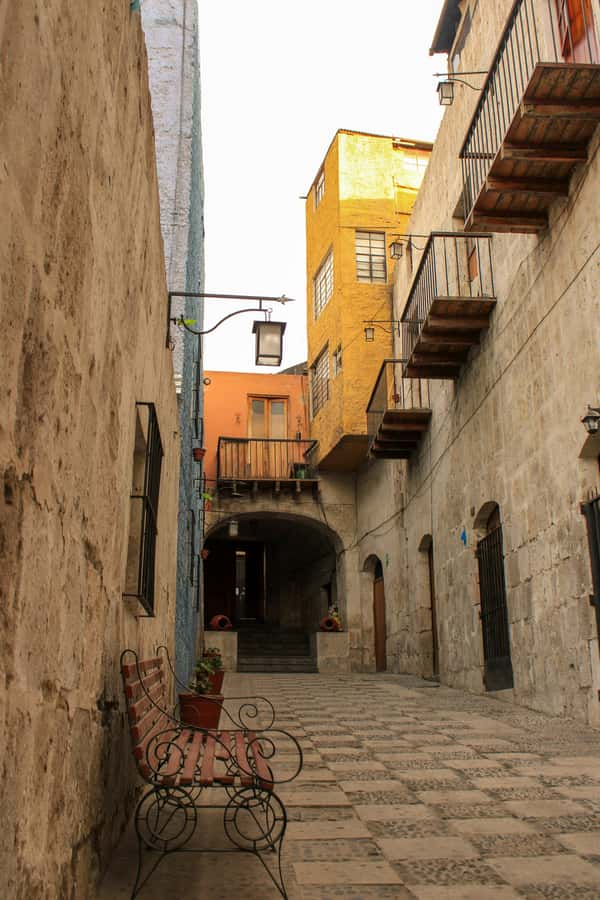
Between the main stops, you walk along picturesque cobblestone streets. The guide fills these stretches with traditions, legends, and curious facts passed down through generations.
This is also where the experience can be at its strongest or weakest. A good local guide can turn an ordinary-looking lane into a story about Arequipa’s character. Several guides connected the city’s architecture with its geography and cultural influences, which gives the walk more range than a simple list of dates.
On the other hand, the tour includes a fair amount of walking time. One person felt that some of those stretches lacked enough explanation. If you need continuous commentary, say so politely and ask questions. The small group makes that easier.
Wear comfortable shoes. The route takes place on foot and includes cobblestone streets. The stated duration is two hours, while the walking portion is also described as approximately one and a half hours. The difference likely allows time for stops, questions, and movement between sites, but you should plan on giving the experience a full two hours.
Local recommendations that continue after the walk
The tour includes recommendations in Arequipa and tips for traveling in Peru. This can be one of the most useful parts, especially if you book early in your stay.
Joss has provided restaurant, bar, and activity suggestions, and one person received help through WhatsApp after the tour. That kind of follow-up is not listed as a guaranteed service, so do not book on the assumption that you will receive personal assistance afterward. Still, the experience clearly aims to give you more than a sightseeing route.
Ask about the places you actually need. You might want a restaurant for a quiet dinner, a bar with a view, a market, or an activity for the next day. The more specific your questions, the more useful the local advice is likely to be.
One person visited San Camilo Market with Joss during a private version of the tour. The standard description does not promise the market as a regular stop, so treat it as an example of how the route may adapt rather than as a fixed inclusion.
The final lookout and volcano views
The tour ends at a viewpoint with a broad view of the volcanoes around Arequipa. Misti, Chachani, and Pichu Pichu are named as the main landmarks.
This ending gives the walk a satisfying shape. You begin among historic buildings, learn how the city developed, and finish by seeing the natural features that frame it. Arequipa makes more sense when you connect its streets and buildings with the peaks around it.
The exact viewpoint is not named in the tour details. Several experiences ended on a rooftop or terrace with a sunset view, and some included pisco sours at a bar. The official description promises a beautiful viewpoint, but it does not promise a drink, a rooftop, or a specific sunset time. Consider those pleasant possibilities, not fixed parts of the booking.
Morning and afternoon departures are available. The afternoon option may work well if the final view is your priority, but the light and weather can affect what you see. The morning may suit you better if you want to use the rest of the day for museums, markets, or another activity.
Is $15 a fair price?
At $15 per person, this is inexpensive for a two-hour guided introduction, particularly with a group cap of six. You are paying for access to a local guide, five historical sites, stories and legends, practical recommendations, and cultural exchange.
The value is strongest if you use the tour as a first look at Arequipa. You can learn where the main center is, identify places to return to, and ask about food and activities before making the rest of your plans.
The price looks less attractive if you expect admission to several major attractions, a long interior tour of the Cathedral, or nonstop detailed commentary from start to finish. The experience is primarily a guided walking route. Some of its value comes from the guide’s local knowledge and the less obvious places along the way.
The 4.9 rating from 87 reviews indicates very strong satisfaction, but I would still read the format carefully. This is not a large sightseeing production. It is a small, flexible walk whose quality depends heavily on the individual guide and the questions you bring.
Who will enjoy this Arequipa walk?
I would recommend it to first-time visitors who want to get their bearings quickly. The mix of major buildings, lesser-known corners, local stories, and restaurant advice gives you a useful base for the rest of your stay.
It also suits people who prefer a small group. A maximum of six is far more manageable than a crowd, and the possibility of a private tour can be a pleasant surprise when bookings are light.
Culture-focused visitors should appreciate the combination of architecture, traditions, legends, and tambos. People interested in photography will enjoy the cobbled streets, cloisters, rooftop views, and volcanoes, although the route is not presented as a specialist photo tour.
You may want something else if you dislike walking, want a highly detailed lecture at every building, or need a fixed itinerary with every stop named in advance. The one negative assessment points to the main risk: there may be sections where you walk more than you listen.
The tour is offered in English and Spanish. Some content may be presented in its original language, so ask about language arrangements when booking if that matters to you.
Booking flexibility and practical details
You can cancel up to 24 hours in advance for a full refund. The reserve now and pay later option lets you hold a place without paying at once, which is useful when your Peru plans are still shifting.
The meeting point is Campo Redondo San Lázaro, not a general hotel pickup. Check the coordinates before setting out and allow enough time to arrive.
The activity provider is Huallata Experiences. The tour is listed at $15 per person, lasts two hours, and offers morning and afternoon starting times, subject to availability.
Should you book it?
Book this walk if you want a friendly, local introduction to Arequipa that combines famous buildings with tambos, cloisters, stories, and a volcano view. The small group size, strong guide feedback, and practical recommendations make it especially useful at the beginning of a visit.
I would not book it expecting a full museum program or minute-by-minute commentary. If you are happy to walk, ask questions, and let the guide shape some of the route, $15 is a good value. For the best chance of a memorable ending, choose an afternoon departure and confirm what viewpoint is planned.
FAQ
How long does the Arequipa walking tour last?
The listed duration is two hours. The walking portion is described as approximately one and a half hours, with the remaining time likely used for stops, explanations, and questions.
How much does the tour cost?
The price is $15 per person.
Where does the tour meet?
The meeting point is Campo Redondo San Lázaro in Arequipa. The listed coordinates are -16.3934138, -71.5336117.
What languages are available?
The tour is available with a live guide in English or Spanish. Some content may be presented in its original language.
How large is the group?
The group is limited to six participants. If only one booking or a very small number of people remains, the tour may operate as a private experience.
What places are included?
The walk includes five historical sites, including the Cathedral, colonial cloisters, and tambos. It also includes cobblestone streets, local stories, legends, and a final viewpoint.
Does the tour include a view of the volcanoes?
Yes. The tour ends at a viewpoint with views toward Misti, Chachani, and Pichu Pichu.
Can I cancel the booking?
Yes. You can cancel up to 24 hours before the activity for a full refund. A reserve now and pay later option is also available.
More Historical Tours in Arequipa
- Cartagena: Historic Center and Getsemaní Shared Walking Tour
★ 4.9 · 2,716 reviews - Santiago: Guided Walking Tour of the Historical Old Town
★ 4.8 · 459 reviews - Maria Fumaça – Wines and History
★ 4.0 · 242 reviews - Rio de Janeiro: Historic Rio and Santa Teresa Half-Day Tour
★ 4.4 · 228 reviews
More Walking Tours in Peru
- Lima: Miraflores Trending Flavors Half-Day Walking Tour
★ 4.9 · 98 reviews - Cusco: Historic Walking Tour with Pisco Sour and Music Show
★ 4.6 · 65 reviews - Lima Private Walking Tour
★ 5.0 · 65 reviews - Trending Flavors: Miraflores Walking Tour Including Food and Drinks Tasting
★ 5.0 · 63 reviews
Just added around Arequipa
- Turist Bus Colca Canyon (Chivay) To Puno★ 5.0 · 83 reviews
- 3-Day Colca Canyon trek with Professional Guide★ 5.0 · 40 reviews
- Trekking, Waterfalls and Thermal Baths★ 4.5 · 47 reviews
- Salinas National Reserve PRIVATE TOUR★ 5.0 · 81 reviews
- Sillar Route in Arequipa and viewpoint of the Volcanoes★ 4.0 · 71 reviews
- Sillar Route and Culebrillas Petroglyphs★ 4.5 · 89 reviews
- Full Day Tour / Colca Canyon★ 4.0 · 70 reviews
- Colca Full Day★ 5.0 · 57 reviews
Historical Tours, compared.
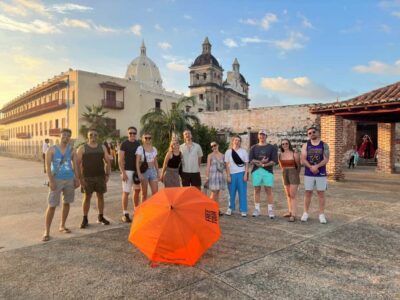
Historic Center and Getsemaní Shared Walking Tour
Read our review →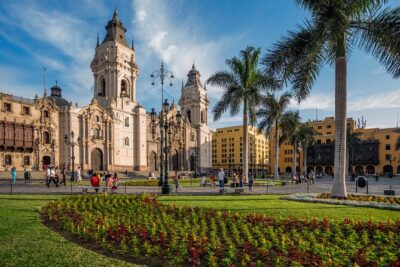
Lima’s Vibrant Heritage: Exploring the City’s Landmarks Half-day
Read our review →


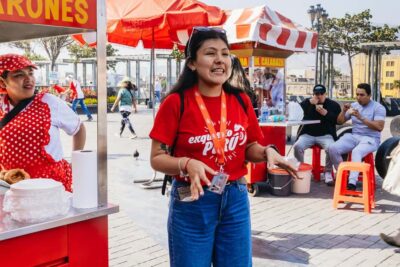
Lima: Historic Center Street Food, Market, and Eateries Tour
Read our review →
Nazis in Buenos Aires: a historical walking tour
Read our review →
Browse the lists this tour appears in