
Reviewed · CITY TOURS
Buenos Aires: Hop-On Hop-Off City Bus Tour
Buenos Aires is too spread out for a quick walking tour, and this bus gives you a useful first look at the city’s many faces. In one long circuit, you move from Congress and San Telmo to La Boca, Puerto Madero, Palermo, Belgrano, Recoleta, and the River Plate stadium. The full loop takes about three hours, so you can either ride it as a city overview or use it to reach selected sights.
I like the clear multilingual commentary, which includes English, Spanish, Portuguese, Japanese, Chinese, Russian, Italian, French, German, Ukrainian, and Korean. I also like the 25-minute service and the chance to sit upstairs in the open air while the city rolls by. The main drawback is timing: traffic can stretch the wait beyond 25 minutes, and the route is so long that getting off at every interesting stop is impossible in a single day.
Key points to know before you board
- A three-hour city loop: Stay aboard for a broad introduction to Buenos Aires, but plan carefully if you want several stops.
- Three ticket lengths: Choose 24, 48, or 72 hours, with the clock starting when you first board.
- The route covers major barrios: You pass La Boca, San Telmo, Puerto Madero, Palermo, Belgrano, Recoleta, and Chinatown.
- Good football access: Stops connect with La Bombonera and the River Plate stadium, though service changes on match days.
- Open-top seating with air conditioning: Upstairs gives you the best views, while the enclosed section offers relief from sun and heat.
- Useful but imperfect timing: Buses are planned every 25 minutes, but traffic and boarding can cause longer waits.
What this Buenos Aires bus tour is really good for
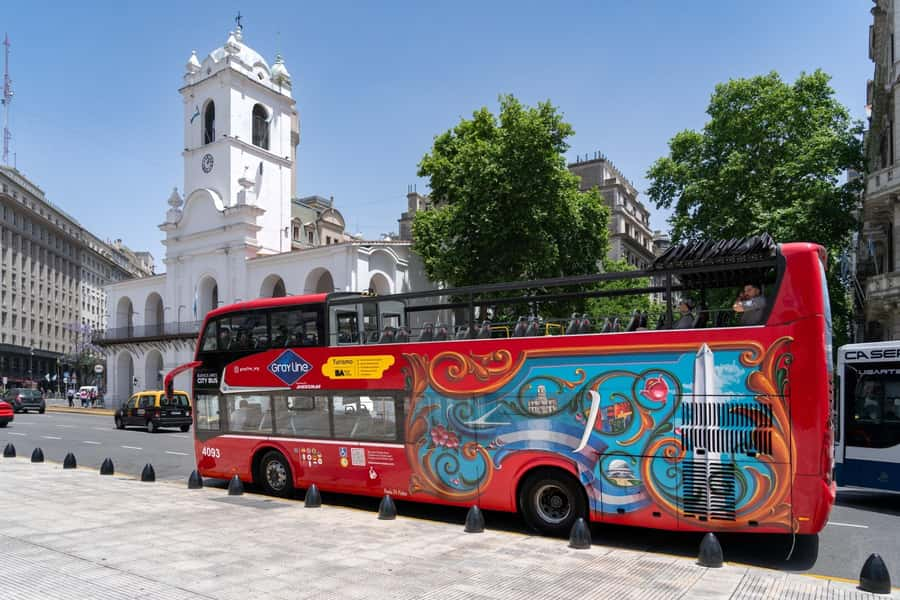
I see this as a city orientation tour first and transport service second. Buenos Aires is a large capital with districts that feel quite different from one another. A walk through San Telmo will not tell you much about Palermo, and a visit to La Boca will not prepare you for Recoleta or Belgrano.
The bus connects those areas without asking you to work out several unfamiliar routes. You can listen to the audio guide, look out over the tree-lined streets, and decide which neighborhoods deserve more time on foot. That makes the first day of a Buenos Aires visit easier.
The ticket costs about $35 per person. The value depends on how you use it. For one full loop with no stops, it is mainly a sightseeing ride. For 48 hours, it becomes more useful because you can break the city into sections and use the bus to link several attractions. The 72-hour option makes the most sense if you prefer a slow pace or want to return to favorite areas.
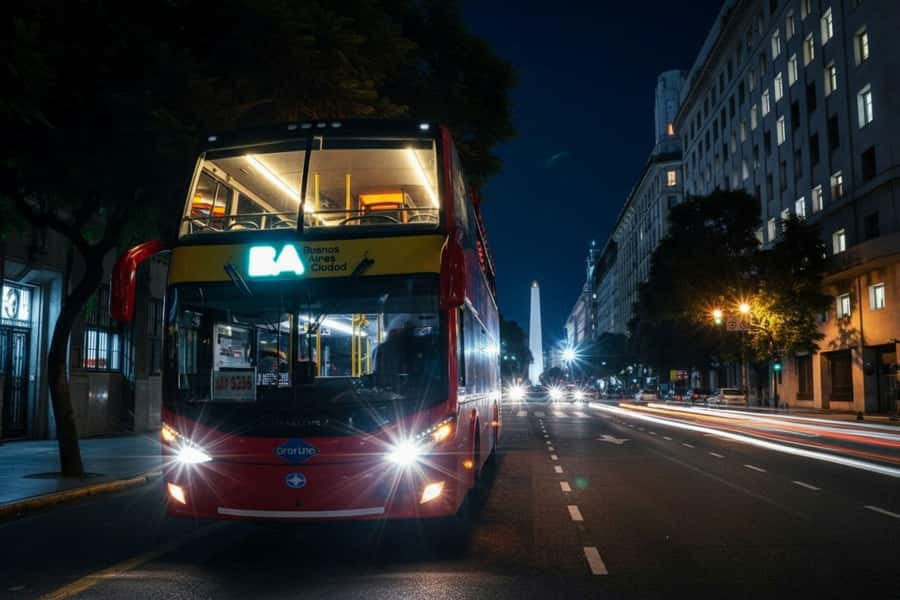
The service runs daily from about 9:30 a.m. to 6 p.m. The first buses begin around 9:20 a.m. from the two main starting points, and the final buses leave around 5:30 p.m. Those last departures only complete about half the route, so do not board late in the afternoon expecting a full circuit.
More City Tours in Buenos Aires
- Buenos Aires: City Highlights Guided Tour with Transfer
★ 4.7 · 1,946 reviews - Best of Buenos Aires: Guided Sightseeing City Tour
★ 4.0 · 402 reviews - Buenos Aires Private City Tour with Local Guide
★ 5.0 · 308 reviews
Starting at Diagonal Norte or Plaza San Martín
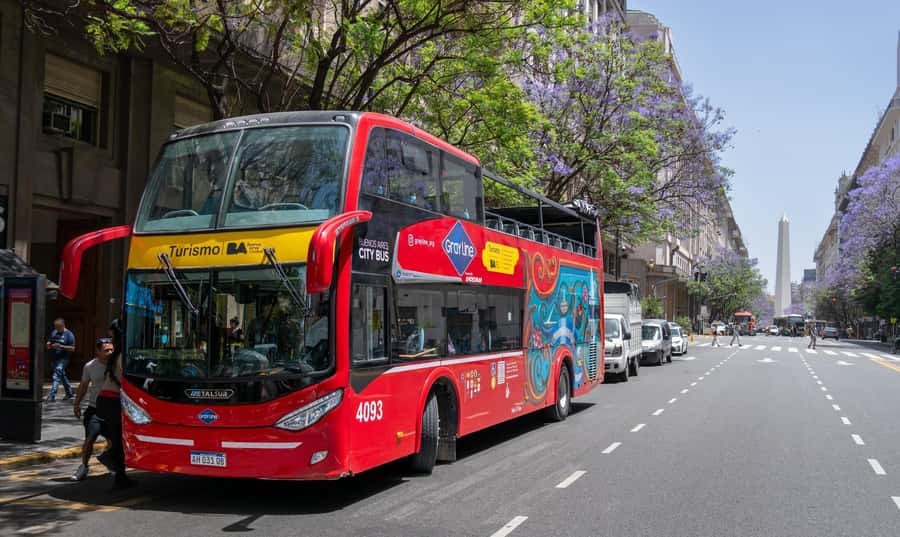
You can begin at any stop, but the two main starting points are Diagonal Norte, at Avenida Presidente Roque Sáenz Peña 728, and the operator’s office at Plaza San Martín, Avenida Santa Fe 808.
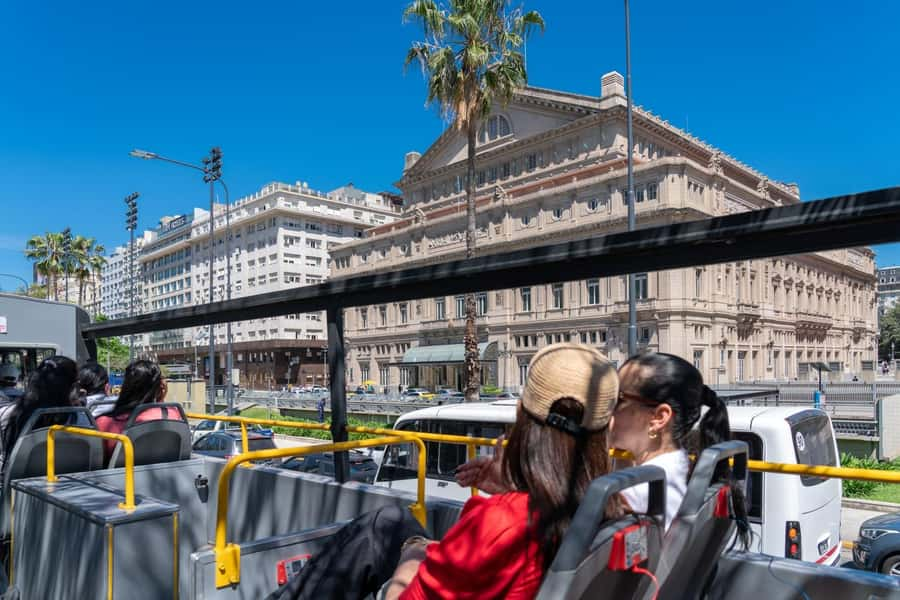
Starting in the center is handy if you are already near Congress, the central shopping streets, or Teatro Colón. Plaza San Martín is another practical choice, especially if you are near Retiro or the northern central districts.
You do not need to begin at the stop shown during booking. The bus ticket can be activated at any stop on the first reserved day, and the 24, 48, or 72-hour period begins with your first boarding. The ticket can also be started within six months of purchase, according to the operating terms.
The buses have WiFi onboard and at the stops, though I would not depend on it for navigation. The onboard network has been unreliable at times, and the real-time map can be difficult to locate or follow. Downloading your own map before setting out is sensible.
Congress, San Telmo, and the southern neighborhoods
The first part of the route introduces central Buenos Aires and the older southern districts.
You pass the Palace of the Argentine National Congress, an imposing landmark that helps explain the city’s grand civic style. Since the bus passes rather than stops directly at every attraction, you will need to decide if a nearby stop works for your walking plans.
The route continues toward El Loco Chávez and the Paseo de la Historieta, where Argentine cartoon characters appear as public art. It is a lighter, more local sort of sight than the big monuments and gives the ride some personality.
Plaza Dorrego places you near San Telmo, one of the best areas for wandering after you leave the bus. The square is linked with the neighborhood’s old streets and traditional atmosphere. San Telmo is worth more than a quick photograph, so I would use this stop as part of a walking visit rather than simply viewing it through the upper deck.
Next comes Usina del Arte, a cultural center in a converted power station in the La Boca area. The stop connects the tour with a less obvious part of the southern city, where industrial architecture and cultural spaces replace the grand avenues of central Buenos Aires.
La Boca, Caminito, and football at La Bombonera
The stop for La Bombonera, home of Boca Juniors, is one of the route’s strongest features for football fans. The Boca Museum can be reached from this stop, according to the tour information, so you can combine the bus with a stadium-related visit.
The nearby Caminito area is famous for its brightly painted buildings and strong connection with tango and working-class port culture. It is one of the places where I would definitely get off. The colorful streets are more interesting at street level than from a moving bus, and the area gives you a sharper sense of Buenos Aires than another pass by a monument.
Use normal city awareness with your belongings here and keep your visit focused on the marked tourist area. The bus makes it easy to continue afterward without arranging another long cross-city journey.
A key football warning: on days when Boca Juniors or River Plate play at their stadiums, the tour does not operate. Check the football schedule before committing your sightseeing day. You can also reach the River Museum from the Monumental stop later in the route.
More Hop-On Hop-Off Tours in Buenos Aires:
- Buenos Aires Hop-On Hop-Off Bus, Free Walking Tours & Discounts
★ 4.5 · 2,218 reviews - Buenos Aires Hop-On Hop-Off Bus and Exclusive Benefits
★ 4.4 · 1,714 reviews - Buenos Aires: Hop-On Hop-Off Bus and Football Museums
★ 4.3 · 39 reviews - Cartagena: City Sightseeing Hop-On Hop-Off Bus Tour & Extras
★ 3.9 · 681 reviews
Puerto Madero and the Costanera Sur
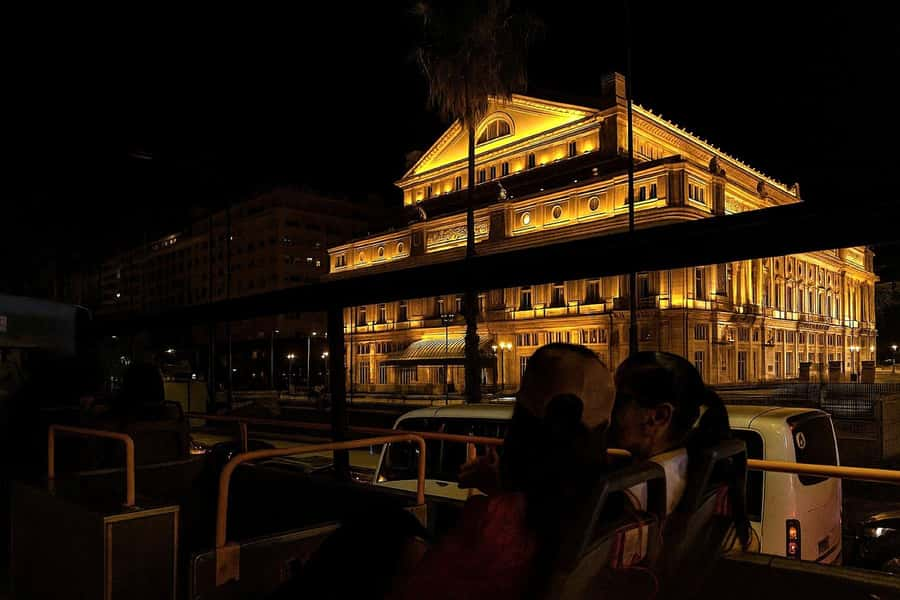
After the southern neighborhoods, the bus reaches Costanera Sur and Puerto Madero. These areas show a more recent side of Buenos Aires.
Puerto Madero is known for its renovated waterfront setting, modern buildings, and broad promenades. It feels very different from San Telmo and La Boca, which is exactly why the bus route is useful. In a few hours, you see how the city shifts from colonial-era streets and port districts to newer development.
The Costanera Sur stop connects with open public space beside the river. If you are tired of buildings and traffic, this is a reasonable place to pause. The bus also passes the tourist circuit and river station area, giving you another connection point for activities near the waterfront.
The commentary continues while you ride, and local music plays between portions of the audio in some buses. That small touch keeps the long circuit from feeling like one uninterrupted lecture.
Galerías Pacífico, Plaza San Martín, and central Buenos Aires
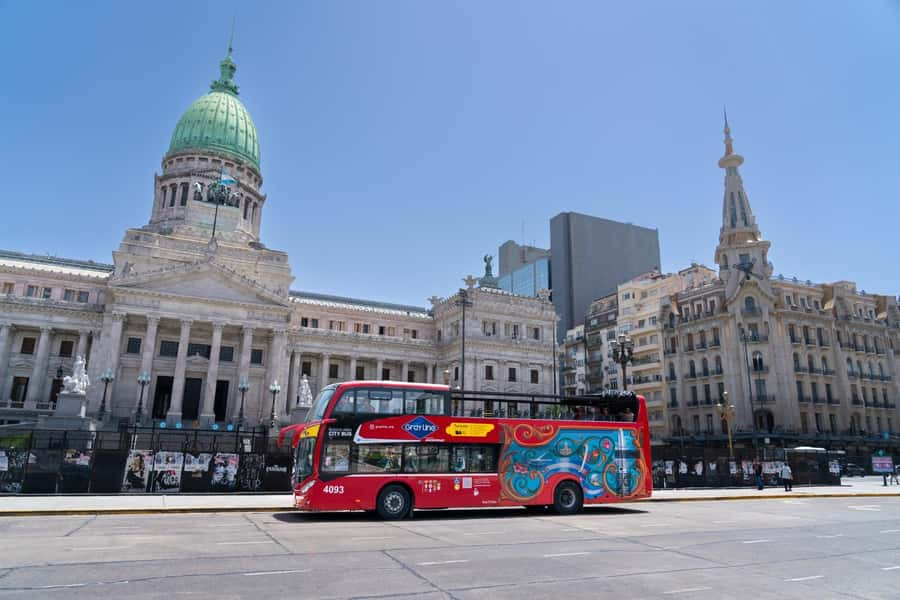
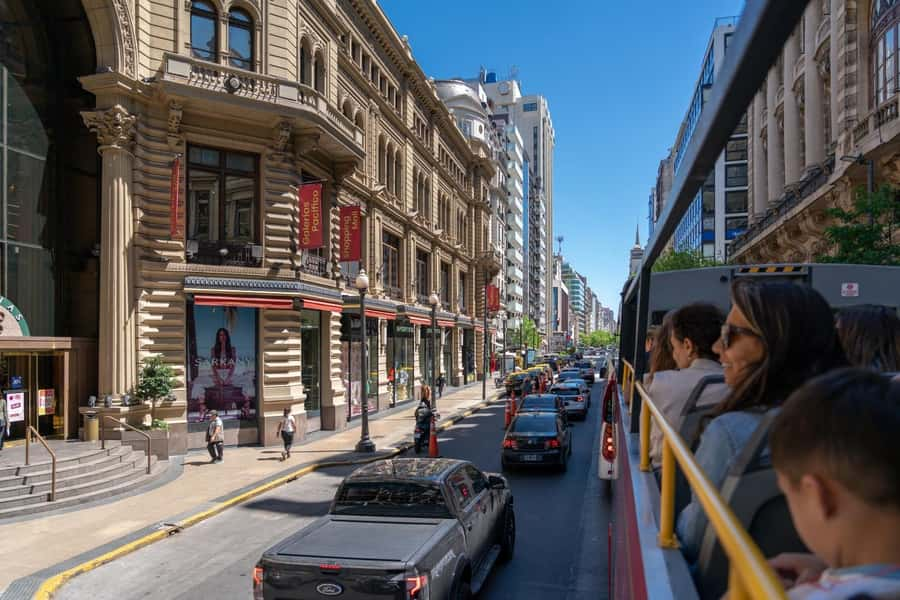
The route then comes back toward the central and northern core, passing Galerías Pacífico and Plaza General San Martín.
Galerías Pacífico is a useful stop for anyone interested in architecture, shopping, or a break indoors. Plaza San Martín provides a calmer green space near the center and serves as one of the main bus offices and starting points.
This section works well as a practical connection between the southern and northern parts of the city. If you are staying near the central area, you can ride out to La Boca or Palermo and return without learning a new bus system.
The main caution is that the audio timing is not always perfect. Commentary can occasionally begin after the bus has already passed the building or sight being described. Keep looking out the window rather than waiting for every landmark to be announced.
Palermo, the MALBA, and the Planetarium
The northern section brings you to some of Buenos Aires’s most popular cultural and recreational areas.
The Floralis Genérica, the giant metal flower sculpture, is one of the route’s recognizable photo stops. It is a quick visual landmark and a good reminder that Buenos Aires combines formal public spaces with playful modern art.
The Museum of Latin American Art of Buenos Aires, usually known as MALBA, is another strong reason to use the bus. The route does not include museum admission, but the stop makes it easier to add a major art visit without a separate cross-town journey.
You also pass the Planetario Galileo Galilei, which sits in the Palermo parks. The planetarium and surrounding green areas offer a change from the dense city center. If you want to visit, check its opening details separately because admission is not part of the bus ticket.
The route continues by the Club de Pescadores and Jorge Newbery Airfield, giving you views of the riverfront and the city’s northern edge. This is where staying on the upper deck is particularly useful. There is no need to get off at every stop; sometimes the best use of the ticket is simply to watch the city change.
River Plate, Chinatown, and Belgrano
At Parque de la Memoria, the tour passes a memorial space dedicated to victims of Argentina’s dictatorship. The route then reaches Estadio Monumental Antonio Vespucio Liberti, the home stadium of River Plate.
From the Monumental stop, you can access the River Museum. Football supporters should allow time for the museum rather than treating the stadium as a quick photo stop. Again, match days affect the bus operation, so check before setting aside a football-focused day.
The Chinatown stop offers a different neighborhood experience, with shops and food connected to Buenos Aires’s Chinese community. It is a useful place to get off for a meal or a short walk, especially after several hours of monuments and museums.
The bus also passes the Argentine Polo Association, linking the ride with one of Argentina’s best-known sports. The Carta Magna Monument marks another northern landmark before the route heads back toward Recoleta and the center.
Recoleta and Teatro Colón
The final stretch includes Recoleta and Teatro Colón, two essential names on a first visit to Buenos Aires.
Recoleta is known for its cemetery, elegant streets, and cultural attractions. One limitation is that the red route does not stop directly at the famous Recoleta Cemetery. The nearest stop is roughly a mile away, while a separate yellow circuit may serve the cemetery more closely. If the cemetery is high on your list, confirm the exact route before relying on this ticket alone.
Teatro Colón is one of the city’s major cultural landmarks and a fitting final sight on the central loop. The bus lets you see its exterior and reach the area, but admission to attractions is not included. You will need a separate ticket for any interior tour or performance.
This final section is a good place to get off if you want to finish with central Buenos Aires rather than ride the entire loop back to your original boarding point.
How to plan one day or two days
For a 24-hour ticket, I would not try to visit every stop. Start early, ride one complete section, and choose two or three places for proper visits. La Boca and Caminito make a strong southern outing, while MALBA, the Planetarium, and Recoleta form a better northern plan.
A full circuit takes around three hours, and traffic may make it longer. That surprised some riders who expected a quick loop. If you have a flight delay or limited time, the full ride still gives you a worthwhile overview, but you may only have time to get off once.
The 48-hour ticket offers better value for most people. Use the first day to see the whole route and mark places you want to revisit. Use the second day for La Boca, Puerto Madero, Palermo, Recoleta, or one of the football museums.
A 72-hour ticket suits a slower schedule, though the supplied price of $35 per person may vary by ticket length and booking option. Check the current amount before paying. The extra time matters most if you like long museum visits, meals between stops, and unhurried walks.
Comfort, commentary, and service details
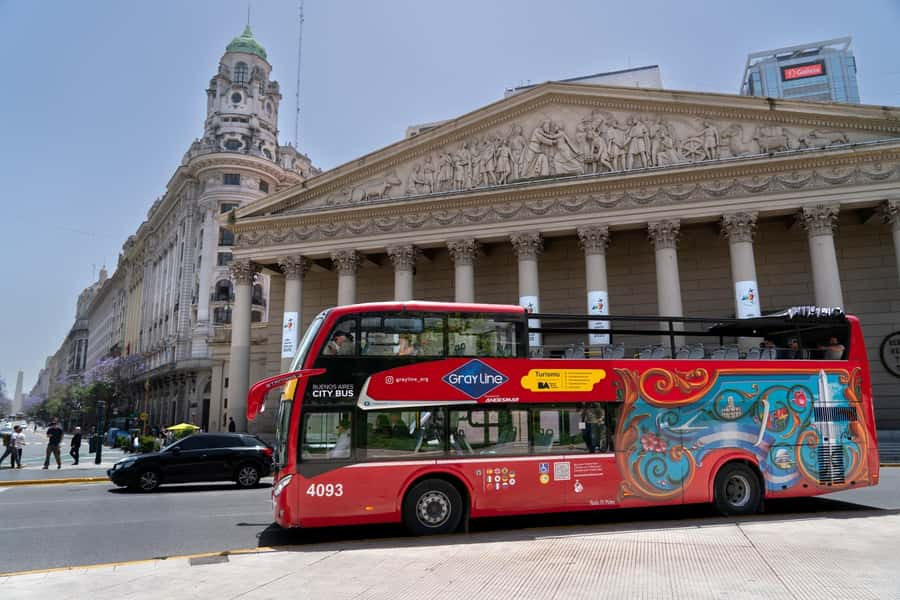
The buses are open-top double-deckers with air conditioning and a sunroof. Upstairs gives you the clearest views, but it can feel cool inside when the weather changes, and some earphone cables may be short for the upstairs seats.
The audio guide is available in eleven languages. Live support is listed in Spanish, English, and Portuguese. The recorded commentary covers the city’s landmarks and neighborhoods, and the English version has generally clear volume and useful timing, though the narration can occasionally lag behind the view.
The planned frequency is every 25 minutes. In practice, traffic and boarding can lengthen the wait to around 35 minutes. I would not plan a museum reservation with a narrow connection unless you leave extra time.
The tour has a strong practical safety advantage because it offers a simple way to cross a large city while you are still learning its layout. It is not a substitute for walking, but it helps you choose where to walk.
Booking details worth checking
The tour includes the bus ticket, open-top vehicle, air conditioning, sunroof, and multilingual audio guide. Hotel pickup, attraction admissions, food, and drinks are not included.
Cancellation is allowed up to 24 hours before the activity for a full refund, and reserve-now-pay-later booking is available. One unusual booking detail concerns El Gato Negro: when that option appears in your reservation, the selected date and time refer to the reservation there. Missing the confirmed brunch time means losing that service without a refund, while the bus ticket can still be activated at any time on the original reserved day.
Should you book the Buenos Aires hop-on hop-off bus?
I would book it if you want a broad first look at Buenos Aires, plan to visit districts far apart, or prefer having transport arranged while you get your bearings. The strongest parts are the long route, clear commentary, football stops, and access to both old and modern neighborhoods.
I would choose 48 hours if your budget allows. A single day works, but the three-hour loop and long list of worthwhile stops make it easy to spend the whole ticket riding instead of exploring.
Skip it if you mainly want a focused walking tour of central Buenos Aires or if exact departure times matter to you. For everyone else, especially first-time visitors, it is a useful city framework. Use the bus to understand Buenos Aires, then get off and experience the neighborhoods on foot.
FAQ
How long does the bus ticket last?
You can choose a 24-hour, 48-hour, or 72-hour ticket. The selected period begins the first time you board the bus.
Where can I start the tour?
You can board at any bus stop. The two main starting points are Diagonal Norte at Avenida Presidente Roque Sáenz Peña 728 and Plaza San Martín at Avenida Santa Fe 808.
What are the bus operating hours?
The bus operates daily from about 9:30 a.m. to 6 p.m. The first buses begin circulating around 9:20 a.m., and the last buses leave around 5:30 p.m.
How often does a bus arrive?
The planned frequency is every 25 minutes. Traffic and boarding can make the actual wait longer.
How long does a complete loop take?
A complete red route loop takes about three hours, though traffic may affect the total time.
Which languages are available for the audio guide?
The audio guide is available in Spanish, English, Portuguese, Japanese, Chinese, Russian, Italian, French, German, Ukrainian, and Korean.
Is WiFi included?
Yes. Free WiFi is available onboard the buses and at the bus stops, although the connection may not always work reliably.
Does the ticket include attraction admissions?
No. Admission to museums, stadium attractions, and other sights is not included.
Can I visit the Boca and River Plate museums from the route?
Yes. The Boca Museum can be accessed from the Bombonera stop, and the River Museum can be accessed from the Monumental stop.
Does the tour operate on football match days?
No. On days when River Plate or Boca Juniors play at their stadiums, the bus tour does not operate.
Just added around Buenos Aires
- Private Airport Transfer In or Out: Aeroparque (AEP)–Buenos Aires★ 5.0 · 73 reviews
- Sailing with Wine Tasting in Buenos Aires★ 5.0 · 50 reviews
- Traditional Argentine FoodTour with optional Michelin Experience★ 4.5 · 56 reviews
- Unique Tailored Tours – The Hummingbird Trip★ 5.0 · 69 reviews
- Experience The Essence of Buenos Aires in San Telmo★ 5.0 · 51 reviews
- Tigre Speedboat – The Delta s Captain – CITYSAILING TIGRE★ 5.0 · 75 reviews
- Tango Porteño Show with Optional Dinner in Buenos Aires★ 4.5 · 58 reviews
- La Ventana Tango Show & Dinner with Optional Classic Bus Ride★ 4.5 · 77 reviews
City Tours, compared.
Cusco: Half-Day City Tour with Sacsayhuaman and Q’enco
Read our review →
Private City Tour, Monserrate, Emerald and Botero
Read our review →
City Sightseeing Hop-On Hop-Off Bus Tour & Extras
Read our review →

City Tour Cusco Qoricancha Sacsayhuaman y Tambomachay
Read our review →
Main City Sights in 7 Hours – Shared Group Tour
Read our review →Browse the lists this tour appears in