
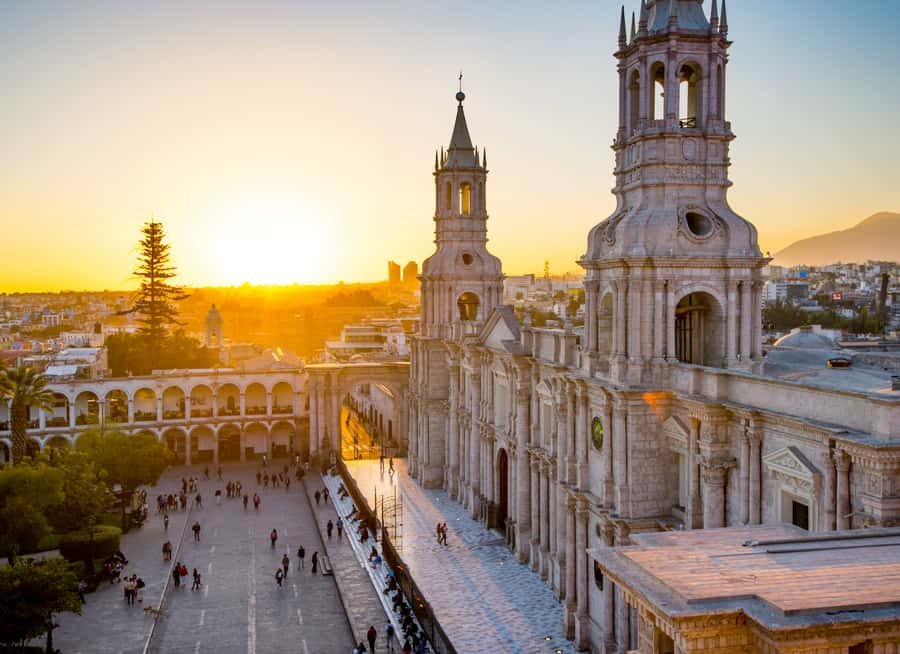
Reviewed · HISTORICAL TOURS
Walking tour in the Historic Center of Arequipa
Arequipa’s best introduction is on foot, and this tour links the city’s grand Plaza de Armas with quieter courtyards, volcano viewpoints, camelids, and the old San Lazaro quarter. It is a lot of ground for two hours, with guides such as Edgar, Johan, Beatriz, and Jorge Echeandia bringing history and humor to the walk.
I like the mix of major sights and ordinary city life, from the Company cloisters to people waiting to renew national identity cards. I also like the chance to see and feed llamas, alpacas, suri, and vicuñas at Mundo Alpaca. The main consideration is the tip: the $10 booking fee is only part of the expected cost, and one account notes a suggested 30 to 50 soles per person.
Key points to know before you book
- The walk begins one block from Plaza de Armas: Meet at Santa Catalina Street 204, where the guide carries an umbrella.
- You get city history and practical orientation: The route helps you understand Arequipa’s center before exploring on your own.
- Mundo Alpaca adds an unusual stop: You can see camelids and possibly feed llamas and alpacas.
- El Puente Grau brings volcano views: Misti, Chachani, and Pichu Pichu may appear from this strategic viewpoint.
- The $10 price needs clarification: A voluntary guide tip is expected, and some participants have paid 30 to 50 soles.
- The pace can be brisk: Plan your own return visit if you want long photo stops or detailed time inside museums.
Why this two-hour walk works well in Arequipa
Arequipa can seem easy to understand at first glance. The white volcanic-stone buildings around Plaza de Armas are striking, the streets are compact, and the main sights sit close together. Yet a guide helps connect the architecture, religious art, neighborhoods, volcanoes, and daily life into one clear picture.
This walk is especially useful on your first day. You can learn the shape of the center, hear the story of the city, and pick up ideas for restaurants and museums. Pamela said the walk helped her find her way around during the following two days, while Alan valued the historical context and practical details of present-day life.
The route lasts about two hours, though one participant experienced roughly two and a half hours. That extra time may depend on questions, the group, and the guide. You walk the entire way, so wear shoes suited to city streets and bring water. The route is not a bus tour with long transfers. Its value comes from seeing how the center fits together at street level.
More Historical Tours in Peru
- Arequipa: Walk through the Historic Center of the City
★ 4.9 · 87 reviews - Arequipa, Historic and Colonial City and Santa Catalina Monastery
★ 4.5 · 42 reviews - Lima’s Vibrant Heritage: Exploring the City’s Landmarks Half-day
★ 4.5 · 581 reviews
Meeting at Santa Catalina Street 204
The meeting point is Santa Catalina Street 204, one block from the main Plaza de Armas. Look for a guide holding an umbrella. The directions are simple, but the umbrella matters because the center can be busy and several streets lead toward the square.
The coordinates are -16.3967191, -71.53667879999999. It is wise to arrive a few minutes early. One participant had a delayed start because the guide was not immediately at the meeting point and the organizer did not answer the first call. The issue was eventually fixed, but this is a good reason to keep the confirmation details available and allow a little spare time.
The tour is offered in English or Spanish. Guide quality is a major part of the experience. Edgar received praise for his history, humor, restaurant advice, and ability to answer questions. Johan was described as engaging and funny, while Beatriz was praised for explaining religious art and local history. Jorge Echeandia was also noted for being helpful, friendly, and well informed.
Because the experience is guide-led rather than audio-based, your questions matter. Ask about anything you pass. The route seems to reward curiosity, though you should not expect a private tour unless your booking specifically confirms that.
Plaza de Armas and the white-stone center
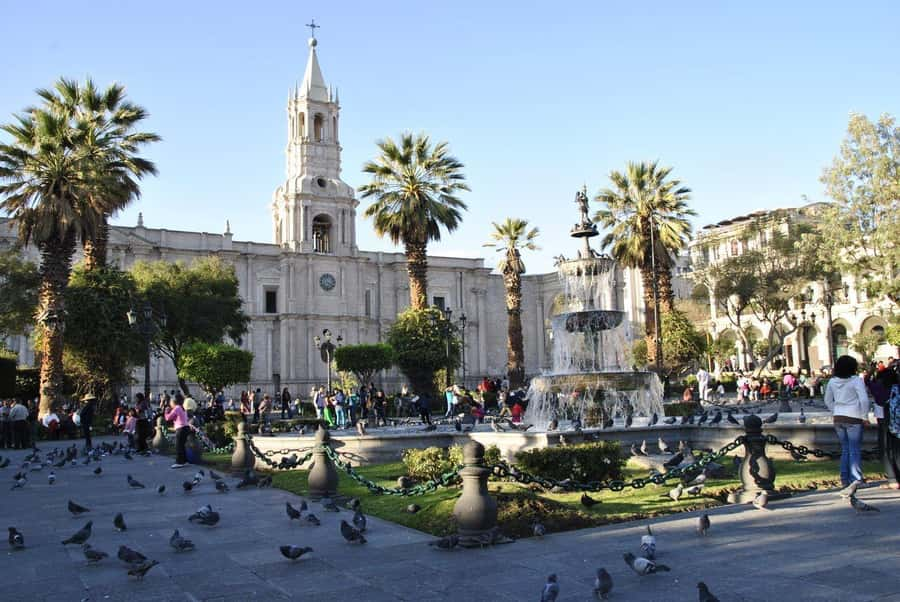
The first stop is Arequipa’s main square, where the guide explains the history of the plaza, its arches, and the portals surrounding it. This is the right place to begin because the square is the city’s visual and civic center.
Arequipa is often called the White City because much of its historic architecture uses pale volcanic stone. Around the plaza, that stone gives the buildings a bright, formal appearance. The guide helps you read details that can otherwise blur together: the shape of the arches, the role of the portals, and the way religious and civic buildings face the square.
The plaza is also a useful orientation point. You can return here easily after the tour, and the surrounding streets lead to Santa Catalina Convent, museums, restaurants, and shops. Alan appreciated learning about everyday events as well as older history, including the line of people waiting to renew national identity cards. That kind of detail keeps the walk grounded in current Arequipa rather than turning it into a string of dates.
Do not expect a long, quiet photography session here. The guide needs to keep the group moving, and the square is one of the most active parts of the route. Take a few photographs at the start, then listen for the explanation that gives the buildings more meaning.
The Company cloisters and old city courtyards
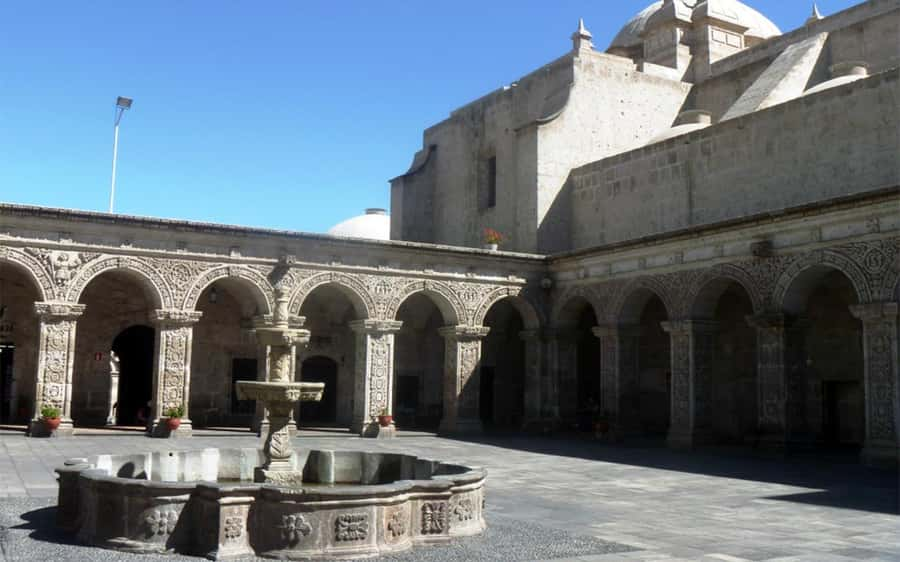
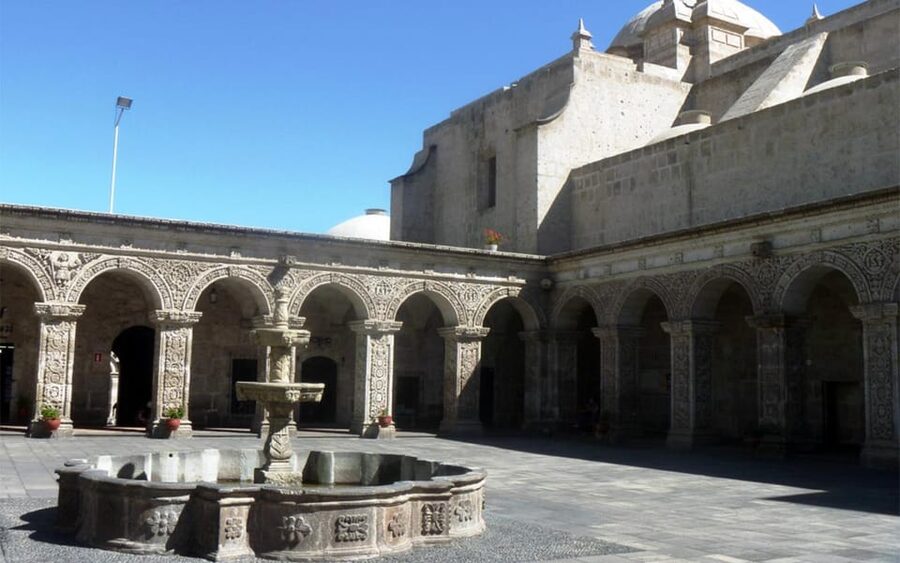
From the plaza, the walk continues to the cloisters of the Company, one of the architectural highlights. The carved stonework, arcades, and religious setting show the careful design used in Arequipa’s historic center.
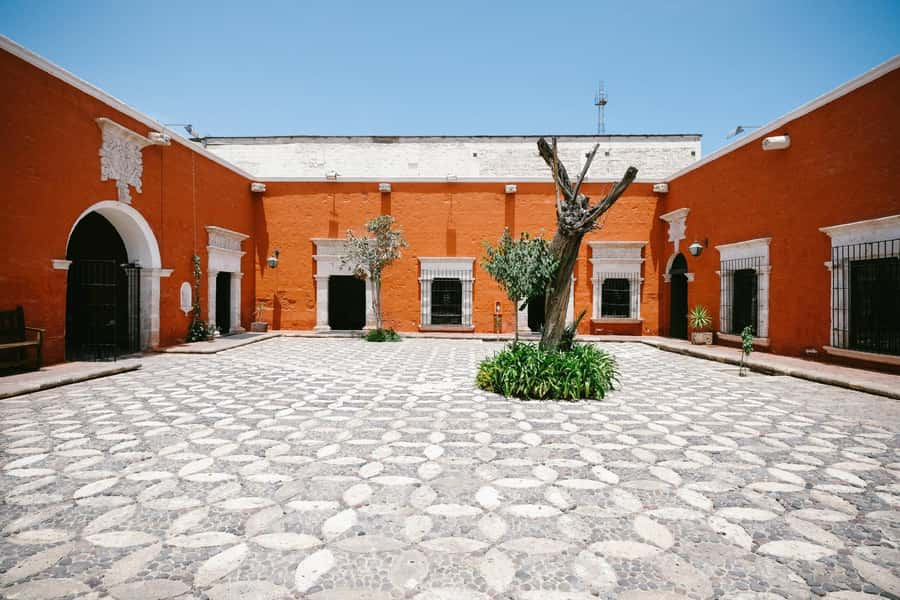
This stop is valuable because cloisters offer a different view of the city than a grand public square. Instead of looking outward at portals and facades, you step into a more enclosed space with repeating arches and quieter corners. The route also includes old mansions, gardens, and courtyards near the center. These details help you see the city as a collection of lived-in spaces, not only postcard buildings.
The exact amount of time at each place can vary. Several participants praised the number of sights covered in a short period, but one person felt the walk was rushed and allowed too little time for photographs. I would treat this as an introduction rather than a detailed architectural study. Listen closely, take quick photos, and mark the places you want to revisit later.
The optional museum visits need special attention. Santa Catalina Convent and museums such as the Juanita mummy museum may be added by prior arrangement, but they require separate admission and internal guides. The material also describes entrance to visited places as included, so confirm exactly which admissions are covered before you go. The safest assumption is that the standard walk does not automatically include every major museum or convent ticket.
More Walking Tours in Peru
- Arequipa Walking Tour city center and drinks experience
★ 5.0 · 72 reviews - Lima: Miraflores Trending Flavors Half-Day Walking Tour
★ 4.9 · 98 reviews - Cusco: Historic Walking Tour with Pisco Sour and Music Show
★ 4.6 · 65 reviews - Lima Private Walking Tour
★ 5.0 · 65 reviews
El Puente Grau and the volcano view
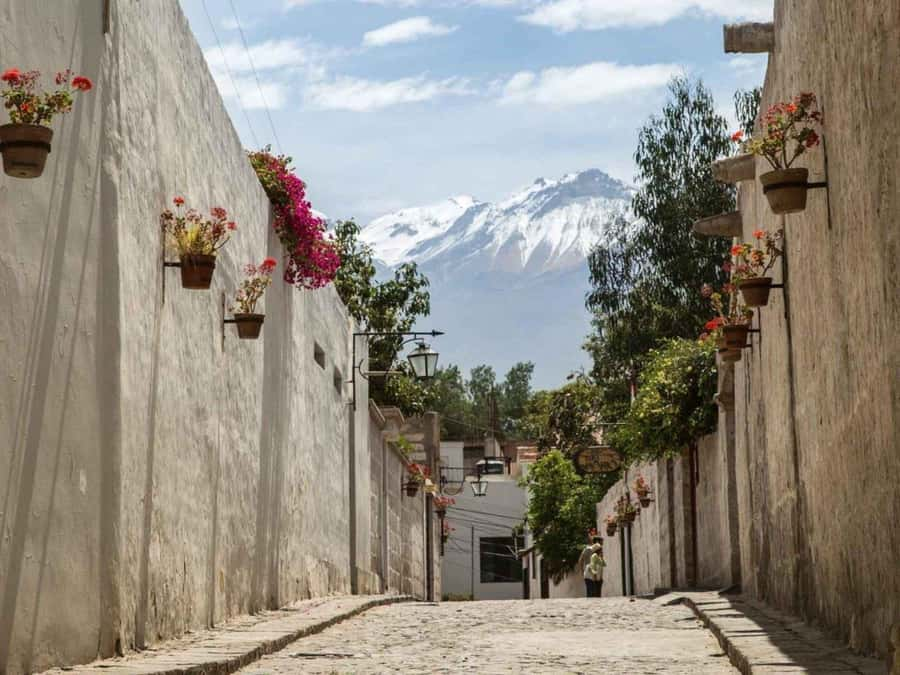
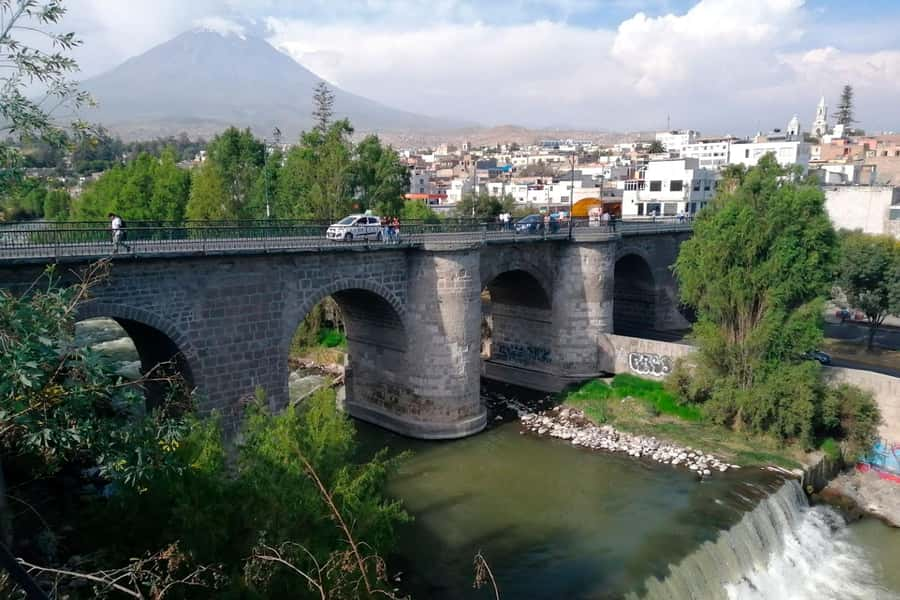
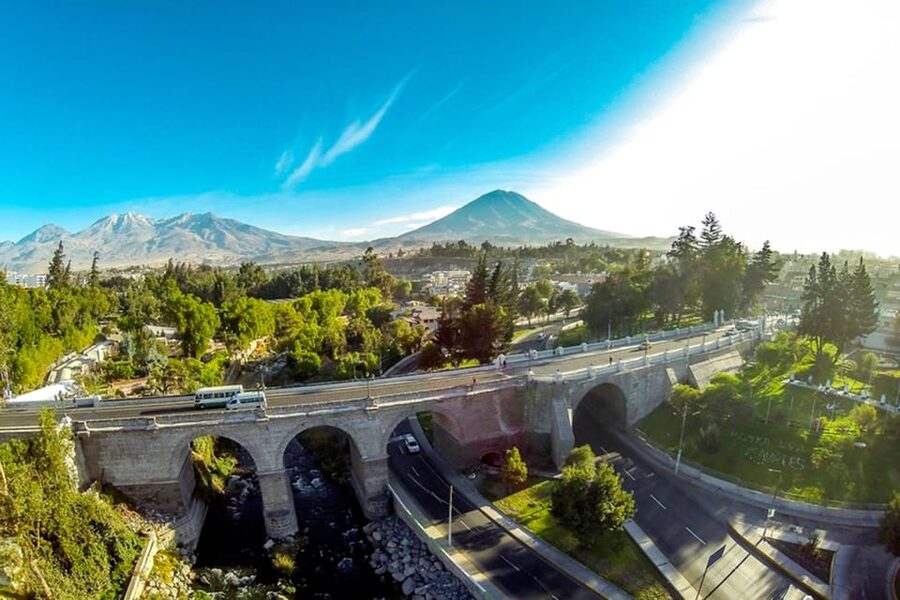
The walk reaches a viewpoint near El Puente Grau, where you may see Misti, Chachani, and Pichu Pichu. These volcanoes are part of Arequipa’s identity, and seeing them from the city gives useful context to the streets and stone buildings around you.
This is one of the tour’s strongest changes of scene. You move from arcades and courtyards to open views over the city. The volcanoes may be clearer on some days than others, so do not treat the view as guaranteed. Still, the stop gives you a chance to understand why Arequipa’s setting matters.
Several participants singled out the volcano views as a highlight. One guide also took the group to the top of a hotel for a broad view across the city. That rooftop stop is not clearly promised as a fixed part of every departure, so consider it an occasional addition rather than a guaranteed feature.
If photography is important to you, ask the guide how long the group will pause. The walking pace may leave only a short window for pictures. You can always return later if the weather is clear and you want more time.
Mundo Alpaca and the camelids
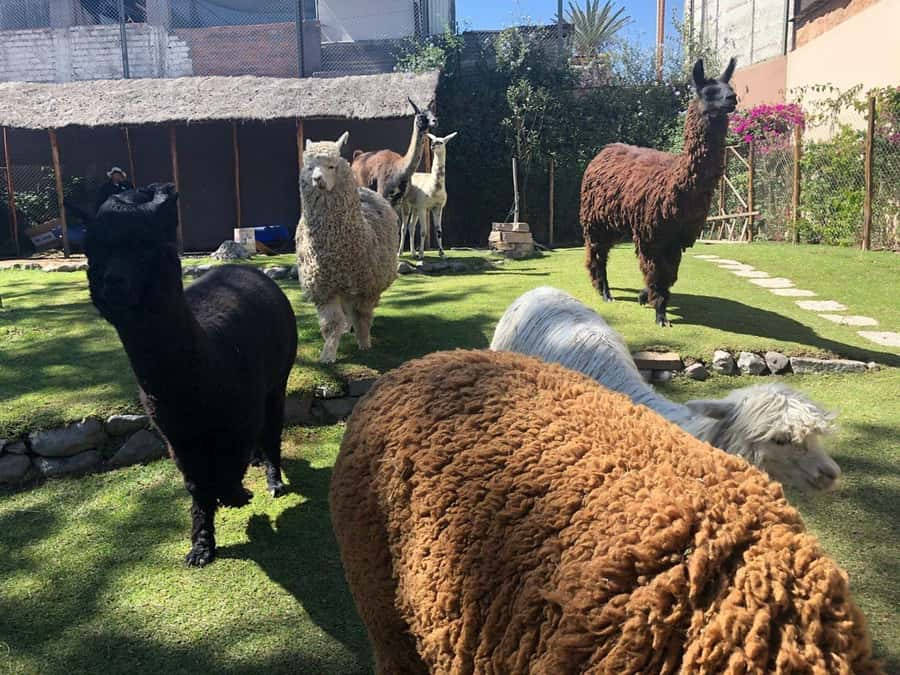
Mundo Alpaca gives the city walk an unexpected rural touch. Here you find an old breeding farm for camelids, including llamas, alpacas, suri, and vicuñas. The experience may include seeing or feeding the animals, and one participant especially enjoyed seeing a baby llama and alpaca.
This stop works because it connects a famous Peruvian product, alpaca fiber, with the animals themselves. You can see where the fiber comes from and, if you choose, browse fabrics made from the same material. The shopping is optional. You do not need to buy anything to understand why alpaca textiles are important in the region.
For many people, this will be the most memorable part of the route. It is also a useful break from churches, plazas, and stone facades. Families and anyone interested in animals will likely appreciate the change. If you prefer a strictly architectural tour, this stop may feel less central to your interests.
Keep your expectations practical. This is a small camelid area within a broader city walk, not a full-day animal sanctuary visit. The route gives you an introduction, then moves on toward San Lazaro.
San Lazaro, the city’s first settlement
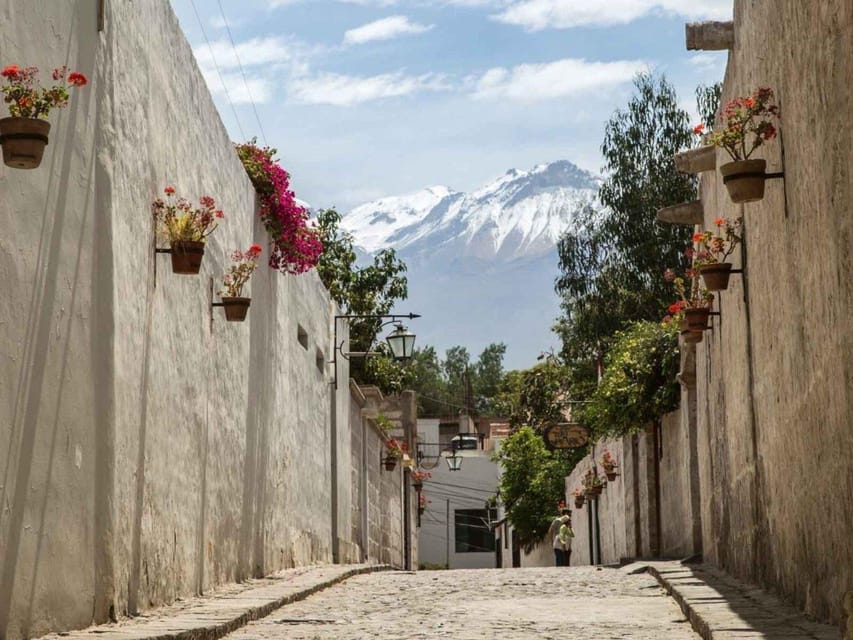
The final major neighborhood is San Lazaro, described as the first town founded in what became the White City. Its smaller streets and older character offer a contrast with the formal scale of Plaza de Armas.
This part of the walk helps explain how Arequipa grew. Instead of seeing only the center as a finished historic district, you get a sense of an earlier settlement and its place in the city’s development. It is also a pleasant area for noticing details that can be missed on a direct sightseeing route.
The tour then returns toward the center and finishes near Plaza de Armas, close to the starting point. That makes the walk easy to combine with lunch, a museum visit, or a later independent stroll. You are not left at an inconvenient edge of town.
The real cost: $10 plus a guide tip
The advertised price is $10 per person, but you should understand the payment arrangement before booking. The fee covers the reservation, while the guide expects a voluntary tip to help pay operating costs, guide service, and maintenance connected with the places visited.
One participant said the expected tip was 30 to 50 soles per person and felt that this was high for a tour described at points as a free walking tour. That is the key value question. At $10 plus a tip, the experience may still be inexpensive for two hours of guiding, especially if you value the history, volcano viewpoint, camelids, and local recommendations. But the final amount is not simply $10.
Ask at the beginning how the tipping system works and what admissions are included. The description says entrance to places visited is included, while the detailed explanation says Santa Catalina Convent and certain museums cost extra. Clarifying this avoids an awkward surprise at the end.
At its best, the tour offers strong value because it covers several types of sights that would be hard to connect alone. At its weakest, the low booking price can create confusion about the true cost. Treat the $10 as a reservation fee, not the complete price.
Who will get the most from this walk?
I would choose this tour if you have just arrived in Arequipa and want a quick map of the historic center. It suits first-time visitors, independent explorers, and anyone who wants restaurant suggestions or help understanding the city before visiting museums on their own.
It is also a good match if you enjoy a guide with personality. Edgar, Johan, Beatriz, and Jorge Echeandia were all praised for humor, clear explanations, and local advice. A good guide can turn a short walk into a useful introduction.
You may want another option if you need a slow, highly detailed architectural tour. The route covers many stops, and some participants found the pace quick. It may also disappoint if you want guaranteed extended time inside Santa Catalina Convent or the Juanita museum. Those visits should be arranged separately, with admission and internal guiding confirmed in advance.
The walk requires continuous movement and includes outdoor viewpoints. The supplied information does not describe an accessibility plan, so contact the provider if you have mobility concerns or need a modified route.
Should you book this Arequipa walking tour?
Book it if you want a broad first look at Arequipa rather than one long museum visit. The combination of Plaza de Armas, Company cloisters, old courtyards, a volcano viewpoint, Mundo Alpaca, and San Lazaro gives you a useful sense of the city in a short time.
I would book it early in your stay, then return independently to the places that deserve more time. Just confirm the starting time, the tipping expectation, and which entrance fees are included. If you accept the brisk pace and understand that the $10 fee is not the whole payment, this is a practical, lively way to get oriented.
FAQ
How long does the Arequipa walking tour last?
The stated duration is about two hours. One participant experienced a walk of about two and a half hours, depending on the pace and time spent on questions.
Where does the tour begin?
It begins at Santa Catalina Street 204, about one block from Plaza de Armas.
How will I recognize the guide?
The guide will carry an umbrella at the meeting point.
What languages are available?
The tour is offered in English and Spanish.
What sights are included on the route?
The route includes Plaza de Armas, the Company cloisters, old mansions and gardens near the center, a volcano viewpoint near El Puente Grau, Mundo Alpaca, and San Lazaro.
Can I see Misti, Chachani, and Pichu Pichu?
The tour visits a strategic viewpoint where you can observe these volcanoes. Visibility depends on conditions.
Are Santa Catalina Convent and the Juanita mummy museum included?
They can be visited by prior arrangement, but the supplied information says they require an extra cost and internal guides. Confirm the details before booking.
Is the $10 payment the full cost?
No. The $10 price covers the reservation, and a voluntary tip to the guide is expected. One stated tip range is 30 to 50 soles per person.
Can I cancel the booking?
You can cancel up to 24 hours in advance for a full refund. The tour also offers reserve now and pay later booking.
More Walking Tours in Arequipa
- Rio de Janeiro: Rocinha Favela Walking Tour with Local Guide
★ 4.8 · 3,052 reviews - Rio De Janeiro: Half-Day Rocinha Favela Walking Tour
★ 4.7 · 2,272 reviews - Buenos Aires Hop-On Hop-Off Bus, Free Walking Tours & Discounts
★ 4.5 · 2,218 reviews - Buenos Aires: La Boca Guided Walking Tour in English
★ 4.8 · 1,587 reviews
More Historical Tours in Arequipa
- Cartagena: Historic Center and Getsemaní Shared Walking Tour
★ 4.9 · 2,716 reviews - Santiago: Guided Walking Tour of the Historical Old Town
★ 4.8 · 459 reviews - Maria Fumaça – Wines and History
★ 4.0 · 242 reviews - Rio de Janeiro: Historic Rio and Santa Teresa Half-Day Tour
★ 4.4 · 228 reviews
Just added around Arequipa
- Turist Bus Colca Canyon (Chivay) To Puno★ 5.0 · 83 reviews
- 3-Day Colca Canyon trek with Professional Guide★ 5.0 · 40 reviews
- Trekking, Waterfalls and Thermal Baths★ 4.5 · 47 reviews
- Salinas National Reserve PRIVATE TOUR★ 5.0 · 81 reviews
- Sillar Route in Arequipa and viewpoint of the Volcanoes★ 4.0 · 71 reviews
- Sillar Route and Culebrillas Petroglyphs★ 4.5 · 89 reviews
- Full Day Tour / Colca Canyon★ 4.0 · 70 reviews
- Colca Full Day★ 5.0 · 57 reviews
Historical Tours, compared.
Historic Center and Getsemaní Shared Walking Tour
Read our review →
Lima’s Vibrant Heritage: Exploring the City’s Landmarks Half-day
Read our review →



Lima: Historic Center Street Food, Market, and Eateries Tour
Read our review →
Nazis in Buenos Aires: a historical walking tour
Read our review →
Browse the lists this tour appears in