
Reviewed · EASTER ISLAND TOURS
Rapa Nui Stargazing
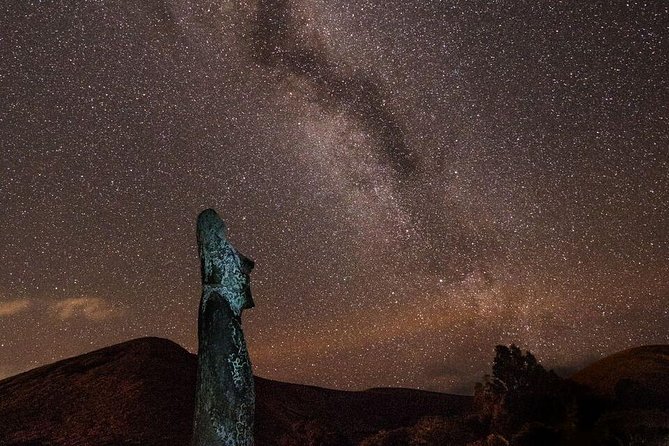
Rapa Nui Stargazing takes you away from Hanga Roa’s lights to Anakena, where the night sky can feel enormous. The best part is the mix of astronomy and Polynesian navigation, followed by long-exposure photographs beside the moai. The small group limit and local guide make the presentation easier to follow than a large bus tour.
I like the use of telescopes for planets, moon craters, star clusters, and southern-sky objects. I also like the warm drink, local cake, and hotel drop-off after a late night. The main catch is weather and moonlight: the operator may cancel close to departure, and a full moon can make the stargazing impossible.
Key Points
- Dark skies near Anakena: The tour leaves Hanga Roa’s lights for a remote observing site and the beach.
- Polynesian navigation: The guide explains how Rapa Nui people and other Polynesian voyagers used the stars at sea.
- Telescope viewing: Depending on the sky, you may see the moon, planets, star clusters, and nebulae.
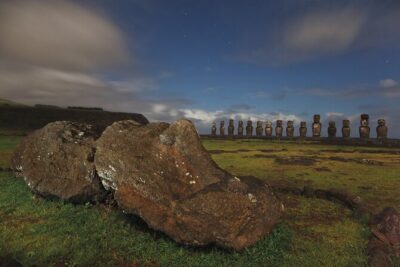
- Moai night photography: The final beach stop includes long-exposure photos with the moai at Ahu Nau.
- Small groups: The maximum is 12 people, though the tour needs a minimum number to operate.
- Plan around weather: Book early in your island stay so a cancellation can be moved to another night.
Why Rapa Nui Is a Fine Place to Study the Stars
Easter Island, or Rapa Nui, has little artificial light outside Hanga Roa. That makes it a strong setting for looking up, but the tour is not only about spotting bright stars through a telescope.
The most useful part is the link between the sky and the ocean. Your guide explains how Polynesian navigators read stars and used them to find their way between widely scattered islands. This gives the evening a clear sense of place. You are not simply looking at Saturn or the Milky Way in a random field. You are learning how the sky helped people reach Rapa Nui in the first place.
The southern sky also gives the guide plenty to work with. Depending on the season and conditions, you may see Jupiter, Saturn, moon craters, Sirius, the Pleiades, star clusters, or a nebula through the equipment. One evening included views of the Horsehead Nebula, though you should treat that as a possibility rather than a promise. Clouds, wind, the moon, and the time of year all affect what appears.
The tour is rated 4.4 out of 5 from 62 ratings, which fits the experience well. When the sky cooperates, this can be one of the island’s most memorable evening activities. When clouds or a bright moon interfere, there is no practical way to replace the main attraction.
More Stargazing Tours in Easter Island:
- San Pedro de Atacama: Etno-Stargazing Tour with Transfer
★ 4.8 · 629 reviews - San Pedro de Atacama: Stargazing Experience
★ 4.7 · 489 reviews - Astronomical Tour with Guide and Pick Up San Pedro de Atacama
★ 4.5 · 145 reviews
Meeting in Hanga Roa and Heading Toward Anakena
The meeting point is in front of the Katipare library, also called Centro Lector Katipare, in Hanga Roa. Hotel pickup is not included, so you need to reach the library yourself. The tour does provide hotel drop-off later, which matters because the return is late and the roads are dark.
The listed start time varies by season and final confirmation. The schedule gives 20:00 in summer and 19:30 in winter, while another timing note places September through April departures around 20:30 to 21:00. Confirm the exact time with the operator before setting out. Do not assume the time shown on one booking page is the final word.
The trip lasts about three and a half hours. You may return around 1:00 in the morning, depending on the evening’s timing and the length of the photography session. Eat beforehand if you need a full meal, since the included refreshment is hot chocolate or another hot drink with local cake, not dinner.
The drive to Anakena is part of the practical appeal. You do not need to arrange a rental car or navigate the island after dark. A local driver and guide handle the transport and provide live commentary along the way.
A Remote Telescope Stop Away From Town Lights
Before reaching the beach, the group sets up telescopes at a remote site. This is where the main astronomy presentation takes place. The guide uses the equipment to point out objects that would be hard to identify with the naked eye.
The small group limit of 12 is important here. A telescope is a one-person-at-a-time tool, so a crowd can turn every viewing opportunity into a long wait. With fewer people, you have a better chance to ask questions and take more than a quick look through the eyepiece.
The tour has used telescopes and binoculars, and past sessions included views of the moon, Jupiter, Saturn, star clusters, and other southern-sky targets. The exact lineup depends on what is visible. A cloud bank can block one part of the sky while leaving another clear, so the guide may adjust the plan during the evening.
I would bring realistic expectations. This is not a professional observatory with a large collection of instruments. It is a field-based outing using portable telescopes in a remote setting. That is part of the charm, but it also means wind matters. Strong gusts can make a telescope unstable and make standing outside unpleasant.
One weak point is the presentation format. A guide has sometimes used a small tablet or laptop to show maps and photographs, and not everyone can see a small screen clearly. If the group is full, stand close enough to the guide during the explanation. Ask questions aloud rather than relying on a screen at the edge of the group.
Polynesian Navigation Gives the Evening Its Meaning
The astronomy lesson is strongest when it connects the stars to Rapa Nui culture. The guide explains how Polynesian sailors used stars for direction and how those ocean voyages reached islands across the Pacific.
This subject gives you something to remember after the telescope is packed away. You begin to see the night sky as a practical navigation system rather than a collection of pretty points. The talk is intended for beginners, so you do not need previous astronomy experience.
Guides such as Mark and Marc have been praised for clear explanations, friendly presentations, and short lessons on Polynesian navigation. The staff may vary, so do not book based on one particular guide being guaranteed. Still, the format is built around local commentary rather than a silent transfer to a viewpoint.
The best sessions balance explanation with actual viewing. One past group wanted more time at the telescope, while another found the guide’s presentation and object selection just right. This is a fair concern. If you are a serious amateur astronomer, you may want more observing time and less talk. If you are new to the subject, the instruction will likely be the part that makes the experience accessible.
A few more Easter Island days worth comparing
- From Hanga Roa: Rapa Nui Culture Sightseeing Tour
★ 4.6 · 307 reviews - From Hanga Roa: Easter Island Highlights 2-Day Tour
★ 4.3 · 205 reviews - From Hanga Roa: Easter Island Sightseeing Full Day Tour
★ 4.5 · 189 reviews - Full Day Tour in Rapa Nui
★ 4.5 · 122 reviews
Anakena Beach and Ahu Nau After Dark
Anakena is the final major stop. The tour has special night access to Ahu Nau, giving you a chance to see the moai in conditions that are very different from a daytime visit.
The beach adds a strong visual finish. After the telescope session, the guide takes long-exposure photographs of the group with the moai behind you. The results can show the stars, the dark beach, and the statues in one frame. Souvenir photographs are not included in the price, but they can be purchased.
The photo session can take a while. If you prefer astronomy to posed pictures, you may find the final part slow. If you want a distinctive Rapa Nui keepsake, this is one of the tour’s better extras. Some sessions have included music, including guitar and singing, which adds atmosphere without turning the entire evening into a performance.
You should bring a flashlight or headlamp. This is not just a comfort item. You will need a light while walking around in dark conditions, but use it carefully so you do not shine it into someone’s eyes or ruin a photograph. A phone light can work in a pinch, but a small headlamp leaves both hands free.
Hot Chocolate, Cake, and a Chilly Return
The included hot drink and local cake are simple but well timed. After standing outside for a while, a warm cup makes a real difference. Hot chocolate has been a particular favorite, and one guide named Tuhii is credited with making it.
Bring a jacket or at least one long-sleeved layer. Rapa Nui may feel warm during the day, but the temperature can drop after dark, especially when you are standing still at a remote site. Wind can make the evening feel colder than the thermometer suggests.
The hotel drop-off is another practical advantage. After astronomy, a beach photo session, and a late drive, you will be ready for bed rather than another walk through Hanga Roa. Confirm that your lodging is within the operator’s drop-off area if you are staying outside the main town.
The $140 Price and What You Get
At $140 per person, this is not a cheap night out. The price includes a driver and guide, live commentary, transport during the activity, the small-group format, the hot drink and cake, and hotel drop-off. It does not include hotel pickup, admission charges where applicable, or souvenir photos.
I think the value depends on what you want from Rapa Nui. If you only want to look at stars, you could find a dark spot on your own for less money. You would not get the telescopes, cultural explanation, organized transport, special nighttime access, or the final photo session.
The cost makes more sense if you value context and convenience. The guide turns a dark sky into an organized lesson, and the group size keeps the evening personal. The photos also give you something tangible to take home, though you should budget extra if you want them.
The tour usually needs a minimum number of participants. That creates a second risk besides weather. A departure may be canceled if too few people sign up, even when the sky is clear. The operator may offer another date, another night activity, or a refund.
Weather, Moonlight, and the Risk of Cancellation
This is the section you should read before booking. The experience depends on a dark and reasonably stable sky, so cancellations can happen close to departure. In some cases, the decision is made only about an hour before the start.
A clear sky over Hanga Roa does not guarantee good conditions at Anakena. The remote site may have cloud or strong wind, and telescopes cannot work well in heavy wind. You may see a beautiful sky from town and still have a legitimate cancellation at the observing site.
The full moon is another issue. Bright moonlight washes out many stars, so the operator generally does not run the normal stargazing experience around full moon dates. A full moon hike may be offered as an alternative, but it is a different activity, not an equivalent replacement for telescope viewing.
I recommend booking this for the first night or two of your island stay. That gives you room to move the reservation if poor weather interrupts the plan. If you schedule it on your only final night, a cancellation may leave no practical way to try again.
The cancellation terms are fair on paper. You can cancel for a full refund up to 24 hours before the start. If the operator cancels for poor weather or a missing minimum group, you can receive a refund or choose another date or experience. Once the tour has started, no refund is offered.
Who Will Enjoy This Night Most
This suits couples, families, solo visitors, and anyone interested in the connection between astronomy and Pacific exploration. You do not need technical knowledge. Most people can participate, and the meeting point is near public transportation.
Families should remember the late finish. Children who can stay alert outside for several hours may enjoy the planets, moon, and photographs, but the schedule can be tiring. The dark setting also means young children need close supervision.
Photographers should see this as a guided night portrait opportunity rather than a dedicated astrophotography workshop. The long-exposure photos with the moai are a highlight, but the photography process may take time and the souvenir images cost extra.
Serious stargazers may want to ask how much telescope time to expect. The presentation, transport, cultural talk, and beach photography are all part of the package. This is a cultural night tour with astronomy, not a full observing session for advanced hobbyists.
Should You Book Rapa Nui Stargazing?
I would book it if you have at least one spare night, enjoy learning how people read the sky, and want to see Anakena after dark. The combination of portable telescopes, Polynesian navigation, hot chocolate, and moai photography is unusual enough to justify the price for many visitors.
I would hesitate if your schedule is rigid, you are visiting during a full moon, or you would be deeply frustrated by a last-minute cancellation. Book early in your stay, confirm the departure time, pack warm layers and a flashlight, and keep your plans flexible.
When the sky is clear, this can turn a familiar island visit into something much larger. You leave with more than a photo beside a moai. You leave with a better sense of how the people of Rapa Nui looked at the same stars and found their way across the Pacific.
FAQ
Where does Rapa Nui Stargazing begin?
The group meets in front of the Katipare library, also called Centro Lector Katipare, in Hanga Roa on Easter Island.
Is hotel pickup included?
No. Hotel pickup is not included. You must reach the Katipare library meeting point yourself.
Is hotel drop-off included?
Yes. Hotel drop-off is included after the tour.
How long does the experience last?
The tour lasts approximately three hours and 30 minutes, and some sessions return to hotels around 1:00 in the morning.
What is the maximum group size?
The maximum is 12 participants.
What can you see through the telescopes?
Depending on the conditions, you may see the moon and its craters, Jupiter, Saturn, star clusters, Sirius, the Pleiades, nebulae, and other southern-sky objects.
Does the tour operate during a full moon?
The normal stargazing tour does not generally operate around full moon dates because moonlight makes many stars difficult to see. A full moon hike may be offered instead.
What happens if the weather is poor?
The operator may offer another date or a full refund if the tour is canceled because of poor weather. The decision may be made close to departure because conditions at Anakena can differ from those in Hanga Roa.
Can I cancel my booking for a refund?
You can cancel at least 24 hours before the local start time for a full refund. Cancellations or changes made less than 24 hours before the start are not accepted for a refund.
Just added around Easter Island
- Ride to the highest point on the island for sunset★ 5.0 · 40 reviews
- Terevaka Horse Excursion: The highest point and 360° view.★ 4.7 · 38 reviews
- Sunrise Tongariki: Sunrise at Tongariki Park Private Tour★ 4.5 · 47 reviews
- Easter island: Snorqueling tour on coral reefs★ 4.4 · 47 reviews
- Half Day Tour in Rapa Nui★ 5.0 · 48 reviews
- Private Full-Day Easter Island Highlights South and East★ 5.0 · 60 reviews
- Two days of Full Day Tour of Rapa Nui + Sunrise in Tongariki★ 4.8 · 55 reviews
- Full day tour – DREAM★ 5.0 · 86 reviews
Easter Island Tours, compared.
From Hanga Roa: Rapa Nui Culture Sightseeing Tour
Read our review →
From Hanga Roa: Easter Island Highlights 2-Day Tour
Read our review →
From Hanga Roa: Easter Island Sightseeing Full Day Tour
Read our review →
From Hanga Roa: Journey from Orongo to Ana Te Pahu
Read our review →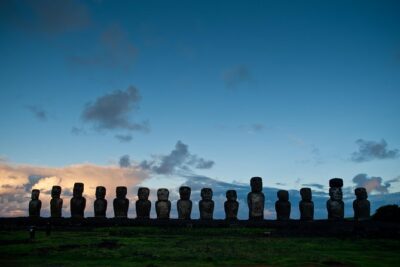
Journey of the Ancestors: Tongariki, Rano Raraku & Anakena Beach
Read our review →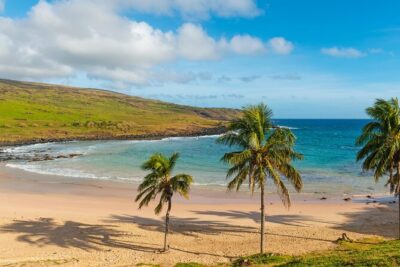
Full Day Private Tour: Factory of the Moai the stone giants
Read our review →Browse the lists this tour appears in