
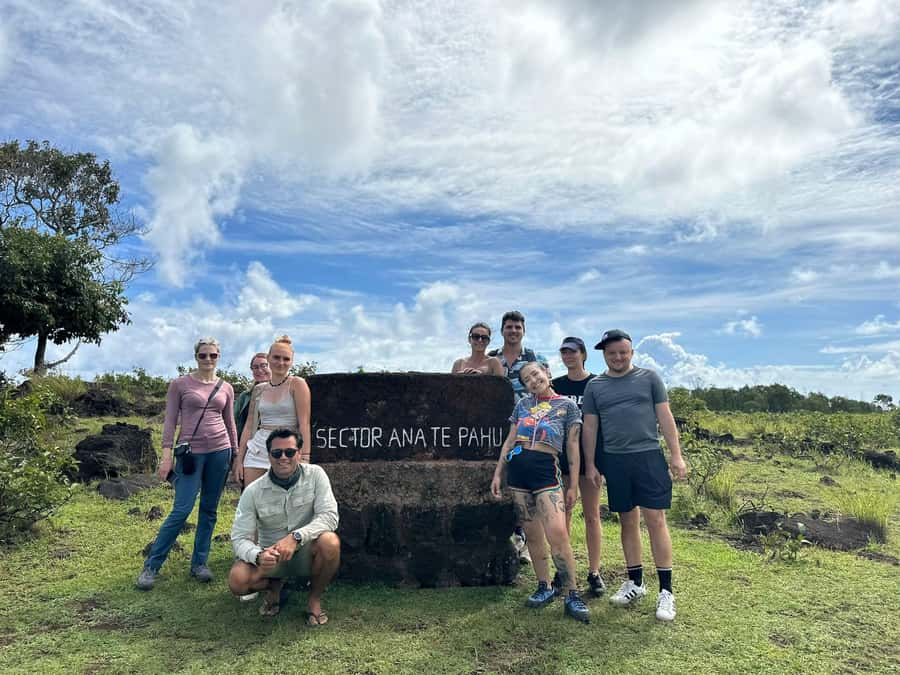
Reviewed · EASTER ISLAND TOURS
Two days of Full Day Tour of Rapa Nui + Sunrise in Tongariki
Rapa Nui is best understood on the ground, beside the Moai, volcanic craters, and stone platforms that make this far-off island unlike anywhere else. This three-day plan gives you two full sightseeing days plus a sunrise at Ahu Tongariki, one of the island’s most striking ceremonial sites.
I like the access to certified local guides and the chance to hear different interpretations of Rapa Nui’s legends and rituals. I also like the practical hotel pickup and small-group or private options. The main caution is the sunrise timing: one report says pickup came around 6 a.m., well before sunrise at about 8 a.m., while the guide needed to return for a 9 a.m. full-day tour. Confirm the exact sunrise schedule before you go.
Key points to know before booking
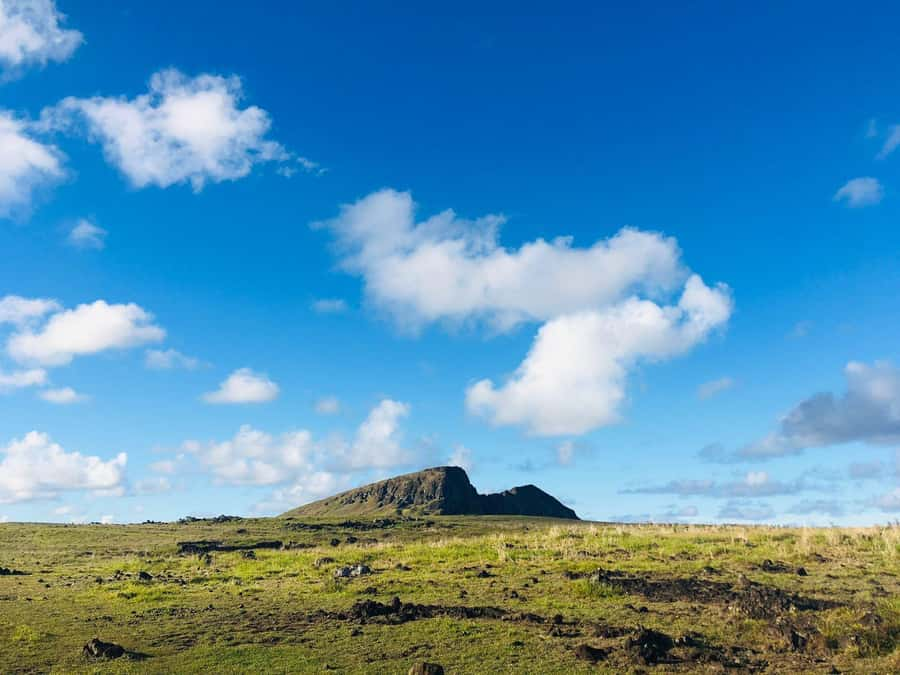
- Ahu Tongariki at sunrise: The famous row of Moai is the centerpiece, but confirm how much time you will have at the site.
- Two full days of island touring: You get more than a quick visit to one or two famous platforms, with archaeological sites and volcanic scenery included.
- Several named guides: Alex, Alejandro, David, and Ariki have led different portions of the experience, so the tone and depth can vary by day.
- National park fee is extra: Chilean nationals pay 20,000 CLP and foreign nationals pay 72,000 CLP according to the supplied information.
- Food is not included: Bring water and snacks, even though there are places to buy food during the outings.
- Local support matters: The company focuses on certified local guides, personal help before and after the tours, and spending with a Rapa Nui-based operator.
Why two full days matter on Rapa Nui
Rapa Nui can look small on a map, but its major sites are spread across a remote island with a great deal of open ground between them. A short outing may give you a Moai photo and little context. This plan gives you two full days to connect the statues with the volcanic setting, ceremonial platforms, old stories, and surviving traditions.
I like this format for a first visit because you are not forced to choose between the island’s most famous places. The schedule is built around the main archaeological sights, including Ahu Tongariki, while leaving room for the wide views and rugged volcanic terrain that make the journey feel more than a series of stops.
The guides add much of the value. Rapa Nui’s past includes legends, rituals, and questions that do not always have one certain answer. A good guide can explain what is firmly known, what is based on oral tradition, and what remains debated. That distinction matters here. You want stories, but you also want someone who does not present every theory as settled fact.
The group may have a different guide each day. Alex is described as especially informed and committed to his work. Alejandro is noted for a logical, informative approach, while David is described as more inventive and willing to present different ideas. The changing guides can be a benefit because you hear several perspectives, though the quality and style may not feel identical from one day to the next.
More 2-Day Trips in Easter Island:
- From Hanga Roa: Easter Island Highlights 2-Day Tour
★ 4.3 · 205 reviews - From Puno: Uros, Amantaní & Taquile Islands 2-Day Tour
★ 4.5 · 452 reviews - From Cusco: 2-Day Trip to the Sacred Valley and Machu Picchu
★ 4.6 · 265 reviews
Day one: meeting the Moai and the island’s past
The first full day begins with pickup at your accommodation. You need to wait in the reception or lobby. The vehicle does not go room to room, and the group cannot hold up the schedule for a late departure.
From there, expect a day built around Rapa Nui’s best-known archaeological places. The supplied details do not give a fixed stop-by-stop timetable, so your precise order may depend on the guide, weather, and group arrangements. You can expect the main focus to be the Moai, ceremonial platforms, ancient settlement remains, and the island’s dramatic volcanic setting.
This is where a local guide can turn a photo stop into a useful lesson. The Moai are not isolated curiosities. They belong to a wider culture of ancestors, chiefly power, ceremony, stoneworking, and community labor. You will hear about the people who made and moved them, along with the rituals and legends connected to the platforms.
A full day also gives you time to ask questions. That is important on Rapa Nui, where many details are easy to misunderstand from a guidebook caption. Ask what is known from archaeology, what comes from oral accounts, and which explanations are theories. The best part of a small group is often this back-and-forth rather than simply following a flag from one site to another.
Bring water, snacks, and clothing that lets you walk comfortably. Food is not included, although the tour notes that there are points where you can buy it. You should not assume that a purchase stop will come exactly when you want it, so a small supply in your day bag is the sensible choice.
Day two: volcanic ground and major ceremonial sites
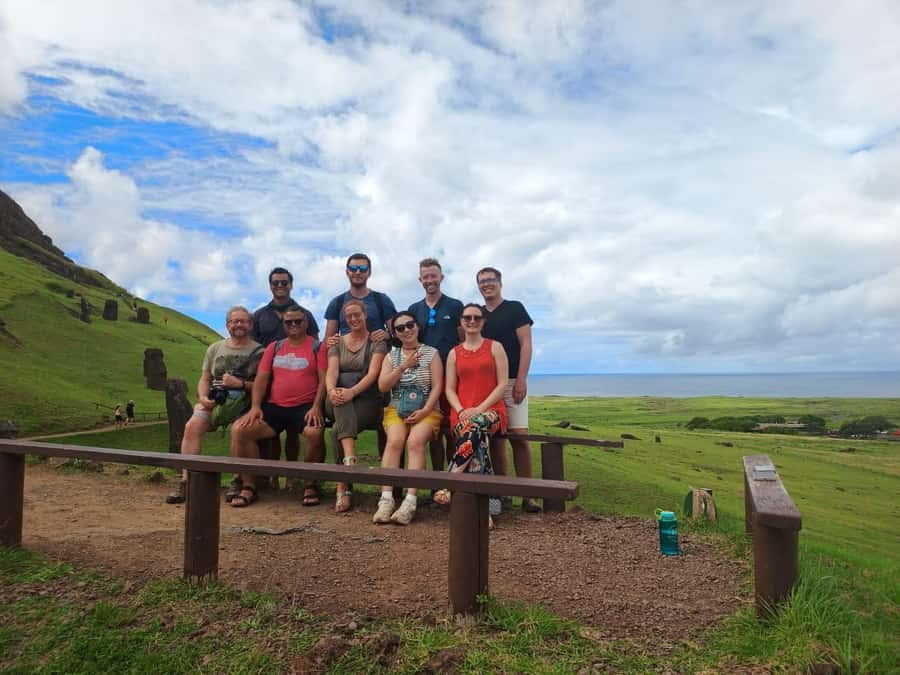
The second full day continues the island circuit, with more time for archaeological sites and the scenery around them. Rapa Nui’s volcanic origins are not background decoration. The stone, slopes, open fields, and coastal views help explain how the island’s communities lived and why certain locations became important.
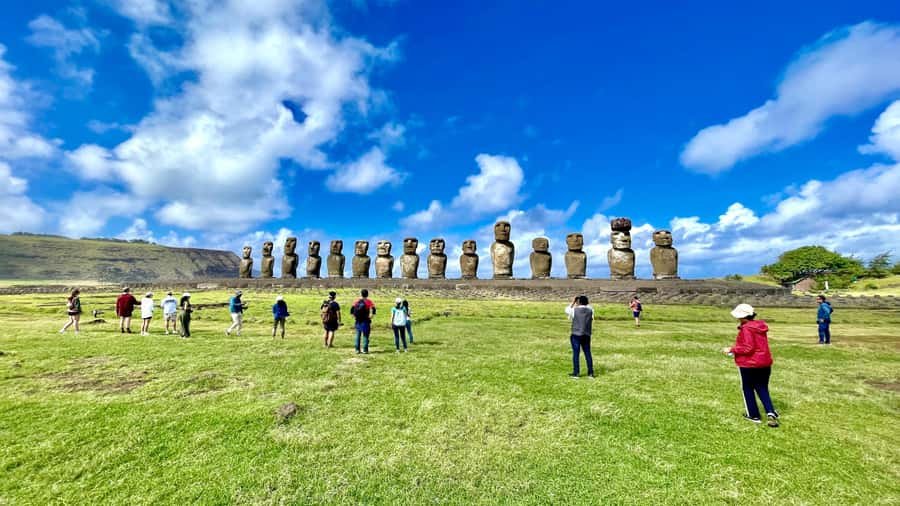
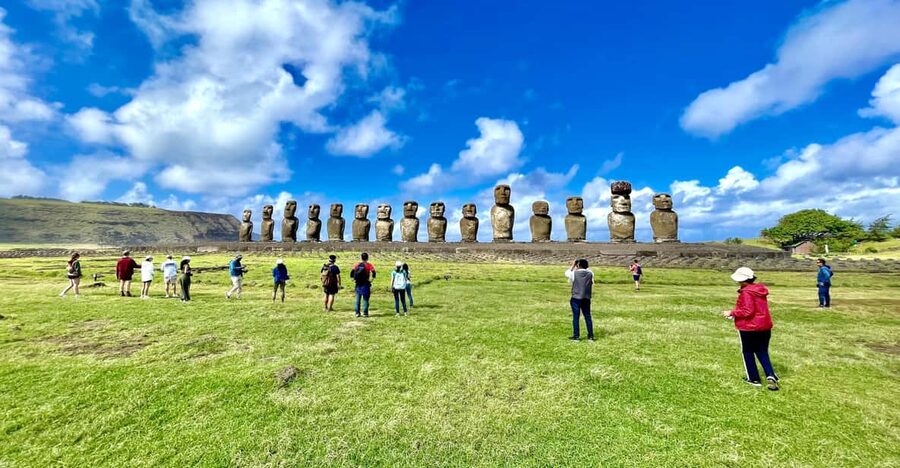
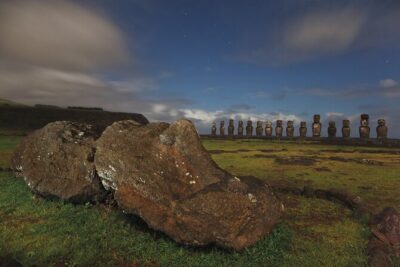
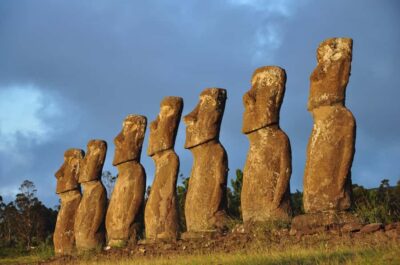
A key attraction is Ahu Tongariki, the great ceremonial platform with its line of Moai facing inland. It is one of the places most people picture before arriving on Rapa Nui, and the scale becomes clearer when you are standing in front of it. The platform was restored after severe damage, and the arrangement gives you a strong sense of the communal effort involved in building and maintaining such a site.
Seeing Tongariki during daylight is useful even if you also attend the sunrise. You can examine the figures, the platform, and the surrounding setting without being focused only on the changing sky. If your sunrise visit is rushed, the full-day visit may provide the better chance to take in the site properly.
The guides may approach the island’s story in different ways. Alejandro’s logical style may appeal if you prefer a clear structure and evidence-based explanations. David’s more controversial or inventive presentation may suit you if you enjoy discussing competing theories. You should be ready for some variation rather than expecting the same personality and teaching style for all three days.
That variation can work in your favor. You may hear different ideas about ancient rituals or unresolved questions, then decide which explanations make the most sense to you. If you prefer one consistent guide for the entire experience, ask about guide assignments before paying.
Sunrise at Tongariki: beautiful, but timing matters
The sunrise outing is the most time-sensitive part of the plan. Ahu Tongariki is widely associated with sunrise views, and the setting can be memorable when the light reaches the Moai and the Pacific sky changes color.
The practical problem is timing. One account describes pickup at about 6 a.m., with sunrise closer to 8 a.m., and a guide who needed to leave in time for a full-day tour around 9 a.m. That leaves a risk of waiting a long time, then having to depart before the sunrise has fully developed. Another account describes the sunrise as beautiful, so the experience can work well when the schedule allows enough time.
Ask three questions before the morning:
- What time will pickup be?
- What time is sunrise on your date?
- How long can you stay at Tongariki before returning?
Also ask where the group will stand. One account describes uncertainty about the best viewpoint, with the right position becoming clear only afterward. You should not assume that the guide will automatically place you at the exact spot you want, especially if several groups are arriving together.
The sunrise segment is best treated as a special photo and atmosphere stop, not a full archaeological lesson. The full-day visit gives you the time for history and site details. At dawn, you are mainly there for the light, silhouettes, and sense of place.
A towel is included on the suggested packing list, though the reason is not explained. Comfortable shoes and clothes matter more clearly. High heels are not allowed, and they would be a poor match for uneven ground in any case. Rain ponchos are provided if needed, which is a useful touch on an exposed island where weather can change.
A few more Easter Island days worth comparing
- From Hanga Roa: Rapa Nui Culture Sightseeing Tour
★ 4.6 · 307 reviews - From Hanga Roa: Easter Island Sightseeing Full Day Tour
★ 4.5 · 189 reviews - Full Day Tour in Rapa Nui
★ 4.5 · 122 reviews - Full day tour – DREAM
★ 5.0 · 86 reviews
Guides, languages, and the personal side of the tour
The experience is available in English, Spanish, and French. That makes a real difference on a tour built around oral history and interpretation. You want to understand the difference between a fact, a legend, and a guide’s preferred theory.
The operator uses certified local guides and offers private or small-group formats. A private tour should give you more control over questions and pace, while a small group may offer a friendlier shared experience at a lower cost than a fully private outing. The supplied information does not state the maximum group size, so ask before booking if crowding is important to you.
The human side of the service receives strong praise overall. The plan is described as well organized, and the guides are repeatedly credited with enthusiasm and useful information. The company also offers help before and after the tours, including suggestions for other activities and views on the island.
That support can be valuable on Rapa Nui because you are far from mainland Chile and may have only a few days to make decisions. Still, the service is not identical on every outing. The sunrise guide may function mainly as a driver and attendant rather than as a full interpreter. If detailed commentary matters most to you, save your biggest history questions for the two full-day tours.
What the price really covers
The listed price is $250 per person for three days of touring. That is not a budget sightseeing bus, but it covers two full days, one sunrise outing, local guides, accommodation pickup and return, rain ponchos, and pre- and post-tour assistance.
I consider the price reasonable if you value structure and local interpretation. Arranging transport to widely separated sites on your own could be awkward, and hiring a guide for two full days would likely require more planning. The service also supports a Rapa Nui-based operator and local guides, which gives your money a more direct local connection than a generic outside excursion.
The total cost is higher than the advertised tour price because the national park entry ticket is not included. The supplied figures are 20,000 CLP for Chilean nationals and 72,000 CLP for foreign nationals. You must have this ticket before the first day begins. It can be purchased in person at the Ma’u Henua offices or online through the Rapa Nui National Park ticket site.
Food is another extra. There are places to buy it, but snacks and drinks should be in your bag from the start. This is especially important because two full days can be tiring, and one direct account points out that some people arrived without enough food or water.
Pickup, walking, and what to pack
Pickup and drop-off are included, but the timing is strict. Be in the lobby or reception before the stated time. The vehicle will not knock on your door, and it cannot wait indefinitely for one person without affecting the rest of the group.
Transfers appear to be functional, though the route may include several accommodation pickups and can feel less direct. If you are sensitive to delays, allow patience at the beginning and end of each day. The advantage is convenience: you do not need to arrange separate transport to the archaeological sites.
You should have moderate physical fitness. The information does not give exact walking distances or trail grades, so do not assume that every stop is a simple roadside photo. Wear comfortable shoes, light and practical clothes, and bring water, snacks, sun protection, and a towel if you want to follow the suggested packing list.
Rain ponchos are supplied in wet weather. That helps, but it does not replace sensible clothing. High heels are not allowed, and sturdy casual shoes are the better choice for the island’s uneven outdoor sites.
Who will enjoy this most
I would recommend this experience to a first-time Rapa Nui visitor who wants the major sites explained rather than simply photographed. It suits you especially well if you have three days available and want hotel pickup, local guides, and help with planning the rest of your stay.
It is also a good fit if you enjoy hearing more than one interpretation of a complicated past. Having different guides such as Alex, Alejandro, and David can give the two full days a useful change of voice.
You may want another option if you need a tightly scripted schedule, one guide for every outing, or a long, unhurried sunrise session. The sunrise timing deserves special attention, and the guide assigned to that morning may not offer the same depth of commentary as the full-day guides.
Before booking, I would ask about the exact itinerary, guide assignments, group size, sunrise departure, and time at Tongariki. Those answers will tell you far more about the final experience than the headline price.
Should you book the Rapa Nui tour?
Book it if you want a practical introduction to Rapa Nui with two full days of guided sightseeing, local support, and a separate Tongariki sunrise. The strong overall rating reflects the parts that matter most: organization, guide enthusiasm, and access to the island’s major places.
Just budget for the park ticket, food, and drinks, and confirm the sunrise plan in writing. If you do that, this is a sensible way to see Rapa Nui without spending your short stay trying to solve transport and site planning on your own.
FAQ
How long does the experience last?
The experience lasts three days: two full-day tours followed by a sunrise outing at Ahu Tongariki.
Is the national park ticket included?
No. You need to buy it before the first activity. The supplied price is 20,000 CLP for Chilean nationals and 72,000 CLP for foreign nationals.
Can I buy the national park ticket online?
Yes. The ticket can be purchased in person at the Ma’u Henua offices or through the Rapa Nui National Park ticket website provided with the booking information.
Is food included?
No. Food is not included, but there are places where you can buy it. Bringing drinks and snacks is advised.
Which languages are available?
The tour is available in English, Spanish, and French.
What should I bring?
Bring comfortable shoes, comfortable clothes, and a towel. You should also plan for food and drinks. Rain ponchos are provided if it rains, and high-heeled shoes are not allowed.
Just added around Easter Island
- Ride to the highest point on the island for sunset★ 5.0 · 40 reviews
- Sunrise Tongariki: Sunrise at Tongariki Park Private Tour★ 4.5 · 47 reviews
- Terevaka Horse Excursion: The highest point and 360° view.★ 4.7 · 38 reviews
- Easter island: Snorqueling tour on coral reefs★ 4.4 · 47 reviews
- Half Day Tour in Rapa Nui★ 5.0 · 48 reviews
- Private Full-Day Easter Island Highlights South and East★ 5.0 · 60 reviews
- Full day tour – DREAM★ 5.0 · 86 reviews
- Rapa Nui Stargazing★ 4.5 · 62 reviews
Easter Island Tours, compared.
From Hanga Roa: Rapa Nui Culture Sightseeing Tour
Read our review →
From Hanga Roa: Easter Island Highlights 2-Day Tour
Read our review →
From Hanga Roa: Easter Island Sightseeing Full Day Tour
Read our review →
From Hanga Roa: Journey from Orongo to Ana Te Pahu
Read our review →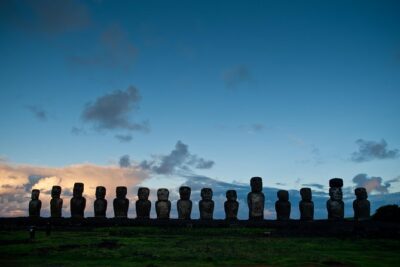
Journey of the Ancestors: Tongariki, Rano Raraku & Anakena Beach
Read our review →
Full Day Private Tour: Factory of the Moai the stone giants
Read our review →Browse the lists this tour appears in