
Reviewed · EASTER ISLAND TOURS
From Hanga Roa: Rapa Nui Culture Sightseeing Tour
Rapa Nui’s most famous moai sites are spread across the island, and this eight-hour circuit brings them together in one long, rewarding day. You’ll see the quarry at Rano Raraku, the great platform at Tongariki, the fallen statues of Akahanga, and Anakena Beach, where palm trees and warm-looking water provide a welcome finish.
I like the local guides, who bring the island’s customs and stories into the day rather than simply pointing at statues. I also like the route’s value: at $80, with transport and hotel pickup included, you can cover the essential eastern and northern sites without arranging a car.
The tradeoff is the pace. You’ll spend plenty of time getting on and off the vehicle, and lunch is not included. A late meal has caused at least one visitor to miss the final stop, so keep an eye on the clock.
Five things to know before you book
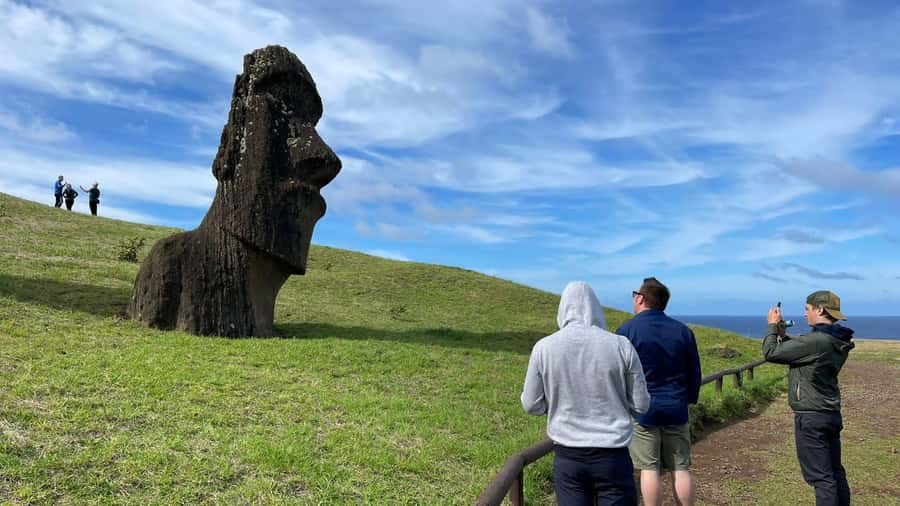
- Rano Raraku is the day’s big reveal: Unfinished moai still appear to rise from the volcanic rock where they were carved.
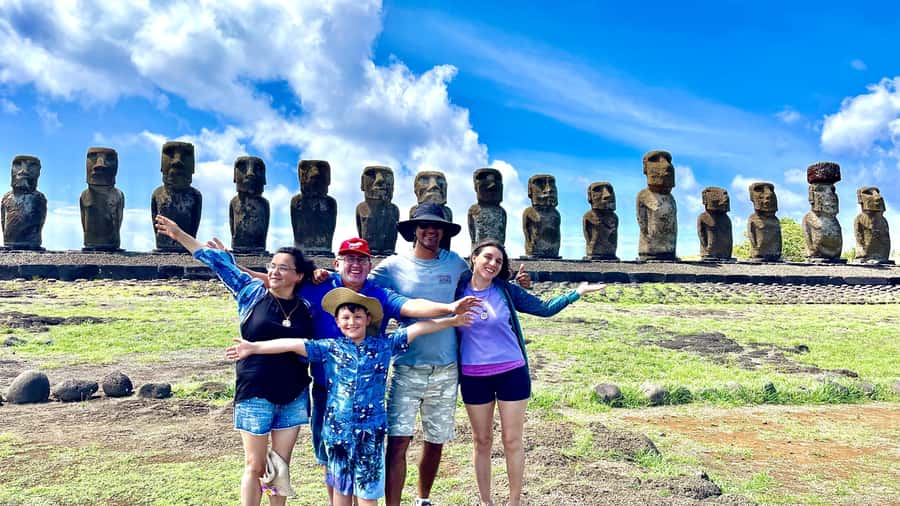
- Tongariki gives you the classic moai view: Fifteen statues line one huge ceremonial platform.
- Anakena is more than a photo stop: You get about 90 minutes of free time at the island’s best-known beach.
- Guides make the difference: Frank, Hivi, Habi, Javiera, Zoe, Enzo, and others have been praised for clear English and strong knowledge of local customs.
- Budget for two extras: The national park ticket and lunch are not part of the $80 price.
Seeing Rapa Nui’s major sites in one day
This tour is built for you if your time on Easter Island is short or you want an organized first look before exploring on your own. It covers a large portion of the island’s major archaeological sites, with a mix of guided walks, photo stops, and open time at Anakena.
The vehicle ride from Hanga Roa takes about 45 minutes before the sightseeing begins. Hotel pickup and drop-off simplify the day, especially if you do not want to arrange a rental car or navigate the island’s archaeological areas yourself.
The route is full, but not frantic on paper. Most stops allow 45 minutes, Rano Raraku gets about an hour, and Anakena receives the longest break at 90 minutes. Still, this is a full-day outing, and you should expect frequent transitions between the vehicle and the sites.
A few more Easter Island days worth comparing
- From Hanga Roa: Easter Island Highlights 2-Day Tour
★ 4.3 · 205 reviews - From Hanga Roa: Easter Island Sightseeing Full Day Tour
★ 4.5 · 189 reviews - Full Day Tour in Rapa Nui
★ 4.5 · 122 reviews
Vaihu and the first look at moai
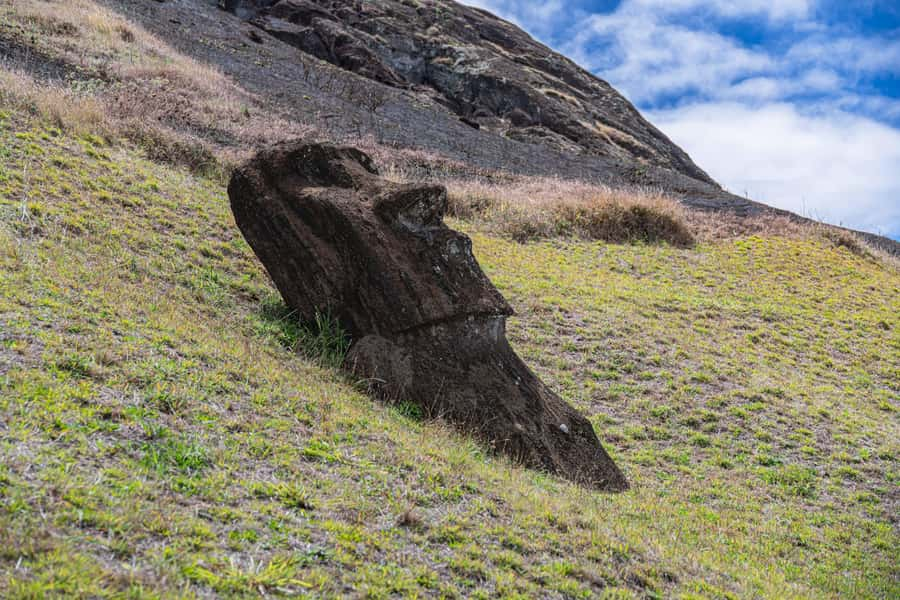
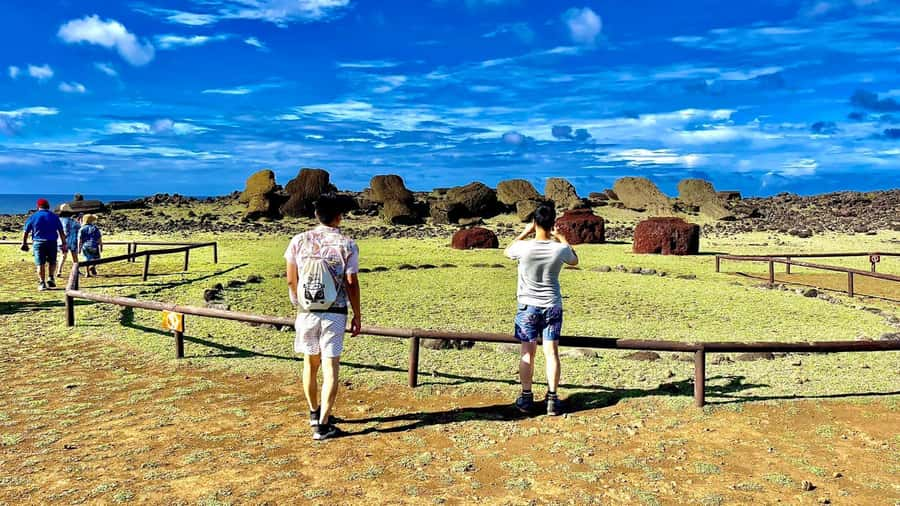
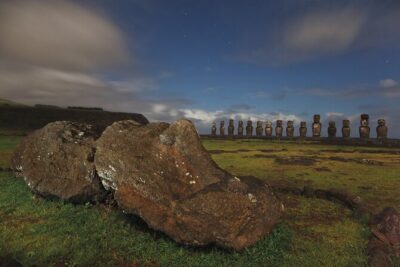
Vaihu is one of the earlier stops, with about 45 minutes for a guided visit and walk. Here, fallen moai lie among the open terrain, giving you an early introduction to the island’s ceremonial platforms and the changes that affected them over time.
It is not the stop most likely to define your day. One visitor called the first two locations less impressive than what followed. That is useful context, since the itinerary builds toward Rano Raraku and Tongariki rather than delivering its strongest sight immediately.
Still, Vaihu helps establish the scale of Rapa Nui. The statues are not isolated museum pieces. They belong to an island-wide network of platforms, quarry sites, villages, and ceremonial areas. A good guide can help you read the setting instead of treating the moai as a series of unrelated photo opportunities.
Akahanga and the island’s older stories
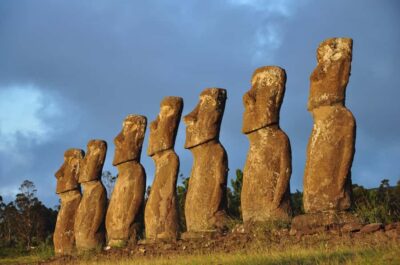
At Ahu Akahanga, you’ll have another 45-minute guided walk. The site is associated with legends and contains fallen moai, stone platforms, and rough coastal scenery.
This stop rewards patience. Akahanga is less polished than Tongariki, and the statues are not arranged in the perfect row you may have seen in photographs. That is precisely why it matters. The fallen figures and weathered stones show the archaeological sites as places with long, complicated lives, not just restored monuments.
Your guide’s explanation is especially important here. The tour’s strongest feature is not simply reaching Akahanga, but hearing how the site fits into Rapa Nui traditions and local accounts. Guides named Frank, Franco, Hivi, Habi, Javiera, Zoe, and Enzo have all received praise for explaining the island in English or Spanish, though the person leading your group will vary.
Rano Raraku, where the moai were carved
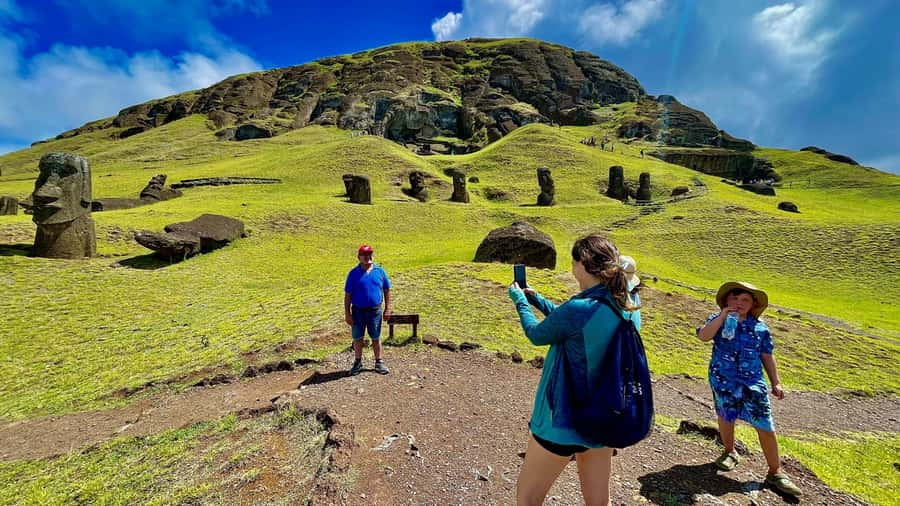
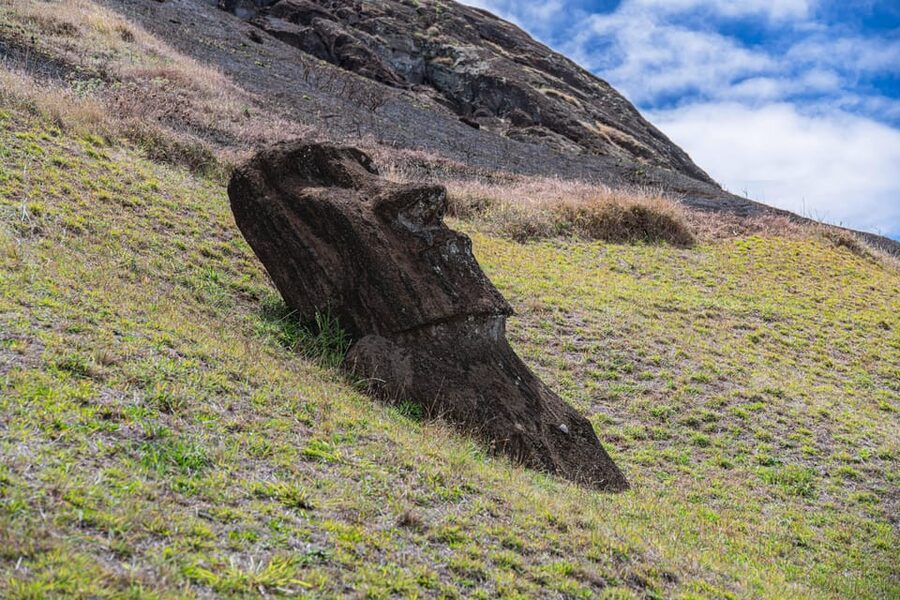
Rano Raraku is the point when the day usually gathers force. This volcanic quarry was the main source of the stone used for many moai, and about an hour is set aside for a guided visit and walk.
You’ll see unfinished statues still attached to the rock or partly buried in the slope. Their presence answers one of the island’s most basic questions: the moai were carved here before being moved to ceremonial platforms around Rapa Nui.
The unfinished figures also make this site feel different from the coastal ahu. At Tongariki, you see completed statues in a formal arrangement. At Rano Raraku, you see the worksite itself, including pieces that were abandoned at different stages. It is one of the clearest places to understand the skill, effort, and organization behind the statues.
Wear comfortable shoes and expect some walking. The itinerary identifies this as a guided walk, not simply a roadside viewing point. The national park ticket is not included in the tour price, so you need to budget for that separately.
Lunch may also be arranged around this part of the day, but it is not included. One person described eating at a restaurant near the quarry, with reasonable prices and good food. Another found lunch so late that the final stop was missed. I would ask about the meal timing at the start of the morning and avoid letting lunch stretch beyond the planned schedule.
Same trip, a completely different kind of day:
- Full day tour – DREAM
★ 5.0 · 86 reviews - From Hanga Roa: Journey from Orongo to Ana Te Pahu
★ 4.3 · 75 reviews - Journey of the Ancestors: Tongariki, Rano Raraku & Anakena Beach
★ 4.5 · 70 reviews - Full Day Private Tour: Factory of the Moai the stone giants
★ 4.5 · 63 reviews
Tongariki and the island’s most famous platform
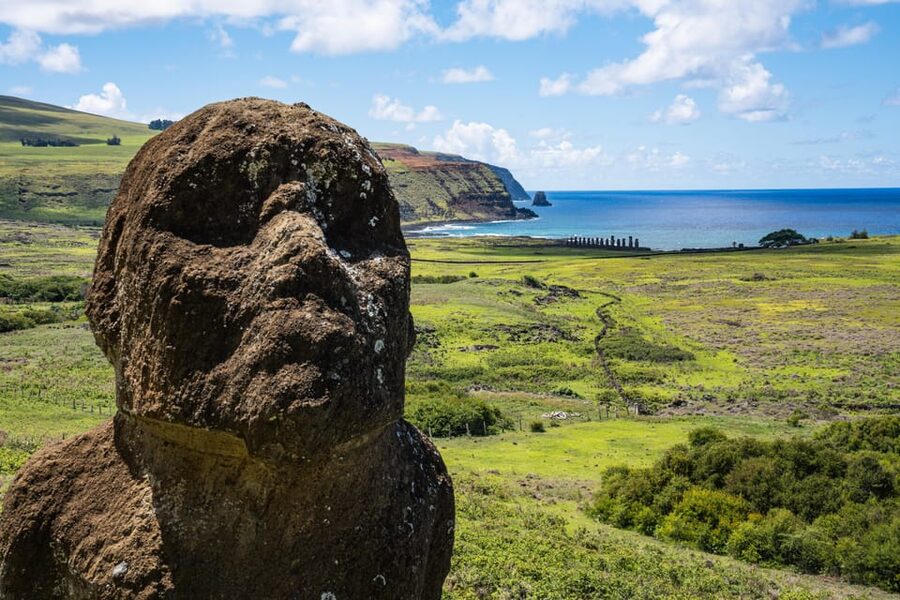
Ahu Tongariki is the visual centerpiece for many people. Fifteen moai line the platform, creating the most recognizable group of standing statues on Rapa Nui.
You’ll have about 45 minutes here, enough for photographs and a guided explanation. The setting gives you a strong sense of the statues’ scale, spacing, and relationship to the sea and surrounding terrain.
This is also where the value of a guide becomes clear. A quick visit can leave you with a striking photograph but little understanding of what you are seeing. A strong local guide can explain the platform, the statues, and the island’s customs in a way that connects the stone figures to the people who made and cared for them.
Past visitors have described guides switching comfortably between English and Spanish. Frank was also praised for speaking Rapa Nui, English, and Spanish. You should not assume every guide speaks all three languages, but English and Spanish are listed for the tour.
Te Pito Kura and the magnetic stone
The next stop, Ahu Te Pito Kura, lasts about 45 minutes. It is known for a large rounded stone traditionally associated with unusual magnetic properties and spiritual importance.
This is a shorter and more focused stop than Rano Raraku or Tongariki. The interest comes from the meaning attached to the stone, not from a large group of standing moai. If your priority is seeing as many intact statues as possible, you may find this stop less satisfying than the quarry or Tongariki.
I would still keep it on the route. Rapa Nui is not only about statues. The stone offers a glimpse of how natural objects can carry ceremonial importance and local stories. The guide’s explanation gives the stop its purpose.
Anakena Beach is the right finale
The day ends at Anakena, where you’ll have about 90 minutes of free time. This is the tour’s best chance to slow down, take photographs, walk near the palms, or swim if conditions and your plans allow.
Bring swim shorts and a towel if you want to use the beach. One visitor called it the finest beach they had seen, and several people singled out the chance to swim as a highlight. The beach gives the day a welcome change of pace after hours of archaeological sites and guided walks.
Anakena also adds balance to the itinerary. You are not spending the entire day among stone platforms. You get a final stretch of coast, sand, palms, and open time before returning to Hanga Roa.
The free time is generous compared with the 45-minute stops, but it depends on the group keeping to schedule earlier in the day. A delayed lunch or a late departure could reduce this final break. If Anakena matters most to you, tell the guide early that you want to protect the beach time.
How good are the guides?
The guide is the most praised part of this experience, and that matters more here than on a simple sightseeing bus. The sites are powerful, but the meaning behind them is not always obvious.
Named guides include Javiera, Hivi, Habi, Frank, Franco, Zoe, Enzo, and Jose. Several have been described as local islanders, and their strength is connecting the moai to Rapa Nui traditions, daily life, and oral accounts.
The best comments describe guides who answer questions, explain cultural details in context, and handle both English- and Spanish-speaking participants. One guide was praised for making the day relaxed while still covering the important sites. Another managed a small group of only four people, which can make stops feel more personal.
The standard is not guaranteed every time. One account described a guide who gave only surface explanations, left important information out, and made an insulting remark. That appears to be an exception among the supplied feedback, but it is a fair reminder that guide quality can vary. If something is unclear, ask direct questions early rather than waiting until the last stop.
Comfort, vehicle time, and group pace
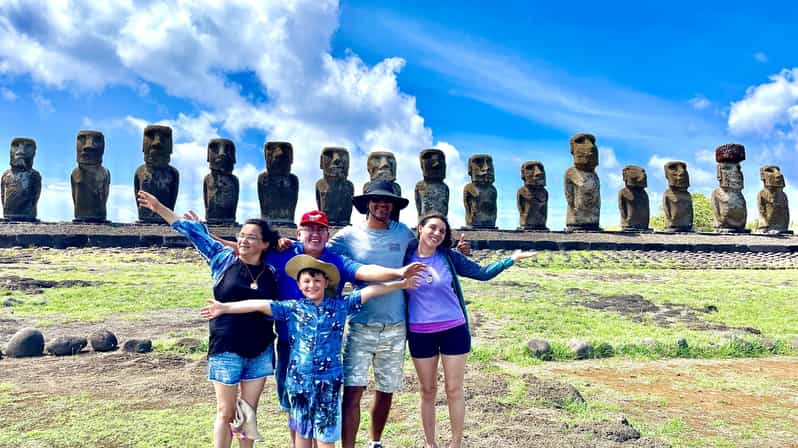
The tour includes transportation and hotel pickup in Hanga Roa. The first listed bus ride takes about 45 minutes, and the route includes several short transfers between sites.
One person specifically praised the quality of the minivan, while others liked the punctual pickup and the lack of unusually long journeys. The comfort matters because the day lasts eight hours and includes repeated walking stops.
You should also be ready for a group schedule. The tour is designed to cover the island’s major sights in one day, so you will not have unlimited time at each place. Two people felt that some minor stops could have been shortened to allow more time at the most important moai sites.
That is the central choice. If you want to see the classic route efficiently, the structure works well. If you prefer to linger, sketch, hike, or study one site at length, a private or self-directed plan may suit you better.
What $80 gets you
At $80 per person, the price is reasonable for a full day that includes transport, a local guide, and pickup and drop-off in Hanga Roa. The biggest value is time. You can reach Vaihu, Akahanga, Rano Raraku, Tongariki, Te Pito Kura, and Anakena without arranging the route yourself.
The price does not include the national park ticket or lunch. Those extras can affect the real cost, so include them in your budget before booking. Lunch prices on Rapa Nui can be higher than you expect, though one account found the restaurant meal near the quarry reasonable.
The tour also offers free cancellation up to 24 hours before departure and a reserve-now, pay-later option. Pickup is included, and you should wait in your hotel lobby 10 minutes before the scheduled time.
Wheelchair access is listed, but the stops include walks at archaeological sites. If you use a wheelchair, confirm how each site will be handled before the day begins.
Who should book this Rapa Nui tour?
I would choose this tour if you have only one full day on the island, want the major moai sites in one route, or prefer local explanation to independent sightseeing. It is also a good first-day plan if you want a broad introduction before returning to a favorite site on your own.
It suits history-minded visitors, photographers, first-time island visitors, and anyone who values hotel pickup. The mix of archaeology and Anakena Beach also works well for people who want more than a full day of stone platforms.
I would think twice if you dislike group schedules, need long quiet periods at each site, or want complete control over lunch and departure times. The route is busy, and the best locations may deserve more than their allotted 45 minutes.
Should you book it?
Yes, if your aim is to see Rapa Nui’s essential sites in one day with a local guide. The strongest reasons are the route, the quarry at Rano Raraku, the fifteen moai at Tongariki, and the relaxed finish at Anakena.
Book it with two practical plans: bring sun and beach gear, and sort out lunch timing before the morning gets away from you. At $80, it offers a sensible way to cover the island, provided you accept a full schedule and remember that the park ticket and food cost extra.
FAQ
How long does the Rapa Nui Culture Sightseeing Tour last?
The tour lasts eight hours, including transportation, guided visits, walking time, and the return to Hanga Roa.
Where does the tour start and end?
Pickup and drop-off are provided in Hanga Roa. You should wait in your hotel lobby 10 minutes before the scheduled pickup.
Which sites does the tour visit?
The route includes Vaihu, Ahu Akahanga, Rano Raraku, Ahu Tongariki, Ahu Te Pito Kura, and Anakena Beach.
Is lunch included?
No. Lunch is not included in the $80 price. A restaurant stop near the moai quarry has been used during the day, but you should budget separately for food.
Is the national park ticket included?
No. The national park ticket must be purchased separately.
What languages are available?
Live guiding is available in English and Spanish. Some guides may also speak Rapa Nui, but English and Spanish are the listed tour languages.
Is the tour wheelchair accessible?
Yes, the activity is listed as wheelchair accessible. Since several visits include walking at archaeological sites, confirm the practical arrangements for each stop before departure.
Just added around Easter Island
- Ride to the highest point on the island for sunset★ 5.0 · 40 reviews
- Sunrise Tongariki: Sunrise at Tongariki Park Private Tour★ 4.5 · 47 reviews
- Terevaka Horse Excursion: The highest point and 360° view.★ 4.7 · 38 reviews
- Easter island: Snorqueling tour on coral reefs★ 4.4 · 47 reviews
- Half Day Tour in Rapa Nui★ 5.0 · 48 reviews
- Private Full-Day Easter Island Highlights South and East★ 5.0 · 60 reviews
- Two days of Full Day Tour of Rapa Nui + Sunrise in Tongariki★ 4.8 · 55 reviews
- Full day tour – DREAM★ 5.0 · 86 reviews
Easter Island Tours, compared.
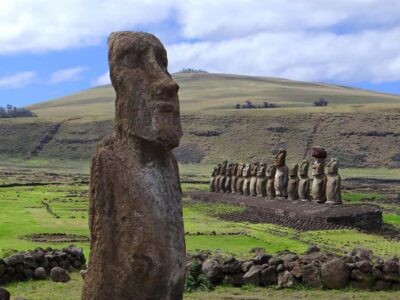
From Hanga Roa: Easter Island Highlights 2-Day Tour
Read our review →
From Hanga Roa: Easter Island Sightseeing Full Day Tour
Read our review →
From Hanga Roa: Journey from Orongo to Ana Te Pahu
Read our review →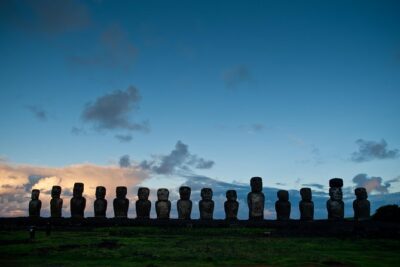
Journey of the Ancestors: Tongariki, Rano Raraku & Anakena Beach
Read our review →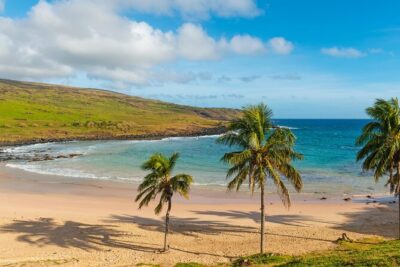
Full Day Private Tour: Factory of the Moai the stone giants
Read our review →
Browse the lists this tour appears in