
Reviewed · STARGAZING TOURS
San Pedro de Atacama: Etno-Stargazing Tour with Transfer
The best part of this Atacama evening is the change in scale. One minute you are looking at the Milky Way as an ancient Andean road, and the next you are using a telescope to pick out Saturn, a binary star, or a distant cluster. Guides such as Felipe, Claudio, and Salvador explain the science clearly, without turning the night into a dry lecture.
I especially like two things here: the mix of modern astronomy and Andean sky lore, and the chance for everyone to use the large telescopes rather than simply watch the guide work. The dark desert setting does much of the heavy lifting. One caution: the desert becomes very cold after sunset, and a bright moon can wash out many stars, so check the lunar calendar before booking.
Key points to know before booking
- Two ways of reading the sky: Learn Western astronomy, then hear how ancient Andean communities read animals, rivers, water, time, and the afterlife in the stars.
- Real telescope time: You get help focusing on planets, star clusters, nebulae, galaxies, and binary stars, depending on the season.
- Strong English and Spanish guiding: Felipe, Claudio, Salvador, and other guides have been praised for clear explanations and patient answers.
- A warm finish: Coffee, tea, or red wine are included, and the evening may also feature a bonfire, snacks, and a relaxed picnic-style finish.
- Moonlight matters: A full or nearly full moon can reduce the number of stars visible, though the telescope can still offer good views.
- Pickup is central, not from the ayllus: Transfers serve San Pedro de Atacama, with meeting and return points at Licancabur 10 and Restaurant Tara.
Why the Atacama night sky feels different
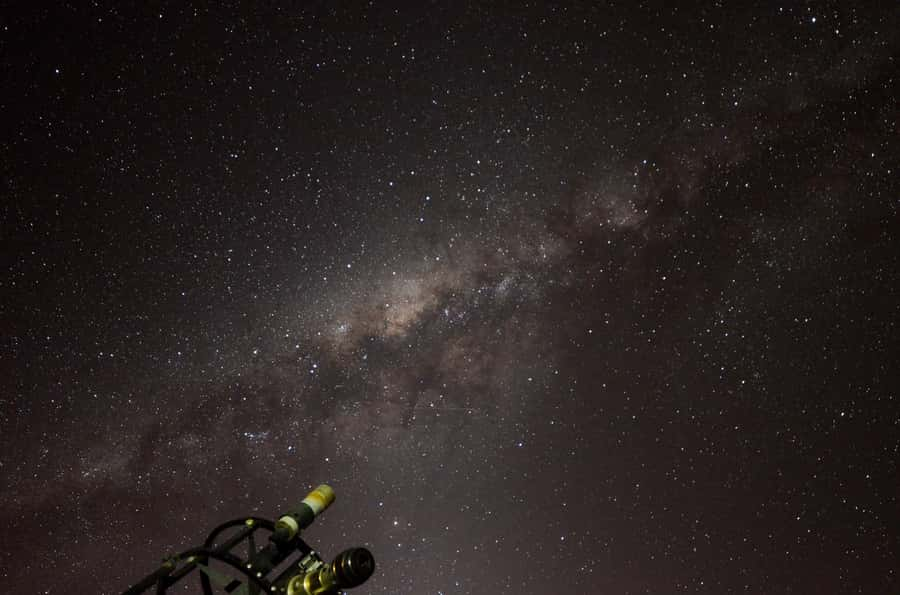
San Pedro de Atacama is an excellent place to look up because the tour takes you away from the town’s lights into a darker desert setting. The sky is not merely scenery here. It becomes the subject of the evening, with the guide showing you how to read brightness, color, position, and movement.
You begin with the Western view of the universe. This covers stars, planets, constellations, the solar system, deep space, and ideas about how the cosmos formed. The guide may point out objects visible during your visit, but the exact selection depends on the season and the conditions that night.
The Southern Hemisphere gives this experience extra appeal. You can look for the Southern Cross, a familiar feature of southern skies that many visitors from Europe or North America have never seen from home. Depending on the date, you might also see Saturn, the Moon, star clusters, nebulae, galaxies, or double stars through the telescope.
This is a good tour for curious beginners. You do not need to know the difference between a nebula and a galaxy before arriving. The guides use laser pointers, telescope views, and direct questions to make the subject easier to follow. Several guides, including Felipe and Claudio, have been singled out for explaining difficult ideas in plain English.
More Stargazing Tours in San Pedro De Atacama:
- San Pedro de Atacama: Stargazing Experience
★ 4.7 · 489 reviews - Astronomical Tour with Guide and Pick Up San Pedro de Atacama
★ 4.5 · 145 reviews - San Pedro de Atacama: Guided Atacama Desert Stargazing Tour
★ 3.9 · 93 reviews
From ancient Greece to Andean star stories
The astronomy lesson then takes a cultural turn. You learn how Greek traditions turned stars into figures and stories, but the tour does not stop with the familiar Western constellations.
The Andean section is the more distinctive part. Long before Spanish arrival, Indigenous communities watched the night sky closely and used it as a guide to daily life. Instead of seeing only bright stars connected into outlined figures, they also read the dark spaces between the stars.
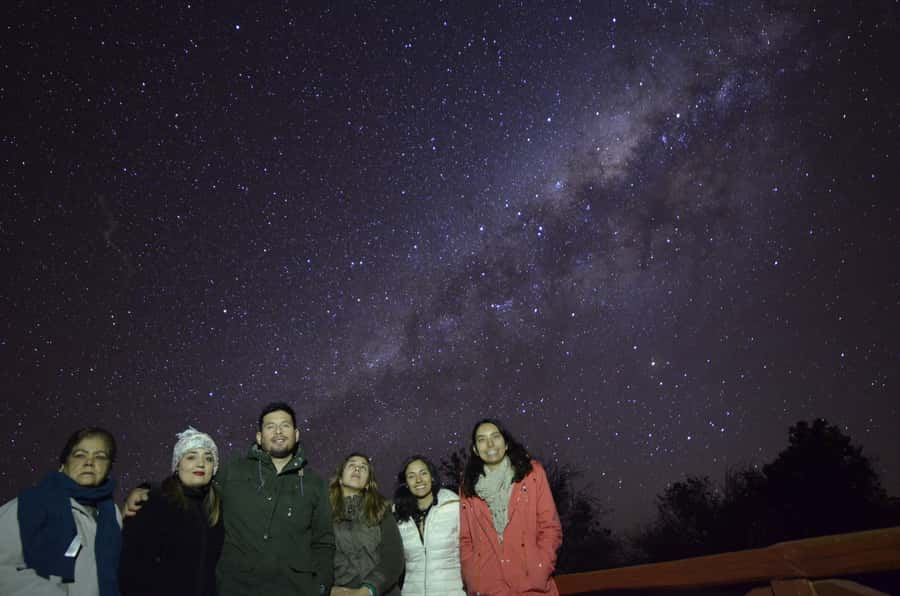
That difference is easy to miss, but it changes how you look at the Milky Way. Dark patches could suggest animals, water, rivers, schedules, and ideas about life after death. The sky was not separate from the earth. It helped explain seasons, movement, and the order of daily life.
I like this part because it gives the telescope viewing a local connection. You are not simply ticking off planets. You are learning that the same sky can be understood in several ways, depending on the culture doing the looking.
The best guides keep the discussion open and practical. Felipe has been praised for connecting current research with ancient knowledge, while Salvador has been described as energetic and especially good at making the subject accessible. Your guide may be different, but the activity is offered in English and Spanish.
The 15-minute ride into darker desert
Pickup is included in San Pedro de Atacama, but not in the surrounding ayllus. The stated meeting points are Restaurant Tara and Licancabur 10, so confirm the exact location and make sure you can identify it after dark. One person had trouble finding Restaurant Tara, and the guide eventually came looking for the group.
The drive out takes about 15 minutes by van. That short transfer is useful because it gets you away from the brightest town lights without turning the evening into a long transport operation. The return ride takes about 25 minutes, and drop-off is back at Licancabur 10 or Restaurant Tara.
Pickup times change with the season. In April through August, pickup is listed for 7 p.m. During Chilean summer time, it is usually between 9 and 9:20 p.m. Check the confirmed time carefully, especially if you have an early excursion the next morning.
Weather can change the plan. If clouds or other poor conditions affect visibility, the tour may be moved later the same night or to the following night. If it cannot run, other options are offered. This flexibility is sensible in the desert, where a small shift in timing can make the difference between a cloudy sky and a clear one.
A 90-minute lesson beneath the stars
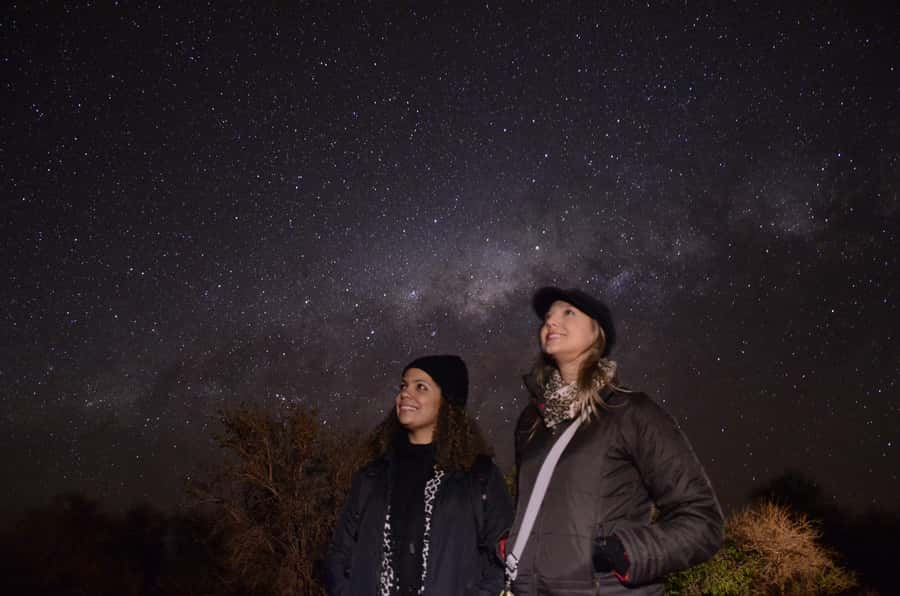
The main stop lasts about an hour and a half. The time is generally shared between the sky talk, unaided stargazing, telescope viewing, and photography.
At first, give your eyes time to adjust. The sky may look crowded with stars, but the guide helps you separate the major patterns and identify useful reference points. The brightness and color of a star can tell you something about it, and the guide explains why some objects appear sharper or more striking than others.
The telescope session is the practical heart of the evening. You can look through the equipment with help from the guide, who focuses it and explains what you are seeing. This matters because telescope views can be underwhelming if you do not know where to look or what detail to expect.
You may view planets, stars, binary stars, clusters, nebulae, or galaxies. The exact menu depends on the time of year, the moon, and the weather. Saturn has been a highlight on several evenings, as have Antares, the crescent Moon, and star clusters.
Groups have used two large telescopes, which can reduce waiting time. Still, this is a shared activity, not a private observatory session. You may need to take turns, especially if the group is busy or several people want a second look at the same object.
The guide’s role makes a big difference. Claudio has been praised for keeping children interested with just the right amount of information. Other guides have answered tricky questions patiently and adjusted the objects shown to match the group’s interests. If you have a particular planet or feature in mind, ask. The viewing list is not fixed.
More transfers and shuttles around San Pedro De Atacama:
- Buenos Aires: City Highlights Guided Tour with Transfer
★ 4.7 · 1,946 reviews - Santiago: Concha y Toro Vineyard Tour w/ Transfer & Tasting
★ 4.2 · 455 reviews - Private transfers from Lima Airport or to Lima Airport
★ 4.0 · 359 reviews - La Paz: Cholitas Wrestling Tickets and Transfer
★ 4.4 · 338 reviews
Why the moon calendar deserves attention
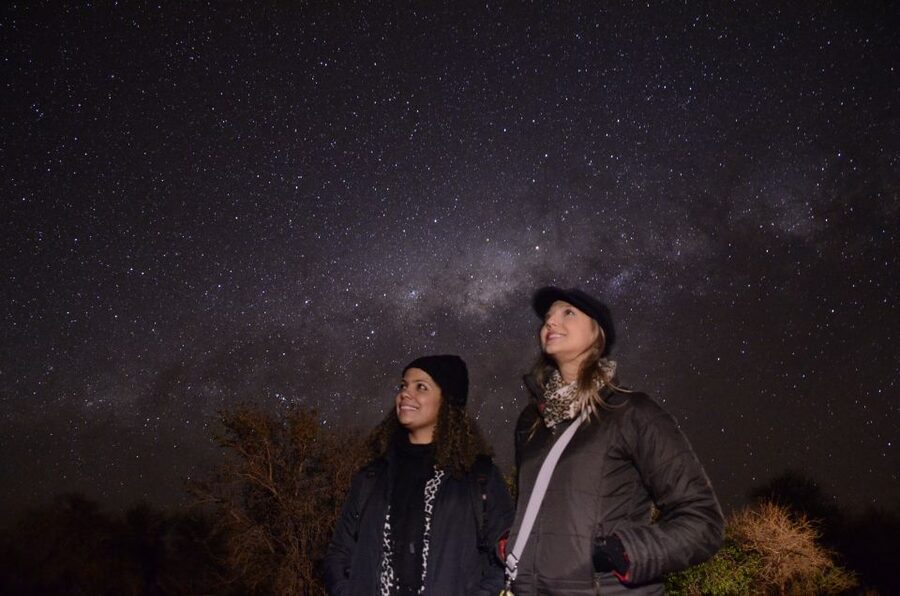
The lunar phase is the main factor to consider before you pay. A dark or lightly moonlit night usually gives you more stars and clearer views of faint objects. A bright moon can make the sky look less crowded, even when the air is clear.
A full moon is not a total failure. It can still be a strong target through the telescope, and bright planets remain worth seeing. But if your main dream is a dense Milky Way or a sky packed with faint stars, choose your date with care.
The included souvenir photo also changes in bright moonlight. During periods of high moonlight, the photo is taken only through the telescope eyepiece rather than as a broader portrait beneath the stars. Check the lunar calendar before booking if the photograph matters to you.
Warm ponchos, drinks, and the final photo
The Atacama is famously dry, but dry does not mean warm. Once the sun disappears, temperatures can drop quickly. Wear several layers, long trousers, and comfortable shoes. Bring extra warm clothing even if the afternoon felt hot.
Ponchos or blankets have been provided on many evenings, and that is a thoughtful touch. Even so, I would not rely on supplied warmth alone. A warm jacket, hat, and gloves will make it easier to focus on the sky instead of your fingers.
Coffee, tea, and red wine are included. Recent versions of the evening have also featured hot chocolate, snacks, a bonfire, and a more generous picnic-style finish. Some groups have enjoyed wine around the fire, while one evening included a pisco sour. Treat these extras as part of the operating style rather than a guaranteed menu, since the exact food and drink offering can vary.
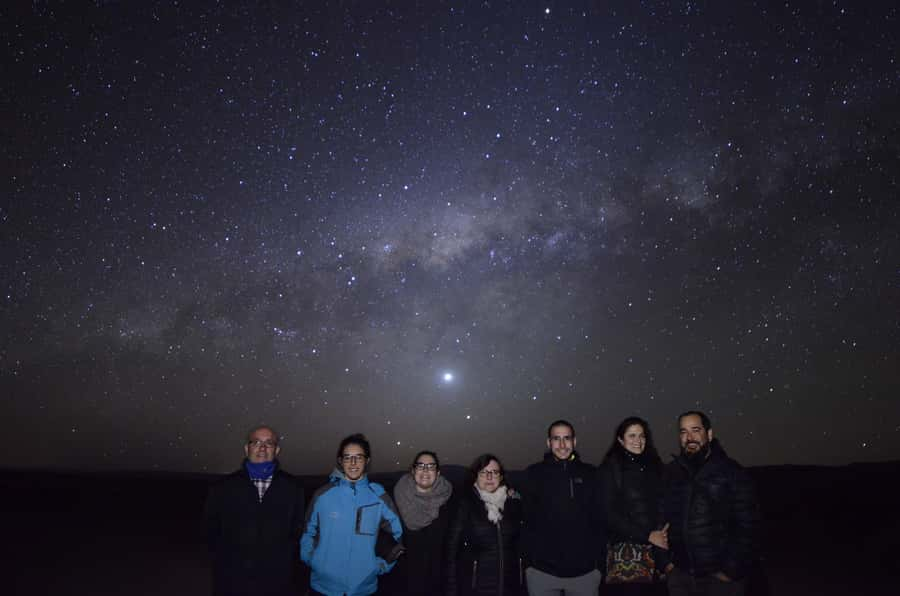
The star photo is another welcome extra. The team helps with poses and sends the finished image by email. It gives you a simple souvenir that shows the setting, rather than leaving you with only a phone full of dark, blurry pictures.
You may bring binoculars, but they are not required. The tour provides telescope equipment, and the guide does the hard work of locating and focusing the targets.
Is $41 good value for 150 minutes?
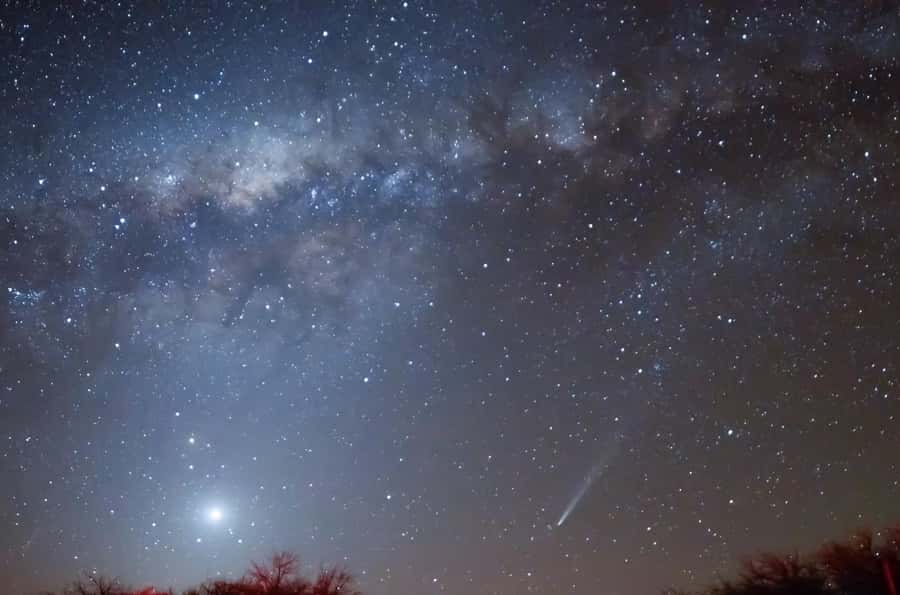
At $41 per person, this is a strong value if you want both explanation and equipment. A basic dark-sky outing can leave you staring upward without knowing what you are seeing. Here, the guide supplies the story, the cultural context, the telescope access, and the photo.
The value improves if your evening includes the bonfire, snacks, and several drinks. Families have found the structure easy to enjoy, and children around ages 10 to 15 have stayed engaged when the guide kept the facts focused and interactive.
The tradeoff is that the experience depends on nature. Clouds can force a delay, and moonlight can reduce visibility. You are paying for a well-planned chance to see the sky, not a guaranteed list of planets or galaxies.
The tour is also not ideal if you want a private, silent stargazing session. The guide talks throughout much of the evening, and telescope viewing is shared. For most first-time observers, that is a benefit. Experienced amateur astronomers may want more control over the equipment and a longer period for independent observation.
The activity is listed as wheelchair accessible, with pickup included in San Pedro proper. Confirm the meeting point and any personal mobility needs before departure.
Who should book this astronomy evening?
I would choose this tour if you want a clear introduction to astronomy, enjoy learning how cultures interpret the same sky, or need a family-friendly evening that does not require prior knowledge. It suits couples, families, and solo visitors who want an organized way to see the southern stars.
It is particularly useful early in your Atacama stay. A guide can help you recognize the Southern Cross and other features for the rest of your trip. You may find yourself looking up from a restaurant courtyard later and spotting patterns that would otherwise pass unnoticed.
Book with more caution if you dislike cold weather, need a fixed schedule, or have only one chance to see a cloudless sky. The weather policy helps, but a late change may affect your plans. Also avoid booking a bright-moon night if your priority is a packed Milky Way.
Should you book the San Pedro stargazing tour?
Yes, if you want a practical, well-priced introduction to the Atacama sky. The combination of Andean astronomy, telescope viewing, and patient guiding gives the evening more substance than a simple star photo stop.
Choose your date with the moon in mind, bring serious warm layers, and confirm the pickup point. If the conditions cooperate, you can expect a memorable night with planets, Southern Hemisphere constellations, a useful lesson in Andean sky traditions, and a warm drink beside the fire.
FAQ
How long does the stargazing tour last?
The activity lasts 150 minutes, including transfers and the guided astronomy experience. The main stop in San Pedro de Atacama is listed as about 1.5 hours, with the van ride taking about 15 minutes out and 25 minutes back.
Where does pickup take place?
Pickup and drop-off are offered in San Pedro de Atacama, not in the ayllus. The listed locations are Restaurant Tara and Licancabur 10.
What time does pickup happen?
From April through August, pickup is listed for 7 p.m. During Chilean summer time, pickup is usually between 9 and 9:20 p.m. Check availability for the exact date.
What can I see through the telescope?
Depending on the season and conditions, you may see planets, stars, binary stars, star clusters, nebulae, galaxies, or the Moon. The guide helps focus the telescope and explains each object.
Is the tour available in English?
Yes. Live guiding is available in English and Spanish. Guides including Felipe, Claudio, Salvador, and others have led English-language sessions.
What should I wear?
Bring warm clothing, comfortable clothes, and comfortable shoes. The desert can become very cold at night. Binoculars are allowed, and the activity also provides telescope equipment.
What happens if the weather is bad?
The tour may be moved to a later time the same night or to the next night. You will be notified, and if the activity must be canceled, other options will be offered.
Just added around San Pedro De Atacama
- San Pedro de Atacama: Guided Atacama Desert Stargazing Tour★ 3.9 · 93 reviews
- Sandboarding Tour in San Pedro de Atacama, Chile★ 4.9 · 77 reviews
- San Pedro de Atacama: Rainbow Valley & Hierbas Buenas Tour★ 4.7 · 40 reviews
- San Pedro de Atacama: Red Rocks & Altiplano Lagoons Day Trip★ 4.9 · 108 reviews
- San Pedro de Atacama: 3 D. Tour Uyuni and Back to San Pedro★ 4.8 · 61 reviews
- San Pedro de Atacama: Guided Buggy Tour Through the Desert★ 5.0 · 99 reviews
- Caracoles: Red Stones of Atacama and Chaxa Guided Day Trip★ 4.8 · 56 reviews
- From San Pedro de Atacama: Rainbow Valley Tour★ 4.9 · 48 reviews
Stargazing Tours, compared.
Astronomical Tour with Guide and Pick Up San Pedro de Atacama
Read our review →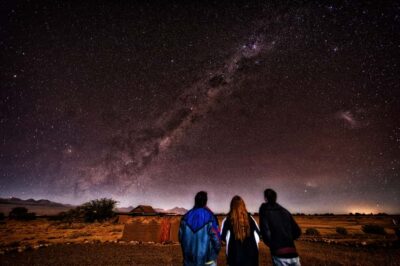
Cusco by Night: Planetarium Cusco, Dinner, and Pisco Sour
Read our review →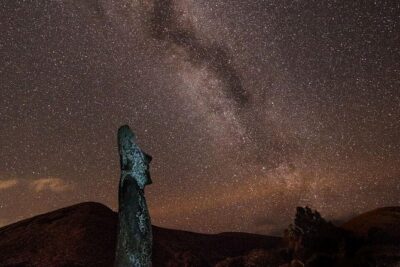
Browse the lists this tour appears in