
Reviewed · EASTER ISLAND TOURS
From Hanga Roa: Easter Island Highlights 2-Day Tour
Rapa Nui’s moai are impressive anywhere, but they make far more sense when you see the quarry where they were made, the platforms where they once stood, and the coastlines tied to island tradition. This two-day tour connects the major sites in a sensible order, from Vaihu and Akahanga to Rano Raraku, Tongariki, Orongo, and Ahu Akivi. Local guides add the human story behind the stone.
I especially like the access to Rano Raraku and Tongariki on the first day, plus the chance to hear about modern Rapa Nui life from native guides such as Jeremías, Zoe, Roberto, and Enerike. The minibus pickup and small groups make a long day easier. The main drawback is that the two days may not feel equally strong: the first day is usually the fuller experience, while the second can feel rushed, especially when commentary switches between English and Spanish.
Key points to know before booking
- Rano Raraku puts the moai in context: You see the volcanic quarry where many statues were carved, not just the finished figures beside the sea.
- Day one is the fuller archaeological circuit: Vaihu, Akahanga, Rano Raraku, Tongariki, Te Pito Kura, and Anakena form a powerful introduction to Rapa Nui.
- The second day adds variety: Orongo, Vinapu, Puna Pau, Ana Te Pahu, and Ahu Akivi show cliffs, stonework, caves, topknots, and unusual moai placement.
- Native guides are a major strength: Guides including Jeremías, Zoe, Roberto, Enerike, Javier’s Hucke, Simon, and Franko have been praised for clear explanations and local perspective.
- Bring food and sun protection: Lunch is not included, and the second day may have no proper meal stop.
- Expect a bilingual small-group tour: Groups can reach 14 people, and English and Spanish explanations may take extra time.
Why two days works well on Rapa Nui
Rapa Nui is small enough to cross by road, yet its important sites are spread around the coast and interior. Seeing the island properly is not just a matter of stopping for photographs. The meaning of a moai changes when you know how it was carved, moved, placed on an ahu platform, and connected to a particular community.
This tour gives you that broad structure over two days. You do not have to arrange separate transport to the eastern coast, the volcanic quarry, the ceremonial village at Orongo, and the caves inland. Pickup from your accommodation is included, and transport is by spacious minibus.
That convenience matters here. Several major archaeological areas require a guide, so a guided circuit is a practical way to cover the island. At $170 per person for two days, the price is reasonable if you want the major sights explained rather than simply photographed. You still need to budget for site entrance fees, food, and possibly drinks or snacks.
The group limit is 14 people. That is not a private tour, but it is small enough for questions and a more personal guide experience than a large coach. Some departures may be much smaller. One pair had five people on the first day and a private guide on the second, though you should not count on that arrangement.
More 2-Day Trips in Easter Island:
- Two days of Full Day Tour of Rapa Nui + Sunrise in Tongariki
★ 4.8 · 55 reviews - From Puno: Uros, Amantaní & Taquile Islands 2-Day Tour
★ 4.5 · 452 reviews - From Cusco: 2-Day Trip to the Sacred Valley and Machu Picchu
★ 4.6 · 265 reviews
Day one: the southern coast and the moai heartland
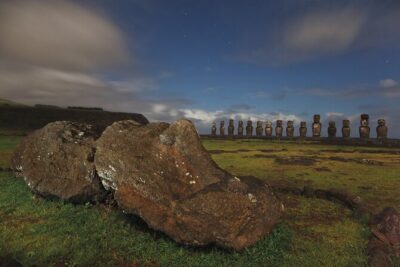
The first day begins with pickup and a run along the southern coast. The opening stops at Vaihu and Akahanga introduce you to a less polished side of Rapa Nui archaeology. Here, toppled moai and broken ahu platforms remain where they fell or were left, rather than being restored into a neat display.
At Vaihu, the setting helps you understand the scale of the island’s ceremonial sites. At Akahanga, the fallen statues create a quieter, more solemn scene. Your guide can explain the different theories about the collapse of the moai culture without reducing everything to one simple answer. That kind of explanation is one reason this tour is more useful than driving around alone.
The terrain is open and exposed. Bring a hat, sunscreen, and water. One full day includes a lot of walking and time in direct sunlight, with little shade at several stops.
Rano Raraku, where the statues began
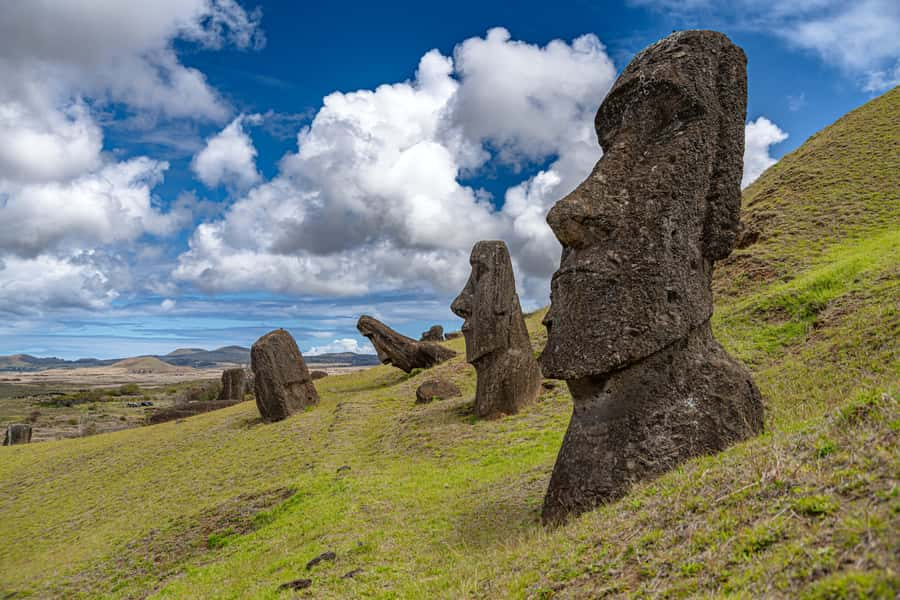
Rano Raraku is the key stop of day one. This volcanic quarry supplied the soft stone used for most moai, and the unfinished figures around the slopes make the site feel like a giant stone workshop abandoned mid-project.
You can see moai still attached to the rock, partly carved figures, and statues in different stages of completion. This is where the production process becomes easier to picture. The moai were not simply found and placed around the island. They were shaped here, separated from the rock, and then transported to ceremonial platforms.
The quarry can also be the most logistically awkward lunch stop. A cafe may be available, but it can become busy. One useful approach is to carry a substantial snack and avoid losing a large amount of sightseeing time in a slow lunch queue.
Tongariki and the power of fifteen moai
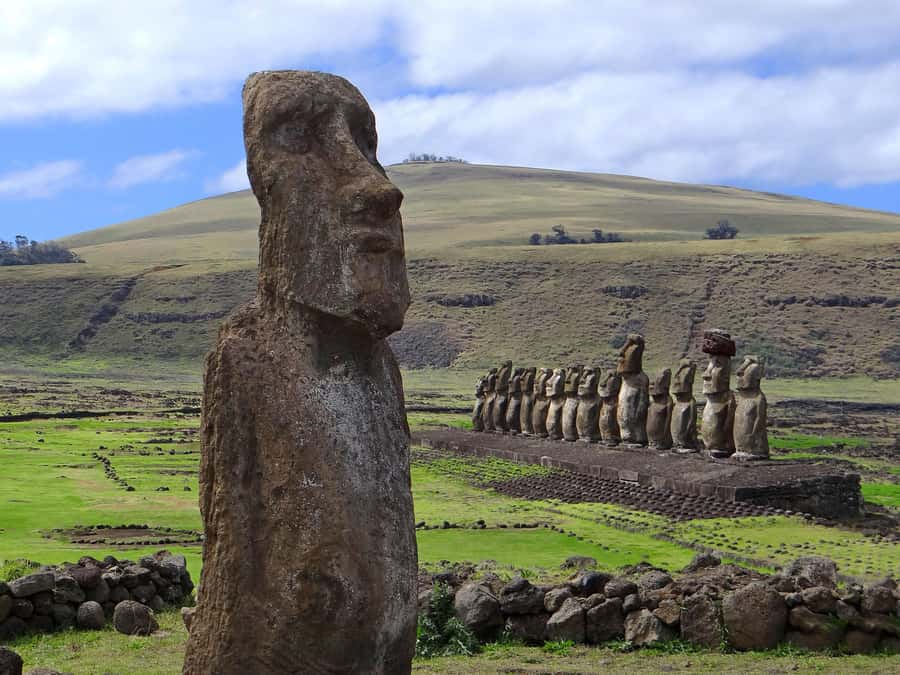
Ahu Tongariki is the visual high point for many people. Fifteen moai line the massive platform, facing inland with the Pacific behind you. The row gives you a clear sense of the ceremonial scale that is harder to grasp when you see only one statue at a time.
Your guide can explain the platform, the statues, and the damage and restoration that shaped what you see today. Allow yourself time to look beyond the main row. The volcanic slopes and open coast help explain why Tongariki feels so imposing.
This stop is particularly good for photographs, but do not rush through the explanation. The value is not only the famous view. It is the connection between the quarry, the road system, the ahu, and the communities that built and maintained these places.
A few more Easter Island days worth comparing
- From Hanga Roa: Rapa Nui Culture Sightseeing Tour
★ 4.6 · 307 reviews - From Hanga Roa: Easter Island Sightseeing Full Day Tour
★ 4.5 · 189 reviews - Full Day Tour in Rapa Nui
★ 4.5 · 122 reviews - Full day tour – DREAM
★ 5.0 · 86 reviews
Te Pito Kura and the road to Anakena
Te Pito Kura adds another archaeological stop before the tour turns toward the northern beach. The site is linked with local legends and gives you another chance to examine the relationship between moai and ceremonial platforms.
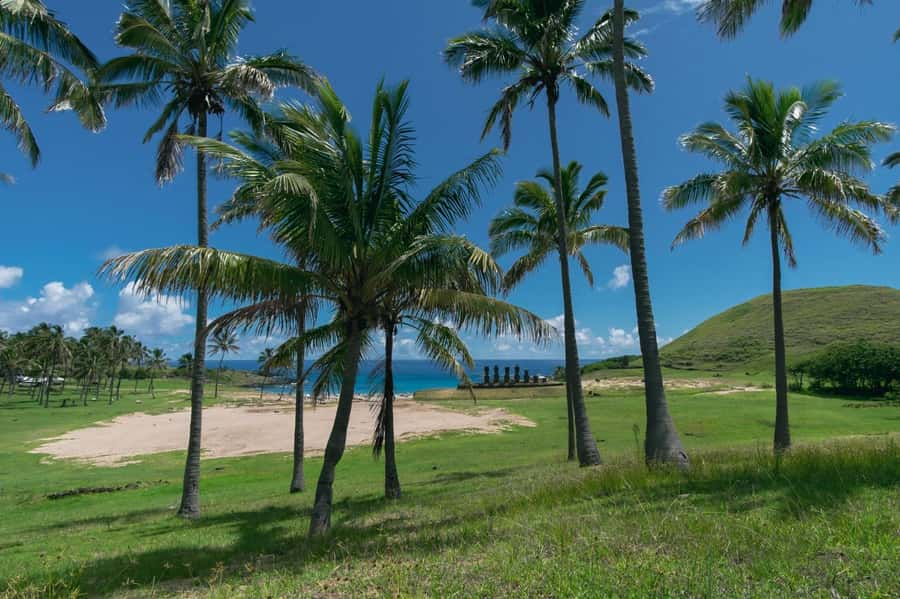
Anakena provides a welcome change after a day among stone and volcanic ground. Palm trees frame the sandy beach, and ancient moai sit close to the shore. The beach is not just a scenic finish. It also shows that Rapa Nui has a softer, more relaxed side, far removed from the stark quarry and fallen statues.
Build time for food into this stop. On one full-day departure, the group reached Anakena late in the afternoon, around 4:30, after choosing not to wait at the quarry cafe. That makes a packed lunch or solid snacks a smart choice. You may have time to enjoy the beach, but do not assume a long leisurely swim break.
Day two: cliffs, red stone, and island caves
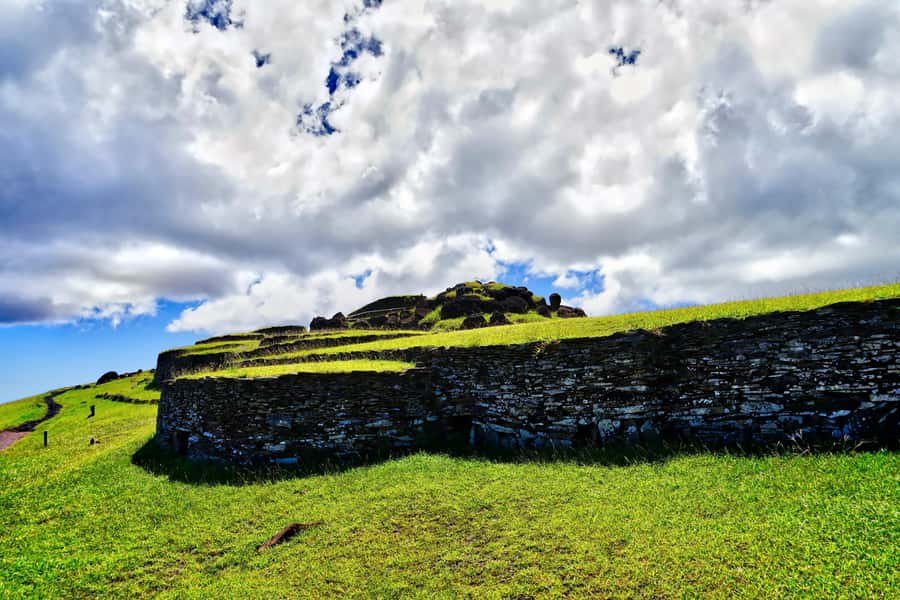
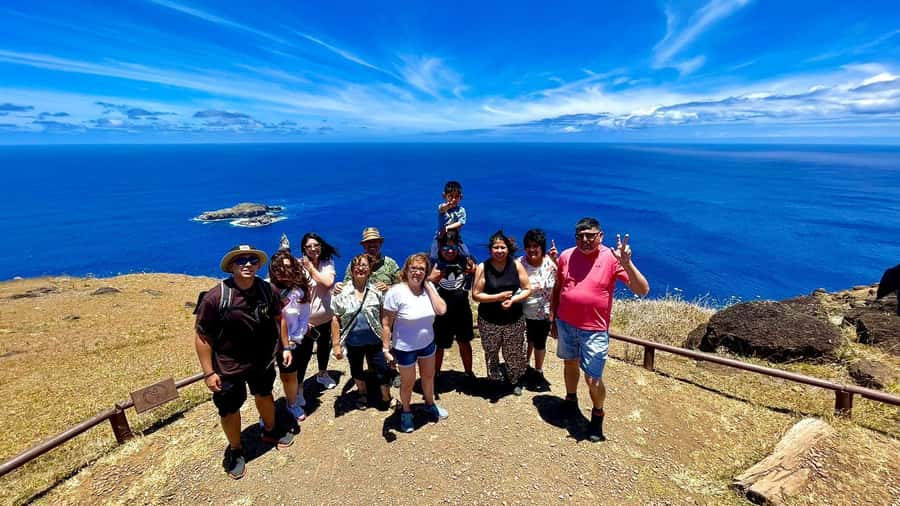
The second day covers a different set of places and begins at Orongo. The ceremonial village sits on the rim of Rano Kau, a volcanic crater with broad views across the water. The crater itself is a major part of the stop, with its large interior and changing colors visible from the rim.
Orongo is also tied to the birdman tradition, one of the most important ceremonial practices in Rapa Nui’s later prehistory. The stone houses and cliff setting make this stop feel different from the coastal ahu sites. It is one of the places where a good guide adds real value, since the site’s meaning is not obvious from the stone structures alone.
If you have only limited time on day two, Orongo may be the stop you remember best. It combines a dramatic setting with a strong cultural story. The drawback is timing. The second day can end around 3:00 or 3:30, and the route may feel compressed if pickup takes a long time.
Vinapu and the question of stonework
Vinapu is known for carefully fitted stone walls. The precise masonry has often prompted comparisons with South American building techniques, though the subject is complex and should be treated as a question for discussion rather than a settled answer.
This is a good place to pay attention to construction details. The stones, joints, and wall shape are easy to overlook if you are expecting another lineup of moai. Your guide’s explanation helps you see why Vinapu belongs on the route.
Puna Pau and the red scoria topknots
Puna Pau is a red scoria quarry. This is where the pukao, or topknots placed on some moai, were made. The reddish material gives the site a different appearance from Rano Raraku, and the stop fills in another part of the statue-making process.
If the moai are the main reason you booked, Puna Pau answers a useful question: what are those red forms on top of certain statues, and where did they come from? It is a shorter, more specialized stop than Tongariki or Rano Raraku, but it adds detail to the larger story.
Ana Te Pahu and the practical side of cave visits
Ana Te Pahu takes you below ground into a network of lava caves. Lanterns are provided, which is important because the cave environment can be dark and uneven. The tour also supplies rain capes, useful if weather changes during the day.
The caves offer a different view of island life. They were not simply geological curiosities. Their chambers and passages have links to shelter, movement, and spiritual practice, with petroglyphs adding another layer of meaning.
You should wear practical shoes and expect conditions to be less polished than at an outdoor archaeological site. The tour is wheelchair accessible as a listed feature, but cave access can still vary by exact route and conditions, so ask the provider about the cave portion if mobility is a serious concern.
Bad weather does not always ruin this part of the day. During one wet departure, guide Zoe adjusted the order of the stops and used caves as shelter, turning an awkward weather spell into an unusual experience. That kind of flexibility is valuable on an island where conditions can change quickly.
Ahu Akivi and the unusual ocean-facing moai
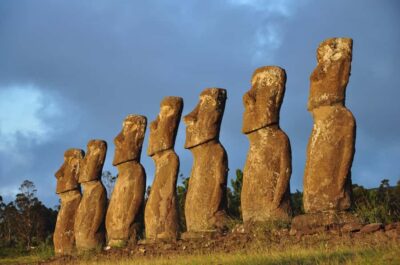
Ahu Akivi closes the main route with seven moai facing toward the ocean. Their placement differs from the usual inland-facing arrangement, which makes the site an important final lesson in how varied moai traditions could be.
The seven figures are also useful for understanding that Rapa Nui is not one single type of archaeological scene. After two days of coastlines, quarries, crater views, and caves, Ahu Akivi brings you back to the statues themselves, but with a clearer sense of their purpose and setting.
Guides who bring the island to life
The strongest part of this experience is the guiding. The best guides do more than recite dates. They connect moai theories with indigenous traditions, family memory, daily life, and the continuing identity of Rapa Nui.
Jeremías has been praised for explaining culture, everyday life, and competing ideas about the moai in clear detail. Zoe has shown a practical ability to rearrange a day around rain while sharing traditions connected with her ancestors. Roberto has added local songs and ukulele, while Enerike has brought visible pride in the island and its past.
Other named guides include Javier’s Hucke, Simon, and Franko. Javier’s Hucke has been especially appreciated for patiently translating and answering questions in a mixed English and Spanish group. Simon once went out of his way to drop people at Ahu Tahai for sunset after the tour.
The exact guide is not guaranteed, and the experience can change from one day to the next. Some guides speak almost entirely in English. Others split the commentary between English and Spanish. That matters if you understand only one language. A bilingual explanation can take twice as long, especially in a group of 12 to 14 people, and one English-only participant found the second day less satisfying for that reason.
Timing, food, and comfort
These are long sightseeing days, but the pace is generally manageable. The first day can run from about 9:30 pickup to 6:00 drop-off, with several major stops and a beach visit. The second day may finish around 3:00 or 3:30, although pickup delays can shorten the time available at sites.
Lunch is not included. The route may include a cafe stop, but you should not depend on it. Carry snacks for both days, especially for day two, when there may be no meal stop before the end. Ask your guide about food options at the start of each day, since one useful improvement would be a clear schedule of stops and meal timing.
Wear sun protection. Much of the route is exposed, and one day includes several hours outside. The supplied rain cape helps with sudden showers, while the lantern is useful for Ana Te Pahu. You should still bring water, sturdy footwear, and enough food for a late lunch.
Drones are not allowed. Site entrance fees are also extra, so add those costs before deciding how the $170 total fits your budget.
Is this two-day tour good value?
I think it is good value for a first visit, particularly if you want the island’s major sites explained in a short stay. You get accommodation pickup, minibus transport, two full days of guiding, and access to a route that would take more planning on your own.
A rental motorcycle or independent day can still be useful. One person combined a self-guided motorcycle day with this tour and found that the two approaches complemented each other. Driving alone gives you freedom, while the guided days supply the cultural context and access arrangements that are easy to miss.
The main value comes from the guides, not from luxury. This is a practical minibus tour with long outdoor stops, extra fees, and food arrangements left to you. If you want a private vehicle, fixed English-only commentary, or a slow photography schedule, this may feel too structured.
Who should book it?
Book this tour if you are visiting Rapa Nui for the first time, want to see the main moai sites, and value local explanation over complete independence. It suits couples, families, and solo visitors who prefer a small group and do not want to arrange transport around the island.
It is also a strong choice if you have only two days available. The first day is the essential one, with Rano Raraku, Tongariki, and Anakena providing the clearest introduction to Rapa Nui. Add the second day for Orongo, Ana Te Pahu, Vinapu, Puna Pau, and Ahu Akivi, but prepare for bilingual commentary and a tighter schedule.
If English-only guiding is essential, confirm how the group will be handled before booking. If food delays bother you, carry lunch and snacks. With those small preparations, the tour gives you a well-rounded look at the island and a far better understanding of the moai than a series of unconnected stops.
FAQ
How long is the tour?
The experience lasts two days. Starting times vary, so you need to check availability when booking.
What language is the tour offered in?
Live guiding is available in English and Spanish. Some groups are bilingual, so commentary may be divided between the two languages.
How large is the group?
The tour is described as a small-group experience with a maximum of 14 participants.
Is hotel pickup included?
Yes. Pickup directly from your accommodation is included, followed by transport in a spacious minibus.
Are meals included?
No. Lunch is not included. The route may include a cafe or lunch stop, but you should bring substantial snacks, particularly for the second day.
Are entrance fees included?
No. Entrance fees to the archaeological sites are separate from the $170 tour price.
What equipment is provided for the caves?
You receive a personal lantern for cave exploration. Rain capes are also provided for sudden showers.
Can wheelchair users join?
The activity is listed as wheelchair accessible. Because one stop includes caves, you should confirm the exact cave access arrangements with the provider if you need full mobility support.
Can I cancel the booking?
You can cancel up to 24 hours before the activity for a full refund. A reserve now and pay later option is also available.
Just added around Easter Island
- Ride to the highest point on the island for sunset★ 5.0 · 40 reviews
- Sunrise Tongariki: Sunrise at Tongariki Park Private Tour★ 4.5 · 47 reviews
- Terevaka Horse Excursion: The highest point and 360° view.★ 4.7 · 38 reviews
- Easter island: Snorqueling tour on coral reefs★ 4.4 · 47 reviews
- Half Day Tour in Rapa Nui★ 5.0 · 48 reviews
- Private Full-Day Easter Island Highlights South and East★ 5.0 · 60 reviews
- Two days of Full Day Tour of Rapa Nui + Sunrise in Tongariki★ 4.8 · 55 reviews
- From Hanga Roa: Journey from Orongo to Ana Te Pahu★ 4.3 · 75 reviews
Easter Island Tours, compared.
From Hanga Roa: Rapa Nui Culture Sightseeing Tour
Read our review →
From Hanga Roa: Easter Island Sightseeing Full Day Tour
Read our review →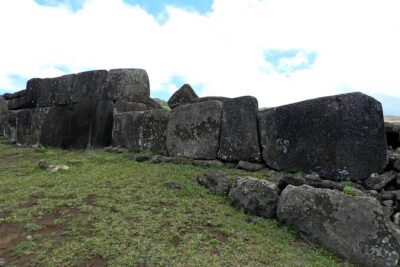
From Hanga Roa: Journey from Orongo to Ana Te Pahu
Read our review →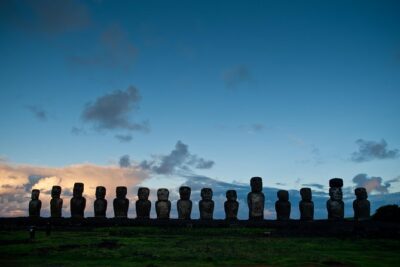
Journey of the Ancestors: Tongariki, Rano Raraku & Anakena Beach
Read our review →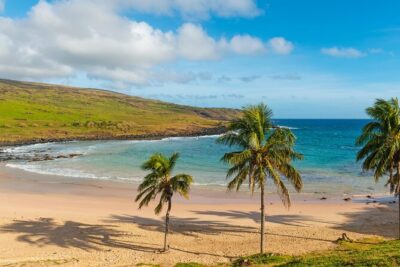
Full Day Private Tour: Factory of the Moai the stone giants
Read our review →
Browse the lists this tour appears in