
Reviewed · UYUNI SALT FLATS TOURS
Uyuni: 3-Day Salt Flats Tour ending in San Pedro de Atacama
The best part of this trip is the changing scenery. In three days, you go from Bolivia’s blinding white salt flats to flamingo lagoons, rust-colored desert, steaming geysers, and the green water below Licancabur Volcano. The route is more than a quick photo stop at Uyuni. It is a full crossing to San Pedro de Atacama.
I like the small six-person 4WD group, which keeps the vehicle more manageable on rough roads, and I like the chance to photograph the flats in several ways, from forced-perspective shots to mirror reflections. The main drawback is comfort: the second night is very basic, the roads are bumpy, and hot water is never certain.
Key points to know before you book
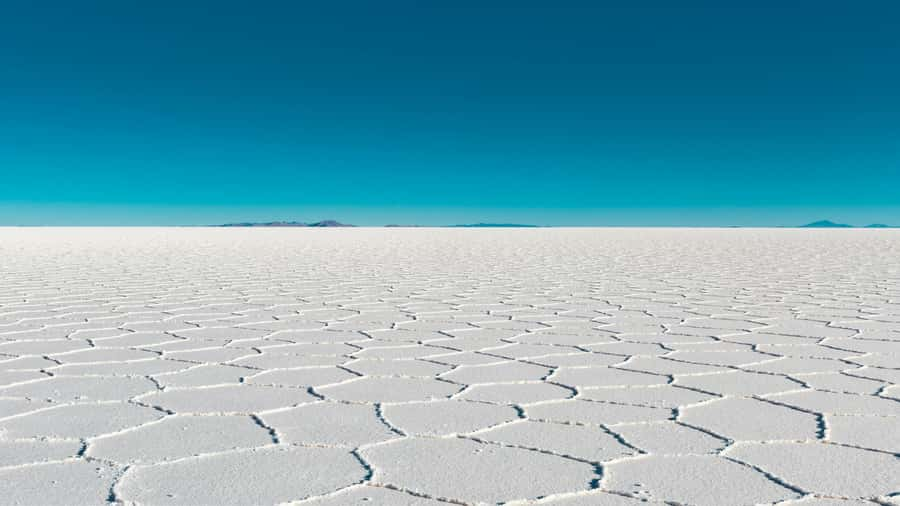
- Sunset and mirror photos on the salt flats: The first day gives you time for perspective shots, panoramic photos, and reflections when water covers the salt crust.
- A full border-crossing route: The tour ends at Hito Cajon on the Chilean border, followed by a transfer to San Pedro de Atacama around 12:30 p.m. on Day 3.
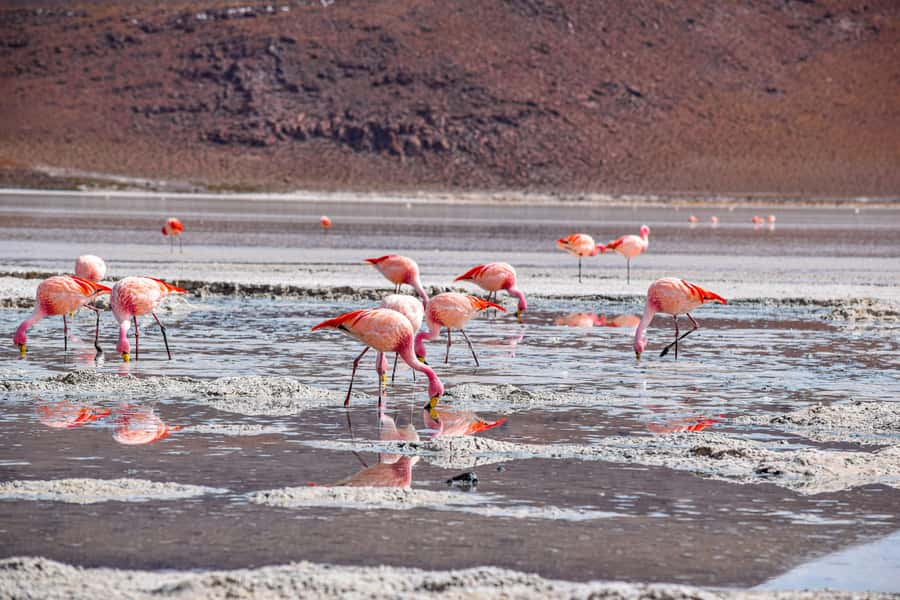
- Flamingos at four Andean lagoons: Cañapa, Hedionda, Chiarcota, and Honda bring wildlife and color to the second day.
- Very simple second-night lodging: The Laguna Colorada refuge has shared dormitory rooms and a shared bathroom, with bed arrangements assigned by availability.
- Cold, high, rough, and remote: Expect unpaved roads, little internet, no guaranteed hot water, and very cold winter nights.
- $427 buys a route, not luxury: The price covers transport, meals, two nights, a guide-driver, and the Chile transfer, but entrance fees, snacks, toilets, and rubber boots cost extra.
Why this three-day crossing is worth considering
At $427 per person, this is not simply a day tour of the salt flats. You are paying for a long point-to-point journey through southern Bolivia, with a 4WD vehicle, meals, shared accommodation, a guide-driver, and transport from the Chilean border to San Pedro de Atacama.
That makes the price more useful for people already planning to visit both Bolivia and northern Chile. You avoid returning to Uyuni and use the route as transportation between two major stops. If you only want salt-flat photos, a shorter Uyuni outing may suit you better. If you want the whole high-altitude circuit, this trip packs a lot into three days.
The group is limited to six people per driver. That matters on roads where you may spend hours in the vehicle. You still have limited personal space, but a small group is easier for photo stops and shared meals than a large coach.
Pickup is available from your Uyuni hotel, bus terminal, or airport. The regular hotel pickup runs between 10:30 and 10:45 a.m. If your bus arrives earlier, you can wait at the office or be taken to a café for breakfast. That is a useful detail because Uyuni arrivals often do not line up neatly with the departure time.
More three-day trips from Uyuni Salt Flats:
- 3-Day Tour to Salt Flats and Lagoons
★ 4.5 · 168 reviews - From Uyuni: Red Lagoon & Uyuni Salt Flats 3-Day Guided Tour
★ 4.4 · 160 reviews - La Paz: Uyuni Salt Flats & San Pedro de Atacama 3-Day Tour
★ 4.1 · 145 reviews
Day 1: Train Cemetery, Colchani, and the white expanse
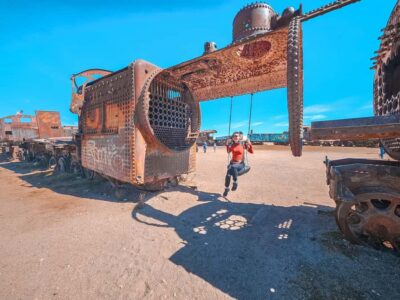
The first stop is the Train Cemetery outside Uyuni. Rusting rail cars and abandoned wagons from the Bolivian Railway Company sit in the open desert. It is an easy place to take striking photos, but it is also a quick reminder that this region once depended on rail transport for its mining economy.
Next comes Colchani, a small village tied to salt production. You can learn how local workers process the salt and browse handicrafts. Keep some cash handy for snacks and small purchases, since the tour does not include snacks and internet access is limited later in the route.
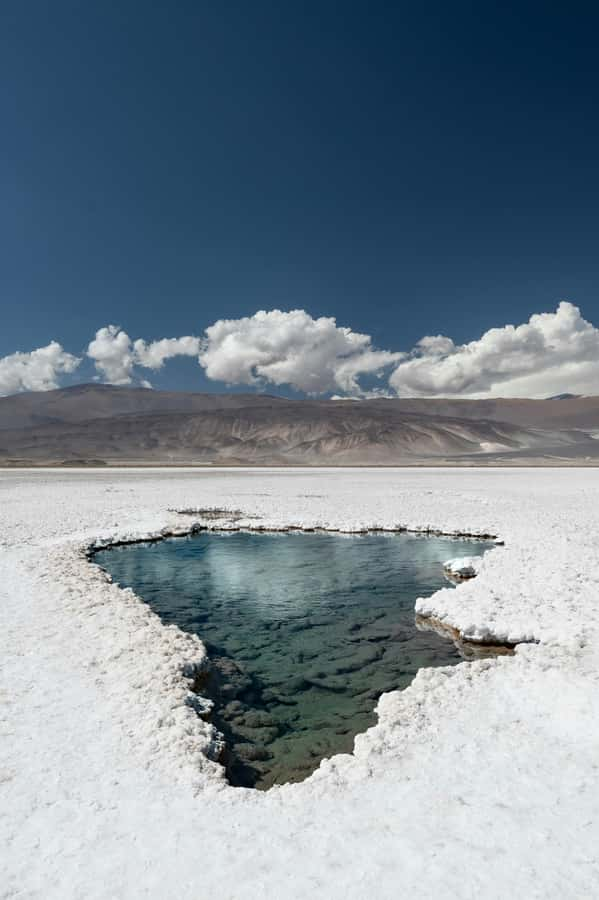
Then the ground turns white. The Uyuni Salt Flats are the visual center of the trip, and the first day gives you several ways to appreciate them. You will see signs of underground aquifers, visit Flags Square, stop at the Dakar Monument, and see the first salt hotel.
The salt hotel is an unusual sight because its walls and some furnishings are made from salt blocks. It is not the accommodation for the night in the usual plan. Your overnight stay is at a salt hostel, with double or triple rooms and private bathrooms. A quadruple room may be assigned in rare cases.
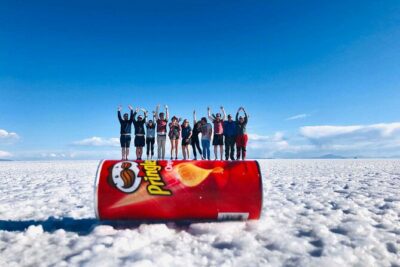
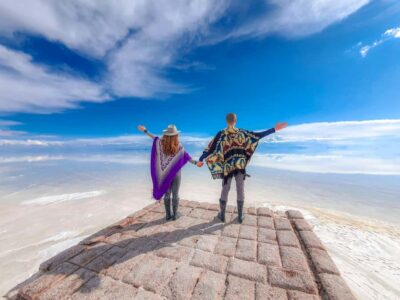
Lunch is served on the flats. Afterward, your driver-guide helps you create perspective photos, the classic images in which people appear to stand inside a bottle, jump over a vehicle, or shrink against the horizon. The effect depends on careful positioning, so listen to the guide and be patient while the camera angle is adjusted.
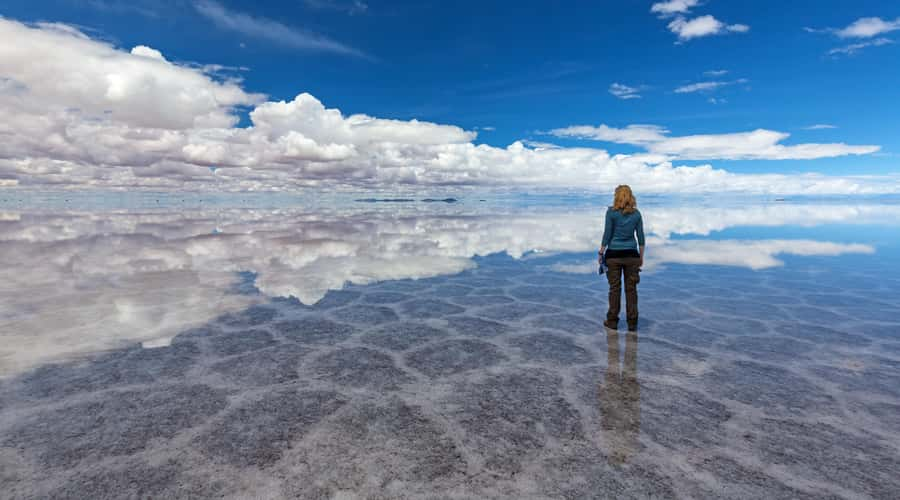
During the rainy season, a thin sheet of water can cover the salt. This creates the famous mirror effect, with the sky reflected under your feet. Weather and road conditions can change the plan from December through April. If flooding prevents access to the salt lodges, the overnight stay may be moved to a regular hostel in Uyuni.
Incahuasi Island and sunset over the salt
Incahuasi Island breaks up the white plain with coral fossils and giant cacti. From here, you get broad views toward Tunupa Volcano and a better sense of how enormous the salt flats really are.
The island is not a soft, flat stroll. You should wear comfortable clothing and shoes suitable for walking over uneven ground. Bring sunglasses and sunscreen. At this altitude, the white surface reflects strong light from every direction.
The day closes with sunset over the flats. The horizon can turn pink and blur into the salt, making this one of the quietest and most memorable moments of the route. After sunset, you head to the salt hostel. Rooms are basic but more comfortable than the next night, and private bathrooms are normally provided.
Day 2: Lagoons, flamingos, and the Stone Tree
After breakfast, the vehicle heads toward San Juan. This small village is your practical stop for snacks and a restroom. Take advantage of it. The next stretch is remote, and toilet access is not included in the tour.
The road continues toward Ollagüe Volcano, an active volcano with religious importance for Indigenous communities. You may see it from a distance rather than approach it closely. The point of this stop is the setting, the volcanic activity, and the connection between the mountain and local belief.
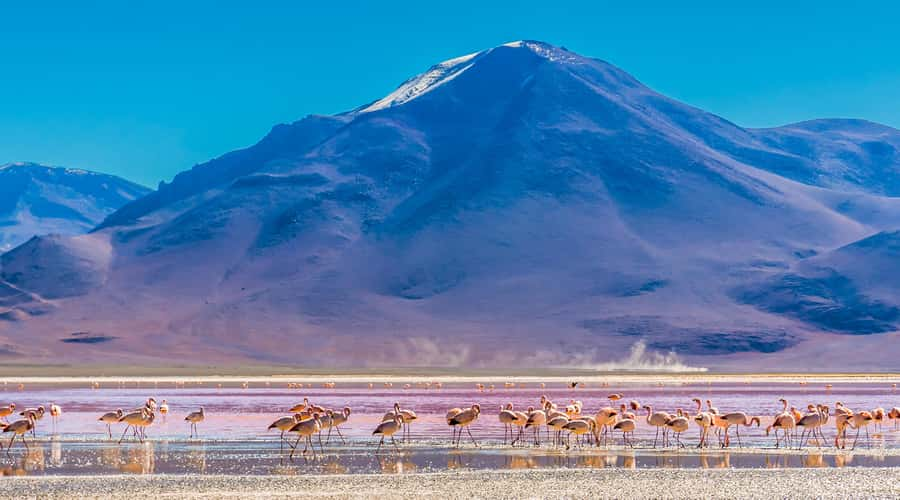
The main attraction of the morning is the chain of Andean lagoons. Cañapa, Hedionda, Chiarcota, and Honda each offer a different mix of water, rock, sky, and wildlife. Pink flamingos are the stars, but Andean ducks and seagulls may also appear.
Hedionda Lagoon has a strong smell caused by minerals and gases. That is part of the experience, not a sign that something has gone wrong. Lunch is served near the lagoon, so you can eat with the birds and open views around you.
The meals are basic, with an effort to vary the menu. A basic vegetarian option is available. If you need more food between meals, bring snacks from Uyuni or San Juan. Dietary details beyond the vegetarian option are not specified, so you should confirm your needs before booking.
A few more Uyuni Salt Flats days worth comparing
- Day Trip to Uyuni Salt Flats
★ 4.0 · 602 reviews - From La Paz: Uyuni Salt Flat Tour & Overnight Roundtrip Bus
★ 4.5 · 327 reviews - Uyuni tour express from La Paz by bus
★ 4.5 · 172 reviews - La Paz: 5-Day Uyuni Salt Flats by Bus
★ 4.3 · 153 reviews
Siloli Desert, the Stone Tree, and Red Lagoon
After lunch, you enter the Siloli Desert, one of the driest places on Earth. The route reaches roughly 6,000 meters above sea level, so this is where the altitude can become a serious concern. The vehicle may stop briefly if conditions or altitude require it, and the tour follows safety procedures.
The Stone Tree is the desert’s famous natural sculpture. Wind has shaped the volcanic rock into a form that looks almost impossible, with a narrow base supporting a larger top. It is a quick stop, but the shape is memorable because the surrounding ground is so bare.
You then enter Eduardo Avaroa National Reserve, Bolivia’s most visited national park. The reserve protects the volcanic desert, lagoons, wildlife, and high mountain environments that make this route special.
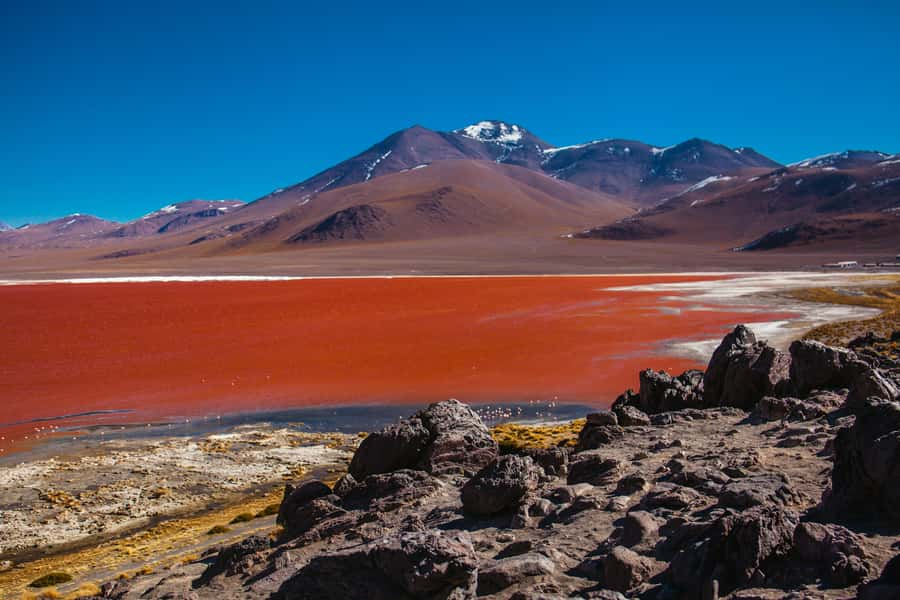
The day ends at Red Lagoon, a broad mineral-rich lake often filled with pink flamingos. The color can vary with light and conditions, so do not expect one fixed shade. The combination of red water, pale mountains, white birds, and thin high-altitude air is one of the strongest scenes on the trip.
The overnight stop is in Huayllajara at the Laguna Colorada refuge. This is the point where you need realistic expectations. Rooms may have two, three, four, or six beds, and the bathroom is shared. Assignment depends on availability. The refuge is extremely basic, and most places on the route have no heating.
From May through September, nights can be very cold, and a sleeping bag is included. Pack warm clothing even if you receive one. A hat, gloves, thick socks, and layers matter more here than stylish travel clothes.
Internet is often unavailable on Day 2. Treat that as part of the route rather than a service failure. Download maps and important travel information before leaving Uyuni, and tell family or friends that communication may be limited.
Day 3: Geysers, hot springs, and the Chilean border
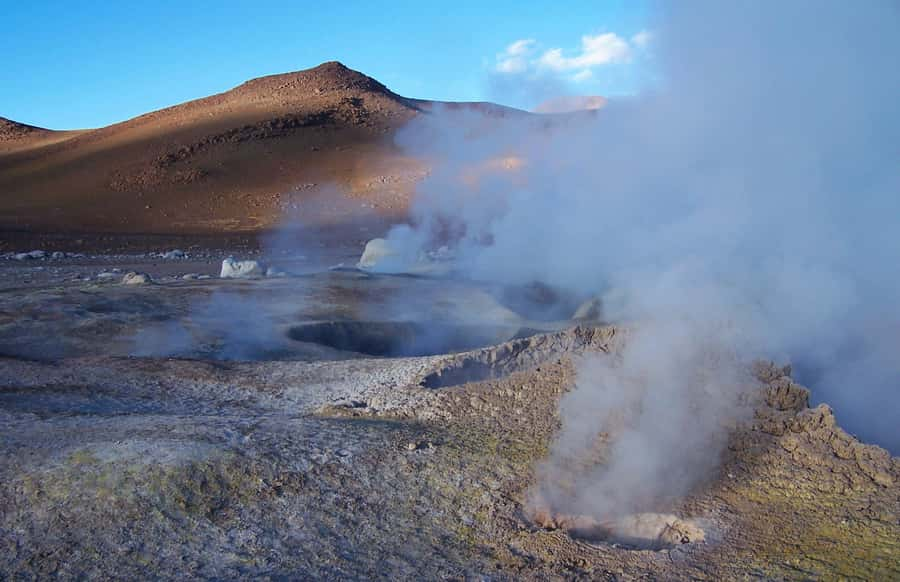
The final day begins early at the Sol de Mañana Geysers. Steam rises from vents and pools in the volcanic ground as the sun comes up. Early starts are necessary for the light and conditions, but they also mean leaving the refuge while temperatures are at their lowest.
Next comes the Polques Hot Springs. This is a chance to warm up after the cold morning. Hot water is included, but a shower is not guaranteed throughout the trip. Drought, gas shortages, or frozen pipes can prevent hot water, and availability is reported at about 75 percent. Bring a swimsuit if you want to use the springs, and keep a towel accessible.
The Dali Desert has tall rock formations scattered across open sand and volcanic ground. Its name comes from the surreal shapes associated with Salvador Dalí’s paintings. You do not need to be an art expert to enjoy it. The appeal is the strange spacing and clean lines, with little around the rocks to distract from their forms.
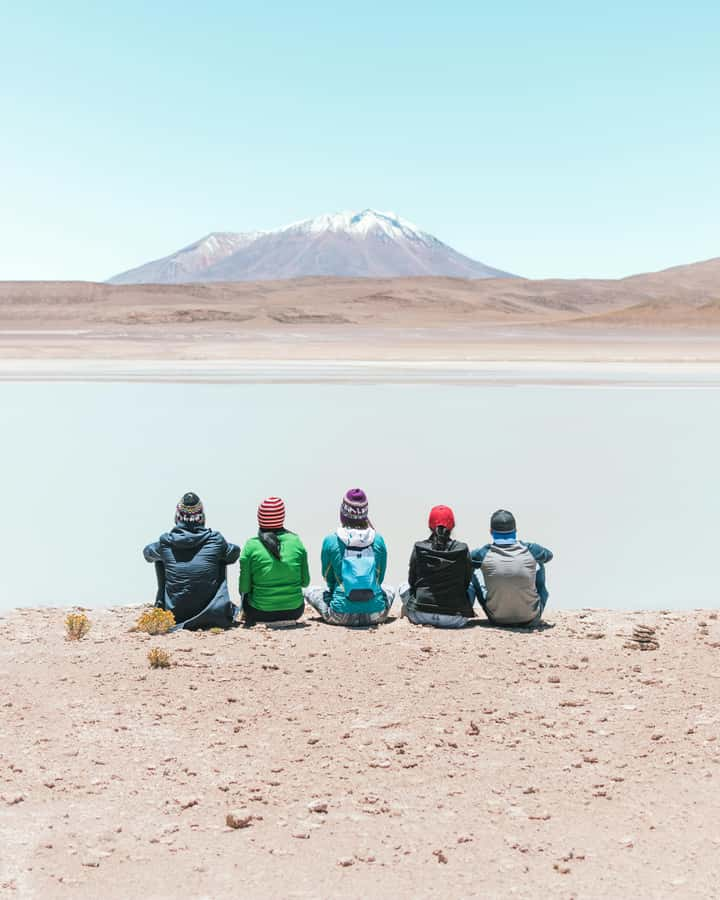
The last major Bolivian stop is Green Lagoon, beside Licancabur Volcano. The volcano marks the natural border area with Chile and gives the lagoon its dramatic backdrop. As with Red Lagoon, the water’s color can shift with light and conditions.
The tour ends at the Chilean border at about 9:30 a.m. You then board a vehicle for San Pedro de Atacama, arriving around 12:30 p.m. Keep your passport in a secure but reachable place. This is a border transfer, not a return to Uyuni, so make sure your onward plans begin in San Pedro.
What the 4WD ride and lodging are really like
The roads are rough, unpaved, and bumpy. You will spend a great deal of time seated in the 4WD, crossing open country with few services. People with back problems should not book this trip, and pregnant women and children under three are not suited to the conditions.
The vehicle carries up to six people per driver. Your comfort will depend partly on the group, especially when luggage and camera equipment share the available space. Pack light, keep your day items close, and store anything you need during the drive where you can reach it.
Lodging improves the first night and drops sharply on the second. The salt hostel generally offers private bathrooms in double or triple rooms. The Laguna Colorada refuge uses shared dormitories, and you may sleep in a room with up to six beds.
Do not book this expecting reliable heating, strong Wi-Fi, or hotel-style service. Book it because the route takes you to places that are difficult to reach independently. The basic rooms are the tradeoff for seeing this remote part of Bolivia.
What to pack, and what costs extra
Bring your passport, warm layers, sunglasses, sunscreen, comfortable clothes, and cash. A sleeping bag is included from May through September, but you should still bring enough warm clothing for the coldest part of the night.
Rubber boots are not included. They can be especially useful when water covers parts of the salt flats during the rainy season. Entrance fees are also excluded, and the tour does not cover snacks or toilet use.
A small day bag is more useful than repeatedly opening your main luggage. Put sunscreen, water, warm layers, tissues, cash, and your passport where you can reach them. Water is provided during meals, but you should confirm how much personal drinking water you want for the drives.
Who should choose this Uyuni route?
I would choose this tour if you want to connect Bolivia with Chile and care more about scenery than comfort. It suits photographers, first-time visitors to the salt flats, and people who want the major lagoons, deserts, geysers, and border transfer in one organized trip.
It is also useful if you are traveling alone but do not want to arrange a private 4WD. The six-person limit keeps the group small enough for a shared trip without the scale of a bus tour.
I would think twice if you need dependable showers, internet, soft beds, or smooth roads. The altitude and long drives are not minor details. You should also avoid it if you have back problems, are pregnant, or are traveling with a child under three.
The English or Spanish guide-driver makes a real difference. Guide assignments can vary, but Jamie is one named guide associated with the trip. If he is leading your departure, expect clear explanations and an active hand with the photo stops. The overall rating is 4.7 from 62 ratings, and Jamie received specific praise for making the three days work well and explaining the sights clearly.
Should you book the three-day crossing?
Book it if the route to San Pedro fits your plans and you want the full sequence: salt flats, Incahuasi, flamingos, Stone Tree, Red Lagoon, geysers, hot springs, Dali Desert, and Green Lagoon.
The $427 price is fair for a shared trip that includes a 4WD, meals, two nights, a guide-driver, pickup in Uyuni, and the Chile transfer. Just budget extra for entrance fees, snacks, toilets, and any rubber boots you need.
My practical advice is simple: book this for access and scenery, not comfort. Pack for cold, bring cash, charge your devices before leaving Uyuni, and accept that the best parts of the route come with rough roads and very basic nights.
FAQ
How long does the tour last?
The tour lasts three days. It begins in Uyuni and ends at the Chilean border on Day 3, followed by transport to San Pedro de Atacama.
What time is pickup in Uyuni?
Hotel pickup is generally between 10:30 and 10:45 a.m. Pickup can also be arranged from the Uyuni bus terminal or airport.
Where does the tour end?
The tour ends at the Hito Cajon border crossing at about 9:30 a.m. You then take another vehicle to San Pedro de Atacama, arriving around 12:30 p.m.
Is transportation shared?
Yes. Transportation is by 4WD vehicle with up to six participants per driver.
What accommodation is included?
The first night is usually at a salt hostel in a double or triple room with a private bathroom. The second night is at the Laguna Colorada refuge in a shared dormitory with two, three, four, or six beds and a shared bathroom.
Is a sleeping bag included?
A sleeping bag is included from May through September.
Are entrance fees included?
No. Entrance fees are not included in the listed price.
Is hot water guaranteed?
No. Hot water is available about 75 percent of the time, but drought, gas shortages, and frozen pipes can prevent it.
What happens if rain floods the salt-lodge road?
If flooding blocks the road to the salt lodges during the rainy season, the overnight accommodation may be changed to a regular hostel in Uyuni.
Just added around Uyuni Salt Flats
- Uyuni: Isla Incahuasi & Uyuni Salt Flats Full-Day Jeep Tour★ 4.7 · 44 reviews
- Uyuni: Sunset and Starlights Tour★ 4.6 · 79 reviews
- Uyuni Salt Flats Private 3 day tour (Palacio Sal 4* & Tayka 3*)★ 5.0 · 38 reviews
- Uyuni Salt 1 day Tour with guide in English + Lunch and Sunset★ 4.5 · 35 reviews
- Uyuni Salt Flats (3 Days) English Speaking Guide★ 4.5 · 45 reviews
- Private Day Trip Salar de Uyuni★ 5.0 · 40 reviews
- Private Salt Flat Full-Day Tour Including The Cemetery of Trains and Lunch from Uyuni★ 4.5 · 73 reviews
- Full Day Private Tour to Salar de Uyuni★ 5.0 · 65 reviews
Uyuni Salt Flats Tours, compared.
From La Paz: Uyuni Salt Flat Tour & Overnight Roundtrip Bus
Read our review →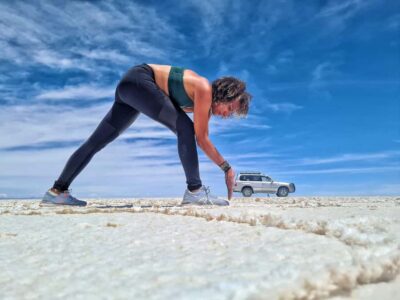
From Uyuni: Red Lagoon & Uyuni Salt Flats 3-Day Guided Tour
Read our review →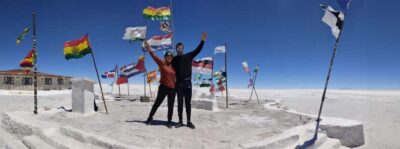

La Paz: Uyuni Salt Flats & San Pedro de Atacama 3-Day Tour
Read our review →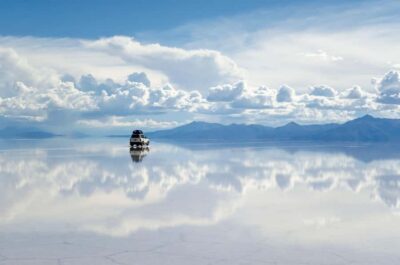
From Uyuni: Salt Flats Highlights Jeep Tour with Lunch
Read our review →Browse the lists this tour appears in