
Reviewed · UYUNI SALT FLATS TOURS
3-Day Tour to Salt Flats and Lagoons
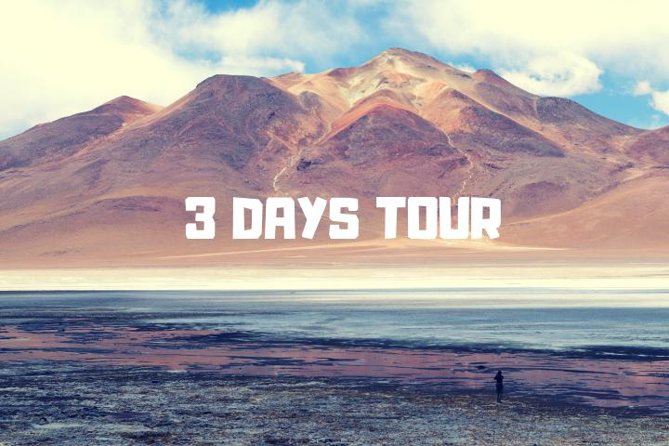
The biggest thrill here is the sudden change from a white salt plain to a red lagoon, then to steaming hot springs and volcano country. This three-day 4×4 journey packs Bolivia’s most striking sights into one rugged route, with the Salar de Uyuni as its opening act.
I like the small-group feel and the practical extras: meals, fuel, lodging, transfers, and a guide who helps with perspective photos are included. The food is wholesome, the scenery is extraordinary, and guides such as Peter, Hector, and Ivan have earned warm praise. The catch is simple: this is not a luxury trip. Cold rooms, shared bathrooms, rough roads, and high altitude are part of the deal.
Key points at a glance
- Start with the Train Cemetery at 11 a.m. before reaching Colchani and the salt flats.
- Photograph the vast Salar de Uyuni with help from a guide familiar with forced-perspective shots.
- Climb cactus-covered Incahuasi Island for a 360-degree view across the salt.
- Spend the second day in Eduardo Avaroa National Park, looking for flamingos, vicuñas, llamas, viscachas, and Andean foxes.
- Soak in hot springs after a long high-altitude day, one of the trip’s most memorable rewards.
- Expect basic accommodation and severe cold, so warm clothing matters more than stylish luggage.
The salt flats begin with rust and white space
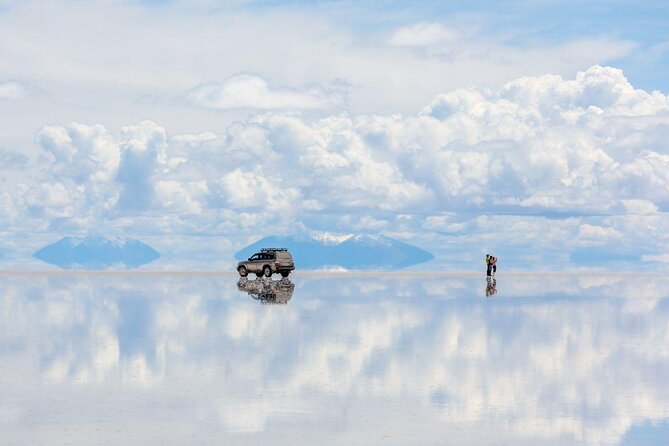
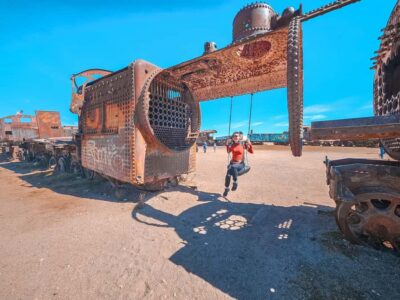
You meet at Red Planet Expedition’s office on Avenida Ferroviaria in Uyuni at 11 a.m. The trip begins in a Toyota Land Cruiser, the standard workhorse for this remote route. The first stop, the Train Cemetery, is a compact introduction to Bolivia’s industrial past, with old locomotives left to weather in the desert.
It is a photogenic stop, but do not expect a long museum visit. The appeal is visual: rusted machinery, open sky, and a stark reminder of a railway age that never fully developed as planned. From there, you continue to Colchani, a small settlement on the edge of the salt flats.
Colchani gives you a quick look at local salt production and handicrafts. This is also the practical point for browsing handmade goods before the road leaves ordinary settlement life behind. The first day allows about two hours for the Train Cemetery and Colchani together, so the pace is brisk rather than leisurely.
Lunch comes in Colchani before you enter the Salar de Uyuni. That timing matters. Once you are out on the salt, there are few conventional services, and the day’s schedule depends on the condition of the surface and the route your driver takes.
More Lake Tours in Uyuni Salt Flats:
- From Uyuni: Red Lagoon & Uyuni Salt Flats 3-Day Guided Tour
★ 4.4 · 160 reviews - 3-Day Uyuni Salt Flat Tour with Sunset and Red Lagoons
★ 5.0 · 83 reviews - Cusco: Humantay Lake Tour with Breakfast and Buffet Lunch
★ 4.9 · 2,976 reviews
Three hours on the Salar de Uyuni
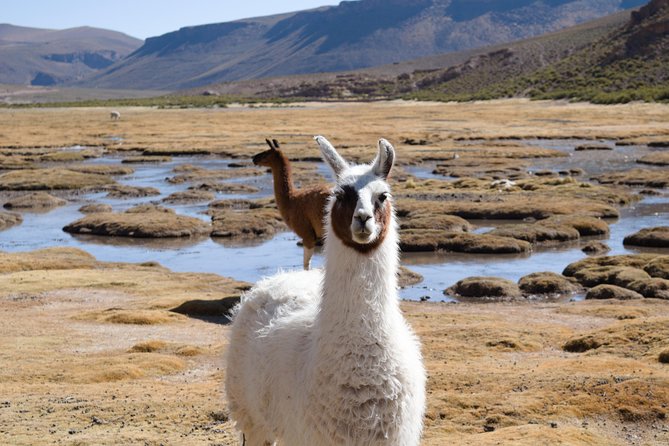
The salt flat is the tour’s main visual event, and the scale takes time to understand. The surface can look almost blank at first, but the lack of clutter is the point. White ground, hard blue sky, distant mountains, and a 4×4 moving across the middle create the kind of photographs that are difficult to frame anywhere else.
You stop at Playa Blanca, the only hotel permitted inside the salt flats. The building is made from salt, and the nearby sculptures, flags, and Dakar Statue add human shapes to an otherwise enormous open space. It is a short stop, but it helps you see how local material has been used in practical and symbolic ways.
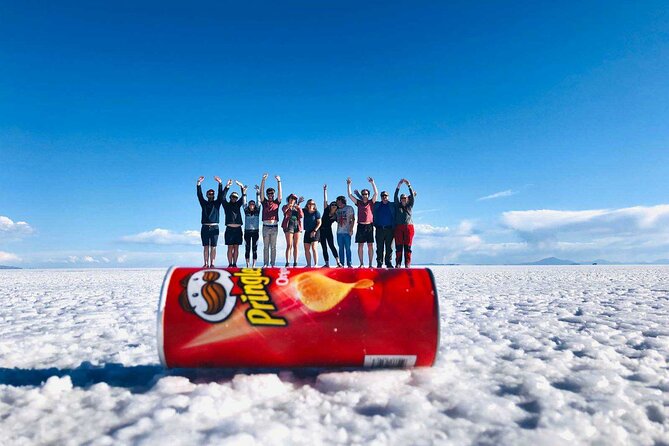
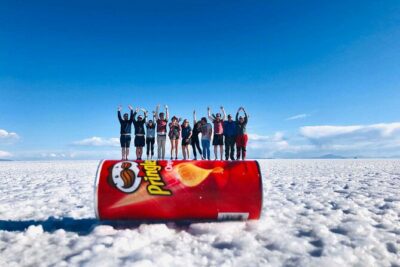
The tour then heads farther toward the center of the salt. This is where the guide helps with forced-perspective photos. You might pose with a shoe, bottle, toy, or another object that appears much larger than it is. A guide who knows the angles can save you a great deal of trial and error, especially when there are no obvious reference points around you.
The salt flats portion lasts about three hours. That is enough for the main sights and photographs, though you should not expect a slow, solitary session in every location. Weather, surface conditions, and the group’s pace shape the timing.
Admission to the salt flats itself is not listed as included, so check the exact payment requirements before departure. The separate Inca Wasi charge is 30 bolivianos, and the national park fee is 150 bolivianos.
Incahuasi Island and the first sunset
After the salt plain, the route reaches Incahuasi Island, also called Cactus Island. Despite the name, this is not a green tropical island. It is a rocky outcrop covered with giant cacti and coral-like rock formations, rising sharply from the salt.
The loop hike takes about one hour and climbs to a high point with a 360-degree view. I like this stop because it changes the rhythm of the day. After hours of flat white space, you get a short walk, some elevation gain, and a chance to look back at the route you have crossed.
You should have moderate physical fitness for this section. The altitude makes even a manageable climb feel harder, and there is little shelter from the cold or sun. Take water, wear firm shoes, and move steadily rather than trying to race to the top.
The final part of Day 1 heads west toward Villa Candelaria. Before leaving the salt, the route pauses near the shore for sunset. The combination of changing light and the reflective white surface can be spectacular, but cloud cover controls how much color you see.
At the accommodation, afternoon tea comes with hot coffee, chocolate, cookies, and snacks, followed by dinner. This is a welcome finish after a long day. The first night is basic, and the rooms may not have heat, so a warm base layer and a hat are more useful than extra casual clothing.
Day 2 reaches Bolivia’s high desert
Day 2 starts around 6:30 a.m. with a long drive through Bolivia’s high desert. This is the toughest day in the schedule, with roughly ten hours on the road and repeated stops at lagoons, volcanoes, and desert formations.
The route enters Eduardo Avaroa National Park, a huge protected area listed at about 720,000 hectares. The views shift constantly, from dormant volcanoes to mineral-colored water and wide, empty desert. You may see llamas, vicuñas, viscachas, Andean foxes, and flamingos along the way.
Laguna Colorada is the day’s main sight. Its red tone comes from mineral deposits and microscopic life in the water, with the exact color changing according to light and conditions. Flamingos feeding in the shallows make the scene even more memorable. Keep your expectations practical, though. Wildlife is not guaranteed at a particular distance, and the high-altitude setting can be windy and cold.
The route also includes a volcanic crater with visible geological activity before continuing to the accommodation and hot springs. The springs are one of the tour’s best rewards. After hours in a bouncing vehicle and cold desert air, warm water under the open sky feels remarkably good.
The accommodation on the second night is especially basic. Some rooms do not have heat, and shared bathrooms may be used. One particularly useful lesson from past departures is to treat the phrase hot springs included in the day as more important than the word hotel. You are paying for access to an extraordinary route, not polished lodging.
More three-day trips from Uyuni Salt Flats:
- La Paz: Uyuni Salt Flats & San Pedro de Atacama 3-Day Tour
★ 4.1 · 145 reviews - Uyuni: Uyuni Salt Flats and San Pedro de Atacama 3-Day Tour
★ 4.3 · 122 reviews - Uyuni Salt Flats 3 Days/ 2 Nights with English Speaking Guide
★ 4.0 · 91 reviews - Tambopata Peruvian Amazon Jungle for Three Days/Two Nights
★ 4.5 · 329 reviews
Salvador Dalí Desert and Green Lake
Day 3 begins around 6:30 a.m. with breakfast. The morning meal includes items such as pancakes, yogurt, milk, and cornflakes. It is filling enough to get you moving, though it is less traditional than some people expect from a Bolivian trip.
The Salvador Dalí Desert is named for its surreal-looking rock formations and broad, empty setting. The comparison to the famous painter is easy to understand once you see the isolated shapes against the pale desert. This is another place where the view matters more than a long activity. You stop, walk a little, take photographs, and continue.
Green Lake comes next, near the Chilean border. Its color is linked to mineral content and the surrounding volcanic terrain, though the appearance can change with wind and weather. The route is close to the border crossing, so this is the point where you can be dropped at the immigration office if you are continuing to Chile.
If you return to Uyuni, the 4×4 heads north by another route. The day includes short breaks for stretching and toilets, plus lunch, with arrival at the Uyuni office around 5 p.m. The return option gives you a second set of views rather than simply retracing the entire route.
What the $370 price really covers
At $370 per person, the tour is not the cheapest way to see the salt flats, but the price covers the main practical costs of a remote three-day route. You receive two nights of accommodation, two breakfasts, two lunches, two dinners, afternoon tea, fuel, hotel pickup, a professional guide, and photography help.
That package matters in this part of Bolivia. You are not arranging separate transport, meals, park access, and remote lodging as you go. The 4×4, driver, fuel, and food are bundled into one booking, which makes the price easier to justify for a first visit.
The main extra costs are the 30-boliviano Inca Wasi fee and the 150-boliviano national park entrance fee. Alcoholic drinks are not included but can be purchased. Carry enough local currency for the entrance fees and personal needs.
A small-group departure is advertised with a maximum of six people. The operating details also explain that one guide may be divided between two cars, with one guide for up to 12 people, and cars use radios to communicate. Some departures have had 12 people split between two vehicles. Ask how your specific departure will be arranged if group size and guide time are important to you.
Guides, drivers, and the practical experience
The strongest part of the operation is the human side. Guides named Peter, Hector, and Ivan have been singled out for their care, good organization, and help with the route. Drivers including Leonardo, Rolo, and Efrain have also been praised for handling the long roads and helping with practical needs.
That said, the experience can vary. A serious altitude-sickness incident on one departure led to a complaint about pressure to continue and high charges for an emergency transfer. This is an important warning, not a reason to assume every departure will go badly. You should take altitude symptoms seriously, tell the guide immediately, and confirm what emergency transport might cost before setting out.
The roads are rough and rocky. Two flat tires occurred on one trip, which gives you a useful sense of the conditions. If you have a bad back, the repeated jolts may be a real problem. The trip suits people who accept slow progress, dusty clothes, and long periods in a vehicle in exchange for access to remote scenery.
Cold nights and simple meals

Pack for cold temperatures, not just sunny photographs. The flats and high desert can feel severe after sunset, and the absence of room heating has been a repeated concern. Bring layers, warm socks, gloves, and a hat. Sleeping bags are supplied according to the information provided, but you still need warm personal clothing.
Meals are included and generally described as wholesome and adequate. Vegetarian food is available if you request it when booking, and you should state any other dietary needs in advance. Breakfasts lean toward familiar items such as pancakes, yogurt, milk, and cereal rather than strongly traditional Bolivian dishes.
The food is not the reason to book this tour, but it keeps the schedule moving. Afternoon tea on the first evening is a thoughtful touch, especially after the salt flats and cactus island. Expect useful fuel for the road, not restaurant dining.
Who should book this three-day route?
I would choose this tour if you want the major Uyuni sights in one organized trip and you are comfortable with basic conditions. Nature lovers, first-time visitors, photographers, and people who enjoy meeting a mixed international group should find plenty to like.
It is also a good fit if you want the Chile border option on Day 3. The tour can drop you at the immigration office near Green Lake, or you can return to Uyuni and arrive around 5 p.m.
I would be more cautious if you need heated rooms, private bathrooms, smooth roads, or a flexible schedule. The altitude is serious, the second day is long, and the accommodation is rustic. Children must be accompanied by an adult, and all participants should have moderate fitness.
The tour has a 4.4 rating from 168 reviews, which fits the overall picture: memorable sights and strong guides, balanced by uneven lodging and communication details. Booking confirmation is provided at the time of booking. Free cancellation is available up to 24 hours before the local start time, while poor weather may lead to a different date or a full refund.
Should you book the Red Planet Expedition tour?
Book it if your priority is Bolivia’s salt flats, lagoons, flamingos, desert formations, and hot springs, and you see rough conditions as part of the adventure. The route is packed with variety, the included meals and transport simplify a remote journey, and the photography help can make a real difference on the salt.
Skip it if you want comfort or have serious altitude, mobility, or back problems. Before paying, confirm the group arrangement, entrance fees, accommodation standard, transfer costs in an emergency, and your route after Green Lake. With those points clear, this is a strong value for an ambitious three-day introduction to Bolivia’s high country.
FAQ
Where does the tour start?
It starts at the Red Planet Expeditions office at G5QH+475, Avenida Ferroviaria, Uyuni, Bolivia.
What time does the tour begin?
The scheduled start time is 11 a.m.
Where does the tour finish?
The tour ends back at the meeting point in Uyuni unless you are dropped at the Chilean immigration office near Green Lake.
How long is the tour?
The tour lasts approximately three days.
Are meals included?
Yes. Two breakfasts, two lunches, and two dinners are included, along with afternoon tea.
Are entrance fees included?
No. The Inca Wasi Island fee is 30 bolivianos, and the Eduardo Avaroa National Park fee is 150 bolivianos.
Is accommodation included?
Yes. Two nights of accommodation are included. The rooms are basic, and some may not have heating or may use shared bathrooms.
Can I request vegetarian meals?
Yes. Vegetarian meals are available, but you should request them when booking and provide any other dietary requirements in advance.
Can I continue to Chile after the tour?
Yes. On Day 3, you can be dropped at the immigration office near the Chilean border after visiting Green Lake.
What happens if I need to cancel?
You can receive a full refund if you cancel at least 24 hours before the local start time. Cancellations or changes made less than 24 hours before departure are not refunded or accepted.
Just added around Uyuni Salt Flats
- Visit to Uyuni Salt Flats from La Paz Bolivia by Bus★ 5.0 · 55 reviews
- La Paz Uyuni Premium Bus★ 4.5 · 78 reviews
- La Paz: Uyuni Salt Flats Tour by Bus★ 4.8 · 46 reviews
- Uyuni: Uyuni Salt Flats and San Pedro de Atacama 3-Day Tour★ 4.3 · 122 reviews
- From La Paz: 4-Day Trip to San Pedro de Atacama w/Salt Flats★ 4.2 · 109 reviews
- From La Paz: Uyuni Salt Flats 2-Day Tour with Bus Transfers★ 4.3 · 90 reviews
- 3-Day Uyuni Salt Flat Tour with Sunset and Red Lagoons★ 5.0 · 83 reviews
- Uyuni Salt Flats 3 Days/ 2 Nights with English Speaking Guide★ 4.0 · 91 reviews
Uyuni Salt Flats Tours, compared.
From La Paz: Uyuni Salt Flat Tour & Overnight Roundtrip Bus
Read our review →
From Uyuni: Red Lagoon & Uyuni Salt Flats 3-Day Guided Tour
Read our review →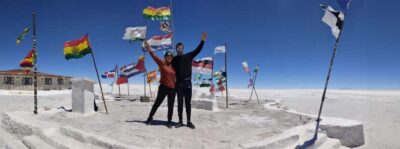

La Paz: Uyuni Salt Flats & San Pedro de Atacama 3-Day Tour
Read our review →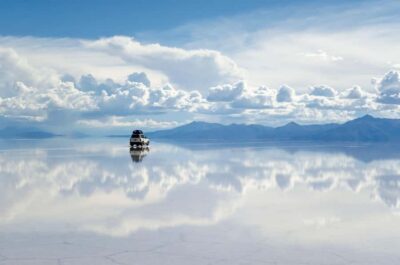
From Uyuni: Salt Flats Highlights Jeep Tour with Lunch
Read our review →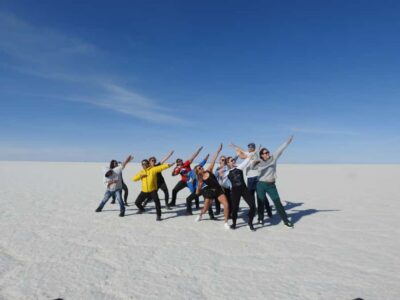
Uyuni: Uyuni Salt Flats and San Pedro de Atacama 3-Day Tour
Read our review →Browse the lists this tour appears in