
Reviewed · SHOPPING TOURS
Buenos Aires: San Telmo and Market Guided Walking Tour
San Telmo gives you Buenos Aires in a compact, walkable package: old churches, cobbled streets, comic-strip characters, food stalls, tango, and a Sunday market that can feel wonderfully chaotic. The route begins near San Ignacio de Loyola, then moves through some of the city’s oldest streets before finishing in San Telmo.
I like the way this tour connects architecture and Argentine history instead of treating the neighborhood as a string of photo stops. I also like the human touch from guides such as Juan, Santiago, and Jorge, who explain the area with humor and answer questions rather than simply reciting dates.
The main drawback is the group size. One tour had more than 30 people, and a narrow street can feel tight with that many bodies. You also walk rain or shine, so bring suitable shoes and a light layer.
Key points to know before you book
- You see San Telmo’s main characters in two hours: Mafalda, Clemente, comic art, churches, the market, and the Sunday fair.
- The history has a clear local focus: your guide explains Buenos Aires’ foundation, colonial buildings, immigration, and the shift toward modern city life.
- Sunday is the most atmospheric time: the street fair adds music, art, food, crowds, and tango near San Telmo.
- The guides make the difference: Juan, Santiago, and Jorge are praised for clear English, humor, warmth, and detailed answers.
- The price is modest: at $13 per person, this is an efficient introduction to one of Buenos Aires’ most distinctive neighborhoods.
- Expect a real walking tour: the route is on city streets, can be crowded, and continues in poor weather.
Why San Telmo makes a good first walk
San Telmo is the kind of Buenos Aires neighborhood that rewards a guide. You can see an old church, a grand facade, a market stall, and a cartoon statue within a few blocks, but the connections are not always obvious on your own.
The neighborhood tells several stories at once. You learn about the early city, colonial buildings, the arrival of immigrants, and the local culture that grew from those layers. The result is more useful than a simple list of monuments. You begin to understand why San Telmo feels older, more handmade, and less polished than some other parts of Buenos Aires.
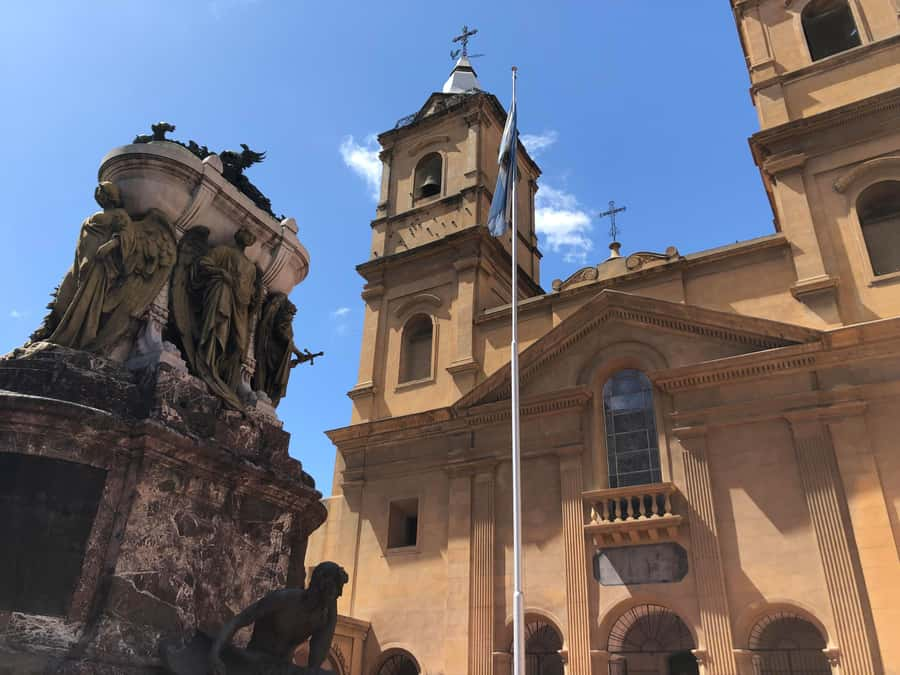
The tour starts at Parroquia San Ignacio de Loyola. From there, you walk toward Iglesia y Convento de San Francisco and continue through San Telmo’s streets. The guide points out facades, collective houses, public art, and small details that are easy to miss while you are watching traffic or looking for the next turn.
I would choose this walk early in your Buenos Aires stay. It gives you a sense of place before you tackle the city’s wider museums, avenues, and neighborhoods. It also helps you decide where you want to return for food, shopping, photographs, or a slower afternoon.
More Walking Tours in Argentina
- Buenos Aires Hop-On Hop-Off Bus, Free Walking Tours & Discounts
★ 4.5 · 2,218 reviews - Buenos Aires: La Boca Guided Walking Tour in English
★ 4.8 · 1,587 reviews - Nazis in Buenos Aires: a historical walking tour
★ 4.9 · 193 reviews
From San Ignacio to San Francisco
The opening section near San Ignacio introduces the city’s colonial roots. The church is a fitting starting point because the tour uses nearby religious buildings to explain how Buenos Aires developed rather than presenting San Telmo as an isolated old quarter.
At Iglesia y Convento de San Francisco, you get a guided look at another important religious site. The value here is the explanation around the building. Your guide discusses the colonial past, the role of the church, and the architectural details that give this part of the city its character.
You should not expect an extended indoor museum visit. This is a fast-moving city walk, and the emphasis is on the street scene and the story that links each stop. If you like short historical explanations tied to what you can see in front of you, the pace should work well.
The guides are a strong part of this opening stretch. Juan is described as funny, kind, and clear, while Santiago is praised for warmth and an ability to answer questions. Jorge is also noted for giving detailed explanations. Those differences matter because a good guide can turn an ordinary facade into a clue about the city’s past.
Reading San Telmo’s 19th-century facades
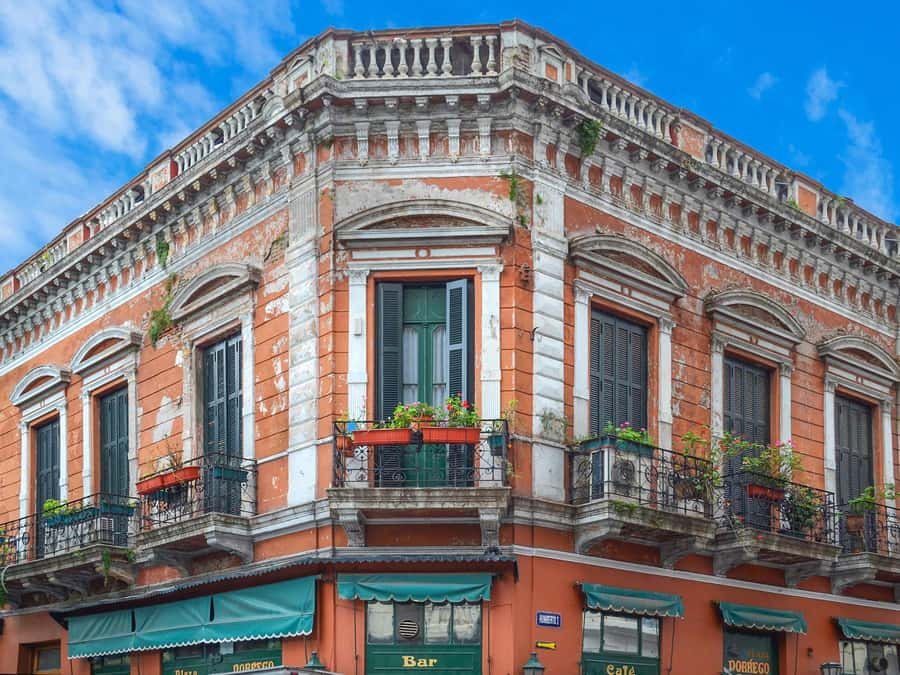
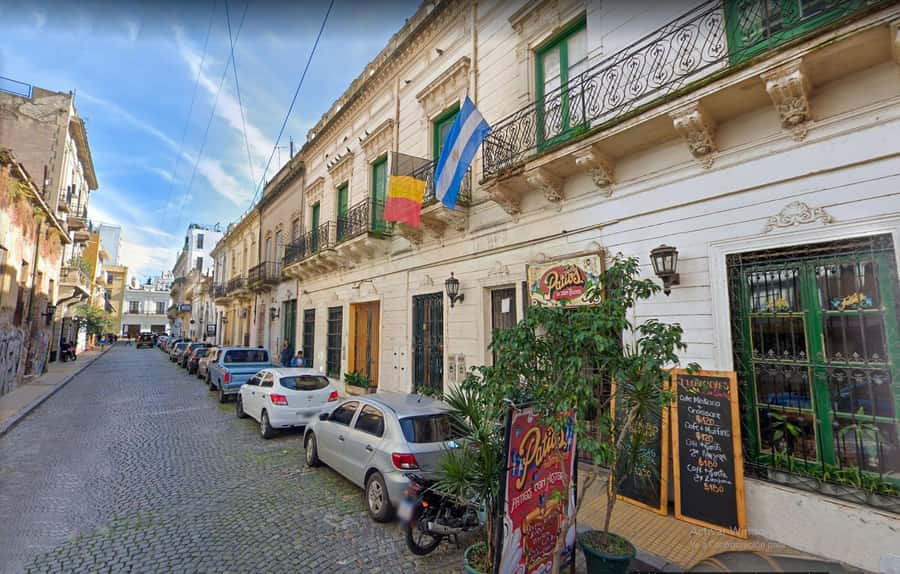
The walk continues along streets lined with 19th-century architecture and collective houses. These facades are among the best reasons to take the tour slowly. They show a more domestic side of Buenos Aires, with buildings that reflect the lives of families and immigrants rather than only grand civic projects.
Your guide also explains immigration and its effect on local culture. That context gives the architecture more meaning. A shared house is not just an old wall or decorative doorway. It becomes part of the story of people arriving, settling close together, and helping shape the Buenos Aires you see today.
I like this part because it encourages you to look up. San Telmo can be visually noisy, especially during the Sunday fair, and it is easy to focus only on stalls and crowds. The guide gives you reasons to notice balconies, entrances, old walls, and the contrast between preserved buildings and modern city life.
The route has some practical limits. Narrow streets are less comfortable with a large group, and the guide may need to stop often to keep everyone together. One report specifically noted that a big group made the streets feel crowded. If you prefer quiet, leisurely photography, you may need to return on your own after the tour.
Meeting Clemente and Mafalda
The comic characters add a lighter note to the history walk. At Clemente in Paseo de la Historieta, you meet one of Argentina’s beloved comic figures in public art form. The stop helps explain how drawing, satire, and everyday humor fit into Argentine culture.
The Mafalda Statue is another popular pause. Mafalda is a major symbol of Buenos Aires, and the statue gives you an easy photo opportunity while the guide explains why this character matters locally. The stop works particularly well for families, comic fans, and anyone who wants to see a side of the city beyond churches and old houses.
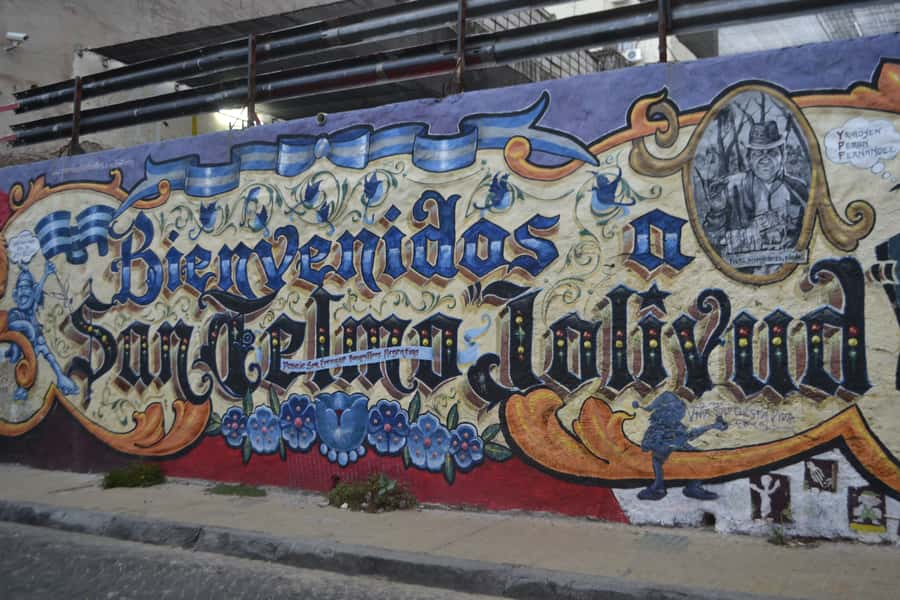
You may also see other cartoon-style sculptures and murals along the way. These works give San Telmo a playful visual thread, and they prevent the tour from becoming too heavy on dates and architecture. The combination is one of the route’s best features: one moment you are discussing colonial Buenos Aires, and the next you are meeting a character known across Argentina.
The Mafalda stop can be popular, so do not expect an empty setting or unlimited time for photographs. Treat it as a short cultural stop within a larger walk, not as a separate attraction with a long visit.
More Walking Tours in Buenos Aires
- Buenos Aires: Personalized 2 to 8-Hour Private Walking Tour
★ 4.7 · 149 reviews - Buenos Aires Walking Tour with Local Guide and Optional Rooftop
★ 4.5 · 87 reviews - Best of Buenos Aires Private Walking Tour
★ 4.5 · 73 reviews - Full Day Private Walking Tour of Buenos Aires Neighborhoods
★ 5.0 · 55 reviews
Inside Mercado San Telmo
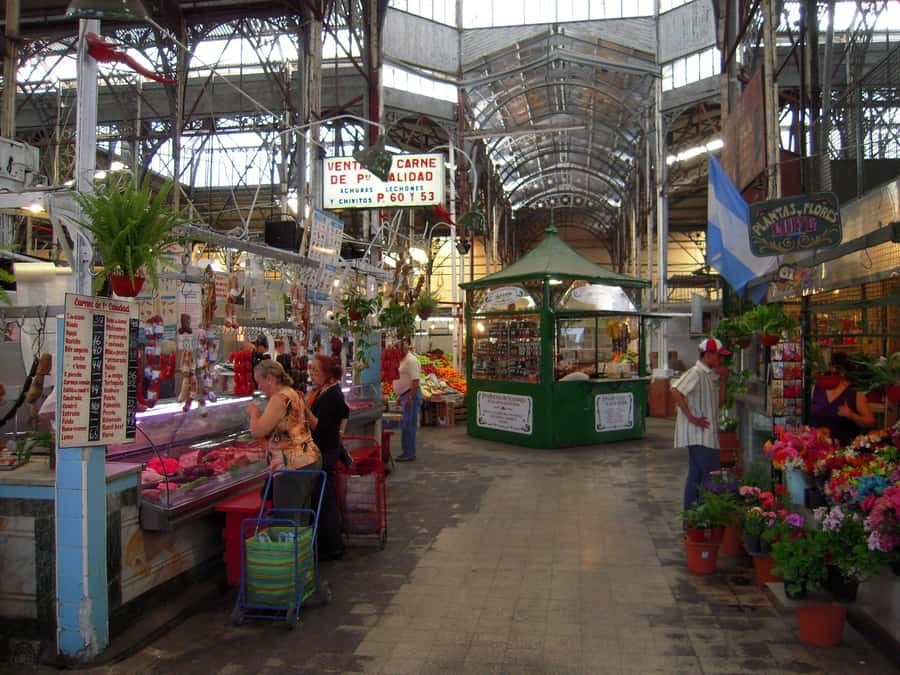
Mercado San Telmo is the food center of the tour. This traditional indoor market gives you a look at the neighborhood through its produce, prepared food, old stalls, and informal atmosphere. The guide explains the market’s place in the community and gives you a chance to notice the food culture as well as the building itself.
You may find traditional Argentine dishes and snacks here, though the tour price does not include food. I would bring some small spending money if you want to sample something, but you should not confuse the market visit with a dedicated food tour. The main purpose is to understand the market and its role in San Telmo.
This stop is useful because it brings the history down to street level. Churches and facades tell you about institutions and architecture. A market shows how people eat, shop, meet, and use the neighborhood in daily life. That change of focus keeps the two-hour route varied.
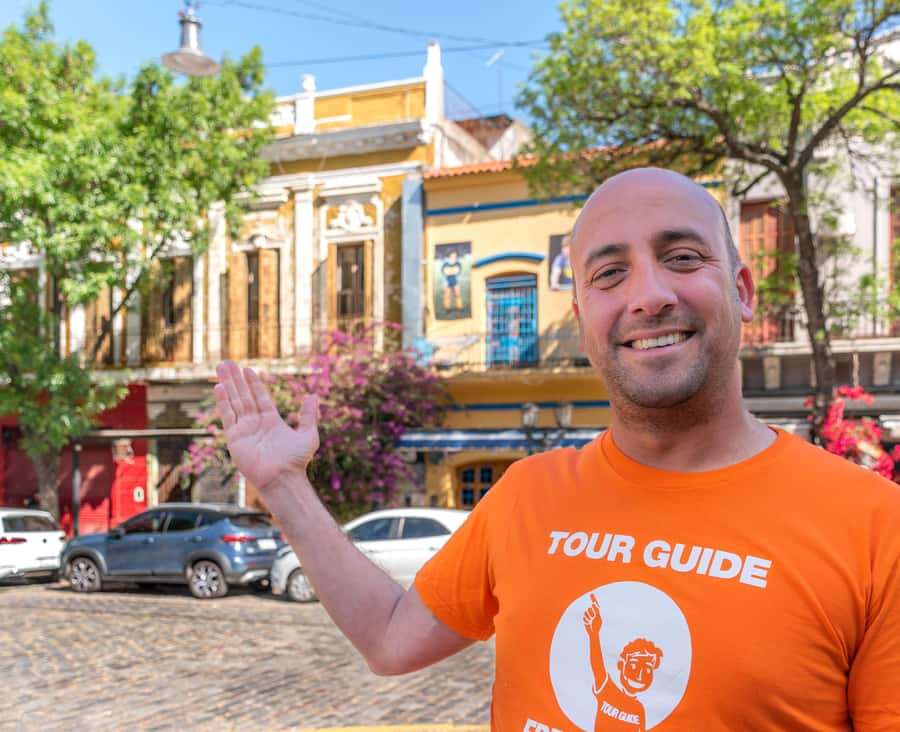
The market can be crowded, especially when combined with the Sunday fair outside. Stay close to the orange-shirted guide or orange umbrella, since those are the stated meeting markers. In a busy indoor space, that simple visual cue matters.
The Sunday fair and San Telmo Square
If your walk takes place on Sunday, the street fair is likely to be the most energetic section. Stalls, music, art, food, and crowds spread through the neighborhood, creating a scene that feels very different from a quiet weekday street.
This is also the point where the tour becomes especially practical. A guide can help you understand what you are seeing instead of leaving you to wander through a maze of stalls. You get local context, a sense of how the fair fits into San Telmo, and a clearer idea of which streets deserve a second visit.
The fair is not a calm setting. One participant described it as chaotic, and that is fair warning rather than a criticism. You will need to keep your group in sight, watch your belongings, and accept that some stops may be brief. The reward is an atmosphere that cannot be recreated by looking at old buildings on a quiet morning.
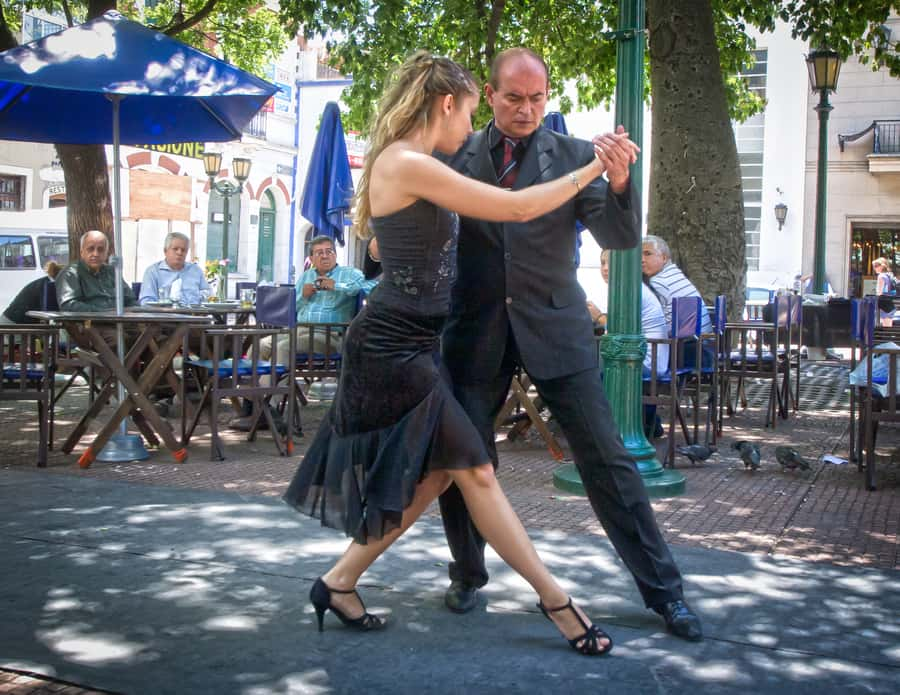
The walk finishes in San Telmo, with the square providing a natural end point. You might see tango dancers there, adding music and movement to the final part of the experience. Since the tour does not include a full tango show, think of this as a chance to see the neighborhood’s public performance culture, not a formal stage production.
Guide quality and group size
The English-speaking guides are the strongest reason to book this tour rather than simply follow a map. Juan receives repeated praise for combining humor with clear explanations. Santiago is described as warm, respectful, helpful, and quick with answers. Jorge is praised for the depth of his explanations.
That range of feedback suggests you can expect a guide who does more than point at buildings. The guide explains history, architecture, art, and local stories, then responds to questions from the group. For a neighborhood as layered as San Telmo, that makes a real difference.
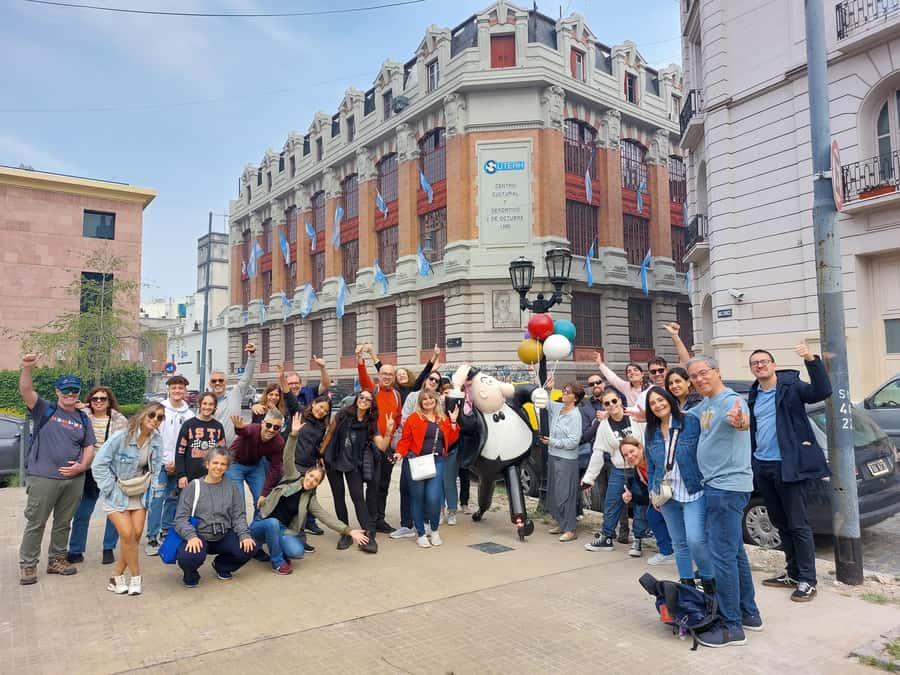
The group size is less predictable. Several people had groups of more than 30, and one person found the size awkward on narrow streets. Another person felt the guide managed a large English group well by projecting their voice and keeping people together.
I would book this if you are comfortable with a social group walk. If you need a private experience, a quiet pace, or long stops for photography, this may not suit you. At $13, the price is low enough that the tradeoff is understandable, but you should know what you are choosing.
Is two hours enough for San Telmo?
Two hours is enough for an introduction, not enough for every corner of the neighborhood. The route covers major landmarks, public art, the market, architecture, and the fair, so you get a useful overview without giving up half a day.
The short duration also makes this easy to fit around other plans. You can take the walk in the morning and return to the market later, or use the finish in San Telmo as the start of your own afternoon. The tour gives you orientation, then you can decide where to spend more time.
The pace is likely to be steady. You move between several stops and listen to explanations along the way. Wear comfortable shoes, keep water handy, and dress for the forecast. The walk operates rain or shine, so a rainy day will change the feel of the experience, especially at the outdoor fair.
Because the starting point is Parroquia San Ignacio de Loyola and the finish is in San Telmo, check the meeting details carefully before setting out. Look for the orange shirt or orange umbrella, and arrive ready to walk rather than expecting a stationary talk.
What you get for $13
At $13 per person, the tour offers good value if you want context and orientation. You are paying for two hours with an English-speaking guide who links major sights and explains the neighborhood’s development.
The value is not in exclusive access or a long indoor visit. You do not receive food as part of the price, and the tour does not promise a private group. The value comes from seeing several places efficiently and learning why they matter.
I especially like that the route includes different types of stops. You get religious architecture, 19th-century homes, public art, comic characters, a food market, and a Sunday fair. That variety would be hard to organize in a short self-guided walk unless you had already researched the area.
Flexible booking also helps. You can reserve and pay later, and cancellation is allowed up to 24 hours in advance for a full refund. Those terms are useful if your Buenos Aires schedule is still shifting.
Who should book this walk?
I recommend it for first-time visitors who want a quick introduction to Buenos Aires’ older neighborhoods. It also suits solo visitors, since the group gives you company and the route has plenty of natural conversation points.
Families may enjoy the Mafalda and Clemente stops, while architecture fans will appreciate the facades and collective houses. Food-focused visitors get a useful market visit, though they should plan to buy their own samples and spend more time there afterward.
The tour is less suitable for anyone who dislikes crowds, has trouble walking on city streets, or wants a private, unhurried experience. The large group possibility matters, particularly on Sunday when the fair draws more people into the same narrow streets.
FAQ
How long does the San Telmo walking tour last?
The tour lasts two hours.
What language is the tour offered in?
The live tour guide speaks English.
Where does the tour start?
The meeting point is Parroquia San Ignacio de Loyola.
Where does the tour finish?
The tour finishes in San Telmo.
How do I identify the guide?
Look for a guide wearing an orange T-shirt or carrying an orange umbrella.
Does the tour visit the San Telmo Market?
Yes. The route includes a guided visit to Mercado San Telmo, where you can see the traditional indoor food market and may choose to buy Argentine food separately.
Does the tour run in bad weather?
Yes. The walk takes place rain or shine, so dress for the weather and wear suitable walking shoes.
Should you book it?
Book this tour if you want a low-cost, well-organized introduction to San Telmo with a guide who can connect churches, architecture, immigration, comic art, food, and the Sunday fair. The mix of Mafalda, Clemente, the market, and tango near the square gives the walk more personality than a standard old-town circuit.
I would choose a Sunday if you want the full street-fair atmosphere, but a quieter day may suit you better if crowds are a concern. At $13, this is a sensible first look at San Telmo, especially when you treat it as an orientation walk and leave time afterward to explore the market and streets at your own pace.
More Shopping Tours in Buenos Aires
- Cusco: Peruvian Cooking Class, Cocktails & Local Market Tour
★ 4.9 · 512 reviews - Pisac Indian Market and Ollantaytambo Fortress with Lunch
★ 4.5 · 395 reviews - Lima: Historic Center Street Food, Market, and Eateries Tour
★ 4.9 · 216 reviews - Cooking class and market tour with a local chef
★ 5.0 · 186 reviews
Just added around Buenos Aires
- Private Airport Transfer In or Out: Aeroparque (AEP)–Buenos Aires★ 5.0 · 73 reviews
- Sailing with Wine Tasting in Buenos Aires★ 5.0 · 50 reviews
- Traditional Argentine FoodTour with optional Michelin Experience★ 4.5 · 56 reviews
- Unique Tailored Tours – The Hummingbird Trip★ 5.0 · 69 reviews
- Experience The Essence of Buenos Aires in San Telmo★ 5.0 · 51 reviews
- Tigre Speedboat – The Delta s Captain – CITYSAILING TIGRE★ 5.0 · 75 reviews
- La Ventana Tango Show & Dinner with Optional Classic Bus Ride★ 4.5 · 77 reviews
- Private Airport Transfer in or out with english speaking driver.★ 4.5 · 69 reviews
Shopping Tours, compared.

Cusco: Peruvian Cooking Class, Cocktails & Local Market Tour
Read our review →
Pisac Indian Market and Ollantaytambo Fortress with Lunch
Read our review →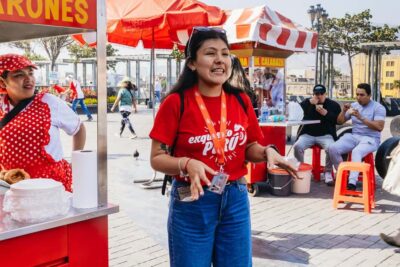
Lima: Historic Center Street Food, Market, and Eateries Tour
Read our review →
Cooking class and market tour with a local chef
Read our review →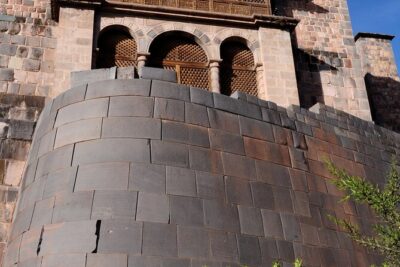
Cusco City Sightseeing, San Pedro Market, Cathedral and Qorikancha Temple
Read our review →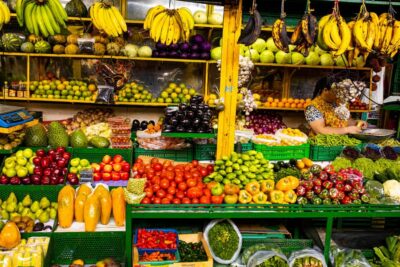
Medellín Multi-sensory Tour in the market, +15 Exotic Fruits
Read our review →
Quito Old Town Tour: History, Market Visit & Ice Cream Tasting
Read our review →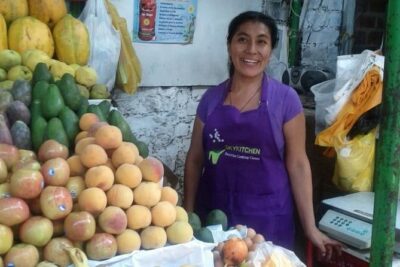
Market Tour, Tasting of 35 Fruits, and 4-Course Peruvian Cooking Class in Lima
Read our review →Browse the lists this tour appears in