
Reviewed · FOOD & DRINK
Quito Old Town Tour: History, Market Visit & Ice Cream Tasting
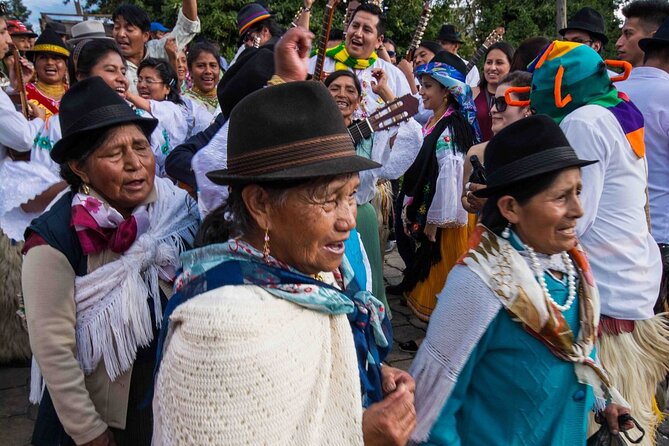
Quito’s Old Town makes the most sense when someone connects the grand plazas, churches, politics, food, and street life. This walking tour does that well, beginning at Central Market and moving through Independence Plaza, La Compañía de Jesús, San Francisco, and La Ronda. The market stop gives you more than pretty buildings: you see medicinal plants, unusual fruit, local customs, and everyday Quito.
I like the mix of history and food, especially the chance to taste tropical fruit, juices, chocolate, and ice cream made with South American ingredients. I also like the small maximum of 12 people, which gives guides such as Marcelo, Pablo, Carlos, and Etiel room to answer questions and adjust the pace.
The main drawback is that this is a walking tour in a high-altitude city, with cobblestones, stairs, changing weather, and a possible tower climb at San Francisco. The meeting and ending details also need a careful look, since the tour information gives Teatro Sucre as the starting point while the route description ends around La Ronda and the listed end point is near Independence Square.
Key points at a glance
- Central Market first: Begin with fruit, juices, medicinal plants, and local customs before the colonial sights.
- A strong first-day tour: The route links Quito’s major plazas and churches with useful background on Ecuadorian politics, religion, earthquakes, and daily life.
- Hands-on ice cream: Make your own frozen treat with ingredients you are unlikely to find at home.
- Small groups: The maximum is 12 people, with guides who can take questions and sometimes adjust the pace.
- Historic churches: See La Compañía de Jesús and the Metropolitan Cathedral, with an optional climb at San Francisco.
- Good value at $29.19: Four hours of guiding, tastings, and several major sights make this a fair introduction to central Quito.
Why this is a smart first look at Quito
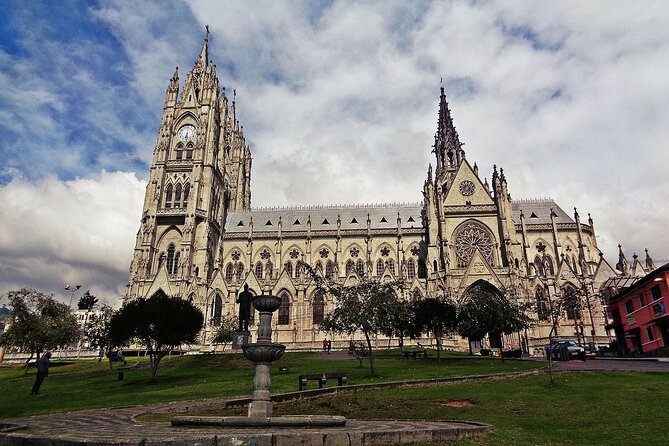
Quito can feel like several cities at once. The colonial center has grand religious buildings and formal plazas, yet daily life carries on around them through markets, food stalls, public offices, and narrow streets. A guide helps you see how those parts fit together.
This tour is especially useful on your first day. You get a basic map of Old Town, learn the names of the main buildings, and pick up food tips for the rest of your stay. Several guides, including Marcelo and Pablo, are praised for explaining not only Quito’s past but also Ecuadorian politics, religion, architecture, economics, Andean culture, and the effects of volcanoes and earthquakes.
The tour lasts about four hours, though the description also refers to a three-hour adventure. Plan for a substantial morning on foot rather than a quick orientation. At $29.19 per person, the price is fair if you want a guide, tastings, and a small group without paying for private touring.
More Food Tours in Quito:
- 3 Hours Local Food Tour in Quito
★ 5.0 · 83 reviews - Medellin: Comuna 13 Graffiti Tour, Cable Car & Street Food
★ 4.8 · 9,046 reviews - Medellín: Comuna 13 True Story and Street Food Tour
★ 4.9 · 1,779 reviews
Starting at Mercado Central with fruit and local remedies
The day begins at Quito’s Central Market, with the scheduled start at 10:00 a.m. The listed meeting point is Teatro Sucre on Guayaquil Street, so check the exact instructions before you set out. From there, the guide takes you to the market.
Give this stop your full attention. The market is not just a place to grab a snack. Each stall offers a small lesson in Quito life, from tropical fruits and juices to medicinal plants and traditional remedies. The tour description even calls out remedies connected with love, a detail that gives the market stop a little humor and shows how food, plants, custom, and belief can overlap.
You can expect tastings of local fruit and drinks. Some outings also include chocolate or other food samples, although the core description specifically promises fruit, juices, and ice cream. Ask your guide about anything you taste, especially if you want to remember the Spanish name or buy it later.
The market is one of the best parts of the route for anyone who wants more than architecture. It lets you see people shopping and working in a normal setting. The tradeoff is that markets can feel crowded and sensory-heavy, and you will be walking through active public spaces rather than a polished attraction.
Independence Plaza and the center of Ecuadorian power
From the market, the route moves into Independence Plaza, also called Plaza Grande. This is where the Spanish city of Quito took shape in the 16th century, and it became a setting for major Ecuadorian revolutions.
The square brings several important buildings together. You see the Independence Monument, the Government Palace, the Archbishop’s Palace, and the Metropolitan Cathedral. That grouping makes the guide’s explanation valuable. Instead of viewing each façade as a separate photo stop, you learn how government, church authority, and public life shared the same center.
I would pay attention here to the stories behind the buildings, not just their appearance. Guides have discussed political changes, religious orders, and the way major events shaped Quito. The information can be detailed, particularly with guides such as Pablo, whose explanations have included comparisons with colonial activity elsewhere in the Americas.
Because the tour moves through the working center of the city, expect crowds and normal street activity. The guide’s voice can be harder to hear in busy areas, so stay close to the group and ask for a repeat when needed. A small group helps, but it does not remove the noise of the plaza.
La Compañía de Jesús and Quito’s church interiors
Next comes La Compañía de Jesús, one of Quito’s great architectural showpieces. Its exterior is carved from volcanic stone, and the interior is covered with gold leaf. This is a sharp change from the market. You move from fruit crates and herbal remedies into a church where craftsmanship, faith, and colonial wealth are expressed through stone and gilded decoration.
The stop matters because Quito’s churches are not simply old buildings. They reflect the influence of Catholic religious orders and the competition among them. A good guide can explain how those groups affected the growth of the city, a subject that has been especially well covered by Pablo.
Take a moment to look beyond the main altar or the most obvious gold surfaces. Notice how the volcanic material outside contrasts with the bright interior. The tour does not promise a long private visit or special access, so the amount of time inside may depend on the day and the guide’s pace.
This is also a point where the tour’s walking format pays off. You reach the church through the streets of Old Town and see how religious buildings sit within the wider city, rather than arriving by vehicle and missing the connection between them.
Same trip, a completely different kind of day:
- Cotopaxi & Quilotoa With Optional Hotel Pick-Up & Drop-Off
★ 4.5 · 170 reviews - Quito Airport Arrival Transfer to Hotel
★ 4.5 · 150 reviews - PRIVATE CITY TOUR: Quito Colonial, Half the World and Cable Car
★ 5.0 · 144 reviews - Full Day City tour of Quito -All main attractions WITH ADMISSIONS
★ 5.0 · 102 reviews
San Francisco and the optional tower climb
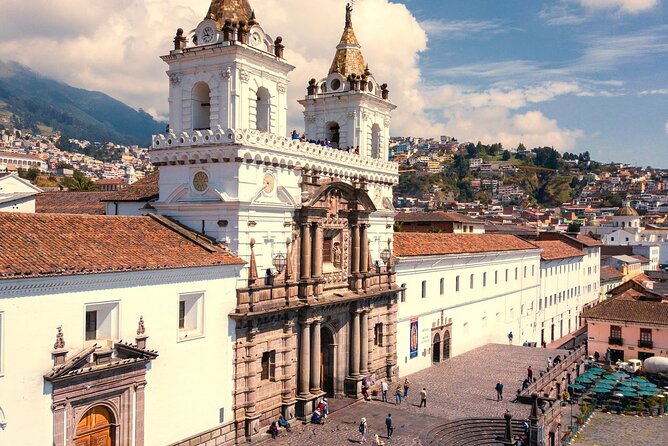
The itinerary includes San Francisco Church, one of Quito’s oldest churches, with an option to climb its towers to a lookout. The view is described as worth the stairs, but the climb is optional, so you can decide based on your energy, comfort, and the time available.
This is the tour’s clearest physical challenge. Quito’s altitude, uneven streets, and stairs can make a short climb feel harder than expected. Wear walking shoes and take your time. If you skip the tower, you still have the church and the surrounding historic center to enjoy.
Ask the guide whether the climb will fit the group’s timing and whether it is available during your visit. The supplied information presents it as an option, not a guaranteed feature at every departure. That distinction matters if the lookout is a major reason you are booking.
Ice cream with Ecuadorian ingredients
After the main history stops, the tour turns to food. You learn how to make ice cream using ingredients from South America, then try flavors that may be unfamiliar at home.
This is more than a dessert break. It gives the tour a hands-on moment after several hours of listening and walking. You get to taste local ingredients in a simple, memorable form, and your guide can explain how the flavors fit into Ecuadorian food culture.
Chocolate is also part of the tasting experience in some departures, and several guests have enjoyed chocolate stops or demonstrations. The exact selection can vary, so think of the food component as a chance to sample local flavors rather than a fixed meal.
The stop is particularly good for families and younger participants. Children age 6 and older may join with an adult, and making ice cream gives them something active to do. It also keeps the tour from becoming a long string of monuments.
La Ronda gives the tour a lively finish
The route ends at La Ronda, one of Quito’s best-known cultural streets. Its narrow, picturesque setting makes a pleasant final stop after the formal plazas and churches.
La Ronda is useful as a place to continue exploring on your own. You finish with a sense of where the city’s food, crafts, and evening atmosphere gather, rather than being dropped at an anonymous street corner. The tour description identifies La Ronda as the ending point, while the meeting details also list Independence Square near Chile Street as an end location. Confirm the final drop-off point with the operator so you can plan your next activity correctly.
The tour does not include hotel pickup or drop-off. That is normal for a central walking tour, but it means you should allow time to reach Teatro Sucre before 10:00 a.m. and arrange your own way back afterward.
What the guide adds to the experience
The guide is the main reason to book this rather than simply walk Old Town with a map. Marcelo is repeatedly identified as patient, friendly, and able to discuss history, architecture, religion, plants, flowers, and current Ecuadorian life. Pablo is described as a strong storyteller with a university-style command of colonial history and politics. Carlos and Etiel are also praised for adjusting to group interests and paying attention to comfort.
That does not mean every departure will feel identical. The guide may shape the balance between history, food, churches, and side streets. If you want more time at a particular stop, ask early. The small group makes that request more realistic than it would be on a large coach tour.
One useful feature is the willingness to answer practical questions. Guides have suggested places to buy chocolate and coffee, recommended restaurants near the end of the route, and occasionally added a gallery or demonstration when time and interest allowed. Those extras are not guaranteed, but an engaged guide can make the morning more useful than a script alone.
Pace, clothing, and who will enjoy it most
Wear comfortable clothes, walking shoes, a sweater or light jacket, sunglasses, and a hat. Quito’s weather can change quickly, and one outing had to be altered because of rain and thunder. The right clothing will not stop a storm, but it will make the walk far more pleasant.
You should also expect a mix of ordinary walking and sightseeing pauses. The route includes cobblestones, market aisles, church interiors, and stairs if you choose the San Francisco lookout. Most people can participate, and service animals are allowed, but anyone concerned about altitude, balance, or stairs should ask about the day’s pace before booking.
This tour suits:
- First-time visitors with one or two days in Quito
- Solo visitors who want a small group and local orientation
- Couples looking for history with food stops
- Families with children age 6 and older
- Anyone interested in markets, religion, architecture, and Ecuadorian ingredients
It is less suited to you if you want a slow museum tour, private transport, or a route with very little walking. It is also not the best choice if you need every stop to follow a rigid schedule.
Value, group size, and booking timing
At $29.19, the tour offers a lot for a half-day: a local guide, Central Market, Old Town landmarks, tastings, an ice cream activity, and a maximum group size of 12. You are not paying only for entry to one monument. You are paying for context and for someone to connect places that can otherwise seem unrelated.
The strongest value comes from the guide’s explanations. If you already know Quito’s history and feel comfortable navigating Spanish-language markets alone, the tour may add less for you. If you are new to Ecuador, the combination of orientation and food makes the fee easy to justify.
The experience is booked about 29 days ahead on average, so do not assume it will always be available at the last minute. One person also noted that a last-minute booking had been cheaper in that case, but prices can change. Compare the current price and availability before deciding how far ahead to reserve.
Free cancellation is available if you cancel at least 24 hours before the start time. Changes or cancellations inside that window are not accepted for a refund.
Should you book this Quito Old Town walk?
I would book it for a first morning in Quito, especially if you want history explained in plain language and prefer food stops to a long lecture. The Central Market and ice cream activity give the tour personality, while Independence Plaza, La Compañía, San Francisco, and La Ronda cover the core of Old Town.
Book it with realistic expectations. This is a walking route in changeable weather, not a private car tour. Confirm the meeting and final end points, wear proper shoes, and stay flexible about the optional tower climb and exact tasting lineup.
If you have only one day in Quito, this tour gives you a useful base for the rest of your visit. If you have several days, it still works well as an opening introduction, leaving you free to return later to the churches, museums, and market stalls that catch your interest.
FAQ
How long does the Quito Old Town tour last?
The experience lasts approximately four hours. The description also refers to a three-hour adventure, so you should plan for a morning that may run close to four hours.
What time does the tour start?
The scheduled start time is 10:00 a.m.
Where does the tour begin?
The listed starting point is Teatro Sucre at C. Guayaquil and, in Quito.
Where does the tour finish?
The route description says the tour ends at La Ronda. The provided meeting information also lists an end point near Independence Square and Chile Street, so confirm the exact final location before booking.
How much does the tour cost?
The listed price is $29.19 per person.
How many people can join?
The tour has a maximum of 12 travelers.
Can children join the tour?
Yes. Children age 6 and older may join when accompanied by an adult.
Is hotel pickup included?
No. Hotel pickup and drop-off are not included.
What should I wear?
Wear comfortable clothing and walking shoes. A sweater or light jacket, sunglasses, and a hat are also recommended because Quito’s weather can change quickly.
Can I cancel for a full refund?
Yes, if you cancel at least 24 hours before the experience start time. Cancellations or changes made less than 24 hours ahead are not accepted for a refund.
More Historical Tours in Quito
- Cartagena: Historic Center and Getsemaní Shared Walking Tour
★ 4.9 · 2,716 reviews - Lima’s Vibrant Heritage: Exploring the City’s Landmarks Half-day
★ 4.5 · 581 reviews - Santiago: Guided Walking Tour of the Historical Old Town
★ 4.8 · 459 reviews - Maria Fumaça – Wines and History
★ 4.0 · 242 reviews
More Shopping Tours in Quito
- Cusco: Peruvian Cooking Class, Cocktails & Local Market Tour
★ 4.9 · 512 reviews - Pisac Indian Market and Ollantaytambo Fortress with Lunch
★ 4.5 · 395 reviews - Lima: Historic Center Street Food, Market, and Eateries Tour
★ 4.9 · 216 reviews - Cooking class and market tour with a local chef
★ 5.0 · 186 reviews
Just added around Quito
- Cotopaxi Volcano Tour from Quito – Day Trip to the Andes★ 5.0 · 65 reviews
- Cable Car and Quito Private City Tour★ 5.0 · 68 reviews
- Tropical Escape: 3 Days Amazon Rainforest Tour from Quito★ 4.5 · 57 reviews
- Cotopaxi & Baños Full Day Tour from Quito Adventure in the Andes★ 5.0 · 61 reviews
- Quito to Cuenca 4 or 5-Day Tour with Cotopaxi, Quilotoa, Baños and Chimborazo★ 5.0 · 45 reviews
- 4 or 5 Day Quito to Cuenca and Cotopaxi,Quilotoa,Baños,Chimborazo★ 5.0 · 58 reviews
- Quilotoa Cultural Hike★ 5.0 · 81 reviews
- Private Transportation from Airport to Hotel in Quito or vice versa (one way)★ 5.0 · 84 reviews
Food & Drink, compared.

Comuna 13 Graffiti Tour, Cable Car & Street Food
Read our review →
Jolimont Winery Tour – Visitation and Tasting – Canela RS
Read our review →
Browse the lists this tour appears in