
Reviewed · CITY TOURS
Cusco City Sightseeing, San Pedro Market, Cathedral and Qorikancha Temple
Cusco’s past and present come together in a single afternoon here. You’ll see the gold-lined remains of Qorikancha, smell fruit and bread at San Pedro Market, then follow old Inca stonework to the Cathedral on Plaza de Armas. It is a smart first look at the city, especially if you want a guide to connect the sites.
I like the small group limit of 15, which should make questions and conversation easier, and I like the efficient mix of walking and vehicle transfers. The main caution is timing: some departures have finished well before the stated three and a half hours, while a delayed pickup can leave the route feeling rushed.
Key points to know before booking
- Qorikancha gives the tour its strongest historical moment: the former Temple of the Sun now shares its foundations with Santo Domingo church and convent.
- San Pedro Market shows everyday Cusco: potatoes, corn, cheese, bread, produce, and local handicrafts fill the stalls.
- The route links major sights without requiring you to arrange taxis: pickup and drop-off are included from selected hotels.
- The pace is generally gentle enough for a new arrival: this matters at Cusco’s high altitude, though you should still allow time to adjust.
- English and Spanish are used together: ask at booking how the guide will divide the commentary if the group is mixed.
- The value depends on execution: at $59, included admission and transport help, but a short or delayed tour weakens the deal.
A useful first afternoon in Cusco
This outing is built for the first day or two of a Cusco stay. In a few hours, you get a view from San Cristóbal Plaza, local food and shopping at San Pedro Market, Inca stonework, Spanish colonial art, and the central square. You do not need to study a map or arrange separate taxis between each stop.
The route also gives you two ways to understand Cusco. At the market, you see the city as a working place where people buy groceries and bread. At Qorikancha, the Cathedral, and the old streets, you see how Spanish colonial buildings were placed over or beside Inca foundations.
That combination is more useful than a tour made up only of churches and viewpoints. You get daily life as well as monuments.
Still, this is an overview, not a slow historical study. The advertised duration is about three hours and 30 minutes, but individual departures have varied. Some have taken closer to two and a half hours, and one delayed pickup resulted in a much shorter route. If you want time for long market browsing or detailed church commentary, plan to return to the sights on your own.
More City Tours in Cusco
- Cusco: Half-Day City Tour with Sacsayhuaman and Q’enco
★ 4.6 · 1,129 reviews - City Tour Cusco Qoricancha Sacsayhuaman y Tambomachay
★ 4.7 · 617 reviews - Cusco: Sightseeing Tour of the City on an Open-Top Bus
★ 4.0 · 481 reviews
San Cristóbal Plaza and the first look at Cusco
The outing begins at San Cristóbal Plaza, where the city spreads below you. This is a strong opening because the layout of Cusco makes more sense from above. Your guide can point out the central districts, the old streets, and the way the city sits among the surrounding mountains.
You will have time for photographs before continuing. That pause matters, since many city tours rush past a viewpoint without giving you a chance to take in the setting.
The starting point also sets the tone for the rest of the route. Cusco is not just a collection of isolated monuments. Its old center is compact, layered, and built around streets that still follow earlier lines.
If you have only just arrived from a lower altitude, take this stop slowly. Cusco’s elevation can make even a modest walk feel harder than expected. One useful feature of this route is its generally unhurried pace, though the exact pace depends on the guide and the group.
San Pedro Market, where Cusco does its daily shopping
San Pedro Market is the most direct contact with ordinary city life on the route. You will see stalls with potatoes, corn, cheese, produce, bread, and other regional foods, along with handicrafts. The market is valued less for polished presentation than for its smells, colors, and steady local trade.
I would use this stop to look before you shop. Notice the range of potatoes and corn, the bakery products from Oropesa, and the way food is arranged for daily use rather than for display. Your guide can add context about local ingredients and eating habits, which gives the market more meaning than a quick walk through the aisles.
You may also have time to buy something. Carry small amounts of Peruvian currency if you plan to make purchases or use facilities along the route. Bathrooms in Cusco can cost one or two soles, and free facilities are not always available.
The market stop is listed at about 45 minutes, but the real time can depend on traffic, group movement, and the guide’s schedule. If shopping is your priority, do not expect a full market morning. This is an introduction that helps you decide if you want to return later.
Qorikancha, where Inca and Spanish Cusco meet
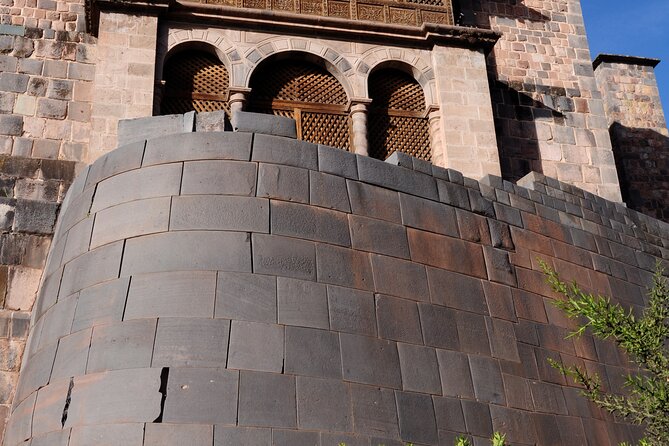
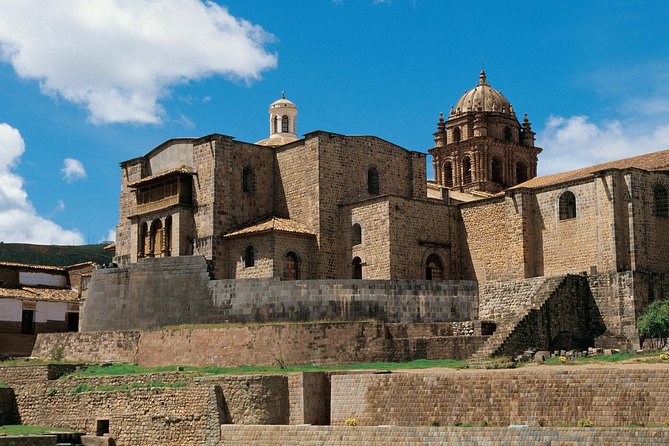
Qorikancha is the historical centerpiece. Originally called Intikancha or Intiwasi, it was dedicated to Inti, the Inca sun god. Much of the original complex was destroyed after the Spanish conquest, and its stonework became part of the foundation of Santo Domingo church and convent.
The power of this stop comes from the contrast between the surviving Inca masonry and the later colonial building above it. Your guide can explain why Qorikancha was so important in the Inca capital and how the site changed after the Spanish arrived.
The tour includes admission, which is helpful because Qorikancha is one of the places where a guide adds real value. Without context, you may see handsome stone walls and church rooms. With context, you can follow the changes in purpose, religion, and power.
Allow roughly an hour in the planned schedule, though some groups have spent nearer 30 minutes inside. That shorter visit can still cover the main points, but it may feel thin if Qorikancha is your main reason for booking.
If you are choosing only one interior site to study closely, this is probably the one. The Cathedral has remarkable art, but Qorikancha explains the meeting and conflict between Inca and Spanish Cusco in a particularly clear way.
More City Tours in Peru
- Open Bus Cusco City Tour
★ 4.5 · 219 reviews - Cusco: City Tour | Half-Day Tour to 4 Archaeological Sites
★ 4.6 · 206 reviews - City Tour in Cusco & visit Museum South American Camelid Private.
★ 5.0 · 147 reviews - Cusco: Half-Day City Tour
★ 4.2 · 129 reviews
San Blas and the carved details of the old center
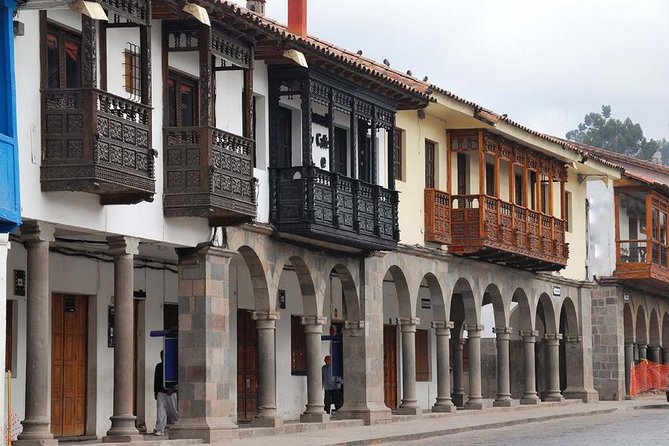
The route continues through the artisans’ quarter of San Blas. The church here is noted for its carved woodwork, so look closely rather than simply checking off another church.
San Blas adds a different feel to the tour. Qorikancha is about imperial Inca power and Spanish religious change. San Blas brings you into the city’s craft traditions and its narrower old streets.
The program describes a visit to the church and its woodwork, but the exact time inside can vary. This is one reason the tour works best as an introduction. You will see the key feature, hear the main explanation, and then have the option of returning if the church or neighborhood catches your interest.
Walking here may involve uneven streets and gradual slopes. Most people can take part, but you should wear stable shoes and tell your guide if altitude is affecting you.
Hatun Rumiyoc Street and the Twelve-Angled Stone
On the way toward the Cathedral, you will walk along Hatun Rumiyoc Street and see the famous Twelve-Angled Stone. The stone is a small object compared with the churches and plazas, yet it is one of the clearest examples of the precision associated with Inca masonry.
This stop works best when you look beyond the single stone. Notice how tightly the blocks fit together and how the wall survives beside later construction. Your guide can explain the role of the old Inca Roca Palace, now occupied by the Archbishop’s Palace.
The Twelve-Angled Stone is also a good example of why a guided walk helps. You could pass it without realizing what you are seeing, especially when the lane is busy. The stop is brief, but the detail gives the old center a sharper focus.
Cusco Cathedral and the final walk to Plaza de Armas
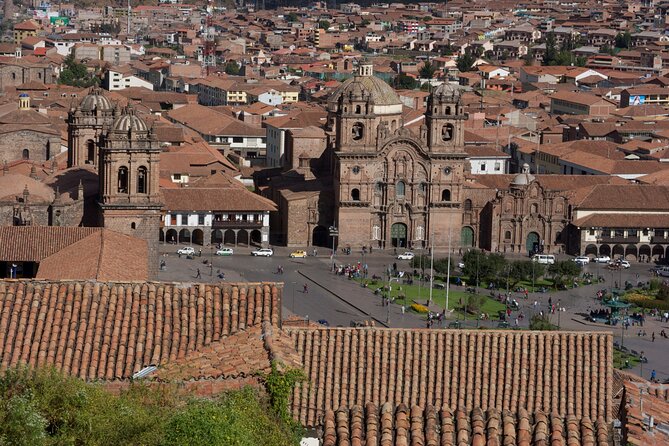
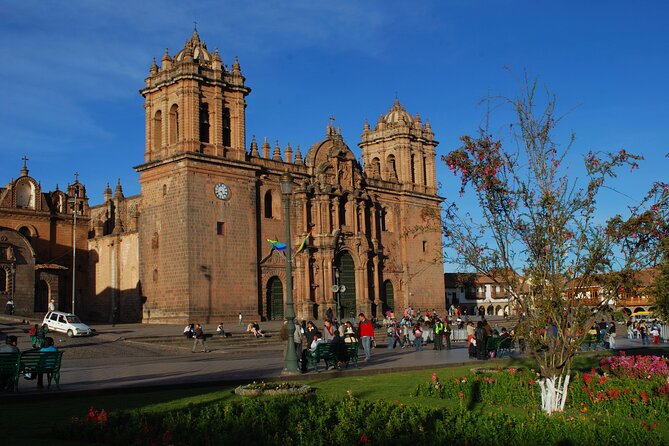
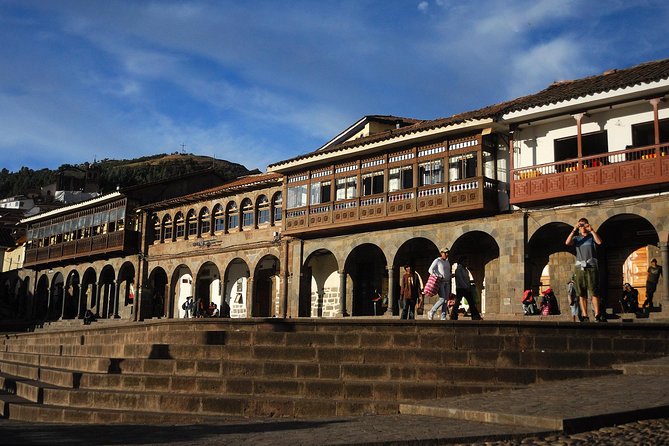
The tour ends at Plaza de Armas, the city’s main square, with a visit to Cusco Cathedral. The Basilica of the Assumption of the Virgin was built between 1560 and 1654 and serves as the mother church of the Roman Catholic Archdiocese of Cusco.
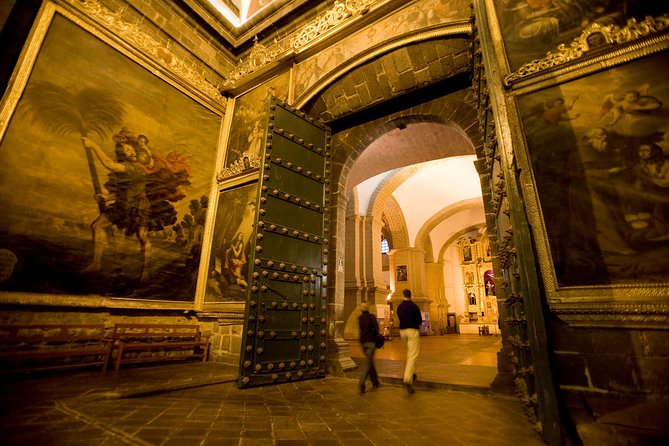
Inside, look for the carved woodwork and colonial paintings. The Cathedral contains important religious art from the colonial period, and the guide can help you read the images and architectural details rather than treating the visit as a quick photo stop.
The Cathedral is included in the admission price, another point in the tour’s favor. It is also the place where the route’s themes come together: Spanish Catholic power, local artistic traditions, and the earlier Inca city beneath the modern center.
The visit may be brief. Some departures have treated the Cathedral as a short final stop, while others have allowed more explanation. If you want time to study the paintings, ask your guide early how much time is planned inside.
Afterward, you finish in or near Plaza de Armas. That is convenient because the square has restaurants, shops, and transport connections. You can continue exploring on your own instead of being left at an out-of-the-way drop-off point.
What the guide adds, and where the format can falter
The strongest guide experiences have been described as clear, friendly, and full of useful context. Guides named Henry, Jose Marie, Robin, Marcelo, Manuel, and Gabriel have been praised for explaining Cusco’s past, food, customs, and religious traditions. A good guide also helps a solo visitor with photos and makes the walking route feel less uncertain.
The group limit is 15, but the bilingual format deserves attention. English and Spanish are both used, and the balance can change with the group. In one case, an English-speaking participant found that most of the explanation was in Spanish, followed by short English translations. If detailed English commentary is important to you, confirm how the tour handles mixed groups before paying.
The vehicle transfers are useful, but they are not always an advantage. Cusco traffic can eat into a short afternoon, especially when the vehicle collects people from more than one hotel. Several stops are close enough to walk, so a delayed vehicle can feel frustrating.
Ask for a clear outline at the start: pickup order, planned stops, walking sections, and estimated finish time. That simple step can prevent confusion if the group runs late.
Altitude, comfort, and the practical details
Cusco is high enough that altitude sickness can spoil even a well-planned tour. If you have just arrived, give yourself time to rest and adjust when possible. Drink fluids, take the walking slowly, and tell the guide if you feel unwell.
The route is not presented as a strenuous hike, and the leisurely pace suits many people. Still, you will walk through old streets and stand inside several sites. Comfortable shoes are more useful than dress shoes, and a light layer is sensible for an afternoon that may change from sunny to cool.
Hotel pickup and drop-off are included from selected hotels. Some hotels sit on streets where vehicles are not allowed, so you may be asked to reach a nearby point. Confirm the exact meeting place rather than assuming the vehicle can stop at your door.
The start time is 2:00 pm. The stated duration is approximately three hours and 30 minutes. Allow extra flexibility afterward, since one delayed departure can affect dinner plans. If you have a fixed evening reservation, leave a buffer.
Free cancellation is available up to 24 hours before the local start time. Changes or cancellations inside that window are not accepted for a refund.
Is $59 a fair price for this Cusco route?
At $59 per person, the price is reasonable if the service runs close to the planned length. You are paying for a bilingual guide, admission to Qorikancha and the Cathedral, hotel transport from eligible hotels, and an organized route through several separate areas.
The value is strongest if you are new to Cusco, traveling alone, or short on time. You avoid figuring out local transport, finding the Twelve-Angled Stone, and working out which admissions you need. A good guide also gives you context that a self-guided walk may miss.
The value is weaker if you are comfortable walking independently. San Pedro Market, San Blas, Hatun Rumiyoc Street, and Plaza de Armas can be visited without a tour, and some people may find the stops too short. The tour also does not promise a long visit to every church or a detailed study of the Cathedral.
I would book it for a first afternoon, particularly if you have just arrived and want an organized introduction. I would not book it as your only cultural experience in Cusco. Save time later for returning to Qorikancha, the Cathedral, or the market at your own pace.
Who should book this afternoon tour?
This experience suits you if you want the main sights arranged in one short outing, prefer help with transport, or want historical and cultural explanation as you walk. It is also a practical choice for solo visitors who would rather not navigate the old center alone on their first day.
Families and couples can benefit from the compact route, though young children may find the church commentary and stonework less engaging than the market. People concerned about altitude may appreciate the gentle pace, but you should not schedule the tour immediately after a difficult arrival if you already feel ill.
Independent walkers may prefer separate visits. You can spend longer at the market, pause for photographs, and return to the Cathedral when it suits you. The tour earns its price through organization and interpretation, not through exclusive access or a private route.
Should you book the Cusco city tour?
Book it if you want a practical overview of Cusco in one afternoon and you value a guide’s explanation of Qorikancha, colonial art, Inca masonry, and local food. The mix of San Pedro Market and major historic sites gives you a useful first sense of the city.
Before booking, accept three limits: the tour is bilingual, traffic can affect the schedule, and some departures have been shorter than expected. Ask about the English-Spanish balance, confirm your pickup point, and leave room after 5:30 pm in case the route runs late.
For most first-time visitors, this is a sensible orientation tour rather than a once-only grand excursion. Use it to learn the city’s layout and choose the places you want to revisit slowly.
FAQ
How long does the Cusco city tour last?
The approximate duration is three hours and 30 minutes. The planned start time is 2:00 pm, but the actual finish can vary because of pickup delays and traffic.
What sights are included?
The route includes San Cristóbal Plaza, San Pedro Market, Qorikancha, San Blas, Hatun Rumiyoc Street, the Twelve-Angled Stone, Plaza de Armas, and Cusco Cathedral.
Are entrance tickets included?
Yes. Admission to Cusco Cathedral and Qorikancha Temple is included.
Is hotel pickup available?
Hotel pickup and drop-off are included from selected hotels. Some old-town hotels are on streets where vehicles cannot enter, so you may need to meet the vehicle nearby.
Is the tour offered in English?
Yes. The service is bilingual in English and Spanish. The balance between the two languages can depend on the makeup of the group.
How many people can join the tour?
The maximum group size is 15 people.
What is the cancellation policy?
You can cancel for a full refund up to 24 hours before the experience begins. Cancellations or changes made less than 24 hours before the local start time are not accepted for a refund.
More Shopping Tours in Cusco
- Lima: Historic Center Street Food, Market, and Eateries Tour
★ 4.9 · 216 reviews - Medellín Multi-sensory Tour in the market, +15 Exotic Fruits
★ 5.0 · 113 reviews - Buenos Aires: San Telmo and Market Guided Walking Tour
★ 4.8 · 102 reviews - Quito Old Town Tour: History, Market Visit & Ice Cream Tasting
★ 4.5 · 91 reviews
More Shopping Tours in Peru
- Cusco: Peruvian Cooking Class, Cocktails & Local Market Tour
★ 4.9 · 512 reviews - Cooking class and market tour with a local chef
★ 5.0 · 186 reviews - Vegan Peruvian Cooking Class Cocktails and Local Market in Cusco
★ 5.0 · 46 reviews - Pisac Indian Market and Ollantaytambo Fortress with Lunch
★ 4.5 · 395 reviews
Just added around Cusco
- rainbow mountain full day★ 5.0 · 44 reviews
- Rainbown mountain cusco 1 Day★ 4.5 · 72 reviews
- Manu National Park Tour 4days/3night★ 5.0 · 69 reviews
- Tour to the HUMANTAY LAGOON from CUSCO★ 5.0 · 35 reviews
- Vegan Peruvian Cooking Class Cocktails and Local Market in Cusco★ 5.0 · 46 reviews
- Cusco Private Airport Transfer: Fast, Reliable Hotel Drop-Off★ 5.0 · 80 reviews
- 1 Day Tour to Palccoyo (Alternative Rainbow Mtn) from Cusco, Peru★ 5.0 · 53 reviews
- 5-Day: Salkantay Trek to Machupicchu and Humantay Lake★ 5.0 · 42 reviews
City Tours, compared.
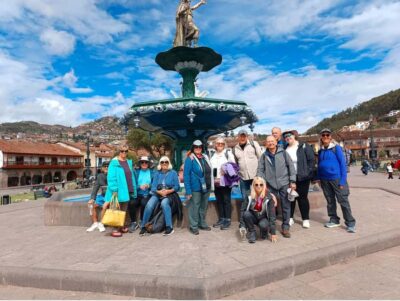
Cusco: Half-Day City Tour with Sacsayhuaman and Q’enco
Read our review →
Private City Tour, Monserrate, Emerald and Botero
Read our review →
City Sightseeing Hop-On Hop-Off Bus Tour & Extras
Read our review →
City Tour Cusco Qoricancha Sacsayhuaman y Tambomachay
Read our review →
Main City Sights in 7 Hours – Shared Group Tour
Read our review →Browse the lists this tour appears in