
Reviewed · WALKING TOURS
Buenos Aires in One Day Private Walking Tour
Buenos Aires reveals itself best at street level, and this private tour gives you a long, thoughtful look at the city rather than a quick ride past its landmarks. Over about six hours, you move from grand avenues and presidential buildings to old churches, colonial streets, market squares, and the family mausoleums of Recoleta Cemetery.
I like the wide range of neighborhoods and the way the guides connect buildings to Argentina’s politics, immigration, religion, and daily life. I also like the private format, which lets your guide adjust the pace and answer your questions. The tradeoff is simple: this is a true walking day, and the itinerary can feel rushed or uneven if you hope to spend much time inside museums or historic buildings.
Key points at a glance
- Recoleta Cemetery: Spend about 45 minutes among ornate tombs, including Eva Perón’s burial site and General San Martín’s guarded mausoleum in the nearby cathedral.
- San Telmo’s difficult past: See Plaza Dorrego, the old streets, colonial buildings, and sites linked to slavery, British invasions, and the city’s early development.
- Private English-speaking guide: Guides such as Carlos, Soledad, Clemencia, and Eilat have led this route, with individual attention built into the experience.
- A serious walking commitment: The advertised duration is six hours, though some outings have lasted closer to seven. Wear comfortable shoes.
- One taxi required: Transportation is not included, and one taxi ride between sights usually costs about $5 to $7.
- An end in San Telmo: The tour finishes near Plaza Dorrego, not at the starting point, leaving you in a good area for cafes, antiques, and further exploring.
A long walk through Buenos Aires, not a drive-by tour
The main strength of this experience is its scale. You are not confined to one district or given a short list of photo stops. You cross several parts of Buenos Aires and hear how the city changed from a colonial port into a grand capital shaped by European immigration, military leaders, political conflict, and modern redevelopment.
The tour begins at Florida Garden, near Florida Street, at 10 a.m. Look for a guide carrying or wearing a small Buenos Aires Walking Tours sign outside the cafe’s corner door at Paraguay Street. That meeting point matters because the tour starts promptly, and the route covers a lot of ground.
The private setup is useful here. If you are the only person in your booking, the guide can tailor the day to your interests. If you care about architecture, politics, churches, or Argentine social life, say so early. The guides have different strengths. Carlos is especially praised for his clear English and broad understanding of Argentine life, while Soledad has been appreciated for her work in Recoleta Cemetery. Clemencia is noted for being warm and helpful, and Eilat for knowing less obvious corners of the city.
More Day Trips in Argentina
- Gaucho Day Trip from Buenos Aires: Santa Susana Ranch
★ 4.0 · 272 reviews - Gaucho Experience: A Day Trip to Don Silvano Ranch
★ 4.0 · 148 reviews - Colonia del Sacramento: Small-Group Day Trip
★ 4.5 · 48 reviews
Florida Street and Retiro’s grand architecture
Florida Street gives you an immediate introduction to central Buenos Aires. Your guide explains its old buildings and role in the city before leading you toward Retiro, one of the most architecturally impressive parts of the route.
At Plaza San Martín, you encounter layers of Argentine history in one public space. The site has served as a military bastion, bullfighting ring, and slave market. The square also carries the name of General José de San Martín, a key figure in South America’s independence movements.
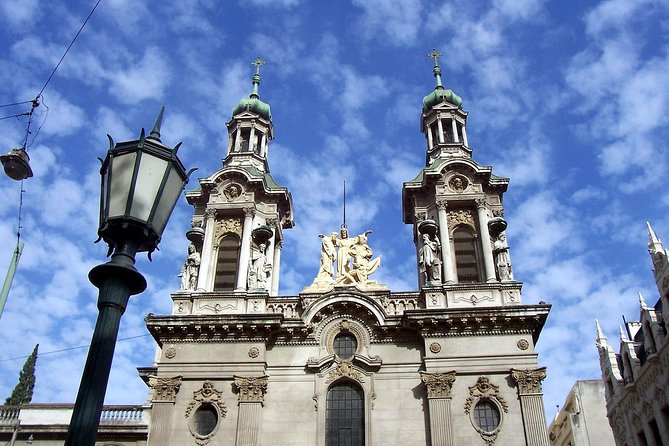
Retiro is where the tour’s architectural commentary becomes especially strong. You see the Paz Palace, the Kavanagh Building, the Santísimo Sacramento Church, the British Clock Tower, and the railway stations. The buildings reflect Argentina’s former wealth and the influence of Britain, France, Italy, Catholicism, Judaism, ranching, and military power.
The walk along Avenida Alvear continues that theme. Palaces and mansions include the Ortiz-Basualdo Palace, now associated with the French Embassy, the Alzaga-Unzué Manor, the Duhau Mansion, the Alvear Palace, and other large residences. You also pass Arroyo Street and its galleries.
I would give this section your full attention if you enjoy city design. The guide is not just pointing at pretty facades. You are shown how social status, immigration, religion, and international ties shaped the city’s appearance. The limitation is that most of these stops are viewed from the street. This is an architecture walk, not a series of interior visits.
Recoleta Cemetery and the stories behind the marble
Recoleta is one of the strongest sections of the day. The district has a more polished feel, with elegant buildings, cultural venues, and the Nuestra Señora del Pilar Church surrounding the cemetery.
Inside Recoleta Cemetery, expect around 45 minutes among ornate mausoleums and narrow paths. This is not a quick look at Eva Perón’s grave followed by a departure. Your guide explains the monuments, notable families, and political stories connected to the cemetery, including Evita’s burial place.
The cemetery is important because Argentina’s public life is often understood through its personalities. The tombs turn national politics into something visible and personal. You see how the country remembers presidents, military figures, cultural leaders, and wealthy families through elaborate stonework.
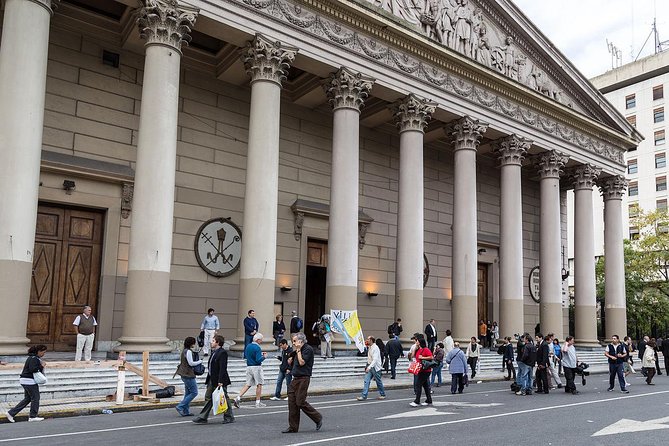
The Metropolitan Cathedral later adds another major San Martín connection. General San Martín’s guarded tomb is located there, and the church is also linked to Pope Francis, who served as Archbishop of Buenos Aires before becoming pope.
There is a practical point here: the cemetery section can feel long if you prefer active neighborhoods to monuments and memorials. Some outings have spent so much time here that the later parts felt less balanced. If you have limited interest in cemeteries, tell your guide. If you enjoy stories, sculpture, and Argentine political figures, this may be the day’s most memorable stop.
Palermo’s monuments and ordinary city life
The route continues through Palermo, Buenos Aires’ largest and most populous neighborhood. This part gives you a chance to see more of the city as a place where people live, work, shop, and move through their daily routines.
Stops can include the National Gallery of Art, the National Library building, the Floralis Monument, Peynot’s grand monument presented by France for Argentina’s centennial, and a monument to Eva Perón at the place where she died. You also pass the Buenos Aires Design Center.
Palermo helps break up the formal sequence of palaces, churches, and political landmarks. The point is not simply to collect monuments. Your guide uses the district to explain how Buenos Aires functions today and how its neighborhoods differ in character.
This is also one reason to choose the private version. You can ask how locals use the parks, how the city’s architecture changed, or which areas make sense for a later meal. The tour does not promise a long stop at each site, so think of Palermo as a guided orientation rather than a full neighborhood visit.
More Walking Tours in Argentina
- Buenos Aires Hop-On Hop-Off Bus, Free Walking Tours & Discounts
★ 4.5 · 2,218 reviews - Buenos Aires: La Boca Guided Walking Tour in English
★ 4.8 · 1,587 reviews - Nazis in Buenos Aires: a historical walking tour
★ 4.9 · 193 reviews - Buenos Aires: Personalized 2 to 8-Hour Private Walking Tour
★ 4.7 · 149 reviews
Downtown, Galerías Pacífico, and the city’s public face
The downtown portion brings you back toward Florida Street and the city center. You pass Galerías Pacífico, a grand former British railway building now used as a shopping center, with famous mural paintings inside. If the route allows a closer look, it is one of the more attractive commercial buildings in central Buenos Aires.
You also see the Centro Naval, Teatro Colón, the Obelisk, the financial district, and buildings connected to Argentina’s national anthem and changing economy. The guide explains how Buenos Aires developed and how the city’s wealth was tied to ranching, trade, banking, railways, and foreign investment.
This section works best when you listen for connections. The Obelisk is not just a landmark for photographs. Teatro Colón is not just an opera house. The financial district is not just a cluster of office buildings. Each stop helps explain how Buenos Aires presented itself as a modern capital and why it earned the old nickname Paris of the South.
You may not enter Teatro Colón or other major buildings. That is worth knowing before booking. The value comes from having someone explain what you are seeing, not from admission to a long list of interiors.
Plaza de Mayo and the country’s political memory
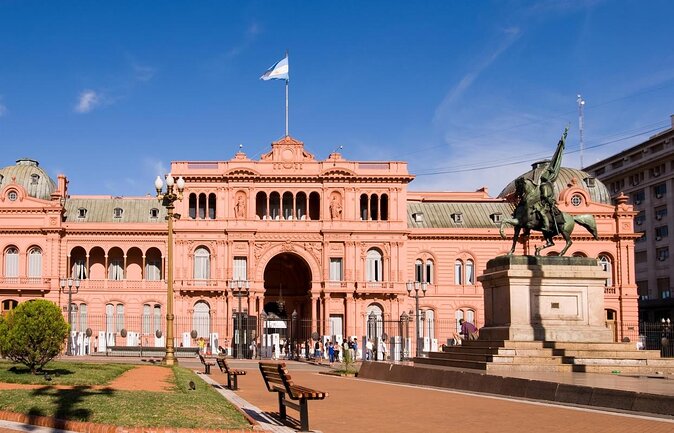
Plaza de Mayo is the symbolic heart of the route. Here you see the Casa Rosada, the Cabildo, the Metropolitan Cathedral, the Pirámide de Mayo, and the National Bank.
The Casa Rosada is the president’s office, while the Cabildo recalls the city’s colonial government. The cathedral connects religious life with Argentine independence and General San Martín. Around the square, your guide also explains the Mothers of the Disappeared and the political violence of Argentina’s military dictatorship.
This is a place where the guide’s commentary matters. A quick visit can leave you with a few grand buildings and no sense of their meaning. A good explanation helps you understand why this square remains central to demonstrations, national ceremonies, and arguments about Argentina’s past and present.
The tour also covers Manuel Belgrano’s monument, the former location of the gallows, ministry buildings that still show evidence of coups, and the Pirámide de Mayo. These details are not polished sightseeing material, but they give the city a more honest shape.
San Telmo, slavery, immigration, and the antiques market
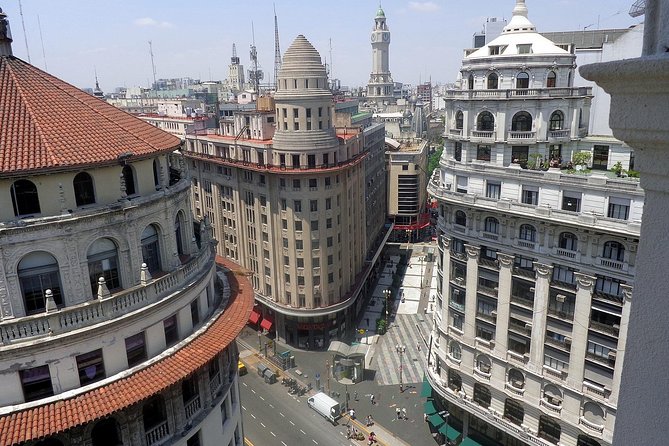
San Telmo is the oldest neighborhood on the route and one of its most layered. Colonial-style houses, old churches, small shops, and uneven streets give the area a different feel from Retiro and Recoleta.
You pass Defensa Street, the route used by Buenos Aires residents during the British invasions of 1806 and 1807. The guide also discusses the old presence of British merchants and institutions in Argentina.
The tour addresses slavery in Buenos Aires at an unusually direct level. You see a tiny house that was reportedly given to a freed slave and learn about the city’s former slave market. The route also includes the Manzana de las Luces, early religious and educational sites, the oldest preserved shops and houses, the Saint Dominic Convent, the Viceroy Liniers House, and the Minimal House.
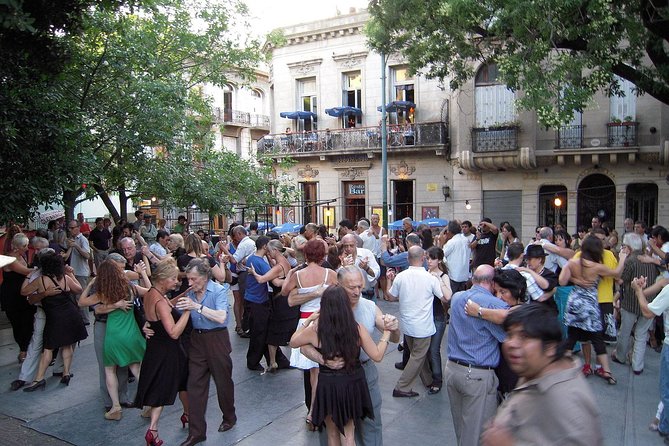
Plaza Dorrego is the natural finish to this part of the walk. It is the center of the San Telmo Antiques Fair and has cafes and antique stores around it. The advertised endpoint is Plaza Dorrego, so do not assume you will be returned to Florida Garden or your hotel.
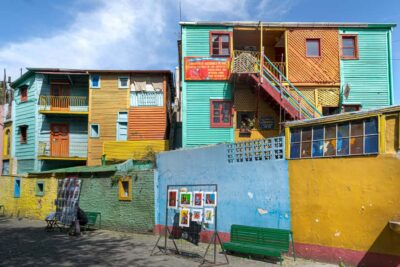
The tour may also include a short extension to La Boca, but this is optional and not included. It requires a taxi and adds about 45 minutes. The colorful port district is linked to Italian immigrants, sailors, and dockworkers, but you should confirm the extra plan and cost with your guide before agreeing.
Puerto Madero and a useful break
Puerto Madero provides a sharp contrast with San Telmo. This newer district was built by extending Buenos Aires across the old British dockyards and into former waterfront areas.
The stop is short, about 15 minutes, so expect an overview rather than a full waterfront visit. The contrast is the point: old colonial streets on one side of the day, a newer district shaped by redevelopment on the other.
A coffee and lunch break is included in the flow of the tour, but food and drinks are your responsibility. Use it as a chance to rest, ask questions, and decide how much energy you have left. Six hours on foot is demanding, and some outings have lasted nearly seven hours.
What the $199 price gets you
At $199 per person, this is not a budget orientation walk. You are paying for a private English-speaking guide, a full day of personal attention, cemetery admission, and a route that links far more districts than a short neighborhood tour.
The value is strongest for first-time visitors with limited time who want context as much as sightseeing. You can cover Retiro, Recoleta, Palermo, downtown, Plaza de Mayo, San Telmo, and Puerto Madero in one day without organizing each connection yourself.
The value is weaker if you mainly want to enter museums, linger over lunch, or explore one neighborhood slowly. Most stops are explained from public streets, and the route covers so much ground that some parts may feel like an introduction rather than a detailed visit.
The taxi is extra, usually about $5 to $7, and hotel pickup and drop-off are not included. Bring water, wear sturdy shoes, and keep some Argentine pesos or a payment method available for lunch and transport.
Who should book this walking day?
I would choose this tour if you are visiting Buenos Aires for a short stay, want a private guide, and prefer understanding the city to simply checking off landmarks. It also suits couples, families with older children, and solo visitors who want a flexible day with room for questions.
Children eight and under are free when accompanied by a paying adult, but the distance and six-hour length still make this better for children who can manage a serious walk.
You should think twice if you dislike long walks, need regular rest stops, or want a tour focused on interiors. The route operates rain or shine, and the full plan can change because of weather, strikes, protests, repairs, or other city conditions.
FAQ
How long does the Buenos Aires walking tour last?
The advertised duration is approximately six hours. Some outings have lasted close to seven hours, depending on the pace and the day’s schedule.
Where does the tour begin?
The meeting point is Florida Garden at Florida 899, Buenos Aires. Meet outside the cafe’s corner door near Paraguay Street at 10 a.m., and look for a guide holding or wearing a small Buenos Aires Walking Tours sign.
Where does the tour end?
The scheduled endpoint is Plaza Dorrego in San Telmo, near Humberto 1º 400. It is not the same as the starting point.
Is this a private tour?
Yes. Only your group participates in the private activity.
Is transportation included?
No. One taxi ride is required during the tour, and the cost is not included. The taxi generally costs about $5 to $7.
Is lunch included?
No. The tour includes a coffee and lunch break, but you pay for your own food and drinks.
Is Recoleta Cemetery admission included?
Yes. Cemetery admission is included in the tour price.
Can children join the tour for free?
Children eight and under are free when accompanied by a paying adult.
What happens if it rains?
The tour operates rain or shine. The full itinerary may change because of weather, city events, strikes, repairs, or other conditions.
Should you book it?
Book this tour if you want a serious city orientation on foot and have only one day to connect Buenos Aires’ major districts. The strongest reasons are the private guide, the range of neighborhoods, and the clear attention given to politics, architecture, immigration, and Recoleta Cemetery.
Skip it if you want a relaxed day, extensive interior visits, or a single-district experience. At $199 per person, the tour earns its price through time, coverage, and personal explanation, but only if you are ready to walk, pay for your own break and taxi, and accept that the route may be adjusted along the way.
More Day Trips in Buenos Aires
- Machu Picchu Day Trip from Cusco
★ 4.5 · 1,644 reviews - From Salta: Full-Day Trip to Salinas Grandes and Purmamarca
★ 4.6 · 914 reviews - Day Trip to Uyuni Salt Flats
★ 4.0 · 602 reviews - Santiago: Portillo and Laguna del Inca Day Trip with Picnic
★ 4.5 · 572 reviews
More Walking Tours in Buenos Aires
- Buenos Aires: San Telmo and Market Guided Walking Tour
★ 4.8 · 102 reviews - Buenos Aires Walking Tour with Local Guide and Optional Rooftop
★ 4.5 · 87 reviews - Best of Buenos Aires Private Walking Tour
★ 4.5 · 73 reviews - Full Day Private Walking Tour of Buenos Aires Neighborhoods
★ 5.0 · 55 reviews
Just added around Buenos Aires
- Private Airport Transfer In or Out: Aeroparque (AEP)–Buenos Aires★ 5.0 · 73 reviews
- Sailing with Wine Tasting in Buenos Aires★ 5.0 · 50 reviews
- Traditional Argentine FoodTour with optional Michelin Experience★ 4.5 · 56 reviews
- Unique Tailored Tours – The Hummingbird Trip★ 5.0 · 69 reviews
- Experience The Essence of Buenos Aires in San Telmo★ 5.0 · 51 reviews
- Tigre Speedboat – The Delta s Captain – CITYSAILING TIGRE★ 5.0 · 75 reviews
- La Ventana Tango Show & Dinner with Optional Classic Bus Ride★ 4.5 · 77 reviews
- Private Airport Transfer in or out with english speaking driver.★ 4.5 · 69 reviews
Walking Tours, compared.
Historic Center and Getsemaní Shared Walking Tour
Read our review →
La Paz and El Alto: Cable Car Rides and Walking Tour
Read our review →
Punta Arenas: Walk with Penguins on Magdalena & Marta Island
Read our review →
Browse the lists this tour appears in