
Reviewed · HISTORICAL TOURS
WALKING TOUR – A journey through the history of Santa Cruz
Santa Cruz de la Sierra has a story that feels quite different from Bolivia’s better-known highland cities. This walking tour follows that story through old houses, civic buildings, museums, and art spaces, while Paul Vaca explains the city’s independent character in clear, approachable terms.
I like the small maximum of six people, which gives you room to ask about food, culture, and other places to visit. I also like the mix of formal museums and working cultural spaces, especially Manzana 1 and the Melchor Pinto house, rather than a walk that simply circles the main plaza.
The main thing to consider is the pace. You will be on foot for about two and a half hours, with several indoor stops, so this suits you best if you have moderate physical fitness and want history rather than a quick photo walk. Also, the summary lists Vallegrande, but the meeting point and every stop are in Santa Cruz de la Sierra, so confirm the city details when booking.
Key points at a glance
- Paul Vaca leads a six-person maximum group, making it easier to ask questions and discuss Santa Cruz beyond the standard sightseeing script.
- The tour visits six historic and cultural stops, including the main square, cathedral, museums, old houses, and art spaces.
- You learn why Santa Cruz developed differently from La Paz and Sucre, with special attention to local civic identity.
- Manzana 1 occupies the city’s oldest building, adding an art-focused stop to the historical route.
- The $11.40 price includes the guide and listed admissions, with snacks not included.
- The walk returns to its starting point near Calle Libertad, Junín, Ayacucho, and the Raúl Otero Reiche ticket office.
Santa Cruz history begins at Plaza 24 de Septiembre
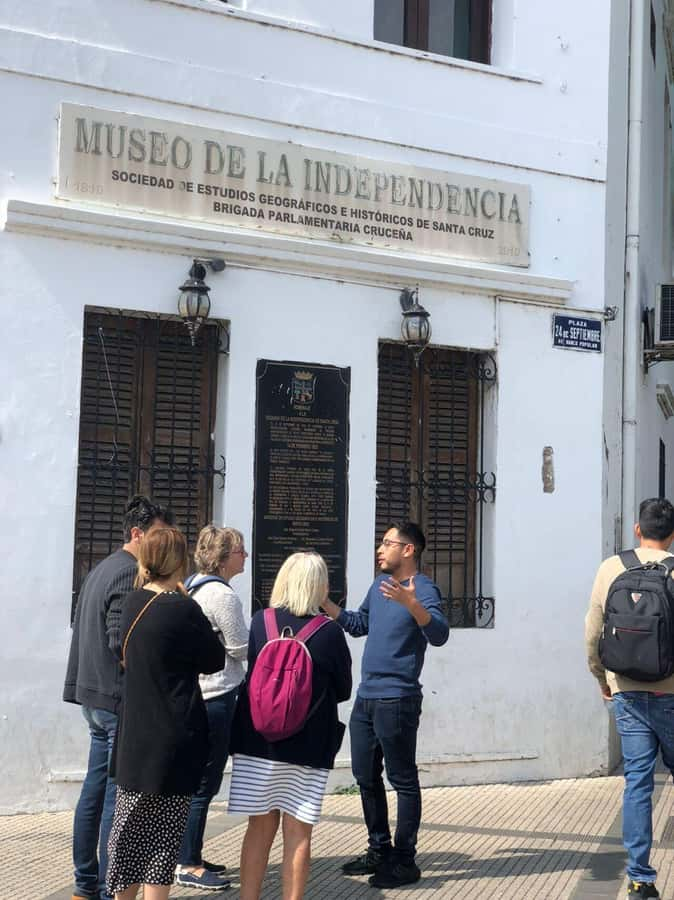
The tour starts at Plaza 24 de Septiembre, the natural place to set the scene for Santa Cruz de la Sierra. Instead of treating the square as a quick backdrop for photographs, Paul takes you into the city’s early story and the development of its historic center.
Your first portion includes the regional history museum, the Independence Museum of Santa Cruz, and the House of Culture. The timing listed for this opening section is about 20 minutes, though the actual time spent at each place can depend on the group and the day’s access.
This is where the tour’s main strength appears. Santa Cruz is not presented as a footnote to Bolivia’s highland history. You get a local account of how the city developed, how its civic identity took shape, and why its history does not follow the same pattern as La Paz or Sucre.
For a first morning or afternoon in town, this is useful orientation. You gain a framework for understanding the old center before wandering on your own. You can also ask Paul about culture, food, and other activities around Santa Cruz, a point that makes this tour more than a fixed list of dates and buildings.
More Historical Tours in Bolivia:
- Walking tour in Sucre: History, Culture & Amazing Views
★ 4.8 · 79 reviews - Walking tour – A journey through the History of Santa Cruz
★ 4.8 · 61 reviews - Sucre: Free Walking tour (History, culture and traditions)
★ 4.8 · 47 reviews
Manzana 1 brings art into the old center
Manzana 1 Espacio de Arte occupies what is described as the oldest building in the city. The building sits at the corner of Independencia and Ayacucho streets, less than 100 meters from Santa Cruz Cathedral, so this part of the route is compact and easy to combine with the surrounding historic center.
The appeal here is the contrast. You are looking at an old structure, but the purpose is current art, with exhibition space for local and national artists. That gives you a better feel for Santa Cruz as a living city rather than a museum piece.
Admission is included. The scheduled visit lasts about 20 minutes, enough for an introduction to the building and a focused look at the displays. Art exhibitions change, so the exact material on view can vary, but the stop gives the walk a welcome visual break from political and architectural history.
I especially like this stop for visitors who normally find city history walks a little heavy. The art space adds a present-day layer and helps connect the old center with contemporary Santa Cruz.
La Federal reveals an older residential side
La Federal is one of the oldest houses in the city. The tour uses it to introduce the people who shaped important parts of Santa Cruz history, moving from broad civic events to the homes and lives tied to them.
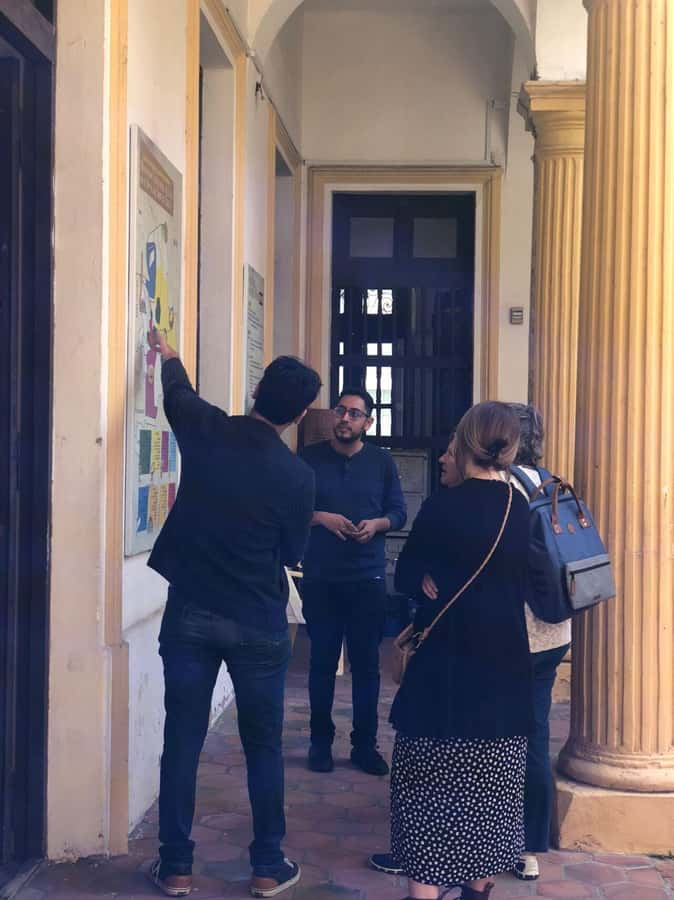
The visit is scheduled for 30 minutes, making it one of the longer stops. That suggests you should expect more than a quick look through a doorway. Paul’s role here is important because an old house can be difficult to read without context. He helps connect the building to the figures and events associated with it.
Admission is included. The stop should appeal to you if you enjoy architecture, domestic spaces, and the human side of city history. It may be less compelling if you want a fast-paced walk with constant movement, since the itinerary gives this house a full half hour.
Still, the longer timing makes sense. A building like this works best when you understand who lived there and why the property mattered.
Santa Cruz Cathedral anchors the route
The Metropolitan Cathedral of Santa Cruz de la Sierra is one of the city’s most recognizable landmarks. Its wood architecture and long history give the tour a clear architectural centerpiece.
The cathedral visit lasts about 15 minutes, and admission is free. The short stop keeps the walk moving while still giving Paul time to explain why the building matters to the city.
Because Manzana 1 is less than 100 meters away, these two stops work naturally together. You move from an old building used for modern art to a major religious and civic landmark. That close spacing also gives you a useful sense of the historic center’s scale.
Do not expect a long guided religious tour based on the supplied schedule. This is a focused stop within a wider history walk. If the cathedral is open, you may have a chance to look inside, but the tour details guarantee a visit to the landmark, not a specific interior program.
More Walking Tours in Bolivia:
- La Paz and El Alto: Cable Car Rides and Walking Tour
★ 4.8 · 790 reviews - La Paz Half-Day Walking Tour
★ 4.8 · 591 reviews - Rio de Janeiro: Rocinha Favela Walking Tour with Local Guide
★ 4.8 · 3,052 reviews - Cartagena: Historic Center and Getsemaní Shared Walking Tour
★ 4.9 · 2,716 reviews
Casa Cultural Melchor Pinto and civic identity
Casa Cultural Melchor Pinto adds a political and social layer to the walk. It is described as an important place in the civic struggles of Santa Cruz and in the city’s development.
The visit lasts about 20 minutes and admission is free. This stop helps explain why Santa Cruz has such a strong local identity. The city’s story is not only about colonial buildings, religious sites, or economic growth. It also includes civic movements and disputes over how the region should develop and represent itself.
This is one of the places where Paul’s explanations matter most. The building alone may not tell you why it is important, especially if you are unfamiliar with Santa Cruz politics. His job is to make the connection between the house, civic action, and the city you see today.
If you want a simple architectural stroll, this section may feel more serious. If you want to understand the forces that shaped Santa Cruz beyond its monuments, it is one of the more useful stops.
Altillo Beni closes with the city’s growth
The final major stop is Altillo Beni City Museum, where you look at the history of Santa Cruz and its considerable growth. The scheduled visit lasts 30 minutes, tying with La Federal for the longest stop on the route.
The order works well. You begin with early history, see older buildings and civic landmarks, then finish by considering how the city expanded and changed. That gives the walk a clear timeline rather than a random collection of addresses.
Admission is free. As at the other museums, the value is not just entry but explanation. Paul can help connect the objects, rooms, and displays to the broader story you have been following since Plaza 24 de Septiembre.
By the end, you should have a better sense of Santa Cruz as a city with its own path. The tour does not try to cover every attraction in town. Instead, it uses a compact central route to explain how the city began, developed, argued over its future, and grew into the place you are visiting now.
Why the small group changes the experience
The maximum group size is six people. That is a meaningful advantage for a history-focused walk.
In a large group, questions about local culture or the city’s relationship to other parts of Bolivia can get lost. Here, you have a better chance to ask Paul about the points that interest you most. The supplied feedback repeatedly highlights his ability to explain complex history simply, without making the walk dull or overloaded with information.
That is especially useful at places such as Casa Cultural Melchor Pinto and La Federal, where the importance of a building depends on context. You are not left to guess why a particular house or institution matters.
The small group also makes the walk feel more flexible, though you should not assume the route can be changed at will. The official schedule remains about two hours and 30 minutes, and the stops are clearly defined.
The guide’s teaching style is the main reason to book
Paul Vaca is the guide named for this experience, and the strongest praise focuses on his explanations and communication. He is described as clear, friendly, genuine, and able to answer questions about history, culture, food, and practical plans in Santa Cruz.
That combination matters. A guide can know a great deal and still give a poor tour if the information arrives as a flood of dates. Paul’s approach, as described in the supplied material, is more conversational. You get the main facts, then have room to ask questions and connect the past with present-day Santa Cruz.
I would book this tour early in your stay if you want help planning the rest of your time. The walk gives you a local introduction, and Paul may be able to point you toward other activities. The experience is booked on average 22 days ahead, so reserving in advance is sensible if your schedule is fixed.
Is $11.40 a good value?
At $11.40 per person, this is an inexpensive way to get a guided introduction to central Santa Cruz. The price includes Paul’s guiding service, admission to Manzana 1, and admission to La Federal. The cathedral, museums, and other listed free-entry stops do not add an admission charge.
Snacks are not included, but that is a minor issue on a 2.5-hour city walk. Bring your own water or plan to buy something separately, since the tour does not promise refreshments.
The value is strongest if you would otherwise walk past these buildings without understanding them. A free museum visit can be less useful when you do not know what to look for. Here, the guide ties the stops together and gives you a storyline.
It is less valuable if you only want landmark photographs or prefer exploring alone. You are paying for interpretation, context, and the chance to ask questions, not for transportation or a long list of attractions outside the center.
Timing, meeting point, and practical details
The meeting point is at the Raúl Otero Reiche ticket office on Calle Libertad, between Junín and Ayacucho in Santa Cruz de la Sierra. The activity finishes back at the same meeting point, which makes it easy to continue exploring the center afterward.
The route is near public transportation, but the experience itself is a walking tour. You need a moderate level of physical fitness, and comfortable shoes make sense. The total schedule adds up to about 135 minutes across the six stops, not counting the short walks between them.
The booking information says confirmation is normally received at once. If you book within three days of the start date, confirmation can take up to 48 hours and remains subject to availability.
You can cancel for a full refund up to 24 hours before the local start time. A late cancellation or late change is not accepted for a refund. The tour also requires good weather and a minimum number of people. If poor weather or insufficient bookings cancel the activity, you will be offered another date or experience, or a full refund.
Who will enjoy this Santa Cruz walking tour?
I would choose this for a first-time visitor who wants a useful introduction to Santa Cruz without spending much. It is also a good fit if you have only a short stay and want to understand the city before deciding what to see next.
History fans should like the balance of museums, old houses, civic sites, and architecture. Art lovers get a worthwhile stop at Manzana 1, while visitors interested in local politics and regional identity will find Casa Cultural Melchor Pinto especially helpful.
It may not suit you if walking for two and a half hours is difficult, if you need a fully accessible route, or if you are looking for food tastings and entertainment. Snacks are not included, and the tour stays focused on history, culture, and the old center.
The six-person limit is also best for people who enjoy conversation. If you prefer to move silently at your own pace, an independent walk may be a better match.
Should you book this tour?
Book it if you want to understand why Santa Cruz feels different from La Paz and Sucre, and if you value a guide who can explain that difference in plain language. The combination of Paul Vaca, a six-person limit, six central stops, and a $11.40 price makes this a strong value for a history-minded visitor.
Skip it if you want a fast photo stop, a food tour, or a route beyond the historic center. For everyone else, it is a practical first look at Santa Cruz, with enough local context to make the rest of your visit more meaningful.
FAQ
Where does the tour start?
It starts at the Raúl Otero Reiche ticket office on Calle Libertad between Junín and Ayacucho in Santa Cruz de la Sierra.
Where does the tour end?
The activity ends back at the meeting point.
How long does the walking tour last?
The tour lasts approximately two hours and 30 minutes.
How much does the tour cost?
The listed price is $11.40 per person.
Who guides the experience?
The guide is Paul Vaca, an experienced guide with knowledge of Santa Cruz and Bolivian history.
How many people can join the tour?
The maximum group size is six people.
Are admissions included?
Admission to Manzana 1 Espacio de Arte and La Federal is included. The other listed stops have free admission.
Are snacks included?
No. Snacks are not included in the tour price.
Can I cancel for a full refund?
Yes. You can cancel at least 24 hours before the experience start time for a full refund. Changes or cancellations made less than 24 hours in advance are not accepted.
Just added around Bolivia
- Walking tour in Sucre: History, Culture & Amazing Views★ 4.8 · 79 reviews
- Walking tour – A journey through the History of Santa Cruz★ 4.8 · 61 reviews
- Uyuni: Isla Incahuasi & Uyuni Salt Flats Full-Day Jeep Tour★ 4.7 · 44 reviews
- Uyuni: Sunset and Starlights Tour★ 4.6 · 79 reviews
- Uyuni: 3-Day Salt Flats Tour ending in San Pedro de Atacama★ 4.7 · 62 reviews
- Uyuni Salt Flats Private 3 day tour (Palacio Sal 4* & Tayka 3*)★ 5.0 · 38 reviews
- Uyuni Salt 1 day Tour with guide in English + Lunch and Sunset★ 4.5 · 35 reviews
- Uyuni Salt Flats (3 Days) English Speaking Guide★ 4.5 · 45 reviews
Historical Tours, compared.
Historic Center and Getsemaní Shared Walking Tour
Read our review →
Lima’s Vibrant Heritage: Exploring the City’s Landmarks Half-day
Read our review →



Lima: Historic Center Street Food, Market, and Eateries Tour
Read our review →
Nazis in Buenos Aires: a historical walking tour
Read our review →
Browse the lists this tour appears in