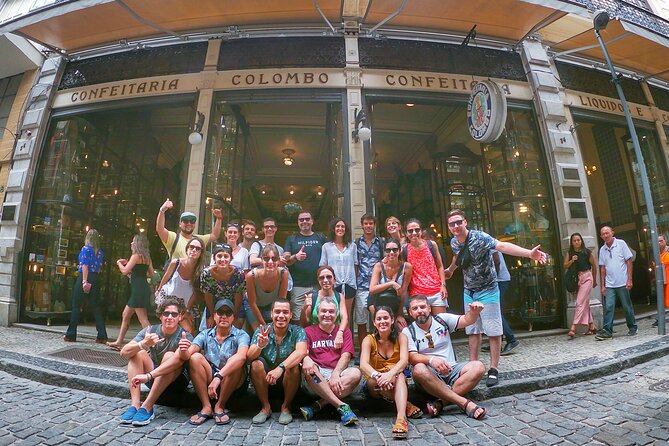
Reviewed · HISTORICAL TOURS
Historical Downtown and Lapa – Walking Tour
Rio’s historic center gives you the part of the city that beach postcards leave out. This three-hour walk links grand public buildings, old squares, Lapa’s famous Selarón Steps, and Praça XV, while your guide explains how Brazil’s politics and city life shaped the streets around you. Rafael and Juliana have led this walk, and both are noted for keeping the history lively rather than turning it into a lecture.
I like the close-up scale of the experience. You walk from place to place, stop for photos, and can ask direct questions about Brazil’s political past. I also like the practical side: guides have offered suggestions for food and other things to do in Rio, and the route has included a short restroom and drink break. The main consideration is the pace and weather. You may cover about three miles, and the walk is far more pleasant in cool conditions than under strong sun.
- About three hours on foot: Expect a steady walking route through Centro and Lapa, not a bus tour with long rides between sights.
- History beyond the beaches: The focus is Rio’s civic, cultural, and political center, including Avenida Rio Branco and major public buildings.
- Selarón Steps finish: The tiled staircase is one of the route’s best photo stops and gives the walk a memorable final stretch.
- Guides who welcome questions: Rafael and Juliana have been singled out for lively explanations, local suggestions, and easy conversation.
- Small-group scale: The maximum is 20 people, though some departures have had only five participants.
- Important price detail: The booking price is listed as $40 per person, while some guide-led versions have operated as free walks supported by optional tips. Confirm the exact arrangement before paying.
Why Rio’s historic center deserves three hours
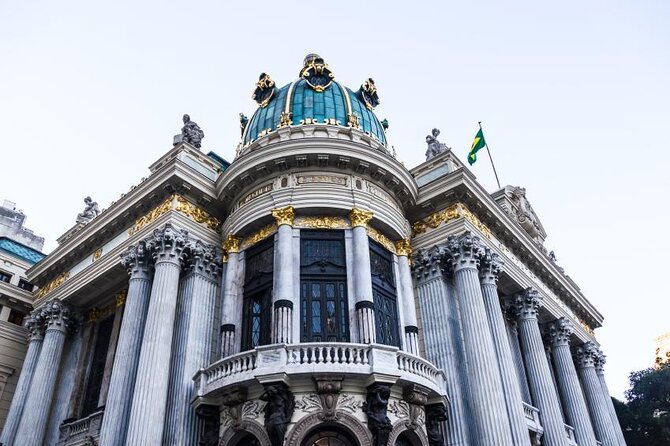
If your Rio plans focus on Copacabana, Ipanema, and Christ the Redeemer, this walk adds the city’s public face. Centro is where grand civic buildings, cultural institutions, squares, and traces of national politics come together. You get a better sense of Rio as Brazil’s former capital and working city, not just as a backdrop for beaches and mountain views.
The route is especially useful early in a stay. You can ask your guide where to eat, what else to visit, and how to shape the rest of your time. Rafael has been praised for answering questions clearly, while Juliana has been described as energetic, friendly, and comfortable speaking in both English and Portuguese.
The tour is not a relaxed stroll with long café stops. One participant estimated about three miles at an average pace. That is manageable for most people, but you should wear comfortable shoes and expect city pavement, stairs, and outdoor exposure. A cool day makes a real difference.
Starting at Praça Floriano and the Municipal Theater area
The meeting point is Praça Floriano, 1, in Centro, near the Theatro Municipal. The square is a sensible place to begin because it puts you among some of Rio’s most impressive public architecture from the first minute.
Look for the tour team and confirm your guide before setting off. One guide has used a green shirt to make the group easy to spot, though clothing can change. The tour may be conducted by a multilingual guide, so the language mix and speaking rhythm can vary by departure.
This opening area also helps explain why Rio’s center feels so different from the beach districts. You are surrounded by institutions built for government, culture, and public life. The guide’s commentary is the key value here. Instead of simply pointing out façades, you can ask how Rio’s role in Brazilian politics changed over time and why these buildings mattered.
More Historical Tours in Brazil
- Rio de Janeiro: Historic Rio and Santa Teresa Half-Day Tour
★ 4.4 · 228 reviews - Rio de Janeiro: Little Africa Heritage Walking Tour
★ 4.9 · 177 reviews - Explore Little Africa : Unveiling Afro Heritage in Rio de Janeiro
★ 5.0 · 97 reviews
The National Library and Brazil’s public culture

The first named stop is the Biblioteca Nacional, or National Library. You spend about 25 minutes here, with the building viewed from outside according to the route details.
That distinction matters. The description lists admission as included, but the stop is marked exterior, so you should not assume you will enter the reading rooms or see the interior collections. The value is the setting and the explanation around it: this is a place to discuss Brazil’s intellectual and civic life while looking at one of the center’s major cultural institutions.
I like stops such as this because the guide can connect a building to the country’s story instead of treating it as a quick photo backdrop. If you are interested in books, public education, national institutions, or the political development of Brazil, allow yourself time to ask questions here.
Do not expect a museum visit with a long indoor break. The stop is short, and the walk continues through busy central streets. Bring water, since food and drinks are not included.
Museum of Fine Arts and the wartime memorial
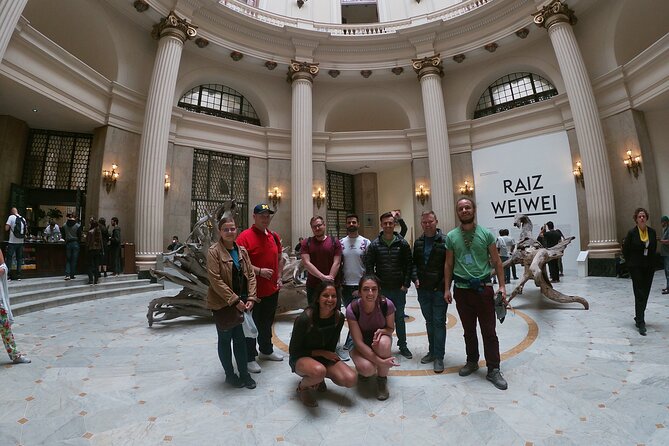
The route then moves to the Museu Nacional de Belas Artes, or National Museum of Fine Arts, and the National Monument to the Dead of the Second World War. The listed time is about 15 minutes, again described as an exterior stop.
These two references point to Rio’s cultural and civic identity. The art museum represents Brazil’s formal cultural institutions, while the war memorial adds a more solemn public note. Together, they give the guide a chance to explain how Brazil remembers national events and presents its culture in public spaces.
The short timing means this is best viewed as a guided introduction, not a full museum visit. If you want to study the art collections or spend time inside the museum, plan a separate visit. On this walk, you are paying for context, orientation, and the chance to understand how several institutions fit together.
This is also where a good guide makes the difference. The strongest reports about Rafael focus on his historical explanations and his ability to answer questions without losing the group’s momentum. That combination suits a walking tour: enough detail to make the buildings meaningful, but not so much that you remain in one spot for the whole morning.
Avenida Rio Branco, Rio’s grand urban corridor
Avenida Rio Branco receives about 20 minutes of walking time. Rather than a single attraction, it is part of the experience of moving through the center and seeing how Rio’s public core is laid out.
This section helps you connect the previous buildings. You are not just ticking off separate addresses. You are walking along a major avenue and seeing the relationship between cultural institutions, squares, offices, and older parts of the city.
The guide’s historical commentary is particularly useful here because broad avenues often hide their past. Without explanation, you might notice the architecture but miss the political decisions and urban changes that shaped the area. The tour’s stated emphasis on Brazil’s political history gives you a reason to slow down and look beyond the obvious details.
Avenida Rio Branco is also a reminder that this is a city walk, not a controlled attraction visit. You will be outdoors and moving through central Rio. Stay with the group, listen for street-crossing instructions, and keep valuables secure in the usual way you would in any busy urban area.
More Historical Tours in Rio de Janeiro
- Learn the History of Rio with an Unforgettable City Center Walking Tour
★ 5.0 · 82 reviews - Rio’s city walking tour: a glimpse of history and olympic legacy
★ 4.5 · 78 reviews - Olympic Boulevard, Museum of Tomorrow & Historical Rio
★ 4.5 · 66 reviews - Rio: Olympic Boulevard, Museum of Tomorrow & History Tour
★ 4.1 · 47 reviews
Lapa and the colors of Selarón Steps
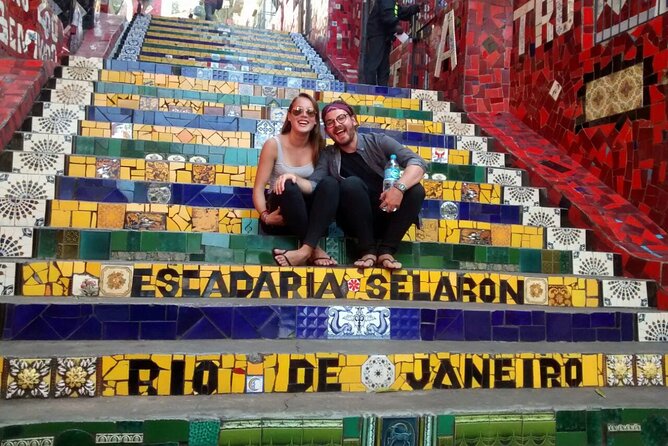
The Escadaria Selarón is one of the route’s most memorable stops. The tiled staircase is a natural place for photos, but the guide’s context gives the visit more weight than a quick picture at a famous landmark.
The stairs mark the transition into Lapa, a part of Rio closely associated with street life, music, and nightlife. The route does not promise an evening entertainment program, so think of this as a daytime cultural stop within a historical walk. You will see the staircase, hear its story, and have a strong photo opportunity near the end of the tour.
One guide-led walk finished at the steps, which makes practical sense. After several hours of history and city streets, Selarón offers a visually strong conclusion. It also gives you a place to pause and take pictures rather than rushing past another formal building.
The staircase can be crowded, and the surface includes steps rather than a flat path. That is worth keeping in mind if anyone in your group has difficulty with stairs. The supplied information says most people can participate, but it does not promise a step-free route.
Republic Square and the city’s political memory
The itinerary also names the Republic, likely referring to a square or civic area connected with Rio’s republican history. The exact timing is not specified, so do not count on a long, separate stop here.
This part of the walk fits the tour’s central theme: Rio’s streets are tied to changes in government, public power, and national identity. A guide who enjoys political history can make an ordinary square far more interesting by explaining what happened there and why its name matters.
This is one of the tour’s best qualities for curious visitors. You can ask questions that do not fit neatly into a standard sightseeing script. For example, you can ask how Rio’s role changed after the capital moved, or how public spaces reflect Brazil’s political shifts. The available information specifically highlights opportunities to ask about political history, so bring questions with you.
Praça XV and the market finish
The walk ends at Praça Quinze de Novembro, usually called Praça XV, in Centro. This is also where Feira da Praça XV appears on the route, with about 15 minutes allocated to the market area. Admission is not included, and food and drinks are not included in the tour price.
A market stop gives the route a more everyday ending. After grand institutions and formal avenues, you get a chance to see a public square with local commerce and street activity. A Saturday departure may be especially appealing because the market can add more movement and color to the final part of the walk.
The market is not simply a place to pass through. You might find something worth browsing, and it can be a useful spot to ask your guide for food suggestions. Bring payment if you want to buy something, since purchases are separate from the tour.
The official end point is Praça Quinze de Novembro, Centro, Rio de Janeiro, 20010. There is no hotel drop-off unless you select an option that specifically includes it. Because the tour ends in a central area near public transportation, you can continue sightseeing afterward, though the exact onward plan is yours to arrange.
The guides make or break this walk
The strongest part of the experience is the guide’s delivery. Rafael has been praised for turning the tour into an engaging history lesson and for giving useful suggestions about food and other places to visit. Juliana has been described as high-energy, friendly, and able to guide in both English and Portuguese.
You should not assume you can request a particular guide, but those names give you a sense of the style to expect. The guides are not simply reading dates from a script. They are expected to explain, answer questions, and connect the city’s past with what you are seeing.
The route can also work well for families with older children who can keep up on foot. Children must be accompanied by an adult. Since the walk covers several miles and includes stairs, you should judge the route by your child’s walking ability rather than by the three-hour duration alone.
Group size is capped at 20 people. That is small enough for questions to be possible, though a full group may feel less personal than a five-person departure. Some tours may operate with a multilingual guide, so confirm the language offered when you book.
Is $40 good value for this Rio walk?
The listed cost is $40 per person. The price includes the activities, but not food, drinks, hotel pickup, or drop-off unless you choose an option that includes transport. At this rate, the value rests mainly on the guide’s explanations and the amount of historical orientation you receive in three hours.
There is one point you should clarify before booking. Several descriptions of the experience refer to a free walking tour with optional tips, while the supplied booking details list a $40 price. Those may be different booking arrangements or versions of the same operation. Check the exact payment and tipping terms for your chosen departure so you know if the $40 is a fixed charge or if the walk follows a tip-based model.
For someone who wants to understand Rio’s center, $40 can be reasonable if the guide is engaging and the group runs as planned. You are not paying for restaurant meals, museum entry, or private transport. You are paying for a compact introduction to an area that can be confusing without local explanation.
The cancellation terms are straightforward. You can receive a full refund if you cancel at least 24 hours before the start time. Changes or cancellations inside 24 hours are not accepted for a refund. If you are arriving by cruise ship, take special care with timing, because a missed tour caused by a late or absent ship is not refundable.
Who should book this experience
I would choose this walk if you enjoy history, architecture, public squares, and asking questions. It is also a smart choice if this is your first time in Rio and you want to get your bearings in the center before exploring alone.
It suits people who want more than the standard postcard circuit. The route helps balance the city’s famous natural sights with its political and cultural story. You can also use the guide’s food and sightseeing suggestions to plan the rest of your visit.
I would be cautious if you dislike walking in hot weather, have difficulty with stairs, or want extensive indoor museum time. The named stops are mainly external, and the pace can reach about three miles in three hours. This is a city orientation walk with history, not a slow museum tour.
The maximum group size of 20 keeps the experience manageable, but it is not a private tour. If you need a very quiet pace or detailed attention at every stop, a private guide may suit you better. If you want an affordable, social introduction to Centro and Lapa, the format makes sense.
Should you book the Historical Downtown and Lapa walk?
Book it if you want Rio’s past explained as you walk through it. The National Library, Avenida Rio Branco, Selarón Steps, Republic Square, and Praça XV create a useful route, and the best guides add political context that you will not get from photographs alone.
Before paying, confirm the $40 price, language, meeting instructions, and whether your departure is guaranteed. A previous English-language departure was canceled only a few hours before starting because too few people had booked, so a backup plan is wise if your time in Rio is tight.
For history-minded visitors, first-time visitors, and anyone curious about the city beyond the beaches, I would book it. Just bring water, wear good shoes, allow for sun and stairs, and keep the rest of the day flexible.
FAQ
How long does the Historical Downtown and Lapa walking tour last?
The tour lasts approximately three hours.
How much does the tour cost?
The listed price is $40 per person. Some descriptions of the walk refer to a free, tip-supported format, so confirm the exact payment arrangement for your selected departure.
Where does the tour start?
The meeting point is Praça Floriano, 1, Centro, Rio de Janeiro, near the Theatro Municipal area.
Where does the tour end?
The tour ends at Praça Quinze de Novembro, also called Praça XV, in Centro.
Is hotel pickup included?
Hotel pickup and drop-off are not included unless you select an option that specifically offers them.
Are food and drinks included?
No. Food, drinks, and purchases at Feira da Praça XV are not included.
Can I cancel for a full refund?
Yes, if you cancel at least 24 hours before the experience start time. Cancellations or changes made less than 24 hours before the start time are not refunded.
More Walking Tours in Rio de Janeiro
- Guided Walk to Telegraph Stone
★ 4.5 · 49 reviews - Bossa Nova Walking Tour
★ 5.0 · 48 reviews - Rio de Janeiro: Bossa Nova Walking Tour with Guide
★ 4.9 · 46 reviews - Centro Historico and Lapa – Santa Teresa Walking, Historical and Bohemian Tour
★ 5.0 · 44 reviews
More Walking Tours in Brazil
- Rio de Janeiro: Rocinha Favela Walking Tour with Local Guide
★ 4.8 · 3,052 reviews - Rio De Janeiro: Half-Day Rocinha Favela Walking Tour
★ 4.7 · 2,272 reviews - Sunrise and Sunrise Walk Two Brothers with Local Guide
★ 5.0 · 193 reviews - Walking tour of the bohemian neighborhoods of Santa Teresa and Lapa
★ 5.0 · 59 reviews
Just added around Rio de Janeiro
- Walking tour of the bohemian neighborhoods of Santa Teresa and Lapa★ 5.0 · 59 reviews
- Tijuca Forest Hike – Waterfalls & Caves, Nature & Wild Life!★ 5.0 · 51 reviews
- Guided Market Fruit Tasting in Rio with 15+ Exotic Flavors★ 5.0 · 68 reviews
- Rio Highlights: Christ, Sugarloaf, and More in a Private Tour★ 5.0 · 36 reviews
- Guided Tour to Favela Santa Marta★ 5.0 · 60 reviews
- Trail and Rappel on Morro Dois Irmãos★ 5.0 · 77 reviews
- Tijuca National Park and all its wonders★ 5.0 · 88 reviews
- City Tour Full VIP – Corcovado Train + Churrascaria Rodízio★ 5.0 · 43 reviews
Historical Tours, compared.

Historic Center and Getsemaní Shared Walking Tour
Read our review →
Lima’s Vibrant Heritage: Exploring the City’s Landmarks Half-day
Read our review →



Lima: Historic Center Street Food, Market, and Eateries Tour
Read our review →
Nazis in Buenos Aires: a historical walking tour
Read our review →