
Reviewed · MUSEUMS
Olympic Boulevard, Museum of Tomorrow & Historical Rio
Rio’s old center tells a different story from the beaches. This four-hour outing takes you from the painful legacy of Cais do Valongo to the restored Port Zone, the striking Museum of Tomorrow, colonial churches, Olympic traces, and the grand Confeitaria Colombo. It is a useful way to see several sides of the city before lunch.
I like the hotel pickup from Copacabana, Ipanema, Leblon, Leme, or Barra da Tijuca, and I like the steady mix of walking, driving, and indoor stops. The main caution is simple: this is a walking tour, and some people found the shared van pickups and repeated stops less efficient than expected.
Key points to know before booking
- Cais do Valongo gives the tour real historical weight, with live commentary at a former port tied to Brazil’s history of slavery.
- The Museum of Tomorrow gets about 90 minutes, enough time to explore its interactive displays without turning the whole morning into a museum visit.
- Porto Maravilha combines modern Rio with older landmarks, including Mauá Square, Orla Conde, the Olympic cauldron, and the Etnias mural.
- The historic-center walk is packed with small stops, from São Bento Monastery and Candelária Church to Praça Quinze and the Paço Imperial.
- Confeitaria Colombo is both a café and a preserved interior, but food and drinks cost extra, and the shop is closed on Sundays.
- The group can reach 19 people, though smaller departures may move faster and feel more personal.
Rio’s Port Zone tells the story first
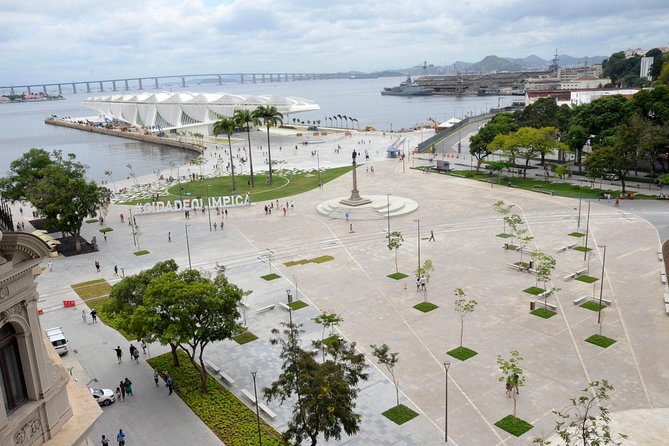
The route begins around Porto Maravilha, Rio’s renewed port district. This area was reshaped for the 2016 Olympics and now links public art, museums, open promenades, and important historical sites.
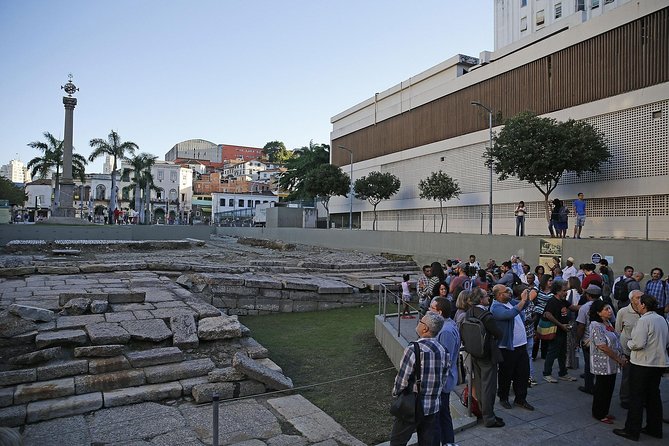
The first meaningful stop is Cais do Valongo. You walk by while your guide explains the site. Admission is free, and the visit lasts about 15 minutes, but the subject is not light. Valongo was connected to the arrival and sale of enslaved Africans, so this stop gives the rest of the morning a necessary sense of place.
I appreciate that the tour does not treat Rio as only postcard scenery. The commentary here helps you understand why the port matters and why the modern redevelopment cannot be separated from Brazil’s difficult past.
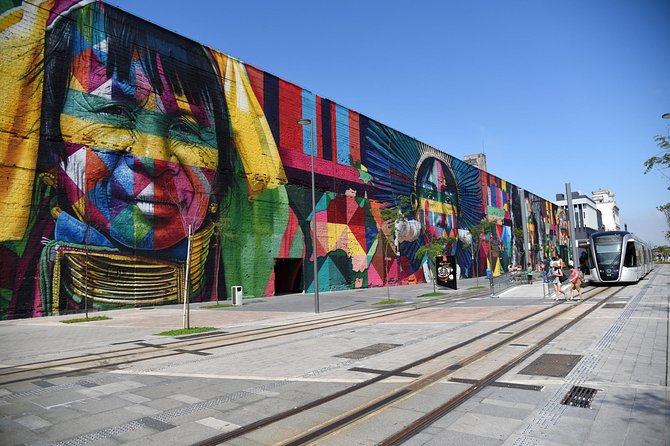
Nearby, the Etnias mural provides a more cheerful photo stop. The large work, known as Painel Etnias, adds color and scale to the port district. You get about 10 minutes for pictures, which is enough for a quick look rather than a long art discussion.
You also pass through the wider Porto Maravilha area, where public art and newer attractions have turned the old port into one of Rio’s main cultural zones. The contrast is useful: one moment you are considering a painful historical site, and the next you are looking at a modern public space built to welcome locals and international visitors.
More Historical Tours in Brazil
- Rio de Janeiro: Historic Rio and Santa Teresa Half-Day Tour
★ 4.4 · 228 reviews - Rio de Janeiro: Little Africa Heritage Walking Tour
★ 4.9 · 177 reviews - Explore Little Africa : Unveiling Afro Heritage in Rio de Janeiro
★ 5.0 · 97 reviews
Museum of Tomorrow takes the middle of the morning
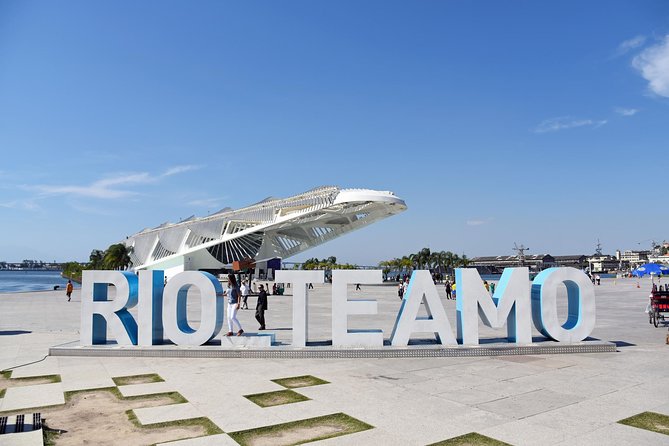
Mauá Square is a short five-minute stop. It was renewed around the 2016 Olympic period and now works as the gateway to the Museum of Tomorrow and the waterfront promenade.
The museum itself receives the largest block of time, around 90 minutes, with admission included. Its unusual, futuristic building is one of the most recognizable sights in the port district. Inside, the displays are interactive and focused on the future of humanity, science, technology, and the choices shaping the planet.
You should expect an exhibit experience rather than a traditional collection of paintings or historic objects. That makes it especially useful for families and teenagers, who may prefer hands-on displays to long wall labels. The museum also gives you a welcome indoor break if Rio is hot or rainy.
The museum is the most subjective part of the tour. Some people will find its interactive approach engaging and worth the entry fee. Others may feel the admission would have been better spent on more time in the historic center, especially if they prefer churches, architecture, and street life.
The schedule gives you enough time to get a proper look, but not enough for a slow, detail-heavy museum visit. If the Museum of Tomorrow is one of your main reasons for booking, you may want to return on your own. If you simply want a strong introduction, 90 minutes is a sensible compromise.
Afterward, the walk continues along Orla Conde. This waterfront promenade gives you a fresh angle on the port and allows a short pause after the museum. It is not presented as a major sightseeing stop, but it helps connect the museum, square, public art, and older parts of central Rio.
São Bento Monastery brings the old city indoors
The next major stop is São Bento Monastery, with an internal visit of about 15 minutes. This is a short stop, but it adds a very different mood to the morning.
The monastery is known for its ornate interior and religious art. You should not expect a long guided study of every detail. Instead, the visit gives you a quick chance to see one of central Rio’s most important churches from inside, rather than merely passing its façade.
The route also passes the Church of Our Lady of Candelaria. It is described as one of Brazil’s most beautiful and important nineteenth-century churches, with a long connection to Rio’s artistic and religious life. Since this is a pass-by rather than a full interior visit, your guide’s explanation matters more than your time inside.
That pattern repeats throughout the tour. You see many landmarks, but only a few receive a long stop. This works well if you want orientation and variety. It is less suitable if you prefer to spend an hour at each church or museum.
Olympic traces and colonial lanes fill the walk
The Olympic cauldron, called Pira Olímpica, takes only about a minute. It is a quick photo and a reminder of the 2016 Games, not a full Olympic-site tour.
That point matters because the name of the experience may lead you to expect a larger look at Olympic venues. In practice, the Olympic connection is one thread in a much wider route. You see the cauldron, Mauá Square, and the renewed port district, but the morning is not devoted solely to Olympic architecture.
The walk then turns toward older Rio. You pass through Travessa do Comércio, where preserved colonial details survive among cafés, restaurants, and narrow lanes. The change in scale is enjoyable. The open waterfront gives way to streets that feel more intimate and tied to the city’s earlier periods.
You also see the architectural remains linked to the former residence of the Telles de Menezes family. The structure connects Praça Quinze to Travessa do Comércio and offers a small but useful clue to how the old center was organized.
This part rewards a guide who can explain what you are looking at. Guides named Carlos, Sandra, Alexia, Gabriella, and Newton have been praised for clear explanations, patience, and a friendly approach. Carlos, in particular, has been noted for taking regular breaks and making the walk workable for different fitness levels. Your assigned guide may be someone else, but the format depends heavily on the person leading it.
More Historical Tours in Rio de Janeiro
- Learn the History of Rio with an Unforgettable City Center Walking Tour
★ 5.0 · 82 reviews - Rio: Olympic Boulevard, Museum of Tomorrow & History Tour
★ 4.1 · 47 reviews
Praça Quinze connects several layers of Rio
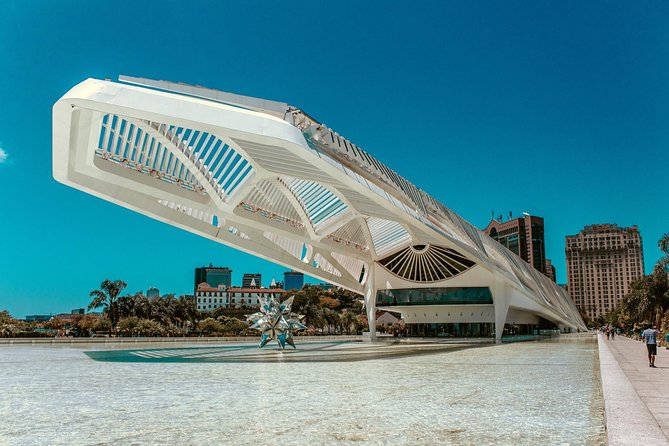
Praça Quinze de Novembro is another short walking stop, around 15 minutes. It is one of the places where Rio’s colonial, imperial, and modern stories meet.
You pass the Master Valentine Fountain, also called the Colonial Fountain. Designed by Valentim da Fonseca e Silva during the colonial period, it is a small detail with a large historical role. The guide can help you notice why an old fountain matters in a city that is otherwise known for beaches and dramatic mountain views.
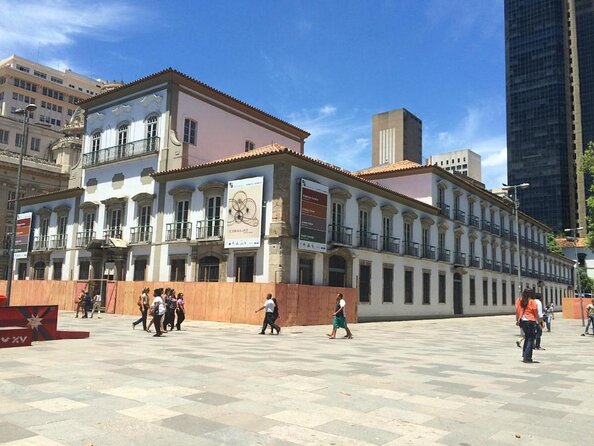
The route also passes Paço Imperial, an eighteenth-century building once used as a residence for governors. It now operates as a cultural center. The building gives you a direct link to Rio’s political past without requiring a long museum visit.
Praça Quinze itself works well as a stopping point because it gathers several historic references close together. You get a sense of the former center of power, the old waterfront, and the streets that connect the square with the colonial lanes.
Do keep your energy in reserve here. The stops are short, but the route includes repeated walking between them. One person described the tour as involving lots of walking, even though the guide was patient and well informed. That is fair. The van handles the longer distances, but your feet handle much of the sightseeing.
Confeitaria Colombo is the sweetest finish
The final stop is Confeitaria Colombo, one of Rio’s best-known historic cafés. You go inside for about 20 minutes, with a little extra time if you choose to eat.
Food and drinks are not included, so budget separately if you want coffee or pastries. The café is a highlight for many people because the preserved interior and traditional sweets provide a pleasant finish to a morning focused on history, monuments, and serious subjects.
This is also the one stop where the timing may feel tight. Twenty minutes is enough to look around and order something simple, but not enough for an unhurried meal if the group is keeping to schedule. Think of it as a chance to sample the setting and perhaps grab a pastry, not a full café outing.
Confeitaria Colombo is closed on Sundays. If the tour runs on a Sunday, this part of the plan will not be available, so check the operating day before you book.
What the four-hour schedule really feels like
The stated duration is about four hours, starting at 9:00 a.m. The schedule combines short sightseeing stops with one long museum visit and a substantial walking section.
Pickup is available from main hotels in Copacabana, Ipanema, Leblon, Leme, and Barra da Tijuca. The air-conditioned van holds up to 19 people. Hotel pickup is a real advantage in Rio, especially when you are unfamiliar with the downtown meeting points.
Allow some flexibility at the start. Because this is a shared service, the van may collect other people before reaching the port district. One person found that these pickups used up part of the available time. Smaller departures can feel quicker and more relaxed, while a full vehicle may make the morning feel more structured.
The tour operates in rain or sunshine. Bring comfortable shoes, not merely attractive ones. The route includes waterfront paths, squares, historic streets, and frequent transitions between stops.
Rain does not necessarily ruin the day because the museum, monastery, and café provide indoor time. Still, wet pavement can make the walking section less pleasant, and the open port district offers limited shelter. A light rain jacket and sensible footwear would be practical choices.
Is $72 a fair price?
At $72 per person, the value rests on convenience and coverage rather than on one major attraction. The price includes hotel transportation, a professional guide, museum admission, taxes, and a four-hour route through several parts of central Rio.
If you paid separately for transport, the Museum of Tomorrow, and a guided visit to the historic center, the cost could add up quickly. The air-conditioned van is particularly useful if your hotel is in Barra da Tijuca or one of the beach districts.
The value is weaker if you already know central Rio, can arrange transport easily, or want to choose your own pace. You may prefer to spend a full morning inside the museum, linger over lunch, or stop longer at the churches. This tour gives you breadth, not complete freedom.
The average booking lead time is about 11 days. That suggests you should reserve ahead if your Rio schedule is fixed, while also keeping the minimum-group rule in mind. If the operator cancels because too few people have booked, you are offered another date or a full refund. One late cancellation caused serious frustration for a person leaving Rio that night, so avoid placing this tour on the final morning of your trip.
Free cancellation is available up to 24 hours before the start time. Changes made inside that window are not accepted, and the local time controls the cutoff.
Who will enjoy this tour most?
I would choose this tour if you want a first look at downtown Rio without giving up an entire day. It suits families, couples, and people visiting for a short stay who want history, public art, architecture, and one major museum in a single outing.
It is also a good fit if you are staying in the South Zone or Barra and do not want to arrange your own transport into the center. The guide adds context that can be hard to gather while moving between scattered landmarks.
Families may particularly like the Museum of Tomorrow, while adults interested in Brazil’s past will value Cais do Valongo, São Bento Monastery, Praça Quinze, and Paço Imperial. The route also gives you a taste of Confeitaria Colombo without requiring a separate downtown plan.
I would hesitate if you dislike group tours, tire easily while walking, or want a relaxed café-and-architecture morning. The maximum group size is 19, though some departures are much smaller. Children four and younger can go free if they do not occupy a seat, but children must be accompanied by an adult.
Should you book Olympic Boulevard, Museum of Tomorrow & Historical Rio?
Book it if you want an efficient introduction to Rio beyond Copacabana. The strongest parts are the guide’s storytelling, the contrast between Cais do Valongo and the renewed port, the 90-minute museum visit, and the chance to see colonial Rio on foot.
Go in knowing that the Olympic element is brief, the shared pickup can add time, and the walking is real. Wear comfortable shoes, check the Sunday closure at Confeitaria Colombo, and clarify your pickup location with the operator and your hotel before the morning of the tour.
At a 4.7 rating from 66 reviews, with 91 percent recommending it, this is a solid choice for a short stay. It is not the final word on Rio’s center, but it is a practical first chapter.
FAQ
How long does the tour last?
The tour lasts about four hours and starts at 9:00 a.m.
Is hotel pickup included?
Yes. Roundtrip pickup is available from main hotels in Copacabana, Ipanema, Leblon, Leme, and Barra da Tijuca. You should contact the operator to arrange your hotel or a nearby pickup point.
Is admission to the Museum of Tomorrow included?
Yes. The tour includes an internal, interactive visit lasting about one hour and 30 minutes.
Is food included at Confeitaria Colombo?
No. Food and drinks are available for purchase, but they are not included in the tour price. Confeitaria Colombo is closed on Sundays.
How much walking is involved?
A substantial amount. The tour includes walking through Porto Maravilha, along Orla Conde, through Travessa do Comércio, around Praça Quinze, and through the historic center. Comfortable shoes are recommended.
What happens if the tour is canceled because too few people book?
You will be offered a different date or experience, or you can receive a full refund.
More Museum Tours in Rio de Janeiro
- Bogotá City Tour with Monserrate, Gold and Botero Museums
★ 4.9 · 584 reviews - Buenos Aires: Tickets to Boca Juniors Museum & Stadium
★ 4.5 · 581 reviews - Skip the Line: Casapueblo Museum Admission Ticket in Punta del Este
★ 4.5 · 281 reviews - Bogotá: City Tour, Monserrate, Gold Museum, Plaza de Bolivar
★ 4.7 · 168 reviews
More Museum Tours in Brazil
- Petrópolis Day Trip from Rio de Janeiro including Imperial Museum and Crystal Palace
★ 4.0 · 101 reviews - Rio: Olympic Boulevard, AquaRio and Museum of Tomorrow Tour
★ 4.5 · 54 reviews - Rio: Petrópolis Trip with Palace, Imperial Museum & Brewery
★ 4.6 · 42 reviews - 7-Hour Shared Group Santos Tour : Mont Serrat, Coffee Museum and Sightseeing
★ 5.0 · 68 reviews
Just added around Rio de Janeiro
- Skip the Line: Lagoa Misteriosa Admission Ticket with Scuba Diving Experience★ 5.0 · 81 reviews
- Rio de Janeiro: Tijuca Peak Guided Hike★ 4.7 · 56 reviews
- Sugarloaf Mountain Fast-Pass Ticket and Guided Tour★ 4.4 · 62 reviews
- Rio de Janeiro: Sugarloaf Mountain Hike and Climb★ 5.0 · 45 reviews
- Rio de Janeiro: Sunrise Lookout and Christ the Redeemer Tour★ 5.0 · 121 reviews
- Rio de Janeiro: Samba Class and Samba Night Tour★ 4.6 · 115 reviews
- Rio Surf Experience★ 4.9 · 37 reviews
- Rio Samba Bus: hop-on hop-off city tour in Rio de Janeiro★ 3.8 · 94 reviews
Museums, compared.
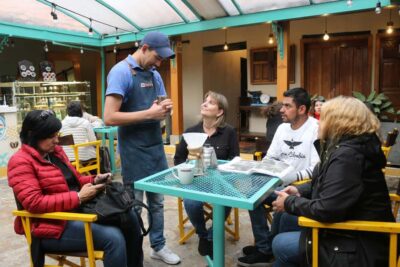
Bogotá City Tour with Monserrate, Gold and Botero Museums
Read our review →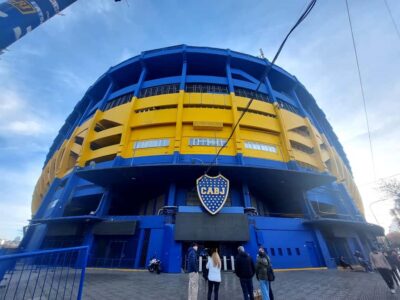
City Tour, Monserrate, Gold Museum, Plaza de Bolivar
Read our review →
City Tour in Cusco & visit Museum South American Camelid Private.
Read our review →
City Tour, Monserrate, Gold Museum, Botero Museum, Plaza Bolívar
Read our review →
Petrópolis Day Trip from Rio de Janeiro including Imperial Museum and Crystal Palace
Read our review →
City Tour in Cusco & visit Museum South American Camelid
Read our review →
Browse the lists this tour appears in