
Reviewed · EASTER ISLAND TOURS
Full Day Tour in Rapa Nui
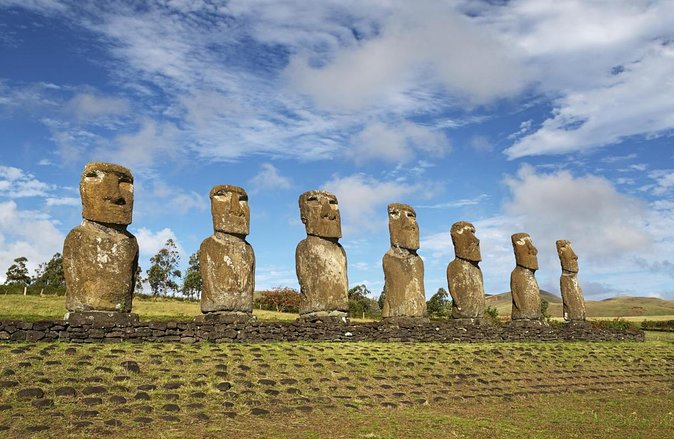
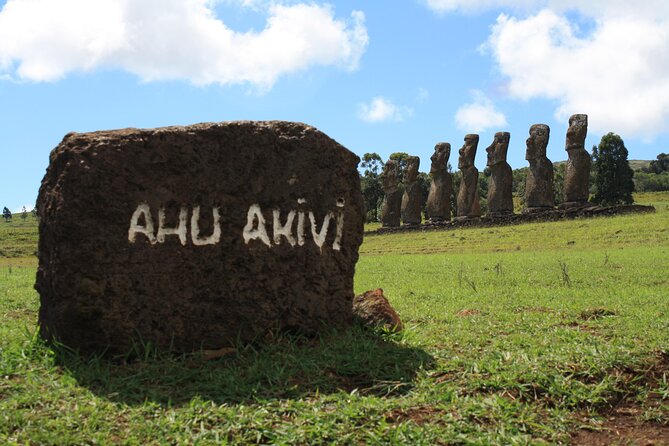
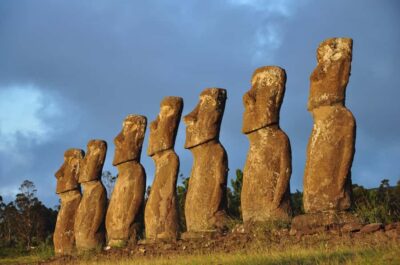
Ahu Akivi’s seven Moai are the unusual stars here. They face out toward the Pacific rather than inland, and that one detail gives the site a special sense of mystery. I like that this tour also reaches Orongo and Rano Kau, where the island’s later Birdman tradition comes into focus. The mix of archaeology and nature is excellent.
I also like the small-group plan, with a stated limit of 14 people, and the chance to see caves, a pukao quarry, ceremonial platforms, and a volcanic crater in one outing. Guides such as Merahi, Frank, Fernanda, Enrique, and Zoe have earned strong praise for explaining Rapa Nui culture and answering questions. The main caution is that timing and group size can vary, and some outings finish closer to 2 or 3 p.m. than to a long full day. Bring your own water and lunch.
Key points before you book
- Six important sites in about six hours: The route covers Ahu Akivi, Ana Te Pahu, Puna Pau, Ahu Vinapu, Rano Kau, and Orongo.
- Only one listed stop has Moai: Ahu Akivi gives you seven statues, but this is not the outing for Ahu Tongariki’s famous row of 15 or the main Moai quarry.
- Ana Te Pahu requires care: The cave can be dark, wet, slippery, and low in places. Sturdy shoes and a flashlight are wise.
- The National Park ticket is extra: You need to arrange that separately, and it may be required before the outing begins.
- Language and timing can vary: English and Spanish may be combined, which can lengthen explanations and reduce time at some sites.
- The price is reasonable for transport and guiding: At $70 per person, it works best as one half of a two-day Rapa Nui sightseeing plan.
What this Rapa Nui route actually covers
This is a west and central island route rather than a complete survey of every major Moai site. You will see a strong selection of ceremonial, geological, and cultural places, but you will not see everything in one day.
That distinction matters. Rapa Nui National Park spreads across a large island, and the most famous places are divided between different touring routes. If your mental picture of Easter Island centers on the 15 Moai at Ahu Tongariki, the quarry at Rano Raraku, or the many statues around the island, check the route carefully before paying.
This outing gives you a different story. It connects the work of carving and moving Moai with the red-stone topknots called pukao, ancient caves, the volcanic crater at Rano Kau, and the Birdman ceremony at Orongo. I find that combination more useful than a simple statue-counting trip, but it will not satisfy you if your top goal is seeing the largest concentration of Moai.
The advertised start is 9:30 a.m., and the planned duration is about six hours. Actual departure times have varied, with some departures closer to 10:30 or 11 a.m. Pickup confusion has also caused problems for some people. Confirm the time and meeting point directly before the day of the outing, and do not assume the published start time is the final word.
A few more Easter Island days worth comparing
- From Hanga Roa: Rapa Nui Culture Sightseeing Tour
★ 4.6 · 307 reviews - From Hanga Roa: Easter Island Highlights 2-Day Tour
★ 4.3 · 205 reviews - From Hanga Roa: Easter Island Sightseeing Full Day Tour
★ 4.5 · 189 reviews
Ahu Akivi and the seven Moai facing the sea
Ahu Akivi is often the most memorable first stop because its statues have such an unusual orientation. The seven Moai face toward the ocean, unlike the more familiar arrangement of statues looking inland over their community.
You get about 45 minutes here. That is enough to hear the main explanation, take photographs, and appreciate the setting, but it is not a long archaeological study. Admission to the site is not included in the $70 price, so your National Park ticket must be handled separately.
This stop is especially good for first-time visitors who want a clear introduction to the purpose and placement of Moai. It also gives you a chance to ask the guide about how the statues relate to Rapa Nui ancestors and ceremonial spaces.
The limitation is simple: seven statues may feel modest if you expect the island’s grandest group. I would treat Ahu Akivi as a thoughtful cultural stop, not as the main Moai spectacle of your trip.
Ana Te Pahu, a cave visit with real footing concerns
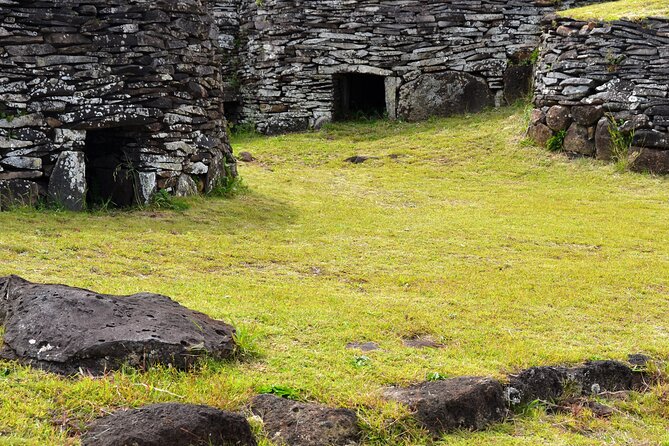
Ana Te Pahu receives the longest scheduled visit, about 90 minutes. The site includes a network of lava caves once used by the Rapa Nui people, surrounded by palms and native plant life.
The cave adds variety to a day otherwise filled with open-air sites. You move from bright volcanic scenery into cool, dark passages, and the setting helps you understand how natural formations could become useful shelters and living spaces.
This is also the stop that needs the most practical warning. Some sections can be wet, slippery, and low. Cell phone lights may be used, but several people have found the darkness and footing difficult. One poor outing involved no clear warning about the conditions, and the cave felt unsafe for an older visitor using a walking stick.
Wear shoes with a firm sole. Bring a small flashlight if you have one, and keep your hands free when possible. If rain has affected the cave, the guide may change or shorten the visit. That is sensible, but it means the route can lose one of its most distinctive stops.
The 90-minute schedule may include the walk to the cave, time inside, and the guide’s explanation. If you have limited mobility, dislike confined spaces, or want an easy sightseeing day, ask about the cave conditions before setting out.
Puna Pau and the red stone used for pukao
Puna Pau is a quarry, but not the quarry where the Moai bodies were carved. This site supplied red volcanic scoria for the cylindrical topknots, or pukao, placed on the heads of some statues.
You get about 45 minutes here. The red stone gives the stop a different look from the dark volcanic rock found elsewhere, and the guide can explain the effort involved in shaping and placing these heavy pieces.
I like this stop because it corrects a common misunderstanding. The Moai and their topknots came from different materials and different quarry areas. Seeing Puna Pau helps you think about the statues as engineered objects, not simply large sculptures left in the open.
Do not expect rows of complete Moai. The value is in understanding the production process and the symbolic role of the pukao. Admission is not included, so again, your Park ticket matters.
Same trip, a completely different kind of day:
- Full day tour – DREAM
★ 5.0 · 86 reviews - From Hanga Roa: Journey from Orongo to Ana Te Pahu
★ 4.3 · 75 reviews - Journey of the Ancestors: Tongariki, Rano Raraku & Anakena Beach
★ 4.5 · 70 reviews - Full Day Private Tour: Factory of the Moai the stone giants
★ 4.5 · 63 reviews
Ahu Vinapu and the carefully fitted stonework
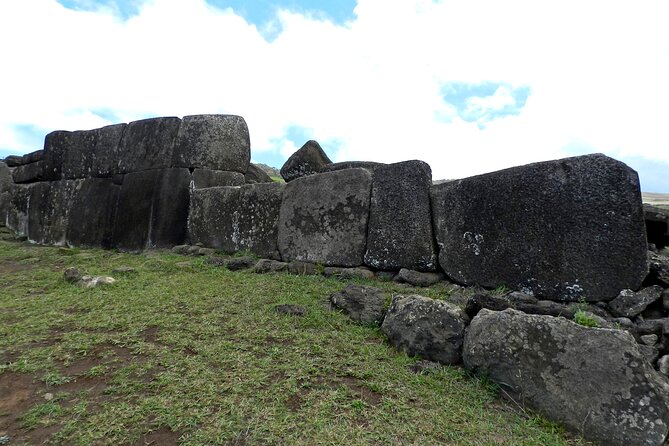
Ahu Vinapu gets another 45 minutes. Its ceremonial platform is known for large stones fitted with impressive precision, and the construction has often prompted comparisons with Inca masonry in South America.
That comparison should be treated as a question to explore rather than a simple claim of direct contact. Your guide can explain the stonework, the site’s place in Rapa Nui archaeology, and the theories surrounding its unusual appearance.
For me, Vinapu is less immediately dramatic than a group of standing Moai, but it rewards close attention. Look at the joints and the way the stones meet. This is a good place to slow down and notice the skill involved in building ceremonial architecture from heavy volcanic blocks.
The stop is relatively short. If your guide is also driving and the group includes both English and Spanish speakers, explanations may be repeated in two languages. That can reduce the time available for individual questions.
Rano Kau, the crater that changes the pace
Rano Kau is the quickest scheduled stop, with about 30 minutes at the crater rim. The view opens across a huge volcanic hollow, with a crater lake and plant-covered inner slopes below.
This pause gives your eyes a break from archaeological details. The crater is broad, green, and quiet, and the contrast with the open Pacific makes it one of the best photo stops on the route.
Thirty minutes is enough for the main viewpoint and a short explanation, but not for an extended walk around the rim. If weather limits visibility, the experience will be less impressive, so keep your expectations flexible.
Rano Kau also prepares you for Orongo. The ceremonial village sits along the crater’s edge, and the two stops make the most sense when understood together.
Orongo and the Birdman competition
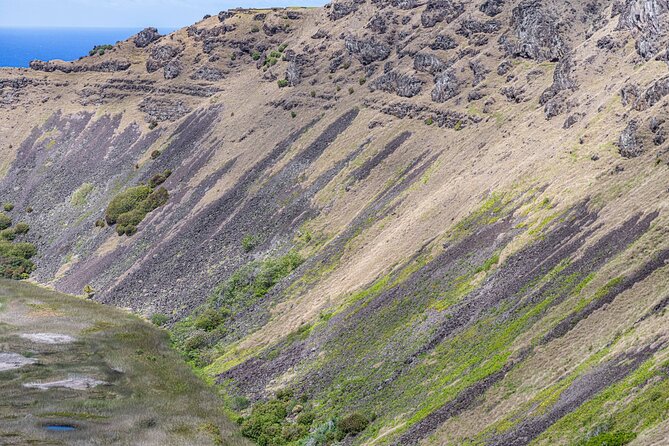
Orongo receives about 75 minutes, making it one of the most important stops of the day. The stone village sits at the edge of Rano Kau, with the Pacific spreading out beyond the cliffs.
This was the setting for the Birdman competition, a later Rapa Nui ceremony in which competitors sought the first sooty tern egg from an offshore islet. The event carried political and spiritual importance, and Orongo’s stone houses, carved images, and exposed position help explain why this place mattered.
I would give this stop your full attention. The story is unusual, and the site connects geography, ritual, competition, and leadership in a way that makes Rapa Nui history easier to understand.
Access and timing can be affected by weather or damage. One outing had to move quickly because of a recent landslide, with the guide providing more explanation at the visitor center. That is a fair compromise when safety or access changes, but you may not have as much time at the crater edge as planned.
Orongo is also where a strong guide makes the biggest difference. Guides including Frank, Enrique, and Zoe have been praised for clear cultural explanations, while other departures have suffered from weak English, little group communication, or an impatient manner. You cannot choose a particular guide from the information provided, so language ability remains a variable.
How much value do you get for $70?
At $70 per person, the cost is fair if you want transportation between scattered sites and a guide to explain what you are seeing. Hiring transport independently may not provide the same cultural context, and the route covers several places that are awkward to connect on foot.
The value drops if you expect a long, leisurely full day with lunch, bottled water, snacks, and every major Moai site. Those extras are not reliably included. Several outings have ended around 2 p.m., and food and drinks have not been supplied despite some confusion about that point.
Think of this as a six-hour guided route, not necessarily an all-day outing from breakfast to dinner. Pack water, snacks, and lunch. If the tour ends early, you will still have time for another activity around Hanga Roa.
The best value comes when you pair this outing with a second route covering Ahu Tongariki, Rano Raraku, and the larger Moai sites. One day gives you the west and central sites described here. Two days provide a more complete picture of the island.
Group size, language, and guide quality
The stated maximum is 14 people, which is a good size for an archaeological tour. A smaller group makes it easier to hear explanations and ask questions, although actual vehicle sizes and group arrangements have not always been consistent.
Some outings have combined English and Spanish speakers. When one guide translates everything twice, the day can feel slower, and you may get less time at each site. If English explanation is essential, confirm the language arrangement before booking.
The strongest part of the operation is often the guide. Merahi has been praised for patience and cultural detail. Frank was noted for explaining the quarry, caves, and Birdman ceremony. Fernanda, Enrique, Zoe, Simon, and Sol have also received positive comments for their warmth or clear information.
But service is not uniform. Pickup messages have occasionally been late or unclear, one departure involved leaving people behind, and one guide was criticized for poor English and rude behavior. These are serious issues, especially on a remote island where you have limited alternatives. Confirm your pickup point, arrive early, and keep your phone available for updates.
Physical effort and what to pack
The activity calls for moderate fitness. You will get in and out of transport, walk over uneven ground, and possibly enter a wet cave with low ceilings. Orongo and the crater area may also require steady walking on outdoor paths.
Pack:
- Water for the whole outing
- A snack or packed lunch
- Sturdy walking shoes
- A small flashlight for Ana Te Pahu
- Sun protection and a hat
- Your National Park ticket confirmation
The National Park ticket is not part of the tour price. It may need to be purchased before the outing, not at the first site, so sort this out in advance.
Free cancellation is available up to 24 hours before the local start time. Cancellations or changes inside that window are not accepted for a refund.
Who should book this route?
I would book this if you want cultural context, volcanic scenery, and a broad introduction to western Rapa Nui in one manageable outing. It suits people who value a good explanation of the Birdman ceremony and want more than a quick drive past Moai.
It is also a sensible choice for a first day on the island, especially if you plan a second day for the main statue sites. The price is modest for transport, a guide, and six scheduled stops.
I would choose another route, or ask detailed questions first, if your priority is seeing the 15 Moai at Ahu Tongariki, the main quarry, or a long, relaxed day. I would also hesitate if you have difficulty walking on wet or uneven ground, unless the cave portion can be adjusted.
Should you book the Full Day Tour in Rapa Nui?
Book it for the range of places and cultural subjects, not for the highest number of Moai. Ahu Akivi, Puna Pau, Ana Te Pahu, Vinapu, Rano Kau, and Orongo give you a thoughtful look at how Rapa Nui people used stone, caves, volcanoes, and ceremony.
Go in prepared for variable timing, possible bilingual guiding, and no included food or drink. Confirm the pickup details, buy the Park ticket ahead of time, and bring proper shoes and a light. With those precautions, this $70 outing can be a useful and memorable half-day route, especially as part of a two-day plan.
FAQ
How long does the Full Day Tour in Rapa Nui last?
The scheduled duration is approximately six hours, starting at 9:30 a.m. Actual departure and finish times can vary.
What sites are included?
The route includes Ahu Akivi, Ana Te Pahu, Puna Pau, Ahu Vinapu, Rano Kau, and Orongo.
Are the National Park entrance fees included?
No. The National Park ticket is not included in the tour price and may need to be purchased before the outing.
Does the tour include Ahu Tongariki or Rano Raraku?
No. Those sites are not listed on this route. Ahu Tongariki and the main Moai quarry are covered by another tour plan.
Is food or water provided?
Food and water should not be assumed to be included. Bring your own water, snacks, and lunch.
How many people can join the tour?
The stated maximum is 14 people, though actual group arrangements may vary.
Is the tour offered in English?
English guiding is offered, but some departures combine English and Spanish. Translation can affect the time available for explanations and questions.
What happens if I need to cancel?
You can cancel for a full refund up to 24 hours before the local start time. Cancellations or changes made less than 24 hours ahead are not accepted for a refund.
Just added around Easter Island
- Ride to the highest point on the island for sunset★ 5.0 · 40 reviews
- Sunrise Tongariki: Sunrise at Tongariki Park Private Tour★ 4.5 · 47 reviews
- Terevaka Horse Excursion: The highest point and 360° view.★ 4.7 · 38 reviews
- Easter island: Snorqueling tour on coral reefs★ 4.4 · 47 reviews
- Half Day Tour in Rapa Nui★ 5.0 · 48 reviews
- Private Full-Day Easter Island Highlights South and East★ 5.0 · 60 reviews
- Two days of Full Day Tour of Rapa Nui + Sunrise in Tongariki★ 4.8 · 55 reviews
- Full day tour – DREAM★ 5.0 · 86 reviews
Easter Island Tours, compared.
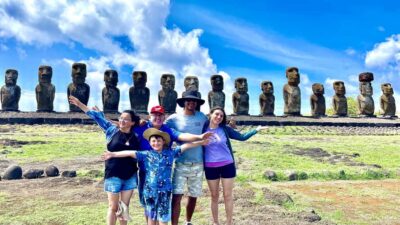
From Hanga Roa: Rapa Nui Culture Sightseeing Tour
Read our review →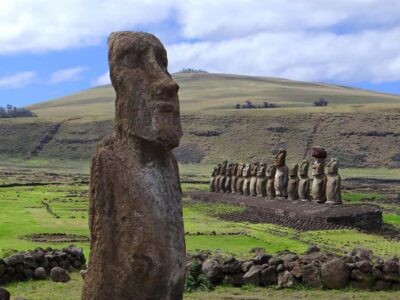
From Hanga Roa: Easter Island Highlights 2-Day Tour
Read our review →
From Hanga Roa: Easter Island Sightseeing Full Day Tour
Read our review →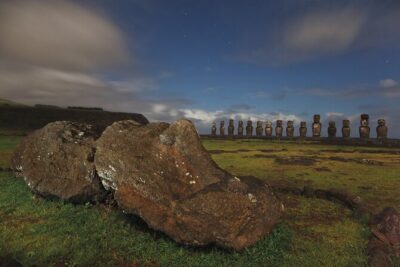
From Hanga Roa: Journey from Orongo to Ana Te Pahu
Read our review →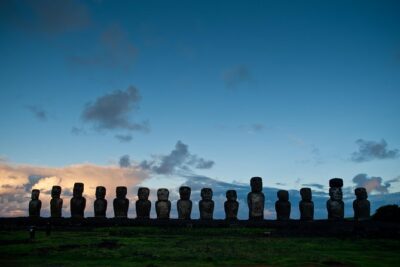
Journey of the Ancestors: Tongariki, Rano Raraku & Anakena Beach
Read our review →
Full Day Private Tour: Factory of the Moai the stone giants
Read our review →
Browse the lists this tour appears in