
Reviewed · EASTER ISLAND TOURS
Half Day Tour in Rapa Nui
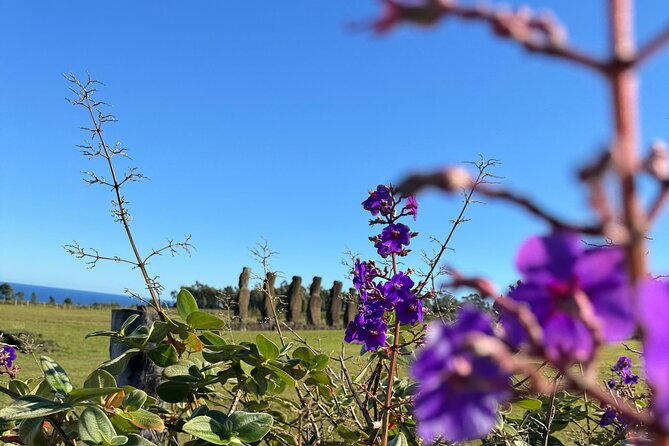
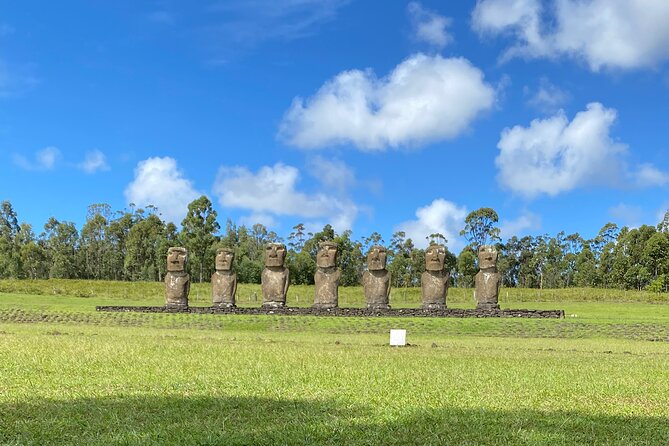
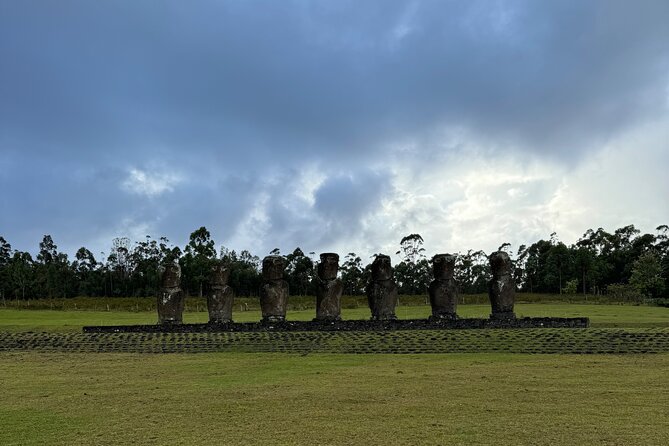
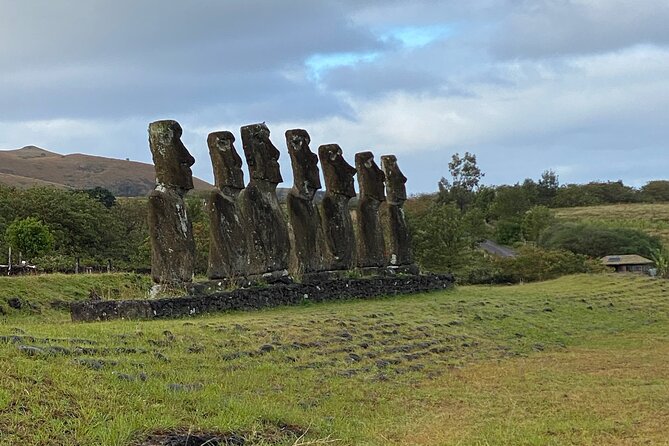
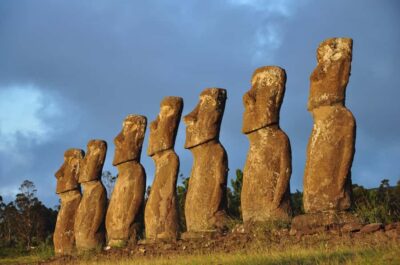
Ahu Akivi is the star here: seven moai face inland toward the island, yet this is the only major site where the statues appear to look out toward the sea. With local guide Nicolás, also called Nico, the visit goes beyond photographs and connects the stones to oral tradition, migration stories, and the beginnings of Rapa Nui culture. I like the local focus and the fact that the route reaches four major sites in one private outing.
I also like the small maximum group of six, air-conditioned transport, and flexible feel suggested by the guide’s careful attention to timing and changing weather. The main drawback is the listed price of $1,500 per person, which is a serious outlay for a half-day tour. The value depends on how much you want personal guiding and cultural context rather than a basic site transfer.
Key points at a glance
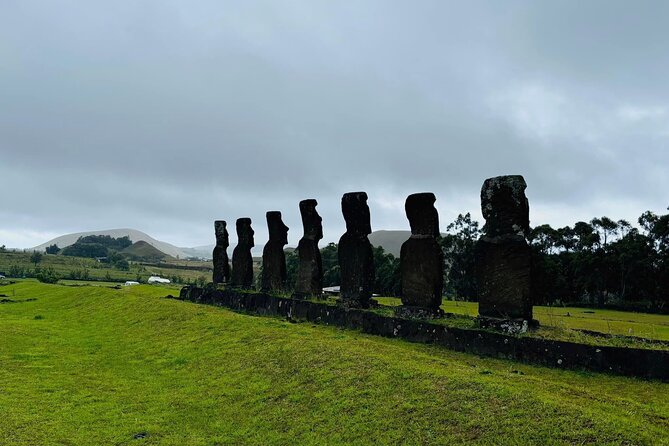
- Ahu Akivi’s seven moai: See the island’s unusual group of statues connected with stories about Rapa Nui’s origins.
- Puna Pau’s red pukao quarry: Learn where the red stone cylinders placed on some moai were carved.
- Rano Kau and Orongo: Visit a huge volcanic crater and the ceremonial village tied to the Birdman competition.
- Private transport for up to six people: Pickup and an air-conditioned vehicle make the route easier in changeable weather.
- Local storytelling: Nicolás or Nico explains customs, language, traditions, and place names with a personal connection to the island.
- Bring your own water: Snacks and soda are included, but bottled water is not.
Why this route matters on Rapa Nui
Rapa Nui is often introduced through its famous moai, but the statues make more sense when you understand the places around them. This tour links ceremonial sites, a stone quarry, a volcanic crater, and stories about how the island’s people arrived and organized their society.
The route covers the northern and central parts of the island, with an additional visit to the southwest at Rano Kau and Orongo. That gives you a useful arc: origins at Ahu Akivi, the making of pukao at Puna Pau, volcanic geography at Rano Kau, and political and religious competition at Orongo.
I would choose this experience early in a stay if you want a foundation for later visits. The guide’s explanations can help you notice details that are easy to miss when you simply drive from one famous site to another.
The tour is listed as lasting about two to four hours, though the scheduled visits add up to several hours once driving and pickup are included. Treat the timing as approximate. Rapa Nui weather can change quickly, and the experience is designed around seeing the sites properly rather than rushing through them.
A few more Easter Island days worth comparing
- From Hanga Roa: Rapa Nui Culture Sightseeing Tour
★ 4.6 · 307 reviews - From Hanga Roa: Easter Island Highlights 2-Day Tour
★ 4.3 · 205 reviews - From Hanga Roa: Easter Island Sightseeing Full Day Tour
★ 4.5 · 189 reviews
Ahu Akivi and the seven moai
The first stop is Ahu Akivi, reached after pickup and about 30 minutes of driving. You receive roughly an hour at the site, with admission included.
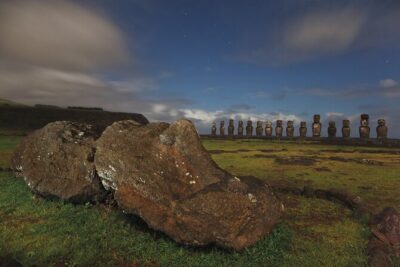
Ahu Akivi is unusual for two reasons. It is inland rather than directly on the coast, and its seven moai are the only well-known group described here as facing toward the sea. Their placement gives the site a different mood from the coastal platforms that dominate many photographs of Easter Island.
This is where Nico’s storytelling matters most. The tour’s purpose is to explain both oral tradition and historical interpretation, especially stories tied to the origin of Rapa Nui and how its people arrived. You should expect a conversation about meaning, memory, and local tradition rather than a simple list of dates.
The one-hour visit is a sensible amount of time. It gives you room to look at the statues, study the ahu platform, hear the stories, and take photographs without reducing the stop to a quick roadside pause. If you enjoy archaeology but want the human story kept in view, this is likely the strongest part of the morning.
Ahu Akivi also sets up an important theme: the moai were not isolated works of art. Their position, orientation, platform, and relationship to the surrounding land all matter. A guide can point out those connections in a way a printed description often cannot.
Puna Pau, where the red pukao were made
The next stop is Puna Pau, the quarry for pukao. You have about 30 minutes here, with admission included.
A pukao is the red cylindrical stone placed on top of some moai. Puna Pau helps answer a question that often occurs when you first see these statues: how did people obtain and shape the different types of stone used for the body and head ornament?
The quarry also offers broad views over the island. The tour description highlights a 180-degree panorama, so this is both a geological stop and a good place to understand Rapa Nui’s scale. You are not just looking at a single archaeological site. You are seeing how the island’s volcanic terrain provided the materials used in its ceremonial monuments.
Thirty minutes is enough for an introduction, a look at the quarry, and photographs, but it is not an extended hike. That makes Puna Pau a useful stop for anyone who wants the production side of moai culture without signing up for a full-day outing.
The short visit may feel quick if you are especially interested in stoneworking. Still, the private format helps. With no large group to gather, the guide can focus on your questions and keep the stop moving at a reasonable pace.
Rano Kau, a crater with a story
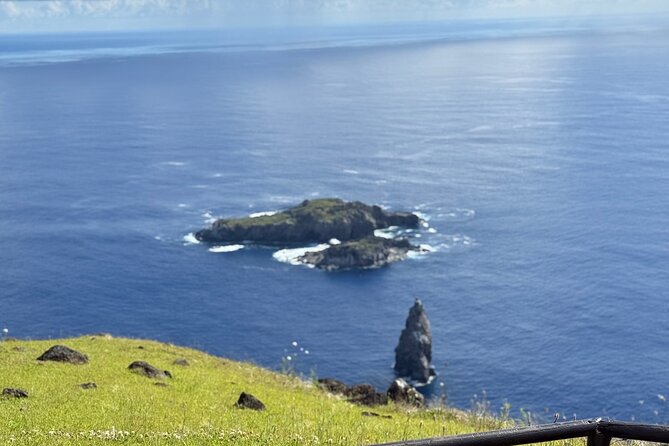
The tour then visits Rano Kau, one of the island’s most striking volcanic features. The crater portion is allotted about 30 minutes, and admission is not included in the tour price.
Rano Kau is presented as the largest crater in Rapa Nui. Its interior is described as a natural greenhouse, a phrase that points to the sheltered, water-filled environment inside the volcanic bowl. The crater is valuable not only for its appearance but also for the way it shows the island’s volcanic origins.
The guide also connects Rano Kau with the oral tradition surrounding Haumaka, an important figure in stories about the island. That link gives the stop more weight than a scenic overlook. You are hearing how a place can function as both a physical feature and a part of cultural memory.
Plan for changing conditions here. Rapa Nui can be rainy and windy, and the crater’s open views are most rewarding when visibility is good. The experience provider has adjusted plans for wet weather on other outings, but you should still bring suitable clothing and avoid assuming that every view will be clear.
Because admission is not included, check the current park entry requirements before booking and budget for any required entrance fee. The provided details do not state the amount or explain how tickets are handled, so this is one point worth confirming in advance.
Same trip, a completely different kind of day:
- Full Day Tour in Rapa Nui
★ 4.5 · 122 reviews - Full day tour – DREAM
★ 5.0 · 86 reviews - From Hanga Roa: Journey from Orongo to Ana Te Pahu
★ 4.3 · 75 reviews - Journey of the Ancestors: Tongariki, Rano Raraku & Anakena Beach
★ 4.5 · 70 reviews
Orongo and the Birdman competition
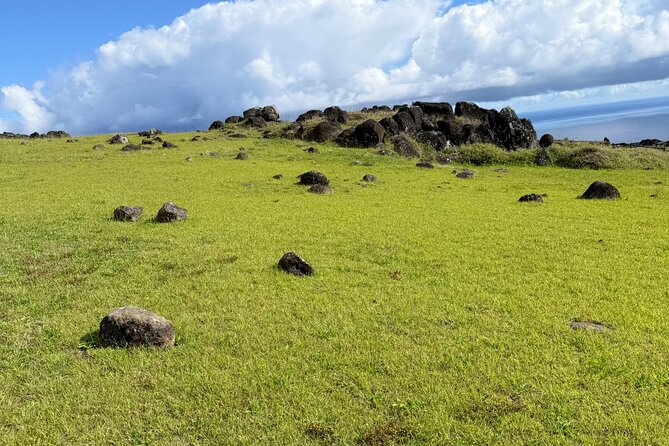
The final area is Orongo, the ceremonial village on the rim of Rano Kau. The schedule allows about an hour to climb the volcano and enjoy the views, followed by a visit to the village. The stated timing also lists 30 minutes for the Orongo portion, so the exact division between walking, viewing, and interpretation may vary.
Orongo is tied to the Birdman competition, one of the most dramatic political and ceremonial traditions associated with Rapa Nui. The contest required elite competitors to face a dangerous challenge in the hope of securing authority for a supreme leader.
This is not just another moai stop. Orongo shifts the focus from statue building to leadership, ritual, and risk. The village’s setting on the volcanic rim makes the story feel connected to the terrain, and the guide can explain why this location became such an important ceremonial center.
You should be prepared for walking and an uphill section. The supplied details say most people can participate, but they do not give a formal accessibility rating or describe the path surface. If you have mobility concerns, ask the operator what the current route involves before reserving.
The lack of included admission at Rano Kau and Orongo is worth noting again. These sites may be among the most memorable on the route, but your total cost is not limited to the advertised per-person price if separate park entry is needed.
What Nico adds to the experience
The repeated strength of this tour is its guiding. Nicolás, often referred to as Nico, is described as a local guide who explains the island’s history, customs, language, and traditions with patience and enthusiasm.
That distinction matters on Rapa Nui. A site can look impressive while remaining hard to understand. The guide’s role is to connect the stones and crater to stories that give them meaning, while also helping you distinguish oral tradition from the historical record.
The personal approach also appears useful beyond the scheduled route. Nico has helped people coordinate other activities and suggest places to eat, even though those services are not part of the formal itinerary. Treat that as a helpful possibility, not a guaranteed inclusion.
The tour is offered in a private vehicle for a maximum of six people. That is a strong fit for families and small groups who want to ask questions, stop for photographs, and move at a comfortable pace. It is also more personal than a large coach, though the price is harder to justify if you are traveling alone.
The vehicle is air-conditioned, and snacks and soda are included. Bottled water is not. The operator recommends bringing your own specific water, while local bottled water carried on excursions may be rainwater. I would pack more water than you think you need, especially for the walk near Rano Kau and Orongo.
Is the $1,500 price good value?

At $1,500 per person, this is not a budget sightseeing run. The price makes the most sense if the amount is for a private experience and your group values a local guide, dedicated transport, and a small maximum size.
The value is strongest for people who want interpretation rather than transportation alone. A basic route can show you the moai, quarry, crater, and village. This tour aims to explain how those places fit into Rapa Nui’s origin stories and cultural traditions.
For a family or group of friends, the cost may feel easier to justify if the booking covers a private party and allows you to share the guide’s attention. For a solo visitor, the same price is a much steeper decision.
The included snacks and soda are useful but do not change the main calculation. Lunch is not included, though you can be left at a place to eat at the end of the excursion. Water and entrance fees also need attention when planning the real cost.
Since the activity is often booked about 305 days ahead, I would not leave it until the last moment if your dates are fixed. The small capacity can fill early, particularly for visitors who want Nicolás or the NCP agency to organize their day.
Who should book this half-day tour?
I would recommend it to you if you want:
- A private or very small-group outing
- A local guide who can explain oral traditions and island customs
- A compact introduction to four major sites
- Help connecting moai, volcanic geology, and ceremonial life
- Pickup and air-conditioned transport
- A tour suitable for a family group, with attention to different ages
I would think twice if you mainly want the lowest price, a long independent walk, or a slow visit at every site. The itinerary is compact, and the price is high compared with a standard shared excursion.
It is also not the right choice if you expect lunch, bottled water, or every admission fee to be covered. Those items are outside the listed inclusions.
Practical details before you reserve
Pickup is offered, and the listed meeting period is between 9:30 AM and 10:00 AM from Monday through Sunday during the stated operating dates. Confirm the exact pickup time and location with the operator after booking.
Your confirmation is provided at the time of booking. The experience is capped at six people, and most people can participate, though the climb and walking around Rano Kau and Orongo deserve consideration if you have mobility limitations.
Free cancellation is available when you cancel at least 24 hours before the start time. Cancellations or changes made less than 24 hours before the local start time are not accepted for a refund.
The tour includes private transportation, an air-conditioned vehicle, snacks, and soda. It does not include lunch or bottled water. Wear clothing suited to sun, wind, and rain, and bring your own water.
Should you book it?
Book this tour if you want Rapa Nui explained by a local guide in a small setting, and if Ahu Akivi, Puna Pau, Rano Kau, and Orongo fit your limited time. The route gives you a useful cultural framework, not just a checklist of monuments.
Skip it if the $1,500 price is outside your budget or if you prefer to explore independently. For the right visitor, the strongest value is Nico’s patient storytelling and the chance to ask questions as you move through sites tied to the island’s origins, stoneworking, volcanoes, and ceremonial leadership.
FAQ
How long does the Half Day Tour in Rapa Nui last?
The tour is listed as lasting approximately two to four hours. The actual timing can vary because the route includes pickup, driving, and visits at four locations.
Which places does the tour visit?
The itinerary includes Ahu Akivi, Puna Pau, Rano Kau, and Orongo.
How many people can join the tour?
The activity has a maximum of six participants.
Is hotel pickup available?
Yes. Pickup is offered, and the tour provides private transportation.
Is transportation air-conditioned?
Yes. Transport is provided in an air-conditioned vehicle.
Are meals included?
Lunch is not included. You can be left at a place to eat at the end of the excursion.
Is bottled water included?
No. Bottled water is not included. You are advised to bring your own water.
Are admission tickets included?
Admission is included at Ahu Akivi and Puna Pau. Admission is not included at Rano Kau or Orongo.
What is the cancellation policy?
You can cancel at least 24 hours before the experience start time for a full refund. Cancellations or changes made less than 24 hours before the start time are not accepted for a refund.
Just added around Easter Island
- Ride to the highest point on the island for sunset★ 5.0 · 40 reviews
- Sunrise Tongariki: Sunrise at Tongariki Park Private Tour★ 4.5 · 47 reviews
- Terevaka Horse Excursion: The highest point and 360° view.★ 4.7 · 38 reviews
- Easter island: Snorqueling tour on coral reefs★ 4.4 · 47 reviews
- Private Full-Day Easter Island Highlights South and East★ 5.0 · 60 reviews
- Two days of Full Day Tour of Rapa Nui + Sunrise in Tongariki★ 4.8 · 55 reviews
- Full Day Private Tour: Factory of the Moai the stone giants★ 4.5 · 63 reviews
- From Hanga Roa: Journey from Orongo to Ana Te Pahu★ 4.3 · 75 reviews
Easter Island Tours, compared.
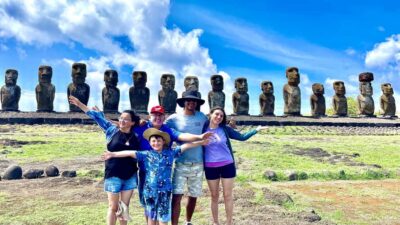
From Hanga Roa: Rapa Nui Culture Sightseeing Tour
Read our review →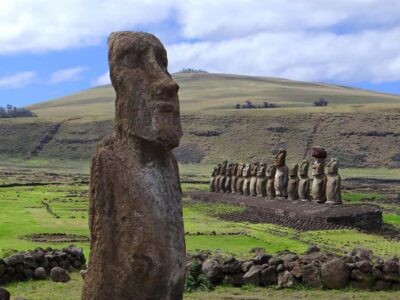
From Hanga Roa: Easter Island Highlights 2-Day Tour
Read our review →
From Hanga Roa: Easter Island Sightseeing Full Day Tour
Read our review →
From Hanga Roa: Journey from Orongo to Ana Te Pahu
Read our review →
Journey of the Ancestors: Tongariki, Rano Raraku & Anakena Beach
Read our review →
Full Day Private Tour: Factory of the Moai the stone giants
Read our review →Browse the lists this tour appears in