
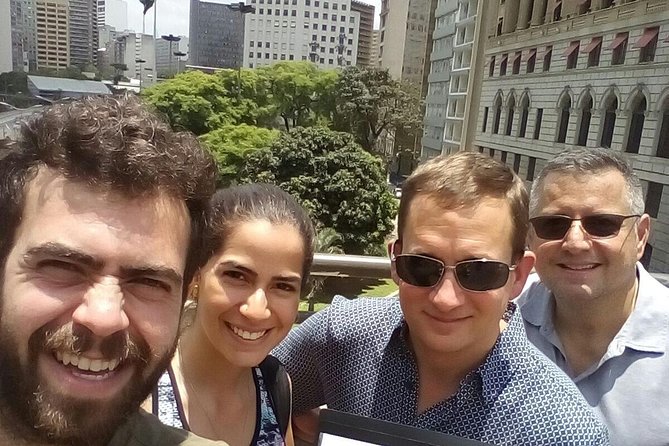
Reviewed · HISTORICAL TOURS
Sao Paulo: Downtown-Center History Walking Tour – in English
São Paulo’s city center makes the most sense on foot, where Niemeyer’s curved Copan Building, grand coffee-era façades, Jesuit foundations, and Japanese street markets sit within a few kilometers. This tour links those places with the stories that explain how the city became Brazil’s giant, complicated metropolis.
I like two things right away: the small maximum of 10 people, which leaves room for questions, and the route’s mix of famous sights with less obvious stops such as record shops, manga, antiques, and underground shopping corridors. The main consideration is strict timing. Start time is 10:00 am, and the guide cannot wait for late arrivals.
Key points at a glance
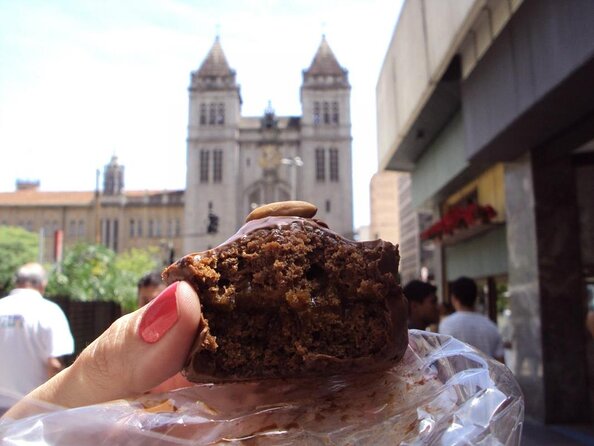
- A 3-kilometer route through central São Paulo: Walk from Edifício Itália to Liberdade in about two hours.
- Architecture with a story: Compare Copan’s modern curves, the Municipal Theatre’s European style, art déco façades, and Sé Cathedral’s neo-Gothic scale.
- A useful introduction to São Paulo: Learn how Indigenous peoples, Jesuits, immigrants, coffee wealth, modernist artists, and city politics shaped the center.
- Liberdade is part of the lesson: Finish among Japanese lanterns, market stalls, produce, and foods linked to São Paulo’s immigrant communities.
- A guide who adds local context: Giuliano is praised for clear explanations, easy conversation, multilingual ability, and practical food and coffee suggestions.
- Plan to arrive early: Traffic can be difficult, and late arrivals may miss the entire walk without a refund.
Why this São Paulo walking tour works
The best city walks help you understand what you are seeing. This one does that by moving through several versions of São Paulo in a compact route. You begin in Centro Novo, where giant twentieth-century buildings reflect ambition and rapid urban growth, then move toward the colonial foundation at Pátio do Colégio, the symbolic center at Sé, and the immigrant character of Liberdade.
That range gives the walk real shape. You are not simply collecting churches and façades for photographs. You are following the city’s changes from a Jesuit settlement to a coffee-funded business center, then to a modern megacity built upward and reshaped by migration.
The tour lasts about two hours and covers roughly 3 kilometers. I consider that a sensible length for a first look at downtown. There are frequent stops, time for photographs, and opportunities to ask questions rather than marching from one landmark to the next.
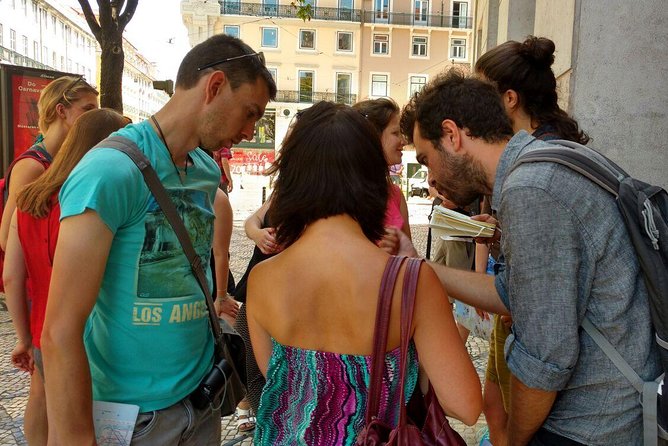
The group limit matters. With no more than 10 people, you should be able to hear the guide, stay together at busy crossings, and ask about subjects that interest you. Giuliano is repeatedly singled out for explaining social and economic change in plain language, keeping the pace comfortable, and offering suggestions for food, coffee, and further sightseeing.
The price is $31.24 per person. That is fair value if you want a guided introduction rather than a quick list of dates and building names. You are paying for the connections between the stops, the guide’s local interpretation, and the chance to orient yourself before exploring the city alone.
More Historical Tours in Brazil
- São Paulo: Downtown Historical Bike Tour
★ 4.9 · 191 reviews - Maria Fumaça – Wines and History
★ 4.0 · 242 reviews - Rio de Janeiro: Historic Rio and Santa Teresa Half-Day Tour
★ 4.4 · 228 reviews
Starting beneath Edifício Itália
Meet at 10:00 am on Avenida Ipiranga, at Edifício Itália. The building was once São Paulo’s tallest and remains one of the city’s most recognizable landmarks. It is a practical starting point because you are already in Centro Novo, an area shaped by high-rise growth and the city’s twentieth-century push upward.
This first stop sets up one of the walk’s main ideas: São Paulo is not a city with one neat historical period. Old churches, early colonial foundations, coffee wealth, modernist towers, shopping arcades, and immigrant districts all overlap.
You will want to arrive early. The guide begins on time and cannot hold the group for someone delayed by traffic. A reminder is sent before the tour, and the meeting point is near public transportation, but central São Paulo still rewards a generous time cushion.
Copan and the city built upward
From Edifício Itália, the route reaches Edifício Copan, designed by Oscar Niemeyer. Its huge curved form is one of the clearest symbols of Brazilian modernism, and it gives the group a chance to discuss the optimism and disorder of São Paulo’s mid-century expansion.
Copan is more than a striking photograph. Its scale reflects a city trying to house more people, attract investment, and reinvent itself through concrete and vertical construction. The building’s sweeping shape also offers a useful contrast to the more formal European styles seen later on the walk.
The stop is free, as are all the listed stops. That does not mean the tour feels empty of substance. The value here comes from learning how the building fits into the city’s growth, not from buying a separate admission ticket.
Gallery of Rock and Centro Novo’s side streets
The route then turns toward the Gallery of Rock and nearby underground shopping corridors. This is one of the more unusual parts of the walk because it broadens the subject beyond monuments and official history.
Expect a look at vinyl records, antiques, manga, and pop culture items. These shops and galleries show another side of downtown, shaped by collectors, music fans, subcultures, and small businesses. If you enjoy places with a strong local character, this stop may be more memorable than another grand façade.
The area also helps explain why a walking tour can reveal more than a car or bus tour. From the street, you see how people use older commercial buildings today. You get a sense of the city’s current habits, not just its past.
More Walking Tours in Brazil
- Sao Paulo: Downtown-Center Walking Tour | 2 Hours – English
★ 4.9 · 84 reviews - Rio de Janeiro: Rocinha Favela Walking Tour with Local Guide
★ 4.8 · 3,052 reviews - Rio De Janeiro: Half-Day Rocinha Favela Walking Tour
★ 4.7 · 2,272 reviews - Sunrise and Sunrise Walk Two Brothers with Local Guide
★ 5.0 · 193 reviews
The Municipal Theatre and Brazil’s modern identity
At the Municipal Theatre, the conversation turns to culture and national identity. The building draws on European architectural traditions, but its history is tied to Brazil’s effort to create an artistic voice of its own.
The theatre hosted the 1922 Week of Modern Art, a key moment when Brazilian artists challenged older rules and looked for forms that felt more local and modern. The guide uses this stop to explain how elegance and rebellion can occupy the same building.
This is a good place to pause for photographs, but the building’s importance goes beyond its appearance. São Paulo’s coffee wealth helped fund cultural institutions, and the theatre shows how business money, social ambition, and artistic change met in the city center.
Banco do Brasil and the coffee economy
Next comes Centro Cultural Banco do Brasil, surrounded by art déco architecture and grand façades from São Paulo’s coffee boom. The buildings communicate prosperity, but the story is not simply one of progress.
Coffee helped pay for infrastructure, culture, and urban growth. It also existed alongside sharp social contrasts. A useful guide will help you see both sides: the polished façades that announced wealth and the unequal society that made that wealth possible.
This part of the walk is particularly helpful if you want context for São Paulo’s present-day economic power. The city did not become Brazil’s business center by accident. Investment, transport, migration, industry, and political influence all played a part, and this stop gives those forces a physical setting.
Pátio do Colégio and the city’s beginning
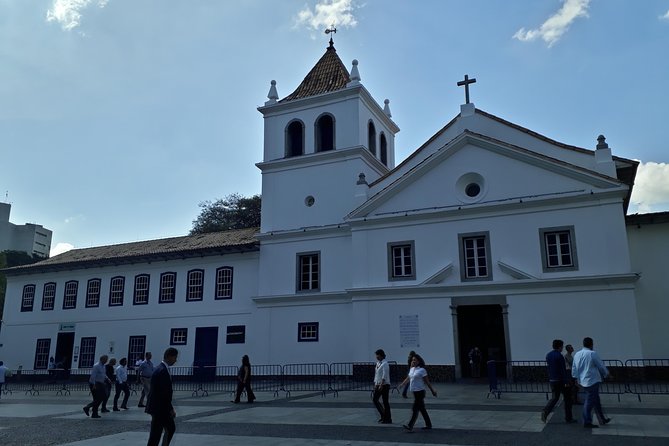
At Pátio do Colégio, the route reaches the place where São Paulo was officially founded in 1554. Jesuit missionaries and Tupi-Guarani peoples are central to the discussion, so the city’s origin is presented as a meeting of cultures shaped by unequal power.
That distinction matters. A simple founding story can make colonization sound tidy and inevitable. Here, the focus includes religion, political authority, Indigenous presence, and resistance. You are encouraged to look at the plaza not only as a pleasant historic space but also as a place marked by conflict.
This is one of the strongest stops for understanding why São Paulo’s history cannot be reduced to colonial buildings. The city’s foundations involve people whose lives and contributions were often pushed out of official accounts.
Sé Cathedral and ground zero
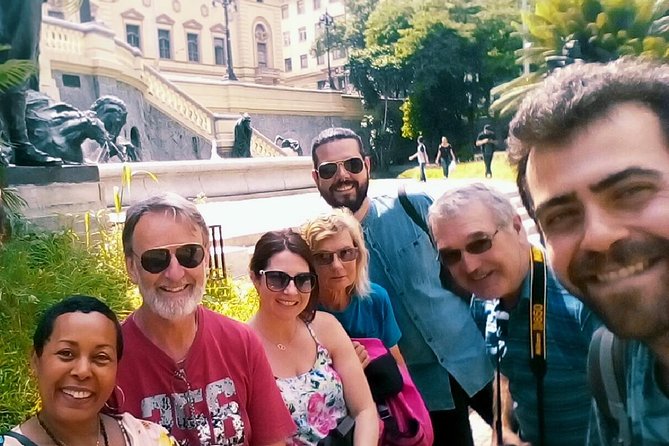
The walk continues to Sé Cathedral, a vast neo-Gothic church at São Paulo’s symbolic ground zero. Its size and pointed architecture make it one of the route’s most imposing sights.
The cathedral also functions as a public gathering place. The discussion includes protest, civic identity, and the meaning of building a monumental church at the center of the city. That wider context makes the stop more useful than a quick visit for interior photographs.
Bring your camera, but also take a moment to watch the square around you. Sé is an important urban meeting point, and the guide can help you understand how the cathedral relates to the city’s public life.
Liberdade, markets, and immigrant São Paulo
The tour ends at Praça da Liberdade, beside the PM base at number 125. Liberdade is widely known as the largest Japanese neighborhood outside Japan, but its identity is also part of São Paulo’s wider immigrant story.
The district’s lanterns, markets, and multicultural streets show how the city keeps changing through migration. The route includes the Liberdade street market, where you learn about produce and authentic foods associated with the area.
This ending works well because it shifts the focus from official buildings to everyday city life. You finish with food, shopping, street activity, and the practical question of where to eat next. Giuliano has provided food and coffee suggestions to people on the walk, and those tips can help you continue exploring after the formal tour ends.
Remember that the tour ends in Liberdade rather than returning you to Edifício Itália. That is useful if you plan to eat or explore the district, but you should account for the one-way route when arranging your day.
The guide and the feel of the group
The guide most often identified with this experience is Giuliano. His strengths are clear explanations, an easy manner, and enthusiasm for São Paulo and Brazil. He has been praised for handling questions, speaking several languages, and keeping the walk informative without making it stiff.
The pace is described as comfortable, with regular stops for photographs and questions. Two locations also offer restroom access, which is a useful detail on a two-hour urban walk.
The group may include people from different countries, and Giuliano has handled multiple languages fluently. The tour is conducted in English, so you should be ready for a history-focused conversation rather than a silent sightseeing stroll.
A small group makes it easier to build conversation. People have made new acquaintances during the walk, and the social side can be pleasant if you are traveling alone or as a pair. At the same time, the experience is still structured around the city, not around forced group activities.
Safety, comfort, and practical planning
Central São Paulo has a reputation that can make first-time visitors uneasy. The walk takes place in a busy urban area, so you should remain alert, keep your belongings secure, and follow normal big-city habits. The guide’s presence and group format help with orientation, but no walking tour removes the need for awareness.
Most people can take part, and the route is near public transportation. It is still a 3-kilometer walk, so comfortable shoes are important. The tour requires decent weather, and poor conditions can lead to a different date or a full refund.
Sun and heat can affect your comfort. The guide has tried to keep the group in the shade when possible, but you should still prepare for an outdoor morning. The route includes churches, cultural buildings, streets, and market areas, so the surface and surroundings will vary.
The strict start time is the main logistical risk. Arrive early at Edifício Itália rather than aiming for exactly 10:00 am. If traffic delays you, the group may already be moving, and late arrival is not accommodated.
Free cancellation is available until 24 hours before the start time. Cancellations or changes inside that window are not refunded, and the cut-off follows local time.
Who will get the most from this walk
I would choose this tour for a first morning in São Paulo, especially if you want help making sense of the center before exploring on your own. The route gives you useful bearings, introduces the main historical periods, and ends in a district where you can continue with food and shopping.
It suits solo visitors, couples, and friends who prefer conversation and context to a fast checklist of sights. It is also a good choice if architecture interests you, since the route covers modernism, brutalism, art déco, neo-Gothic design, and colonial foundations.
You may want something else if you dislike walking, need a flexible start time, or prefer to spend long periods inside museums. The tour moves through many places but does not promise extended interior visits or admission to special exhibitions.
The experience is also less suitable for anyone hoping to see all of São Paulo. It focuses on the historic center and Liberdade, not the full city. That focused route is a strength for a short visit, but it is not a complete city tour.
Should you book the São Paulo Downtown-Center History Walking Tour?
Book it if you want a compact, thoughtful introduction to São Paulo with a guide who explains why the buildings and neighborhoods matter. The strongest reasons are the small group, comfortable pace, broad range of subjects, and final stop in Liberdade, where history connects directly with food and street life.
At $31.24, the tour offers solid value for two hours of guiding and orientation. Arrive early, wear comfortable shoes, keep your belongings close, and save time after the walk for Liberdade.
Skip it only if a strict 10:00 am start or a 3-kilometer walk does not fit your plans. For most first-time visitors who want the city center explained rather than merely photographed, this is a smart opening look at São Paulo.
FAQ
How long is the São Paulo Downtown-Center History Walking Tour?
The tour lasts approximately two hours and covers about 3 kilometers on foot.
What time does the tour start?
The tour starts at 10:00 am.
Where does the tour begin?
It begins at Edifício Itália, at Avenida Ipiranga, 344, in São Paulo’s historic center.
Where does the tour end?
The walk ends at the PM base at Praça da Liberdade, 125, in Liberdade.
Is the tour conducted in English?
Yes. This experience is offered in English.
How large is the group?
The maximum group size is 10 people.
What places are included?
The route includes Edifício Itália, Edifício Copan, the Gallery of Rock, the Municipal Theatre, Centro Cultural Banco do Brasil, Pátio do Colégio, Sé Cathedral, and Praça da Liberdade.
Can I cancel for a full refund?
Yes, if you cancel at least 24 hours before the experience starts. Cancellations made less than 24 hours before the start time are not refunded.
More Walking Tours in Sao Paulo
- Buenos Aires Hop-On Hop-Off Bus, Free Walking Tours & Discounts
★ 4.5 · 2,218 reviews - Buenos Aires: La Boca Guided Walking Tour in English
★ 4.8 · 1,587 reviews - Bogotá: Guided La Candelaria Walking Tour
★ 4.8 · 1,229 reviews - La Paz and El Alto: Cable Car Rides and Walking Tour
★ 4.8 · 790 reviews
More Historical Tours in Sao Paulo
- Cartagena: Historic Center and Getsemaní Shared Walking Tour
★ 4.9 · 2,716 reviews - Lima’s Vibrant Heritage: Exploring the City’s Landmarks Half-day
★ 4.5 · 581 reviews - Santiago: Guided Walking Tour of the Historical Old Town
★ 4.8 · 459 reviews - Lima: Historic Center Street Food, Market, and Eateries Tour
★ 4.9 · 216 reviews
Just added around Sao Paulo
- Guarulhos Airport Transfer to Viracopos Airport or Campinas City★ 5.0 · 51 reviews
- City tour in Campos do Jordão★ 5.0 · 45 reviews
- Arborismo in Horto Florestal – Campos Do Jordão★ 4.5 · 42 reviews
- São Paulo: Campos do Jordão Guided Tour★ 4.5 · 66 reviews
- São Paulo: Liberdade Street Food Tour★ 4.9 · 73 reviews
- 7-Hour Shared Group Santos Tour : Mont Serrat, Coffee Museum and Sightseeing★ 5.0 · 68 reviews
- 8-Hour Private Tour São Paulo: Major Tourist Attractions–Optional Airport Pickup★ 5.0 · 79 reviews
- 6 Hour Ayrton Senna Tour – The Greatest Formula 1 Drivers of all Time★ 5.0 · 83 reviews
Historical Tours, compared.
Historic Center and Getsemaní Shared Walking Tour
Read our review →
Lima’s Vibrant Heritage: Exploring the City’s Landmarks Half-day
Read our review →
Lima: Historic Center Street Food, Market, and Eateries Tour
Read our review →
Nazis in Buenos Aires: a historical walking tour
Read our review →
Browse the lists this tour appears in