
Reviewed · WALKING TOURS
Sao Paulo: Downtown-Center Walking Tour | 2 Hours – English
São Paulo’s center makes the most sense from the pavement. In two hours, this walk links the city’s first skyscraper era, Jesuit beginnings, immigrant neighborhoods, churches, banks, and present-day street life. You finish in Liberdade, the city’s best-known Japanese district, with a much clearer idea of how São Paulo grew into a giant city.
I like the small group limit of 10, which gives you room to ask questions without shouting over a crowd. I also like the way guide Giuliano connects architecture with social change, and can point you toward useful local finds, including vegetarian food spots.
The main drawback is pace. Nine stops fit into a two-hour walk, so several visits are brief rather than detailed. The meeting time is strict, and the information says both wheelchair accessible and not suitable for people with mobility impairments, so you should clarify the route before booking if accessibility matters.
Key points at a glance
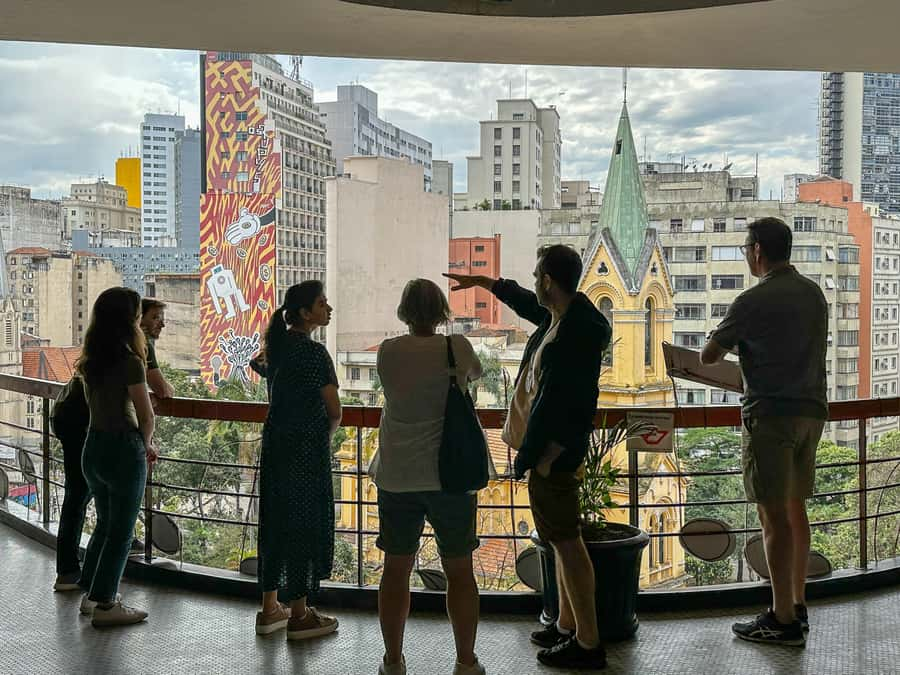
- See São Paulo’s skyline from the Copan Building, one of the city’s famous early skyscraper landmarks.
- Trace several centuries in one walk, from Tupi pathways and Jesuit foundations to immigrant communities and modern banks.
- Visit Galeria do Rock, a lively retail and cultural address with 20 minutes set aside to look around.
- Compare churches, offices, galleries, and civic buildings across the old and new center.
- Finish in Liberdade, a district strongly linked with São Paulo’s Japanese community.
- Get practical advice from Giuliano, including ideas for later sightseeing and vegetarian places to eat.
Why this short walk works as a first São Paulo tour
São Paulo can feel hard to read when you first arrive. It is huge, vertical, and made from many different eras pressed close together. A two-hour orientation gives you a useful framework before you spend time in museums, markets, restaurants, or neighborhoods farther from the center.
This tour is not simply a checklist of famous buildings. Its central idea is how the city changed. You hear about the Tupi people who lived here before Portuguese control, the old South American paths that crossed the region, and the Jesuits and conquerors who helped shape the settlement that became São Paulo.
From there, the walk moves into the city’s later growth. Italians, Japanese, Syrian-Lebanese communities, and other immigrant groups helped create the São Paulo you see today. The buildings become evidence of those changes: churches recall religious and colonial power, banks point to finance and industrial growth, and skyscrapers show the city reaching upward in the twentieth century.
I especially value this kind of explanation because it gives you a way to read the streets after the tour ends. Instead of seeing only a grand façade or a busy square, you begin asking who built it, who used it, and what changed around it.
More Walking Tours in Brazil
- Sao Paulo: Downtown-Center History Walking Tour – in English
★ 5.0 · 91 reviews - Rio de Janeiro: Rocinha Favela Walking Tour with Local Guide
★ 4.8 · 3,052 reviews - Rio De Janeiro: Half-Day Rocinha Favela Walking Tour
★ 4.7 · 2,272 reviews
Starting at Edifício Itália and looking toward Copan
Meet at the entrance of Edifício Itália on Avenida Ipiranga, number 336. You need to arrive early. The guide starts strictly on time, and once the group has left, the guide will not be checking the phone or waiting for late arrivals.
The opening stop is the Copan Building, with about 10 minutes for the visit. Copan is one of São Paulo’s signature modern buildings, and the tour uses it to introduce the city’s early skyscraper story and its remarkable scale.
This is a smart first stop because it gives you an immediate sense of São Paulo as a vertical city. The brief time allocation means you should not expect an extensive architectural lecture or a long interior visit. Think of it as a strong visual introduction, with context from the guide doing much of the work.
Galeria Metrópole and the texture of city life
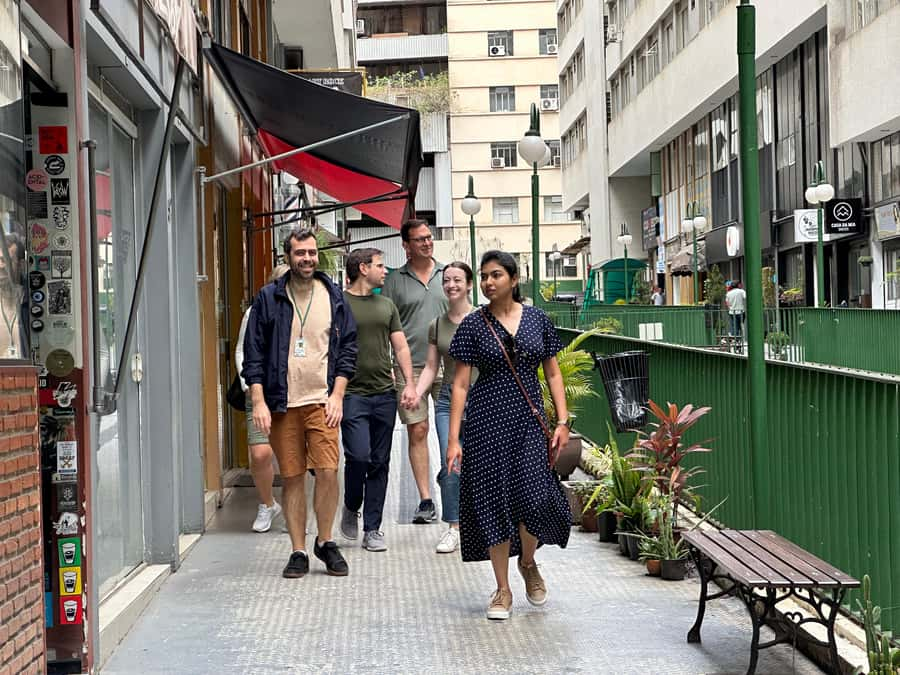
The walk continues to Galeria Metrópole for about 10 minutes. This stop helps shift the focus from monumental architecture to the everyday city, where shops, offices, passageways, and public life overlap.
You may find this part especially useful if you want more than a parade of churches and official buildings. São Paulo’s character is also found in these mixed-use spaces, where the city’s practical side comes forward. Ten minutes is enough to get a feel for the place, but not enough for a long browse.
The changing scenery also keeps the walk from becoming too formal. You move between large architectural statements and ordinary urban spaces, which makes the city’s contrasts easier to notice.
Twenty minutes at Galeria do Rock
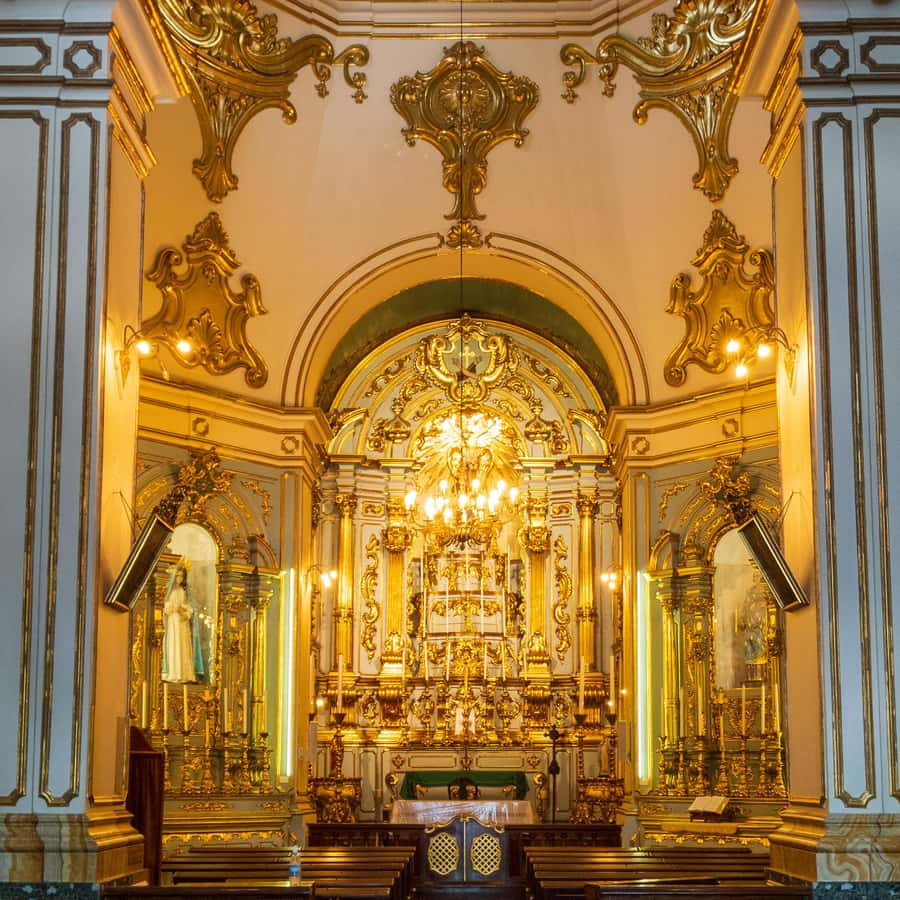
Galeria do Rock gets the longest stop, at around 20 minutes. This is one of the most distinctive addresses on the route, and it gives the tour a welcome change of mood.
The name points to its connection with rock culture, but the wider value is that it shows another side of central São Paulo. You get time to look around rather than simply pause for a photo. If you like music, fashion, independent shops, or places with a strong local identity, this will probably be one of the more memorable stops.
It is also a practical place to observe how older central buildings continue to serve new communities. The guide can help you understand the social setting rather than treating the gallery as a quick photo backdrop.
More Walking Tours in Sao Paulo:
- Cartagena: Historic Center and Getsemaní Shared Walking Tour
★ 4.9 · 2,716 reviews - Buenos Aires Hop-On Hop-Off Bus, Free Walking Tours & Discounts
★ 4.5 · 2,218 reviews - Buenos Aires: La Boca Guided Walking Tour in English
★ 4.8 · 1,587 reviews - Bogotá: Guided La Candelaria Walking Tour
★ 4.8 · 1,229 reviews
Municipal Theatre and São Francisco de Assis Church
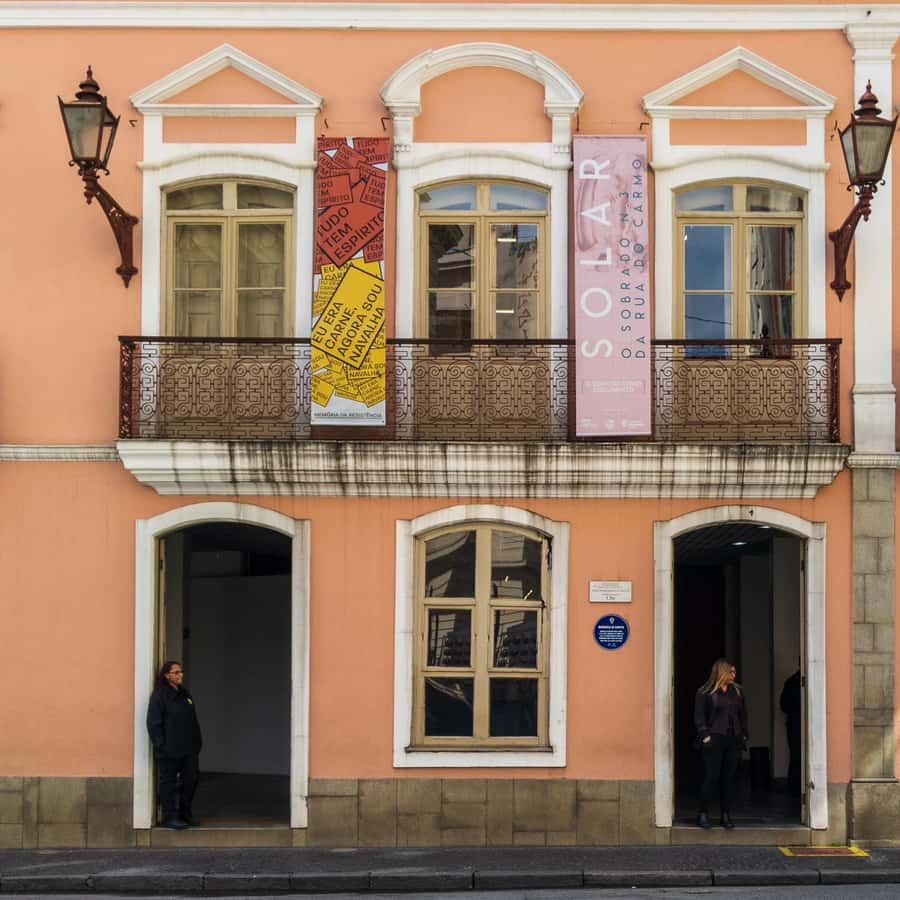
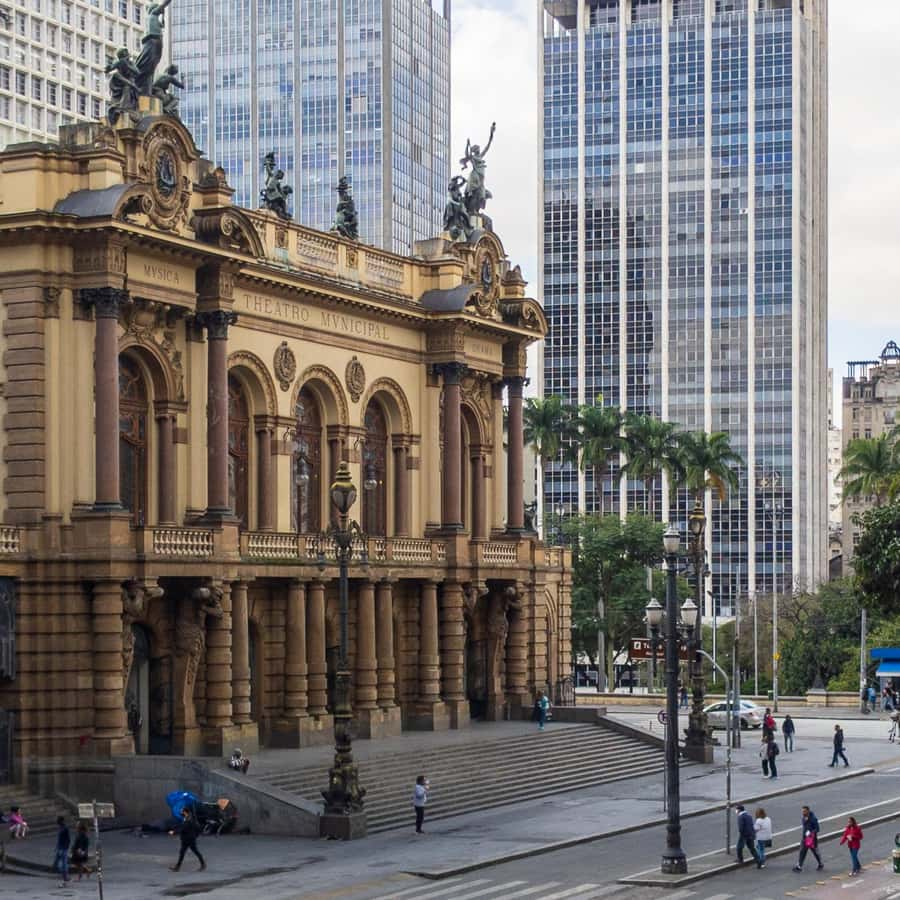
The Municipal Theatre of São Paulo receives about 10 minutes. Its presence adds a civic and cultural note to the route, after the more commercial atmosphere of Galeria do Rock.
Do not expect a full theater tour in this short format. The value here is the building’s place in São Paulo’s public life and the way it fits into the story of a city that wanted large cultural institutions as it expanded.
Next comes Paróquia São Francisco de Assis, with about 20 minutes. The longer stop allows more time to consider the church and the role of religious institutions in the city’s development. The guide’s approach is not limited to dates and construction details. It also connects churches with the people, institutions, and power structures that shaped the center.
That broader context is one of the tour’s strongest features. Architecture becomes a record of changing priorities, not just decoration.
São Bento and the financial center
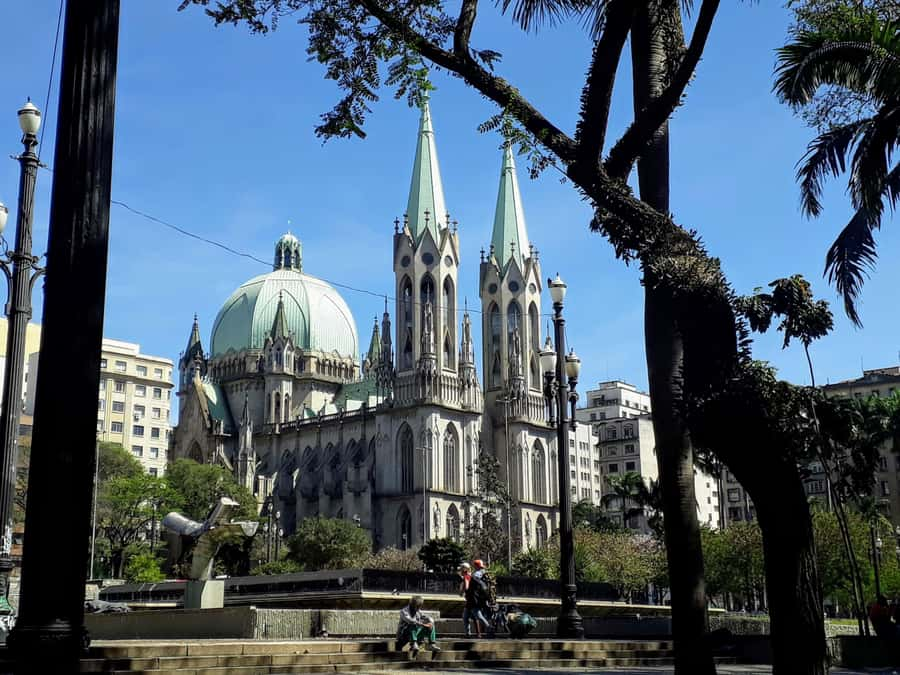
Mosteiro de São Bento is allotted 15 minutes. This is another religious landmark, but the stop adds a different layer to the walk. Along with the churches, monasteries, and older foundations, you see how the center accumulated institutions over time.
The route then reaches the Bank of Brazil Cultural Center, with another 15-minute visit. Here the emphasis shifts toward finance, public culture, and the reuse of central buildings. The exact experience depends on what is open and available during your visit, so treat this as a guided stop rather than a guaranteed extended exhibition visit.
I like the rhythm created by these two locations. São Bento brings the older religious city into view, while the Bank of Brazil Cultural Center points toward the commercial and cultural machinery of modern São Paulo. In just a few blocks, the city’s priorities seem to change.
Pateo do Collegio and São Paulo’s beginning
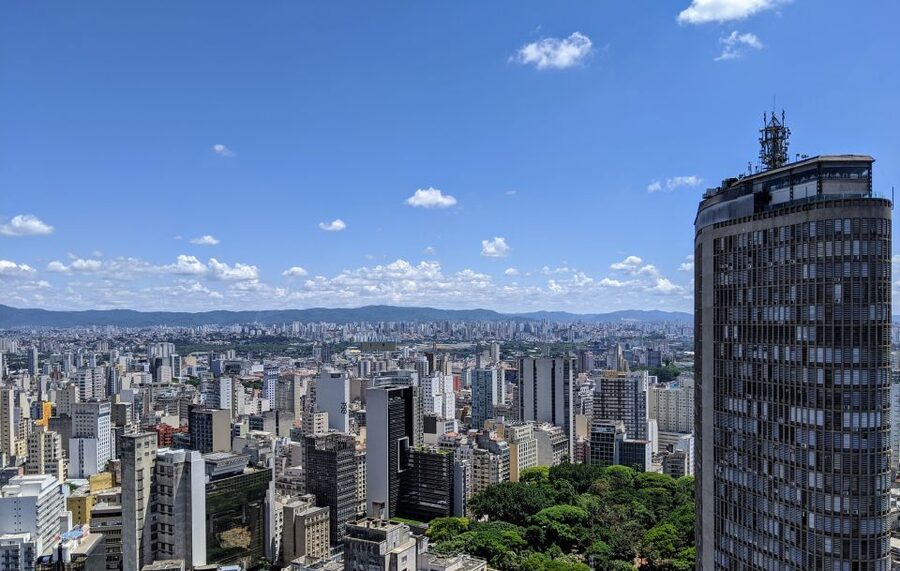
College Pateo, more commonly known as Pateo do Collegio, receives about 20 minutes. This is one of the most important history stops because it ties the modern city to its early Jesuit foundation.
The guide also places this story against the presence of the Tupi nation and the older paths that crossed South America before the city took its current form. That framing matters. It prevents the story from beginning only with European buildings and official dates.
You get a compact account of how a small religious settlement became part of a much larger urban center. The stop is likely to suit you if you want historical context, not only sightseeing photographs. It also gives the walk a clear turning point, moving from the city’s growth and architecture back to its earliest foundations.
Sé Cathedral and the walk to Liberdade
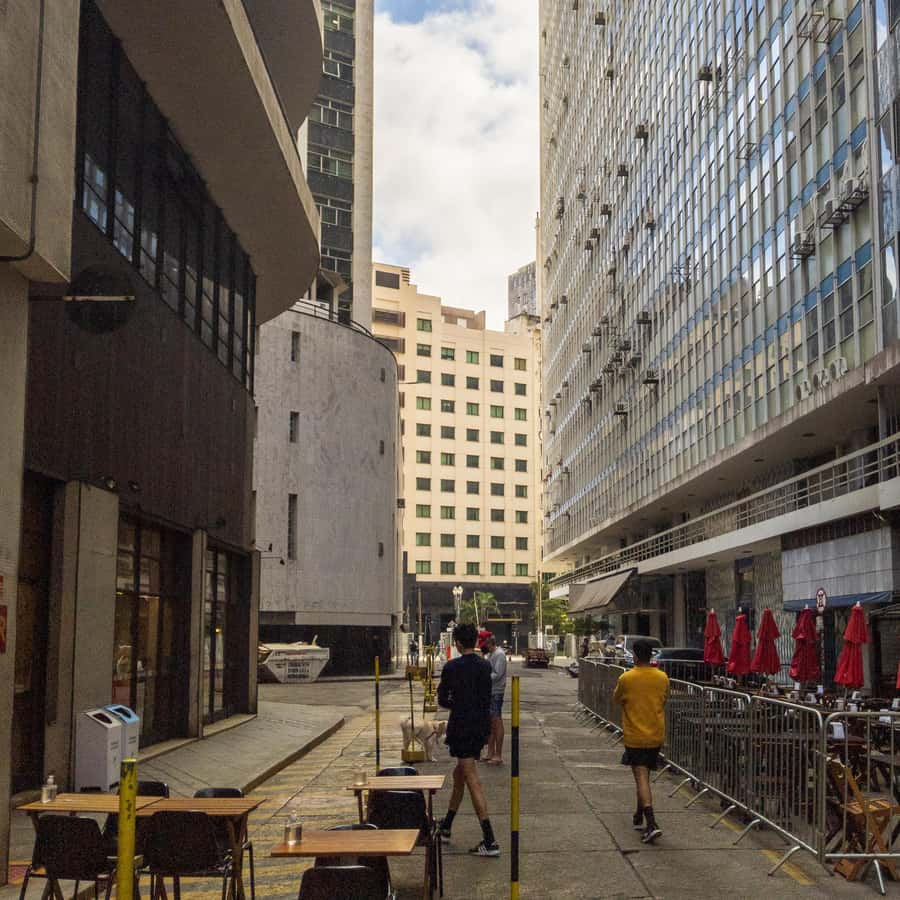
The final major stop is São Paulo Cathedral, with around 15 minutes. The cathedral brings together the religious and civic scale of the historic center, and it provides a fitting closing point for the main architectural sequence.
The walk ends at Praça da Liberdade in Liberdade. This is more than a convenient endpoint. Liberdade is closely associated with São Paulo’s Japanese community and helps bring the tour back to the city’s immigrant story.
That finish gives the route a useful shape. You start among modern skyscrapers and central commercial buildings, pass through religious and colonial history, then end in a neighborhood tied to migration and cultural change. You do not see every side of São Paulo, but you do get a strong introduction to several forces that made the city what it is.
What Giuliano adds to the experience
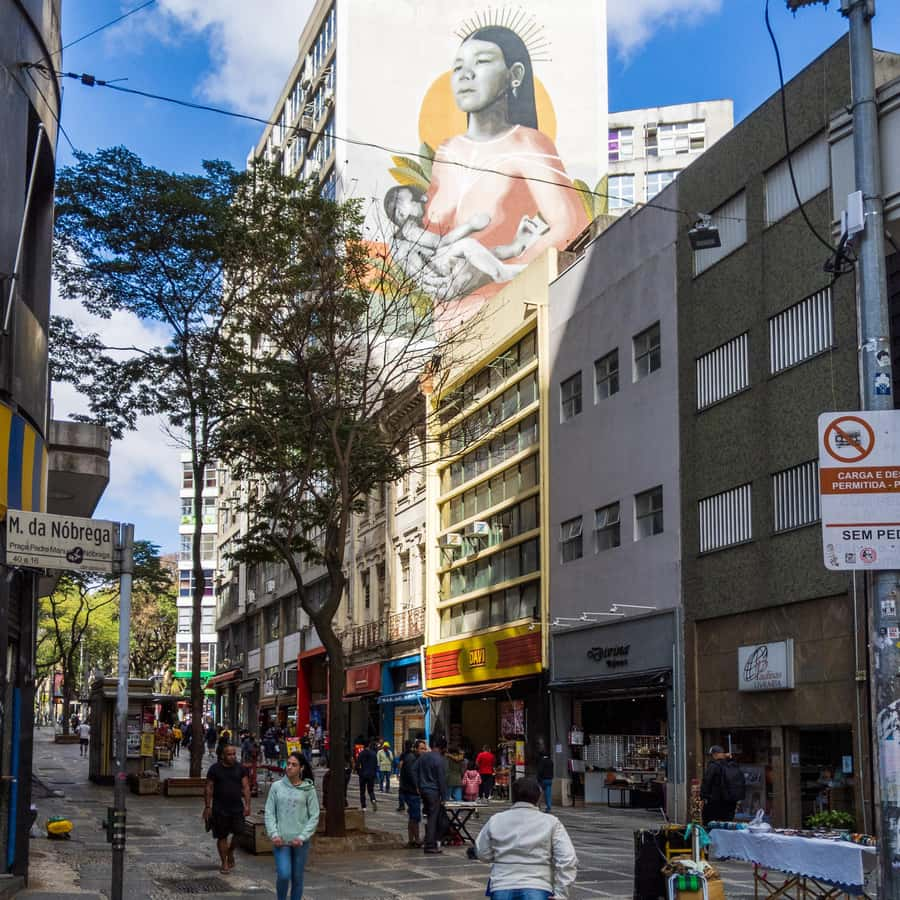
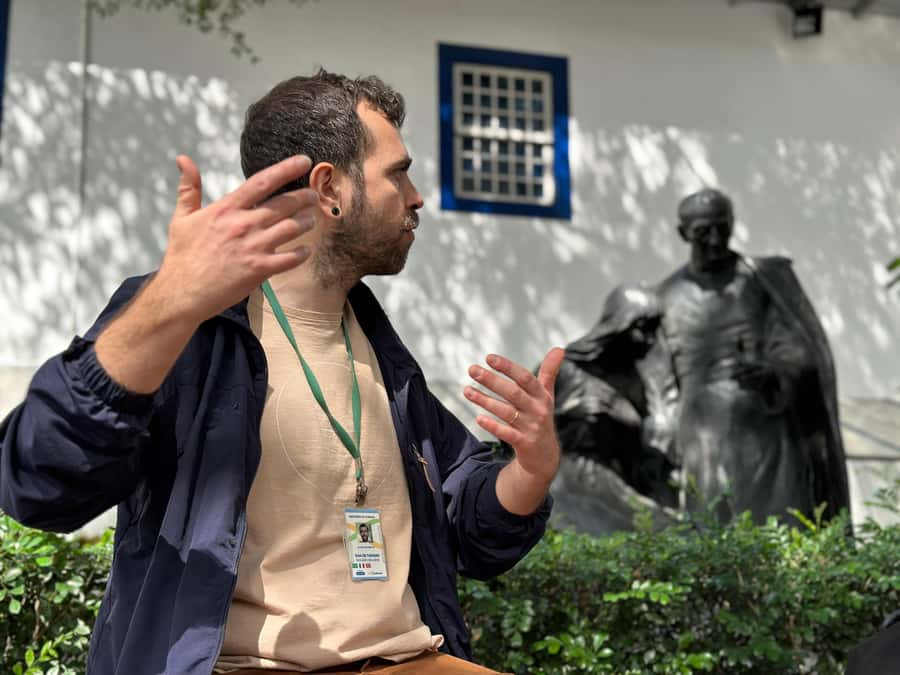
A good city walk depends heavily on the guide, and Giuliano’s role appears central here. He speaks Portuguese, Spanish, and Italian, but this departure is conducted in English. That distinction matters if you are comparing language options.
His strength is explaining both historical and current São Paulo. You can ask about architecture, the city’s past, or what it is like to live there now. He also offers practical recommendations for the rest of your stay, including vegetarian food options and less obvious places to explore.
The small group helps. With no more than 10 participants, questions can shape the conversation, and you have a better chance of hearing the answers clearly. The group size also keeps the walk more personal without making it a private tour.
The experience has received a 4.9 rating from 84 reviews, with praise focused on the guide’s clear explanations, social context, friendly manner, and ability to fit substantial information into a short route. One especially useful strength is the attention to different national backgrounds within the group, helping connect São Paulo’s immigrant story to the people listening.
Timing, walking, weather, and accessibility
Two hours is a good length if you want an introduction without committing half a day. It is also short enough to fit on an arrival day, provided you can reach the meeting point on time and do not schedule a tight connection afterward.
The route is entirely on foot. No transport cost is expected, and food or drinks are not included. Wear comfortable shoes and keep your schedule loose enough to account for walking between the listed stops.
São Paulo’s tropical weather can change quickly. Bring sunscreen and an umbrella, even if the forecast looks friendly in the morning. Rain does not necessarily ruin the experience, but it can make a fast city walk less comfortable.
There is an important accessibility inconsistency in the booking information. The activity is marked wheelchair accessible, while the same information says it is not suitable for people with mobility impairments. If you use a wheelchair, walk with difficulty, or need regular breaks, contact the provider before paying so you can confirm the exact route and conditions.
The tour is English only, despite Giuliano also speaking Spanish, Portuguese, and Italian. Make sure English is the language you want for the full explanation.
Is $37 a fair price?
At $37 per person, this is not the cheapest way to stroll through central São Paulo. You could walk past many of these buildings on your own. The value comes from the interpretation, the concentrated route, the small group, and the practical orientation you receive in two hours.
You are paying for a licensed professional guide who links separate places into one story. That is especially useful in São Paulo, where a church, skyscraper, gallery, and cultural center can look unrelated until someone explains the forces connecting them.
The price makes the most sense during your first days in the city. You can use the guide’s suggestions to decide where to return, where to eat, and which parts of central São Paulo deserve more time. It is less useful if you already know the historic center well or prefer to spend an entire morning inside one museum or monument.
The short format also keeps the cost reasonable for people who want a clear introduction but do not want a long, demanding excursion.
Who should book this walk?
I would choose this tour if you are visiting São Paulo for the first time, want historical context, and enjoy learning through buildings and neighborhoods. It also suits solo visitors and couples who prefer a small group to a large coach outing.
It is a good match for architecture fans, city-history readers, and anyone curious about the Italian, Japanese, Syrian-Lebanese, and other communities that helped shape São Paulo. The recommendations for later sightseeing and vegetarian food are useful extras, especially if you are still planning your days.
You may want something else if you need long visits at each site, guaranteed interior access, or a slow pace. Nine stops in two hours means the guide must keep moving. Arriving late is not a workable option, and the accessibility note needs checking before booking.
For the best experience, arrive at Edifício Itália early, bring sun protection and an umbrella, wear comfortable shoes, and come ready to ask questions. A little preparation lets you spend the tour listening instead of worrying about logistics.
FAQ
Where does the São Paulo walking tour begin?
The meeting point is at the entrance of Edifício Itália, at Avenida Ipiranga, 336. The guide waits there for the group.
Where does the tour finish?
The walk ends at Praça da Liberdade in the Liberdade district of São Paulo.
How long is the tour?
The walking tour lasts two hours. Starting times vary, so you need to check availability when booking.
Is the tour conducted in English?
Yes. This departure has a live English-speaking guide. Giuliano also speaks Spanish, Portuguese, and Italian, but the tour itself is English only.
Is transportation included?
No transportation is needed or included. This is a walking tour, and no transport cost is expected. Food and drinks are also not included.
Can I cancel the booking?
You can cancel up to 24 hours in advance for a full refund. The reserve-now, pay-later option lets you hold a place without paying immediately.
Should you book it?
Book this walk if you want a focused first look at central São Paulo, with a guide who explains why the buildings and communities matter. The strongest reasons are the small group, Giuliano’s local advice, and the way the route connects Indigenous history, Jesuit foundations, immigrants, religion, finance, and skyscrapers.
Skip it if you want a slow museum-style visit or cannot manage a strict start and brisk two-hour schedule. For most first-time visitors who want to get their bearings fast, $37 buys a useful introduction and a better plan for the rest of São Paulo.
More 2-Hour Tours in Sao Paulo
- Cartagena de Indias: 2-Hour Sunset Cruise
★ 4.7 · 1,105 reviews - 2-hour tour in Cartagena Sunset View in party boat
★ 4.6 · 899 reviews - 2-Hour Walking Tour of Yungay The Coolest Neighborhood in Chile
★ 5.0 · 85 reviews - Rio de Janeiro: 2-Hour Boat Trip with Parasailing
★ 4.8 · 53 reviews
Just added around Sao Paulo
- Guarulhos Airport Transfer to Viracopos Airport or Campinas City★ 5.0 · 51 reviews
- City tour in Campos do Jordão★ 5.0 · 45 reviews
- Arborismo in Horto Florestal – Campos Do Jordão★ 4.5 · 42 reviews
- São Paulo: Campos do Jordão Guided Tour★ 4.5 · 66 reviews
- São Paulo: Liberdade Street Food Tour★ 4.9 · 73 reviews
- 7-Hour Shared Group Santos Tour : Mont Serrat, Coffee Museum and Sightseeing★ 5.0 · 68 reviews
- 8-Hour Private Tour São Paulo: Major Tourist Attractions–Optional Airport Pickup★ 5.0 · 79 reviews
- 6 Hour Ayrton Senna Tour – The Greatest Formula 1 Drivers of all Time★ 5.0 · 83 reviews
Walking Tours, compared.
Historic Center and Getsemaní Shared Walking Tour
Read our review →

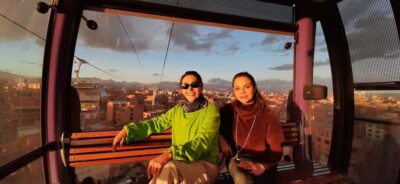
La Paz and El Alto: Cable Car Rides and Walking Tour
Read our review →
Punta Arenas: Walk with Penguins on Magdalena & Marta Island
Read our review →
Browse the lists this tour appears in