
Reviewed · HISTORICAL TOURS
Cusco: Historic Walking Tour with Pisco Sour and Music Show
Cusco’s story comes at you in layers on this two-hour walk: Spanish churches and grand squares give way to Inca walls, steep San Blas lanes, Andean instruments, and a drink at the end. The route includes the 12 and 13 angled stones, the Qoricancha Sun Temple, and views across the city.
I like the small groups, limited to 10 people, and the strong guides. Erick, Nilo, and Niki have all been singled out for clear, lively explanations, while one guide brought professional anthropology training. I also like the choice of a pisco sour or chicha morada after the walk.
The main catch is price clarity. This is promoted as a $10 paid experience, but some visitors found it worked like a free walking tour with an expected tip. The music stop can also change if the workshop is closed, so keep your expectations flexible.
Key points to know before you go
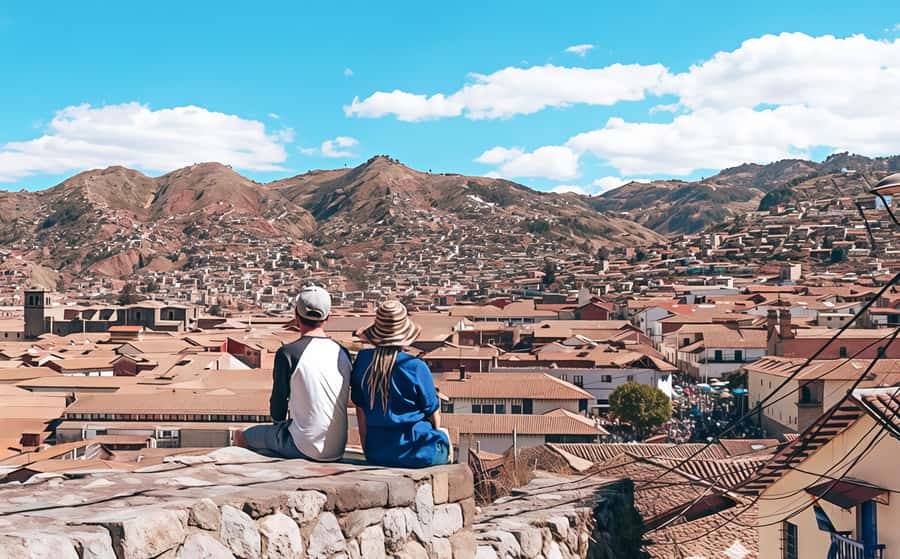
- The route packs in central Cusco: Start at the Plaza de Armas, then see the Cathedral, Company of Jesus, Qoricancha, Inca stonework, and San Blas.
- The group is capped at 10: A small English-speaking group may feel almost private, especially when only three people attend.
- The best details are on foot: The 12 and 13 angled stones, the Andean Trilogy carvings, and 7 Borreguitos Street are easy to miss without a guide.
- The finish is social: Choose a pisco sour or chicha morada after the sightseeing, usually with a toast in a local restaurant.
- The music visit is not guaranteed in practice: A closed venue led one group to a different local dance show instead.
- It suits an arrival day: The easy-to-follow route gives you a useful first look at central Cusco, though the streets are not suitable for wheelchairs or people with mobility limits.
Starting at the Inca Fountain in the Plaza de Armas
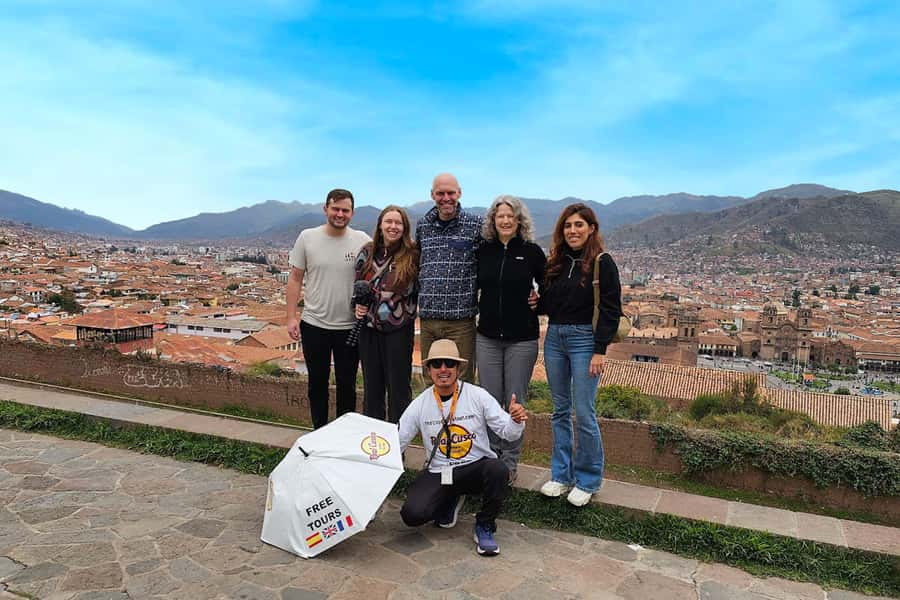
Meet beside the Inca Fountain in the Plaza de Armas, at approximately -13.516772, -71.9787231. Your guide carries a white umbrella, a useful marker in a square where tour groups come and go.
The Plaza de Armas is the right place to begin. It gives you Cusco in one glance: colonial buildings, busy pedestrian routes, church façades, and reminders that the city was built over an earlier Inca center. Your guide uses the square to explain the broad story of Cusco before leading you into the details.
I would choose this tour early in your stay. The route helps you recognize the city center, and the guides also offer practical advice for the rest of your visit. One guide, Erick, was especially good at mixing history with useful tips for travelers, which is exactly what you want before setting off on longer excursions.
The tour lasts about two hours. That is long enough to cover a surprising amount of ground, but short enough to fit around lunch, a museum visit, or an evening meal. You should still expect plenty of walking on uneven streets and some uphill stretches in San Blas.
More Historical Tours in Peru
- Cusco: Historical Guided City Tour with 4 Inca Ruins
★ 4.5 · 99 reviews - Pisco Sour Secrets: Hands-On Mixology in Historic Cusco
★ 4.5 · 50 reviews - Lima’s Vibrant Heritage: Exploring the City’s Landmarks Half-day
★ 4.5 · 581 reviews
Cathedral and Company of Jesus: Cusco’s colonial face
The first major sights are the Cathedral and the Company of Jesus. From the outside, these buildings frame the Plaza de Armas and show how Spanish religious power reshaped the city after the conquest.
The guide’s commentary matters here. A quick photo stop can make the churches blur together, but the explanation helps you see how colonial buildings sit beside older Andean foundations and traditions. You will hear the story of Cusco as a place where Inca and Spanish cultures meet, often uneasily.
Entry to museums is not included, and visiting the interiors is optional. That keeps the base price low, but it also means this is primarily an outdoor history walk. If you want a close look at church art or museum collections, plan to return on your own and budget for any admission fee.
Qoricancha and the meaning of the Sun Temple
Qoricancha, often called the Sun Temple, is one of the most important stops. The site helps explain the scale and importance of Cusco before Spanish rule. Its walls are a powerful reminder that this was not simply a colonial town with an Inca past. It was the center of an empire.
The tour does not include museum entry, so check your expectations. You will learn about Qoricancha from outside unless you arrange a separate visit. Even so, the stop has value because the guide can point out features and explain why the site matters before you decide if an interior visit deserves more of your time.
I like this arrangement for a short orientation tour. You get the setting and the story without losing half the morning indoors. If Qoricancha is a top priority, you can return later with more time and a separate ticket.
Inca stonework and the Andean Trilogy
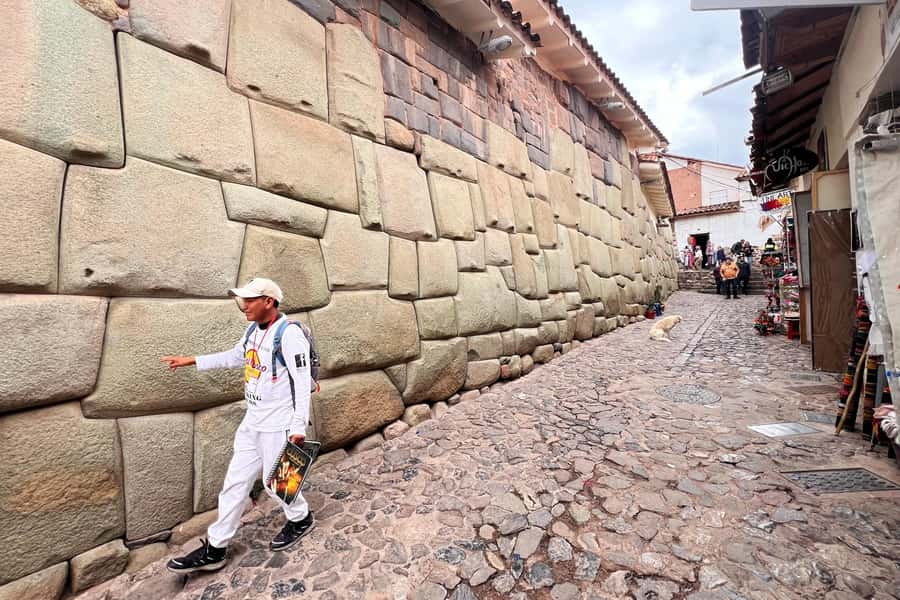
The walk then turns to details that are easy to pass without a guide. The 12 and 13 angled stones are a good example. Their carefully cut edges fit into the surrounding wall with remarkable precision, and the guide gives you a reason to stop rather than simply photograph them.
You will also hear about the Andean Trilogy, represented by the condor, puma, and snake. These animals carry symbolic meaning in Andean tradition, and their forms are carved into an Inca wall. The guide points out the silhouettes so you can read the stonework as more than an impressive construction trick.
This part of the route is one of the tour’s best values. You do not need a long lecture to appreciate the stones, but you do need someone to show you where to look and explain what you are seeing. A large group could make this feel rushed. With a limit of 10, questions are easier.
More Walking Tours in Peru
- Walking tour in the Historic Center of Arequipa
★ 4.4 · 180 reviews - Lima: Miraflores Trending Flavors Half-Day Walking Tour
★ 4.9 · 98 reviews - Arequipa: Walk through the Historic Center of the City
★ 4.9 · 87 reviews - Arequipa Walking Tour city center and drinks experience
★ 5.0 · 72 reviews
Climbing into San Blas
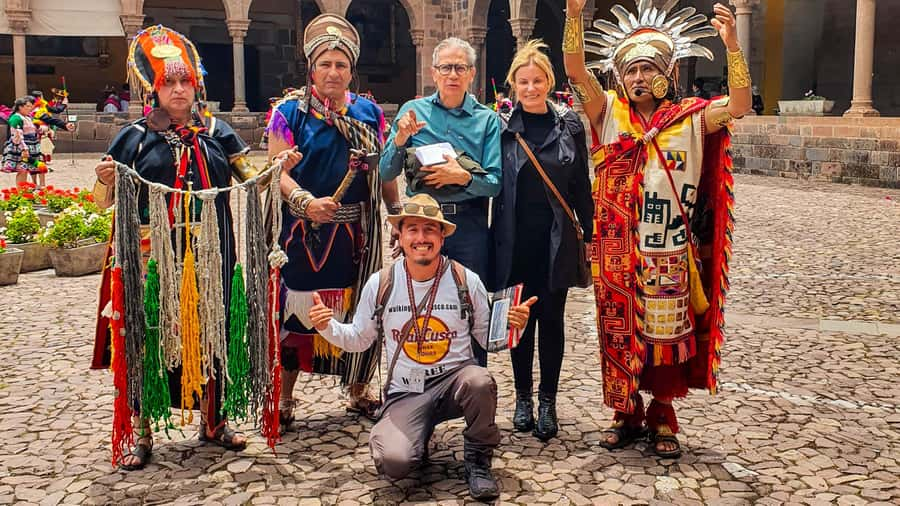
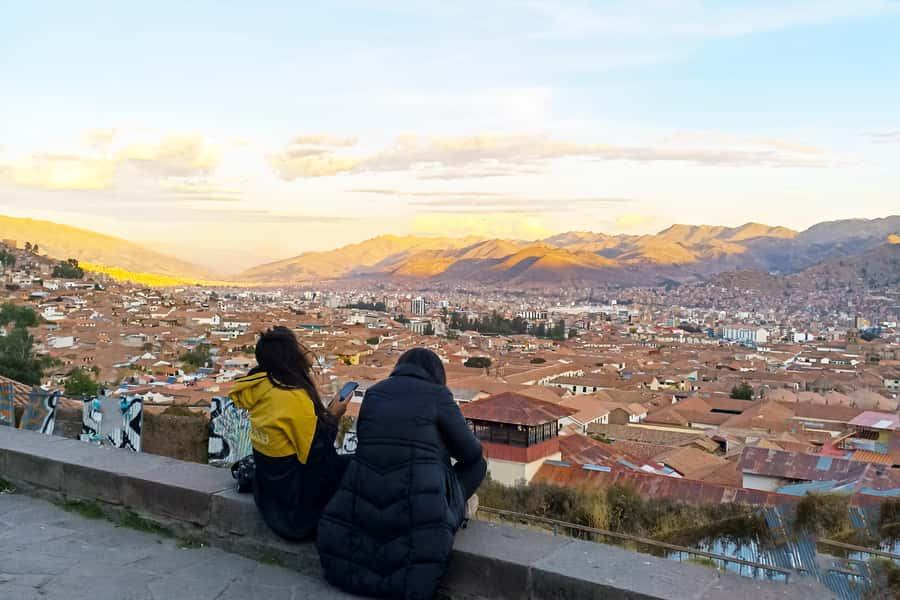
From the central streets, the route continues into San Blas. This neighborhood is known for narrow lanes, whitewashed buildings, craft shops, and wide views over Cusco. The walk feels different here. The Plaza de Armas is formal and grand, while San Blas is more intimate and hilly.
The climb is also the tour’s main physical consideration. The streets are picturesque, but they are not built for effortless walking. The experience is not suitable for wheelchair users or people with mobility impairments, and it is not recommended for babies under one year. Anyone with limited energy should ask about the exact route before booking.
The views make the effort worthwhile for many people. One stop offers a sunset viewpoint, and the timing can create a lovely end-of-day scene over the city. The tour does not promise a sunset on every departure, so treat that as a possible bonus rather than the main reason to book.
San Blas is also where the guide’s local knowledge is most useful. You get more than a checklist of sights. The route points out streets and corners that you might otherwise miss while searching for the better-known square and churches.
The luthier, Andean music, and 7 Borreguitos Street
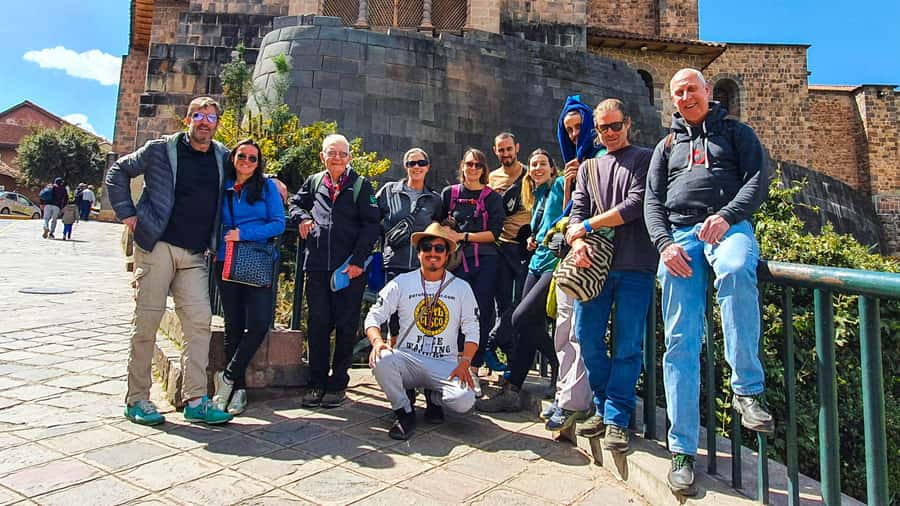
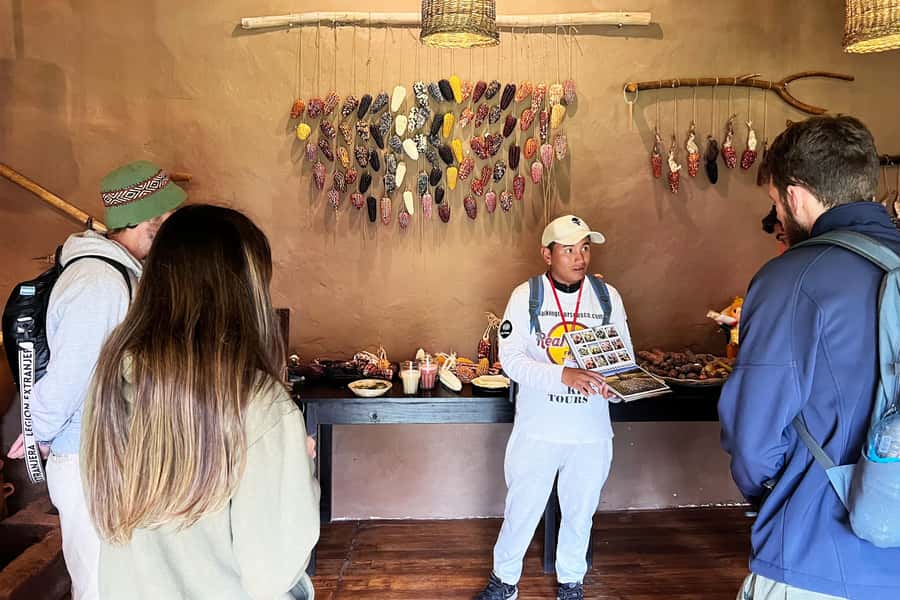
A visit to a luthier’s workshop adds a hands-on cultural note. A luthier makes and repairs musical instruments, and this stop gives you a direct connection to Andean music rather than treating it as background decoration.
The planned experience also includes an Andean music show and city views. In practice, the music stop can vary. One group found the vendor closed and missed the show, although the guide suggested a local dance performance afterward. That replacement became a good evening activity, but it was not the same as the promised workshop visit.
This is the clearest weakness in the itinerary. If the music performance is your main reason for booking, ask at the start of the tour if the venue is open. The guide may be able to explain the current plan, but the stop appears to depend on the operating schedule.
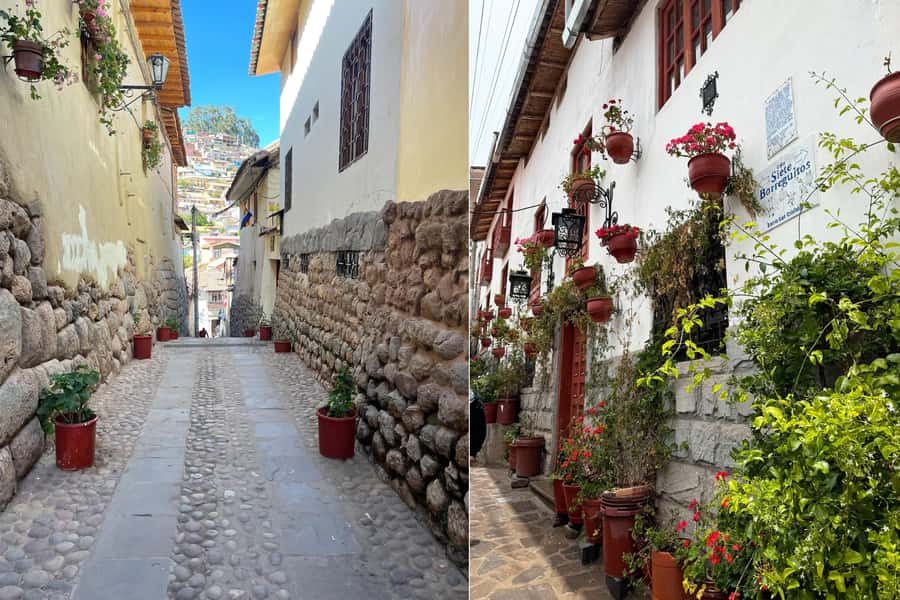
The walk also reaches 7 Borreguitos Street, described as one of the city’s prettiest streets. This is a worthwhile photo stop, but it is best enjoyed as part of the route rather than as a stand-alone attraction. The street gains meaning from the surrounding San Blas walk, the views, and the stories about the neighborhood.
The Temple of the First Inca Ruler
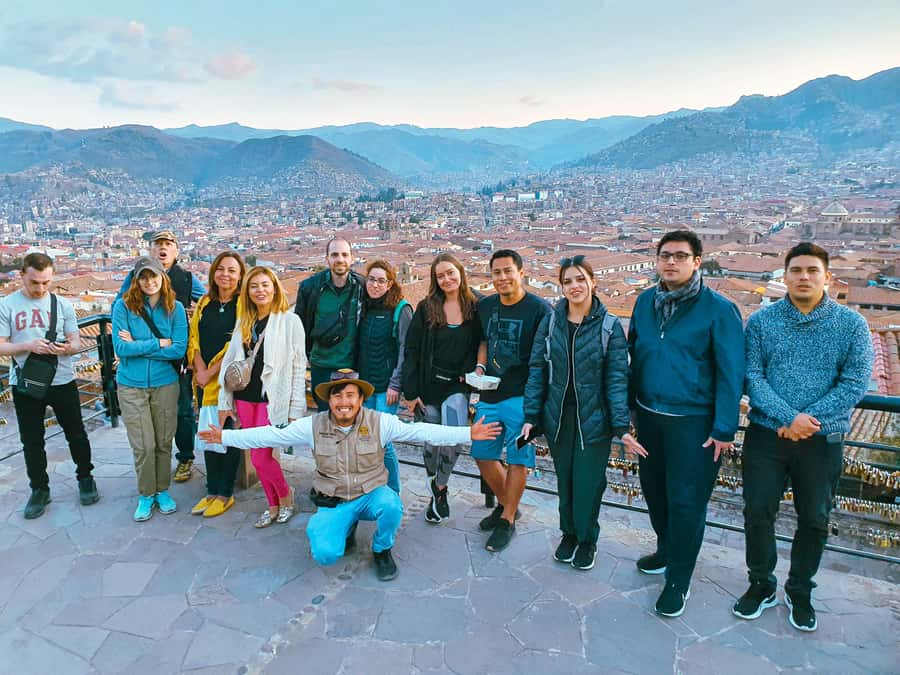
The route continues to the Temple of the First Inca Ruler, Manco Capac. This stop adds an early Inca foundation story to the later colonial and imperial material covered earlier.
The temple visit also helps the walk avoid becoming a simple procession between famous façades. You are moving through different chapters of Cusco’s past: the origin story associated with Manco Capac, the imperial Inca period represented by Qoricancha and the stonework, and the colonial city shown by the Cathedral and Company of Jesus.
The exact amount of time at each location can change. The group may spend longer on questions, views, or the music stop, and another departure may follow a slightly different route. One small English-speaking group found that its route differed from the written description but still covered a great deal of the city. That flexibility can work in your favor, though it means you should not treat every listed stop as guaranteed in precisely the same order.
Finishing with a pisco sour or chicha morada
The tour ends with a choice. A pisco sour is Peru’s best-known national cocktail, while chicha morada is a non-alcoholic drink made from purple corn and commonly served chilled. If you do not drink alcohol, you are not left with an awkward substitute. The non-alcoholic option is part of the plan.
The final toast gives the tour a pleasant social finish. It is not only a drink sample. It gives the group a moment to sit, compare notes, and ask any last questions. The small restaurant setting used by one group was described as charming, which fits the relaxed mood of the ending.
Keep in mind that the drink is included, but further food or drinks are not listed as included. If you want a full meal, plan for that separately.
Guides, language, and group size
Tours are offered in English and Spanish, with a live guide. The small-group limit is 10 people, and English departures can be much smaller. One group had only three participants, making the walk feel close to private.
Several guides have made a strong impression. Erick is described as entertaining and helpful with practical advice. Nilo kept the group in good spirits while explaining the city, and Niki was praised for clear communication. One guide had professional anthropology training, which added depth to the discussion of the Incas and Cusco.
The French option has a special condition: at least four customers are required for it to proceed. French is not listed among the regular language choices, so confirm this point before relying on that departure.
The tour is not suitable for people with hearing impairments, and the activity is not designed for wheelchairs. It is also not recommended for anyone over 95. These restrictions matter because the experience depends on walking, street access, and spoken commentary.
Is $10 a fair price?
At $10 per person, the experience looks like an easy way to see central Cusco without committing to a long day. You get a bilingual guide, the luthier visit, the planned music element, and a pisco sour or chicha morada.
There is one important complication. Some participants understood this as a free walking tour that could be joined in the Plaza de Armas with a tip at the end. Another participant felt that the $10 effectively prepaid the expected tip, then still faced a tip at the end. That makes the price less straightforward than it first appears.
I would ask before starting how payment and tipping work. If the answer is clear and the group is small, $10 can be good value for a guided orientation. If you can join the same route for free and only tip afterward, you may prefer that arrangement. The paid option still offers the convenience of reserving a place, but you should not assume the payment removes any tipping expectation.
Free cancellation up to 24 hours before the tour and reserve-now, pay-later booking add flexibility. Check available start times before committing, especially if you want daylight or a sunset viewpoint.
Who should book this Cusco walk?
I would recommend it to first-time visitors who want a quick introduction before exploring Cusco on their own. It gives you history, neighborhood views, cultural context, and a simple drink stop without taking up a full day.
It also suits people who prefer a guide with a lively approach rather than a formal lecture. The route has enough variety to keep you moving: major churches, Inca masonry, San Blas streets, instruments, music, views, and a local drink.
I would be more cautious if you have limited mobility, if you need a wheelchair-accessible route, or if the Andean music show is the one feature you most want. I would also ask about the tip arrangement before paying, since the cost structure has caused confusion.
Should you book it?
Book this tour if you want a compact, social introduction to Cusco and value a guide who can explain details you might miss alone. The small groups, strong guide roster, San Blas views, Inca stonework, and pisco sour or chicha morada make it a useful first activity.
Skip it if you prefer a museum-heavy visit, need fully accessible streets, or want a guaranteed music performance. For everyone else, confirm the payment and tipping terms, ask if the music venue is open, and wear shoes suited to uneven uphill streets. With those expectations set, this is a lively way to get your bearings in Cusco.
FAQ
Where does the Cusco walking tour meet?
Meet next to the Inca Fountain in the Plaza de Armas. The meeting point coordinates are -13.516772, -71.9787231, and the guide will be holding a white umbrella.
How long does the tour last?
The walking tour lasts two hours.
What languages are available?
The regular tour languages are English and Spanish. A French guided tour requires at least four customers to proceed.
What drinks are included?
You can choose between a pisco sour and a non-alcoholic drink, listed as chicha morada.
Is the music show guaranteed?
The planned itinerary includes an Andean music show, but the venue may be closed. One group was directed to a local dance show instead.
Are museum entry fees included?
No. Museum entry is optional and is not included in the tour.
Is the tour suitable for wheelchair users?
No. The activity is not suitable for wheelchair users or people with mobility impairments. It is also not suitable for babies under one year, people over 95, or people with hearing impairments.
More Walking Tours in Paracas & Ica
- Rio de Janeiro: Rocinha Favela Walking Tour with Local Guide
★ 4.8 · 3,052 reviews - Rio De Janeiro: Half-Day Rocinha Favela Walking Tour
★ 4.7 · 2,272 reviews - Buenos Aires Hop-On Hop-Off Bus, Free Walking Tours & Discounts
★ 4.5 · 2,218 reviews - Buenos Aires: La Boca Guided Walking Tour in English
★ 4.8 · 1,587 reviews
More Historical Tours in Paracas & Ica
- Cartagena: Historic Center and Getsemaní Shared Walking Tour
★ 4.9 · 2,716 reviews - Santiago: Guided Walking Tour of the Historical Old Town
★ 4.8 · 459 reviews - Maria Fumaça – Wines and History
★ 4.0 · 242 reviews - Rio de Janeiro: Historic Rio and Santa Teresa Half-Day Tour
★ 4.4 · 228 reviews
Just added around Paracas & Ica
- 10-Day Taste Peru Experience: Lima, Nasca, Cusco & Machu Picchu★ 5.0 · 63 reviews
- Winery and Pisco Distillery tour★ 5.0 · 82 reviews
- Sandboard and SandSki Experience in Huacachina★ 5.0 · 46 reviews
- Professional Sandboarding and Sandskiing Tour, Ica, Peru★ 5.0 · 42 reviews
- Dune buggy in Huacachina★ 5.0 · 42 reviews
- Glamping in Huacachina Desert★ 5.0 · 70 reviews
- Nazca Lines and Dune Buggy (Huacachina) from Ica★ 5.0 · 56 reviews
- Ballestas Islands & National Reserve of Paracas from Ica★ 4.5 · 66 reviews
Historical Tours, compared.
Historic Center and Getsemaní Shared Walking Tour
Read our review →
Lima’s Vibrant Heritage: Exploring the City’s Landmarks Half-day
Read our review →
Lima: Historic Center Street Food, Market, and Eateries Tour
Read our review →
Nazis in Buenos Aires: a historical walking tour
Read our review →
Browse the lists this tour appears in