
Reviewed · MACHU PICCHU TOURS
Salkantay Trek Challenge – 3 Days / 2 Nights
The Salkantay Pass at 4,630 meters is the main event here. You leave Cusco at 2:30 a.m., climb through stark high Andes, then drop into warm forest before reaching Machu Picchu in only three days. It is a fast, demanding route with big scenery and very little wasted time.
I like the way this trip removes much of the usual fuss: meals, transfers, a guide, safety gear, lodging, and a horse for up to 5 kilograms of luggage are handled for you. I also like the route’s sharp change of scenery, from glaciers and high mountain air to waterfalls, coffee farms, and the Urubamba River.
The catch is simple: this is not a gentle introduction to hiking. The first day is long and hard, the altitude is serious, and you will sleep little. Arrive in Cusco at least two days early, train beforehand, and treat the $680 price as payment for support and convenience, not a bargain weekend walk.
Key points to know before you book
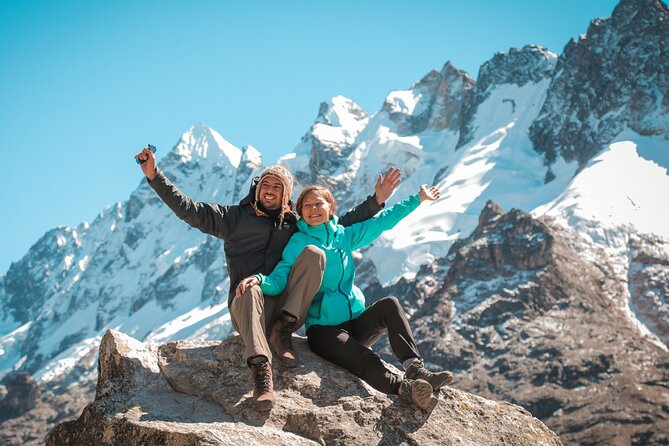
- The first day is the real test: You climb from Soraypampa to the 4,630-meter Salkantay Pass, then continue downhill for hours.
- The scenery changes by the hour: Snowy peaks give way to cloud forest, waterfalls, orchids, coffee plantations, and tropical river country.
- Support is unusually strong for a short trek: A guide, cooks, porters, horse support, meals, first aid, oxygen, walkie-talkies, and satellite phones are included.
- You carry only a small personal load: Horses transport a duffel bag of up to 5 kilograms, while you hike with your day pack.
- The final approach to Machu Picchu is comfortable: You stay in a hotel in Aguas Calientes and take the bus up to the citadel.
- The schedule is tight: Three days gets you to Machu Picchu quickly, but it leaves little room for fatigue, delays, or lingering over the scenery.
What $680 buys you on this Salkantay route
At $680 per person, this is not the cheapest way to reach Machu Picchu. It is also not simply a walking tour with a guide. The price covers nearly every major moving part: private transport, entrance fees, two nights of accommodation, meals, trail support, the train from Aguas Calientes to Ollantaytambo, and transport onward to Cusco.
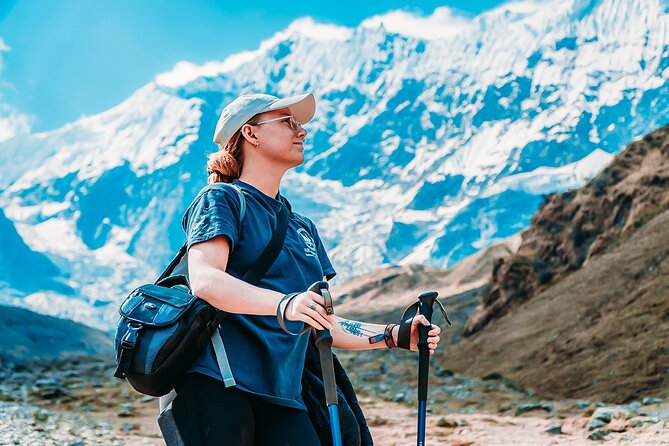
You also get a horse to carry up to 5 kilograms of personal gear. That matters on the first day, when every extra pound makes the climb harder. You still need a day pack with water and essentials, but you do not have to haul your full kit over the pass.
The practical value is in the organization. A private camping setup includes a dining room, kitchen, tables, and chairs. Cooks prepare the included meals, and tea time and trail snacks help keep your energy up. Sleeping bags, trekking poles, a rain poncho, and a backpack cover are supplied, so you do not need to buy or rent every piece of equipment separately.
For a short, high-altitude route, that safety net is important. The crew carries a first aid kit, oxygen, walkie-talkies, and emergency satellite phones. None of this makes the trek easy, but it does make the hard parts more manageable.
More Hiking Tours in Machu Picchu
- Choquequirao Trek 4 days and 3 nights
★ 5.0 · 81 reviews - Machu Picchu: 5-Day Salkantay Trek with Panoramic Train
★ 5.0 · 79 reviews - Ancascocha Trek To Machu Picchu 4 Days And 3 Nights
★ 5.0 · 77 reviews
Day one: from Cusco to the 4,630-meter Salkantay Pass
Pickup begins around 2:30 a.m., with a stated start time of 3:00 a.m. This is an early morning by any standard. You ride from Cusco toward Soraypampa, arriving at about 3,900 meters, or 12,795 feet.
The early transfer saves daylight for the hardest hiking. It also means your first challenge may be staying awake long enough to eat breakfast. Start with a proper night of rest, and keep water and a warm layer close during the drive.
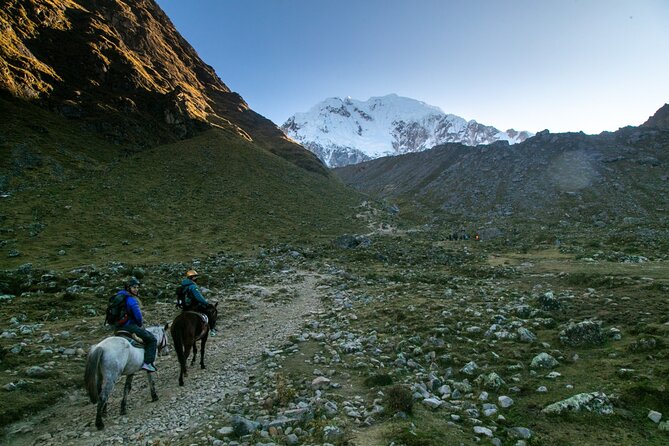
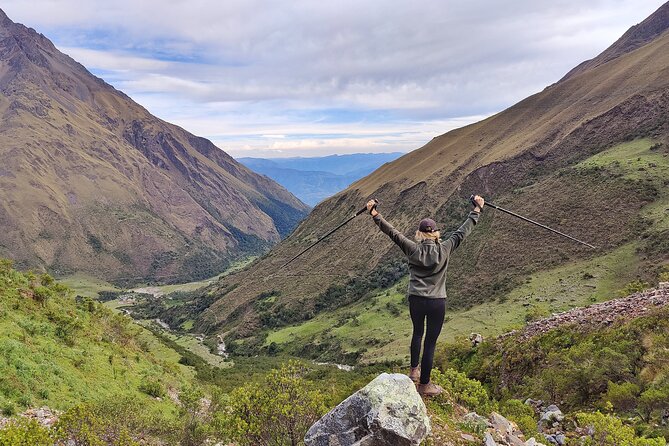
At Soraypampa, you have an energy-focused breakfast before starting up the 7 Serpents Trail. The route climbs toward Abra Salkantay, the high point of the trip. At 4,630 meters, or 15,190 feet, the air is thin enough to affect even fit hikers.
The views are the payoff. You hike beneath imposing Andean peaks and glaciers, with the scene becoming more severe and open as you gain height. This is the part that gives the trek its sense of scale. You are not walking through a mild valley with a distant mountain view. You are moving directly into high mountain country.
The climb is also where altitude problems are most likely to appear. A strong physical condition helps, but fitness does not fully prevent altitude sickness. That is why arriving in Cusco at least two days early is more than a suggestion. Give your body time to adjust before asking it to work above 4,600 meters.
After reaching the pass, the route turns sharply downhill. Lunch is served at Wayracmachay, followed by a long descent toward the high Amazon forest. The temperature rises as you lose altitude, but downhill walking can be tough on tired knees and feet.
The first day is listed at about 10 hours, and one account of the route describes roughly 32 miles across the first two days. Do not read this as a relaxed scenic stroll. The combination of altitude, distance, and uneven ground makes day one the point where preparation matters most.
You finish at Mountain Sky View in Collpapampa, at roughly 2,950 meters. The setting is warmer and more wooded than the pass. Dinner under the stars gives you a pleasant finish, but do not expect a long evening. You will likely be ready for sleep.
Mountain Sky View and the first night outdoors
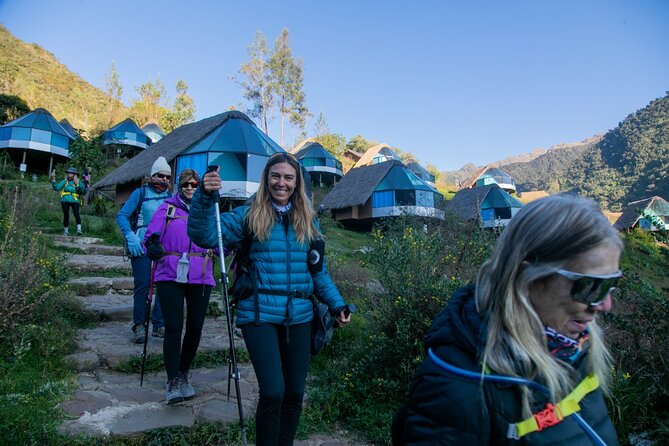
Mountain Sky View is an Andean hut and camp rather than a conventional hotel. The attraction is the setting and the feeling of being out in the mountains, with forest sounds around you and a private camping operation taking care of meals and basic camp comfort.
The included sleeping bag helps, and the dining room, kitchen, tables, and chairs mean you are not expected to prepare your own food or eat on the ground. That support matters after the first day.
The main drawback is limited recovery time. This three-day version compresses a route that is often taken at a slower pace. You should expect an intense rhythm: early starts, many hours on foot, and a second day that still includes a substantial walk.
Day two: forest paths, waterfalls, and Lucmabamba coffee
The second morning begins with breakfast at Mountain Sky View. The route now moves through the Santa Teresa Valley, where the air is warmer and the scenery becomes more tropical.
The first section is described as a leisurely hike, but the overall day is still active. You pass waterfalls, orchids, and coffee plantations on the way to La Playa. This is a welcome contrast to the bare, cold heights of the Salkantay Pass.
At Lucmabamba, you stop for lunch made with local products and see a demonstration of artisanal coffee making. It is one of the more grounded parts of the trip. Instead of only looking at mountains from a trail, you get a closer look at a local crop and a small-scale production process.
This stop also gives the second day some cultural and local flavor. The historical interpretation at Machu Picchu is stronger than the cultural explanation along the trail, so listen closely and ask questions if you want more context about the farms, villages, and communities you pass.
From La Playa, you continue toward Hidroeléctrica. The day’s walking includes about five hours through the coffee and forest area, followed by around three hours along the Urubamba River. The river section is hot, humid, and very different from the morning above the tree line.
At Hidroeléctrica, you can optionally pay the train operator for a train transfer to Aguas Calientes. Otherwise, you continue on foot beside the river. The walk is included in the planned route, while the train is an extra cost paid directly on site.
Walking to Aguas Calientes gives you a gradual arrival rather than a quick train ride. You follow tropical river country and finish in the town at the foot of Machu Picchu. It also adds to an already long day, so the optional train may be worth considering if your legs are worn out or if the schedule has slipped.
You spend the night in a hotel in Aguas Calientes. This is a useful change after the mountain hut. Dinner with the group gives you a chance to recover and prepare for the next morning, but again, sleep may be short. The route is designed to reach Machu Picchu quickly, not to provide leisurely mornings.
More Hiking Tours in Peru
- 4 Day Inca Trail Trek to Machu Picchu Multi day tour
★ 5.0 · 70 reviews - Salkantay Trek 4 Days to Machu Picchu by Glamping Sky Lodge Dome
★ 5.0 · 68 reviews - 2 Day Hiking Short Inca Trail to Machu Picchu
★ 5.0 · 66 reviews - Classic Choquequirao Trek – 5 Days / 4 Nights
★ 5.0 · 52 reviews
Day three: the bus to Machu Picchu and a guided citadel visit
You begin with a light breakfast before taking the included bus from Aguas Calientes to Machu Picchu. The ride climbs through cloud forest and avoids another steep walk before the main visit.
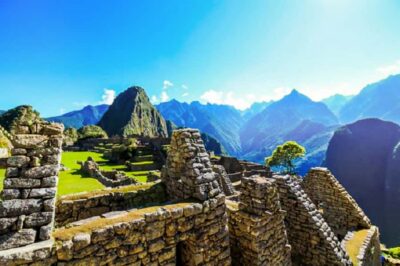
The tour includes a two-hour guided visit inside the Historic Sanctuary of Machu Picchu. You see temples, terraces, and sacred areas while your guide explains the Inca site. This guided time is especially useful after the physical effort of the first two days, since it gives the trip a clear historical finish rather than leaving you to wander without context.
The standard entry is Circuit 2 for bookings made three months ahead, when space is available. If Circuit 2 has sold out, the booking moves first to Circuit 3, then Circuit 1. This is worth checking before you pay, because the circuit determines which parts of the citadel you can visit.
Machu Picchu tickets sell out quickly, and your passport name, number, expiry date, and country are required for everyone at booking. Keep your passport current and ready for the travel date. A ticket is not useful if your identification details do not match.
After the visit, you return to Aguas Calientes for lunch. Lunch and dinner on this final day are not included, so budget for them separately. You then take a tourist-class train to Ollantaytambo, using either the Voyager or Expedition service.
At Ollantaytambo, private transport takes you back to Cusco. The return is not a direct train to your hotel, so expect another transfer after the rail journey. The full day combines a major archaeological site, lunch, train travel, and a road transfer, making it a fitting but busy end to the trip.
The optional bus from Machu Picchu back to Aguas Calientes is also paid directly on site. The included bus is for the journey up to Machu Picchu, not a complete set of return rides.
A guide can make or break the hard sections
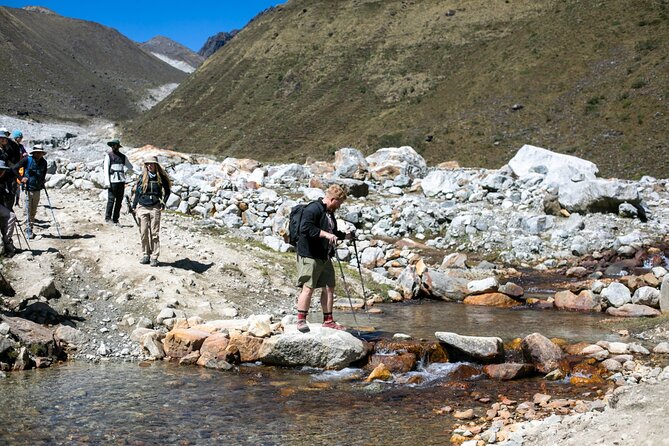
The guide is central to this experience. On a route this demanding, you need someone who can keep the pace sensible, explain what is happening, and watch for signs that the altitude or exertion is becoming a problem.
Several guides are specifically praised in the supplied feedback. Marco is described as organized, supportive, and energetic. Guido is noted for his kindness, patience, and help at the pass. Cesar Quispe is praised for keeping spirits up during the longest hiking sections and for adding historical, cultural, and spiritual context.
You cannot select a particular guide from the information provided, so do not book on the assumption that Marco, Guido, or Cesar will lead your departure. Still, their strengths show what to expect from a good guide on this route: practical help during the climb, steady encouragement, and more than a basic list of dates and names.
The group size is capped at 12 people. That is small enough for a more personal feel and easier communication on the trail. It also means the group’s pace matters. If one person is struggling, the schedule can feel tighter for everyone.
Food, luggage, and safety on a hard three days
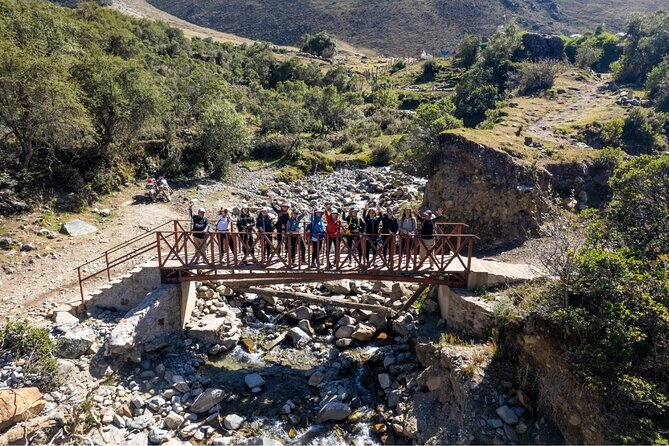
Three breakfasts, two lunches, and two dinners are included. The meals cover the main hiking period, with lunch and dinner on the last day left to you. Vegetarian and vegan meals are available if requested at booking.
The horse carries a duffel bag of up to 5 kilograms per person. Pack that weight carefully. Put spare clothes, sleeping items, and anything you will not need during the day in the duffel. Keep water, medication, rain protection, documents, and warm layers in your own day pack.
The supplied sleeping bag and trekking poles are useful inclusions. So are the rain poncho and backpack cover, since weather can change quickly between high mountains and forest. You still need your own hiking clothing and personal gear.
The safety equipment is reassuring, but it should not encourage overconfidence. First aid, oxygen, radios, and satellite phones are emergency tools, not substitutes for preparation. You need good general health and strong physical fitness to enjoy this trek.
Who should book this three-day challenge
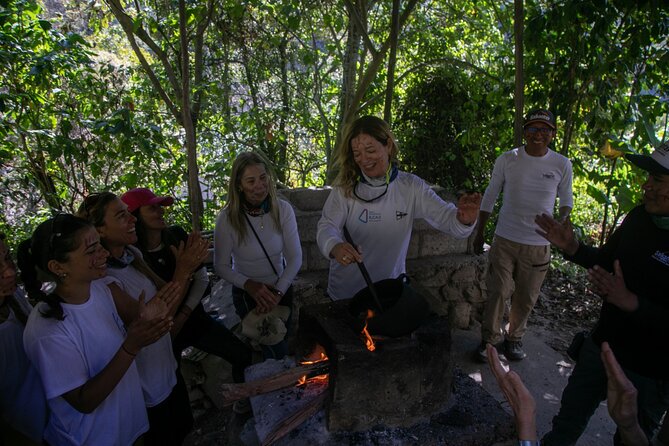
I would recommend it to a fit hiker who wants Machu Picchu reached by foot but has only three days available. It also suits someone who values organized support, does not want to carry all their equipment, and likes a route with dramatic changes in climate and scenery.
It can work for a less experienced hiker who trains first and acclimatizes properly. The provided feedback includes a beginner who completed it with the help of the guide, but other accounts stress the difficulty of the altitude and distance. Treat doable as different from easy.
I would not choose this version if you live a very sedentary life, dislike early mornings, or want generous time for photography and rest. The classic longer Salkantay route would likely provide a gentler pace, but this three-day option is designed for efficiency and challenge.
Book at least three months ahead if Machu Picchu Circuit 2 matters to you. Confirmation is subject to availability and may arrive within 48 hours of booking. The cancellation policy is strict: the experience is non-refundable and cannot be changed, except that poor weather or failure to meet the minimum group size can lead to another date or a full refund.
Should you book the Salkantay Trek Challenge?
Book it if you want a serious mountain trek, have limited time, and value having the hard logistics handled. The strongest reasons are the 4,630-meter pass, the striking change from glaciers to coffee country, the small group, the luggage support, and the well-equipped crew.
Skip it if you want an easy route to Machu Picchu or if you have not allowed time to adjust to Cusco’s altitude. At $680, the trip earns its price through transport, meals, lodging, equipment, staff, and safety support. The real cost is physical: three packed days, long hiking hours, and little sleep.
FAQ
How long is the Salkantay Trek Challenge?
The experience lasts three days and two nights.
What time does pickup begin?
Pickup begins around 2:30 a.m., with a stated start time of 3:00 a.m. in Cusco.
How high is the Salkantay Pass?
The pass reaches 4,630 meters, or about 15,190 feet.
How far should I hike on the first day?
The first day is scheduled for about 10 hours, including the ascent to the pass and the descent toward the forest.
Where do I sleep?
You spend one night at Mountain Sky View in Collpapampa and one night in a hotel in Aguas Calientes.
Is food included?
Three breakfasts, two lunches, and two dinners are included. Lunch and dinner on the final day are not included.
Can I choose a vegetarian or vegan meal?
Yes. Vegetarian and vegan options are available if you request them when booking.
How much luggage can the horse carry?
The horse carries a duffel bag with up to 5 kilograms, or 11 pounds, of personal gear.
Is the train from Hidroeléctrica to Aguas Calientes included?
No. That train is optional and must be paid directly to the train operator.
What Machu Picchu circuit is included?
Circuit 2 is included for bookings made three months ahead when available. If it is unavailable, the booking uses Circuit 3, then Circuit 1.
More 3-Day Trips in Machu Picchu
- Cusco : Sacred Valley & Inca Trail to Machu Picchu 3 days
★ 5.0 · 57 reviews - Tambopata Peruvian Amazon Jungle for Three Days/Two Nights
★ 4.5 · 329 reviews - San Pedro de Atacama: 3-Day Activity Combo with 4 Tours
★ 4.6 · 247 reviews - 3-Day Tour to Salt Flats and Lagoons
★ 4.5 · 168 reviews
More Inca Trail Treks in Machu Picchu
- Cusco: 4-Day Inca Trail to Machu Picchu with Accommodation
★ 4.8 · 432 reviews - Cusco: Machu Picchu 2-Day Inca Trail with Panoramic Train
★ 4.9 · 260 reviews - From Cusco: 2-Day Inca Trail to Machu Picchu
★ 4.2 · 244 reviews - Machu Picchu: Inca Trail 2-Day Overnight Guided Tour
★ 4.9 · 203 reviews
Just added around Machu Picchu
- 10-Day Taste Peru Experience: Lima, Nasca, Cusco & Machu Picchu★ 5.0 · 63 reviews
- Wonderful Cusco 5-Day Tour with Entrance to Machupicchu★ 5.0 · 46 reviews
- Machu picchu one day by train all included★ 4.5 · 53 reviews
- A Day at Machu Picchu, Journey to the Heart of the Andes★ 5.0 · 55 reviews
- Tour to Machupicchu By Train Full-Day★ 4.5 · 56 reviews
- Tour To Machupicchu 2 Days by Train★ 5.0 · 64 reviews
- Machu Picchu 1 Day Tour from Cusco by Train★ 5.0 · 44 reviews
- 2-Day Tour: Sacred Valley & Machu Picchu – All Tickets Included★ 5.0 · 42 reviews
Machu Picchu Tours, compared.
From Cusco: Full-Day Group Tour of Machu Picchu
Read our review →
Machu Picchu: Full-Day Tour from Cusco with Optional Lunch
Read our review →
Cusco: 4-Day Inca Trail to Machu Picchu with Accommodation
Read our review →
From Cusco: 2-Day Trip to the Sacred Valley and Machu Picchu
Read our review →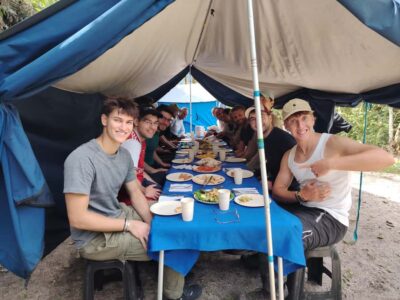
Cusco: Machu Picchu 2-Day Inca Trail with Panoramic Train
Read our review →
Machu Picchu: Inca Trail 2-Day Overnight Guided Tour
Read our review →Browse the lists this tour appears in