
Reviewed · MACHU PICCHU TOURS
Salkantay Trek 4 Days to Machu Picchu by Glamping Sky Lodge Dome
The most memorable feature here is the change in scenery. In four demanding days, you move from snow-bright Andean peaks and a 4,650-meter pass to cloud forest, waterfalls, tropical fruit, and finally Machu Picchu. The Sky Lodge dome nights give you a warmer, more comfortable base than a standard tent, though the cold at Soraypampa is still real.
I like the excellent mountain support team, with guides such as Fernando, Nildo, Jose, and Steven praised for patience, humor, altitude advice, and clear explanations. I also like the food setup: a cook travels with the group and serves three breakfasts, three lunches, three dinners, and hot afternoon tea. The main drawback is the physical demand: long uphill stretches, high altitude, early starts, and a strict non-refundable booking policy.
Key points to know before you book
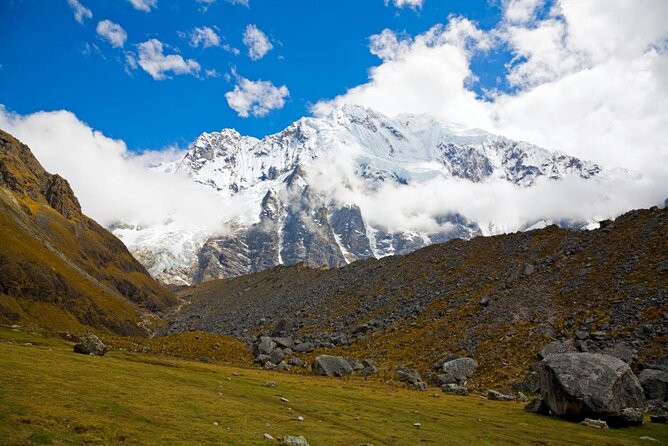
- The 4,650-meter Salkantay Pass is the hardest point: Snow is possible, and altitude makes the four-hour climb feel longer than the distance suggests.
- Two nights use Sky Lodge domes: This adds comfort and hot water to a high-altitude trek, but you still need a sleeping bag rated to about -11 C.
- The scenery changes every day: You’ll see Humantay and Salkantay peaks, cloud forest, waterfalls, tropical plants, and Machu Picchu.
- Guiding is a major strength: Fernando, Nildo, Jose, Steven, and Adela have all been praised for support, history, safety tips, and encouragement.
- The package covers most costly pieces: Machu Picchu entry, transport, meals, camping gear, porters or horses, a hotel night, and the return train are included.
- The final morning is very early: You can walk about 90 minutes to Machu Picchu or take the first bus at 5:30 a.m., depending on the plan arranged with your guide.
What the four-day Salkantay Trek feels like
This is not a gentle route to Machu Picchu. It is a compact high-altitude trek with steep climbs, rough mountain paths, early mornings, and a large change in temperature and vegetation.
The reward is variety. The classic Inca Trail stays focused on archaeological sites and mountain passes. This route gives you a wider natural show: giant snow peaks, a stark pass, damp forest, rushing water, fruit-growing valleys, and the final approach to Machu Picchu.
The trip costs $761.91 per person. That is a serious amount, but it includes a lot: pickup, transport toward the trail, two dome nights, one hotel night in Aguas Calientes, meals, guides, cooking staff, pack animals or porters for up to 7 kilograms of personal belongings, Machu Picchu entry, the return train, and the bus back to Cusco.
You still pay for breakfast on the first day, lunch on the final day, and the 20-sol Salkantay and Humantay entrance charge. You should also budget for a sleeping bag if you do not have one, personal equipment, drinks, and optional porter help.
The maximum group size is 19 people. That is large enough for a social hike, but small enough for a guide to keep track of the group. An assistant guide is included when the group has more than eight people.
More Hiking Tours in Machu Picchu
- Salkantay Trek Challenge – 3 Days / 2 Nights
★ 5.0 · 101 reviews - Choquequirao Trek 4 days and 3 nights
★ 5.0 · 81 reviews - Machu Picchu: 5-Day Salkantay Trek with Panoramic Train
★ 5.0 · 79 reviews
Day one: Mollepata, Cruzpata, and the cold at Soraypampa
The day begins early, with hotel pickup at about 4:30 a.m. A roughly three-hour drive takes you toward Mollepata, where the walking starts after breakfast. The transport details also refer to a tourist bus from Cusco to Challacancha, so use the pre-trek briefing to confirm the exact pickup route and trailhead for your departure.
After breakfast, the cook and horseman organize the camping and kitchen gear. You then begin with around three hours of uphill walking toward Cruzpata. This is a useful first test of your legs and lungs, especially if you have not had much time to adjust to Cusco’s altitude.
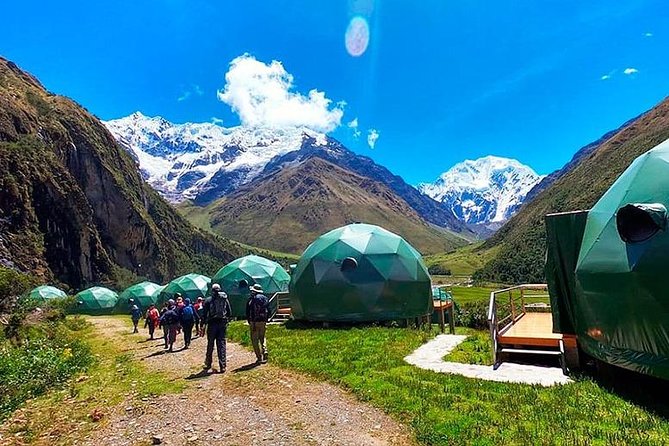
Lunch comes with wide views of Humantay, at about 4,120 meters, and Salkantay, at about 6,271 meters. These are not minor background hills. They dominate the route and give you a clear sense of the scale of the Andes.
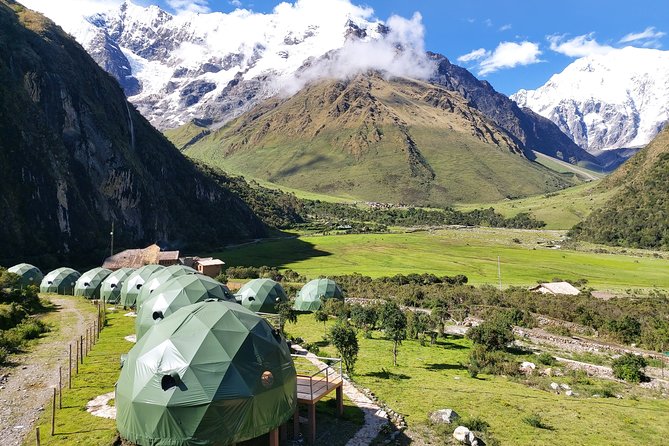
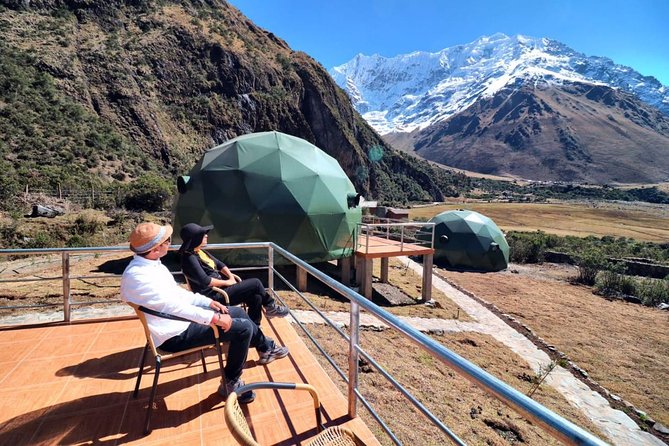
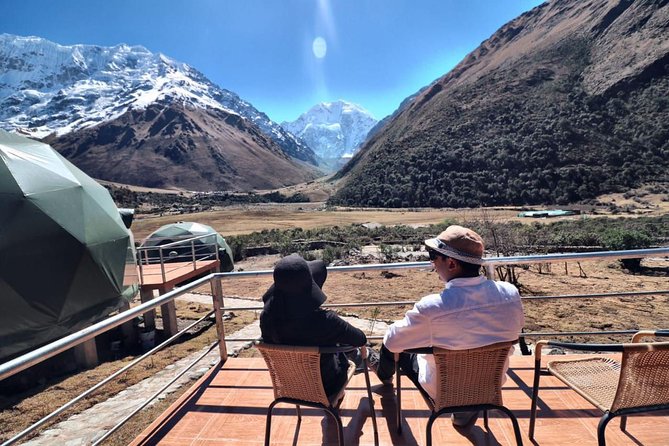
The day continues toward Soraypampa, at about 3,800 meters. It is the highest and coldest camping area of the trip, so this is where your clothing and sleeping bag matter most. The dome helps with comfort, but it does not turn a high mountain night into a mild one.
Bring your warmest layers to the top of your pack. A fleece or windproof jacket, gloves, warm hat, dry socks, and a sleeping bag rated to -11 C are sensible requirements, not overpacking. A hot drink after walking can feel like a small luxury here.
Day two: the 4,650-meter Salkantay Pass
Day two is the physical centerpiece. Breakfast is followed by a start at about 5:30 a.m., then roughly four hours of climbing toward the Salkantay Pass.
At 4,650 meters, the pass sits between Salkantay on the right and Tucarhuay on the left. Snow is possible. The views are powerful, but altitude can make this section slow and uncomfortable, even for people who are fit at home.
This is the day when your guide’s judgment matters. The team has been praised for checking on tired hikers, suggesting coca leaves, offering encouragement, and adjusting the pace to different fitness levels. Guides including Fernando and Nildo have received especially warm praise for staying patient and attentive when the climb became exhausting.
After a rest at the pass, the route drops downhill through cloud forest toward Huayracpunku for lunch. That descent brings relief to some people, but it can be hard on knees and ankles. Trekking poles are worth bringing.
After lunch, you continue toward the upper jungle. At Chaullay, local transport carries you for about an hour to the Loreta La Playa coffee campsite. This vehicle transfer shortens the walking day and helps the four-day schedule work, but it also means this is not a fully continuous foot journey.
Day three: streams, waterfalls, and the upper jungle
The third morning begins at about 6:30 a.m. From the coffee campsite, you walk for around six hours through the upper jungle.
You cross the Lluskamayo River and smaller brooks, with waterfalls, tropical plants, fruit, and greener valleys replacing the bare high-altitude terrain. This is one of the best features of the route because the change happens gradually. You can feel the climate shift as the cold mountain zone gives way to warmer, wetter country.
The walking is still serious, but the route is different from day two. You are no longer focused on one huge pass. Instead, the day is about sustained movement, wet ground, stream crossings, and changing vegetation.
Ask your guide about water during the briefing. Bottled water is sold at several points, but you can also bring sterilizing tablets. Carrying enough drinking water matters, especially after the pass and during warmer sections.
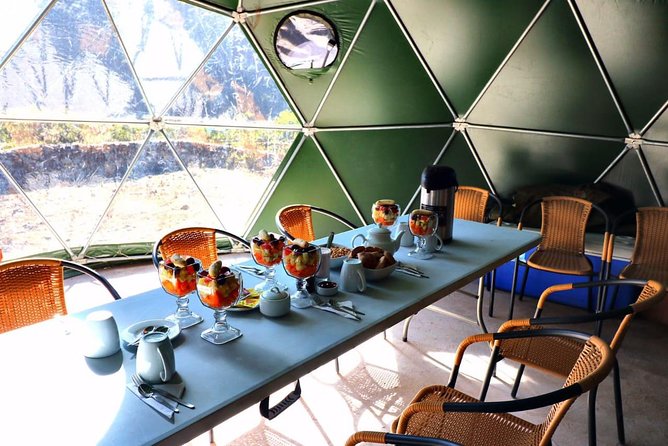
The food deserves attention here. The cook travels with the group and prepares the meals in mountain conditions. Past departures have had hot soups, filling main dishes, vegetables, and desserts, with hot afternoon tea included. Three breakfasts, three lunches, and three dinners are covered, and vegetarian meals are available at no extra cost.
You should still pack small personal snacks if you know you need food between meals. The provided meals support the trek, but everyone’s appetite and timing differ on a long walking day.
More Hiking Tours in Peru
- Ancascocha Trek To Machu Picchu 4 Days And 3 Nights
★ 5.0 · 77 reviews - 4 Day Inca Trail Trek to Machu Picchu Multi day tour
★ 5.0 · 70 reviews - 2 Day Hiking Short Inca Trail to Machu Picchu
★ 5.0 · 66 reviews - Classic Choquequirao Trek – 5 Days / 4 Nights
★ 5.0 · 52 reviews
Day four: the early approach to Machu Picchu
The final morning starts around 4 a.m., with breakfast at about 4:30. You then have two choices.
The walking option takes around an hour and a half uphill to Machu Picchu. The bus option begins with the first bus at 5:30 a.m. and takes about 25 minutes. The walking route gives you a final physical effort before entering the site. The bus saves energy and may make sense if your legs are worn out after three days.
The attraction of the early start is clear: you are aiming to see Machu Picchu as the morning light arrives. Weather can affect the view, and clouds may cover parts of the ruins, but the timing gives the entrance a quieter, more dramatic feel than arriving late in the day.
Your guide provides a walking tour of roughly two hours. Afterward, you can explore the ruins on your own. The tour information does not specify every circuit or optional mountain ticket, so confirm what your Machu Picchu entry allows before departure, especially if you hope to climb Huayna Picchu or Machu Picchu Mountain.
Lunch on day four is not included. Plan to pay for food after the visit. Later, the expedition train runs from Aguas Calientes to Ollantaytambo, followed by a bus back to Cusco.
The Sky Lodge domes and hotel night
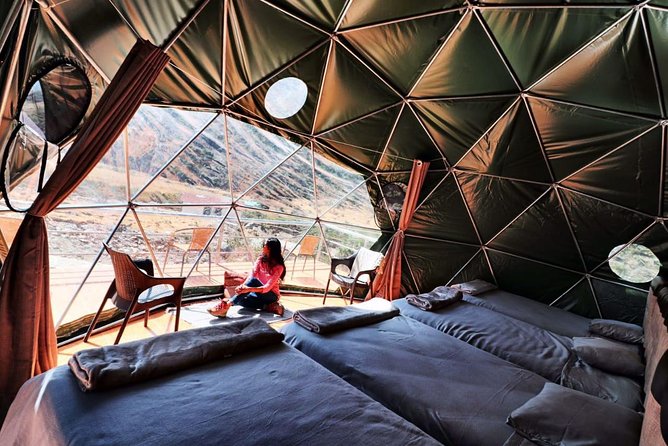
The two Sky Lodge dome nights are a major reason to choose this package over a basic camping trip. You sleep in a more comfortable mountain shelter rather than a standard tent, and hot water is available according to the experience details.
That comfort comes with a reminder: you are still camping at altitude. Facilities are not described in full, so do not expect a full hotel setup in the mountains. Pack a headlamp, towel, soap, toiletries, toilet paper, and warm sleepwear.
The package also includes one night in Aguas Calientes with a private shower and bathroom. That night is well placed. After the early Machu Picchu visit, you get a proper place to wash and rest before the return train and bus journey.
Guides, cooks, and mountain support
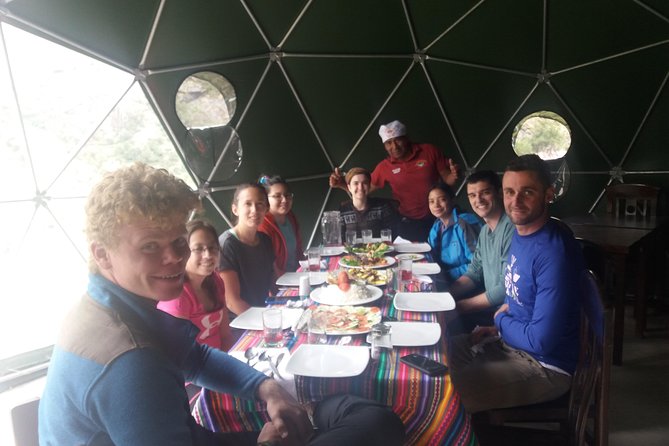
The human side of this trek is one of its strongest features. Fernando has been praised for humor, clear English, historical explanations, altitude support, and personal encouragement. He even joined the group for a game of football during one departure, which tells you something about the friendly tone he can bring to a hard trip.
Nildo has also been singled out for careful planning and attention to small details, especially during the later parts of the route. Jose, Steven, and Adela have been praised for patience, safety tips, and making time to walk beside people one-on-one.
Your exact guide is not guaranteed by the tour details, so you should not book solely on the expectation of one named person. Still, the repeated focus on the guiding team suggests that staff support is a central part of the experience.
The cooks and horsemen matter just as much. The horsemen move food, camping equipment, cooking gear, and personal belongings, with 7 kilograms covered. That support lets you hike with a lighter daypack, though you still carry your water, warm layers, rain gear, and personal essentials.
Fitness, altitude, and what to pack
You need strong physical fitness for this trek. The highest point is 4,650 meters, and the second day includes about four hours of uphill walking before a long descent. No special technical equipment is required, but your regular gear should be good quality and already broken in.
Pack:
- Used trekking boots with reliable grip
- Four pairs of wool or synthetic socks
- A fleece or windproof jacket
- Lightweight layers and two or three T-shirts
- Rain pants and a rain poncho or rain jacket
- Warm gloves and a wool or fleece hat
- Sun hat, sunglasses, sunscreen, and lip balm
- Daypack, walking poles, and headlamp
- Water bottle and sterilizing tablets
- Insect repellent and personal medicine
- Sleeping bag rated to -11 C
- Camera battery, towel, toiletries, and toilet paper
Your clothing needs to handle several climates. You can be cold at Soraypampa, wet in the cloud forest, and exposed to strong sun at high altitude. Layering is more useful than one heavy coat.
The package provides rain ponchos, a duffel bag, first-aid equipment, and emergency oxygen. That is reassuring, but it does not remove the need to take altitude seriously. If you feel unwell, tell your guide early rather than trying to hide it.
Is $761.91 good value?
For a four-day route, the price is not cheap. It becomes easier to justify when you add up what is included: transport from Cusco, guides, cooks, camping equipment, support animals or porters, three days of meals, afternoon tea, two dome nights, a hotel in Aguas Calientes, Machu Picchu entry, the train, and the final bus.
The price is especially useful for someone who wants one booking to handle the difficult logistics. You are not arranging a separate trail permit, Machu Picchu ticket, camp kitchen, support crew, hotel, or train.
The value is weaker if you already own all your gear, want to carry everything yourself, and prefer a smaller private trek. It is also less attractive if you dislike very early starts or want more time in Aguas Calientes.
The experience is non-refundable and cannot be changed for any reason. That is an important financial risk. Check your health, schedule, travel insurance, and Machu Picchu plans carefully before paying.
Who should choose this trek?
I would recommend it to a fit hiker who wants a strong mix of nature and Machu Picchu without giving up basic comfort. The domes, hotel night, meals, and support crew make the route easier to manage than an independent camping trip.
It suits people who enjoy dramatic scenery more than archaeological sites along the walking route. It also works well for solo visitors, since the group structure and guide support provide company and help with logistics.
I would hesitate to recommend it to anyone unaccustomed to altitude, anyone seeking a relaxed holiday, or anyone who needs flexible dates. The 4,650-meter pass and four-day schedule leave little room for a slow pace.
Should you book it?
Book this Salkantay trek if you want a demanding but well-supported route with big mountain views, a clear change into tropical forest, comfortable dome camping, and a carefully arranged finish at Machu Picchu.
Think twice if you want a quiet private walk, dislike cold nights, or are not ready for the altitude. Before booking, confirm the exact pickup point, assigned guide, dome arrangement, Machu Picchu circuit, and transport details at the briefing.
For a strong hiker who wants the Salkantay experience without giving up meals, support staff, a hotel night, and a train back, this package offers solid value.
FAQ
How long is the Salkantay Trek to Machu Picchu?
The experience lasts approximately four days.
What is the highest point of the trek?
The highest point is the Salkantay Pass at about 4,650 meters, or 15,200 feet.
What time does pickup begin?
Hotel pickup is scheduled for about 4:30 a.m., with a stated meeting start time of 5:00 a.m. Confirm the exact arrangement during the pre-trek briefing.
How many nights are spent in Sky Lodge domes?
The package includes two nights in Sky Lodge domes. Room arrangements may be based on two, three, or four beds, subject to request.
Is a hotel night included?
Yes. One night in Aguas Calientes is included, with a private shower and bathroom.
Are meals included?
The package includes three breakfasts, three lunches, three dinners, and three afternoon hot teas. Breakfast on day one and lunch on day four are not included.
Is vegetarian food available?
Yes. A vegetarian option is available at no extra cost.
Is Machu Picchu entry included?
Yes. The Machu Picchu entrance fee is included.
How do I return to Cusco?
The package includes an expedition train from Aguas Calientes to Ollantaytambo, followed by a bus back to Cusco.
What extra entrance fee must I pay?
You must pay a 20-sol entrance charge for the Salkantay and Humantay areas.
More 4-Day Trips in Machu Picchu
- Cusco Sacred Valley and Machupicchu 4 Days
★ 5.0 · 80 reviews - Classic Inca Trail 4 Days to Machu Picchu
★ 5.0 · 69 reviews - 4 Day Inca Trail To Machu Picchu – Private Service
★ 5.0 · 68 reviews - Classic Inca Trail 4 days to Machu Picchu
★ 5.0 · 65 reviews
More Inca Trail Treks in Machu Picchu
- Cusco: 4-Day Inca Trail to Machu Picchu with Accommodation
★ 4.8 · 432 reviews - Cusco: Machu Picchu 2-Day Inca Trail with Panoramic Train
★ 4.9 · 260 reviews - From Cusco: 2-Day Inca Trail to Machu Picchu
★ 4.2 · 244 reviews - Machu Picchu: Inca Trail 2-Day Overnight Guided Tour
★ 4.9 · 203 reviews
Just added around Machu Picchu
- 10-Day Taste Peru Experience: Lima, Nasca, Cusco & Machu Picchu★ 5.0 · 63 reviews
- Wonderful Cusco 5-Day Tour with Entrance to Machupicchu★ 5.0 · 46 reviews
- Machu picchu one day by train all included★ 4.5 · 53 reviews
- A Day at Machu Picchu, Journey to the Heart of the Andes★ 5.0 · 55 reviews
- Tour to Machupicchu By Train Full-Day★ 4.5 · 56 reviews
- Tour To Machupicchu 2 Days by Train★ 5.0 · 64 reviews
- Machu Picchu 1 Day Tour from Cusco by Train★ 5.0 · 44 reviews
- 2-Day Tour: Sacred Valley & Machu Picchu – All Tickets Included★ 5.0 · 42 reviews
Machu Picchu Tours, compared.
From Cusco: Full-Day Group Tour of Machu Picchu
Read our review →
Machu Picchu: Full-Day Tour from Cusco with Optional Lunch
Read our review →
Cusco: 4-Day Inca Trail to Machu Picchu with Accommodation
Read our review →
From Cusco: 2-Day Trip to the Sacred Valley and Machu Picchu
Read our review →
Cusco: Machu Picchu 2-Day Inca Trail with Panoramic Train
Read our review →
Machu Picchu: Inca Trail 2-Day Overnight Guided Tour
Read our review →Browse the lists this tour appears in