
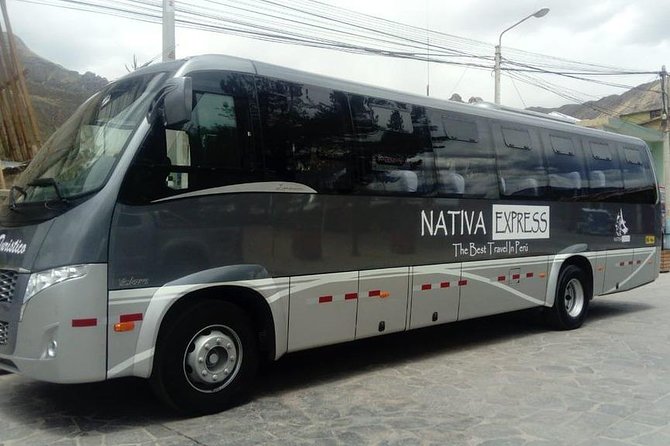
Reviewed · COLCA CANYON TOURS
Turist Bus Colca Canyon (Chivay) To Puno
The best part of this Chivay to Puno bus ride is that it turns a long transfer into an afternoon of Andean sightseeing. You stop at Abra Patapampa, high above the valleys, then watch for vicuñas, llamas, alpacas, and flamingos before reaching Puno. I like the bilingual guide service and the fact that the bus includes a toilet, charging points, and air conditioning.
I also like the simple logistics: meet beside the church on Chivay’s main square, leave around 1:15 pm, and reach Puno around 7:00 to 7:30 pm. The main caution is that snacks, water, and Wi-Fi may not always be offered as expected, so bring your own food, water, and offline work. Road construction can also stretch the ride to about seven and a half hours.
Key points before you book
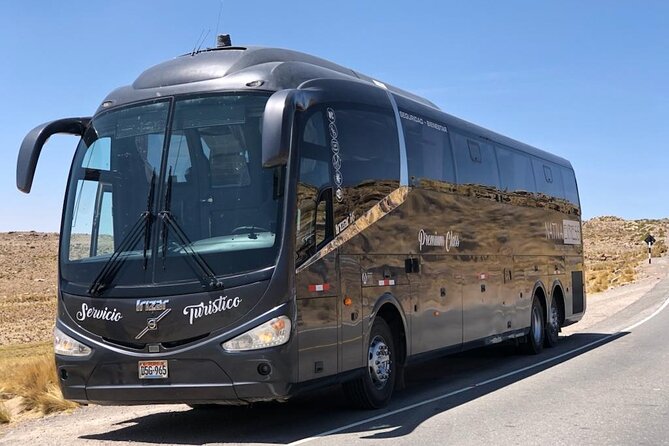
- Abra Patapampa reaches the high Andes: Stop for views of Ampato, Sabancaya, Hualca Hualca, Mismi, and the Chila range.
- Four sightseeing stops break up the ride: You visit Abra Patapampa, Tocrapampa, Patahuasi, and Lagunillas.
- Wildlife is part of the route: Expect llamas and alpacas, with a chance of spotting vicuñas, guanacos, foxes, or Andean flamingos.
- The bus is set up for a long afternoon: Air conditioning or heating, Wi-Fi, charging points, reading lights, and an onboard toilet are included.
- Central Puno hotel service may be possible: Drop-off can be arranged if your hotel is in Puno’s Historic Center.
- Bring backup supplies: The advertised water, snacks, and Wi-Fi may not always be available.
Why this is more than a basic Chivay to Puno transfer
The road from Chivay to Puno crosses some of the most open and memorable country in southern Peru. You are not simply sitting on a bus for six hours. You are climbing toward broad high-altitude plains, passing volcanoes and wetlands, and stopping at places where the scenery changes quickly.
At $41.03 per person, this is a good value if you need to make the journey anyway. A basic transfer would get you from one city to the next, but this service adds four stops and a bilingual guide. You also avoid arranging separate transport to several remote viewpoints.
The value depends on what you want from the day. If you need a fast, private ride, this is not the best choice. The schedule is fixed, the group can reach 40 people, and road conditions may affect arrival time. If you want your transfer to include explanations, photo stops, and a look at the high Andes, the extra time is well spent.
The experience has a 4.8 out of 5 rating from 83 ratings, with 95 percent of customers recommending it. The most praised points are the comfortable bus, the helpful guide, and the assistance with onward plans and accommodation. That human help can matter in Puno, especially if you are arriving late in the day and still need to sort out your hotel connection.
More Colca Canyon trips:
- From Arequipa: Colca Canyon Full-Day Guided Tour with Meals
★ 4.5 · 982 reviews - 2-Day Tour Colca Canyon in Arequipa with end in Puno
★ 4.6 · 248 reviews - From Arequipa: 2-Day Colca Canyon Trekking Tour
★ 4.8 · 243 reviews
Meeting in Chivay at 12:30 pm
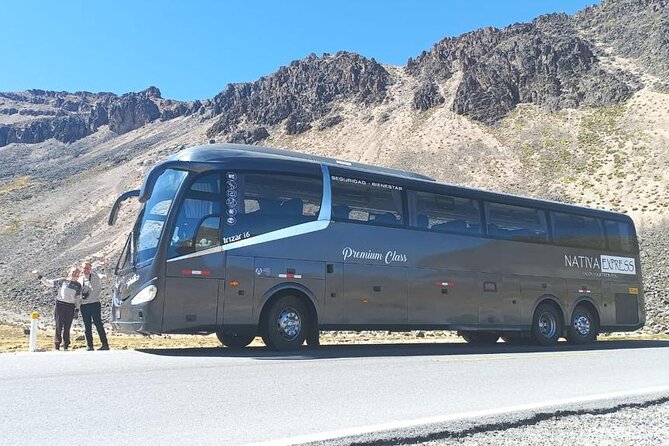
You meet at the operator’s office beside the church on Chivay’s main square. The suggested arrival window is 12:30 to 1:10 pm, with departure at about 1:15 pm.
Give yourself enough time to locate the office and use a restroom before boarding. The meeting point is central, which makes it practical if you have spent the morning in Chivay. Keep your luggage clearly marked and easy to reach, since you may want a jacket, water, sunscreen, and a camera during the afternoon.
The bus can carry up to 40 people. That is large enough to keep the price down, but it also means boarding and unloading may take a little time. The guide provides service in Spanish and English, so you can follow the explanations even if you do not speak Spanish.
Abra Patapampa and the Mirador de los Andes
The first major stop is Abra Patapampa, also called the Mirador de los Andes. You have about eight minutes here, so this is a quick photo stop rather than a long walk.
The view includes several important Andean peaks: Ampato, Sabancaya, Hualca Hualca, Mismi, and the Chila mountain range. Mismi is noted as the source of the Amazon River, which gives this stop added geographic interest. You can also see apachetas, small stone towers traditionally left by people as offerings during journeys through the mountains.
At this altitude, the air can feel cold and thin. Keep your visit short, move at a comfortable pace, and have a warm layer ready. The stop is free, but there is no long time for browsing or settling in. Your best use of the eight minutes is to take photographs, listen to the guide, and return to the bus promptly.
This is the stop that gives the journey its strongest sense of place. You are looking across volcanic peaks and open mountain country, not just pausing at a roadside café.
Tocrapampa and the search for vicuñas
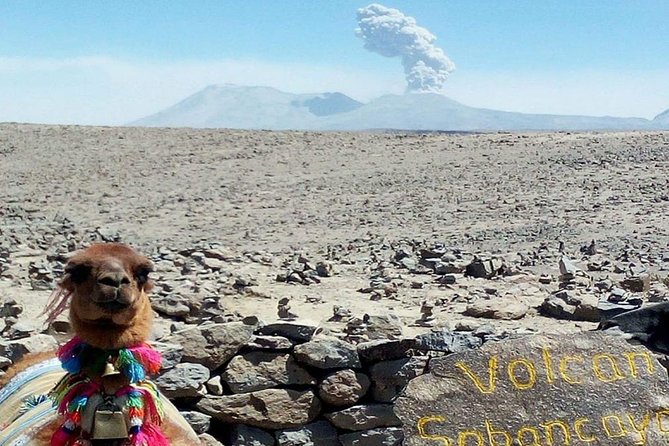
Tocrapampa is a technical stop focused on South American camelids. Llamas and alpacas usually graze in their natural habitat here, and you may see vicuñas if conditions are right.
Vicuñas are especially notable because their fiber is among the finest and most expensive used in the textile industry. They are smaller and more delicate in appearance than llamas, so keep your eyes open across the open ground. The guide can help point out the animals, but sightings are not guaranteed.
The stop also shows why this route is useful for anyone interested in Andean wildlife. You are not being taken to a staged animal display. You are looking across the animals’ natural surroundings from the roadside. That makes the experience less predictable, but also more genuine.
Because the stop is described as a technical pause rather than a long scheduled visit, the exact amount of time may vary. Keep your camera ready and avoid assuming you will have a long wildlife-watching session.
A few more Arequipa days worth comparing
- Tour to the Salinas Lagoon and National Reserve in Arequipa
★ 4.5 · 548 reviews - From Arequipa: Sillar Route Trek
★ 4.2 · 461 reviews - Arequipa: Chili River White Water Rafting with Hotel Pickup
★ 4.8 · 329 reviews - Colca Canyon Plus
★ 5.0 · 198 reviews
Patahuasi in the Aguada Blanca Reserve
Patahuasi, also known as Pampa Cañahuas, is located in the Aguada Blanca National Reserve, behind Chachani Volcano. This is a more generous stop, lasting about 15 minutes.
The reserve is another good place to look for vicuñas, llamas, and alpacas. With luck, you might see foxes or guanacos in the distance. The open setting is part of the appeal. You get a brief look at the plants and animals that survive in a demanding high-altitude environment.
Patahuasi is also the most practical stop. You can use the restrooms, buy handicrafts and souvenirs, and try hot herbal drinks made with chachacoma or muña. Those drinks are useful on a cool afternoon, though any purchase is extra.
I would use this stop efficiently. Visit the restroom first, then take photographs and consider a hot drink. The 15-minute schedule is not long enough for a relaxed meal or a careful shopping session, so do not expect a full café break.
This stop adds comfort to the scenery. You get a chance to warm up, stretch your legs, and buy something local without losing much time on the road.
Lagunillas and its mirror-like lakes
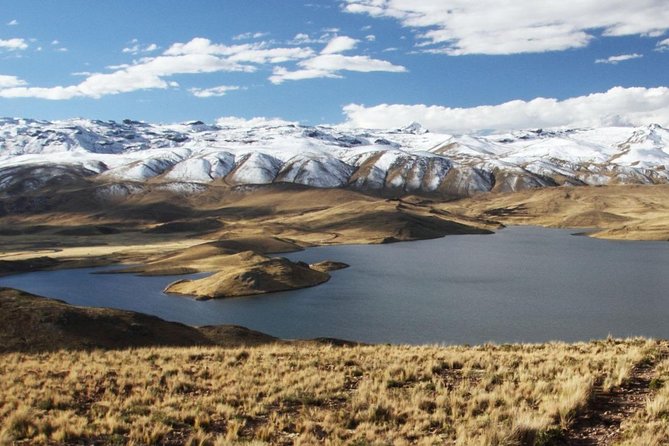
The final sightseeing stop is Lagunillas, where several small lakes reflect the sky. The view is broad and open, with water, mountains, and pale highland ground stretching across the frame.
Lagunillas is also a habitat for Andean flamingos and other birds, depending on the season. You may see flamingos at a distance, but wildlife is never guaranteed. Bring binoculars if you already have them, since the stop is mainly a viewpoint and the birds may not be close.
You have about 15 minutes here. That is enough for photographs and a quick look around, but not for a long walk along the lakes. Wind and cold may be more noticeable near the open water, so keep your jacket handy.
For me, this is a fitting last stop because it changes the mood of the route. The volcano viewpoint is dramatic and the camelid stops are about wildlife. Lagunillas is quieter, with reflections and birds providing the focus.
What the bus provides, and what to bring
The bus is air-conditioned and may use heating when needed. It also has Wi-Fi, an onboard chemical toilet depending on the vehicle, individual reading lights, and charging points for phones, tablets, and laptops.
Those features matter on a six-and-a-half-hour ride. You can charge your phone for photos, use the reading light after sunset, and avoid relying on every roadside stop for restroom access. The toilet is especially useful because much of the route passes through remote highland country.
The listed inclusions also mention snacks, bottled water, and coffee. However, one passenger reported that none of these were offered, along with no working Wi-Fi, and had to buy expensive water at a stop. I would treat the onboard refreshments and internet as helpful extras, not essentials.
Bring:
- A full bottle of water
- A packed lunch or substantial snack
- A warm layer
- Sunscreen and sunglasses
- Medication you may need during the afternoon
- A charged phone and a power bank
- Offline maps, documents, or work if you hope to use the ride productively
The bus includes charging points, but a power bank is still sensible if the vehicle changes or a socket is unavailable.
Timing, road delays, and arrival in Puno
The planned arrival in Puno is around 7:00 to 7:30 pm. That makes this a full afternoon and early-evening transfer. It is not a good fit if you have a fixed dinner reservation or a separate activity starting soon after arrival.
Road construction caused one journey to take about seven and a half hours. That delay was not the operator’s fault, but it is a useful warning. Allow extra time when arranging a train, flight, dinner, or evening check-in after reaching Puno.
If your hotel is in Puno’s Historic Center, the service may be able to take you to the hotel. This is one of the most useful details in the whole experience. Arriving with luggage after dark and finding a taxi or walking route is less pleasant than being taken closer to your accommodation.
The hotel drop-off is not presented as universal for every address, so check that your property is within the Historic Center. If it is outside that area, plan for the final part of the journey separately.
Who will enjoy this bus ride most
I would choose this service if you are already in Chivay and need to reach Puno while seeing more of the Andes. It works particularly well for people who prefer one organized journey instead of arranging several taxis and viewpoint visits.
It also suits you if you enjoy scenery, mountain geology, local wildlife, and short guided stops. The route offers enough variety to keep the ride interesting: volcanoes, apachetas, camelids, reserve land, lakes, and possible flamingos.
Families and older passengers may appreciate the air conditioning, toilet, charging points, and limited walking at each stop. Most people can participate, and the sightseeing does not require a long hike. Still, high altitude, cold, and a long day can be tiring, so pace yourself and carry water.
I would hesitate if your priority is speed, privacy, or dependable onboard internet. A group of up to 40 people and possible road delays mean the schedule has some flexibility built into it. This is a sightseeing transfer, not an express shuttle.
Price, cancellation, and booking advice
At $41.03 per person, the price is reasonable for a guided transfer with four stops, bilingual service, bus facilities, and a possible central Puno hotel drop-off. You are paying for transport and a small guided excursion in one package.
The strongest value comes from the remote stops. Reaching Abra Patapampa, Patahuasi, and Lagunillas independently would require separate transport and careful timing. Here, the route is organized around the transfer, so you can see them without planning a private vehicle.
Free cancellation is available if you cancel at least 24 hours before the start time. Changes or cancellations inside that window are not accepted for a refund. Poor weather can lead to a different date or a full refund.
The service requires good weather, which makes sense for high mountain roads and outdoor viewpoints. Confirm your hotel details in advance if you hope for drop-off in central Puno.
Should you book the Chivay to Puno bus?
Book it if you want a practical transfer with real scenery built into the day. The four stops, bilingual guide, and central Puno drop-off option make it a stronger choice than a plain bus ride.
Pack your own water and food, and do not plan important work around the promised Wi-Fi. Allow extra time for construction or other road delays. If you can accept those limits, this is a well-priced way to cross the Andes and arrive in Puno with more than a long stretch of road behind you.
FAQ
Where does the Chivay to Puno tour start?
You meet at the Nativa Express office beside the church on the main square in Chivay.
What time does the bus leave Chivay?
The planned departure is approximately 1:15 pm. The meeting window is from 12:30 to 1:10 pm.
What time does the bus arrive in Puno?
Arrival is expected around 7:00 to 7:30 pm, although road conditions can make the journey longer.
How long does the transfer take?
The scheduled duration is approximately six hours and 30 minutes.
How many sightseeing stops are included?
Four stops are included: Abra Patapampa, Tocrapampa, Patahuasi, and Lagunillas.
Is a guide included?
Yes. A professional bilingual guide provides service in Spanish and English.
Is Wi-Fi available on the bus?
Free Wi-Fi is included in the service information, but it may not always be available. Bring offline material if you need to work during the ride.
Is food and water provided?
The service information includes bottled water, snacks, and coffee. Since these may not always be offered, bring your own water and food.
Does the bus have a restroom?
An onboard chemical toilet is included depending on the type of vehicle.
Can the bus take me to my hotel in Puno?
If your hotel is located in Puno’s Historic Center, it may be possible to arrange drop-off there.
What is the cancellation policy?
You can cancel for a full refund at least 24 hours before the experience starts. Cancellations or changes made less than 24 hours before departure are not refunded or accepted.
What happens if the weather is poor?
If poor weather causes cancellation, you can be offered another date or a full refund.
Just added around Arequipa
- 3-Day Colca Canyon trek with Professional Guide★ 5.0 · 40 reviews
- Trekking, Waterfalls and Thermal Baths★ 4.5 · 47 reviews
- Salinas National Reserve PRIVATE TOUR★ 5.0 · 81 reviews
- Sillar Route in Arequipa and viewpoint of the Volcanoes★ 4.0 · 71 reviews
- Sillar Route and Culebrillas Petroglyphs★ 4.5 · 89 reviews
- Full Day Tour / Colca Canyon★ 4.0 · 70 reviews
- Colca Full Day★ 5.0 · 57 reviews
- Private 3 Day Colca Canyon Trekking tour (superior Service)★ 5.0 · 58 reviews
Colca Canyon Tours, compared.
2-Day Tour Colca Canyon in Arequipa with end in Puno
Read our review →
From Arequipa: 2-Day Colca Canyon Trekking Tour
Read our review →
From Arequipa: Full Day Tour of Colca Canyon with Meals
Read our review →
From Arequipa: Colca Canyon Day Trip with Transfer to Puno
Read our review →
From Puno to Arequipa: 2 Days/1 Night Colca Canyon Tour
Read our review →Browse the lists this tour appears in