
Reviewed · SAMBA & CARNIVAL SHOWS
Salvador: Cultural Treasure – Samba de Roda.
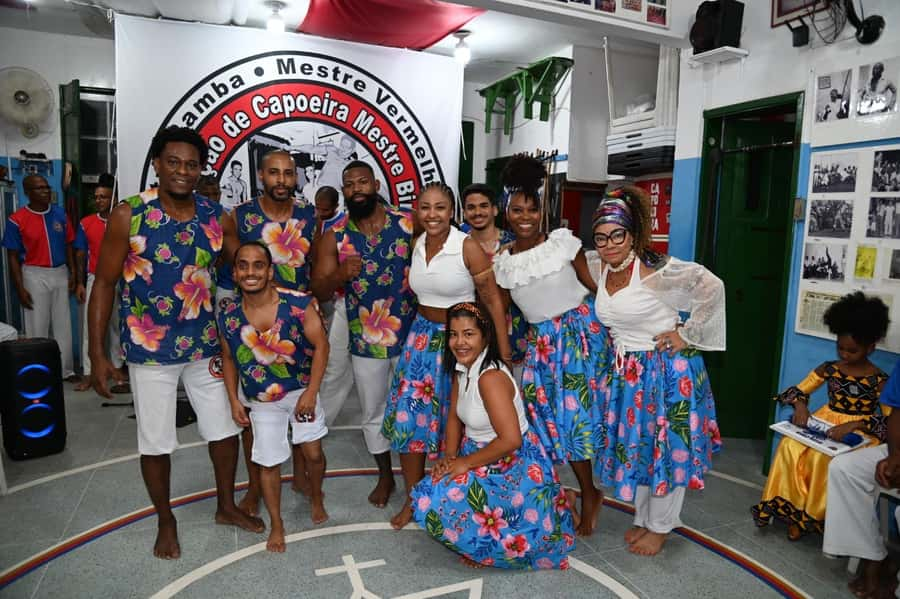
Samba here is more than a dance lesson. You learn its basic steps inside the first capoeira school in Brazil, a place tied to Mestre Bimba and the long fight to protect Afro-Brazilian culture. The setting gives the class real weight, while instructor Yasmin keeps the lesson friendly and easy to follow.
I like two things especially: the clear English instruction and the smart mix of movement, music, and history. You can arrive with two left feet, learn enough steps to enjoy the rhythm, and still leave with a better sense of Salvador’s culture. The one drawback is the short one-hour format. It gives you a useful introduction, not time to become a samba expert, and you need to make your own way to the school.
Key points at a glance
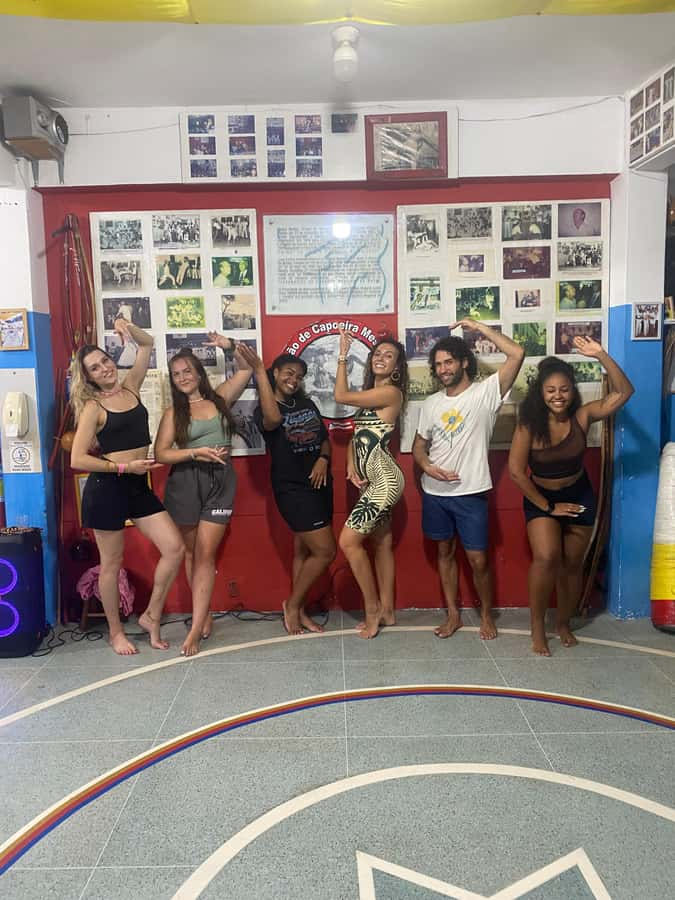
- Learn inside Mestre Bimba’s historic capoeira school: The class takes place at Associação de Capoeira Mestre Bimba, founded in 1937.
- Beginner-friendly from the first step: No partner or previous dance experience is needed.
- Get cultural context, not just choreography: You’ll hear how samba developed in Afro-Brazilian communities in Bahia and how it connects with capoeira.
- Study with English-speaking instructor Yasmin: Her calm, patient teaching style helps beginners follow both the explanations and the movements.
- Expect a lively one-hour workout: You’ll learn basic steps, move to music, and may work up a sweat.
- Pay $43 for a focused cultural activity: The price is reasonable if you value a small, personal lesson in a historic setting rather than a brief performance for tourists.
Why this samba class belongs in your Salvador plans
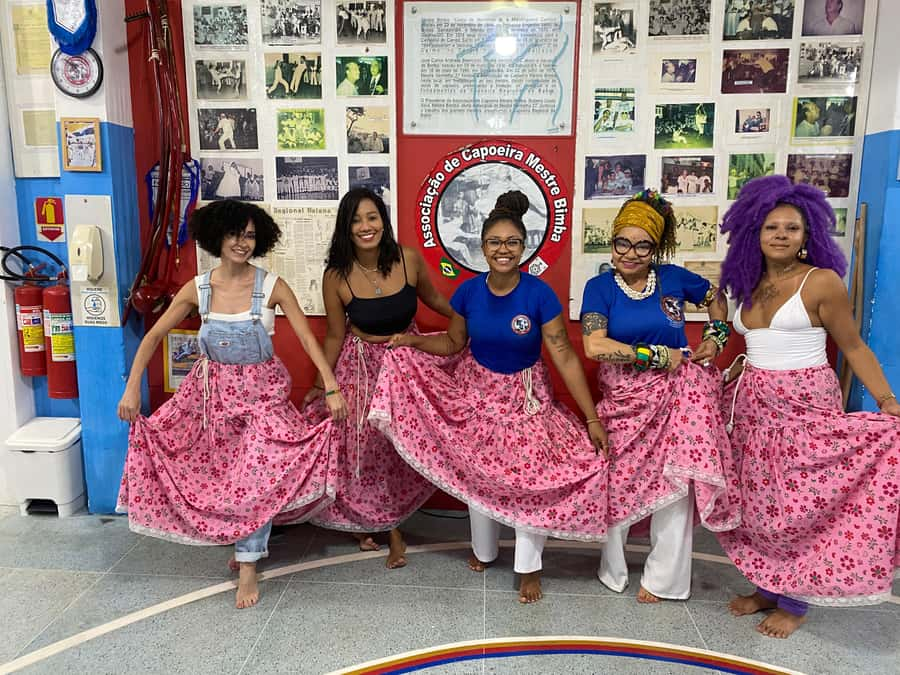
Salvador is one of Brazil’s best places to look beyond postcard culture. Music, dance, religion, food, and resistance are closely tied to the city’s Afro-Brazilian roots. A samba class can help you understand that connection with your whole body, not just through a guide’s explanation.
This experience begins with movement, but the setting changes how you hear the music. You are not learning samba in a generic hotel room. You are entering Associação de Capoeira Mestre Bimba, the school founded in 1937 by Mestre Bimba, creator of Capoeira Regional.
The school has long been viewed as a place of cultural resistance. That matters because African cultural practices in Brazil, including capoeira and Candomblé, were once treated with suspicion and criminalized. Samba faced similar pressure before becoming one of Brazil’s most recognizable cultural forms.
The class gives you a short, accessible way to meet that story. You will not get an academic lecture, and you should not expect a full survey of Brazilian music. Instead, Yasmin connects the steps in front of you with the people and traditions behind them.
More Samba Shows in Salvador:
- Rio de Janeiro: Beginner Samba Lesson in Ipanema
★ 4.9 · 1,071 reviews - Rio: Pub Crawl in Lapa with Cachaça Tasting and Live Samba
★ 4.7 · 881 reviews - Rio: Carnival Backstage Tour at Samba City with Cocktail
★ 4.6 · 520 reviews
Entering the first capoeira school in Brazil
The location is the strongest feature of this activity. Associação de Capoeira Mestre Bimba is not simply a convenient dance studio. Its identity is bound to Mestre Bimba and to the development of Capoeira Regional, a form of capoeira that helped move the practice from criminalized street activity toward public recognition.
That background adds meaning to a simple beginner class. When you shift your weight, follow the beat, and repeat a samba movement, you are working in a place where Afro-Brazilian music and physical expression have been protected and taught for generations.
The school is near Largo do Terreiro de Jesus. Useful landmarks include Ó Pai Ó Restaurante and São Domingos Gusmão Church. The meeting point is the Associação itself, and no pickup service is provided.
I would plan this carefully before leaving your hotel. Salvador’s historic center can be confusing on a first visit, and the activity lasts only an hour. Arriving late means losing a large part of the lesson, so use the nearby landmarks to confirm that you are heading to the right place.
The meeting point also makes this easy to pair with other time in the historic center. You could schedule it around a walk through the area, but leave enough breathing room to arrive without rushing. This is an activity that benefits from being approached with a little calm.
What happens during the one-hour lesson
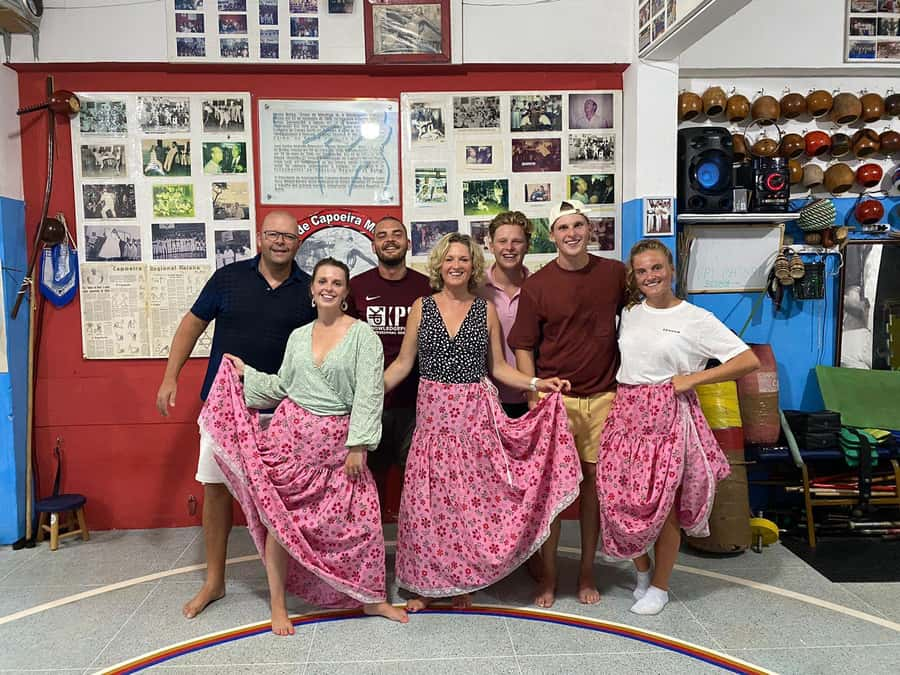
The class is designed for beginners. You do not need a dance background, and you do not need to bring a partner. That makes it a good choice for solo visitors, couples, families, and anyone who feels awkward about signing up for a dance class.
The first part usually centers on orientation and explanation. Yasmin introduces samba and explains why it matters in Brazilian culture. You learn that samba originated in Afro-Brazilian communities in Bahia in the late nineteenth century, then grew into a national symbol after years of discrimination and suppression.
From there, the lesson shifts toward the basic steps. You work on rhythm, footwork, body movement, and the simple patterns needed to begin dancing with the music. The point is not perfect form. The point is to give you enough structure to feel the beat and move with more confidence.
That distinction is useful. Many first-time dancers worry that they will look foolish. A beginner class at this length cannot turn you into a polished performer, but it can give you a handful of movements that make samba feel approachable.
Yasmin’s teaching style is described as patient, encouraging, and calm. She also gives explanations in English and Portuguese, with English available for visitors who need it. That language support matters because dance instruction can become confusing when you are trying to copy a step and interpret unfamiliar directions at the same time.
Expect the class to be active. The music and repeated footwork can make you sweat, even though the session is only an hour. If you combine it with a capoeira class, the physical demand rises considerably. Treat the samba lesson as a light cultural workout, not as a passive demonstration.
Samba, capoeira, and Salvador’s cultural story
The best part of the class is the link between samba and capoeira. These traditions are not identical, but both grew from Afro-Brazilian communities and faced official hostility. Hearing that context while standing in Mestre Bimba’s school gives the discussion more force.
The history is also a reminder that cultural recognition was not automatic. Samba moved from a persecuted form of expression to a national symbol, and UNESCO now recognizes it as Intangible Cultural Heritage of Humanity.
That does not mean a one-hour lesson can explain every regional style or historical debate. It gives you a starting point. You learn why the rhythm matters, how music and movement can carry identity, and why Salvador remains an important place for understanding Brazil’s African heritage.
The class can also help you notice more during the rest of your trip. After learning a few basic samba patterns, you may listen differently to music in the streets, at a cultural event, or in a dance setting. You have a physical reference point rather than only a name in a guidebook.
Some sessions may include more discussion of drums and related traditions, depending on the arrangement. The experience description specifically includes cultural and historical insight, while one account of a class also included drum instruction. Do not book this expecting a guaranteed full drum lesson, but you may find the musical side receives extra attention.
A few more Salvador days worth comparing
- Cooking class in Salvador, an authentic dinning experience
★ 5.0 · 132 reviews - Tour to the Frades Islands and Itaparica, from Salvador – Ba
★ 4.0 · 130 reviews - From Salvador: Schooner Tour to Frades Islands and Itaparica
★ 3.9 · 98 reviews - Tour Praia do Forte and Guarajuba, Leaving Salvador-Bahia.
★ 4.5 · 97 reviews
The teaching style and who will feel comfortable
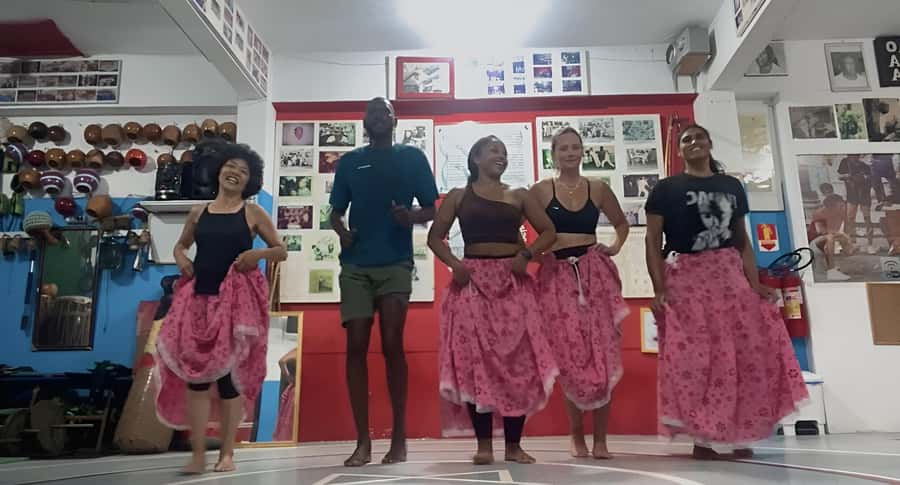
Yasmin is the instructor most often identified with this experience. Her strengths are practical: she speaks fluent English, breaks down the steps for beginners, and creates a setting where you can make mistakes without feeling judged.
That matters more than flashy choreography. A strong first lesson should help you understand what your feet are doing and why the rhythm works. It should also leave room for questions. Yasmin’s calm manner is especially useful if you are nervous, traveling with a teenager, or taking your first dance class.
This is a good activity for families with older children and teenagers. A 15-year-old joined one class with a parent and found it rewarding, which suggests the lesson can work across age groups when everyone is willing to participate.
It is also suitable for couples, but you do not need to attend as a couple. You will not be left out if you arrive alone. The lack of a partner requirement removes one of the biggest barriers for solo visitors.
You should still be honest about what you want. If you are looking for advanced samba technique, a longer dance program would suit you better. If you want a lively introduction that combines cultural context with basic movement, this format makes sense.
What the $43 price really buys you
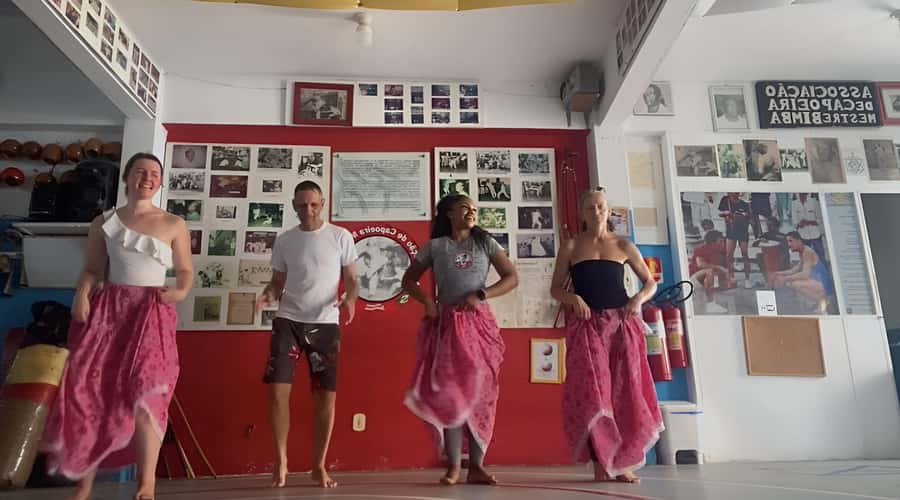
At $43 per person, the class is not the cheapest possible hour in Salvador. You are paying more than you would for simply watching a public performance or listening to music in a square.
The value comes from three things: direct instruction, access to a historically important school, and the cultural explanation that links samba to Bahia and capoeira. You are not only consuming a show. You are taking part in a lesson with a professional instructor and gaining context that is difficult to pick up from a casual evening out.
The short duration keeps the commitment manageable. You can fit the class into a busy Salvador itinerary without giving up half a day. For many people, that is a real advantage, particularly if they are also planning museums, churches, food stops, or a capoeira performance.
The tradeoff is depth. One hour passes quickly once introductions, explanations, practice, and repetition are included. You will learn basic steps, not a complete routine or advanced styling. I would consider the price fair for a focused cultural activity, especially if the historic setting matters to you.
The 4.9 rating from 51 reviews supports the idea that the class delivers what it promises, particularly in teaching quality, atmosphere, and cultural explanation. Still, ratings cannot change the basic limits of the format. Go for a memorable introduction, not a full dance course.
Practical details before you book
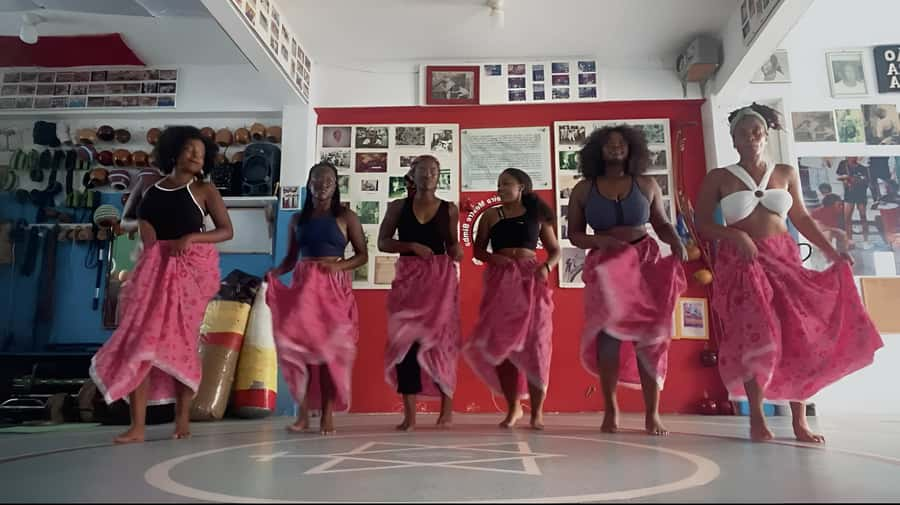
The meeting point is Associação de Capoeira Mestre Bimba, close to Largo do Terreiro de Jesus. You must arrange your own way there because pickup is not offered.
Use Ó Pai Ó Restaurante or São Domingos Gusmão Church as nearby reference points when finding the school. The provider also gives logistical information through WhatsApp, which can be useful when you need to confirm directions or clarify arrival details.
The activity lasts one hour, but check the available start times before booking. Your instructor may speak English or Portuguese, and the class is intended to work well for English-speaking visitors.
Wear something that allows easy movement. The supplied information does not set a dress code, but samba involves repeated steps and body movement, so comfort matters more than style. You may also want water afterward, since the lesson can become a genuine workout.
Respect the venue. This is not just a room hired for a tourist activity. It is connected to Mestre Bimba, capoeira, and the preservation of Afro-Brazilian culture. Listen during the historical explanation, follow the school’s instructions, and remember that the setting has meaning beyond the class itself.
If you are attending at night, think ahead about your route back. One instructor also paid attention to safety concerns around evening travel and offered practical guidance. That kind of local help is useful, but it does not replace your own care with transport and timing.
You can cancel up to 24 hours before the activity for a full refund, and the reserve-now, pay-later option gives you some flexibility. Those policies are helpful if your Salvador schedule is still shifting.
How this fits with a capoeira class
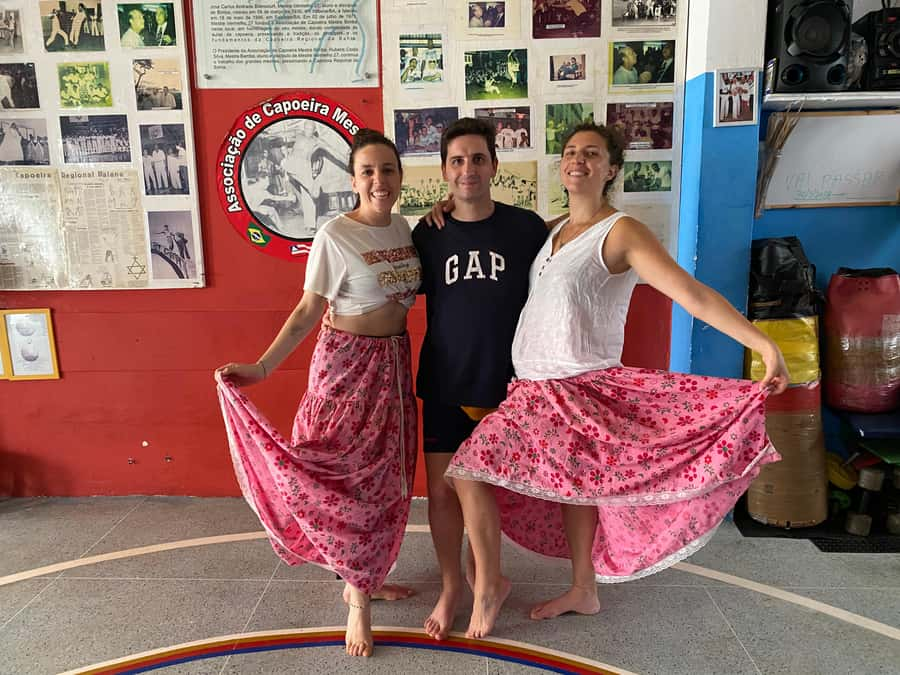
A samba class pairs naturally with capoeira because the school is built around both traditions. You can learn the samba basics first, then consider a capoeira session if you want more physical challenge and a closer look at the school’s main discipline.
Do not assume the two classes feel the same. Samba focuses on rhythm, steps, and dancing with the music. Capoeira brings martial movement, agility, and a different physical vocabulary. Taking both can make for a demanding day, particularly if you are not used to exercise.
The advantage of combining them is context. You gain a clearer sense of how music, movement, and community fit together in Salvador. The disadvantage is time and energy. If you are already planning a long walking day through the historic center, one class may be enough.
The samba lesson works well on its own. You do not need to book capoeira to understand the history or enjoy the dance.
Is this class worth booking?
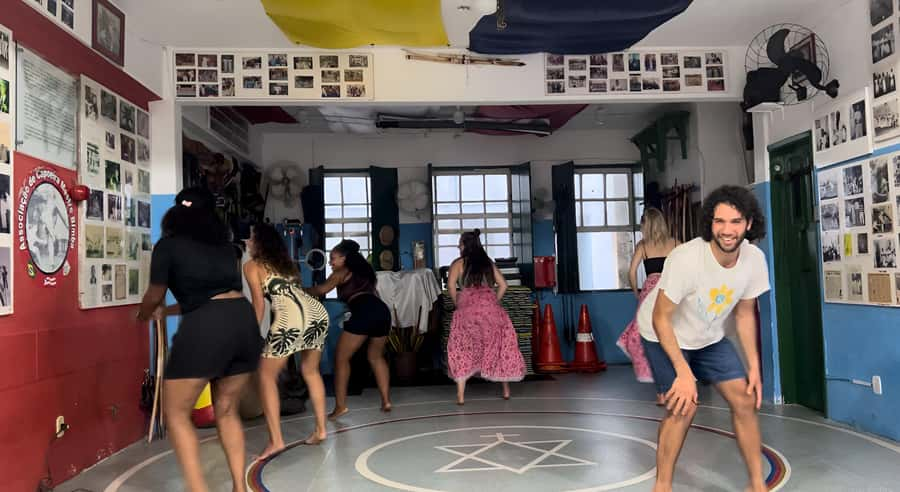
I would book this experience if you want an active introduction to Salvador’s culture and prefer participation to observation. The historic school, English instruction, and patient teaching make it especially useful for first-time dancers, solo visitors, couples, and families with teenagers.
I would skip it if you dislike group movement, want advanced technique, or have only a short window that makes reaching the meeting point stressful. The class is brief, and the school does not provide pickup.
For $43, you get a personal lesson in a place with real cultural importance. You will not master samba in an hour, but you can learn the basic rhythm, understand why the dance matters, and leave with a few steps you can use when the music starts later in your trip. That is a good return for one hour in Salvador.
FAQ
How long does the samba class last?
The class lasts one hour. Check the available start times when booking.
How much does the experience cost?
The price is $43 per person.
Do I need previous dance experience?
No. The class is designed for beginners, and no dance experience is necessary.
Do I need to bring a dance partner?
No. A partner is not required.
Is the instructor English-speaking?
Yes. The instructor speaks English and Portuguese. Yasmin is identified as an English-speaking instructor for the class.
Where does the class meet?
The meeting point is Associação de Capoeira Mestre Bimba, near Largo do Terreiro de Jesus. Ó Pai Ó Restaurante and São Domingos Gusmão Church are nearby landmarks.
Is transportation provided?
No. Pickup service is not offered, so you need to make your own way to the Associação de Capoeira Mestre Bimba.
Just added around Salvador
- 3 DAYS OF CHARM! Booking from 2 people – Chapada Diamantina by Zentur★ 5.0 · 59 reviews
- 2 AMAZING DAYS! Booking from 2 people – Chapada Diamantina by Zentur★ 5.0 · 63 reviews
- Salvador de Bahia African Culture Tour★ 4.5 · 60 reviews
- Salvador: Walking Tour Through Pelourinho★ 5.0 · 49 reviews
- Salvador: Praia Do Forte and Guarajuba Beach Day Trip★ 4.1 · 56 reviews
- Salvador Historic Walking Tour – Pelourinho★ 4.8 · 62 reviews
- Trekking the valley of the pat 3 days/ GUIDE TUTY CHAPADA DIAMANTINA★ 5.0 · 78 reviews
- 4 FASCINATING DAYS! Reservations from 2 people -Chapada Diamantina by Zentur★ 5.0 · 71 reviews
Samba & Carnival Shows, compared.
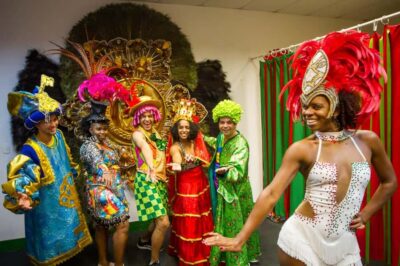
Carnival Backstage Tour at Samba City with Cocktail
Read our review →
Hop-ON Hop-OFF Sightseeing Bus in Rio de Janeiro – Rio Samba Bus
Read our review →
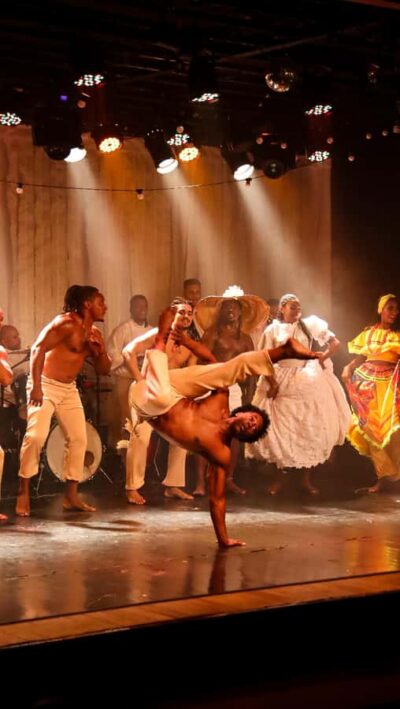
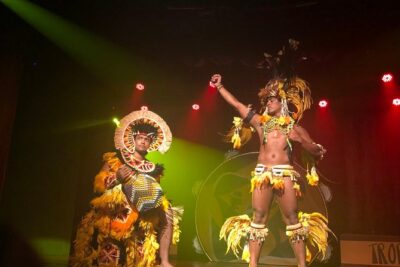
Ginga Tropical – Brazilian Samba and Folklore Show
Read our review →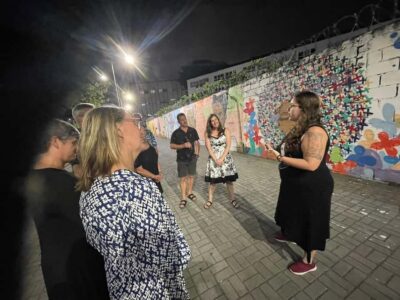
Pedra do Sal: Live Samba Night with Local Guide & Drink
Read our review →
Browse the lists this tour appears in