Reviewed · HISTORICAL TOURS
Rio de Janeiro: Little Africa Heritage Walking Tour
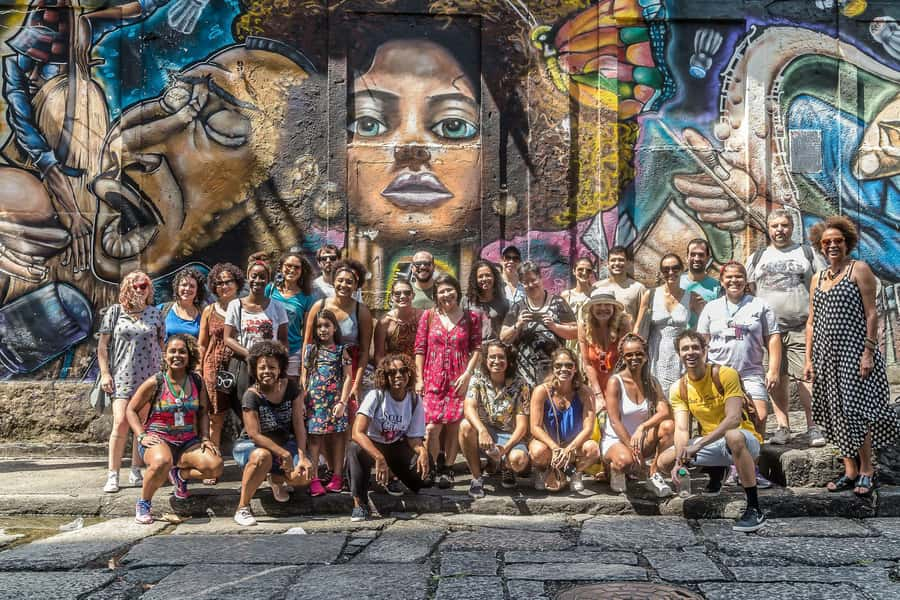
Rio’s Little Africa tour puts the African story of Brazil at the center, not in the margins. In 150 minutes, you walk from the Rio Art Museum through Morro da Conceição, Largo da Prainha, Pedra do Sal, and the Valongo waterfront, learning how slavery, freedom, food, dance, music, and present-day identity connect.
I like the personal storytelling, especially when guides such as Luana, Nathalia, Larissa, Eddie, Marina, and Ryane link national events to family experience and modern Brazil. I also like the rooftop pause at Mauá Square, which gives you a clear view of Guanabara Bay before the walking begins in earnest. The main drawback is practical: you are outside for about two and a half hours, often in heat or rain, with no hotel pickup.
Key points at a glance
- Samba begins at Pedra do Sal: Stop at one of Rio’s key Afro-Brazilian cultural sites and hear why this place matters to the city’s music.
- A rooftop view starts the story: Look across Mauá Square and Guanabara Bay from the Rio Art Museum before entering the port district.
- The tour connects past and present: Expect discussion of colonial Brazil, slavery, abolition, racism, food, dance, and Afro-Brazilian identity today.
- Guides make the difference: Luana, Nathalia, Larissa, Eddie, Marina, Ryane, and other guides have been praised for warmth, clear English, and strong storytelling.
- You visit the Valongo sites: The Hanging Garden of Valongo and Cais do Valongo give the final part of the walk a serious historical weight.
- Bring practical gear: Wear comfortable shoes, carry water and sunscreen, and arrive five minutes early at the Rio Art Museum.
Why Little Africa belongs on your Rio itinerary
Rio is often presented through beaches, samba schools, and dramatic mountains. Those are real parts of the city, but they do not explain how Brazil became Brazil. This walk takes you into the port district, where African people and their descendants shaped food, religion, dance, music, work, and community life.
The neighborhoods here became known as Little Africa around the turn of the 20th century. After the slave trade was made illegal, freed people remained in the port area and built lives there. The tour uses that setting to explain Brazil’s colonial period first, then follows the effects of slavery and freedom into the streets you are walking through.
That opening context matters. Without it, a statue, plaza, or old stone site can feel like a quick photo stop. With it, the same places become evidence of who lived here, who worked here, and whose culture was often left out of the official version of Rio.
I would book this early in your stay. Several hours of clear explanation can help you read the rest of Rio differently, from Carnival references to food menus and the city’s racial politics. It also gives you a more grounded view of Brazil than a sightseeing loop focused only on famous views.
More Historical Tours in Brazil
- Rio de Janeiro: Historic Rio and Santa Teresa Half-Day Tour
★ 4.4 · 228 reviews - Explore Little Africa : Unveiling Afro Heritage in Rio de Janeiro
★ 5.0 · 97 reviews - Learn the History of Rio with an Unforgettable City Center Walking Tour
★ 5.0 · 82 reviews
Starting at the Rio Art Museum and Mauá Square
Meet your guide in front of the Rio Art Museum, also called Museu de Arte do Rio. Arrive five minutes before the start. The guide can wait only 15 minutes for late arrivals, so this is not the moment to rely on a slow taxi or a last-minute ride request.
The first stop includes a short break of about 10 minutes and a view from the museum rooftop. From here, you can take in Mauá Square and Guanabara Bay. This is a useful orientation point because the port area can look modern and open at first glance, while the tour is about the layers beneath it.
The rooftop stop is not simply a scenic extra. It helps place the port in the wider city and gives you a chance to settle into the subject before walking. Bring water even if the day begins cool. The route is outdoors, and the heat can build quickly.
Morro da Conceição and the colonial backdrop
The walk continues toward Morro da Conceição, with about 20 minutes devoted to a guided visit. The guide begins with colonial Brazil and the country’s system of slavery, giving you the basic timeline needed for later stops.
This part is especially useful if you know Rio mainly through its modern image. The story is not presented as a detached museum lecture. The guide uses streets and neighborhoods to explain how the port functioned and why Black communities remained connected to this part of the city after abolition.
The subject can be painful. Expect direct discussion of slavery, racial inequality, and the long effects of a system that Brazil abolished in 1888. The strongest guides balance seriousness with conversation and allow room for questions. Nathalia, Marina, Larissa, and Eddie have been singled out for handling difficult questions with care, humor, or personal insight.
Do not expect a long museum visit here. This is a walking lesson, and the setting does much of the work. You should listen closely, since details introduced at the start return at later sites.
Largo de São Francisco da Prainha and Afro-Brazilian food
At Largo de São Francisco da Prainha, the tour spends about 20 minutes discussing African influence on Brazilian gastronomy. This is one of the more approachable sections because food offers a direct way to understand cultural exchange.
You will not simply receive a list of dishes. The point is to see how African traditions helped shape what Brazil eats and how food remains tied to memory, migration, and community. If you enjoy trying local dishes, pay attention and ask your guide for suggestions after the walk.
Some guides have recommended restaurants and markets for lunch. One group finished with bobó de camarão, a Brazilian shrimp stew, and other local food. Another guide took participants toward a market for lunch after the tour. These meals are not listed as part of the $40 experience, so treat them as optional follow-up ideas, not included services.
A short stop at a cultural center has also been part of some outings, with coffee, cake, and small goods available. Since those extras are not guaranteed in the stated program, do not book this expecting a food tasting. Book it for the explanation, then use the advice to plan your own meal afterward.
More Historical Tours in Rio de Janeiro
- Olympic Boulevard, Museum of Tomorrow & Historical Rio
★ 4.5 · 66 reviews - Rio: Olympic Boulevard, Museum of Tomorrow & History Tour
★ 4.1 · 47 reviews
Mercedes Baptista and the power of Afro dance
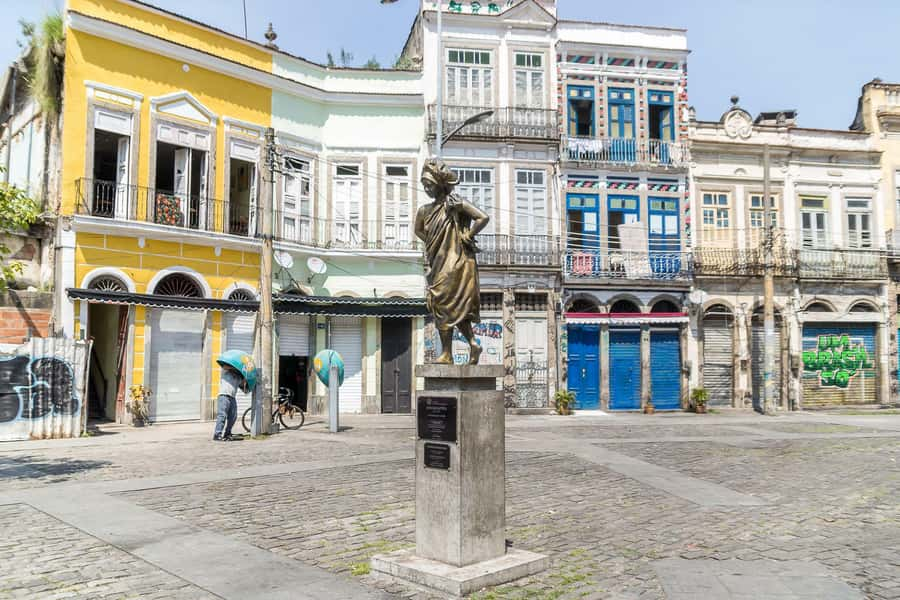
The route includes a statue honoring Mercedes Baptista, described as a pioneer of Afro dance in Brazil and the first Black dancer at Rio’s Municipal Theater. This stop gives the tour a human face.
Her story helps widen the focus beyond slavery and suffering. You learn about Black achievement, artistic work, and the barriers faced by people who changed Brazilian culture while institutions often excluded them. It is a useful reminder that Little Africa is not only a place of painful memory. It is also a place of creativity and persistence.
The statue is also a good example of why a guide adds value. On your own, you might walk past it without knowing who Mercedes Baptista was. Here, a person, a career, and a wider issue of representation are connected in a few minutes.
Pedra do Sal, where samba took root
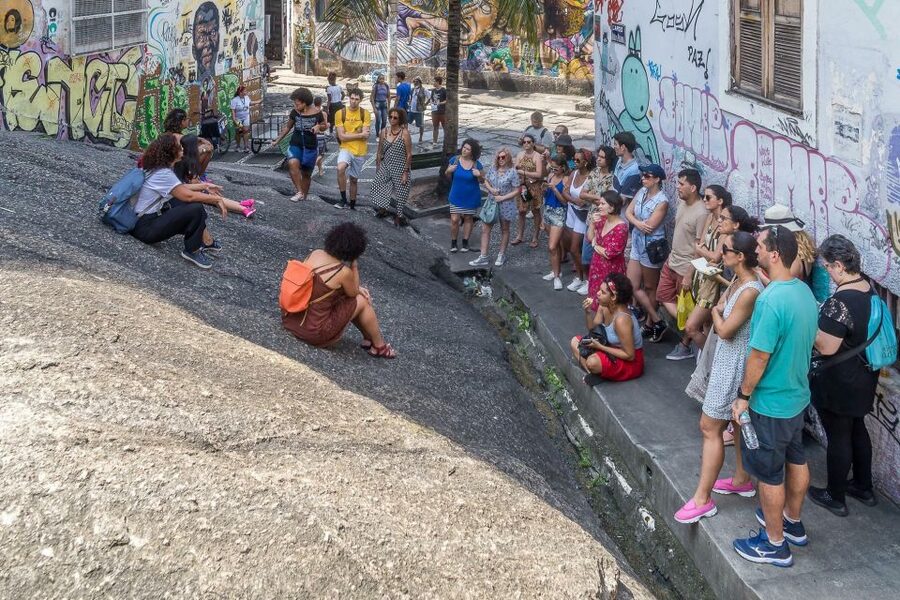
Pedra do Sal receives another 20-minute guided visit. It is widely regarded as the place where samba was born, and the tour presents it as a central meeting point in Rio’s Black cultural life.
The physical stop is not a full samba performance or a music class. You are there to understand the social setting that allowed music and community traditions to grow. Listen for the links between migration, work, religion, celebration, and the port district.
The area is also described as Brazil’s oldest continuously inhabited Black neighborhood. That detail gives the stop unusual weight. You are not visiting a stage set built for tourists. You are walking through a living neighborhood with an ongoing connection to Afro-Brazilian culture.
The walk can feel hot and exposed, especially in summer. Comfortable shoes and light clothing will help, but do not forget sunscreen and water. The pace is manageable, yet you will be standing and walking for much of the experience.
The Hanging Garden of Valongo
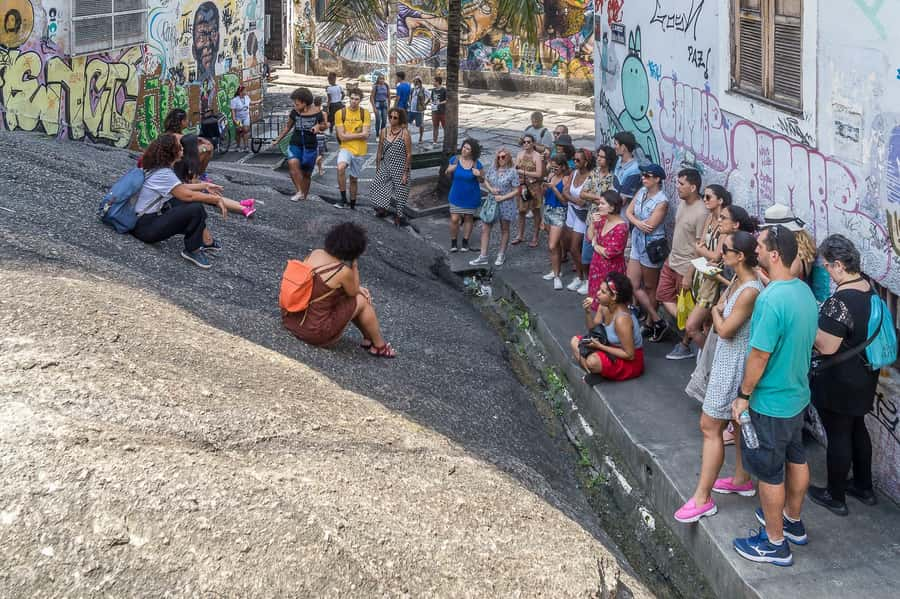
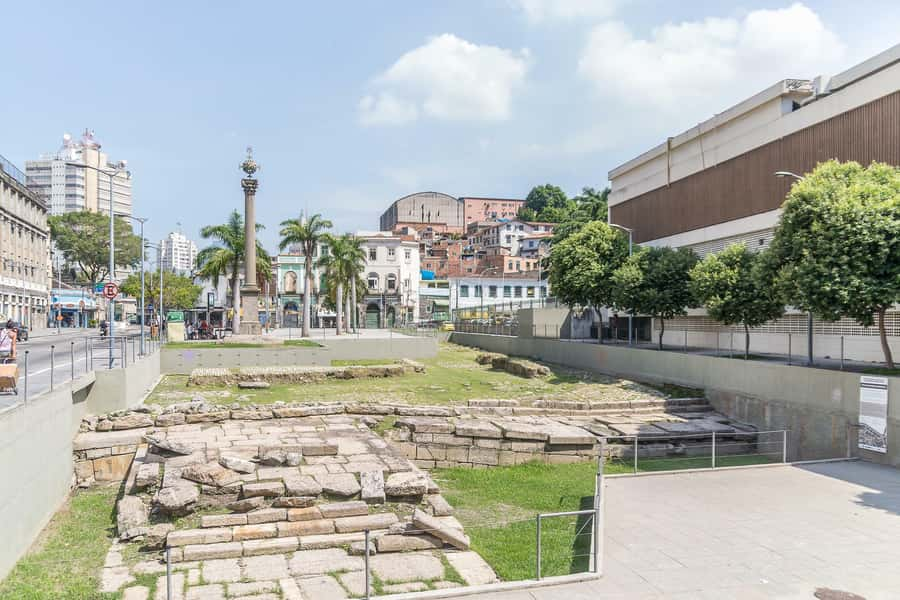
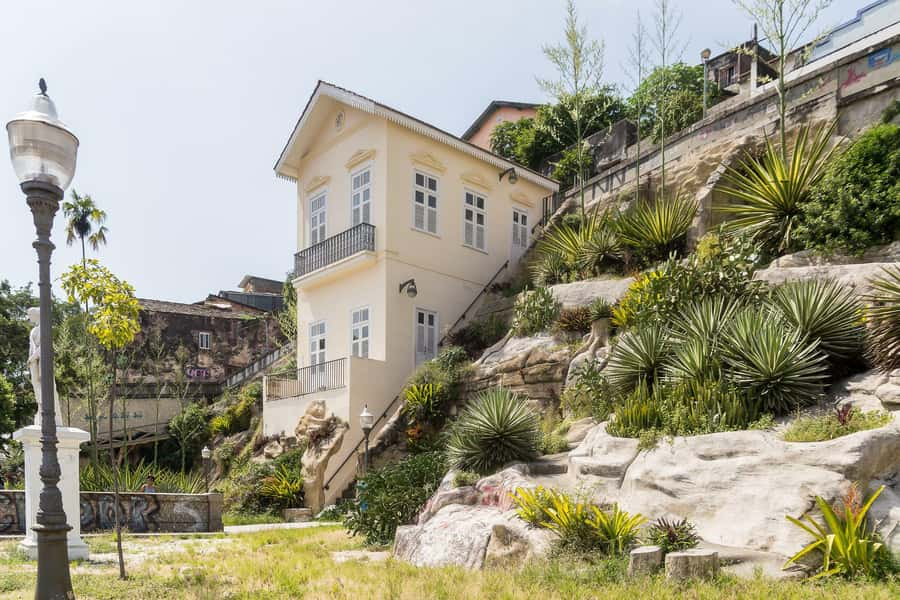
The Jardim Suspenso do Valongo, or Hanging Garden of Valongo, comes later in the route. Allow about 20 minutes here. This stop changes the mood from cultural celebration to public memory.
The garden is part of the Valongo area, where the tour brings together the larger story of the port, slavery, and the people forced through Brazil’s colonial system. The guide’s explanation is essential because the meaning of the site is not always obvious from its appearance.
This is a place to slow down. You may find the material confronting, especially after the earlier discussion of how slavery shaped Rio’s economy and neighborhoods. That seriousness is one reason the tour works best for adults and older children who can engage with difficult history. Children under five are not suitable for this activity.
Cais do Valongo and the final walk back
The final historical stop is Cais do Valongo, followed by the return to the Rio Art Museum. The route gives you roughly 20 minutes at the quay before completing the walk.
Ending at Valongo makes sense. The earlier stops have introduced community, food, dance, and music. Here, the tour brings you back to the forced movement of African people and the human cost behind the port’s development. It is a hard ending, but an honest one.
You finish where you began, rather than at a distant neighborhood. That makes it easier to arrange your next meal or ride. Still, do not assume the guide will provide hotel transport. Pickup and drop-off are not included.
The guides are a major part of the value
This experience is guide-led, so the quality of the interpretation matters more than the number of stops. The guide assigned to your departure may be Luana, Nathalia, Larissa, Eddie, Marina, Ryane, Raquel, Natalia, or another member of the team.
The strongest pattern is clear: the guides are described as warm, passionate, and able to explain sensitive subjects in good English. Several use questions to make the group think rather than simply reciting dates. Some add personal or family connections to the story, while others bring academic training in history or tourism.
That variety can be a strength. A guide with a personal connection may make the subject feel immediate. A guide with formal historical training may offer more structure. You cannot choose a specific guide from the information provided, so book the subject rather than one individual.
Several guides have also helped people after the official finish, including waiting while a delayed ride arrived or helping participants get safely connected with transport. That is kind and useful, but it should not replace arranging your own ride plan.
Is $40 a fair price?
At $40 per person, this is a reasonable price for a 150-minute guided walk in a major city, particularly if you value context rather than just photos. You are paying for an English-speaking guide, interpretation at several meaningful sites, and a route that would be difficult to understand fully on your own.
The value is strongest if Little Africa is new to you. A general Rio city tour may mention the port district briefly, but this experience gives African Brazilian history the full focus. It can also save you the work of piecing together colonial history, samba, food, dance, and Valongo from separate visits.
The price does not include food, drinks, hotel transfers, or a guaranteed café stop. If you want a meal afterward, budget separately. I would plan lunch nearby and use the guide’s recommendations, but I would not treat that as part of the package.
Flexible booking also helps. You can reserve now and pay later, and cancellation is free up to 24 hours before the start for a full refund. Check the available start times, since the stated duration is fixed but the departure time can vary.
Who should book this walk?
I recommend it to first-time visitors who want Rio’s culture explained through people and places, not just landmarks. It also suits anyone interested in the African diaspora, samba, Brazilian food, colonial history, or the connection between slavery and present-day racial identity.
It is a particularly good choice if you have already seen Rio’s standard highlights and want a more serious cultural visit. I would also suggest it to travelers who prefer a small-scale walking experience over a large bus tour, though the exact group size is not provided.
Think twice if you dislike outdoor tours, walking in heat, or emotionally heavy subjects. The tour runs rain or shine, and some of the material is upsetting. Comfortable shoes, water, sunscreen, and a willingness to listen will make a real difference.
Final verdict: book it for context, not spectacle
Book this Little Africa walking tour if you want to understand the forces behind Rio’s music, food, neighborhoods, and racial story. The rooftop view is pleasant, Pedra do Sal is memorable, and the Valongo sites are important, but the real value lies in the guide’s explanation between those stops.
Skip it only if your Rio plans allow time for nothing beyond beaches and viewpoints, or if a long outdoor walk in uncertain weather is not for you. For everyone else, $40 buys a thoughtful introduction to a part of the city many short sightseeing tours barely address.
FAQ
Where does the Little Africa tour start?
The tour starts in front of the Rio Art Museum, or Museu de Arte do Rio, and returns there at the end.
How long does the tour last?
The activity lasts 150 minutes, or two and a half hours.
Is the tour offered in English?
Yes. The tour is offered in English with a live English-speaking guide.
What places does the walking tour visit?
The route includes the Rio Art Museum, Morro da Conceição, Largo de São Francisco da Prainha, Pedra do Sal, the Hanging Garden of Valongo, and Cais do Valongo.
What should I bring?
Bring comfortable shoes, sunscreen, water, and comfortable clothing. The tour takes place outdoors and runs rain or shine.
Is hotel pickup included?
No. Hotel pickup and drop-off are not included. You should meet the guide at the Rio Art Museum five minutes before the activity begins.
More Walking Tours in Rio de Janeiro
- Rio de Janeiro: Downtown Walking Tour
★ 4.3 · 41 reviews - Favela Santa Marta: Walking Tour with local guide
★ 4.8 · 41 reviews
More Walking Tours in Brazil
- Rio de Janeiro: Rocinha Favela Walking Tour with Local Guide
★ 4.8 · 3,052 reviews - Rio De Janeiro: Half-Day Rocinha Favela Walking Tour
★ 4.7 · 2,272 reviews - Sunrise and Sunrise Walk Two Brothers with Local Guide
★ 5.0 · 193 reviews - Rio de Janeiro: Bossa Nova Walking Tour with Guide
★ 4.9 · 46 reviews
Just added around Rio De Janeiro
- Skip the Line: Lagoa Misteriosa Admission Ticket with Scuba Diving Experience★ 5.0 · 81 reviews
- Rio de Janeiro: Tijuca Peak Guided Hike★ 4.7 · 56 reviews
- Rio de Janeiro: Sugarloaf Mountain Hike and Climb★ 5.0 · 45 reviews
- Rio de Janeiro: Sunrise Lookout and Christ the Redeemer Tour★ 5.0 · 121 reviews
- Sugarloaf Mountain Fast-Pass Ticket and Guided Tour★ 4.4 · 62 reviews
- Rio de Janeiro: Samba Class and Samba Night Tour★ 4.6 · 115 reviews
- Rio Surf Experience★ 4.9 · 37 reviews
- Rio Samba Bus: hop-on hop-off city tour in Rio de Janeiro★ 3.8 · 94 reviews
Historical Tours, compared.
Historic Center and Getsemaní Shared Walking Tour
Read our review →
Lima’s Vibrant Heritage: Exploring the City’s Landmarks Half-day
Read our review →

Lima: Historic Center Street Food, Market, and Eateries Tour
Read our review →
Nazis in Buenos Aires: a historical walking tour
Read our review →