
Reviewed · HISTORICAL TOURS
Shared Tour Cali’s Historical Downtown
Cali’s story is best understood on foot, where colonial churches, public plazas, salsa culture, Afro-Colombian traditions, and recent social unrest all meet in the same few blocks. This $13 walking tour gives you that broad picture instead of treating Cali as only a place for nightlife and dance.
I like the way the route connects food, music, language, and politics to the city’s past. I also like the strong local guide element. Guides such as Cristian, Fernando, Juliana, Lem, and Adriana have been praised for clear English, warm energy, and a real feel for Cali. The main drawback is the pace: you may walk about 7 kilometers, and the tour can run closer to three hours than the advertised 150 minutes.
Key points to know before you go
- The route covers Cali’s essential historic center: La Merced, the River Boulevard, Cayzedo Square, the Ermita, theaters, churches, and Jairo Varela.
- The history includes difficult subjects: slavery, discrimination, civil conflict, drug trafficking, social protest, and the effects of the pandemic.
- Afro-Colombian culture is central: expect discussion of Pacific music, local food, slang, dance, and the cultural work of African descendants.
- Salsa gets proper context: you’ll hear how the music grew in Cali and how La Feria de Cali helped shape the city’s public identity.
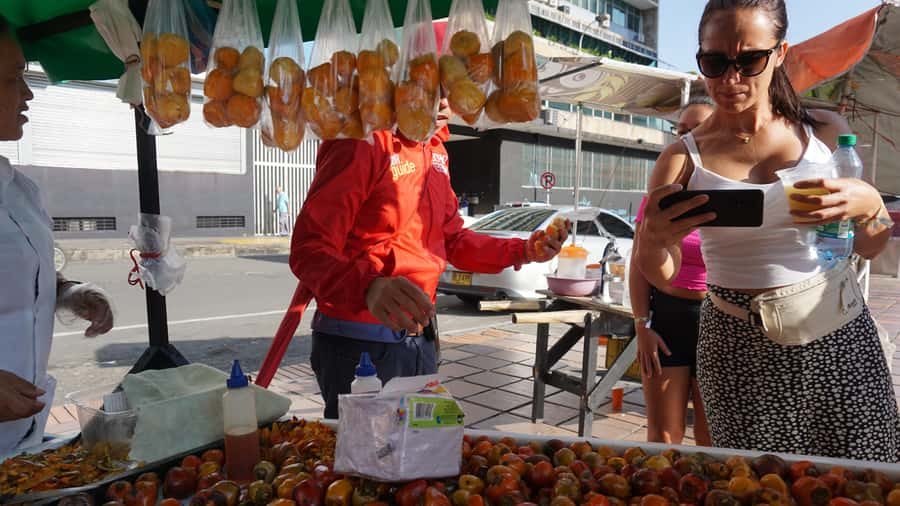
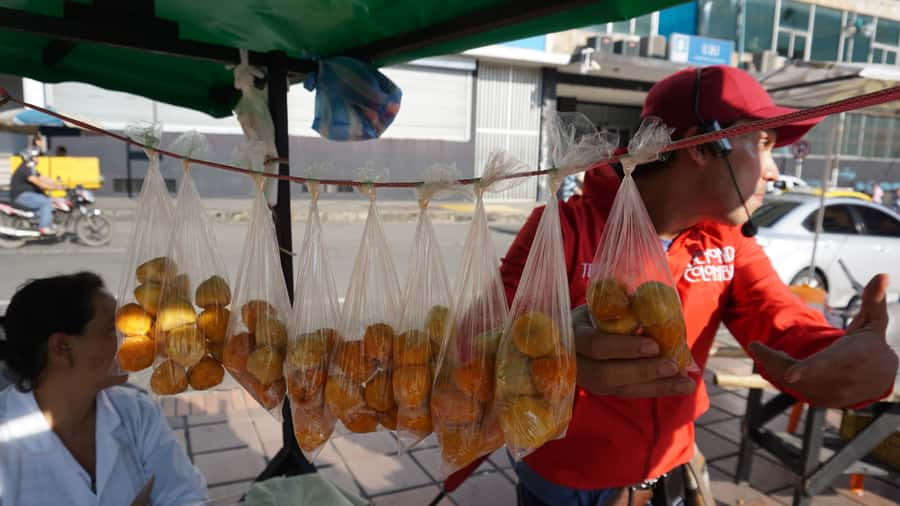
- Chontaduro may be included: this local fruit tasting is offered when available, but food and drinks are not otherwise part of the price.
- Plan for real walking: wear good shoes, carry water, and bring an umbrella or rain jacket.
Why this Cali walk is about more than old buildings
Many city walks treat history as a parade of dates and façades. This one uses Cali’s center as a stage for bigger questions: who built the city, who was left out, how culture survives pressure, and why salsa became such a powerful local language.
That approach suits Cali. The city’s identity comes from several sources at once: the Valle del Cauca region, Indigenous and Spanish traditions, and the lasting influence of African descendants whose food, music, dance, and customs helped shape daily life. You are not simply shown a church and told when it was built. You are encouraged to connect the building to the people and events around it.
The tour also refuses to give you a polished postcard version of the city. Soccer and salsa appear alongside drug trafficking, discrimination, civil wars, and social protest. That balance matters. You leave with a more useful understanding of why Cali can feel welcoming, expressive, proud, and politically alert all at once.
The guide is a major part of the experience. Cristian is known for high energy and clear explanations. Fernando tends to make the walk interactive and adds practical local suggestions. Juliana brings the perspective of someone born in Cali, while Lem is especially associated with salsa and the city’s musical character. The exact guide depends on the date, but the format is built around live storytelling rather than a recorded script.
More Historical Tours in Colombia
- Historical Shared Tour Salsa, Graffiti & Resistance in Cali
★ 5.0 · 107 reviews - Cali: Walking tour of the historic center
★ 5.0 · 69 reviews - Chiva Private Cultural Tour with Audio Guide in Buga
★ 5.0 · 49 reviews
Starting at La Merced and the Calima Gold Museum
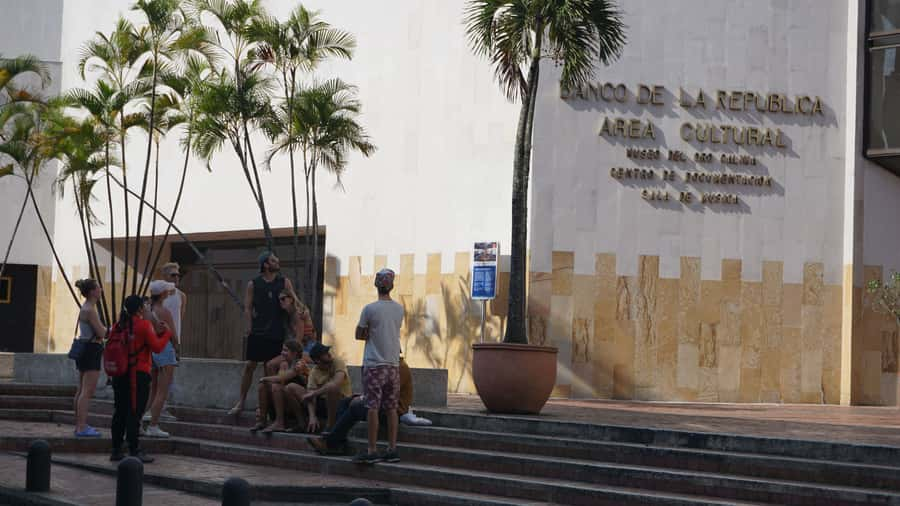
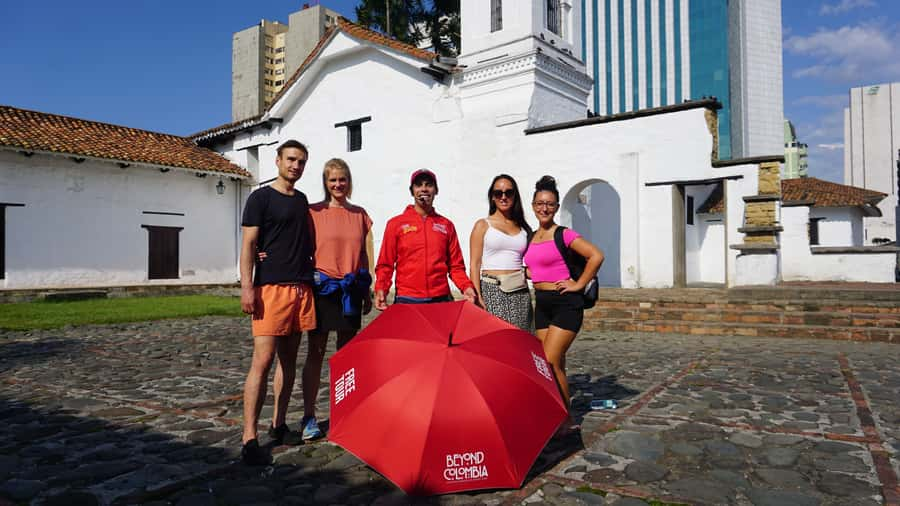
Meet in front of the Museo Arqueológico La Merced, marked by Beyond Colombia’s red umbrellas. This is a sensible starting point because La Merced links Cali’s early colonial story with the older cultures of the region.
The church helps set the scene for Santiago de Cali’s origins. Nearby, the Calima Gold Museum adds another layer, introducing the Indigenous traditions that existed before the city developed under Spanish rule. The tour does not treat the Valle del Cauca as a blank space waiting for colonization. You begin with the idea that this region already had its own societies, skills, beliefs, and trade networks.
You should not expect a long museum visit or a detailed object-by-object collection tour. The value here is the setting and the explanation. The guide uses the first part of the walk to show how geography and regional production influenced Cali’s later growth, particularly from the seventeenth century onward.
This is also where the tour’s broader method becomes clear. The point is not simply to memorize names. It is to understand how economic change created the city you see today.
Reading Cali through food, music, and African heritage
One of the strongest parts of the walk is its treatment of African heritage. The African presence in Cali is not presented as a small footnote to Spanish colonial history. It is connected to the food you eat, the words you hear, the rhythms you recognize, and the way people celebrate.
You’ll learn about the role of African slaves and their descendants in nurturing local culture. The discussion includes gastronomy, dance, and songs from the Pacific region. That makes the tour especially useful if you are new to Colombian cultural history and want something more grounded than a list of ethnic categories.
When available, you may receive a taste of chontaduro. This palm fruit is a small but worthwhile addition because it turns a cultural explanation into something you can experience directly. Do not count on a full snack stop, though. The tasting is subject to availability, and drinks, meals, and other food purchases are not included.
The guide may also point you toward local places for lunch, coffee, souvenirs, and other purchases. These suggestions are one reason to take the walk early in your stay. You can use the advice later instead of choosing restaurants and shops at random.
The River Boulevard and Cali’s public life
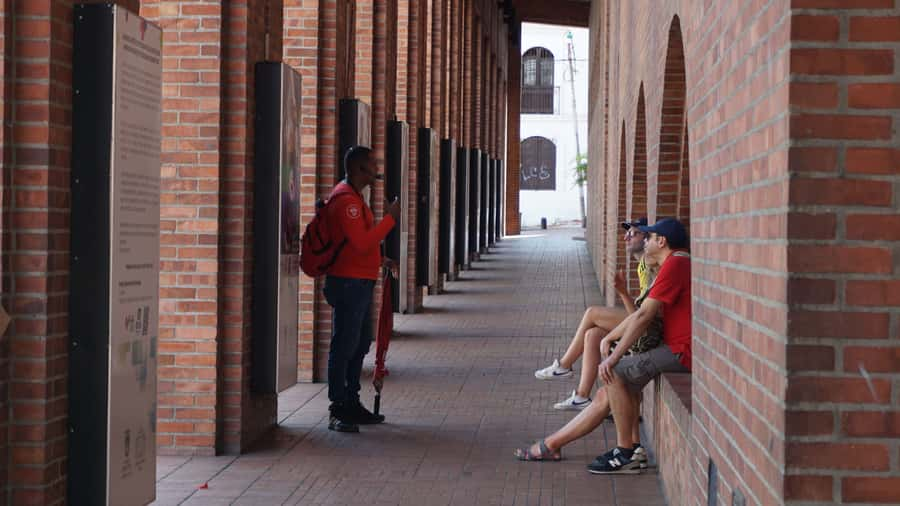
The route continues through the River Boulevard, one of the city center’s key public spaces. Here, Cali’s historic core feels less like a collection of monuments and more like a place where people gather, pass through, protest, meet friends, and enjoy the city.
A good guide will help you notice how the boulevard changed the way the center functions. You may find that the focus is less on one grand sight and more on how public space affects daily life. That is useful in Cali, where streets, plazas, music, and sporting identity are closely linked.
The tour also includes Puente Ortiz, an important crossing in the historic center. As with the boulevard, the bridge is valuable not only as a structure but as a point from which to understand movement through the city. You’ll see how old routes and modern public areas connect.
This section is likely to appeal to you if you prefer city walks that explain how places work. If your priority is entering interiors and spending time inside museums, you may find the route less satisfying because the emphasis is on outdoor interpretation.
More Historical Tours in Cali:
- Cartagena: Historic Center and Getsemaní Shared Walking Tour
★ 4.9 · 2,716 reviews - Lima’s Vibrant Heritage: Exploring the City’s Landmarks Half-day
★ 4.5 · 581 reviews - Santiago: Guided Walking Tour of the Historical Old Town
★ 4.8 · 459 reviews - Maria Fumaça – Wines and History
★ 4.0 · 242 reviews
San Francisco Square, Cayzedo Square, and the city’s civic heart
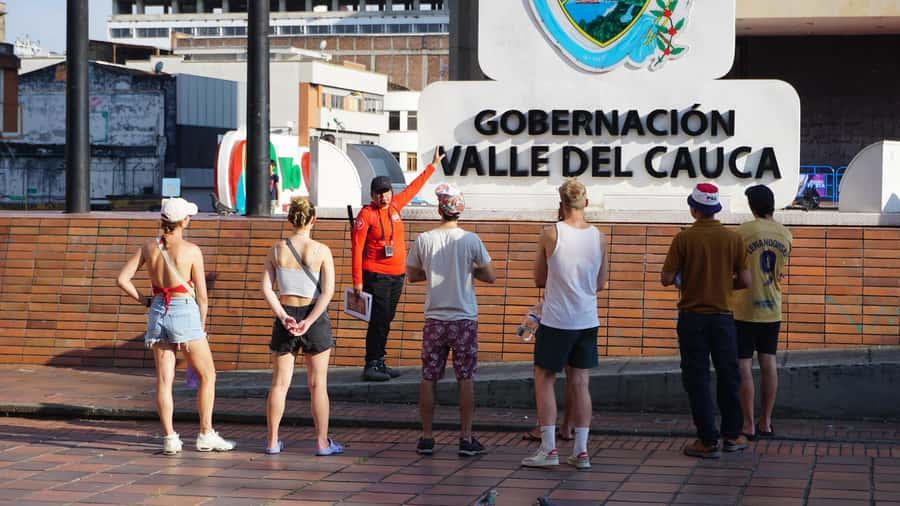
San Francisco Square and Cayzedo Square give the walk a stronger civic and political focus. These are the kinds of places where architecture, government, religion, commerce, celebration, and protest overlap.
Cayzedo Square helps explain Cali’s formal center and the city’s public image. San Francisco Square adds another historic setting, with the guide using the surrounding buildings to explain changes in power and urban life. The route is not just a sightseeing circuit. It asks you to consider whose stories are placed in public view and how those stories change over time.
The discussion of civil wars, discrimination, and social resistance makes these plazas more meaningful. Cali’s history includes periods when public life was marked by conflict and exclusion. The tour also connects earlier struggles with social revolts during and after the pandemic.
That contemporary material is one of the tour’s most useful features, but it may not suit everyone. The walk is not a light introduction made entirely of cheerful anecdotes. You’ll hear about painful events and unresolved issues. An open mind is essential.
Churches, theaters, and the city’s artistic voice
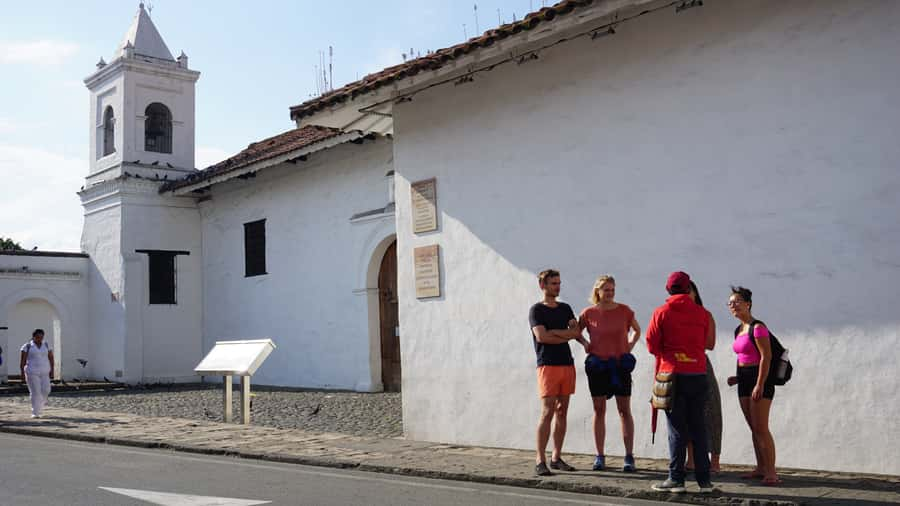
The route passes several major architectural and cultural landmarks:
- The Ermita
- The Municipal Theater
- St. Peter’s Cathedral
- The Jorge Isaacs Theater
- Puente Ortiz
- Jairo Varela
- La Merced
The Ermita and St. Peter’s Cathedral show the importance of Catholic institutions in Cali’s public history. The theaters shift the focus toward performance and artistic expression. The Municipal Theater and Jorge Isaacs Theater help explain how literature, cinema, and theater became part of the city’s cultural development.
You may not enter each building, and tickets or admission are not included. The strength of this section is the guide’s interpretation from the street. If a particular interior is a priority, plan a separate visit rather than expecting this walking tour to function as an architectural interiors tour.
Jairo Varela adds a distinctly musical note. The name is closely linked with Cali’s salsa identity, and the stop helps connect the city’s public art and music culture. The tour explains why salsa is not merely entertainment here. It is tied to neighborhood life, celebration, pride, movement, and the way Cali presents itself to the world.
Salsa, soccer, and La Feria de Cali
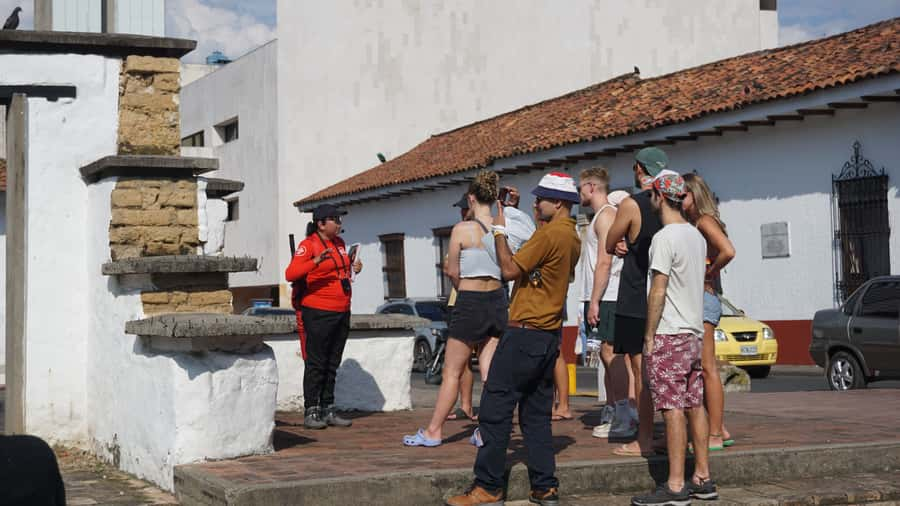
Cali calls itself the world capital of salsa, and the tour gives that claim some historical context. You’ll learn how the salsa movement grew and how the annual Feria de Cali helped turn music and dance into a major part of the city’s public identity.
This is not described as a simple story of carefree parties. The growth of salsa is placed alongside the period of the cartels, which gives the subject a more complicated edge. Cultural life, money, power, nightlife, and public reputation did not develop in separate compartments.
Soccer also enters the discussion. For many people in Cali, soccer and salsa are two major ways of expressing local belonging. The guide’s job is to show how these interests operate socially, not just to name popular teams or dance styles.
If salsa is your main reason for coming to Cali, this walk will give you useful background, but it will not replace a night of dancing. There is no promise of a full dance class or a club visit. Think of it as the cultural groundwork that helps you understand what you see later.
Drug trafficking, protest, and Cali after the pandemic
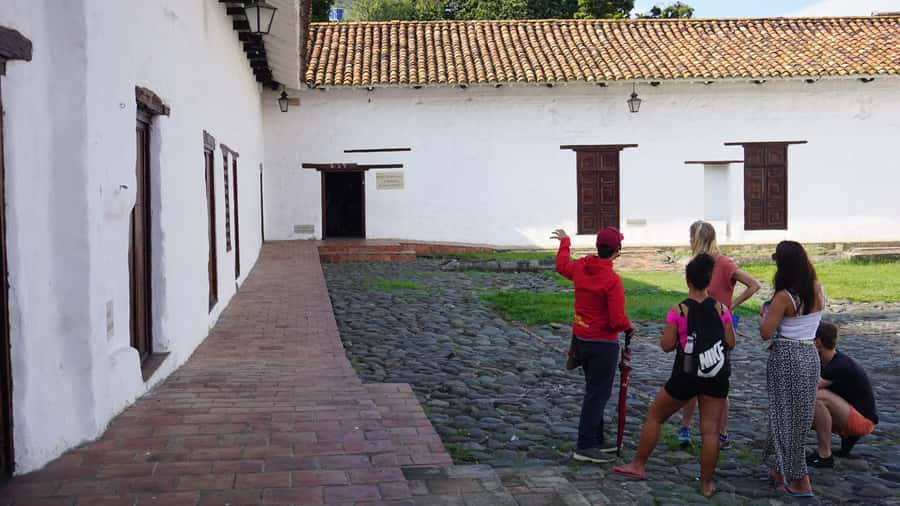
The tour’s most serious section deals with drug trafficking and its effects on everyday life. You’ll hear about the impact, influence, and consequences of the trade, rather than being given a simplified story of villains and victims.
That balanced approach is important. Cali’s modern identity cannot be understood through salsa alone, but it also should not be reduced to crime stories. The walk places difficult subjects beside the city’s creative culture, public celebrations, and community life.
You’ll also discuss social revolts during and after the pandemic. This connects recent events to the longer tradition of resistance and political action in the city. The guide aims to explain the issues without taking sides, which makes the discussion more useful for a first-time visitor who may not know the local context.
Expect these conversations to be thoughtful rather than quick. They take time, and they can make the overall walk feel longer. That is the trade-off for getting a fuller picture of Cali.
How long the walk takes and what to wear
The stated duration is 150 minutes, while the description also says the tour lasts about three hours. I would reserve two and a half to three hours, with a little flexibility. Stops for questions, group size, weather, and the guide’s pace can affect the finish time.
The route covers about 7 kilometers, with breaks to listen. That is a reasonable distance for an active city walk, but it is not a short stroll between nearby monuments. Wear comfortable shoes and light, comfortable clothing.
Cali’s weather can change, so bring an umbrella or rainproof coat. You should also carry water or another drink. Transportation is not provided during the walk, and you will need to make your own way to and from the meeting point.
The activity is in English. Shared tours are social by design, so you will walk with other people rather than hire a guide just for your own party. Party groups are not allowed, and audio recording is not permitted.
Keep your belongings close in crowded areas. The operator uses the local phrase don’t give papaya, meaning do not make it easy for someone to take advantage of you.
Is $13 a good value?
At $13 per person, this is a strong-value introduction to Cali. You get roughly two and a half to three hours of guiding, a long list of major landmarks, cultural context, practical recommendations, and a possible chontaduro tasting.
The value is greatest if you want orientation on your first day. You can learn which neighborhoods and cultural subjects deserve more of your time, then return independently to places that catch your interest.
The price does not include meals, drinks, souvenirs, transport, or entrance tickets. That keeps the cost low, but you should budget separately if you want to visit museums or theaters from the inside.
Beyond Colombia offers free cancellation up to 24 hours before the start, and you can reserve without paying immediately. Those terms are useful if your plans in Cali are still moving around.
Who should take this walking tour?
I would recommend it to first-time visitors who want a clear introduction to Cali’s historic center and cultural identity. It suits you especially well if you enjoy local food, music, public art, social history, and guides who explain difficult subjects directly.
It is also a good pick for solo visitors and couples who want to meet other people while getting practical orientation. The English guides are the main reason this works so well for international visitors. Cristian, Fernando, Juliana, Lem, and Adriana are among the guides associated with especially strong energy, local insight, and clear delivery.
You may want to skip it if you dislike long walks, serious political discussion, or outdoor sightseeing in uncertain weather. It is not suitable for people over 70 according to the activity information, and anyone with limited walking ability should take the 7-kilometer route seriously.
Should you book it?
Book this tour if you want Cali explained as a living city, not just a collection of churches and salsa slogans. The route gives you architecture, food, African heritage, music, protest, theater, and modern history in one efficient introduction.
Skip it if you want a short, relaxed tour with lots of indoor visits or a dedicated salsa lesson. For most first-time visitors, though, the low price and strong guide-led storytelling make this a smart way to get your bearings before exploring Cali on your own.
FAQ
Where does the tour meet?
Meet in front of the Museo Arqueológico La Merced. Look for the Beyond Colombia guides with red umbrellas.
How long does the tour last?
The stated duration is 150 minutes, although the activity description says it lasts approximately three hours. Allow two and a half to three hours.
What language is the tour in?
The tour is conducted in English by a live guide.
How much walking is involved?
You’ll walk about 7 kilometers, with resting stops while the guide explains the sights and history.
Is transportation included?
No. You must arrange your own transportation to and from the meeting point, and the tour itself is done on foot.
Is food included?
A chontaduro tasting is offered when available. Meals, drinks, and souvenirs are not included.
Are entrance tickets included?
No entrance tickets are included. The tour focuses on seeing and explaining the historic center from the route.
What should I bring?
Bring comfortable shoes, comfortable clothes, water or another drink, and an umbrella or rainproof coat. Keep your belongings close in crowded areas.
Just added around Cali
- Salsa Bar Hopping in Cali★ 4.5 · 43 reviews
- Rivering in The Danube (The Mermaid)★ 5.0 · 40 reviews
- Cristo Rey, Tertulia Museum and Downtown Cali City Tour★ 4.5 · 44 reviews
- Salsa & Music Tour of Cali★ 5.0 · 42 reviews
- Admission to Andoke Butterfly Center in Cali with Release Ritual★ 5.0 · 55 reviews
- Historical Shared Tour Salsa, Graffiti & Resistance in Cali★ 5.0 · 107 reviews
- San Cipriano Rainforest – River, Waterfalls and Adventure Day★ 5.0 · 73 reviews
- The Cali Street Food Walking Tour★ 5.0 · 81 reviews
Historical Tours, compared.
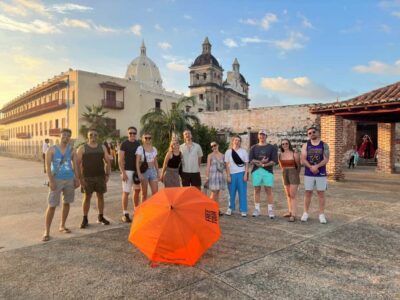
Historic Center and Getsemaní Shared Walking Tour
Read our review →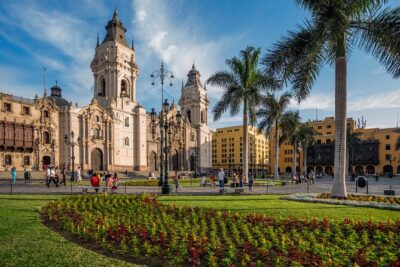
Lima’s Vibrant Heritage: Exploring the City’s Landmarks Half-day
Read our review →
Lima: Historic Center Street Food, Market, and Eateries Tour
Read our review →
Nazis in Buenos Aires: a historical walking tour
Read our review →
Browse the lists this tour appears in