
Reviewed · HISTORICAL TOURS
Historical Shared Tour Salsa, Graffiti & Resistance in Cali
Cali tells its story through salsa, murals, and public spaces. This three-hour walk connects the music of the city with its street art and the idea of popular culture as a form of resistance. You move from a tribute to composer Jairo Varela through central streets and cultural buildings, finishing at Cimarrón Salsa Bar.
I like the way the tour mixes history with things you can actually see and do. You may play instruments, learn a few dance steps, and hear about musicians and local artists rather than simply walking past buildings. I also like the practical club recommendations, since Cali’s salsa scene can be hard to judge from a map alone.
The main consideration is language: the included guide is certified and Spanish-speaking. The group can reach 30 people, so the experience may feel less personal on a busy day. Food, drinks, and souvenirs cost extra, and the advertised price is for the walking experience itself.
Key points at a glance
- Salsa history begins with Jairo Varela: Start at a plaza covered with tributes to one of Cali’s major salsa composers.
- Music becomes something you do: The walk can include instruments and simple dance steps, not just explanations.
- Street art carries a message: Murals connect music, neighborhood identity, football, and unarmed community resistance.
- Ten compact stops keep the route moving: Each listed stop lasts about 18 minutes, creating a broad introduction rather than a long visit at one site.
- You finish at a real salsa venue: Cimarrón Salsa Bar gives the tour a social ending and a useful place to continue your evening.
- The $14 price covers guidance, not spending money: Plan separately for meals, drinks, and any nightlife after the walk.
Why this Cali walk is more than a salsa tour
Many city walks treat salsa as decoration. This one places it at the center of Cali’s identity, then links it to painting, public space, and community action. That makes the route useful even if you are not a confident dancer.
The walk is also a good first look at Cali because it covers several kinds of place in a short time. You see plazas, cultural buildings, a river view, nightlife streets, an urban-art corridor, and a football-themed tunnel. The result is an introduction to how the city presents itself through music and art.
The resistance theme gives the tour its strongest purpose. Music, dance, and graffiti are presented as forms of expression and empowerment, not just entertainment. That context helps you read the murals with more care. A painted musician or dancer becomes part of a larger story about popular culture and public voice.
Expect a guide-led walk rather than a formal museum visit. Cristian has been praised for his energy, history explanations, music activities, and dance instruction. Juliana has also led the experience. Since the tour is offered in Spanish, a basic ability to follow spoken Spanish will make the history and cultural discussion easier to appreciate.
More Historical Tours in Colombia
- Shared Tour Cali’s Historical Downtown
★ 4.8 · 143 reviews - Cali: Walking tour of the historic center
★ 5.0 · 69 reviews - Chiva Private Cultural Tour with Audio Guide in Buga
★ 5.0 · 49 reviews
Starting at Plazoleta Jairo Varela
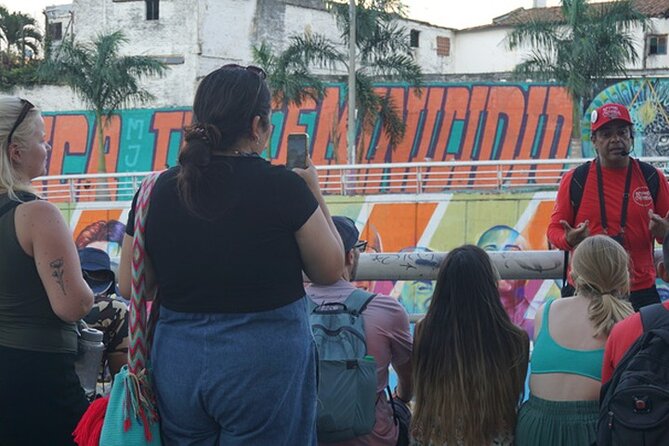
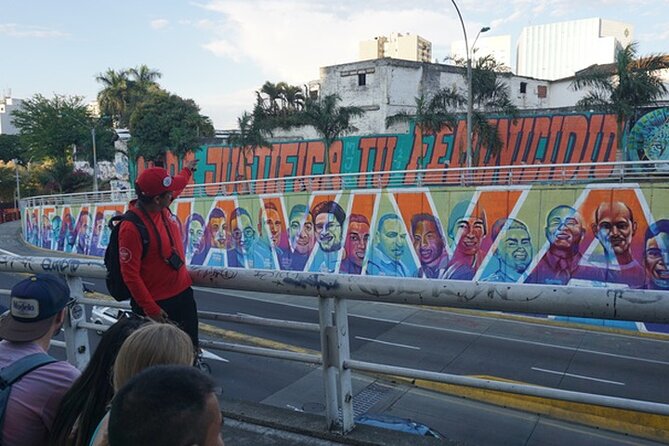
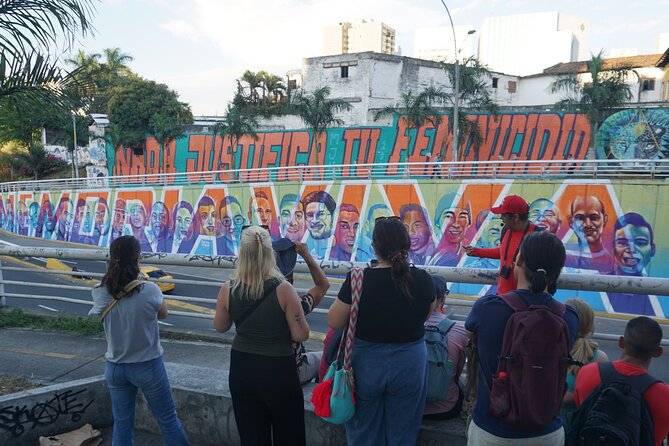
The meeting point is Plazoleta Jairo Varela, also called the Plazoleta de la Caleñidad, in the Granada area. This is a fitting beginning. The plaza honors Jairo Varela, one of Cali’s best-known salsa composers, and its murals give you an immediate visual introduction to the city’s musical pride.
You spend about 18 minutes here. That is enough time for the guide to explain Varela’s place in Cali’s music and point out the artwork around the square. It is not a long stop, so listen closely and ask questions early if you want more detail.
This first stop also sets the tone for the rest of the route. You are not beginning with an abstract lecture about salsa. You are standing among images connected to a real local figure, with the city’s music displayed in public view.
Parque de las Piedras and the social side of salsa
At Parque de las Piedras, the focus shifts from one composer to the public life of salsa. Fountains, sculptures, open areas, and murals make this a place to pause and watch how art and leisure share the same space.
The tour presents the park as a meeting point for salsa lovers. You may hear about live music and the cultural mix reflected in the murals. The short visit works best as a scene-setting stop. It shows that salsa is not confined to clubs, but part of the city’s shared outdoor life.
Because the stop is free and outdoors, you do not need to budget an entrance fee. You do need comfortable shoes, since the experience links ten locations on foot and does not include private transport between them.
Fine arts, public culture, and the city center
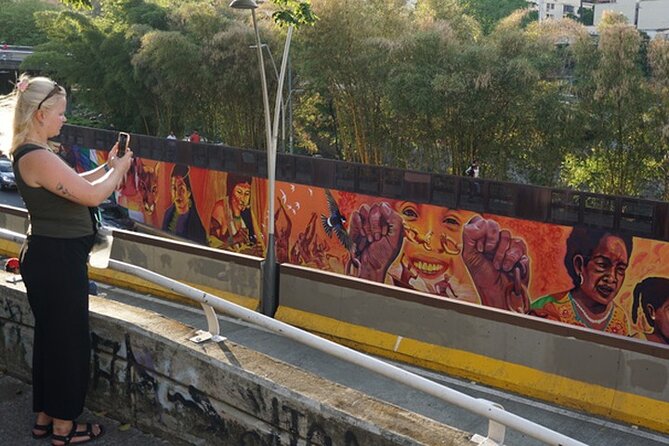
The Departmental Institute of Fine Arts adds a more formal art setting to the route. The building is a cultural center associated with painting, sculpture, and photography. Here, the guide connects the local art scene with music and the wider creative life of Cali.
This stop matters because it prevents the tour from becoming a simple mural hunt. You get a look at how art exists in institutions as well as on building walls. The contrast between a cultural center and street art helps you think about who gets to make art, where it is shown, and how public culture reaches different parts of the city.
Again, allow about 18 minutes. The itinerary is broad, so you should not expect an extended gallery visit or a detailed tour of every exhibition. The value lies in the connection between the building, the city’s artists, and the music discussed throughout the walk.
More Historical Tours in Cali:
- Cartagena: Historic Center and Getsemaní Shared Walking Tour
★ 4.9 · 2,716 reviews - Lima’s Vibrant Heritage: Exploring the City’s Landmarks Half-day
★ 4.5 · 581 reviews - Santiago: Guided Walking Tour of the Historical Old Town
★ 4.8 · 459 reviews - Maria Fumaça – Wines and History
★ 4.0 · 242 reviews
La Curva del Boulevard and the practical side of Cali
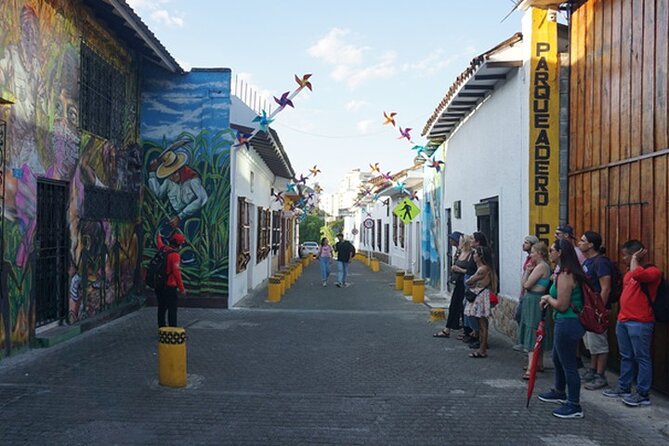
La Curva del Boulevard brings in nightlife and food. The area is known for dining options and evening activity, with murals covering building fronts. The guide may explain the images while pointing out the kind of place where you can stop for a typical dish.
Food is not included, so this is a chance to plan your own extra purchase rather than part of the tour price. That distinction matters. The walk may help you choose what to eat, but you should carry separate money for any meal or drink.
I like this part of the route because it ties culture to ordinary city life. Salsa is not treated as something locked away for tourists. It appears beside restaurants, nightlife, and the facades people pass every day.
The Cali River view at Edificio Boulevard del Río Emcali
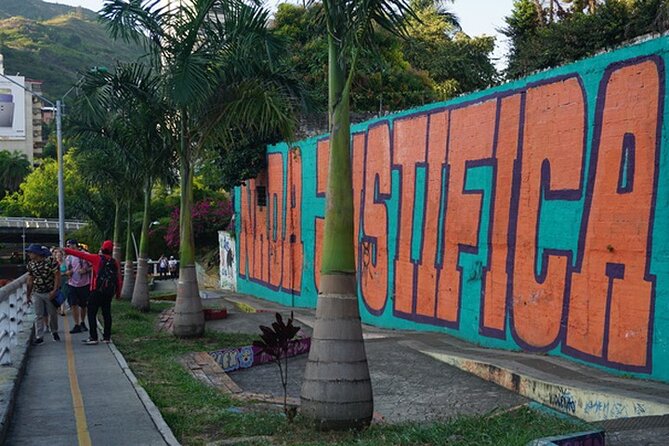
The modern Edificio Boulevard del Río Emcali offers a change of pace. Its architecture represents urban development, and its viewpoint gives you a wider look across the city and toward the Cali River.
After several close views of murals and streets, this panorama helps you understand the route as a whole. You can place the central areas you have walked through and see how the river relates to the built-up city.
The stop is listed at about 18 minutes, so treat it as a viewpoint rather than a long architectural visit. Weather may affect how much you get from the view. The activity requires good weather, and poor conditions can lead to a new date or a full refund.
Calle del Sabor, where the theme reaches its center
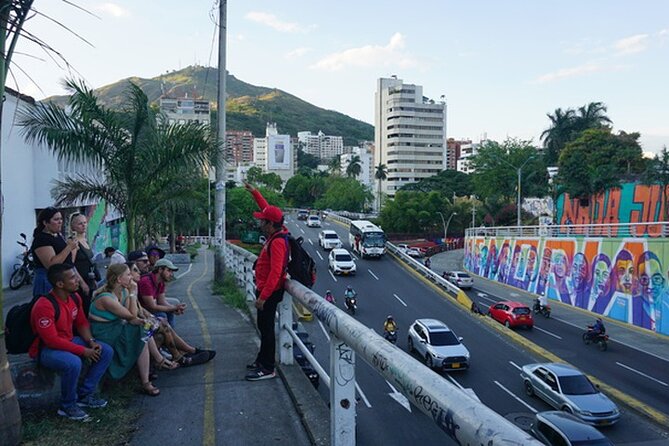
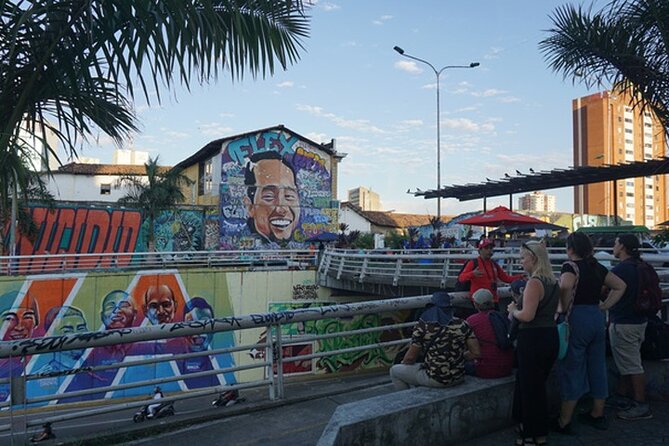
Calle del Sabor is the heart of the salsa portion of the tour. Bars, restaurants, themed shops, and wall paintings fill the route with references to musicians, dancers, and popular Caleña culture.
This is where the walk’s different strands come together. You have already heard about salsa composers, seen public murals, and visited cultural spaces. Here, the music becomes part of a commercial and social district where you can eat, listen, dance, or return later.
The tour includes recommendations for respected salsa bars, so pay attention if you plan to spend an evening dancing. The guide can also suggest places beyond the final stop. Drinks and food are not part of the $14 fee, but the advice may save you from choosing a club at random.
Beneficencia del Valle del Cauca and Calle de la Escopeta
The historic Beneficencia del Valle del Cauca building adds colonial architecture and another cultural setting. It now houses cultural spaces, with art exhibitions, music presentations, and events tied to Cali’s heritage.
This stop broadens the story again. The route is not only about modern graffiti or nightlife. Older buildings also provide space for current art and music. You get a sense of how the city uses its past without keeping culture trapped in the past.
Calle de la Escopeta then returns you to open-air urban art. Its colorful facades work as large canvases for local artists. The short stop gives the guide room to discuss creativity, local identity, and the role of walls as public spaces for expression.
The two locations work well together. One is a historic building used for cultural activity. The other is a street where art changes the feel of the built environment. If street photography interests you, these may be among the most rewarding stops, though the tour schedule will limit how long you can compose each picture.
Túnel Mundialista and the final walk to Cimarrón
Túnel Mundialista brings football into the cultural mix. Its murals celebrate the sport and local life, showing that Cali’s public art is not limited to salsa themes. The tunnel gives you another short, colorful stretch where the guide can explain the stories behind the images.
The route ends at Cimarrón Salsa Bar in the Normandia area. This is more than a convenient endpoint. It gives the experience a clear transition from learning about salsa to seeing where people go to hear it and dance.
The venue is described as an emblematic salsa bar with live music, dance shows, and late-night energy. The tour itself ends there, so any continued evening is your own plan and expense. Still, finishing at a real club is more useful than ending at a generic street corner. You leave with a practical option for experiencing Cali after dark.
What the $14 price really covers
At $14 per person, the tour is priced as an affordable introduction rather than a full-day cultural program. You get about three hours, a certified Spanish-speaking guide, explanations of Cali salsa and popular culture, ten listed stops, street-art interpretation, club suggestions, and possible benefits with recommended local partners.
The price is good if you want structure and context. On your own, you could walk through some of these streets for free, but you would miss the links between the murals, salsa history, and resistance themes. The guide also adds the social element, with possible instrument playing and dance instruction.
You should not read the low price as an all-inclusive outing. Food, drinks, and souvenirs are excluded. The group may reach 30 people, which keeps the cost down but can make it harder to ask long questions or stay together during busy street sections.
The experience is commonly booked about 15 days ahead, so reserve early if your Cali dates are fixed. Confirmation is provided at booking. Free cancellation is available up to 24 hours before the start time. Changes made inside that window are not accepted, and weather or minimum attendance can lead to a different date or a refund.
Who will get the most from this experience
I would choose this walk if you want a first introduction to Cali that combines history with active city life. It suits people who enjoy music, public art, photography, cultural history, and short walking routes with several changes of scene.
It is especially useful at the start of your stay. The guide’s club recommendations can shape your evening plans, and the route gives you names and places to recognize later. You can also use the walk to decide if you want a longer salsa lesson or a night at a club.
You do not need to be an experienced dancer. The included dance steps are described as part of the fun, not as a formal class. Still, if your main goal is intensive dance training, this is not the right format. Its purpose is to connect movement with history while showing you central Cali.
The tour is suitable for most people and service animals are allowed. It is near public transportation. Since the group can include up to 30 people and the route covers many stops, anyone needing a slower or more private pace should consider a private option if available through the provider.
Should you book Salsa, Graffiti & Resistance in Cali?
Book it if you want to understand why salsa matters in Cali, not just hear it in a bar. The strongest parts are the guide-led history, the street-art focus, the chance to learn simple dance steps, and the finish at Cimarrón Salsa Bar.
Skip it if you want a quiet museum tour, a dedicated food tour, or a long dance lesson. You will need to pay separately for meals and drinks, follow a Spanish-speaking guide, and accept a group that may reach 30 people.
For $14, this is a practical way to get your bearings and find the cultural thread linking Cali’s music, murals, and public spaces. I would schedule it early in your visit, wear comfortable shoes, and keep the evening open for one of the salsa venues the guide recommends.
FAQ
Where does the tour start?
The tour starts at Plazoleta Jairo Varela, also called Plazoleta de la Caleñidad, at Av. 2 Nte. #10 Norte-1 to 10 Norte-75 in Granada, Cali.
Where does the tour end?
The tour ends at Cimarrón Salsa Bar at Cl. 4 #1-113, Normandia Sebastian de Belalcazar, Cali.
How long does the tour last?
The tour lasts approximately three hours.
How much does the tour cost?
The listed price is $14 per person.
Is food included?
No. Food, drinks, and souvenirs are not included in the tour price.
Is the guide Spanish-speaking?
Yes. The experience includes a certified Spanish-speaking guide.
How many people can join the group?
The maximum group size is 30 people.
Are admission tickets included?
The listed stops have free admission, and no separate admission fee is included or required for those stops.
Can service animals join the tour?
Yes. Service animals are allowed.
What happens if the weather is poor?
The experience requires good weather. If it is canceled because of poor weather, you will be offered another date or a full refund.
Just added around Cali
- Salsa Bar Hopping in Cali★ 4.5 · 43 reviews
- Rivering in The Danube (The Mermaid)★ 5.0 · 40 reviews
- Salsa & Music Tour of Cali★ 5.0 · 42 reviews
- Cristo Rey, Tertulia Museum and Downtown Cali City Tour★ 4.5 · 44 reviews
- Admission to Andoke Butterfly Center in Cali with Release Ritual★ 5.0 · 55 reviews
- San Cipriano Rainforest – River, Waterfalls and Adventure Day★ 5.0 · 73 reviews
- The Cali Street Food Walking Tour★ 5.0 · 81 reviews
- Afro Walking Tour. The colors of Cali.★ 5.0 · 61 reviews
Historical Tours, compared.
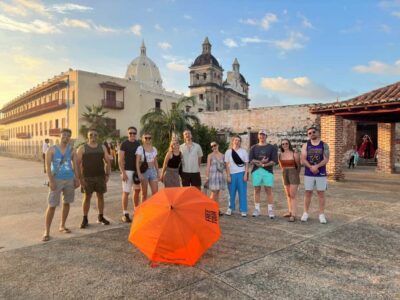
Historic Center and Getsemaní Shared Walking Tour
Read our review →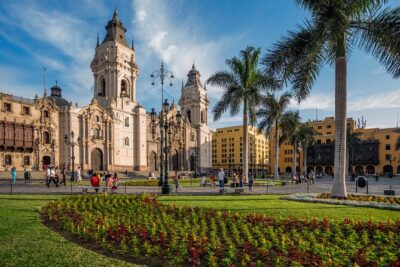
Lima’s Vibrant Heritage: Exploring the City’s Landmarks Half-day
Read our review →
Lima: Historic Center Street Food, Market, and Eateries Tour
Read our review →
Nazis in Buenos Aires: a historical walking tour
Read our review →
Browse the lists this tour appears in