
Reviewed · HISTORICAL TOURS
Buenos Aires: La Boca Art and History Walking Tour
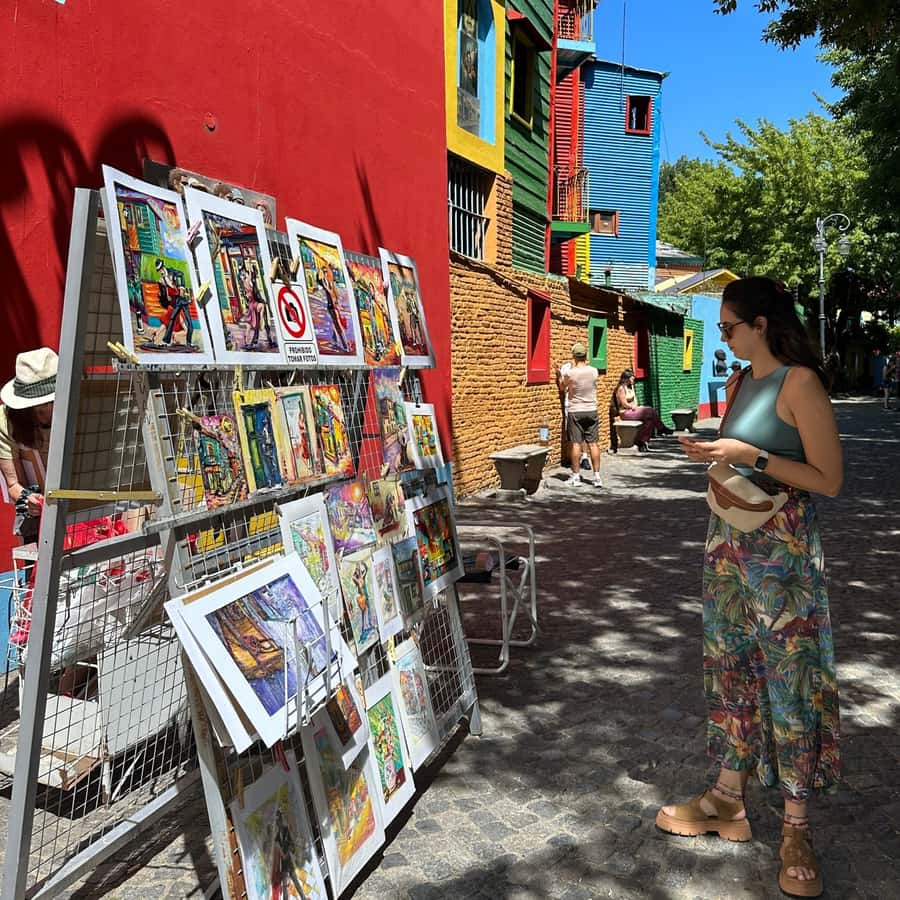
La Boca makes its strongest impression through color, but this tour looks past the painted facades. You follow the story of working-class immigrants, the art of Benito Quinquela Martín, tango’s street presence, and the fierce football identity tied to La Bombonera. I especially like that the walk connects these subjects instead of treating La Boca as a quick photo stop.
I like the focus on Benito Quinquela Martín and the Riachuelo art movement, and I like the human scale of a walking tour led by guides such as Facundo, Laura, Dani, and Francisco. The main consideration is that La Boca is presented through a 150-minute route, so you get a strong introduction rather than time to explore every museum, shop, or street at your own pace.
Key points to know
- Quinquela Martín gives La Boca its artistic backbone: Learn how the local artist and philanthropist shaped the neighborhood’s identity.
- La Bombonera is a photo stop, not a stadium tour: You get a look at Boca Juniors’ famous home and a window into Argentine football culture.
- The route links immigration, tango, art, and daily life: This is more thoughtful than a simple colorful-streets walk.
- The tour ends near where it begins: Meet at the Benito Quinquela statue on Avenida Don Pedro de Mendoza and finish nearby at number 1835.
- Two extras are included: The package includes two of three options, which may be museum entry, wine tasting, or dulce de leche tasting.
- Plan ahead if traveling alone: Book at least 24 hours ahead, and confirm availability directly with Baires Experience if you are a solo traveler.
La Boca beyond the colorful facades
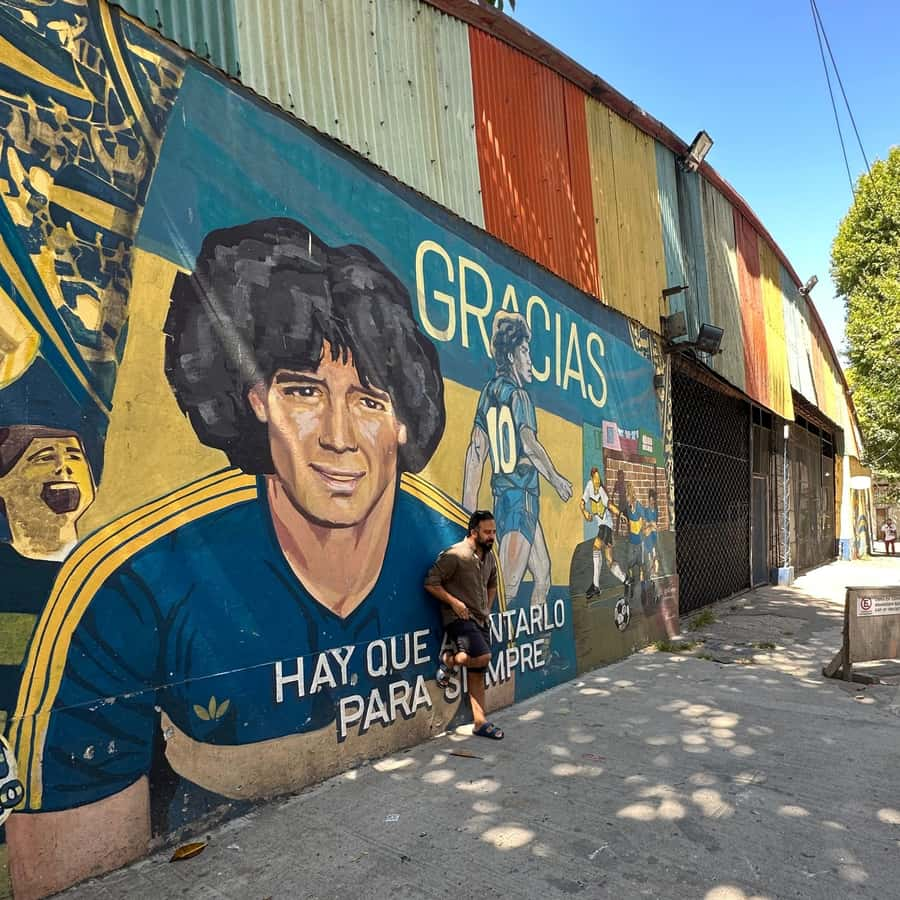
La Boca is easy to reduce to bright walls, tango poses, and football shirts. Those sights are real, but they are only the surface. The useful part of this tour is the way it explains why the neighborhood looks and feels so different from the polished central districts of Buenos Aires.
Your guide places La Boca in the story of immigration and working-class Buenos Aires. The walk brings together the port-side setting, the neighborhood’s social identity, local art, and the passions of Boca Juniors supporters. You are not simply moving from one landmark to the next for photographs. You are given a reason for each stop.
The guides are a major part of the experience. Facundo is praised for warm communication and strong English. Rafa helped a solo participant find the meeting point and kept in touch before the tour. Laura, Dani, Frani, Loli, Ludmila, and Francisco are also named for friendly presentation and clear explanations. Guide assignments can change, but the pattern is useful: this is a people-led tour, and the quality depends heavily on how your guide tells the story.
The tour is offered in Spanish, English, and Portuguese. Some guides may speak additional languages, but you should confirm that directly rather than assume it.
More Walking Tours in Argentina
- Buenos Aires Hop-On Hop-Off Bus, Free Walking Tours & Discounts
★ 4.5 · 2,218 reviews - Buenos Aires: La Boca Guided Walking Tour in English
★ 4.8 · 1,587 reviews - Nazis in Buenos Aires: a historical walking tour
★ 4.9 · 193 reviews
Meeting the guide at the Quinquela statue
The meeting point is the Benito Quinquela statue at Av. Don Pedro de Mendoza 1921. The walk finishes close by at number 1835, so you do not need to arrange a complicated pickup or retrace a long route at the end.
Arrive with your passport or identity card. Hotel pickup and drop-off are not included, so getting to the meeting point is your responsibility. The supplied details do not specify a transport plan, so check your route and allow enough time to find the statue before the start.
The starting point is fitting. Quinquela Martín is not a minor name added to the tour as decoration. His work and local philanthropy are central to how La Boca understands itself. Beginning near his statue gives the guide a natural way to explain the artist before you see the museum connected with him later.
Walking La Boca’s immigrant and working-class story
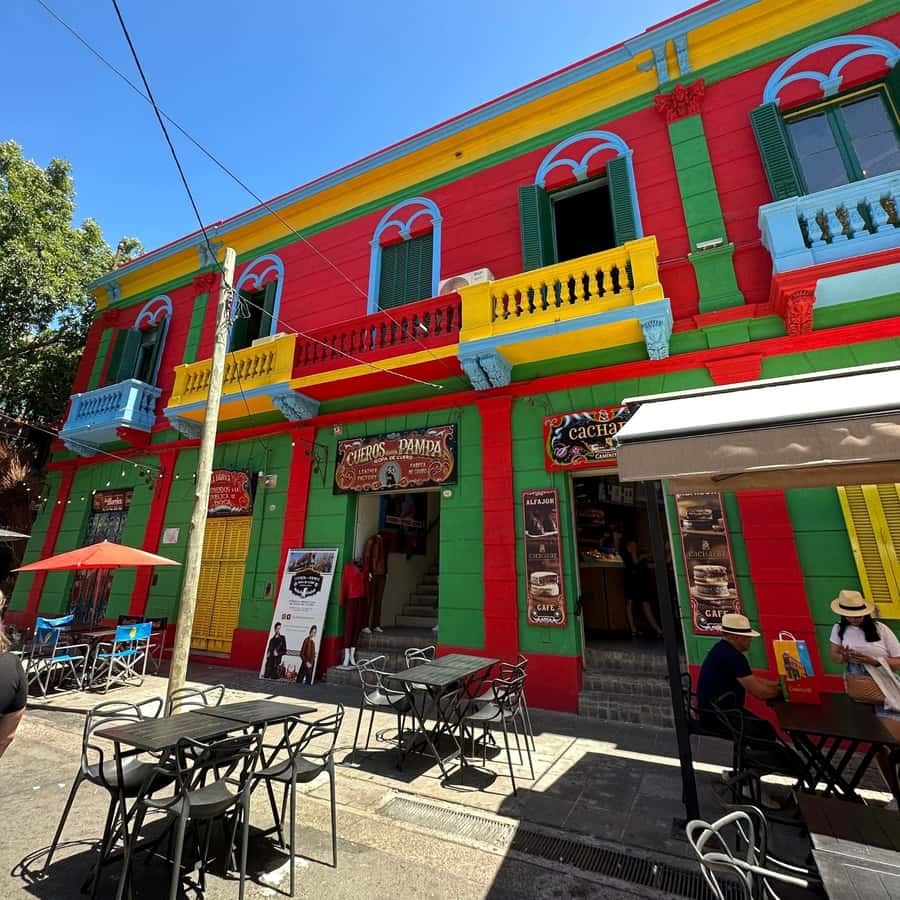
The first part of the route takes you through La Boca itself. Expect a guided walk with sightseeing stops, local points of interest, and explanations of immigration and working-class life.
This is where the tour earns its price. A self-guided walk can show you the painted buildings, but it may not explain why the neighborhood became associated with artists, tango, football, and a strong local identity. Your guide supplies the links between those subjects.
The immigration theme matters because La Boca’s character was shaped by newcomers to Buenos Aires. You will hear about the people and communities that helped form the area, rather than seeing the neighborhood as a stage set designed only for tourists. Frani, one of the guides praised by name, is described as especially strong on the history of La Boca and Argentina as a whole. That broader context is useful if this is your first visit to the city.
You will also pass colorful houses and shops. The colors are part of the appeal, but the guide’s job is to show you the neighborhood behind the postcard image. Expect the walk to be explanatory rather than focused only on posed tango pictures or shopping.
The supplied information does not give an exact group size or a detailed accessibility assessment for every street. The activity is listed as wheelchair accessible, but a walking route through an older neighborhood can still involve practical questions about surfaces and access to individual buildings. If you use a wheelchair, contact the provider before booking so the route and museum entrances can be confirmed for your date.
Feeling tango without a formal dance show
Tango is one of the tour’s main themes, but this is not described as a stage performance or a tango lesson. Instead, you encounter the dance as part of La Boca’s cultural identity and street life.
That distinction helps set expectations. You are booking an art and history walk, not an evening theater production. The reference to tango’s motion gives the route a sense of place, while the guide explains how the dance fits into the neighborhood’s public image.
If your priority is a full tango performance, this tour will not replace a dedicated tango show. If you want to understand why tango is so closely tied to Buenos Aires before choosing a separate performance, the discussion can make that later experience more meaningful.
More Walking Tours in Buenos Aires
- Buenos Aires: Personalized 2 to 8-Hour Private Walking Tour
★ 4.7 · 149 reviews - Buenos Aires: San Telmo and Market Guided Walking Tour
★ 4.8 · 102 reviews - Buenos Aires Walking Tour with Local Guide and Optional Rooftop
★ 4.5 · 87 reviews - Best of Buenos Aires Private Walking Tour
★ 4.5 · 73 reviews
La Bombonera and the force of Boca football
The stop at La Bombonera is a photo stop and sightseeing visit. You see the stadium associated with Boca Juniors and hear about the passion of Argentine football.
This is an important stop even if you do not follow soccer. Football in Buenos Aires is not merely a sporting detail. It is one of the clearest ways a neighborhood expresses pride and belonging. The guides bring that energy into the broader story of La Boca, showing how football sits alongside art, immigration, and local identity.
Rafa is specifically praised for including people, places, and soccer in his explanations. Francisco is also noted for keeping the information well timed and engaging. That matters here, since a stadium stop can otherwise become a quick picture and a few familiar facts.
Keep the boundaries clear: the provided details describe a photo stop, not entry to La Bombonera or access to a match. You should not book this tour expecting an interior stadium visit. It is best understood as a neighborhood stop with football context.
Museo Conventillo El Rincon de Lucia
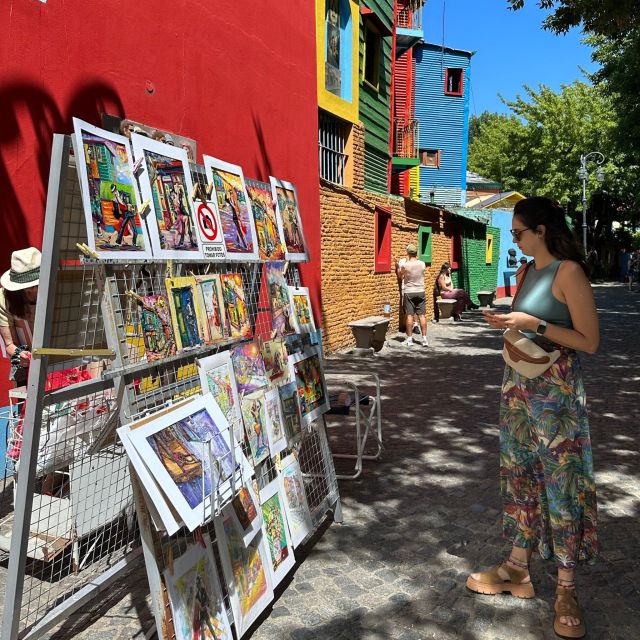
The visit to Museo Conventillo El Rincon de Lucia gives the walking route an indoor historical stop. It is listed as a guided visit, so your guide continues the explanation rather than leaving you to look around without context.
The word conventillo refers to the type of communal housing associated with immigrant and working-class life in Buenos Aires. The museum stop is valuable because it adds a domestic and social angle to the street scenes. Instead of only looking at facades, you get a closer sense of the kind of shared living environment connected with the neighborhood’s past.
The available details do not describe the museum’s individual rooms, displays, or the exact amount of time spent inside. I would treat it as one part of a compact route, not as a full museum afternoon. The guide’s commentary is likely to be as important as the building itself.
Benito Quinquela Martín Museum and the Riachuelo artists
The Benito Quinquela Martín Museum is the artistic center of the experience. You visit with a guide and explore the impact of the artist associated so strongly with La Boca.
The tour also introduces the Riachuelo art movement. This gives you a way to understand local art as a response to a particular place, its working people, and its surroundings. The museum stop should help you see La Boca’s colors as part of a longer artistic story, not just a modern tourism style.
Quinquela Martín’s importance also extends beyond the paintings. The tour highlights his impact as an artist and philanthropist, making him a figure in the neighborhood’s civic story as well as its art history. That broader view is one of the strongest reasons to choose this walk over a quick visit to Caminito or a photo-only tour.
There is one booking detail worth checking. The package includes two of three options: entry to the Benito Quinquela Museum, a free wine tasting, and a dulce de leche tasting. Since the itinerary includes the museum, ask Baires Experience to confirm exactly which two options apply to your booking. Do not assume that all three are included.
Wine, dulce de leche, and the value of the extras
The tasting options add a small food-and-drink element to the history walk. Wine gives the route a link to Argentine social life, while dulce de leche offers a familiar local flavor in a simple, easy format.
The value depends on which pair is included and on your personal interests. If you care most about art, museum entry is likely the stronger choice. If you already plan to visit the museum separately, a tasting may add variety to the afternoon.
At $46 per person, the price is not the cheapest way to see La Boca. You are paying for a live guide, a 150-minute route, and two included options, rather than simply paying to walk through the neighborhood. The price makes the most sense if you want interpretation in English, Spanish, or Portuguese and prefer a planned route that combines several themes.
It is less compelling if you only want a quick look at colorful streets and La Bombonera from outside. You could see those public sights independently, although you would miss the organized connection between art, immigration, tango, and football.
Who will get the most from this 150-minute walk
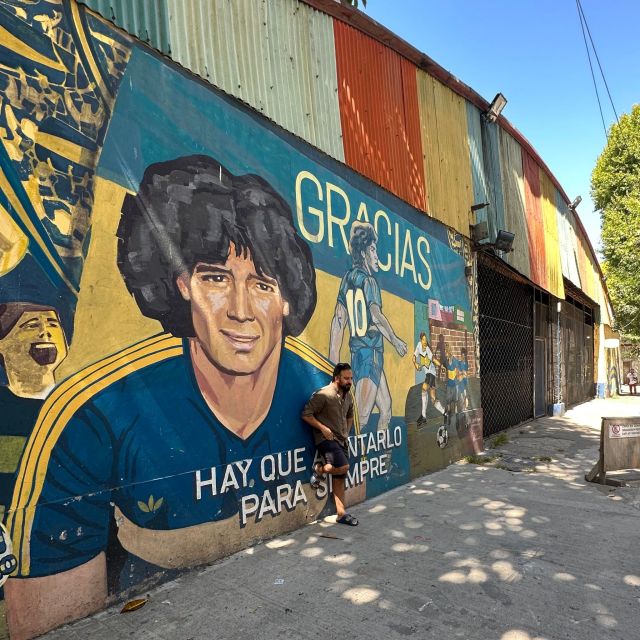
I would recommend this tour to first-time visitors who want an introduction to La Boca with more substance than photographs. It also suits anyone interested in urban art, immigration, Argentine football, or the way a neighborhood’s identity is shaped by its artists.
It works well for people who like walking and asking questions. The guides are described as approachable, friendly, and easy to talk with, which matters because the route covers several subjects in a short period. If you enjoy stopping to hear stories rather than rushing between landmarks, you are likely to appreciate the format.
Families and mixed-interest groups may also find the combination useful. One person can focus on football, another on art, and another on tango or social history. The tour gives each subject a place without making the whole visit depend on one specialty.
You may want a different activity if you want a full tango show, an interior visit to La Bombonera, a long museum session, or several hours of independent photography. This is a compact introduction, not an all-day exploration.
Timing, reservations, and practical planning
The tour lasts 150 minutes, or two and a half hours. That is enough time for a focused circuit, but you should avoid scheduling another fixed activity immediately afterward. The route includes outdoor walking, a stadium stop, and museum visits, so a little flexibility will make the afternoon easier.
Bookings must be made at least 24 hours in advance. Solo travelers must confirm availability directly with Baires Experience before or after booking, and the provider asks you to contact them by email or WhatsApp to make sure the tour operates on your selected date.
The activity offers free cancellation up to 24 hours before the start time. You can also reserve now and pay later, which is useful when your Buenos Aires plans are still shifting. These policies do not remove the need to confirm a solo booking or the exact included extras.
Bring your passport or identity card. There is no hotel pickup or drop-off. The tour is listed as wheelchair accessible, and the guide languages are Spanish, English, and Portuguese.
Should you book the La Boca art and history walk?
Book it if you want La Boca explained rather than simply photographed. The best parts are the focus on Quinquela Martín, the visit to his museum, the conventillo stop, and the way football and tango fit into the neighborhood’s larger story.
At $46, the tour offers fair value when the guide is a priority and the two included options suit you. Confirm whether your booking includes museum entry, wine tasting, or dulce de leche tasting, and contact the provider early if you are traveling alone.
Skip it if your main goal is a stadium interior tour, a full tango performance, or unstructured time in the neighborhood. For everyone else, this is a practical way to meet La Boca through its artists, residents, passions, and public places.
FAQ
How long does the La Boca Art and History Walking Tour last?
The tour lasts 150 minutes, or two and a half hours.
Where does the tour meet?
Meet your guide at the Benito Quinquela statue at Av. Don Pedro de Mendoza 1921.
Where does the tour finish?
The tour finishes at Av. Don Pedro de Mendoza 1835, close to the meeting area.
Does the tour visit La Bombonera?
The tour includes a photo stop and sightseeing at La Bombonera. The provided details do not list an interior stadium visit.
Is the Benito Quinquela Martín Museum included?
The package includes two of three options: Benito Quinquela Martín Museum entry, free wine tasting, or dulce de leche tasting. Confirm which two options apply to your booking.
What languages are available?
The tour is offered in Spanish, English, and Portuguese.
Can I cancel the booking?
You can cancel up to 24 hours in advance for a full refund. The activity also offers a reserve now and pay later option.
More Historical Tours in Buenos Aires
- San Telmo: Historical Guided Tour with Street Food & Drinks
★ 5.0 · 87 reviews - Recoleta Cemetery – Small Group Tour of History & Secrets
★ 5.0 · 53 reviews - Cartagena: Historic Center and Getsemaní Shared Walking Tour
★ 4.9 · 2,716 reviews - Lima’s Vibrant Heritage: Exploring the City’s Landmarks Half-day
★ 4.5 · 581 reviews
Just added around Buenos Aires
- Private Airport Transfer In or Out: Aeroparque (AEP)–Buenos Aires★ 5.0 · 73 reviews
- Sailing with Wine Tasting in Buenos Aires★ 5.0 · 50 reviews
- Traditional Argentine FoodTour with optional Michelin Experience★ 4.5 · 56 reviews
- Unique Tailored Tours – The Hummingbird Trip★ 5.0 · 69 reviews
- Experience The Essence of Buenos Aires in San Telmo★ 5.0 · 51 reviews
- Tigre Speedboat – The Delta s Captain – CITYSAILING TIGRE★ 5.0 · 75 reviews
- Private Airport Transfer in or out with english speaking driver.★ 4.5 · 69 reviews
- Tango Porteño Show with Optional Dinner in Buenos Aires★ 4.5 · 58 reviews
Historical Tours, compared.
Historic Center and Getsemaní Shared Walking Tour
Read our review →
Lima’s Vibrant Heritage: Exploring the City’s Landmarks Half-day
Read our review →
Lima: Historic Center Street Food, Market, and Eateries Tour
Read our review →
Nazis in Buenos Aires: a historical walking tour
Read our review →
Browse the lists this tour appears in