
Reviewed · ANDES MOUNTAIN TOURS
La Paz: Andean Architecture Tour in El Alto
El Alto’s cholets are not shy buildings. Their bright colors, geometric patterns, grand halls, and futuristic shapes turn private wealth into public architecture. This three-hour tour takes you beyond La Paz’s usual sights and shows you the city’s modern Andean identity from street level, cable car windows, and inside one of these unusual mansions.
I like two things right away: you actually enter a cholet, rather than stopping for photos outside, and the cable car gives you a useful view of how La Paz and El Alto fit together. The guides, including Amara, Denise, Jose, Chris, and Remberto, are praised for explaining local customs, architecture, and city life clearly. The main drawback is altitude: this is a walking tour in El Alto, and the high, changeable weather can make three hours feel demanding.
Key points to know before you go
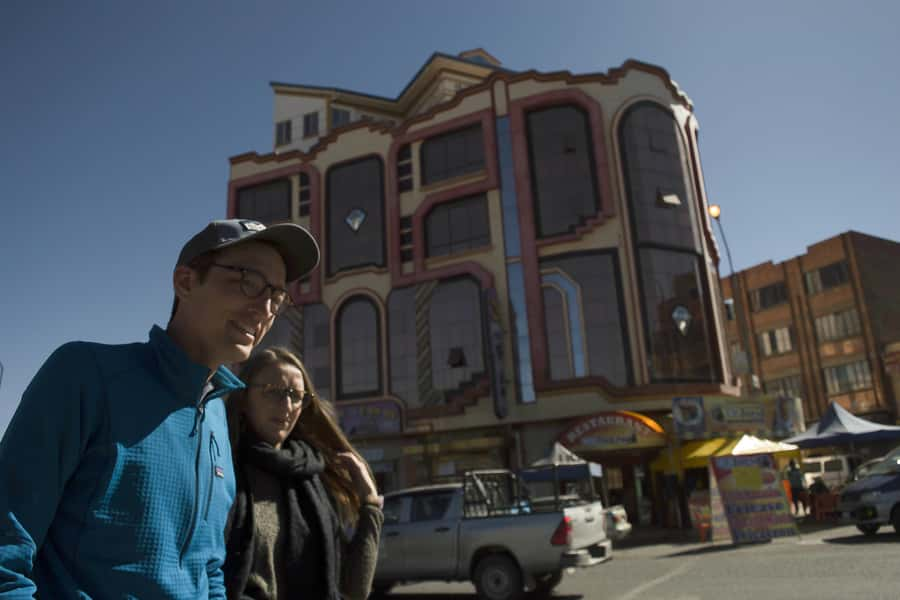
- Cholets turn Andean identity into architecture: These colorful mansions mix modern wealth, traditional patterns, textiles, and older Andean ideas.
- You enter one of the buildings: The interiors continue the exterior design, giving you a better sense of how these spaces are used.
- The cable car is part of the experience: You ride through different parts of the city and see the changing views between La Paz and El Alto.
- The tour reaches places most sightseeing routes skip: El Alto feels like a real working city rather than a polished tourist district.
- The guide makes a big difference: Strong English and Spanish guides explain Freddy Mamani, local traditions, and the meaning behind the buildings.
- Prepare for altitude and weather: Wear comfortable shoes, bring a rain jacket, and carry only a small bag.
Why El Alto’s cholets are worth your time
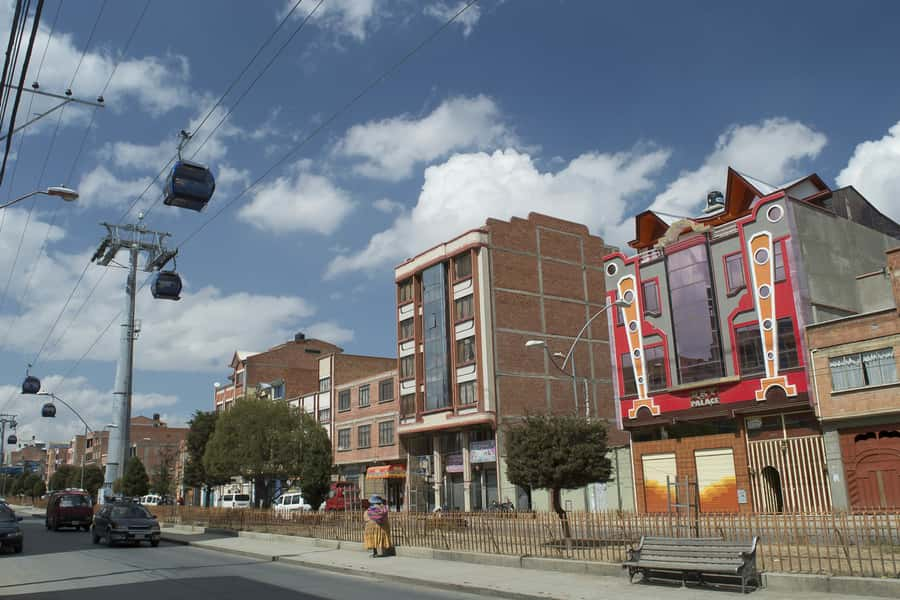
For many visitors, La Paz means steep streets, colonial squares, markets, and mountain views. El Alto offers another side of the city. It is higher, newer, and more closely tied to the rise of successful Aymara business families.
The cholet is the clearest expression of that change. The word combines chalet with cholo, a term connected to Indigenous and mixed-heritage identity in Bolivia. In practice, these buildings are large private mansions and event spaces built to display success. Their owners may use them for family life, businesses, weddings, and lavish parties.
The design often draws on Andean forms and textiles, then pushes them into a modern, almost science-fiction style. You might see strong colors, repeated geometric shapes, decorative facades, and large halls designed to impress. The effect can feel playful, excessive, or even kitsch. That is part of the point. These buildings are not trying to blend in.
I find the architecture more interesting when you see it as a statement about identity, not just as unusual decoration. A cholet says that Indigenous culture and modern wealth belong together. The building is both home and calling card, a place where family, business, celebration, and public status meet.
More days in the Andes around La Paz:
- Cholet Tour – Andean Architecture and Culture – El Alto
★ 5.0 · 72 reviews - From Mendoza: High Andes Aconcagua Mountain Tour
★ 4.4 · 767 reviews - Bariloche: 7 Lakes & San Martin de Los Andes Road Trip
★ 4.5 · 624 reviews
Meeting at the purple cable car station
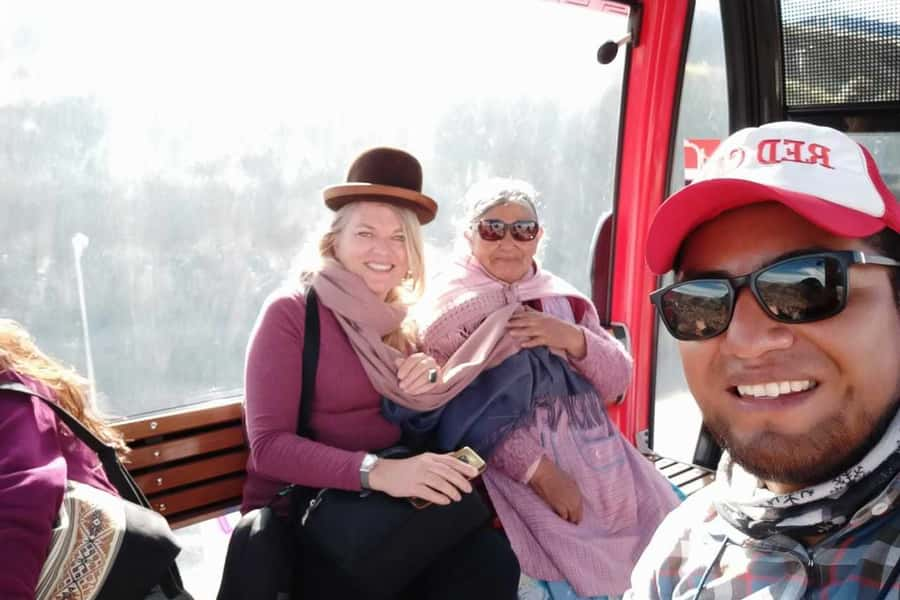
The tour begins in central La Paz at the doors of Michelline cafe, beside the entrance to the purple cable car station, Estacion Teleferico Morado. Look for the guide wearing a red cap.
There is no hotel pickup or drop-off, so you need to make your own way to the meeting point. That is simple enough if you are already in central La Paz, but allow time to find the station entrance. A small bag is best because large luggage and bulky bags are not allowed.
The guide leads the group toward the cable car. The transportation is included, along with a local snack, so you are not paying extra for the basic movement and refreshment during the tour. The group then begins the climb toward El Alto, where the setting changes quickly.
Seeing La Paz and El Alto from the cable car
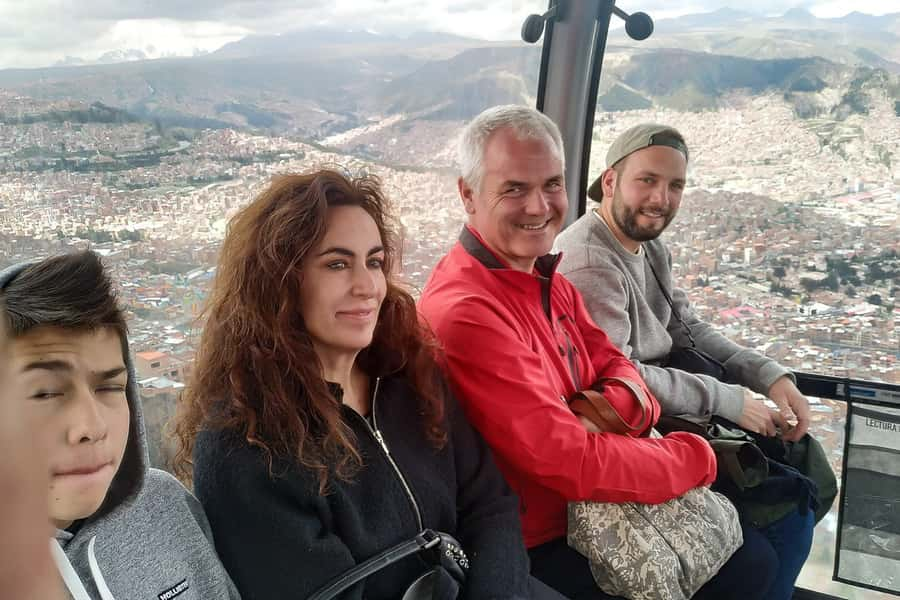
The cable car is not just a convenient ride. It gives you a clear introduction to the relationship between the two cities.
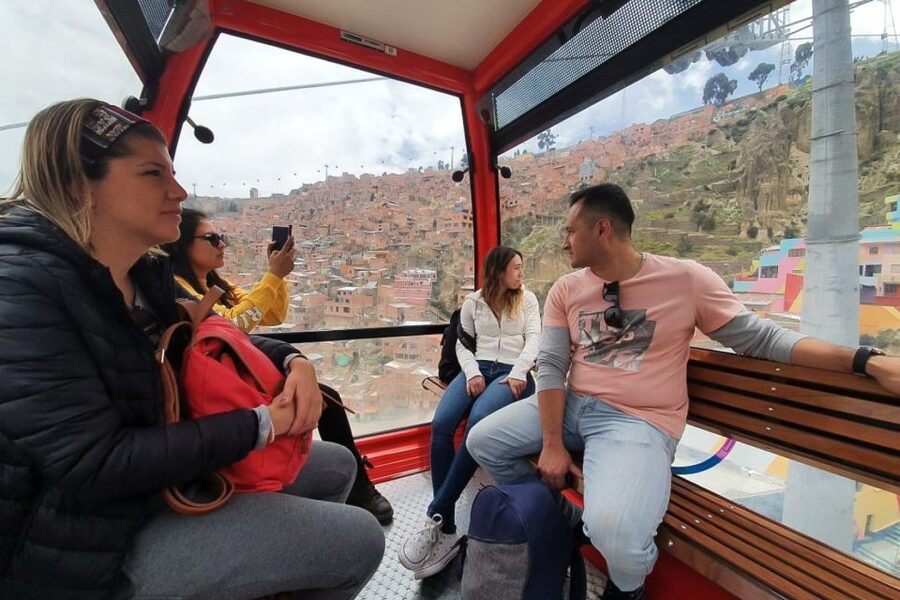
La Paz occupies a dramatic basin, while El Alto spreads across the high plateau above it. From the cabins, you can see streets, buildings, and neighborhoods arranged across the steep terrain. The ride helps you understand why getting between the two areas can be difficult by road and why the cable car matters to daily life.
You also get a better sense of the scale of the urban area. From ground level, La Paz can feel like a maze of hills and narrow routes. From above, the city’s shape becomes easier to read. As the route reaches El Alto, the architecture and street pattern change, and the cholets begin to make more sense as part of a growing urban center.
The cable car ride is one of the most praised parts of the experience because it adds context without requiring a separate sightseeing trip. You are not simply transported to the buildings. You see the connection between La Paz, El Alto, and the high plateau along the way.
Walking among the colorful cholets
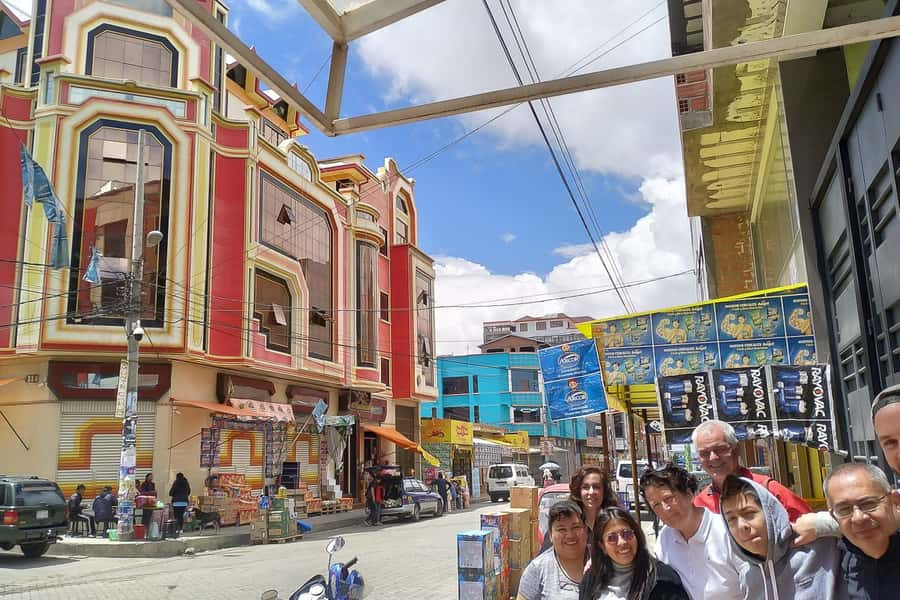
The walking portion takes you into an area that most short visits to La Paz miss. El Alto is not presented as a carefully arranged monument district. You are seeing a living neighborhood where impressive mansions appear among ordinary urban streets.
That contrast is important. A cholet has meaning because it is part of everyday life. It may sit beside less ornate buildings, busy roads, shops, and working neighborhoods. The tour helps you read the area instead of treating the mansions as isolated photo objects.
Your guide points out the design features and explains the social background behind them. The subject is not simply who built the largest house. You learn how successful residents use architecture to show achievement, support family events, and express pride in Andean culture.
The strongest guides add wider city context. Remberto, for example, has been praised for connecting the buildings with facts about La Paz and El Alto. Denise has been singled out for explaining the architecture and city planning in enough detail to satisfy someone with a serious interest in those subjects. Jose has been noted for discussing local culture and city issues beyond the basic route.
That range matters. If you only look at the facades, the tour could become a colorful photo walk. With a good explanation, you begin to understand why these buildings appeared, who uses them, and what they say about social change in Bolivia.
A few more La Paz days worth comparing
- La Paz and El Alto: Cable Car Rides and Walking Tour
★ 4.8 · 790 reviews - La Paz Half-Day Walking Tour
★ 4.8 · 591 reviews - La Paz: Private City Tour with Cable Car & Moon Valley Visit
★ 4.9 · 508 reviews - La Paz: Full Day Trip to Copacabana and Isla del Sol
★ 4.5 · 400 reviews
Entering a cholet and looking inside
The interior visit is the most valuable feature of the tour. You enter one of the cholets and see how the design continues beyond the facade.
From the outside, it is easy to focus on color and shape. Inside, you can better understand the building as a social space. The interior design reflects the same desire to combine Andean references with modern decoration and public display. The rooms are connected to the idea of celebration and status, not simply quiet domestic living.
This stop also answers a question that exterior photos cannot: how does someone actually use a building like this? The tour provides a more complete picture of the cholet as a place for family, business, and parties.
Access to a private or semi-private building can vary, so the guide controls the visit and the timing. Treat the interior as a cultural visit, not a museum. Follow instructions, avoid bringing large bags, and be respectful about photography and residents.
Freddy Mamani and the story behind the style
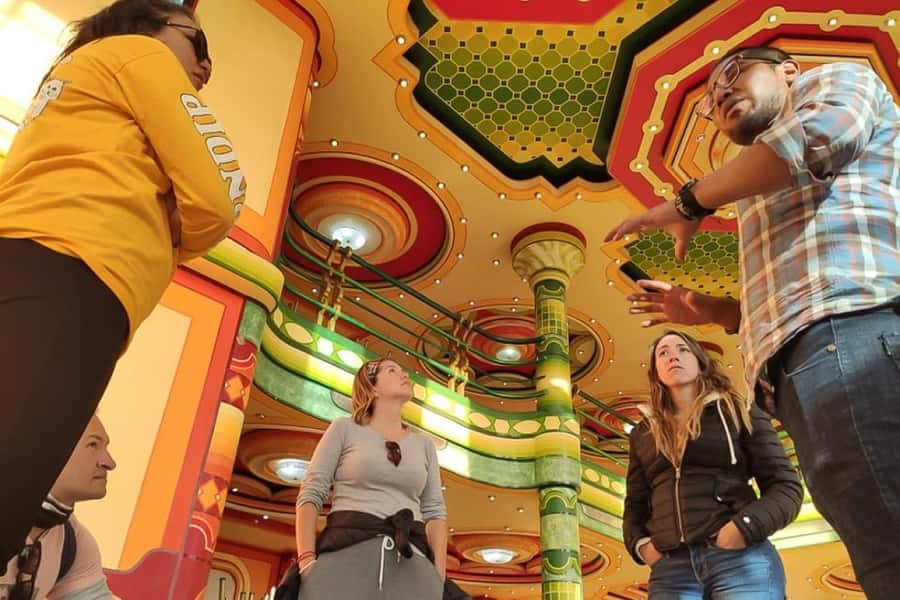
The tour introduces Freddy Mamani, the architect often associated with the early development of this cholet style. His name comes up because the buildings are not random acts of decoration. They form part of a recognizable approach to modern Andean architecture.
Learning about Mamani helps you place the buildings in a wider story. The style reflects the economic success of Aymara entrepreneurs and the wish to make that success visible through design. It also pushes back against the idea that modern architecture must look neutral, restrained, or European.
The tour does not require you to decide if the buildings are beautiful. Some people will love the colors and bold shapes. Others will find them too busy. The useful point is that the architecture gives a visible form to ideas about culture, ambition, family, and belonging.
How much value do you get for $25?
At $25 per person, this is a reasonably priced half-day outing if you want more than a quick photo stop. The fee covers transportation during the tour, a bilingual guide, and a local snack. You are also paying for interpretation in an area that can be difficult to understand on your own.
The value depends heavily on your interests. If you care about architecture, urban growth, Indigenous identity, or how people use public design to express status, the price makes sense. You get access to a cholet interior and the benefit of a guide who can explain details that are not obvious from the street.
If you only want to see colorful buildings, you may find the price less convincing, especially since the tour lasts three hours and includes substantial walking. One participant felt the cost was high on a day when they were the only tourist. That is a fair point to consider. A small group can mean more direct conversation with the guide, but the price may feel less attractive if you compare it with a simple self-guided ride on the cable car.
The strongest value comes from the cultural explanation. Guides such as Denise, Amara, Jose, Chris, and Remberto have received praise for clear English or Spanish, detailed answers, and a friendly approach. Ask questions. The tour becomes much better when you use the guide’s local knowledge instead of treating the route as a fixed series of stops.
Who will enjoy this tour most?
I would choose this tour if you have already seen the central sights of La Paz and want to understand how the wider city works. It suits visitors with an interest in architecture, design, urban planning, Indigenous culture, and contemporary Bolivia.
It also works well if you prefer local neighborhoods to standard sightseeing routes. El Alto is not polished for tourism, and that is precisely why the visit feels useful. You get to see a part of the metropolitan area that many short itineraries leave out.
The tour is less suitable if you dislike walking, struggle with high altitude, or want a relaxed ride with very little physical effort. The route takes place at altitude, and you should walk slowly. Tell the guide if you need a rest.
You should also expect weather changes. La Paz can shift from sun to rain quickly, so bring a rain jacket and wear layers. Comfortable shoes are essential. Large bags and luggage are not allowed, which is helpful on the cable car and during the walk.
Practical details that make the day easier
The experience lasts about three hours and runs daily, with the exact starting time depending on availability. English and Spanish tours are offered.
Plan to arrive at the meeting point with enough time to locate Michelline cafe and the purple station entrance. Since hotel pickup is not included, check your route before leaving your accommodation.
Keep your belongings light. A small day bag is more practical than a suitcase or large backpack. Bring water if you normally need it while walking at altitude, although the included local snack gives you something to eat during the outing.
The tour is not recommended for people with limited mobility. The combination of walking, altitude, changing weather, and cable car access can be tiring. If you are unsure about your fitness for the route, ask the provider before booking.
Free cancellation is available up to 24 hours before the start time, and you can reserve now and pay later. Those options are useful if your plans in Bolivia may change, but the main decision is still physical comfort and interest in the subject.
Should you book the El Alto cholet tour?
Book it if you want to see a modern, proudly Andean side of Bolivia that does not fit the usual postcard image. The best parts are the cable car views, the chance to enter a cholet, and the guides’ explanations of architecture, family wealth, and local tradition.
Skip it if you want a gentle sightseeing ride, have limited mobility, or are uncomfortable walking at high altitude. For everyone else, $25 buys a focused introduction to El Alto and a useful lesson in how buildings can express identity. Go with comfortable shoes, a rain jacket, and enough time to listen.
FAQ
Where does the tour meet?
Meet at the doors to Michelline cafe beside the entrance to the purple cable car station in central La Paz, Estacion Teleferico Morado. The guide wears a red cap.
How long does the tour last?
The tour lasts three hours. Starting times vary, so check availability when booking.
Is transportation included?
Yes. Transportation during the tour is included, including the cable car ride. Hotel pickup and drop-off are not included.
Can I enter a cholet?
Yes. The tour includes a visit inside one cholet so you can see how the colorful design continues through the interior.
What languages are available?
Live guiding is available in English and Spanish.
What should I bring?
Wear comfortable shoes and clothing suited to changing weather. A rain jacket is recommended because conditions in La Paz can change quickly. Do not bring luggage or large bags.
Just added around La Paz
- Private Tiwanaku and Titicaca Day Trip from La Paz★ 4.5 · 62 reviews
- Climbing Huayna Potosí★ 5.0 · 50 reviews
- Cholet Tour – Andean Architecture and Culture – El Alto★ 5.0 · 72 reviews
- Customizable Private City Tour – La Paz★ 5.0 · 69 reviews
- La Paz City Tour and Moon Valley★ 4.2 · 38 reviews
- From La Paz: Day Trip to Chacaltaya and Moon Valley★ 4.4 · 65 reviews
- From La Paz: 2-Day Tour to Isla del Sol & Lake Titicaca★ 4.3 · 54 reviews
- From La Paz: The World’s Most Dangerous Road Biking Tour★ 4.7 · 68 reviews
Andes Mountain Tours, compared.
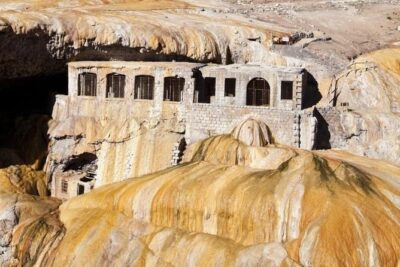
Andes Day Trip from Mendoza Including Aconcagua, Uspallata and Puente del Inca
Read our review →
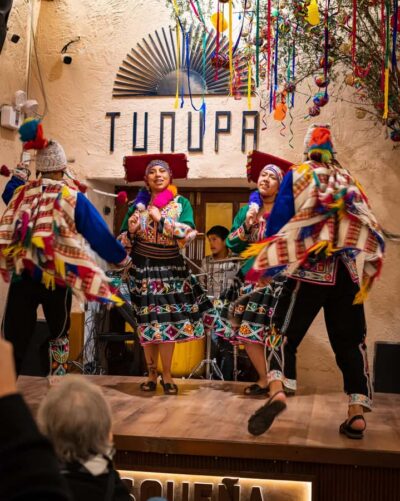
Cusco: Folkloric Andean Show & 3-Course Dinner at Tunupa
Read our review →
Andes Mountains Sunset and Valle Nevado & Picnic
Read our review →
Browse the lists this tour appears in