
Reviewed · FOOD & DRINK
Arequipa Tasting Tour
Arequipa’s best introduction may be found between its grand white-stone churches and the stalls of San Camilo Market. This three-and-a-half-hour walk connects the city’s founding, earthquakes, religious architecture, local produce, queso helado, and pisco in one compact route.
I like the small group limit of eight, which gives guides such as Jose, Daniel, and Jorge room to answer questions and adjust their explanations. I also like the market stop, where the food feels tied to daily life rather than added as a staged tourist sample.
The main drawback is simple: this is more history and architecture walk than tasting tour. Most of the food comes near the end, so eat lunch before an afternoon departure and book this for the cultural background as much as for the snacks.
Key points to know before booking
- San Camilo Market is the food heart of the walk, with fruit, tubers, meats, and other regional products to see and sample.
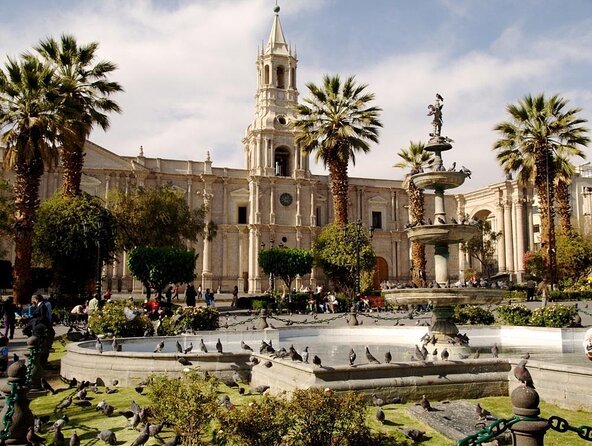
- The pisco tasting happens at the end, at Centro Artesanal Fundo el Fierro near Plaza San Francisco.
- Queso helado is a highlight, a local frozen dessert that gives the tour a distinctly Arequipeño finish.
- The route covers major landmarks, including Plaza de Armas, La Compañía, San Francisco, and the Jesuit cloisters.
- Jose and Daniel receive especially warm praise for clear explanations, patience, and answering questions.
- At $13 per person, the tour offers strong value if you want a guided city orientation with tastings.
Why this Arequipa walk works
This experience links two sides of Arequipa that are easy to see separately but better understood together. One side is monumental: churches, cloisters, plazas, and buildings shaped by Spanish colonial rule and repeated earthquakes. The other is practical and local: the market, fruit, traditional sweets, and pisco.
You begin at Plaza de Armas, but the route does not stay in the postcard center. It moves through Campo Redondo, San Francisco, the streets around Santa Catalina, San Camilo Market, and the Jesuit cloisters. That gives you a useful first look at central Arequipa before you decide which sites deserve a longer visit.
The tour takes about three hours and 30 minutes. It is a walking experience, so you should be comfortable on your feet and ready for a steady city stroll. The group can include no more than eight people, a meaningful advantage in narrow streets, busy public areas, and market aisles.
More Food Tours in Peru
- Lima: Ultimate Peruvian Food Tour
★ 4.9 · 700 reviews - Lima: Historic Center Street Food, Market, and Eateries Tour
★ 4.9 · 216 reviews - Food and Culture Full day Tour in the Sacred Valley
★ 5.0 · 144 reviews
Campo Redondo and the city’s first settlement
The opening stop is Plaza Campo Redondo, a traditional neighborhood connected with the first Spanish conquerors who settled in the area. The visit lasts about 10 minutes, so do not expect a long architectural inspection here.
Its value is as a starting point. It places the city’s early colonial story outside the main plaza and helps you see Arequipa as more than its famous cathedral and volcanic-stone facades. A guide can also use this first stop to explain how the city developed around religious, residential, and commercial areas.
Because the stop is brief, it works best as context rather than a major attraction. If you prefer a tour that begins immediately with food, this opening history may feel slow. If you want to understand the city before looking at its buildings, it is a sensible introduction.
San Francisco, Santa Catalina, and artisan Arequipa
The route continues toward San Francisco Plaza, passing by Santa Catalina Convent and Santa Catalina Street. You may not enter the convent on this tour, but seeing its setting helps you locate one of Arequipa’s major sights for a later visit.
At Plaza San Francisco, the Church and Monastery provide a close look at the city’s religious architecture. The tour also reaches Fundo el Fierro, an artisan center that gives the area a more local, handmade character than the formal Plaza de Armas.
This section takes about 20 minutes. The pace is enough for orientation and explanation, not a full museum-style visit. I see that as a strength for a first day in Arequipa. You get the layout, hear why the buildings matter, and can return later if you want more time inside.
Plaza de Armas and the scars of earthquakes
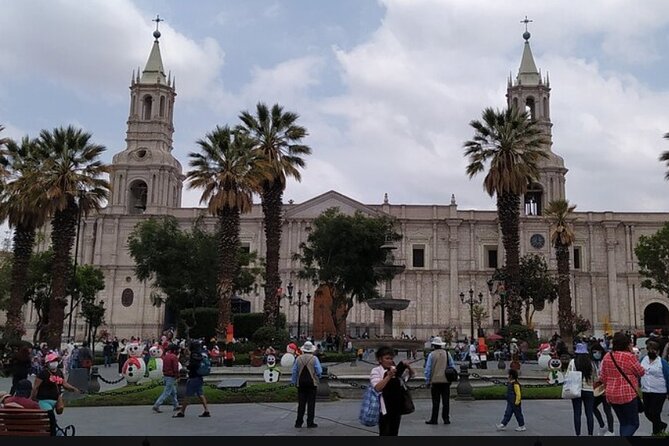
At Plaza de Armas, the guide explains Arequipa’s founding, the changes brought by earthquakes, and the role of the cathedral. This is the longest early stop, at about 25 minutes, and it gives the city’s main square a useful framework.
The earthquakes are not just a side note. They help explain why Arequipa’s buildings have been repaired, rebuilt, or altered over time. When you look at the cathedral and surrounding arcades after this explanation, the square becomes less like a pretty photo stop and more like a record of survival and reconstruction.
Guides Jose and Daniel have been praised for making this kind of information easy to follow and for answering a large number of questions. That matters here, since the plaza can raise plenty of practical questions about design, religion, colonial rule, and natural disasters.
The meeting point is Plaza de Armas, Arequipa 04001. Confirm the exact meeting instructions when you book, since the tour begins in this central public space.
More Food Tours in Arequipa:
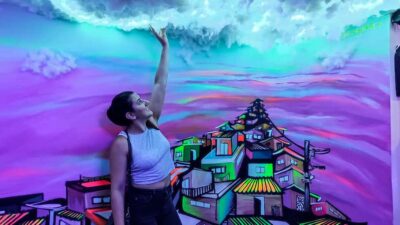
- Medellin: Comuna 13 Graffiti Tour, Cable Car & Street Food
★ 4.8 · 9,046 reviews - Medellín: Comuna 13 True Story and Street Food Tour
★ 4.9 · 1,779 reviews - From Mendoza: 3 Wineries, Olive Oil Factory Tour & Tasting
★ 4.6 · 901 reviews - Rio: Pub Crawl in Lapa with Cachaça Tasting and Live Samba
★ 4.7 · 881 reviews
La Compañía and the Jesuit cloisters
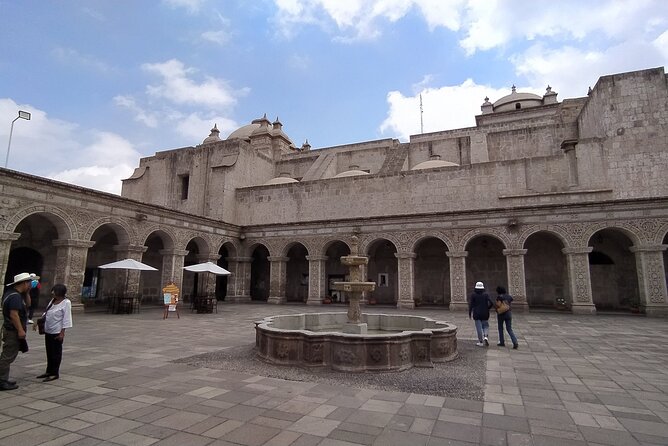
The Church of the Company of Jesus sits beside Plaza de Armas. Its baroque facade, restrained interior, and gold-leaf altars make it one of the route’s strongest architectural stops.
The church visit is listed at about 10 minutes. That is enough for a guided look, but not enough for a slow study of every altar or decorative detail. Think of it as a focused introduction. If you are interested in colonial church art, you will probably want to return on your own.
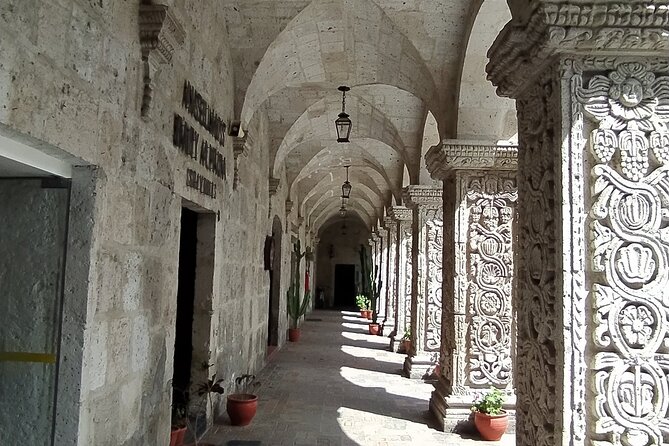
Later, the tour spends about 40 minutes at the Cloisters of the Company. These former Jesuit school and convent spaces are described as one of the city’s finest examples of religious colonial architecture. The longer stop gives the guide more room to explain how the complex functioned and how its courtyards and arcades fit into Arequipa’s urban life.
This contrast between the church and cloisters is useful. The church gives you drama and ceremony. The cloisters offer a quieter look at the institution behind that ceremony. Together, they make the religious history feel more concrete.
Keep in mind that the tour does not include entrance tickets. The listed stops have no admission charge in the supplied details, but any separate paid entry is your responsibility.
San Camilo Market is the tour’s real food lesson
San Camilo Market is the most distinctive part of the walk. You spend about 30 minutes among the products sold in the region, including tubers, meats, fruits, and other everyday foods.
This is not simply a place to grab a snack. The market shows what people buy, cook, and recognize as part of local life. Your guide can point out unfamiliar produce and explain how food connects with Arequipa’s cooking traditions. The experience is more useful than a generic tasting because you see the ingredients before tasting the finished treats.
The market can also be the most stimulating section of the tour. It is a working public market, not a quiet gallery. Stay close to your guide, expect a sensory setting, and bring patience if the route slows around food stalls.
Past guides have taken small groups to several stands to sample fruit and other local items. The exact samples may vary, so you should not book this expecting a fixed tasting menu. The appeal is the explanation and variety, not a set number of bites.
Queso helado and the pisco finish
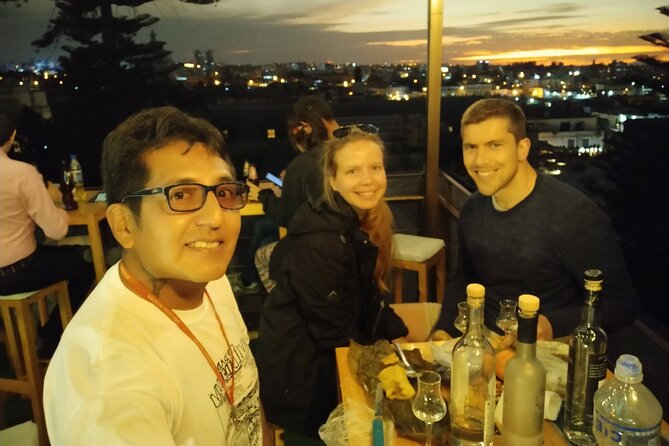
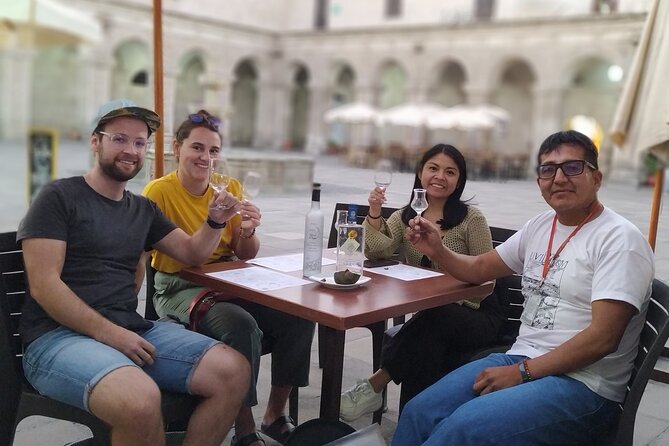
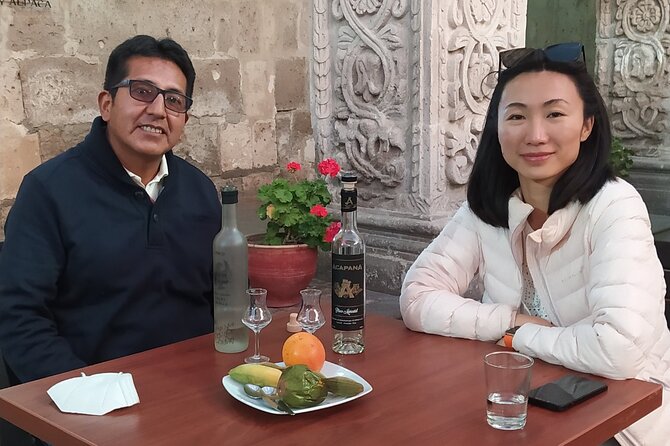
The formal tasting takes place at the end, at Centro Artesanal Fundo el Fierro near Plaza San Francisco. Included items are a pisco tasting, a traditional dessert, and local fruits.
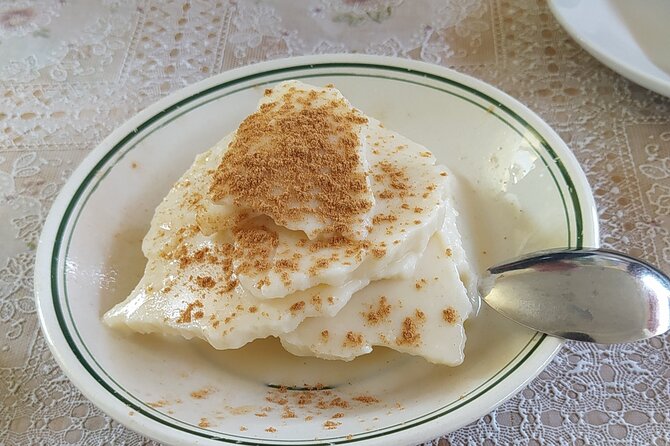
The dessert most often associated with this experience is queso helado, a local frozen treat despite its cheese-like name. It has been singled out as one of the most enjoyable parts of the afternoon. You may also try other small local foods gathered during the market visit.
The pisco session adds a useful layer. Instead of simply receiving a drink, you learn about pisco and how it is made. The tasting is a calm ending after the longer walk, and it gives you time to ask questions that may not fit during the street sections.
One important detail: the tasting is at the end, not spread evenly through the route. That explains why some people see the tour as a city walk with a tasting finish. If the food and drink are your main reason for booking, set your expectations correctly.
The experience does not include bottled water, soda, or lunch. Bring or buy water before starting, and eat first if you choose an afternoon departure. Pisco is alcohol, so take that into account when planning the rest of your day.
What the guides add
The guide can make or break a walking tour, and this experience benefits from a personal format. Jose is praised for answering questions, taking time with the group, and helping people discover places they might otherwise pass without noticing. Daniel is also described as friendly and clear, with strong explanations of Arequipa’s architecture, religion, industries, and food.
Jorge has also led the route, offering a warm and informal approach while pointing out key city sights and local handmade products. The guides are not limited to reciting a short script. The best part of the format is the chance to ask why a building looks a certain way, how a food is used, or what deserves a return visit.
There is some flexibility when circumstances change. In one case, a pisco venue was closed, and the tasting was arranged for the following day with another guide. That shows helpful communication, but it also reminds you that the final tasting location or timing can be affected by local conditions.
How much value do you get for $13?
At $13 per person, this is inexpensive for a three-and-a-half-hour guided walk with a small group and included tastings. The value is strongest if you would otherwise pay for a separate city orientation and then spend money sampling food on your own.
You are paying for interpretation as much as for what you eat. The route covers a useful set of central landmarks, and the guide gives you a way to understand them instead of simply photographing them. The market and pisco lesson add experiences that are harder to arrange with a standard sightseeing walk.
The price looks less impressive if you want a full meal, several substantial tastings, or long visits inside paid attractions. Lunch is not included, drinks beyond the pisco tasting are not included, and the food portion is concentrated toward the final part of the route.
For budget-conscious visitors, I think the balance is good. You get a local market, traditional dessert, fruit, pisco, and a strong introduction to the historic center without committing to an expensive half-day excursion.
Who should book this experience?
I would choose this tour if you have just arrived in Arequipa and want to get your bearings before exploring alone. It is also a good fit if you care about food but want the city’s story around it, rather than a tasting held in isolation.
Solo visitors and couples should find the small group format comfortable. Families can also benefit from the manageable route and food variety, though younger children may not enjoy several history-focused stops. You need moderate physical fitness, since the experience involves extended walking and time on your feet.
This is not the best match for someone seeking a market-only food tour. It is also not ideal if you want a relaxed restaurant lunch, a large number of samples, or lengthy interior visits at every church.
The tour is near public transportation, and service animals are allowed. Confirmation is provided at booking. Free cancellation is available up to 24 hours before the start time, while poor weather may lead to another date or a full refund.
Should you book the Arequipa Tasting Tour?
Book it if you want a low-cost, small-group introduction to Arequipa that combines architecture, local food, and pisco. The strongest reasons are San Camilo Market, the queso helado, the thoughtful guides, and the chance to understand the churches and plazas before revisiting them independently.
Skip it if your priority is immediate, extensive tasting. The tour earns its value through the full walk, with food arriving mainly at the end. Eat lunch first, carry water, wear comfortable shoes, and treat the pisco tasting as the final reward for a useful city orientation.
FAQ
Where does the Arequipa Tasting Tour start?
The tour starts at Plaza de Armas in Arequipa, Peru. The listed address is Arequipa 04001.
Where does the tour finish?
It finishes at Centro Artesanal Fundo el Fierro, near Plaza San Francisco, at C. Zela 202, Arequipa 04001. The pisco tasting takes place there.
How long does the tour last?
The experience lasts approximately three hours and 30 minutes.
How many people can join the tour?
The tour has a maximum group size of eight travelers.
What food and drinks are included?
The experience includes a pisco tasting, a traditional dessert, and local fruits. Queso helado is identified as the traditional dessert in the tour experience.
Is lunch included?
No. Lunch is not included, and people choosing an afternoon departure are advised to eat beforehand.
Are bottled water and soda included?
No. Bottled water and soda are not included.
What happens if I need to cancel?
You can cancel up to 24 hours before the start time for a full refund. Cancellations or changes made less than 24 hours before the start time are not accepted for a refund.
Just added around Arequipa
- Turist Bus Colca Canyon (Chivay) To Puno★ 5.0 · 83 reviews
- 3-Day Colca Canyon trek with Professional Guide★ 5.0 · 40 reviews
- Trekking, Waterfalls and Thermal Baths★ 4.5 · 47 reviews
- Salinas National Reserve PRIVATE TOUR★ 5.0 · 81 reviews
- Sillar Route in Arequipa and viewpoint of the Volcanoes★ 4.0 · 71 reviews
- Sillar Route and Culebrillas Petroglyphs★ 4.5 · 89 reviews
- Private 3 Day Colca Canyon Trekking tour (superior Service)★ 5.0 · 58 reviews
- Full Day Tour / Colca Canyon★ 4.0 · 70 reviews
Food & Drink, compared.
Comuna 13 Graffiti Tour, Cable Car & Street Food
Read our review →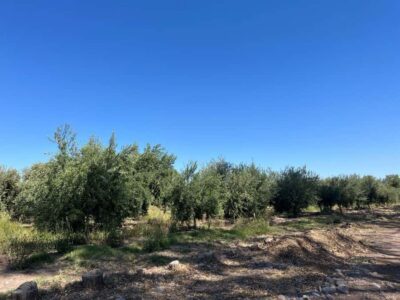
Jolimont Winery Tour – Visitation and Tasting – Canela RS
Read our review →
Browse the lists this tour appears in