
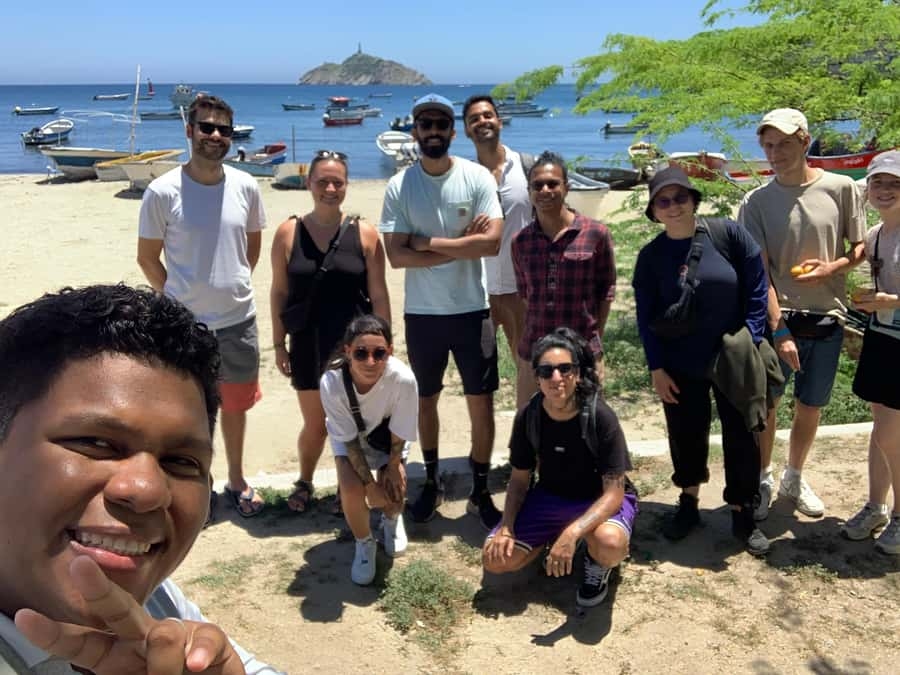
Reviewed · WALKING TOURS
A Pearl In The Caribbean-walking tour in English
Santa Marta’s story comes in quick, colorful chapters on this walk: Tairona gold, pirate attacks, Catholic legends, nightlife, and strange-looking Caribbean fruit. Starting at the Casa de la Aduana and ending at the juice stalls, the route gives you a useful first look at the city without trapping you in a long lecture.
I especially like the way guide Javier connects national history with ordinary city life, from the Colombian independence story in Bolívar Square to the local rebusque, or daily hustle, around San Francisco Square. I also like the practical food advice and the final fruit tasting, which gives the walk a pleasant local finish.
The main consideration is the heat. This is a two-hour walk through central Santa Marta, with outdoor stops and little promise of shade at every point. Bring water, wear light clothing, and use the fruit stop as a chance to cool down rather than treating it as a full meal.
Key points to know before you book
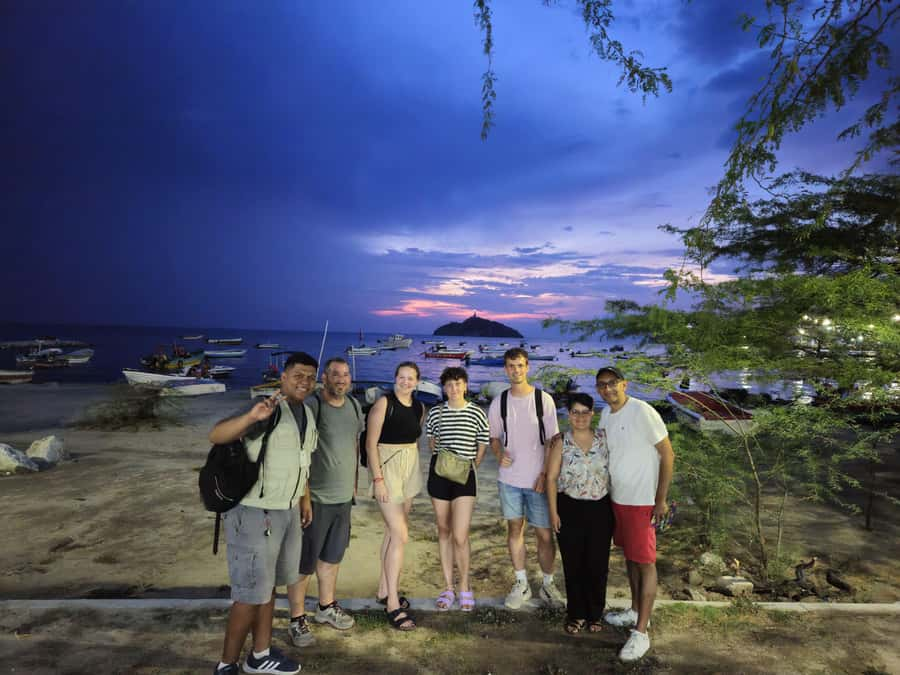
- Start with pre-Hispanic gold: The free-entry Tairona Gold Museum introduces the Indigenous people who lived in the region before Spanish rule.
- Hear Santa Marta’s stranger stories: The cathedral stop covers religious customs, local superstitions, and spooky tales.
- See the city beyond postcard spots: San Francisco Square offers a look at everyday trade and the informal economy known locally as rebusque.
- Get useful food and nightlife advice: The walk includes suggestions for typical dishes, restaurants, and evenings around Lovers’ Park.
- Finish with Caribbean fruit: At the juice stalls, you learn about regional fruits and taste one as part of the experience.
- Pay about $16 for two hours: With a guide, museum admission, and fruit tasting included, this is a strong-value introduction to central Santa Marta.
A good first walk through Santa Marta
Santa Marta sits in Colombia’s Magdalena department on the Caribbean coast, and this tour stays in the historic center. It is not a bus ride or a sightseeing circuit that rushes past the city. You walk from one central square to another, with Javier explaining how the places connect.
That format works well if you have just arrived. In two hours, you get enough background to make later visits more meaningful, plus recommendations you can use for meals, drinks, and evening plans. The route also helps you see Santa Marta as a living city rather than only as a gateway to nearby beaches and parks.
Javier’s approach is a major part of the experience. He presents historical facts through stories and anecdotes, and he is described as friendly, patient, funny, and easy to understand in English. You can ask questions as you go, and the tone appears relaxed rather than formal.
This is especially useful in Santa Marta, where a single street or building can connect Indigenous history, Spanish colonial rule, Colombian independence, Catholic tradition, and modern local commerce. The tour does not try to cover everything. Instead, it gives you several handles for understanding the city.
More Walking Tours in Colombia
- Cartagena: Historic Center and Getsemaní Shared Walking Tour
★ 4.9 · 2,716 reviews - Bogotá: Guided La Candelaria Walking Tour
★ 4.8 · 1,229 reviews - Cartagena: Walled City and Getsemani Shared Walking Tour
★ 4.5 · 352 reviews
Casa de la Aduana and the Tairona Gold Museum
The meeting point is the white Spanish colonial building known as Casa de la Aduana, in the historic center, across from Simón Bolívar Square and facing the bay. It houses the Tairona Gold Museum, also referred to as the Museum of Gold.
This is where the tour begins, and it is the most direct stop for pre-Hispanic history. Inside, you see pieces of Indigenous art from before Spanish colonization, along with examples of modern Indigenous art and gold objects. The museum is free to enter as part of the experience, which matters when you compare the $16 price with other guided city walks.
Javier explains who the Tairona were and why their civilization disappeared. That topic gives the museum more meaning than simply looking at attractive gold pieces. You get a basic sense of the people, beliefs, and artistic traditions connected to the region before the colonial period.
I like this opening because it starts with Santa Marta’s oldest human story, not with a generic introduction to Colombia. Gold is an obvious draw, but the Indigenous context is the part worth paying attention to. Ask questions here if you want more detail, since the museum is the one stop where you can focus on objects rather than street activity.
The museum visit also gives you a cooler, quieter beginning before the outdoor walking portion. After that, the tour moves into the squares and streets of central Santa Marta.
Bolívar Square and several layers of history
The next stop is Bolívar Square, directly connected with the independence story of Colombia. Simón Bolívar is a familiar name across the country, and Santa Marta has its own links to him and to the wider independence period.
Here the guide brings together several subjects: pre-Hispanic history, independence, architecture, and public sculptures. That mixture is useful because the square is not just a place for one historical date. It shows how different periods share the same public space.
The tour’s historical storytelling is at its best when it moves between major events and small details. Javier is praised for making the past entertaining, with colorful stories about local heroes and villains. You should expect interpretation rather than a simple list of dates.
There is also a practical value to visiting this square early in your stay. It helps you recognize the center’s layout, and it gives you a fixed point for exploring on your own later. The stop includes time for photos, but the focus remains on explanation.
Do not expect an extended museum-style examination of Colombian independence. The entire walk lasts two hours, so this is a concise introduction. For most people, that is the right amount of history for a first afternoon or early evening walk.
San Francisco Square and the city’s everyday economy
At San Francisco Square, the mood shifts from formal history to daily life. This is an old part of Santa Marta where you can see local commerce and the practical ways people make a living. Javier explains rebusque, a Colombian term for the daily hustle and informal work that helps support households.
This stop is important because it keeps the tour from becoming a parade of monuments. You are not only looking at buildings and statues. You are also seeing how the center functions now, with vendors, small businesses, and people moving through their daily routines.
The square also brings in stories of pirate attacks and the role of Catholic religion in the Caribbean. Those subjects can sound like separate topics, but in an old coastal city they overlap. Trade, religious institutions, danger from the sea, and public life all shaped the historic center.
I would pay attention to Javier’s explanation of local terms and customs here. These details are hard to pick up by simply walking around, especially if you are visiting from outside Colombia. The square may also feel less polished than the most photographed parts of the center, and that is part of its value. You see a working city, not only a preserved one.
More Walking Tours in Santa Marta:
- Rio de Janeiro: Rocinha Favela Walking Tour with Local Guide
★ 4.8 · 3,052 reviews - Rio De Janeiro: Half-Day Rocinha Favela Walking Tour
★ 4.7 · 2,272 reviews - Buenos Aires Hop-On Hop-Off Bus, Free Walking Tours & Discounts
★ 4.5 · 2,218 reviews - Buenos Aires: La Boca Guided Walking Tour in English
★ 4.8 · 1,587 reviews
The cathedral, superstitions, and Santa Marta’s food
The cathedral square is one of the more atmospheric stops. The church is described as the mother of all churches in Colombia, and the tour uses it to explain Santa Marta’s religious customs and local superstitions.
This is where the walk takes a slightly spooky turn. Javier shares stories connected with beliefs and legends in the city, including the sort of local chisme, or neighborhood gossip, that makes a historical walk feel personal. The stories add humor and character, while the religious material provides context for the city’s traditions.
Look closely at the architecture as you walk around the square. The stop points out Arab, colonial, and Renaissance influences. You do not need to be an architecture specialist to enjoy this. The useful part is learning to notice that Santa Marta’s buildings do not belong to one single style or era.
The square is also the place to ask about food. Javier gives recommendations for typical dishes and restaurants in Santa Marta. That can be more useful than a generic restaurant list because it comes within a conversation about local customs and the city center.
Keep your expectations clear: the tour provides recommendations, not a full food tour. The included tasting comes later at the juice stop. If you are hungry, use the cathedral-square discussion to decide where to eat afterward.
Lovers’ Park and the evening side of downtown
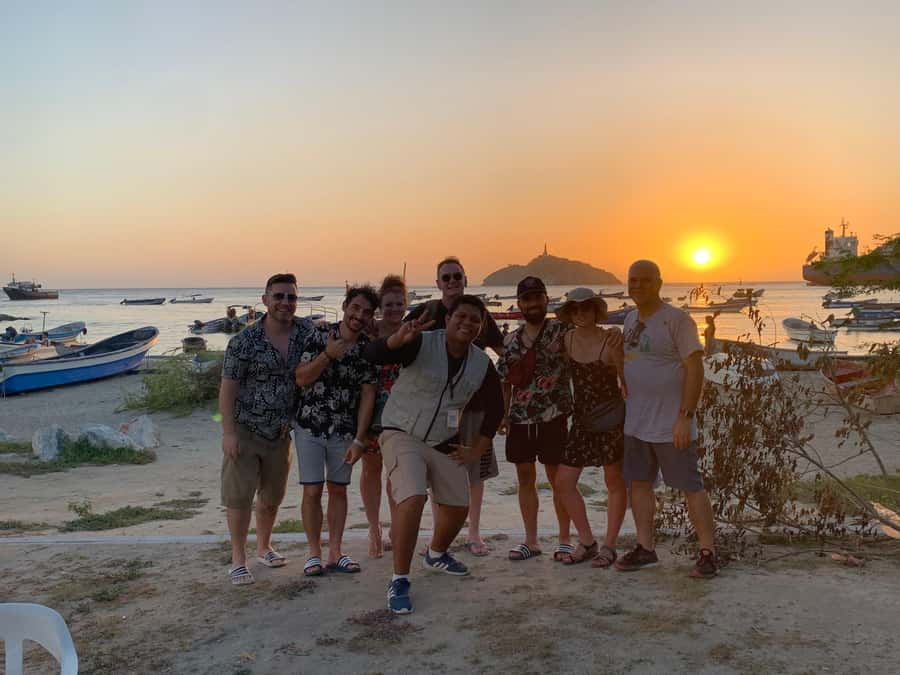
The route continues to Parque de los Novios, usually translated as Lovers’ Park. This is the part of the walk focused on nightlife, dating, and evenings in central Santa Marta.
The park is presented as a place to spend time with friends or enjoy a romantic night. Javier explains how it fits into the city’s social life and points you toward the kinds of activities and places you might want to consider after dinner.
That advice is useful because many people see Santa Marta mainly as a daytime base for trips elsewhere. A short walk around Lovers’ Park reminds you that downtown has its own evening rhythm. You can use the information to plan the rest of your night rather than returning to your accommodation after the tour.
The stop is more about orientation than admission to a particular nightlife venue. No club or restaurant is included, so think of this as local guidance. You will learn what area to explore, then make your own choices.
Caribbean fruit at the juice stalls
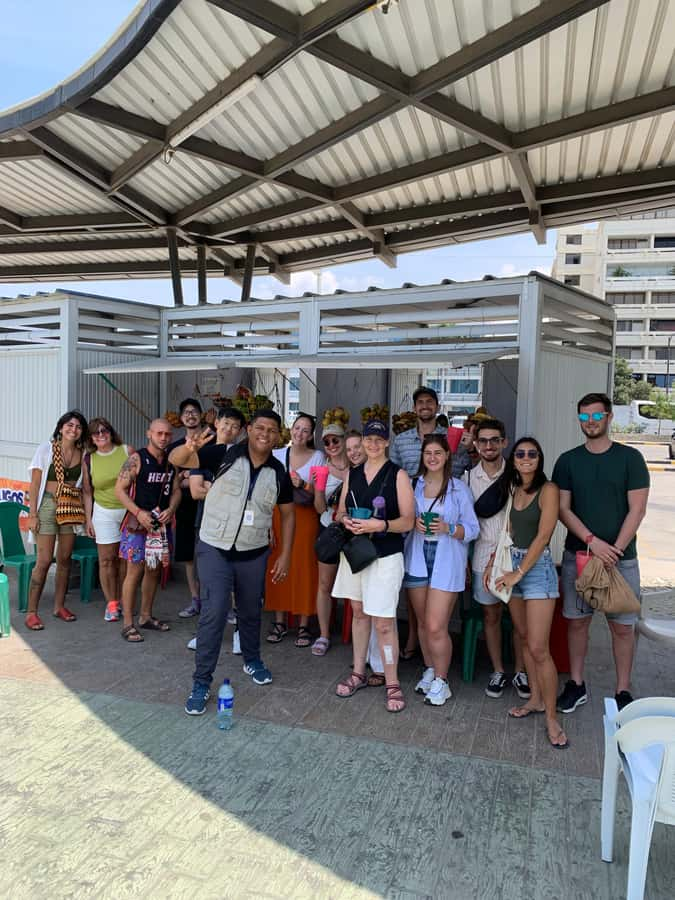
The walk ends at the Plazoleta de Jugos, or juice square. This is a fitting finish because the stop shifts from history and architecture to taste.
Javier gives a small lesson on fruits found along Colombia’s Caribbean coast. You taste one fruit as part of the tour, and you can buy a fresh natural juice afterward if you wish. Past tastings have included interest in fruits and combinations such as lulo with orange juice, as well as coconut water.
This is not just a quick drink break. The fruit explanation helps you understand ingredients you may see in markets, cafés, and juice shops throughout the coast. Some names and flavors may be unfamiliar, which is exactly the point. You get a chance to try something new with an explanation rather than ordering blindly.
The end point can also work well around sunset, when the city begins to cool and the light changes. Timing depends on the start time you select, so do not assume every departure will finish at sunset. The tour description includes sunset as part of the possible experience, but you should check available start times.
Water, juice, and anything not specifically listed are extra. The included fruit tasting is modest, so plan another meal if you are hungry.
What the $16 price includes
At about $16 per person, this is good value for a two-hour guided introduction. You receive an English-speaking local guide, entrance to the Tairona Gold Museum, and a fruit tasting. The route covers several central landmarks without adding transportation costs or a separate museum ticket.
The value is strongest if you are new to Santa Marta. A guide can give you context for places you might otherwise pass without understanding, then point you toward food and nightlife options for later. The advice about local restaurants and trusted vendors adds practical value beyond the scheduled stops.
The price does not include drinks or other food, so budget for those separately. You also need to supply your own water. That is a small extra cost, but it matters in Santa Marta’s heat.
I would not choose this tour if you want a long museum visit, a dedicated food crawl, or a detailed architectural study. The experience samples many subjects rather than concentrating on one. For a short, affordable orientation, that broad approach makes sense.
Comfort, meeting details, and timing
Meet at the Tairona Gold Museum, Casa de la Aduana, in front of Simón Bolívar Square and facing the bay. The guide wears tour-guide accreditation and carries a black backpack, which should make the meeting point easier to identify.
The walk lasts two hours and is available in English only. Make sure the phone number on your reservation can receive WhatsApp messages, since tour information is sent that way.
Santa Marta can be hot, and the route includes outdoor walking. Wear comfortable shoes, carry water, and bring sun protection. The guide has made efforts to keep the group comfortable, but the weather remains a factor you cannot remove from a city walk.
Cancellation is flexible up to 24 hours before the start for a full refund. You can also reserve now and pay later, which helps if your plans for Santa Marta are still shifting.
Who should take this walk?
I would recommend it to first-time visitors who want a quick introduction before choosing restaurants, evening plans, or longer day trips. It also suits people who prefer local stories and conversation to a standard list of landmarks.
History fans will enjoy the sequence from Tairona culture to independence and colonial architecture. Food-minded visitors will appreciate the restaurant advice and fruit tasting, though this is not a full meal-based tour.
It is also a good choice for anyone who wants to hear about Santa Marta from a local guide. Javier’s English is described as clear, and his style combines facts with humor, anecdotes, and room for questions.
You may want something else if walking in strong heat is difficult, if you want a Spanish-language tour, or if your main goal is the beach rather than the historic center. The tour stays focused on downtown Santa Marta.
Should you book A Pearl in the Caribbean?
Book it if you want an affordable first look at Santa Marta with history, local legends, food guidance, and a small taste of Caribbean fruit. The strongest feature is the connection between places: the museum explains the oldest stories, the squares show public and working life, the cathedral adds faith and superstition, and Lovers’ Park points you toward the evening.
The $16 cost is easy to justify because museum admission, guiding, and tasting are included. Just bring water and keep your expectations realistic. This is a lively two-hour orientation, not a full food tour or an exhaustive history lesson.
If you have limited time in Santa Marta, I would take this walk early in your stay. You can use Javier’s suggestions for the rest of your visit, return to the places that interest you, and approach the city with a better sense of what you are seeing.
FAQ
Where does the tour begin?
It begins at Museo del Oro Tairona, also called Casa de la Aduana, in Santa Marta’s historic center.
Where does the tour finish?
The tour ends at Plazoleta de Jugos Santa Marta, the city’s juice square.
How long does the walking tour last?
The tour lasts two hours.
What language is the tour offered in?
The tour is available in English only.
Who guides the tour?
The guide is Javier, also referred to as Javi or Xavier in tour information and guest feedback.
Is museum admission included?
Yes. Entrance to the Tairona Gold Museum is included.
Is fruit tasting included?
Yes. The experience includes a fruit tasting at the juice area.
Are drinks included?
No. Water, juice, and anything else not specifically listed are not included. You can buy a natural juice at the end if you wish.
How much does the tour cost?
The listed price is $16 per person.
Can I cancel for a full refund?
Yes. You can cancel up to 24 hours before the tour for a full refund.
Just added around Santa Marta
- Santa Marta: Cape San Juan del Guía Tour in Tayrona Park★ 4.3 · 64 reviews
- Santa Marta: Multi-Day Trek to The Lost City★ 4.8 · 40 reviews
- Santa Marta A Historical & Street food Experience★ 4.7 · 41 reviews
- Minca: Full-Day Coffee and Cocoa Tour from Santa Marta★ 4.5 · 61 reviews
- Magdalena: Tayrona Park Cruise with Snorkeling & Beaches★ 3.9 · 39 reviews
- From Cartagena: Barranquilla & Santa Marta Guided City Tour★ 3.7 · 46 reviews
- Cartagena: Barranquilla and Santa Marta All-Inclusive Tour★ 3.6 · 38 reviews
- Cacao Experience Tour★ 4.8 · 66 reviews
Walking Tours, compared.
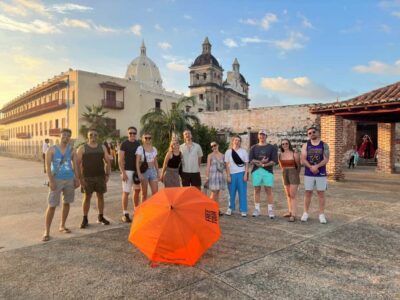
Historic Center and Getsemaní Shared Walking Tour
Read our review →
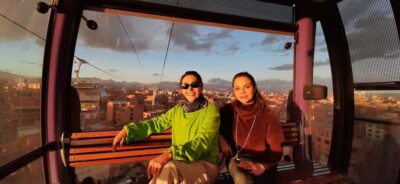
La Paz and El Alto: Cable Car Rides and Walking Tour
Read our review →
Punta Arenas: Walk with Penguins on Magdalena & Marta Island
Read our review →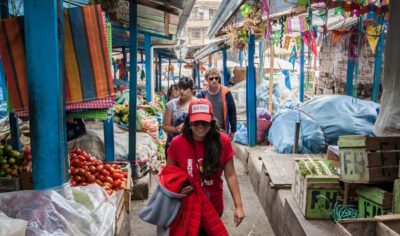

Browse the lists this tour appears in