

Reviewed · WALKING TOURS
La Paz Half-Day Walking Tour
La Paz makes its best first impression on foot, where a guide can connect a masked shoe shiner, a woman’s bowler hat, a street zebra, and a presidential palace to the larger story of Bolivia. I like the way this tour uses ordinary city life to explain culture, rather than treating La Paz as a string of photo stops. I also like the low cost and the friendly guides, especially Denise, Max, Daniel, Rem, and Matt, who are repeatedly praised for clear English, humor, and strong storytelling.
The main consideration is the walking itself. La Paz sits at high altitude, and this is not a wheelchair-friendly outing. The route is planned with the altitude in mind and may stay as flat as possible, but you should still expect city streets, some uphill walking, changing weather, and a fair amount of time on your feet.
Key points to know before booking
- The Witches’ Market explains Andean beliefs: See curious lotions, talismans, potions, and traditional offerings while your guide explains their cultural meaning.
- Plaza Murillo brings Bolivia’s politics into focus: The Presidential Palace, National Congress, Cathedral of La Paz, and other monuments provide the setting for stories about political turmoil.
- The tour answers the questions you notice on the street: Learn why some women wear distinctive hats, why shoe shiners cover their faces, and why zebras help manage traffic.
- Guides are the main attraction: Denise, Max, Daniel, Rem, Matt, and others are praised for humor, good English, patience, and vivid stories.
- The route is designed for a high-altitude city: Guides try to walk slowly and keep the route relatively flat, though this is still a walking tour, not an easy-access sightseeing ride.
- The $3 price is unusually low: It gives you an inexpensive introduction to La Paz, but several participants felt a tip was appropriate for the guide’s work.
Starting at Plaza San Pedro
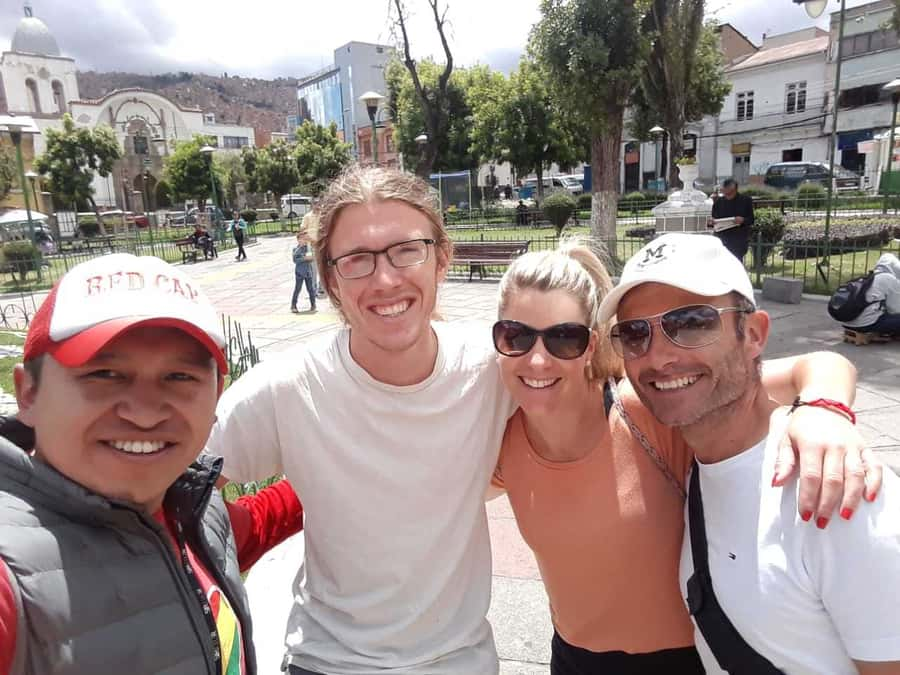
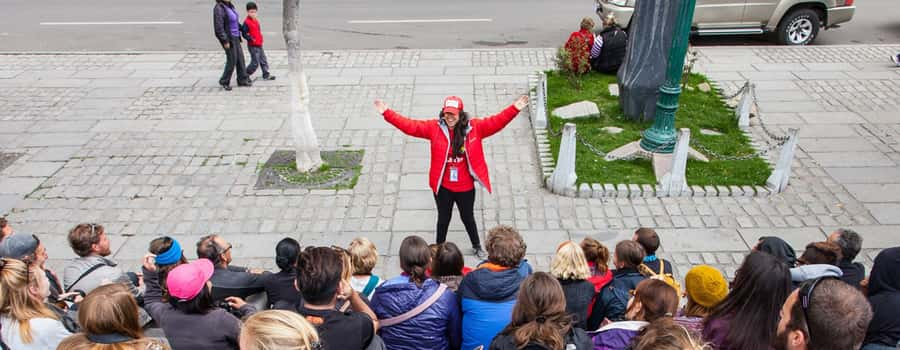
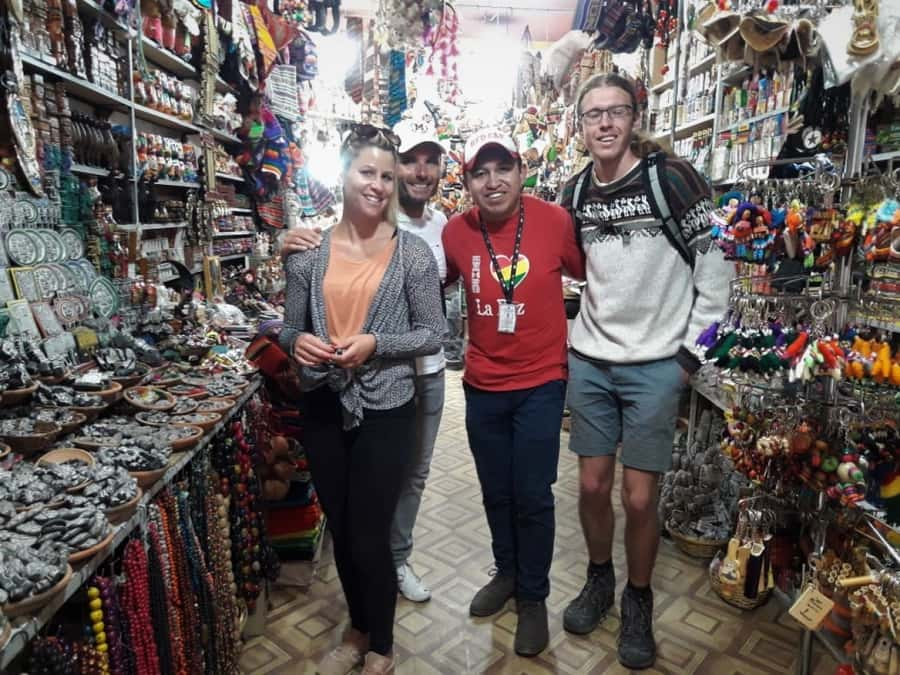
You meet the guide in the center of Plaza San Pedro, also called Plaza Sucre, near the statue on Cañada Strongest. Look for the red cap and I heart La Paz T-shirt. That clear meeting detail matters in a city where a busy plaza can otherwise feel confusing, especially if you have just arrived and are still finding your bearings.
The tour lasts about 150 minutes, or two to two and a half hours. That is a useful length for a first look at La Paz. You get enough time for context and questions without giving up an entire day, and the route leaves you with places you can revisit later on your own.
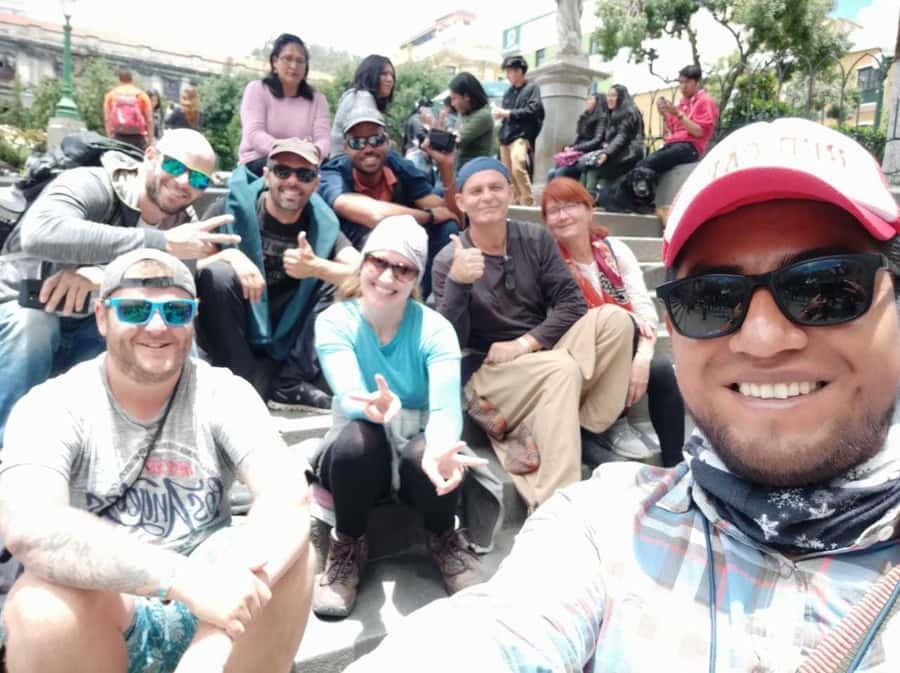
The tour is offered in English with a live local guide. The guide’s personality can shape the experience, and the team has several strong names in its ranks. Denise is repeatedly praised for her energy, humor, and clear explanations. Max is described as passionate about La Paz and good at tailoring the conversation to the group. Daniel is known for keeping the tour both factual and entertaining, while Rem, Matt, Maru, Juan, and Amara have also received warm praise for their storytelling and local insight.
Group size can vary. One afternoon group had only four people, while another participant found a larger group easy to follow. A smaller group gives you more room for questions, but the guides appear used to handling both intimate walks and bigger gatherings.
More Walking Tours in La Paz:
- La Paz and El Alto: Cable Car Rides and Walking Tour
★ 4.8 · 790 reviews - Rio de Janeiro: Rocinha Favela Walking Tour with Local Guide
★ 4.8 · 3,052 reviews - Cartagena: Historic Center and Getsemaní Shared Walking Tour
★ 4.9 · 2,716 reviews
Learning La Paz through street life
This tour’s strongest feature is its choice of questions. Instead of only naming buildings, the guide explains things you notice as you move through the city.
You learn why many Bolivian women wear distinctive hats, including the bowler-style hats often associated with cholitas. The point is not simply to identify clothing. Your guide uses dress and public life to explain identity, tradition, and the way Bolivian culture appears in daily routines.
The street zebras are another memorable detail. These costumed figures help with traffic and public behavior, and they are one of the first signs that La Paz handles city life in its own distinctive way. A guide can turn a quick sighting into a useful lesson about civic culture. Without that explanation, you might take a photograph and move on without understanding what you saw.
The masked shoe shiners also make more sense once you hear the background. Their face coverings are not just a quirky visual feature. The guide explains why they wear masks, giving you a better sense of the social realities behind a familiar street scene.
I like this approach because it keeps the tour grounded. You are not only hearing dates and names. You are learning how people present themselves, work, move through public spaces, and understand their city.
The Witches’ Market and Andean beliefs
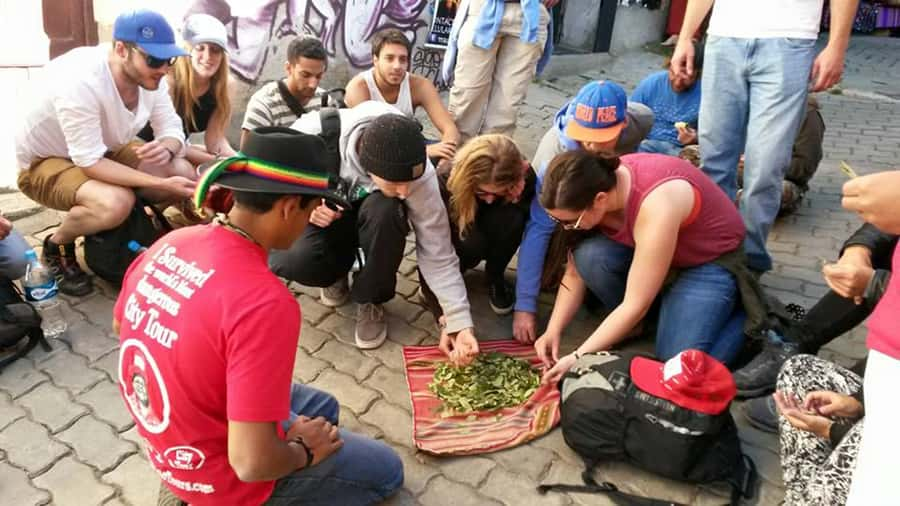
The Witches’ Market is one of the tour’s most unusual stops. Stalls display lotions, talismans, potions, and other items connected with Andean beliefs. Some products may look strange at first glance, but the guide gives them context and explains what people believe they can do.
This is the kind of place where a local explanation matters. Without one, you might treat the market as a colorful collection of curiosities. With one, you can begin to understand how spiritual beliefs remain part of everyday life in the Andes.
You are also told what kinds of potions or traditional items you might buy. That does not mean you need to purchase anything. The value is in learning how these objects fit into local customs and how belief, luck, protection, and ceremony can overlap.
The market is likely to appeal most if you enjoy cultural detail and places that do not feel polished for sightseeing. It may be less comfortable for visitors who prefer a conventional museum or a straightforward shopping stop. The products can be curious and unfamiliar, so listening carefully and treating the subject with respect is important.
This stop also gives the tour a welcome change of pace. Plaza Murillo explains formal power through grand buildings. The Witches’ Market shows a different side of the city, one tied to household practice, faith, and Andean tradition.
Plaza Murillo and Bolivia’s political story
Plaza Murillo provides the tour’s main architectural center. Here you can admire the Presidential Palace, the National Congress of Bolivia, the Cathedral of La Paz, and other historic monuments gathered around the square.
The buildings are worth seeing, but the explanation is the real reason to spend time here. La Paz has experienced substantial political turmoil over the years, and the guide uses the square to explain why the capital has been such an important setting for national events and public power.
This part of the walk is especially useful if Bolivian politics is unfamiliar to you. A guide can give you a plain-language outline of the forces that shaped the city, instead of leaving you with impressive facades and no context. Several guides are praised for making complicated history easy to follow and for answering questions clearly.
Do not expect a long architectural tour packed with every major building in central La Paz. One participant felt the route covered relatively few sights, but also found the stories about each stop excellent. That is a fair description of the tour’s balance. It favors explanation over a rapid checklist.
If your goal is to photograph as many buildings as possible, a self-guided walk may cover more ground. If you want to understand why the buildings matter, this guided format offers better value.
A few more La Paz days worth comparing
- La Paz: Private City Tour with Cable Car & Moon Valley Visit
★ 4.9 · 508 reviews - La Paz: Full Day Trip to Copacabana and Isla del Sol
★ 4.5 · 400 reviews - La Paz: Mountain Bike Down the World’s Most Dangerous Road
★ 4.9 · 386 reviews - La Paz: Cholitas Wrestling Tickets and Transfer
★ 4.4 · 338 reviews
A careful pace at high altitude
Altitude is not a minor detail in La Paz. The city’s thin air can make a normal walk feel harder than expected, especially during your first days in Bolivia.
The guides try to account for this. The route may be kept as flat as possible, and the walking pace is adjusted so you can listen without constantly rushing uphill. One participant specifically noted that the guide understood the difficulty of walking uphill at altitude. That sort of flexibility can make a major difference.
Still, the tour is not suitable for people with mobility impairments or wheelchair users. You should bring comfortable shoes, a sun hat, sunscreen, rain gear, and cash. La Paz weather can shift, and the tour takes place outdoors, so carrying protection for both sun and rain is sensible.
Plan your energy rather than treating this as a casual stroll. If you have just arrived at altitude, you may prefer to choose a start time when you feel strongest. The tour does not include meals or drinks, so bring what you need for the walk.
How much value does a $3 tour offer?
At $3 per person, this is one of the least expensive ways to get an organized introduction to central La Paz. The price covers the local English-speaking guide, while meals and drinks are not included.
The low price is useful for budget travelers, solo visitors, and anyone who wants to test the city with a guide before paying for a longer excursion. You get a short orientation, cultural explanations, and a route through two important areas: Plaza Murillo and the Witches’ Market.
I would not judge the value only by the number of stops. The tour does not promise a full city circuit, and it may cover fewer sights than you expect. Its value comes from the guide’s explanations, especially the answers to questions about clothing, masks, zebras, politics, and Andean beliefs.
Several people felt that the guide’s work deserved a tip at the end. Tipping is not listed as an included feature or fixed requirement, but you should carry cash if you want to show appreciation for a guide who gives you a strong, engaging walk. At this price, a tip can also be a practical way to recognize the time and personal effort involved.
The tour also allows you to reserve now and pay later, and you can cancel up to 24 hours in advance for a full refund. Those terms help if your plans in Bolivia are still changing.
Which guide style will suit you?
You cannot choose a specific guide from the information provided, so it is best to book for the format rather than one individual. Still, the recurring strengths of the guiding team are clear.
Denise is a good fit if you like a lively guide who mixes humor with history. Max suits people who enjoy a passionate presentation and plenty of local feeling. Daniel is praised for making facts fun, while Rem is noted for handling a large group without losing clarity.
Other guides, including Matt, Maru, Juan, Amara, and Remberto, are also praised for warmth, patience, and strong command of local history and culture. The common thread is not a formal lecture style. The guides tend to tell stories, answer questions, and help you connect what you see with how La Paz works.
That matters because a walking tour depends heavily on communication. The strongest feedback focuses on clear English, friendly energy, and the ability to keep the group engaged. If you want a silent route with only a few basic facts, this may feel too conversational. If you enjoy asking questions, it should suit you well.
Who should book this La Paz walk?
I would recommend it as a first activity in La Paz if you want a quick orientation before exploring alone. One participant liked seeing key parts of the city in a safer, more structured way before becoming comfortable on independent walks.
It also suits short stays. In a little over two hours, you can learn the basic shape of central La Paz and mark places to revisit. The tour is particularly useful for first-time visitors who want cultural context instead of only photographs.
The best fit is someone who:
- Enjoys history, politics, and local customs
- Wants an English-speaking guide
- Is comfortable walking outdoors for 150 minutes
- Can manage high-altitude streets and possible uphill sections
- Likes asking questions and hearing personal stories
- Wants an inexpensive introduction to the city
You may want a different activity if you need wheelchair access, have limited mobility, or want a broad sightseeing route with transport between stops. This is a central walking introduction, not a complete tour of every district or attraction in La Paz.
Practical preparation for the meeting point
Wear shoes that can handle uneven city walking and bring layers for changing conditions. Sunscreen and a hat are worthwhile, even if the day begins cool. Rain gear is also specifically recommended, so do not assume a clear morning will last.
Carry cash for personal purchases at the Witches’ Market and for a possible tip. Food and drinks are not included, so plan around the 2 to 2.5 hour duration.
Arrive at Plaza San Pedro, or Plaza Sucre, and look for the red cap and I heart La Paz shirt near the statue. The guide is not meeting you at the Presidential Palace or the Witches’ Market, so double-check that you are heading to the starting plaza.
Should you book the La Paz Half-Day Walking Tour?
Yes, if you want a low-cost, story-driven introduction to La Paz and are comfortable walking at altitude. The best reason to book is not the number of monuments. It is the chance to understand the city’s people, beliefs, street customs, and political past while moving through the places where those stories make sense.
I would book it early in your stay, when the city still feels unfamiliar. You will leave with a better sense of what you are seeing and a short list of places worth returning to. Just bring sensible shoes, rain protection, water or other refreshments, and realistic expectations about the hills.
FAQ
How long does the La Paz Half-Day Walking Tour last?
The tour lasts about 150 minutes, or between two and two and a half hours.
Where does the tour meet?
Meet in the center of Plaza San Pedro, also called Plaza Sucre, near the statue on Cañada Strongest in La Paz.
How do I find the guide?
Look for a guide wearing a red cap and an I heart La Paz T-shirt.
Is the tour offered in English?
Yes. The tour includes a live, English-speaking local guide.
What sights are included?
The walk visits the Witches’ Market and Plaza Murillo. At Plaza Murillo, you can see the Presidential Palace, National Congress of Bolivia, Cathedral of La Paz, and other historic monuments.
What should I bring?
Bring comfortable shoes, a sun hat, sunscreen, rain gear, and cash. Meals and drinks are not included.
Is the tour suitable for wheelchair users?
No. The activity is not suitable for people with mobility impairments or wheelchair users.
Just added around La Paz
- Private Tiwanaku and Titicaca Day Trip from La Paz★ 4.5 · 62 reviews
- Climbing Huayna Potosí★ 5.0 · 50 reviews
- Cholet Tour – Andean Architecture and Culture – El Alto★ 5.0 · 72 reviews
- Customizable Private City Tour – La Paz★ 5.0 · 69 reviews
- La Paz City Tour and Moon Valley★ 4.2 · 38 reviews
- La Paz: Andean Architecture Tour in El Alto★ 4.7 · 46 reviews
- From La Paz: Day Trip to Chacaltaya and Moon Valley★ 4.4 · 65 reviews
- From La Paz: 2-Day Tour to Isla del Sol & Lake Titicaca★ 4.3 · 54 reviews
Walking Tours, compared.
Historic Center and Getsemaní Shared Walking Tour
Read our review →
La Paz and El Alto: Cable Car Rides and Walking Tour
Read our review →
Punta Arenas: Walk with Penguins on Magdalena & Marta Island
Read our review →

Browse the lists this tour appears in