
Reviewed · CYCLING TOURS
From La Paz: The World’s Most Dangerous Road Biking Tour
Bolivia’s Death Road is less about one reckless stunt than a full day of changing scenery, careful riding, and controlled excitement. You begin high among snow-covered peaks at 4,700 meters, then roll down through cloud, forest, waterfalls, and hot lowland air before ending at 1,200 meters.
I like the way the guides keep safety in view without draining the fun. I also like the finish: a buffet lunch, shower, swimming pool, and time to get the grit out of your clothes. The main drawback is the long transport day, plus the ride demands steady bike control and is not suitable for everyone.
Key points to know before you book
- 3,700 meters of descent: The route drops from La Cumbre to Yolosita, with cold mountain air giving way to tropical heat.
- The actual Death Road starts at Chuspipata: The first paved section lets you get comfortable before the rougher track begins.
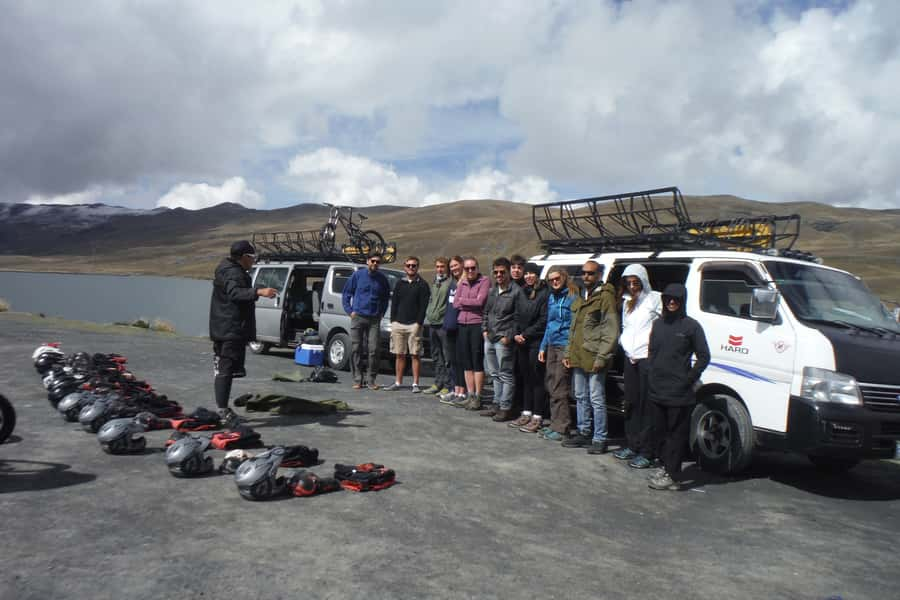
- Good protective kit is included: You get a full-face helmet, pads, gloves, jacket, pants, and a full-suspension downhill bike.
- Guides set the tone: Victor, Freddy, Chris, Maury, Javier, and Eddy have all been praised for calm instruction, patience, bike care, and safe driving.
- The day ends in comfort: Buffet lunch, showers, a swimming pool, snacks, and unlimited water are part of the package.
- Bring dry clothes and cash: Waterfalls, mist, sweat, the 50-boliviano road tax, and an optional zipline can all affect your day.
Why Death Road is such a memorable ride
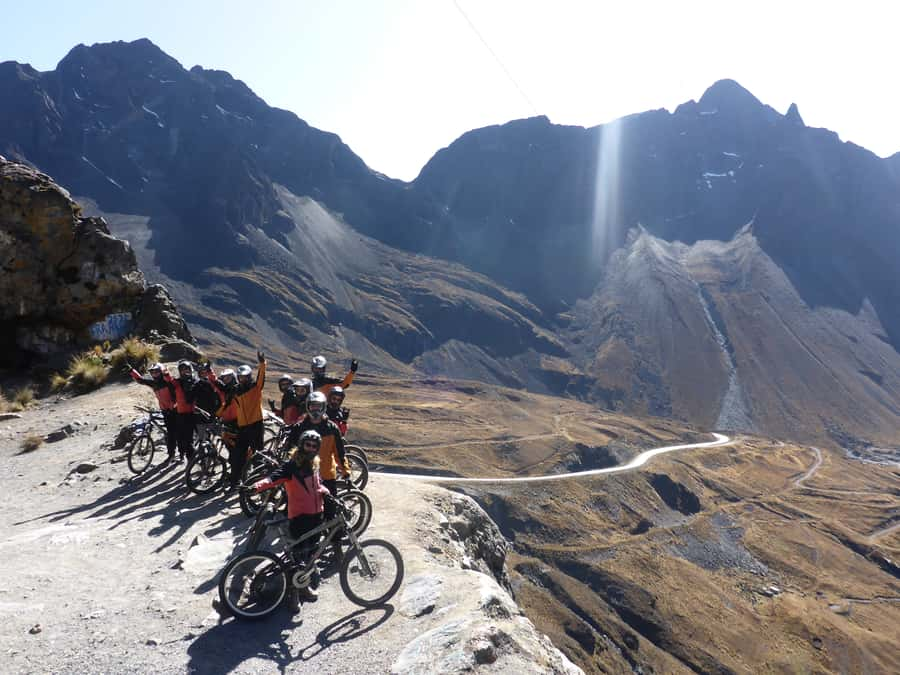
The old North Yungas Road earned its frightening name from its narrow, rough route and steep mountain setting. This tour uses the road as a serious adventure ride, but the experience is structured rather than careless. Guides check the bikes, explain how to handle the route, and stop often for photos, advice, and safety checks.
The headline distance is 64 kilometers, though not every section feels the same. Some riding is smooth and fast. Some is loose, wet, uneven, or hemmed in by rock and vegetation. Your day is shaped as much by the change in climate as by the road itself.
I like that the tour does not throw you straight onto the roughest part. The paved descent gives you time to find your balance, test the brakes, and understand the group’s rhythm. By the time you reach the famous section, you should have a clearer idea of how much speed feels comfortable.
More Bike Tours in Bolivia:
- La Paz: Mountain Bike Down the World’s Most Dangerous Road
★ 4.9 · 386 reviews - Bogota: Bicycle City Tour
★ 4.9 · 2,156 reviews - Buenos Aires: North or South Buenos Aires Bike Tour
★ 4.7 · 719 reviews
From La Paz to Cristo de la Cumbre
The day starts at the Vertigo Biking office, where the tour bus should be parked outside. The trip to the high starting point takes about 45 minutes. From La Paz, the road climbs toward Cristo de la Cumbre and La Cumbre, where the air is thin and the views reach toward snow-covered peaks.
At around 4,700 meters, it can feel cold even if La Paz is pleasant. Wear warm layers that you can remove later. Sunglasses and sunscreen matter here, and a small daypack gives you somewhere to keep the extra clothing.
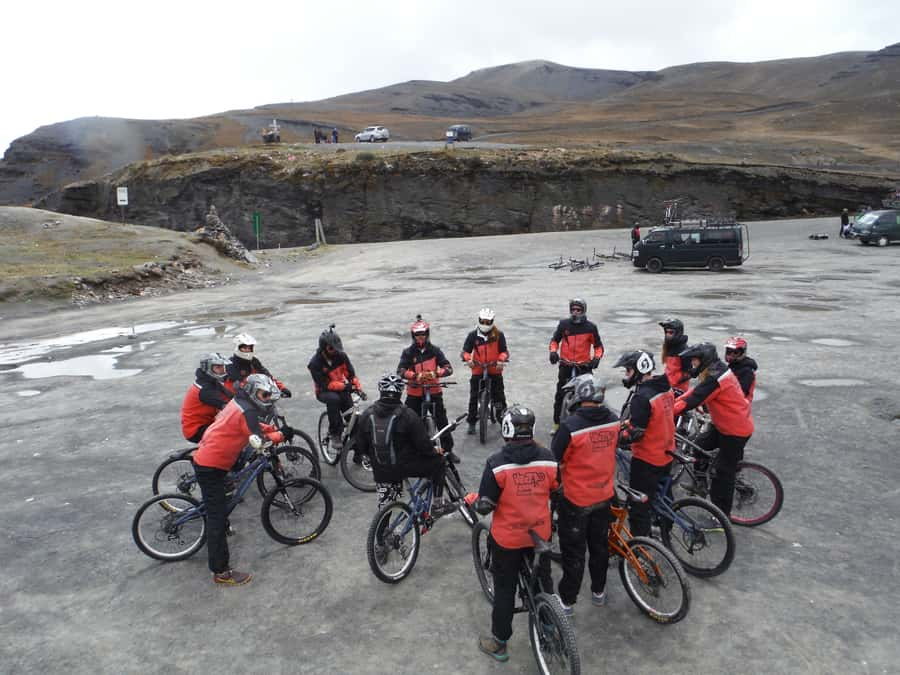
The safety briefing lasts about 30 minutes. This is not filler. It is when you learn how to use the bike, how to position yourself on the road, and what the guides expect during stops and descents. The bikes use hydraulic disk brakes and full suspension, both useful features on a long downhill route.
The altitude is also worth respecting. You may be descending most of the day, but the start is still very high. Move at your own pace and pay attention to how you feel before setting off.
The paved descent helps you find your rhythm
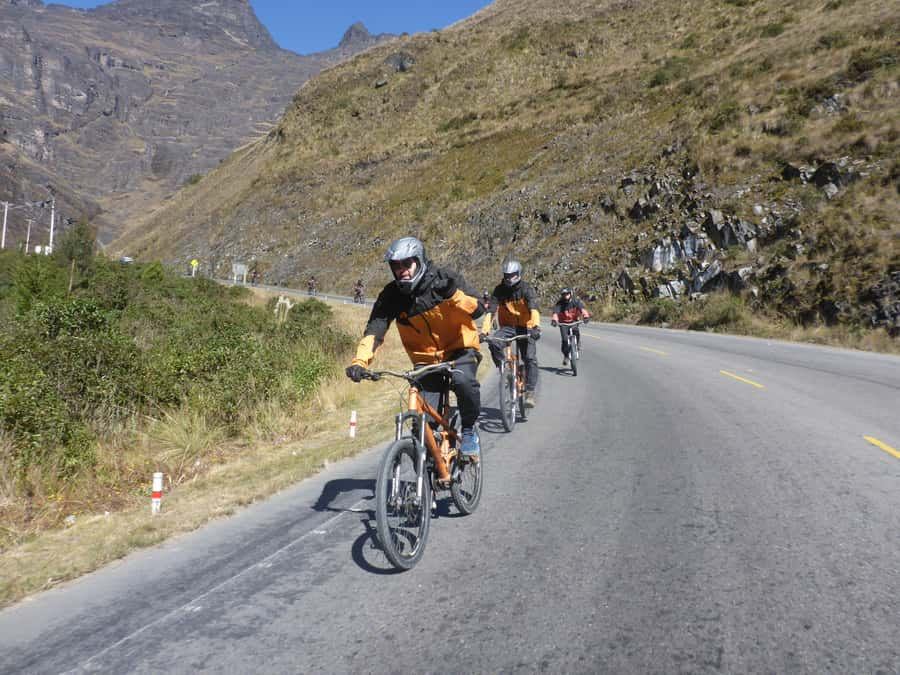
The first bike section follows a paved road for about an hour. It passes small traditional villages and gives you a practical warm-up before Chuspipata. The surface is more predictable than the Death Road track, so you can focus on braking, cornering, and staying comfortable on the mountain bike.
This part is scenic, but it is also useful. A downhill bike can feel different from a city bike or a standard rental, especially when you are wearing a full-face helmet and protective pads. The guides use the early section to check the equipment and offer more instruction.
There are several breaks along the way. Guides use them to take pictures, inspect bikes, and explain the next section. If you want a nonstop downhill thrill, the pauses may feel frequent. I see them as a fair trade for a long ride on changing surfaces, especially when the group includes people with different levels of experience.
The route then includes roughly 15 minutes of transport before the famous dirt road begins. That short bus ride helps separate the warm-up from the main event.
Chuspipata marks the real start of Death Road
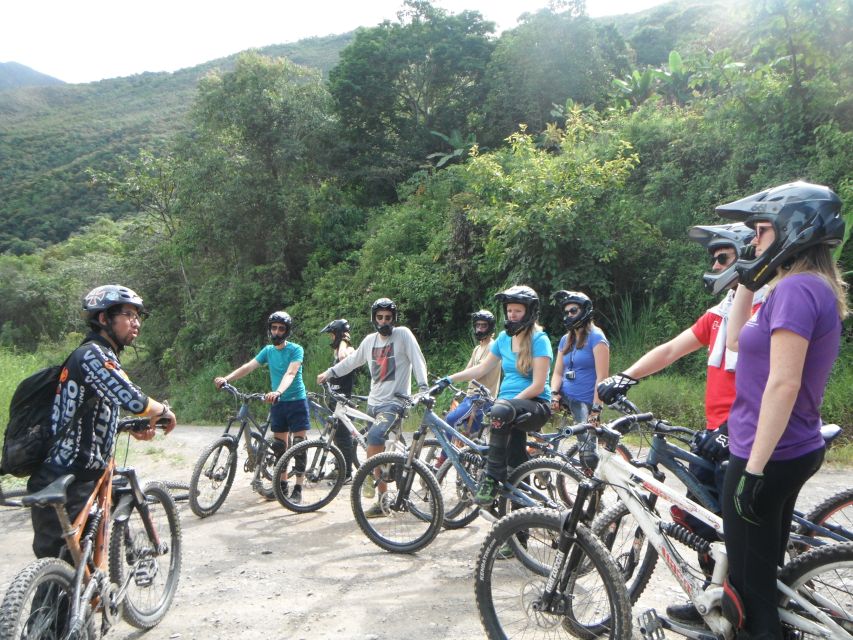
At Chuspipata, the scenery changes quickly. Trees and thicker vegetation replace the bare high mountain setting. Mist and low cloud can drift across the road, and the temperature begins to rise as you lose altitude.
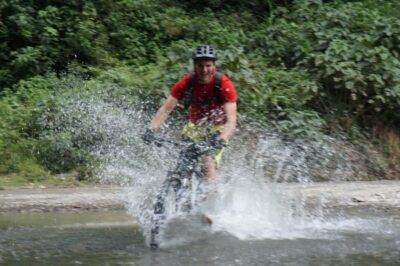
The Death Road section takes about four hours, including breaks, photo stops, safety advice, and guided riding. The dirt surface can be rough, and conditions may include wet patches, small rocks, mud, and water running across the route. You pass under small waterfalls and through tiny rivers, so staying dry is not a realistic goal.
This is where good bike handling matters more than bravado. Keep your speed within your comfort zone. The guide team can let confident riders move ahead in suitable sections, while less experienced riders can take a slower line. Several people specifically praised guides for allowing different riding speeds while still keeping the group supported.
The road may feel narrow beside the mountain, and your attention needs to stay on the surface ahead. Look for the safest line, brake before corners rather than in the middle of them, and listen when the guides call for a stop. The point is to finish with a great story, not to prove that you can ride every section at maximum speed.
A few more Bolivia days worth comparing
- La Paz and El Alto: Cable Car Rides and Walking Tour
★ 4.8 · 790 reviews - Day Trip to Uyuni Salt Flats
★ 4.0 · 602 reviews - La Paz Half-Day Walking Tour
★ 4.8 · 591 reviews - La Paz: Private City Tour with Cable Car & Moon Valley Visit
★ 4.9 · 508 reviews
What the guide team adds to the day
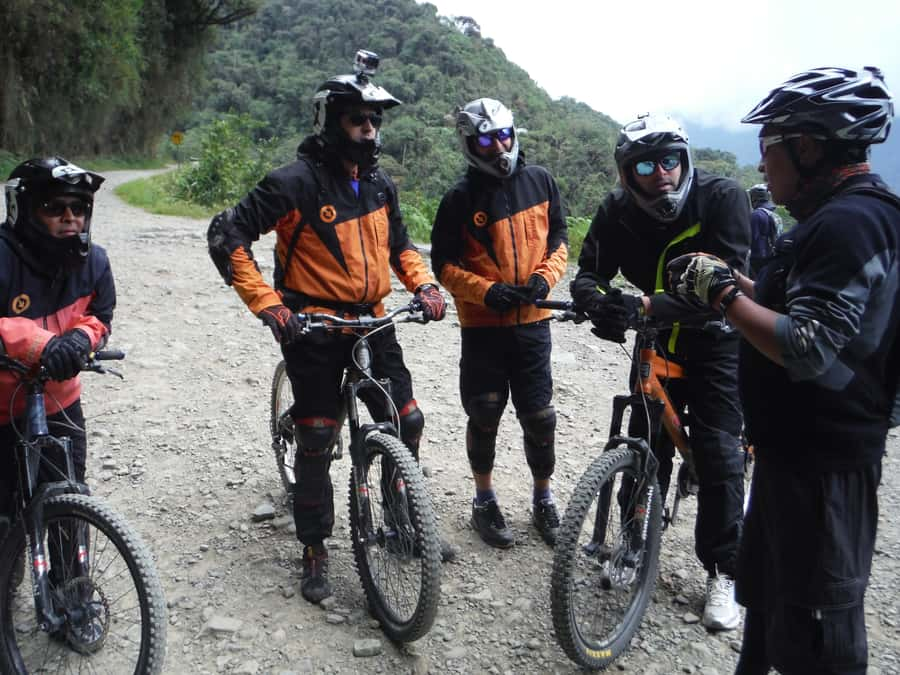
The guide service is one of the strongest parts of this tour. The team is bilingual in English and Spanish, first-aid trained, and supported by qualified mechanics. Names that appear in the experience include Victor, Freddy, Chris, Maury, Javier, and Eddy.
Victor has been singled out for fluent English, cultural conversation, patience, and strong mountain-bike experience. Freddy has been praised both as a guide and as a careful driver. Javier and Eddy have been noted for keeping the mood light while looking after the group, and Chris and Maury have been praised for friendly guidance and safe driving support.
That matters because the road demands more than a bike and a helmet. You want someone checking that the brakes work, watching the group, helping when a rider loses confidence, and explaining what comes next. The support vehicle also gives the team a way to carry water, snacks, and equipment along the route.
The guides take photos and short videos during the day. These are uploaded to Dropbox afterward, which saves you from trying to hold a phone while riding. You should still bring a phone or camera only if you can protect it from water and mud.
Equipment: practical rather than flashy
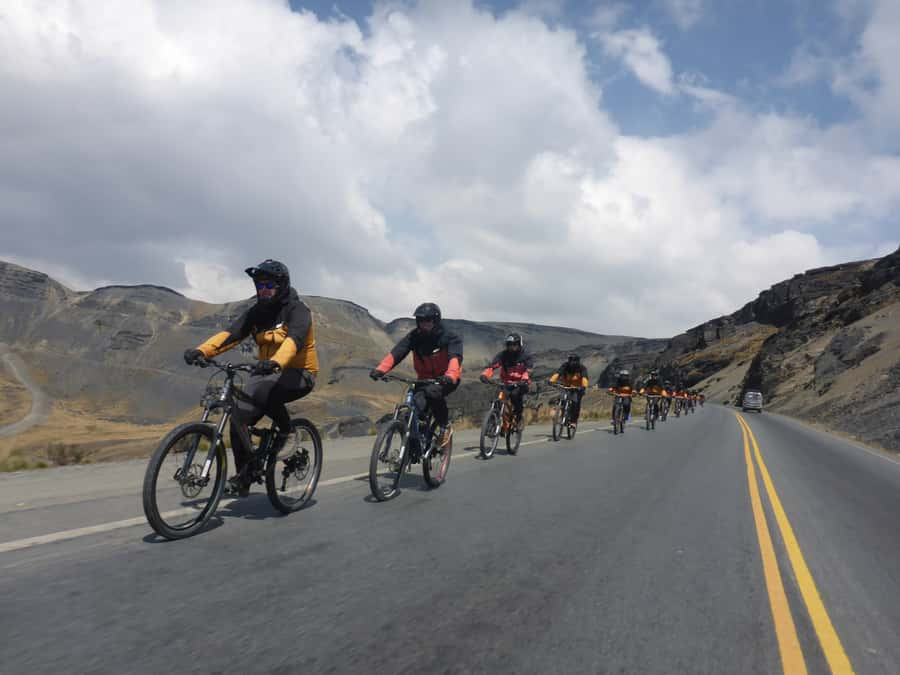
The package includes a full-suspension downhill mountain bike with hydraulic disk brakes, a full-face helmet, elbow and knee pads, gloves, pants, and a jacket. This is the right sort of equipment for a rough downhill route.
One useful point comes from the riding itself: the bikes do not need to look brand new to do the job. The important parts are the brakes, suspension, tires, and general mechanical condition. The team checks the bikes before and during the ride, and the equipment has been described as well maintained.
You will still need to ride responsibly. Protective gear reduces harm but does not remove the risk of falling. Wear the helmet correctly, use the pads, and tell the guides if a bike feels wrong. A small issue is easier to fix during a break than halfway down the road.
Water, snacks, and the long change in climate
The route drops from cold highlands to a hot lowland finish. At Yolosita, around 1,200 meters, the air is much warmer and the area marks the entrance to the Bolivian Amazon.
Unlimited water and snacks are included, which is especially helpful on a full-day ride. Bring sunscreen and insect repellent, since both the climate and the vegetation change sharply during the descent. A change of clothing is not optional in practical terms. You may get wet under waterfalls, damp from mist, dusty from the road, and sweaty by the end.
Pack swimwear if you want to use the pool. Sunglasses help with glare and dust, while warm clothing is needed at the start. Cash is also important for the Death Road tax and any optional add-on.
The viewpoint and village stops
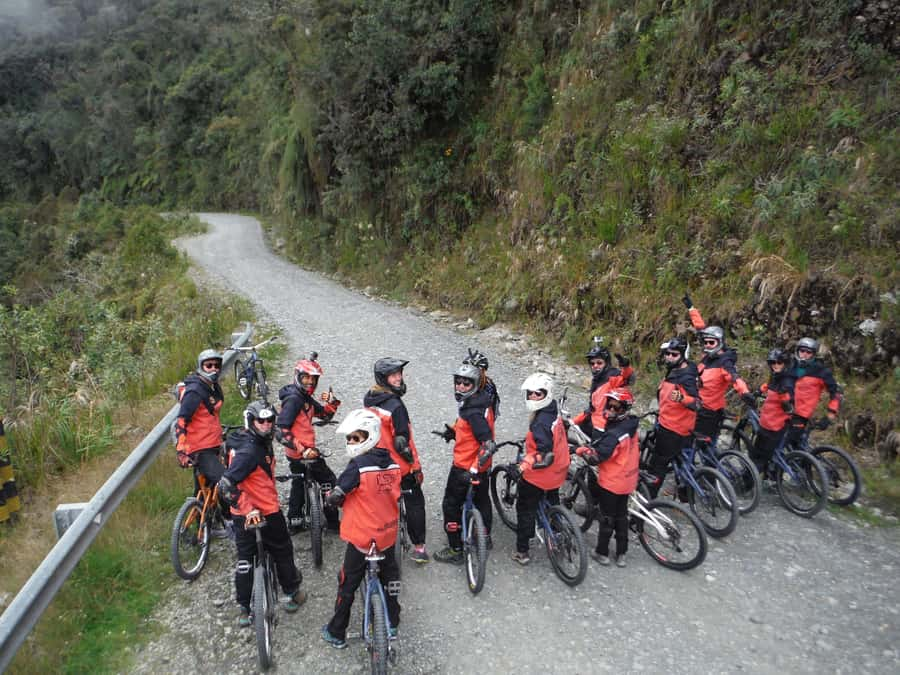
The itinerary includes a viewpoint stop of about 15 minutes for photos and sightseeing. This gives you a pause after the main descent and a chance to take in the route without concentrating on the next bend.
A later stop in a traditional village lasts about 30 minutes and includes a photo stop and guided time. These breaks help make the day more than a timed downhill run. You see how quickly the setting changes from high mountain road to greener, warmer country.
A 20-minute bus ride then takes you toward the final meal and rest stop. The transport breaks up the day, but it also adds to the total time. This is an all-day outing rather than a short activity squeezed between other La Paz plans.
Buffet lunch, showers, and pool time at the finish
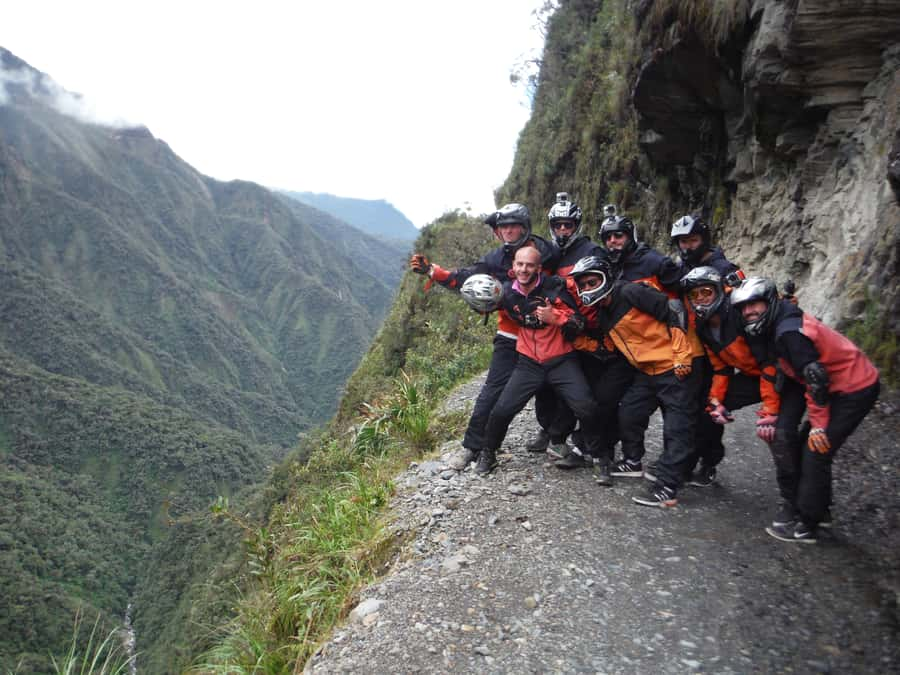
After the riding, you reach a local restaurant and hotel or resort area for about 105 minutes. The included buffet lunch is a welcome part of the price, particularly after several hours on the bike.
You also get a shower and access to a swimming pool. That finish changes the feel of the tour. Instead of being dropped off tired, dirty, and still carrying wet gear, you have time to wash, cool down, eat, and rest.
The pool is not a minor extra. It is the payoff for the big temperature shift and the muddy road. Bring swimwear and dry clothes in an easy-to-reach bag, not buried beneath everything else in the vehicle.
An optional zipline is available for an additional payment on the day. It is not included, so treat it as a separate choice rather than part of the $129 package.
The return to La Paz and the real time commitment
The return bus ride is listed at about three hours, followed by arrival back at the Vertigo Biking office. Combined with the morning transfer, briefings, riding, stops, lunch, and changing clothes, this is a full day with a lot of sitting as well as cycling.
The transport is the least polished part for some riders. The bus or van has been described as the one area that could be improved, even though the driving itself has received strong praise for safety. If vehicle comfort is a major concern, ask about the transport when you book.
The long return also means you should avoid scheduling an important evening activity immediately afterward. Give yourself room for delays, a slow meal, or simple recovery.
Is $129 good value?
At $129 per person, the cost covers private transportation, the bike, protective gear, bilingual guides, mechanical support, snacks, unlimited water, buffet lunch, photos and short videos, showers, and pool access. You also get a carefully managed route rather than simply renting a bicycle and finding the road yourself.
The extra costs are clear: the Death Road tax is 50 bolivianos, and the zipline costs more if you choose it. Bring cash for those items.
For a self-guided rider with their own bike and transport, the tour may seem expensive. For most visitors in La Paz, the value is in the support system. You do not need to arrange a suitable downhill bike, carry food and water, find the route, or solve a mechanical problem alone.
The package makes the most sense if you want the whole day handled for you and place a high value on safety checks and a comfortable finish.
Who should book this ride?
You should consider it if you can ride a bike confidently, enjoy active days, and want a strong contrast between Bolivia’s high Andes and warmer Yungas country. It suits riders who want excitement but also appreciate clear instructions, regular stops, and a guide team that watches the group.
It is not suitable for pregnant women, wheelchair users, people with mobility impairments, or anyone who cannot ride a bike. The minimum height is 155 centimeters, or 5 feet 1 inch.
You should also think carefully if you dislike rough roads, wet conditions, dirt, or long vehicle transfers. The tour is demanding, but you control much of the difficulty by choosing a safe speed and following the guides.
The tour runs with at least two people, so check that a group is confirmed for your date before making firm plans. You can cancel up to 24 hours ahead for a full refund, and the reserve-now, pay-later option keeps your plans flexible.
Should you book Vertigo Biking’s Death Road tour?
Yes, if you want one of La Paz’s biggest day adventures with equipment, guides, food, and a proper place to clean up afterward. The strongest reasons to book are the changing scenery, the well-equipped bikes, the patient guide support, and the finish with lunch, showers, and a pool.
I would skip it if you cannot ride a bike, are uncomfortable on rough mountain roads, or need a short and gentle excursion. For everyone else, pack warm layers, dry clothes, swimwear, sunscreen, insect repellent, and cash. Then expect a long, wet, dusty, thrilling day that earns its place on a Bolivia itinerary.
FAQ
How long is the Death Road biking tour?
It lasts one full day. The riding covers about 64 kilometers, with transport, breaks, safety briefings, lunch, and the return trip included.
How high does the tour begin?
The ride starts at La Cumbre, near Cristo de la Cumbre, at about 4,700 meters above sea level.
Where does the ride finish?
The cycling ends at Yolosita, around 1,200 meters above sea level.
Is the whole route on dirt?
No. The first section is a paved downhill road. The actual Death Road section begins at Chuspipata and follows a dirt road.
Are bikes and safety equipment included?
Yes. You receive a full-suspension downhill mountain bike with hydraulic disk brakes, a full-face helmet, elbow and knee pads, gloves, pants, and a jacket.
Are food and drinks included?
Yes. The tour includes snacks during the ride, unlimited water, and a buffet lunch.
Can I shower and use a pool afterward?
Yes. The finish includes time at a hotel or resort where you can use the showers and swimming pool.
Is the Death Road tax included?
No. The 50-boliviano Death Road tax is paid separately.
Is the zipline included?
No. A zipline is available as an optional extra that you can pay for on the day.
What languages do the guides speak?
The live guides speak English and Spanish.
What should I bring?
Bring warm clothing, sunglasses, swimwear, a change of clothes, sunscreen, insect repellent, cash, a daypack, and your passport or an accepted copy of your passport or ID.
Who cannot take this tour?
The tour is not suitable for pregnant women, wheelchair users, people with mobility impairments, people who cannot ride a bike, or anyone under 155 centimeters tall.
Does the tour require a minimum group size?
Yes. The tour leaves with a minimum of two people. Check that a group is confirmed for your chosen date.
Just added around Bolivia
- Visit to Uyuni Salt Flats from La Paz Bolivia by Bus★ 5.0 · 55 reviews
- La Paz Uyuni Premium Bus★ 4.5 · 78 reviews
- Private Tiwanaku and Titicaca Day Trip from La Paz★ 4.5 · 62 reviews
- Climbing Huayna Potosí★ 5.0 · 50 reviews
- Cholet Tour – Andean Architecture and Culture – El Alto★ 5.0 · 72 reviews
- Customizable Private City Tour – La Paz★ 5.0 · 69 reviews
- Adelante Mujer Bolivian Cooking Workshops★ 5.0 · 54 reviews
- Sucre: Free Walking tour (History, culture and traditions)★ 4.8 · 47 reviews
Cycling Tours, compared.
La Paz: Mountain Bike Down the World’s Most Dangerous Road
Read our review →
Lima Bike Tour Miraflores – Barranco + Huaca Pucllana!
Read our review →
Browse the lists this tour appears in