
Reviewed · FAVELA TOURS
Favela Santa Marta: Walking Tour with local guide
Santa Marta gives you a close look at a Rio neighborhood that is often reduced to stereotypes. A local guide leads you through its steep streets, colorful homes, community projects, murals, and the viewpoint where Michael Jackson filmed They Don’t Care About Us. The funicular ride to the upper part saves your legs and sets up wide views across Rio.
I like the direct contact with local life, especially the Residents’ Association, arts center, sports center, and possible visit to the community daycare. I also like the choice of languages and the small-group or private format. The main caution is that the tour depends heavily on the guide assigned: one French-language booking had a late start and very limited French, while guides such as Marco have earned warm praise for clear explanations.
Key points at a glance
- Michael Jackson viewpoint: Stop at Laje do Michael Jackson, with its statue and views over Rio.
- Local guide: Your guide is a Santa Marta resident, giving the walk a personal connection to the neighborhood.
- Community focus: The route includes social projects, the Residents’ Association, arts spaces, and the sports center.
- Funicular access: Ride to the top when the Santa Marta cable car is operating. Otherwise, you walk uphill or take a taxi for about R$15.
- Language choice: Tours are offered in English, French, Spanish, and Portuguese, but confirm the guide’s actual language before departure.
- Practical pace: Expect 150 minutes on foot, with uneven streets and enough stairs and slopes to make comfortable shoes essential.
Starting high in Santa Marta
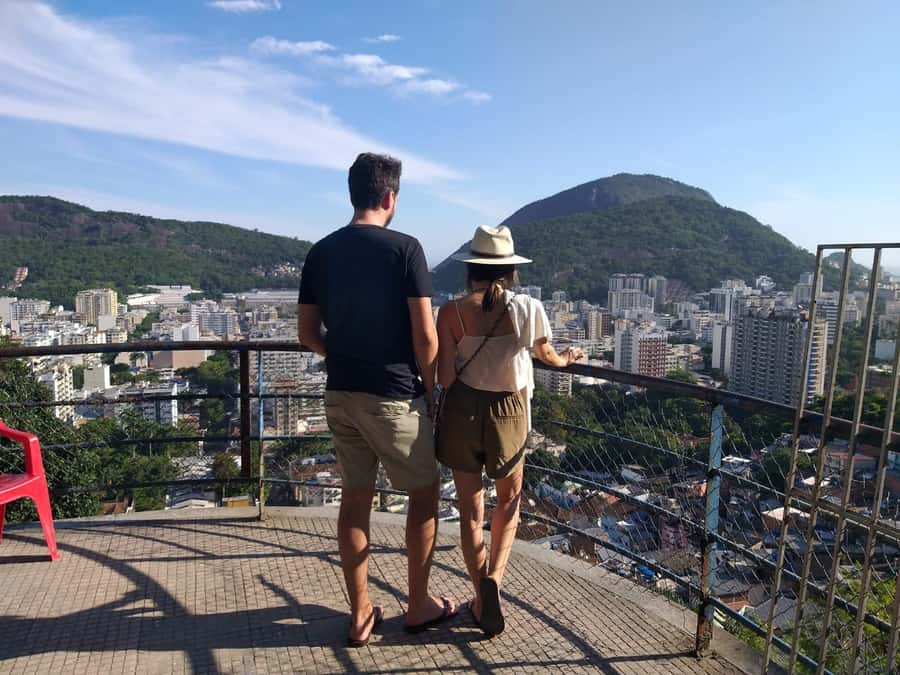
The tour begins with a ride to the highest part of Santa Marta by funicular, also called the Santa Marta cable car. This is a useful start, not just a fun transport detail. Santa Marta sits on a steep hillside, so reaching the upper section first lets you spend the walking time moving through the neighborhood instead of using much of the tour on a long climb.
The cable car may not be operating on your date. If it is closed, your guide will walk with you to the top. You can also take a taxi, which is listed at about R$15. That backup option is worth keeping in mind if you have limited stamina, though the tour itself is not suitable for people with mobility impairments.
Once you reach the upper streets, the route turns into a guided walk through homes, murals, small shops, and community spaces. Santa Marta is home to about 8,000 residents, so this is not a staged attraction built only for sightseeing. You are walking through a working neighborhood where people live, study, work, and shop.
That calls for ordinary courtesy. Listen to your guide about where to pause, keep your group together, and ask before photographing people or private homes. The point is to understand daily life, not to treat the neighborhood like a film set.
More Walking Tours in Brazil
- Rio de Janeiro: Rocinha Favela Walking Tour with Local Guide
★ 4.8 · 3,052 reviews - Rio De Janeiro: Half-Day Rocinha Favela Walking Tour
★ 4.7 · 2,272 reviews - Sunrise and Sunrise Walk Two Brothers with Local Guide
★ 5.0 · 193 reviews
Colorful streets and a more useful picture of Rio
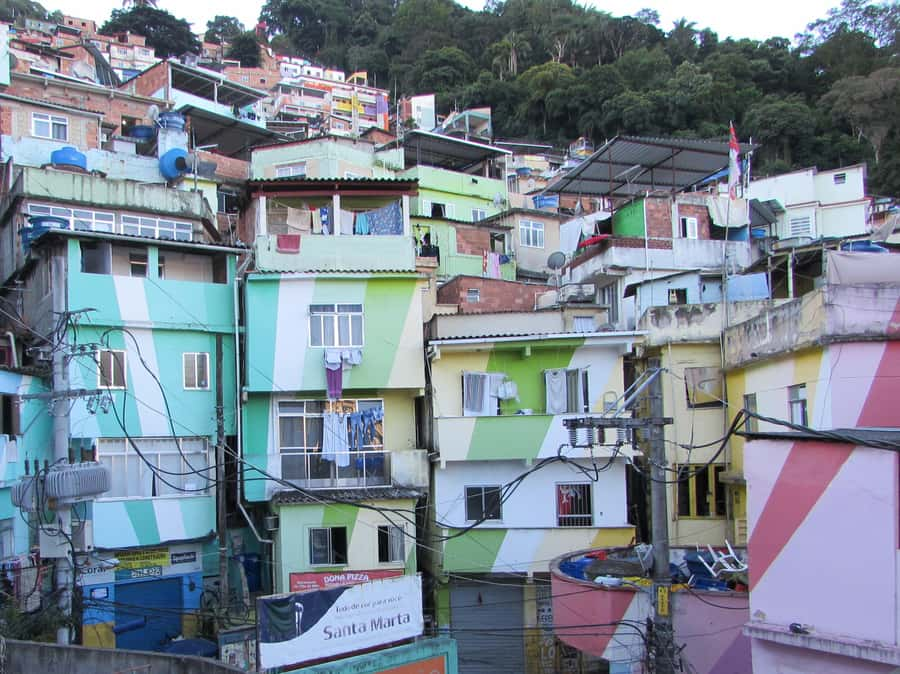
The houses are one of the first things you notice. Traditional homes painted in different colors line narrow streets and steep passages, creating a setting that feels very different from Rio’s postcard beaches and grand avenues.
Your guide explains how the neighborhood developed and how its residents have organized local services and projects. This context matters. Without it, a walk through a favela can become a quick look at painted walls and hillside views. With a local guide, the buildings and streets have a human setting.
I especially like that the visit is not limited to poverty-focused storytelling. The route points to educational projects, local initiatives, and places where residents have built support for children and families. That gives you a fuller picture of Santa Marta and avoids the easy assumption that the neighborhood can be understood through crime stories or dramatic headlines alone.
The quality of this part depends on communication. A strong guide can explain the neighborhood’s past, daily routines, and social work in a way that connects the details. A weak language match can leave you with little more than a walk. One French-language booking began 45 minutes late and had a guide who spoke only a few words of French, so I would confirm your preferred language before paying if that matters to you.
Arts, sports, and community projects
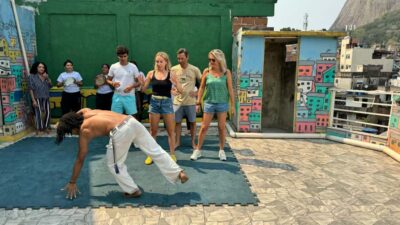
The itinerary includes a visit to the Dona Marta arts center and the favela’s sports center. These stops help show how community life extends beyond housing. Art and sport are not just colorful additions for a tour route. They can also be places where children and residents gather, learn, and build local connections.
You are also scheduled to visit the Residents’ Association and social projects. This is one of the most useful parts of the experience because it shows how local residents help manage community needs. You get a chance to see organized work rather than simply hear an outsider describe it.
The community daycare may be open during your visit. This is not guaranteed, so treat it as a possible stop rather than the central promise of the tour. The same applies to some educational or music-related activities. One booking did not include a music school visit because the activity was taking place in the afternoon, after the tour. Timing can shape what you see.
That is a practical reason to keep expectations flexible. Community spaces operate on their own schedules, and a walking tour cannot promise that every program will be active during a 150-minute visit. Even when a particular room or project is closed, the guide can still explain its role, but the experience will be less hands-on.
Murals, handicrafts, and local shopping
Street art appears along the route, mixed with the colorful homes and narrow lanes. These murals add visual interest, but they also show how residents use public walls to express local identity.
The tour includes time at handicraft shops. This gives you a chance to buy a small souvenir directly from local sellers rather than picking up a generic Rio item in a tourist district. Bring cash if you want to shop, since cash is specifically recommended for souvenirs, drinks, food, and small purchases.
You may also stop at local stores. Food is not included, but you can buy something at a pub during the outing. This arrangement keeps the tour price lower and lets you decide if you want a snack or drink. I would carry a modest amount of Brazilian cash rather than count on every small business accepting a card.
The shopping portion should not be the main reason you book. It is a modest part of a neighborhood walk, not a dedicated craft market visit. The value comes from seeing local commerce in context and having the option to support community businesses.
More Walking Tours in Rio de Janeiro
- Rio de Janeiro: Little Africa Heritage Walking Tour
★ 4.9 · 177 reviews - Learn the History of Rio with an Unforgettable City Center Walking Tour
★ 5.0 · 82 reviews - Rio de Janeiro: Bossa Nova Walking Tour with Guide
★ 4.9 · 46 reviews - Rio de Janeiro: Downtown Walking Tour
★ 4.3 · 41 reviews
Laje do Michael Jackson and the film connection
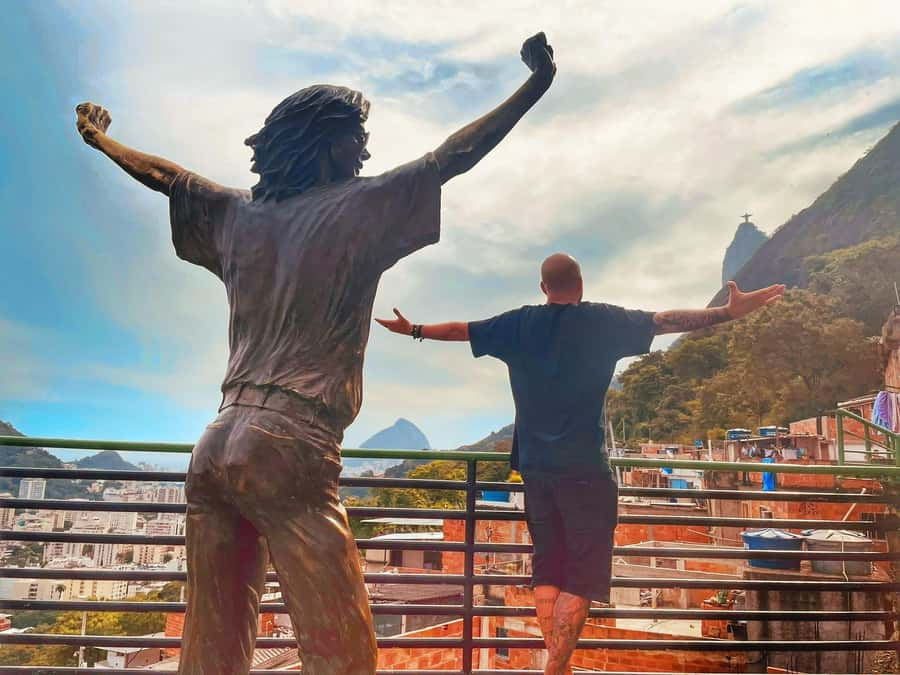
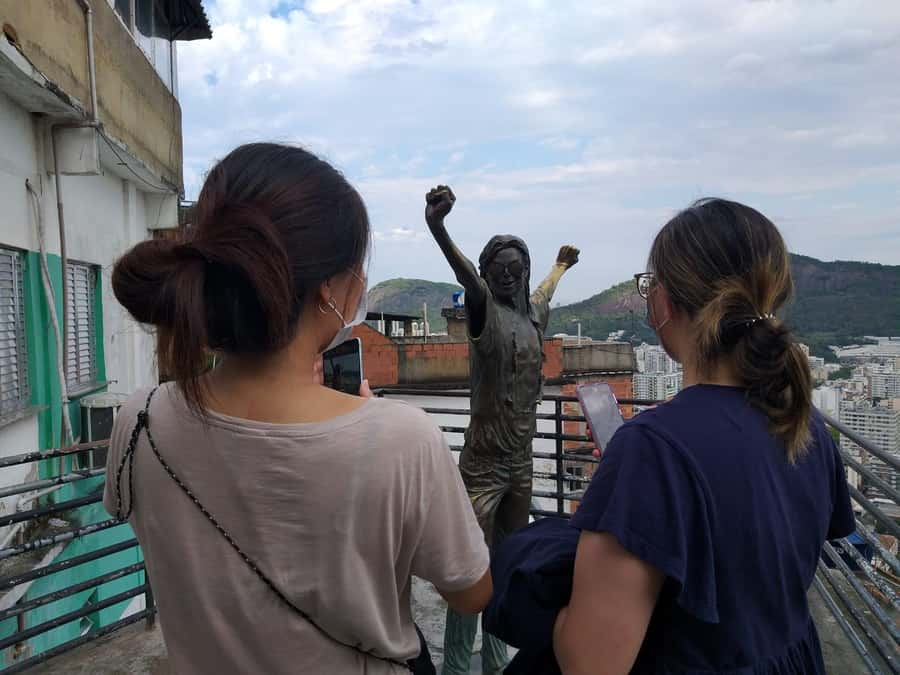
The most recognizable stop is Laje do Michael Jackson, a viewpoint marked by a statue of the American singer. This is where Michael Jackson filmed the video for They Don’t Care About Us, giving Santa Marta a place in popular music history.
The statue is an unusual sight, and it makes the stop easy to remember. Your guide can explain why the location became associated with the video and point out the connection between this hillside neighborhood and a major international production.
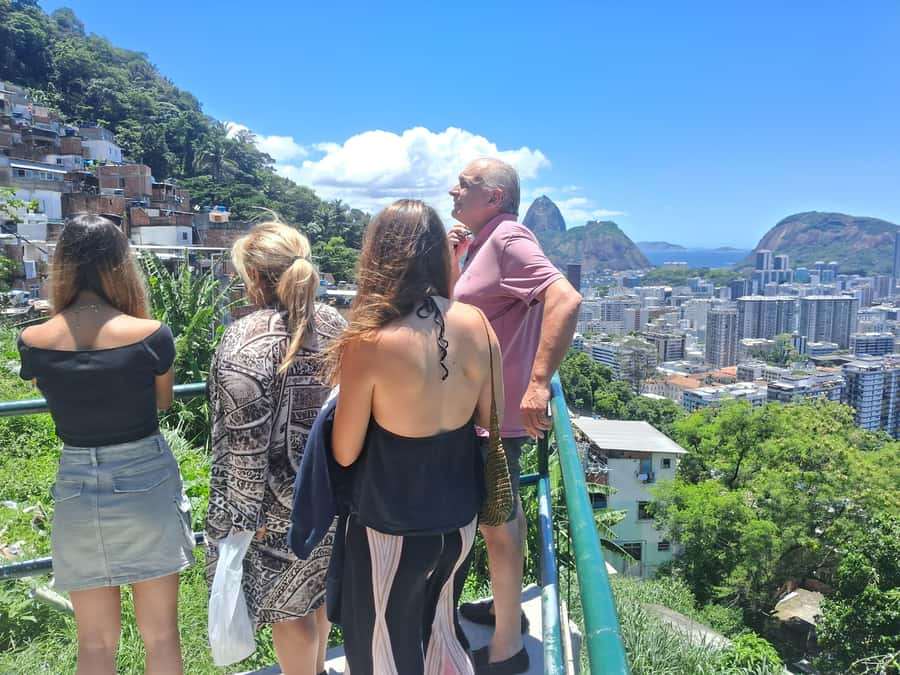
The view is the other reason to pause here. From the hillside, you can look across Rio toward the surrounding mountains. It is a strong visual break after walking through close-set streets, and it helps you understand Santa Marta’s steep position in the city.
Do not expect the viewpoint to be the entire experience. This is one stop in a broader walk, and the tour’s real value comes from the contrast between the famous film connection and the ordinary community life around it. The statue draws attention, but the guide’s explanation gives the stop meaning.
Why the guide matters more than the route
The route itself is interesting, but this is a guide-led experience in the truest sense. You are not simply following a map to a statue and a viewpoint. You are relying on the local resident guide to explain what you are seeing and to help you move through the neighborhood respectfully.
The strongest guide experiences seem to combine warmth with solid language skills. Marco is one guide whose friendly manner and French communication were singled out by name. A French-speaking guide also received praise for explaining the origins of the favela and the way residents live there.
At the same time, language availability on the booking page does not guarantee that every assigned guide will speak your chosen language well. English, French, Spanish, and Portuguese are offered, but I would confirm the match when arranging the tour, particularly for French. If the guide cannot communicate comfortably, the historical and social parts become much thinner.
Small groups and private departures are available. A private tour costs more in many cases, though the exact price can vary by option. The smaller format can be useful here because streets are narrow, stops may require patience, and you may want to ask questions without holding up a large group.
Is $34 a fair price?
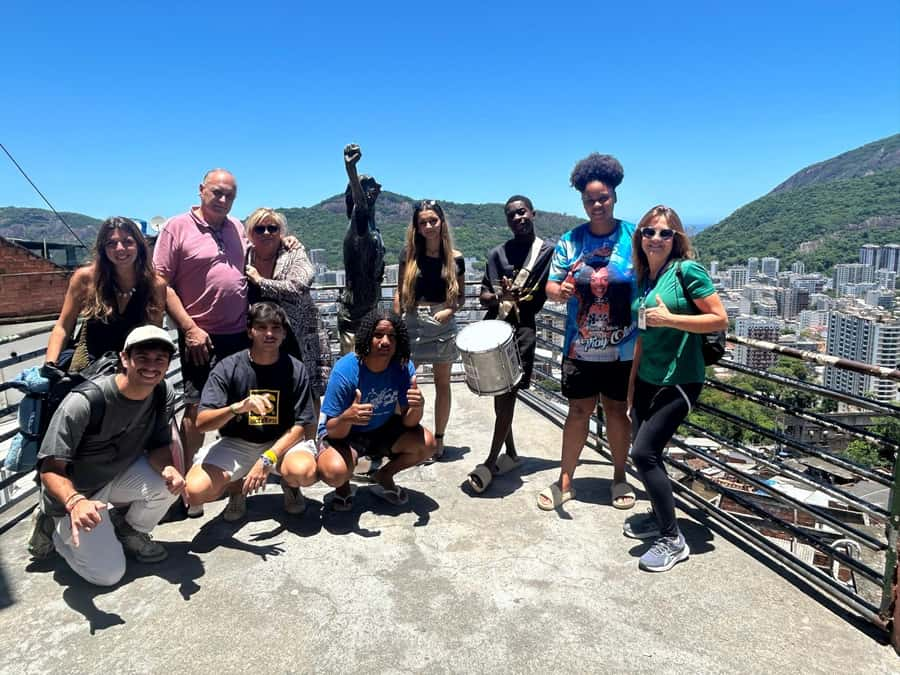
At $34 per person, the tour is fairly priced if you want a guided introduction to Santa Marta rather than a self-guided walk. The fee covers about two and a half hours, a local resident guide, the funicular plan when operating, visits to community spaces, and the chance to see the Michael Jackson viewpoint.
The price is less attractive if you mainly want a quick photo from the top. You can find city views in other parts of Rio without paying for a guided community visit. Here, you are paying for access, explanation, and a route that connects the homes, social projects, arts spaces, shops, and film location.
Food and drinks are extra. Souvenirs are extra. The community daycare and some projects may not be open during your time slot. Keep those limits in mind when comparing the tour with other Rio activities.
Free cancellation up to 24 hours before departure and the reserve-now, pay-later option make it easier to fit into a changing Rio schedule. The meeting point can vary by the option booked, so check your confirmation carefully rather than assuming every departure begins in the same place.
Who should book this Santa Marta walk?
I would choose this tour if you want to understand a part of Rio beyond beaches, viewpoints, and historic center landmarks. It suits curious visitors who are comfortable walking through a residential neighborhood and who want a local explanation of community projects and daily life.
It is also a good match for people interested in street art, social initiatives, Brazilian neighborhoods, or the Michael Jackson video connection. Families may appreciate the educational angle, though children need to be ready for steep streets and a two-and-a-half-hour walk.
I would be more cautious if you have difficulty with slopes, stairs, or uneven surfaces. The tour is not suitable for people with mobility impairments, and the alternate route to the top can involve a walk if the funicular is closed.
Weather is another small factor. The tour can run in light rain, so bring suitable clothing and shoes with a firm grip. Comfortable shoes are essential even in dry weather.
FAQ
How long does the Santa Marta walking tour last?
The tour lasts 150 minutes, or two and a half hours.
What languages are available?
Live guided tours are offered in English, French, Spanish, and Portuguese. Since guide ability can vary, confirm that your assigned guide speaks your preferred language well.
Is the tour private or shared?
Private and small-group options are available, depending on the option you book.
What happens if the Santa Marta cable car is closed?
You will walk to the top of the favela with your guide. Alternatively, you can take a taxi, which costs about R$15.
Is food included?
No. Food is not included, but you can buy food at a local pub during the tour.
Can I visit the community daycare?
A visit to the community daycare is included when it is open. Its availability is not guaranteed during every tour.
What should I bring?
Bring a passport or ID card, comfortable shoes, and cash. Cash is useful for souvenirs, food, drinks, and local shops.
Should you book the Santa Marta tour?
Book it if you want a grounded, local-led look at Santa Marta and are willing to accept that community spaces run on their own schedules. The social projects, colorful streets, Michael Jackson viewpoint, and mountain views make the $34 worthwhile for many visitors.
Before booking, confirm your meeting point, language, and group type. If your guide communicates well, this can be a thoughtful and eye-opening part of a Rio visit. If you need guaranteed access to every project or have mobility limits, choose a different activity.
More Favela Tours in Rio De Janeiro
- Rio de Janeiro: Favela Santa Marta Top Tour with Local Guide
★ 4.9 · 488 reviews - Rio de Janeiro: Favela Santa Marta Tour with Resident Guide
★ 4.6 · 220 reviews - Rio: Favela Rocinha Tour with Local Guide & Secret Spots
★ 4.7 · 218 reviews - Favela Tour The Original, Rocinha & Vila Canoas since 1992
★ 4.5 · 113 reviews
Just added around Rio De Janeiro
- Skip the Line: Lagoa Misteriosa Admission Ticket with Scuba Diving Experience★ 5.0 · 81 reviews
- Rio de Janeiro: Tijuca Peak Guided Hike★ 4.7 · 56 reviews
- Sugarloaf Mountain Fast-Pass Ticket and Guided Tour★ 4.4 · 62 reviews
- Rio de Janeiro: Sugarloaf Mountain Hike and Climb★ 5.0 · 45 reviews
- Rio de Janeiro: Sunrise Lookout and Christ the Redeemer Tour★ 5.0 · 121 reviews
- Rio de Janeiro: Samba Class and Samba Night Tour★ 4.6 · 115 reviews
- Rio Surf Experience★ 4.9 · 37 reviews
- Rio Samba Bus: hop-on hop-off city tour in Rio de Janeiro★ 3.8 · 94 reviews
Favela Tours, compared.

Bogotá´s Barrios: El Paraíso Favela Tour with Cable Car
Read our review →

Favela Rocinha Tour with Local Guide & Secret Spots
Read our review →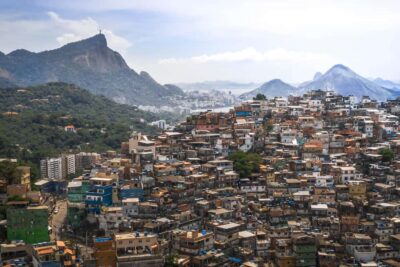
Favela Tour The Original, Rocinha & Vila Canoas since 1992
Read our review →Browse the lists this tour appears in