
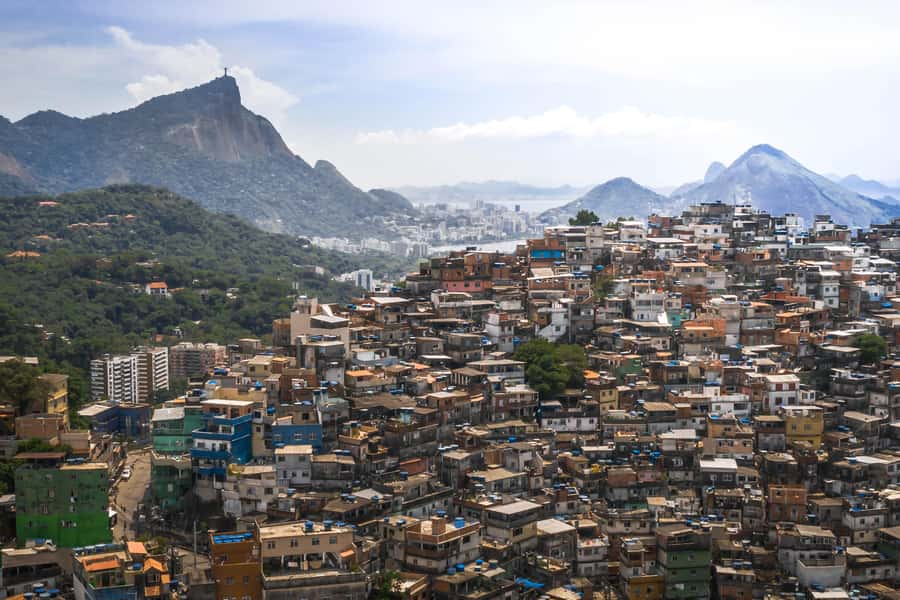
Reviewed · FAVELA TOURS
Favela Tour The Original, Rocinha & Vila Canoas since 1992
Rio’s Favela Tour does more than take you to a hillside community for photographs. It brings you into Rocinha and Vila Canoas with a guide who explains how these neighborhoods grew, how daily life works, and why favelas matter to Rio’s social structure. The walk also includes a community school supported by the tour and some striking views across the city.
I like the friendly, non-voyeuristic approach, and I like that part of the money supports local education projects. The three-hour format also gives you enough time to walk, ask questions, and see both residential and commercial areas without using up an entire day.
The main caution is that language arrangements can change. A recent Italian-language booking had to be moved, and the guide later skipped Rocinha because of a disagreement about a local fee. Confirm your language, date, and planned route directly before you go.
Key points at a glance
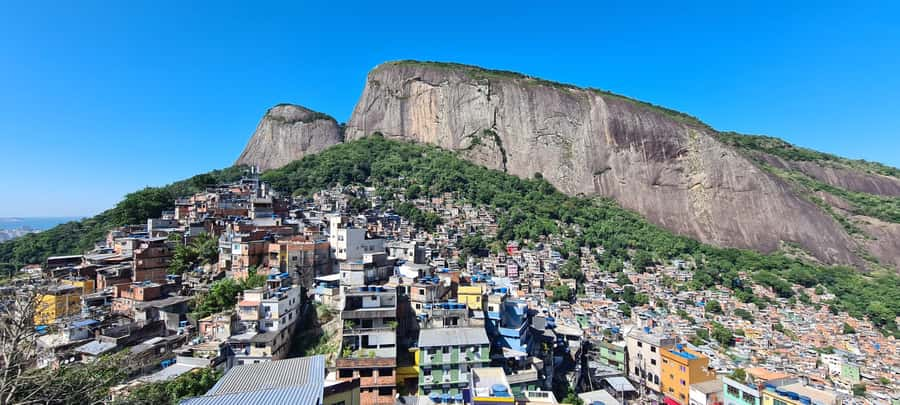
- Two very different communities: Visit Rocinha, Brazil’s largest favela, and smaller Vila Canoas.
- A walking tour from the start: The experience begins when you board the vehicle, with explanations during the ride and on foot.
- A school visit with a purpose: The community school is financed by Favela Tour, giving the social mission a practical link.
- Views from Rio’s hillsides: Expect broad views over the city and coast on the route.
- Pickup in the South Zone: Collection is offered around Leme, Copacabana, Ipanema, Leblon, and São Conrado.
- Five guide languages: Tours are offered in English, French, Spanish, Italian, and Portuguese, subject to demand.
Why this favela tour is worth considering
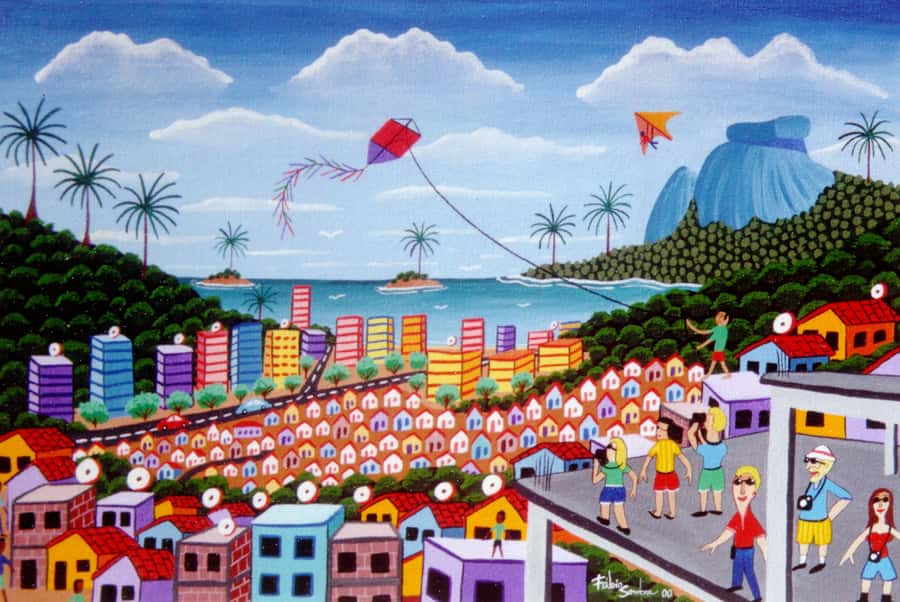
Rio’s favelas are often reduced to two simple ideas: colorful hillside houses or dangerous places to avoid. Both views miss most of the story. This tour gives you a guided way to examine the homes, shops, roads, schools, and community projects that make up everyday life for a large part of Rio’s population.
There are close to 1,000 favelas in Rio, and around 20 percent of the city’s residents live in them. Many grew on former public land on the hillsides. That background matters because you are not looking at an isolated attraction. You are seeing a major part of the city that remains unfamiliar to many people who live elsewhere in Rio.
I value the fact that this tour tries to put people and social questions ahead of dramatic photographs. You walk through local streets, hear how the communities developed, and see ordinary activity rather than simply stopping at an overlook. The guide’s role is important here. A good explanation can turn a confusing maze of buildings into a clear picture of housing, work, education, inequality, and local organization.
The tone is intended to be welcoming. The tour explains that organized visits are the sensible choice, even for confident independent visitors. That is useful advice. You are entering a residential area, not a museum, so having a local guide helps you behave respectfully and understand where you are.
More Favela Tours in Rio De Janeiro:
- Rio de Janeiro: Rocinha Favela Walking Tour with Local Guide
★ 4.8 · 3,052 reviews - Rio De Janeiro: Half-Day Rocinha Favela Walking Tour
★ 4.7 · 2,272 reviews - Rio de Janeiro: Favela Santa Marta Top Tour with Local Guide
★ 4.9 · 488 reviews
Starting with transport and a local bar
Pickup is available from several points in Rio’s South Zone: Leme, Copacabana, Ipanema, Leblon, and São Conrado. The operator generally works with hotels, especially those near the beachfront, and may direct you to a nearby regular pickup hotel if your own accommodation is outside the usual route.
That arrangement is practical, but do not treat the pickup as automatic. Confirm the exact hotel and time by phone, email, or WhatsApp once you are in Rio. The company specifically advises you not to use a middleman for confirmation, since that can create confusion over times and prices.
The tour begins when you get into the vehicle, not only after arriving at Rocinha. This is a useful detail. The ride is part of the lesson, giving the guide a chance to explain Rio’s contrasts before you begin walking.
A stop at a local bar is included in the route. It gives you a simple community setting rather than a staged performance. The supplied details do not promise a meal or a drink, so bring extra money if you want refreshments. You should also carry cash for snacks or local handicrafts.
Walking through Rocinha, Rio’s largest favela

Rocinha is the centerpiece of the visit. It is described as Brazil’s largest favela, and the tour uses it to explain the scale and complexity of these communities.
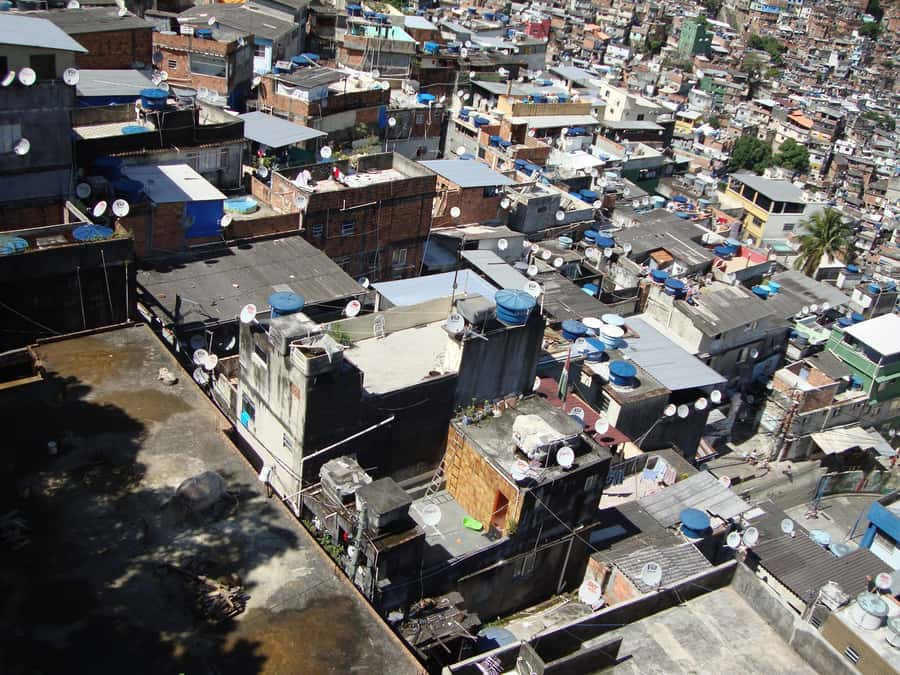
From a distance, Rocinha can look like a dense patchwork on the hillside. Once you enter, the picture becomes more detailed. You move through narrow alleyways and pass both residential and commercial areas. The point is not simply to see crowded construction. It is to understand how people live, shop, work, and move through a place that has developed its own internal systems.
The commercial activity is one of the more useful parts of the walk. A neighborhood is more than its houses, and local shops help show how residents meet daily needs close to home. Your guide can place these details in the wider context of Rio’s divisions and inequalities.
The walking format also sets expectations. This is not a coach tour with a few quick photo stops. You should come ready to walk and comfortable with uneven or narrow passages. The information provided does not specify accessibility arrangements, so anyone with mobility concerns should ask the operator before booking.
Rocinha is also where the tour’s social purpose needs careful handling. You are walking through people’s homes and workplaces. Keep your behavior low-key, listen to your guide, and avoid treating private life as scenery. The tour’s emphasis on inclusion helps, but respectful conduct still depends on you.
Seeing Vila Canoas beside the larger community
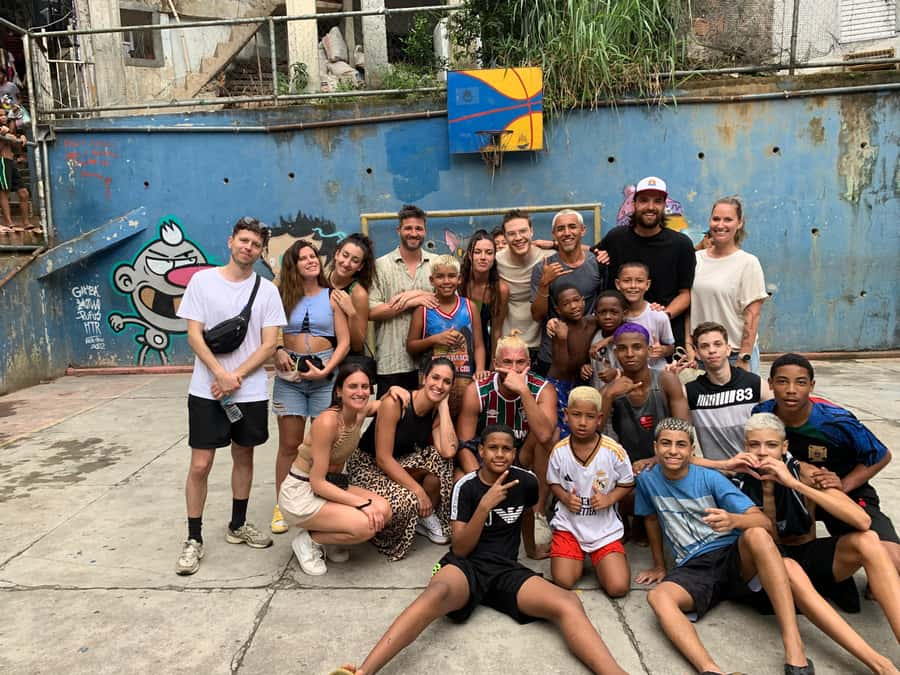
The visit to Vila Canoas gives the tour useful contrast. Rocinha is famous for its size and density, while Vila Canoas offers another example of how a favela can function as a residential community.
Visiting both places prevents you from assuming that one favela represents all the others. The tour presents them as different communities, with their own layouts and social character. That comparison is one of the strongest reasons to choose this experience over a brief drive past a hillside.
You will walk here as well, with the guide pointing out local features and explaining the community’s place in Rio. The route includes a handcraft center, giving you a chance to buy something made locally if you wish. Purchases are optional, but spending directly in the community can make a small contribution beyond the tour fee.
The two-favela route also keeps the experience from becoming a single dramatic story. You see both the challenges and the ordinary parts of community life. That balance is valuable if you want a realistic picture rather than a polished attraction.
A few more Rio De Janeiro days worth comparing
- Rio de Janeiro: 6-Stop Highlights of Rio with Lunch
★ 4.4 · 5,157 reviews - Christ the Redeemer Entry Ticket by Corcovado Train
★ 4.4 · 4,476 reviews - Rio de Janeiro: Sugarloaf Cable Car Official Ticket
★ 4.6 · 2,873 reviews - Rio: Christ the Redeemer, Sugarloaf, Selaron & BBQ Lunch
★ 4.5 · 2,428 reviews
The school visit and the tour’s community role
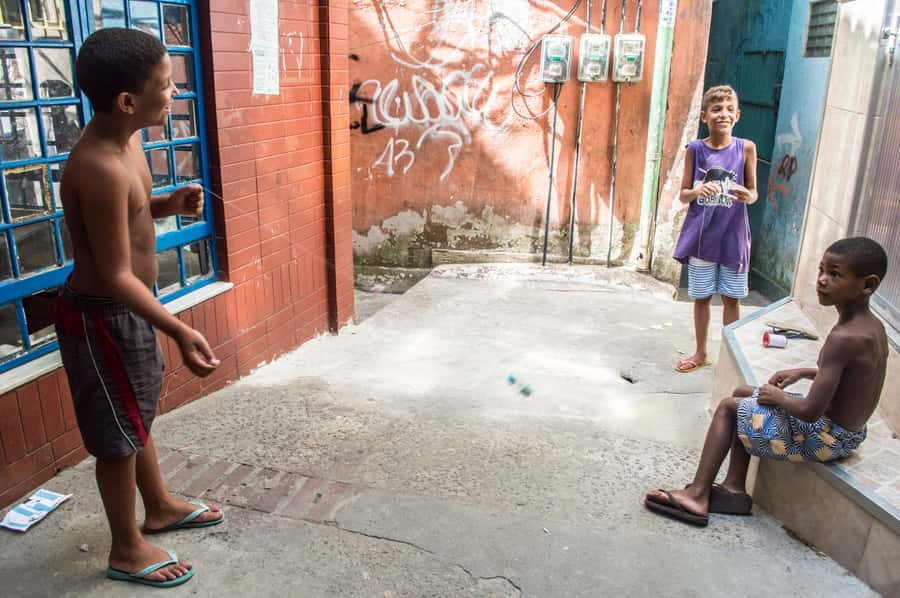
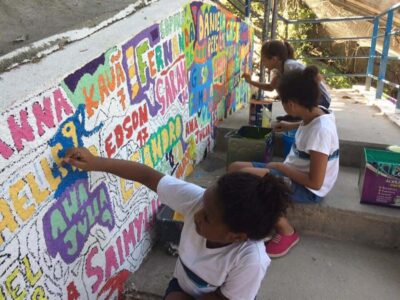
The community school is a key stop. Favela Tour helps finance it, so the visit connects what you are learning with a specific local project. That makes the community-benefit claim easier to understand than a vague promise that tourism helps residents.
A visit to a school can also give you a clearer view of local priorities. Education is one of the practical areas where outside support can matter, especially in communities dealing with unequal access to services. The tour does not present the school as a token photo stop. It places the project within the wider discussion of opportunity and social conditions.
The school was the highlight for some recent participants, and I can see why. It offers a constructive focus after discussions about poverty, exclusion, and danger. You leave with an example of local work and investment, not just a list of problems.
The exact school schedule may depend on the day and local conditions, so confirm what will be open during your departure. The supplied details identify the school as part of the tour, but do not promise a particular classroom activity or meeting with staff.
Views that put Rio’s contrasts in one frame
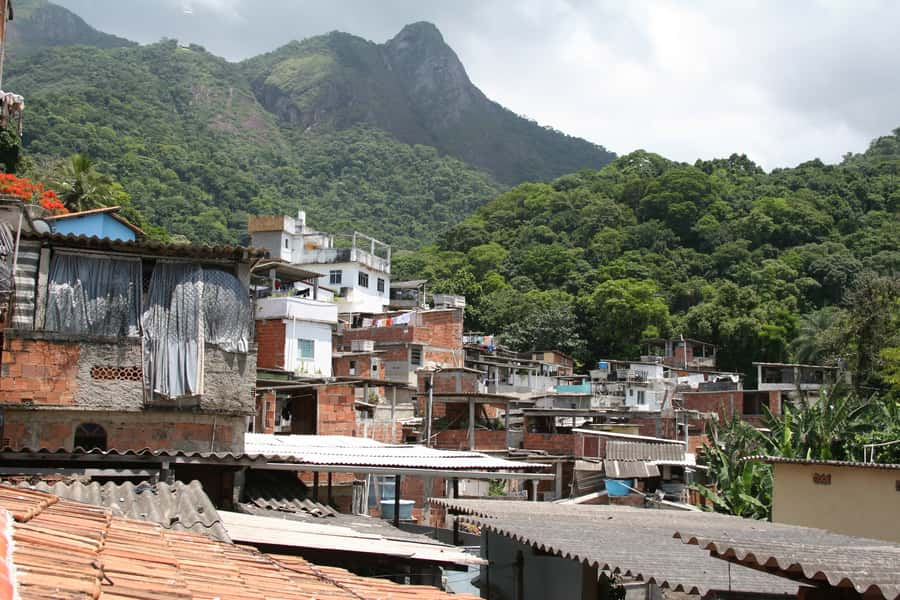
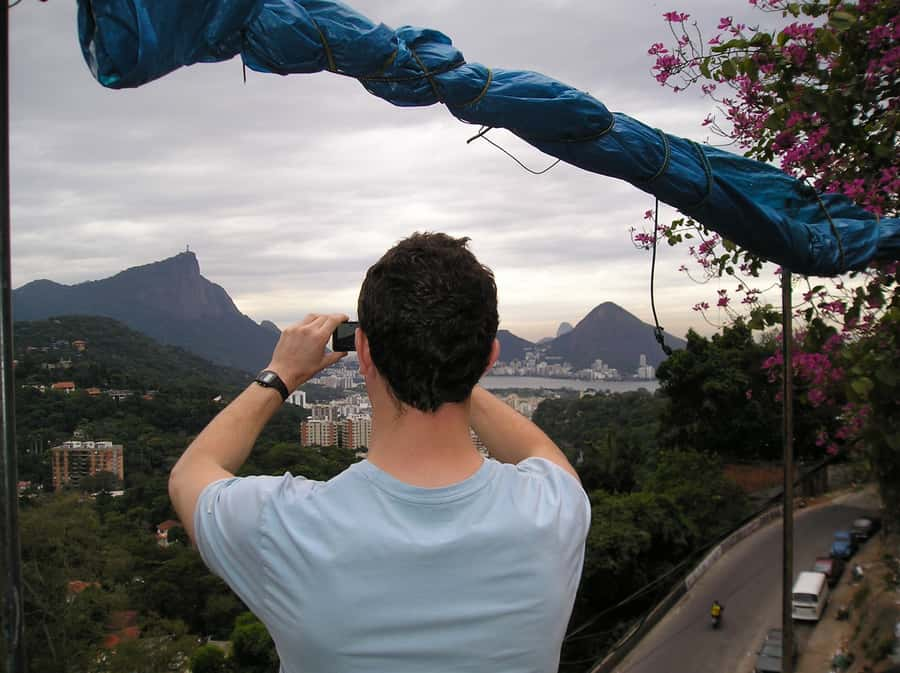
The hillsides provide wide panoramic views over Rio. From above, the city’s famous beaches, wealthy districts, mountains, and dense communities can appear close together. That visual contrast helps explain why Rio can feel both connected and sharply divided.
The views are not the only reason to take the tour, but they add a strong sense of place. You see where the favelas sit in relation to the South Zone rather than treating them as distant, separate settlements. The scenery also gives the walk a welcome pause between more serious conversations.
Bring a camera if you want one, but remember that photography around homes and residents calls for judgment. Ask before photographing people, and follow the guide’s instructions about appropriate places. The tour’s purpose is understanding, not collecting images of strangers.
The guides and language question
The tour operates in English, French, Spanish, Italian, and Portuguese. Recent departures have featured guides named Mateo and Francesco. Mateo was praised for explaining Brazilian culture and offering useful perspective, while Francesco was noted for his explanations of favela history and daily life.
Guide quality matters more here than on a simple sightseeing route. You need someone who can handle sensitive subjects without turning the visit into a lecture or a spectacle. You also need clear directions while walking through busy residential areas.
If you book a language other than English, confirm it before you go. Demand may mean that a particular language is combined with a wider group or moved to another date. One Italian booking was changed because no place was available in that language, so this is not a minor detail.
The multilingual format can also affect how much information you receive. If a guide must repeat explanations in several languages, the pace may slow and the amount of detail may be reduced. A recent participant felt the tour could have included more information for this reason. If you want the fullest explanation, ask whether your departure will be conducted mainly in your chosen language.
Is $33 good value for three hours?
At $33 per person, this is a reasonable price for a three-hour guided experience that includes transport from much of Rio’s South Zone, two communities, a local bar stop, walking commentary, scenic viewpoints, and a school visit.
The value is strongest if you would not feel comfortable visiting a favela independently. You receive local context, a planned route, and a guide who can explain what you are seeing. The contribution to educational projects also gives the fee a purpose beyond transport and guiding.
The price does not include drinks, snacks, or handicrafts, so budget a little extra if you want to stop at the bar or buy something at the handcraft center. You may also need to reach a designated hotel for pickup if your accommodation is outside the normal area.
The experience is less valuable if you want a quick lookout and a few photographs. Much of the tour is spent listening and walking. Its real payoff is the social explanation and the chance to see how the communities function.
Who should book this experience?
I would choose this tour if you want to understand a side of Rio that is easy to miss from beaches, museums, and landmark viewpoints. It suits curious visitors who can walk for several hours, listen to difficult subjects, and treat a residential neighborhood with respect.
It is also a good choice for first-time visitors who are unsure about entering a favela. The organized format offers a safer and more responsible way to go than arriving alone without local guidance.
Families and older visitors should consider the walking demands and ask about the exact route before booking. The description says to come ready to walk, but it does not give a detailed accessibility plan.
This is not the right pick if you want a carefree sightseeing ride with no serious discussion. It deals with poverty, inequality, exclusion, and the contradictions of Brazilian society. The tone is friendly, but the subject matter deserves attention.
Practical details before you go
Wear comfortable shoes and arrive ready to walk. Keep money available for drinks, snacks, or local crafts, and confirm your pickup point rather than assuming the vehicle will come to your exact hotel.
Ask for confirmation by phone, email, or WhatsApp after arriving in Rio. Confirm four things: your date, pickup hotel, guide language, and whether both Rocinha and Vila Canoas are planned for your departure.
The operator offers free cancellation up to 24 hours before the tour and allows you to reserve now and pay later. Starting times vary, so check availability for your date.
Should you book the Favela Tour?
Book it if you want a grounded look at Rio’s social structure, not just another scenic stop. The combination of Rocinha, Vila Canoas, local walking, a school project, and hilltop views gives you a fuller picture than a drive-by visit.
Before paying, confirm the language and route directly. If those details are settled, $33 is fair value for a three-hour experience that supports local education and gives you context you cannot get from the beach.
FAQ
How long does the Favela Tour last?
The tour lasts three hours.
Which favelas does the tour visit?
The route visits Rocinha, described as Brazil’s largest favela, and Vila Canoas.
Where does pickup take place?
Pickup is available from hotels and regular meeting points in Rio’s South Zone, including Leme, Copacabana, Ipanema, Leblon, and São Conrado. You may be asked to go to a specific hotel if your accommodation is outside the usual pickup area.
Which languages are available?
Guided tours are offered in English, French, Spanish, Italian, and Portuguese. Languages other than English may depend on wider demand.
Is transportation included?
Yes. Transportation from and back to most hotels in Rio’s South Zone is included, subject to the operator’s pickup arrangements.
Does the tour visit a local school?
Yes. The route includes a community school financed by Favela Tour.
Should I bring money?
Yes. Drinks, snacks, and local handicrafts are not included, so bring extra money if you want to buy anything during the tour.
Can I cancel the booking?
You can cancel up to 24 hours in advance for a full refund. The tour also offers a reserve-now-and-pay-later option.
Just added around Rio De Janeiro
- Skip the Line: Lagoa Misteriosa Admission Ticket with Scuba Diving Experience★ 5.0 · 81 reviews
- Rio de Janeiro: Tijuca Peak Guided Hike★ 4.7 · 56 reviews
- Sugarloaf Mountain Fast-Pass Ticket and Guided Tour★ 4.4 · 62 reviews
- Rio de Janeiro: Sugarloaf Mountain Hike and Climb★ 5.0 · 45 reviews
- Rio de Janeiro: Sunrise Lookout and Christ the Redeemer Tour★ 5.0 · 121 reviews
- Rio de Janeiro: Samba Class and Samba Night Tour★ 4.6 · 115 reviews
- Rio Surf Experience★ 4.9 · 37 reviews
- Rio Samba Bus: hop-on hop-off city tour in Rio de Janeiro★ 3.8 · 94 reviews
Favela Tours, compared.

Bogotá´s Barrios: El Paraíso Favela Tour with Cable Car
Read our review →
Favela Rocinha Tour with Local Guide & Secret Spots
Read our review →
Favela Santa Marta: Walking Tour with local guide
Read our review →Browse the lists this tour appears in