
Reviewed · WALKING TOURS
Walking tour of the bohemian neighborhoods of Santa Teresa and Lapa
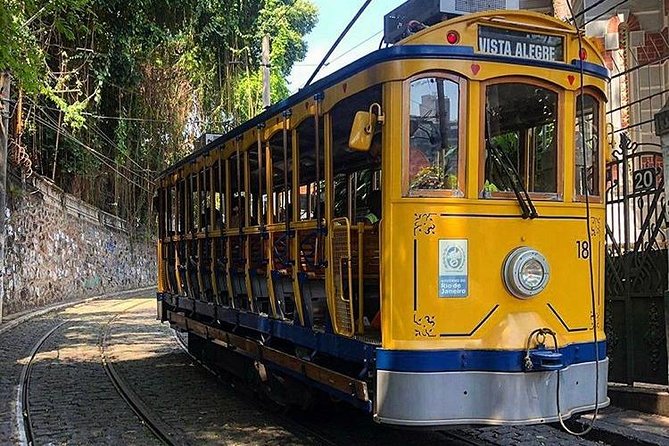
The best part of this Rio tour is the ride up Santa Teresa in the old yellow Bonde tram, followed by a walk through one of the city’s most artistic neighborhoods. You get old houses, street art, hilltop views, and a useful look at central Rio without spending the morning in a tour bus.
I like the small maximum of 12 people, which gives the guide room to answer questions. I also like the local touch: Edmundo is an artist, Ivan lives in Santa Teresa, and Lorena is praised for adapting the route when tram service or a previously visited sight caused a change of plan. The main consideration is that this is a nonrefundable booking, and the tram may not always run exactly as planned.
Key points
- Ride the famous Santa Teresa tram: The half-hour trip up the hill is a scenic part of the experience, not just transportation.
- Meet local guides: Edmundo, Lorena, and Ivan are named guides associated with the tour, with Ivan a Santa Teresa resident and Edmundo an artist.
- See Rio’s best street-art stops: The route includes Selarón Steps, graffiti-covered Lapa, and local art shops.
- Take in broad city views: Parque das Ruínas looks toward central Rio, the Lapa Arches, Christ the Redeemer, and Botafogo.
- Cover several districts in one morning: You move from Copacabana to Santa Teresa, Lapa, and Cinelândia in about three and a half hours.
- Expect a small-group walk: The group is capped at 12, but you should still be ready for streets, stairs, and time on foot.
Riding the yellow tram into Santa Teresa
Your morning begins at 9:00 am outside the Copacabana Palace on Avenida Atlântica. From there, the group makes its way toward the Santa Teresa tram station. Past tour descriptions and city maps can make Santa Teresa look close to Copacabana, but the ride and change of scenery are part of the point.
The famous yellow Bonde climbs into Santa Teresa for about 30 minutes. It is a slow, open-feeling way to reach the hill district, with views and old Rio atmosphere along the route. The tram ride is also a practical introduction to the neighborhood. You see why Santa Teresa feels separate from the modern beachfront city below.
Tickets for the tram and metro are included when those services are used. One account also mentions enjoying a caipirinha during the morning, though you should not treat that as a guaranteed part of every departure.
The tram is a major reason to choose this outing over a standard central-Rio walking tour. It gives the morning a clear sense of place. The drawback is equally clear: service can be interrupted by a local situation. Lorena adjusted one departure when the tram could not run as expected, so flexibility matters.
More Walking Tours in Brazil
- Rio de Janeiro: Rocinha Favela Walking Tour with Local Guide
★ 4.8 · 3,052 reviews - Rio De Janeiro: Half-Day Rocinha Favela Walking Tour
★ 4.7 · 2,272 reviews - Sunrise and Sunrise Walk Two Brothers with Local Guide
★ 5.0 · 193 reviews
Walking around Largo dos Guimarães
The first proper walk takes place around Largo dos Guimarães, the center of Santa Teresa’s social life. This is where the neighborhood’s old houses, small bars, restaurants, and views begin to make sense as one scene rather than a list of sights.
The buildings date mainly from the late 19th and early 20th centuries. Their age gives Santa Teresa a different mood from the high-rise streets of Copacabana. You are looking at a residential district shaped by time, artists, small businesses, and steep streets.
This is also a useful place to let your guide set the pace. Edmundo is described as an artist who knows many people in the area. Ivan is a Santa Teresa local, which makes him a particularly good choice if you want neighborhood context rather than only dates and architectural labels.
Do not expect a long stop at every restaurant or bar. The visit is designed as a walking introduction, not a food tour. Still, Largo dos Guimarães gives you the kind of ordinary street detail that a viewpoint alone cannot provide.
Seeing Rio from Parque das Ruínas
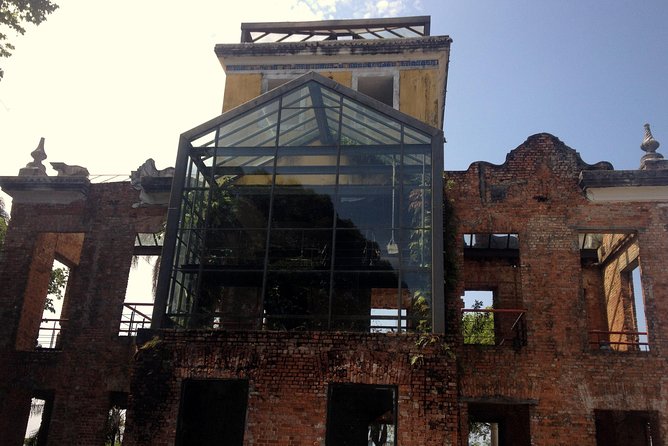
The Centro Cultural Municipal Parque das Ruínas is one of the strongest stops on the route. The site was once the home of Laurinda Santos Lobo and is now a cultural center and open viewpoint.
From here, you can look toward central Rio, the Lapa Arches, Christ the Redeemer, and Botafogo. That wide view helps you understand Rio’s layout. Santa Teresa is not simply an arts district on a hill. It is a high perch above the center, with the famous parts of the city spread out below.
The stop lasts about 30 minutes. That is enough time for photographs and an explanation of the place without turning the morning into a long museum visit. It is also a good pause after the tram ride and streets around Largo dos Guimarães.
The site’s appeal depends partly on weather and visibility. The view is the main attraction, so cloudy conditions can reduce the impact. Even then, the former house and its cultural role give the stop more substance than a quick photo pullout.
From Santa Teresa to the Selarón Steps
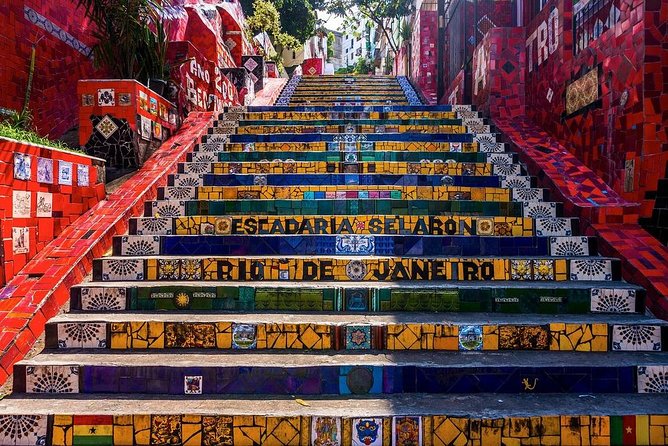
The route then descends toward Lapa and the Escadaria Selarón, or Selarón Steps. The staircase was created by Chilean artist Jorge Selarón over roughly 20 years, using colorful tiles to cover the steps and walls.
This is the most immediately recognizable art stop of the morning. The colors make it easy to understand why the staircase is so popular, but the guide adds useful context about the artist and the work. You get a better sense of the steps as an ongoing personal project, not merely a photogenic staircase.
The stop lasts around 30 minutes. That should give you time to look closely, take pictures, and hear the story without rushing through the entire area.
The steps can be crowded, and the setting is designed more for looking and walking than quiet reflection. If you want a calm, empty photo, this may not be the moment. If you like public art and a bit of urban character, it is one of the best matches on the route.
More Walking Tours in Rio de Janeiro
- Rio de Janeiro: Little Africa Heritage Walking Tour
★ 4.9 · 177 reviews - Learn the History of Rio with an Unforgettable City Center Walking Tour
★ 5.0 · 82 reviews - Rio’s city walking tour: a glimpse of history and olympic legacy
★ 4.5 · 78 reviews - Guided Walk to Telegraph Stone
★ 4.5 · 49 reviews
Reaching the Lapa Arches on foot
From the staircase, the tour continues through Lapa, with graffiti along the walls and the Arcos da Lapa ahead. The arches are the remains of an 18th-century aqueduct that carried water into Rio until the end of the 19th century.
The structure also has a direct connection to your morning: the Santa Teresa tram passes over the aqueduct on its way into the hill district. Seeing the tram first and then learning what the arches once did gives the route a satisfying link between transport, engineering, and city growth.
The Lapa stop is short, about 20 minutes. That is enough for an introduction and photographs, though not a long historical lecture. I like this balance because the tour has several districts to cover. You see the arches in context instead of spending half the morning on one monument.
Graffiti is part of the walk through Lapa, not a side note. It helps explain the area’s artistic identity, though the visual character is urban and sometimes rough around the edges. This is not a polished sightseeing district, and that is part of its appeal.
Finishing around Cinelândia
The final stop is Cinelândia, one of central Rio’s main public squares. The guide introduces the Teatro Municipal, Rio’s opera house, along with the Museu das Belas Artes, the Câmara Municipal, the Biblioteca Nacional, and the Teatro Odeon.
The Teatro Odeon is noted as the only cinema in the square still operating. That detail gives the square a sense of changing city life. Cinelândia is not just a collection of grand buildings. It is a place where cultural institutions, government offices, libraries, and old entertainment venues sit together.
You spend about 20 minutes here. The stop works well as a final overview of central Rio after Santa Teresa and Lapa. It also gives you a chance to identify places you may want to return to later, especially if you plan to explore museums or the opera house independently.
The tour ends back at the original meeting point near the Copacabana Palace. The exact return timing will depend on the pace of the group, tram conditions, and the transitions between neighborhoods.
What the guides add to the morning
The strongest feature of this tour is not simply the route. It is the guide’s role in making Santa Teresa feel personal.
Edmundo is described as both an artist and a guide with many local connections. That can change the feel of a neighborhood walk. Instead of moving from building to building, you get a sense of how Santa Teresa works as a home for artists and longtime residents.
Ivan is a native of Santa Teresa. Choose him if you value local familiarity and want a guide who knows the streets and people of the district. His route has also included an art boutique, which may appeal to you if you want gifts or a closer look at local creative work.
Lorena is praised for her humor, candor, and ability to adjust. On one departure, she changed the plan when the tram was affected by a problem in the neighborhood. She also replaced a sight when the group had already visited it the day before. That sort of flexibility is useful in Rio, where a fixed schedule can be less practical than a good guide.
The guides named here may not all lead every departure, so you should not book on the assumption that one specific person is guaranteed unless the provider confirms it.
Is $72.09 a fair price?
At $72.09 per person, this is not the cheapest way to walk around Lapa. You could visit several of these places independently for less, especially if you already understand Rio’s public transport and feel comfortable organizing the tram, metro, and route on your own.
The value comes from combining several things in one morning:
- Metro and tram transport are included when used.
- A guide explains the neighborhood and historic sites.
- The group is limited to 12 people.
- You get a connected route through Santa Teresa, Lapa, and Cinelândia.
- You avoid having to plan the transitions between hill district, staircase, aqueduct, and central square.
For a first visit to Rio, that combination can make the price reasonable. You are paying for orientation as much as admission. Most stops do not charge an entry fee, but the guide helps you understand why they matter and how they fit together.
If you are an experienced independent visitor who speaks Portuguese or already knows central Rio, the value is weaker. If you want a safe-feeling, organized introduction with a local guide and transport handled, the cost is easier to justify.
Who should book this Santa Teresa tour?
I would choose this experience if you want art, old neighborhoods, and city views in the same morning. It suits first-time Rio visitors who want more than beaches and major postcard sights.
It is also a good fit for anyone who enjoys seeing a city through its smaller districts. Santa Teresa has houses, bars, restaurants, studios, and street views that feel different from the beachfront zones. Lapa adds graffiti, the Selarón Steps, and the aqueduct. Cinelândia supplies grand public buildings and cultural institutions.
You should be comfortable walking for much of the three-and-a-half-hour experience. The route includes a hill district, a staircase, and several urban transitions. The information says most people can participate, but it does not describe a fully accessible route or promise a flat walk.
Families, couples, solo visitors, and small groups can all fit the format. The cap of 12 people is especially useful if you want to ask questions or request a modest adjustment.
Practical details before you commit
The meeting point is the Copacabana Palace, A Belmond Hotel, at Avenida Atlântica, 1702. The tour starts at 9:00 am and ends back at the meeting point.
Confirmation is provided at booking. The activity is near public transportation, and the group size is limited to 12 people.
Plan for changing conditions. The tram is a central feature, but a local disruption can require a route adjustment. That is not necessarily a failure of the experience, though it means you should value a flexible guide more than a rigid checklist.
The cancellation rule is strict. The experience is nonrefundable and cannot be changed for any reason. If the provider cancels because the minimum number of people is not reached, you are offered another date or experience, or a full refund. Because of that policy, book only when your Rio plans are firm.
Should you book it?
Book this tour if you want an easy, well-shaped introduction to Santa Teresa and Lapa, especially if the tram ride and local guide matter to you. The best reasons to go are the connected route, the city views from Parque das Ruínas, the Selarón Steps, and the chance to explore with guides who have genuine ties to Santa Teresa.
Skip it if you prefer to move slowly, spend a full morning in one museum, or arrange public transport and street walks on your own. Also think twice if the nonrefundable policy makes you uneasy.
For most first visits, this is a strong way to see a side of Rio that beaches and major viewpoints cannot provide. It gives you color, old streets, public art, and a clearer sense of how the hill neighborhoods connect with central Rio.
FAQ
Where does the tour start?
It starts at 9:00 am at the Copacabana Palace, A Belmond Hotel, at Av. Atlântica, 1702, Copacabana, Rio de Janeiro.
Where does the tour end?
The activity ends back at the original meeting point.
How long does the tour last?
The experience lasts approximately three hours and 30 minutes.
Is the Santa Teresa tram ride included?
Yes. The tram ride is included as part of the experience, and metro and tram tickets are included when those services are used.
What places are visited?
The route includes the Santa Teresa tram station, Largo dos Guimarães, Parque das Ruínas, Selarón Steps, the Arcos da Lapa, and Cinelândia.
How large is the group?
The maximum group size is 12 people.
Which guides may lead the tour?
The guides associated with the experience include Edmundo, Lorena, and Ivan. Ivan is a Santa Teresa local, and Edmundo is an artist. A specific guide is not guaranteed in the provided details.
Is the tour suitable for most people?
Yes. The information states that most people can participate. The experience includes walking through Santa Teresa and Lapa, so you should be prepared to spend much of the morning on foot.
Can I cancel or change the booking?
No. The experience is nonrefundable and cannot be changed for any reason. If the provider cancels because the minimum number is not reached, you are offered another date or experience, or a full refund.
Just added around Rio de Janeiro
- Tijuca Forest Hike – Waterfalls & Caves, Nature & Wild Life!★ 5.0 · 51 reviews
- Guided Market Fruit Tasting in Rio with 15+ Exotic Flavors★ 5.0 · 68 reviews
- Rio Highlights: Christ, Sugarloaf, and More in a Private Tour★ 5.0 · 36 reviews
- Guided Tour to Favela Santa Marta★ 5.0 · 60 reviews
- Trail and Rappel on Morro Dois Irmãos★ 5.0 · 77 reviews
- Tijuca National Park and all its wonders★ 5.0 · 88 reviews
- City Tour Full VIP – Corcovado Train + Churrascaria Rodízio★ 5.0 · 43 reviews
- Rocinha Walking Tour: Get a Feel for the Brazil’s Largest Favela (Shared Group)★ 5.0 · 37 reviews
Walking Tours, compared.
Historic Center and Getsemaní Shared Walking Tour
Read our review →


La Paz and El Alto: Cable Car Rides and Walking Tour
Read our review →
Punta Arenas: Walk with Penguins on Magdalena & Marta Island
Read our review →

Browse the lists this tour appears in