
Reviewed · WATERFALL TOURS
Hiking in the Tijuca Forest : Waterfalls and Caves
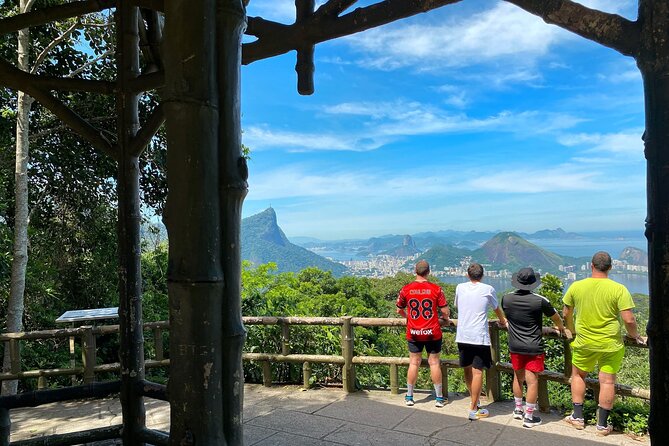
Tijuca Forest gives you a very different Rio de Janeiro. In one half-day, you move from city views above São Conrado to Atlantic rainforest trails, a waterfall, a cave, and mountain lookouts. The forest feels wild, yet it sits inside one of the world’s great cities.
I like the small-group format, capped at 15 people, and the easy hotel pickup from Copacabana, Ipanema, Leblon, or São Conrado. I also like the human touch from guides such as Eduardo, Victor, Júlio, Eric, and Yun, who bring local nature and city knowledge into the walk.
The main caution is that wildlife sightings are never promised, and this is not a polished boardwalk stroll. Some sections are primitive, with high steps and light rock scrambling. Also, take care around the cascades: one participant reported several days of swollen, blistered bites after black flies became active near the water.
Key points to know before booking
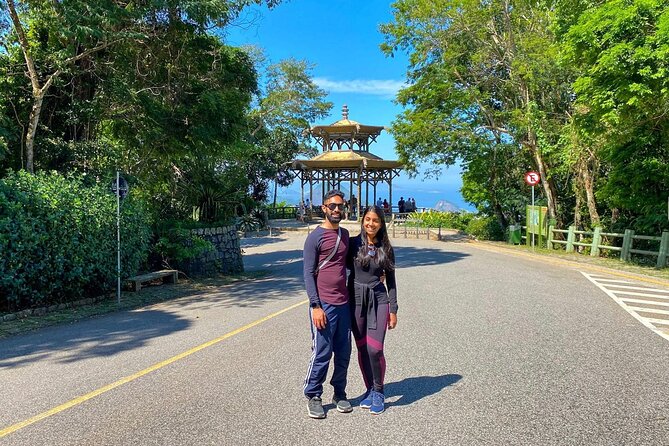
- Canoas Lookout starts the day with a wide view over São Conrado.
- Taunay Waterfall is the park’s largest and most famous cascade.
- The hike mixes forest paths, viewpoints, the Bat Cave, and light scrambling.
- Monkeys, marmosets, toucans, coatis, and sloths are possible sightings, not guarantees.
- Hotel pickup and return are included from Rio’s South Zone.
- The $62 price is fair for transport, park entry, and a specialist guide, though not a bargain if you want only a short walk.
Why Tijuca Forest is worth half a day
Rio is famous for beaches, sugarloaf-shaped peaks, and grand city views. Tijuca Forest adds something different: a close look at the green interior of the city, with no long trip into the countryside.
Tijuca National Park is described as the world’s largest urban rainforest. That matters because you do not have to choose between city sightseeing and nature. You can leave your hotel in the South Zone, ride in an air-conditioned vehicle, and soon be among trees, streams, steep slopes, and bird calls.
The experience lasts about five hours. That is long enough to feel like you have had a proper outing, but short enough to fit beside other Rio plans. Several people returned to their hotels by early afternoon, making this a useful morning activity.
The park also gives you a break from Rio’s busy streets. You will still see the city from above, but the focus shifts to forest life, water, and the work involved in restoring and protecting a natural area inside a major urban center.
More Hiking Tours in Rio de Janeiro
- Rio: Tijuca Forest Small Group Hike to Caves and Waterfalls
★ 4.9 · 536 reviews - Pedra do Telégrafo Hike and Beach Full-Day Tour
★ 4.5 · 417 reviews - Rio de Janeiro: Pedra da Gávea 7-Hour Hike
★ 4.7 · 183 reviews
Canoas Lookout and the first view of Rio
The first stop is Mirante das Canoas, or Canoas Lookout. From here, you look over São Conrado and the surrounding mountains. It is a smart opening stop because it gives you a sense of Rio’s layout before the forest trail takes over.
This is not just a photo stop. The view helps you understand how close the city and rainforest are to one another. São Conrado sits below steep green slopes, and the lookout gives you a broad visual frame for the rest of the morning.
Bring a phone or camera, but do not spend the whole stop behind it. The point is to notice the contrast between the built-up areas below and the thick vegetation around you. The guide can also connect the view to Rio’s geography and offer useful tips about the city.
The exact amount of time at each stop is not specified, so the pace may vary with the group and road conditions. Still, Canoas Lookout serves as a quick, rewarding introduction rather than the central event of the tour.
Taunay Waterfall, the park’s signature cascade
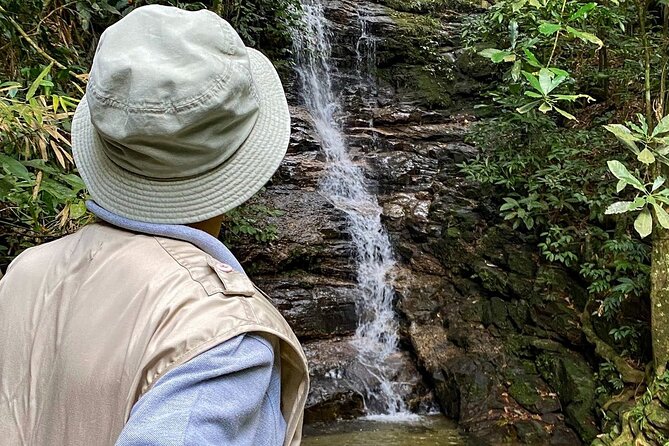
Next comes Cascatinha Taunay, or Taunay Waterfall. It is the largest waterfall in Tijuca National Park and one of the park’s best-known natural sights.
The waterfall gives the outing a clear focal point. You are not simply walking through trees with occasional views. You have a major natural feature to see, photograph, and hear, with the surrounding forest adding shade and scale.
The stop is also a useful reminder that this is a rainforest experience, not only a mountain hike. Water shapes the park. Streams and cascades help create the cool, damp feel of the forest and attract attention from both people and wildlife.
Do not assume the waterfall stop means you can swim there. The experience includes time to cool off at forest cascades, but the supplied details do not promise swimming access at every water stop. Wear shoes and clothing you can manage around wet ground, and follow the guide’s direction near the water.
The forest walk: short for some, active for others
The guided walk through Floresta da Tijuca is described as light to moderate, but the phrase can mean different things to different people. One person measured roughly 4.5 miles, while another described the hike as short. That difference likely reflects pace, route choices, and personal fitness.
The useful takeaway is this: expect real walking, not a quick roadside visit. Some sections may use primitive trail, high steps, and light rock climbing. The route can feel adventurous without being presented as a technical hike.
Guides such as Victor have been praised for keeping a steady pace and adjusting to different physical abilities. Eduardo has also been noted for helping people feel comfortable within a mixed group. Larissa, working as an assistant on one outing, helped a participant over some high steps.
You should still judge the walk by your own ability. The tour information says most people can participate, but it does not promise a flat or fully accessible route. If you have trouble with uneven ground, ask the provider for current trail details before booking.
The physical side is part of the value. You get movement, forest air, and changing scenery instead of sitting in a vehicle all morning. But if you want a gentle stroll with smooth paths, this may be more active than expected.
More Waterfall Tours in Brazil
- Rio: Tijuca Forest & Horto Waterfalls Circuit Tour
★ 4.7 · 99 reviews - Garganta do Céu and Waterfall hike in Pedra da Gávea
★ 5.0 · 71 reviews - Tijuca Forest Hike – Waterfalls & Caves, Nature & Wild Life!
★ 5.0 · 51 reviews - Paraty: Jungle Waterfalls and Cachaça Distillery Jeep Tour
★ 4.7 · 491 reviews
The Bat Cave and smaller forest discoveries
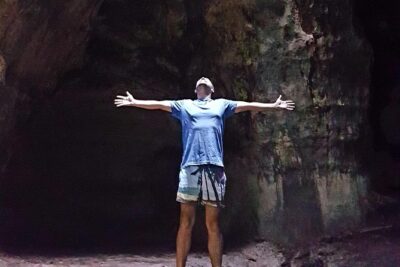
The Bat Cave adds a touch of adventure to the middle of the outing. It is one of the details that makes this more than a standard viewpoint tour.
The cave visit is best understood as a short stop within the larger walk, not a full underground expedition. The available information does not give its length, lighting, or access conditions, so you should expect a natural cave encounter rather than a developed attraction with extensive facilities.
This is where a good guide matters. Eduardo, Victor, Júlio, Eric, and Yun have all been praised for making the forest more interesting through explanations, humor, and close attention to what is around the trail. The guide can point out small features you might otherwise pass without noticing.
The natural attractions are the main event, but the guiding adds context. You learn about the park’s history, Atlantic Rainforest ecosystem, plants, and animals while moving through the setting itself. A guide who can explain what you are seeing makes the walk more rewarding than following a route without any local interpretation.
Wildlife sightings: possible, exciting, and unpredictable
Tijuca Forest offers chances to see monkeys, marmosets, toucans, coatis, birds, and sloths. Some outings have included monkeys and a sloth, while others have produced no animal sightings.
That is normal for a forest walk. You should book this for the chance to see wildlife, not for a guaranteed animal checklist. The guide can help by watching and pointing out movement, calls, or shapes in the trees, but nature does not follow a schedule.
This unpredictability is part of the experience’s honest appeal. A sloth or toucan can make the morning memorable, but the forest still gives you plenty to notice when animals stay out of view. Look at the trees, water, rock formations, and changing light, not only the branches where a monkey might appear.
Keep expectations sensible. This is not presented as a dedicated wildlife safari, and the five-hour schedule also includes several viewpoints and major sights. If your top priority is animal photography, you may want a more specialized nature outing.
Chinese View Lookout and the Emperor’s Table
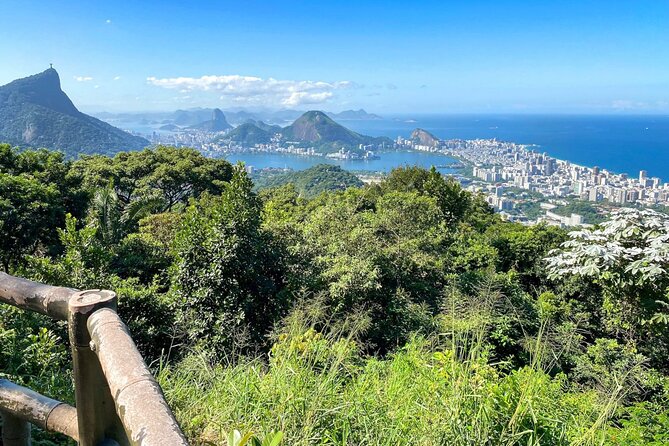
The experience finishes with two of the park’s most scenic points: the historic Emperor’s Table and Vista Chinesa, known in English as Chinese View Lookout.
Chinese View Lookout gives you wide views across Rio’s neighborhoods, mountains, and coastline. It is a strong ending because the forest walk has taken you away from the city, then the lookout returns you to the full sweep of Rio.
The view is especially useful after spending time among trees. From ground level, the rainforest can feel enclosed. From Chinese View, you see how the forest fits into the city’s larger setting, with urban areas and coastal scenery stretching beyond the hills.
The Emperor’s Table adds a historical touch to the final part of the route. The available details do not explain its full background, so the guide’s interpretation will shape how much you learn there. Still, the combination of a historic site and a high viewpoint gives the closing section more variety than a simple return walk.
Views can depend on weather and visibility. The tour promises panoramic vistas as part of the route, but no mountain lookout can guarantee perfect skies. Even with haze, the stop helps tie together the forest and city portions of the morning.
What the $62 price includes
At $62 per person, this tour sits in a reasonable middle range for a guided half-day outing in Rio. Your fee includes an experienced nature-focused guide, an air-conditioned vehicle, round-trip hotel transportation from the South Zone, park admission, and multilingual service.
That package has real value. You do not need to arrange a taxi into the park, work out the route, or pay a separate entrance fee. The guide also handles the practical flow between viewpoints and trail sections.
The value is strongest if you are staying in Copacabana, Ipanema, Leblon, or São Conrado. Pickup from those areas removes much of the morning hassle. If you are staying elsewhere, confirm the meeting point before paying, since the listed service is tied to the South Zone.
The price may feel high if you are looking only for a brief forest walk. One participant felt the cost was a little expensive for what was included. That is a fair concern, especially because snacks, food, drinks, and extra charges are not covered.
I see the cost as reasonable for a visitor who values convenience and a guide. It is less attractive to someone who already has transport, only wants to see Taunay Waterfall, or prefers to explore independently.
Guides make a large difference here
The strongest part of this experience is the guiding. Eduardo receives especially warm praise for his energy, English, photography, attention to different abilities, and ability to connect the forest with the wider city. Victor is described as steady and outdoors-focused, with a route that included primitive trail, a cave, waterfalls, and light scrambling.
Júlio is noted for being friendly and quick to point out interesting details. Eric led a brief, pleasant hike, while Yun was praised for strong English and a deep grasp of the area. Names and availability can change, so you should not book on the assumption that one specific guide will lead your group unless the provider confirms it.
The multilingual format is useful if you are not comfortable in Portuguese. The supplied information does not list every language available, so ask before booking if language support is important to you.
A good guide also changes how safe and comfortable the hike feels. The route includes uneven ground and high steps, and personal attention can help a mixed group stay together. That does not remove the need for sensible shoes or basic fitness, but it does make the outing more approachable.
Practical concerns: water, insects, and what to bring
The biggest practical warning concerns the cascades. One participant entered the water and later experienced severe black-fly bites, with blisters and swelling lasting several days. This may not happen on every visit, but it is enough reason to use strong insect repellent and think twice before getting wet.
Water can wash repellent from your legs, so reapply after contact with the cascades. You may also want long, lightweight trousers if you are comfortable hiking in them. The tour does not include snacks, drinks, or food, so bring what you need for a five-hour outing.
Wear shoes suited to uneven forest paths. The supplied information does not specify a required shoe type, but primitive trail, high steps, wet areas, and light rock scrambling all favor secure footwear over casual sandals.
The air-conditioned vehicle is a comfort before and after the walk. Hotel pickup and drop-off also mean you can finish without arranging a ride from the park. The activity ends back at the meeting point, with South Zone hotel service included as described.
Who should book this Tijuca Forest tour?
I would choose this experience if you want to see a less obvious side of Rio and prefer a guide to manage transport, park entry, and the route. It suits people who enjoy moderate outdoor activity but do not want a full-day expedition.
It is also a good fit after you have seen the major city sights. One person used the hike as a way to add adventure after checking off the classic attractions, and that is a smart way to use it. The forest gives your Rio trip more balance.
Families and mixed-age groups may find the small group and guide support helpful, but the trail is not guaranteed to be smooth. Most people can participate, yet anyone with mobility concerns should ask for current route details first.
Skip it if your only goal is guaranteed wildlife, a very easy stroll, or a swimming-focused waterfall trip. Skip it too if you dislike insects, wet areas, or uneven ground. The tour is safest as a nature walk with possible wildlife and water access, not as a controlled attraction.
Free cancellation is available up to 24 hours before the start time. Changes or cancellations made inside that window are not accepted for a refund.
Should you book it?
Book this tour if you want a convenient, active half-day in Rio’s rainforest with strong guiding and several different sights in one outing. The mix of Canoas Lookout, Taunay Waterfall, forest trails, the Bat Cave, Chinese View, and possible wildlife gives you a lot of variety for five hours.
The $62 price makes the most sense when you value hotel pickup, park admission, and a guide who can explain what you are seeing. Bring water and repellent, wear sturdy shoes, and expect a genuine forest walk rather than a smooth sightseeing loop.
FAQ
How long does the Tijuca Forest experience last?
The tour lasts approximately five hours and returns to the meeting point after the forest visit.
Where does hotel pickup take place?
Round-trip transportation is provided from hotels in Copacabana, Ipanema, Leblon, and São Conrado. The listed start area is Rio de Janeiro’s South Zone.
Is park admission included?
Yes. The entrance fee for Tijuca National Park is included in the tour price.
What sights are included?
The experience includes Canoas Lookout, Tijuca National Park, Taunay Waterfall, Tijuca Forest, Chinese View Lookout, the Bat Cave, forest cascades, and the historic Emperor’s Table.
Can I expect to see monkeys or a sloth?
Wildlife sightings are possible. Animals mentioned for the area include monkeys, marmosets, toucans, coatis, birds, and sloths, but sightings are not guaranteed.
How difficult is the hike?
The walk is described as light to moderate. Some sections may use primitive trail, high steps, and light rock scrambling. Most people can participate, but the route is not described as fully accessible or flat.
What is included in the $62 price?
The price includes a guide, multilingual service, an air-conditioned vehicle, round-trip transportation from the listed South Zone areas, and the Tijuca National Park entrance fee. Snacks, food, drinks, and extra charges are not included.
More Waterfall Tours in Rio de Janeiro
- Shore Excursion: Petrohue Waterfalls, Frutillar & Puerto Varas
★ 4.5 · 554 reviews - Iguassu Waterfalls: 1 Day Tour Brazil and Argentina’s sides
★ 4.9 · 353 reviews - From Manaus: Presidente Figueiredo Waterfalls Daytrip
★ 4.3 · 149 reviews - Amazing Waterfalls of the Amazon – Presidente Figueiredo
★ 4.5 · 141 reviews
Just added around Rio de Janeiro
- Walking tour of the bohemian neighborhoods of Santa Teresa and Lapa★ 5.0 · 59 reviews
- Tijuca Forest Hike – Waterfalls & Caves, Nature & Wild Life!★ 5.0 · 51 reviews
- Rio Highlights: Christ, Sugarloaf, and More in a Private Tour★ 5.0 · 36 reviews
- Guided Tour to Favela Santa Marta★ 5.0 · 60 reviews
- Guided Market Fruit Tasting in Rio with 15+ Exotic Flavors★ 5.0 · 68 reviews
- Trail and Rappel on Morro Dois Irmãos★ 5.0 · 77 reviews
- Tijuca National Park and all its wonders★ 5.0 · 88 reviews
- City Tour Full VIP – Corcovado Train + Churrascaria Rodízio★ 5.0 · 43 reviews
Waterfall Tours, compared.
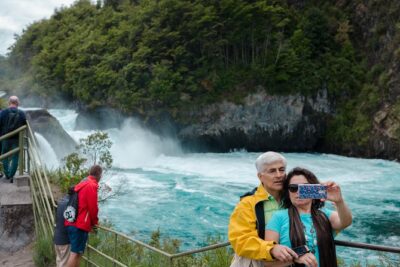
Shore Excursion: Petrohue Waterfalls, Frutillar & Puerto Varas
Read our review →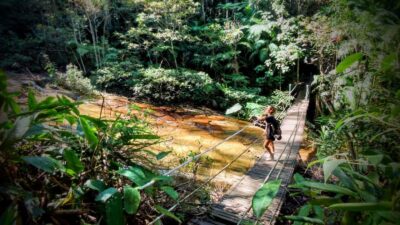
Tijuca Forest Small Group Hike to Caves and Waterfalls
Read our review →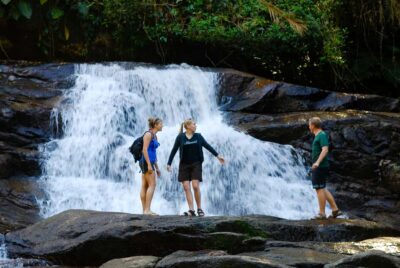
Jungle Waterfalls and Cachaça Distillery Jeep Tour
Read our review →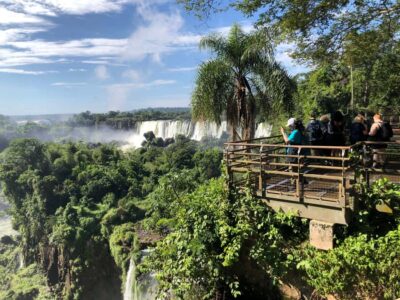
Iguassu Waterfalls: 1 Day Tour Brazil and Argentina’s sides
Read our review →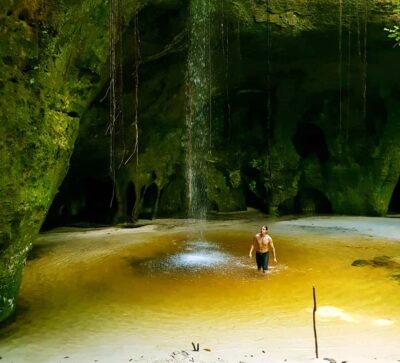

Adventure Day in Arequipa: Pillones Waterfall + Rock Forest
Read our review →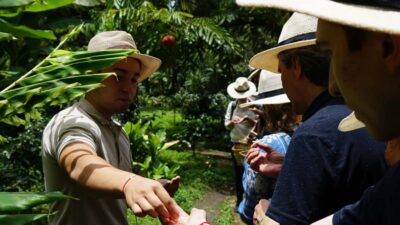
Browse the lists this tour appears in