
Reviewed · WATERFALL TOURS
Rio: Tijuca Forest Small Group Hike to Caves and Waterfalls
Rio’s Tijuca Forest hides an excellent half-day escape from the city. This 6.2-kilometer rainforest circuit links waterfalls, a bat cave, an old chapel, plantation remains, and a suspension bridge, while the guide explains how a former coffee-growing area became the world’s largest replanted urban forest.
I like the mix of nature and Brazilian history, and I like that the walk reaches places you might miss without a guide. Guides such as Vini, Riccardo, Tito, Renata, and Luiza are praised for bringing in geography, politics, geology, plants, and wildlife. The main caution is the uphill work: 448 meters of elevation gain is manageable for a fit person, but this is not a flat park stroll.
Key points at a glance
- A 6.2-kilometer rainforest circuit: Allow about 2.5 to 3 hours for the walking itself, within a six-hour outing.
- Baronesa Cascade swimming stop: Bring swimwear or quick-drying clothes if you want a cool waterfall shower.
- Morcego’s Grotto: Enter Brazil’s largest gneiss cave, but do not expect guaranteed bats or wildlife.
- Coffee-era history: Trails, ruins, the Mayrink Chapel, and an old slave cemetery reveal the park’s human past.
- Small groups and hotel pickup: Transport serves selected hotels and hostels in Rio’s South Zone.
- A real moderate hike: Rough rainforest ground, steep sections, and 448 meters of climbing require decent fitness.
Why Tijuca Forest makes a good Rio break
Rio is famous for beaches, viewpoints, and city streets, but Tijuca Forest gives you a very different view of the city. The forest is close to the South Zone, yet once you are on the trail, the traffic and buildings fade behind trees, rock, running water, and thick tropical growth.
The park’s story is unusual. Much of the area was once used for coffee plantations. In the 19th century, the land was replanted, creating the forest you see today. Your guide connects the trail to Brazil’s geography, colonial economy, slavery, urban growth, and conservation work.
That context matters. You are not simply walking from one waterfall to another. You are seeing a forest shaped by human damage and later restoration. Guides including Luiza, who has a botany background, and Vini, who has extensive knowledge of Brazilian wildlife, can add useful detail to what might otherwise look like ordinary greenery.
The experience has a 4.9 rating from 536 reviews, with repeated praise for the guides’ warmth, English, humor, and ability to make the information easy to follow. That is important here because the forest’s best details are often small: a plant adaptation, a rock type, a historic foundation, or an animal call you might otherwise overlook.
More Hiking Tours in Rio de Janeiro
- Pedra do Telégrafo Hike and Beach Full-Day Tour
★ 4.5 · 417 reviews - Rio de Janeiro: Pedra da Gávea 7-Hour Hike
★ 4.7 · 183 reviews - Rio de Janeiro: Tijuca Forest Challenge Hike Full-Day Trip
★ 4.9 · 163 reviews
Hotel pickup from Rio’s South Zone
Pickup and drop-off are included from designated hotels and hostels in Copacabana, Ipanema, Leblon, Leme, Flamengo, Santa Teresa, Gloria, Catete, Urca, and Praia de Botafogo. The long list includes major hotels, hostels, and smaller properties.
Check your exact address before booking. If direct pickup is not possible, the operator provides a nearby meeting point. That saves you from arranging a taxi or ride across Rio early in the day, though pickup routes can add time to the six-hour schedule.
Transport is generally described as punctual and well organized. One useful criticism is that the van may feel cramped for taller people, especially men, though the transfer is short. You should also ask for vehicle details if that would make your morning easier, since one person wanted the plate number and vehicle information in advance.
The outing is offered as a private or small-group experience. Small groups are especially useful on a forest trail. You can ask questions without shouting, keep a sensible pace, and stop when the guide spots an interesting plant, bird, or geological feature.
Cascatinha Taunay and the old park roads
The first major stop is Cascatinha Taunay, described as the largest waterfall in Tijuca National Park. The visit is short, around 15 minutes, but it gives you an immediate sense of the park’s scale and the power of its streams.
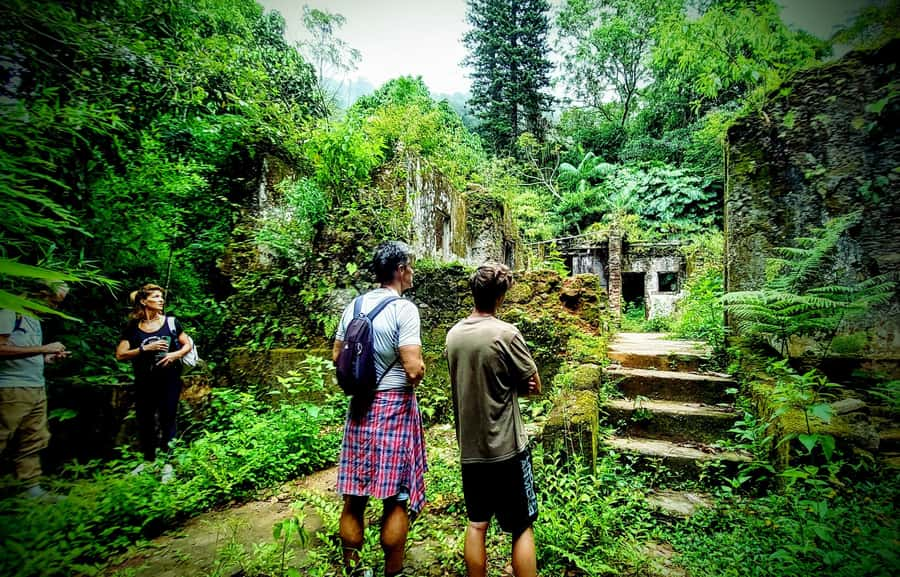
After an introduction to Tijuca National Park, the walk continues along paths created in the 19th century. These roads and trails are part of the story. They were made during the period when the area was occupied by coffee plantations, so the route carries signs of both cultivation and later forest recovery.
The guide’s role is most useful here. A waterfall is easy to photograph, but the surrounding forest becomes more interesting when you understand why it is there and how the park changed over time. Expect stops for explanations rather than a nonstop march.
Mayrink Chapel and the quieter historic stops
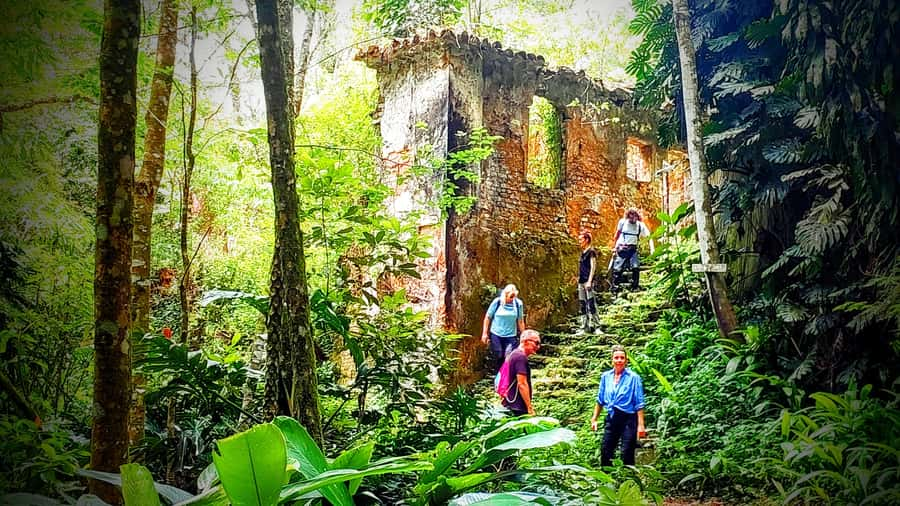
The Mayrink Chapel dates from 1850 and makes a pleasant early photo stop. It is a small historic site within the forest, and its presence feels slightly unexpected after the city sights of Rio.
The itinerary also includes a former residence connected with Barão d’Escragnolle, one of the park’s past managers. The building is now associated with the Esquilos restaurant, but the stop still helps show how people once lived and worked inside this forested area.
You will also see the Wallace Fountain. Its sculpture represents goodness, charity, sobriety, and simplicity. The fountain was a gift from English philanthropist Richard Wallace to Brazil and was produced in France in 1870.
These short stops break up the physical effort. They also give the walk a stronger sense of place. If you want only waterfalls and forest photos, some of the historical explanations may feel slow. I think they are worth keeping, because they show that Tijuca is not untouched wilderness. It is a restored urban forest with a long and complicated human story.
More Waterfall Tours in Brazil
- Rio: Tijuca Forest & Horto Waterfalls Circuit Tour
★ 4.7 · 99 reviews - Paraty: Jungle Waterfalls and Cachaça Distillery Jeep Tour
★ 4.7 · 491 reviews - Iguassu Waterfalls: 1 Day Tour Brazil and Argentina’s sides
★ 4.9 · 353 reviews - From Manaus: Presidente Figueiredo Waterfalls Daytrip
★ 4.3 · 149 reviews
The climb, suspension bridge, and Eucalyptus Forest
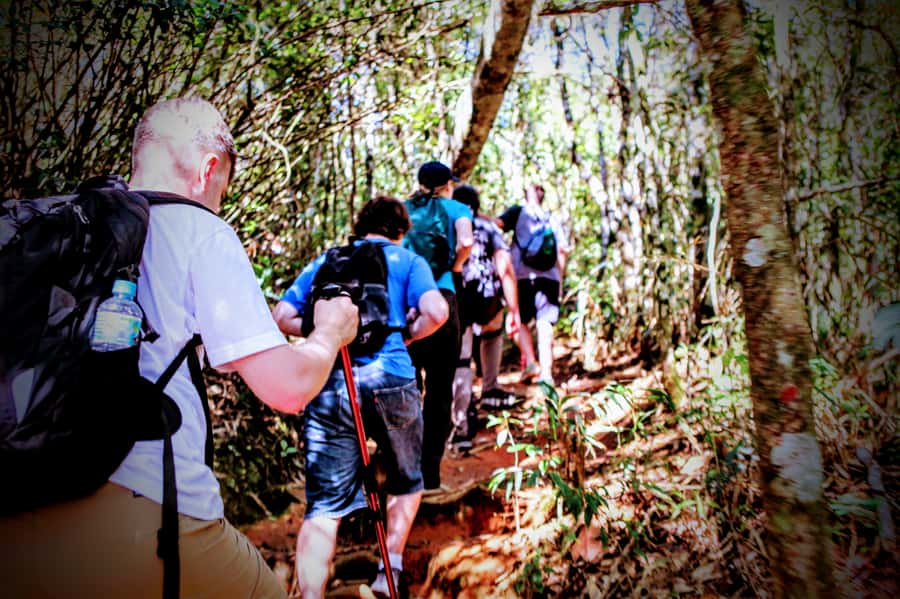
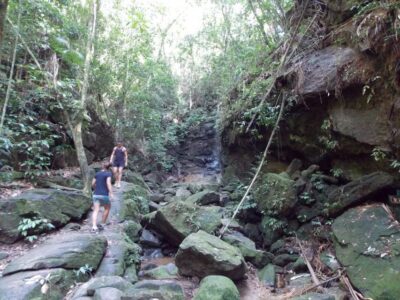
The hike covers 6.2 kilometers and gains about 448 meters in elevation. The ground can be rough, and you will walk both uphill and downhill. Some people describe it as easy with a basic fitness level, while others found the steep section harder than expected.
Both impressions can be true. The distance is not extreme, but the elevation and tropical terrain make it more demanding than a level city walk. A steady pace helps. Good sports shoes are essential, particularly after rain, when roots and rocks may be slick.
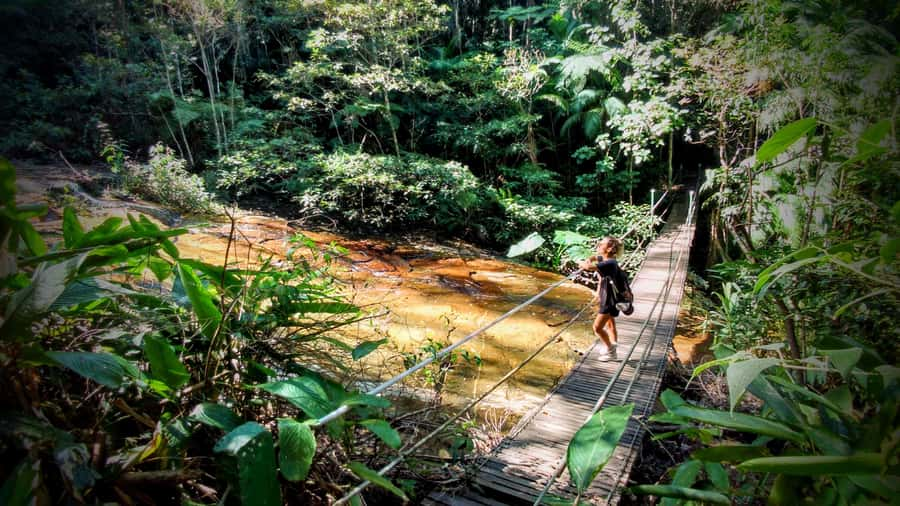
Cova da Onça Suspension Bridge is one of the short stops along the route. It adds a little adventure without turning the outing into a technical trek. The Eucalyptus Forest brings another historical detail: an old slave cemetery. Your guide can place this site within the wider story of plantation labor and the people who shaped the region.
This is one reason I would not treat the tour as just a nature outing. You get exercise, but you also encounter reminders of the people and industries that existed here before the forest was replanted.
Morcego’s Grotto, Brazil’s largest gneiss cave
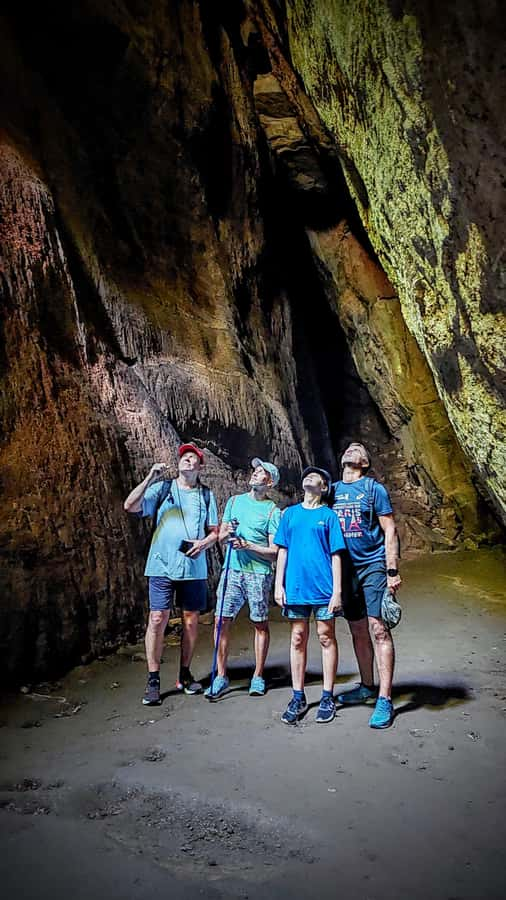
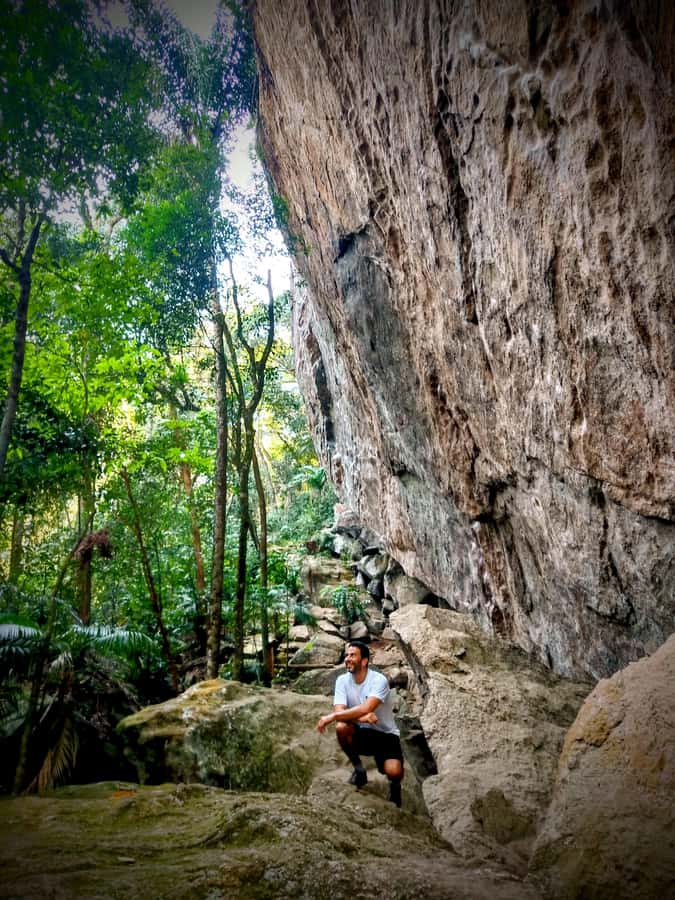
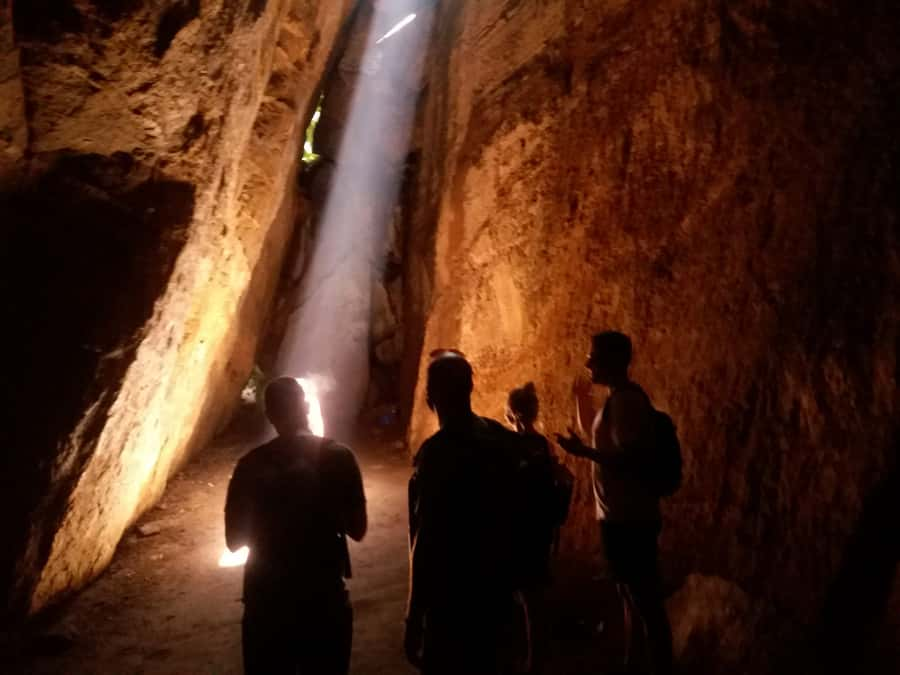
Morcego’s Grotto, also called the Bat Cave, is the most unusual natural stop. It is identified as the largest gneiss cave in Brazil. The trail takes you into the cave area for about 15 minutes.
Do not book this expecting a wildlife show. Bats may be absent, sleeping, or difficult to see. One guide chose not to disturb hibernating bats, which is the right approach. Wildlife sightings vary, and several outings saw no animals at all.
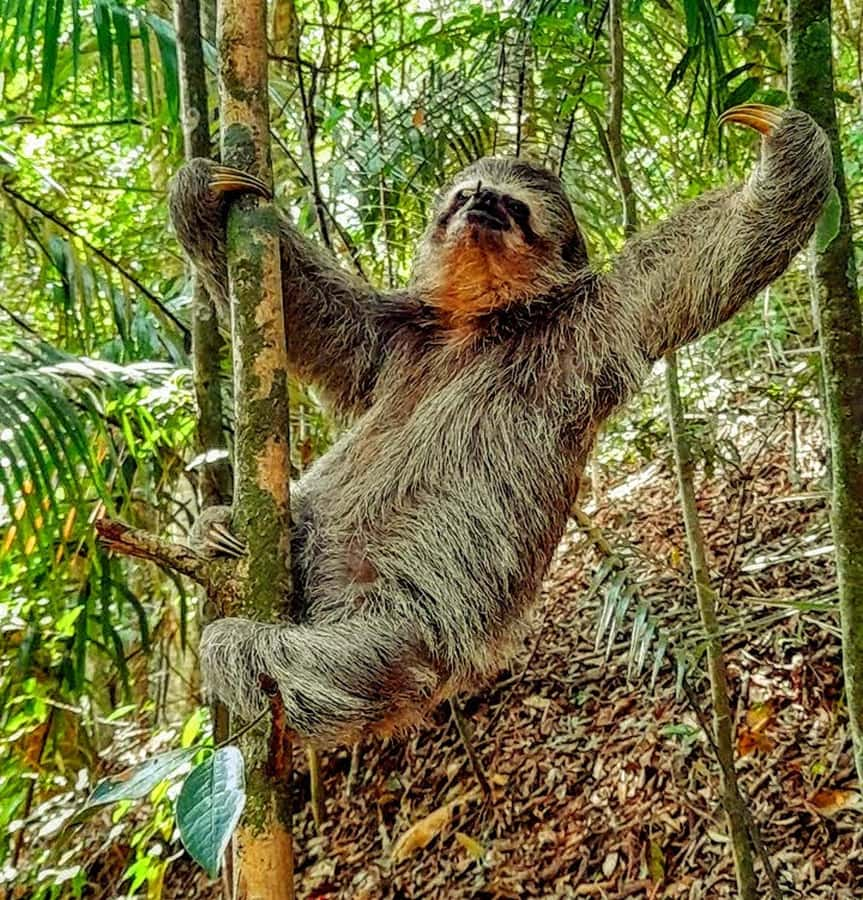
You might get lucky. One group saw a sloth from the vehicle while leaving the park, and another saw coatis and capuchin monkeys. But the forest’s plants, rock formations, and small details are the reliable attractions. Keep your expectations focused on the setting rather than a guaranteed animal encounter.
The cave is also a good example of why a guide helps. The rock is not simply a dark opening in the hillside. Your guide can explain its geology and point out features that would be easy to miss on your own.
Baronesa Cascade and the best cooling stop
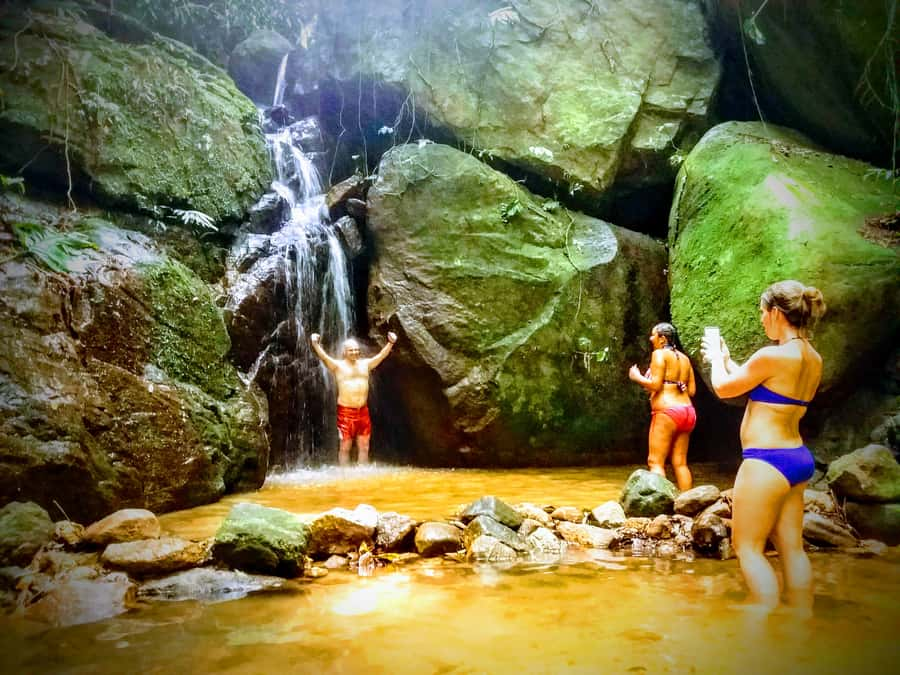
Baronesa Cascade is the trip’s most welcome physical reward. After the climb and the cave, you can cool off under the waterfall. The stop lasts around 20 minutes, so it is more than a quick photograph, though the exact comfort of the water will depend on the day.
Bring a swimsuit, spare clothes, or clothing that dries quickly. You need proper footwear for the trail, and bare feet are not allowed during the activity. A small towel may also be useful, though it is not listed as required equipment.
This is not a full swimming excursion. Food, drinks, and water are not included, and you must carry your own supplies. Pack at least one bottle of water, snacks, sunscreen, insect repellent, and a daypack. Much of the route is shaded, but you still need sun protection.
The waterfall stop works well because it arrives late in the walk. You have earned the cool water, and it gives you a pleasant reset before the return route.
The return route and viewpoints
The way back passes the old Barão d’Escragnolle residence and continues through more forest. Stops include Mirante da Palmira and another viewpoint, with scenic views along the route.
The viewpoints are a useful reminder that Tijuca is woven into Rio rather than separated from it. You may see the city from a different angle, depending on weather and the precise stopping point. One person found the view from Vista Chinesa especially rewarding after a steep section, although that viewpoint is not listed as a guaranteed stop on every version of this route.
The schedule includes several short visits of five to 15 minutes. That keeps the day moving, but you should not expect long, quiet pauses at every attraction. The guide balances walking, explanations, photos, and the needs of the group.
Rain is not necessarily a disaster. The rainforest can feel more atmospheric in wet weather, but slippery trails require extra care. One guide carried ponchos for the group, though you should still be prepared with suitable clothing and a waterproof layer.
What the guide adds to the day
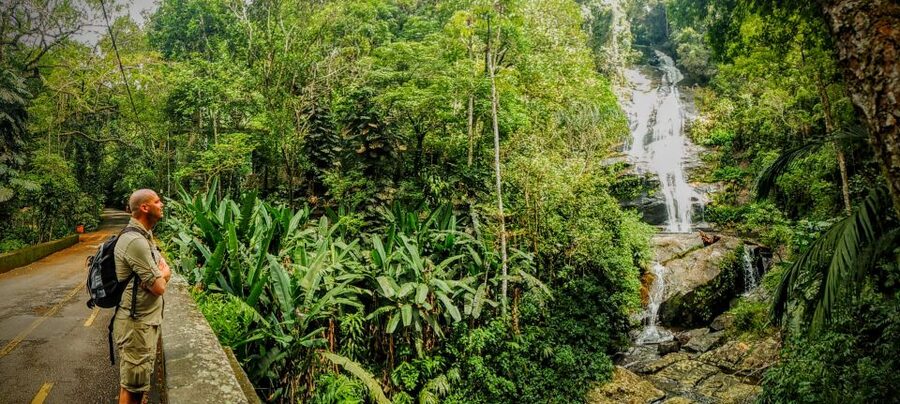
The guide is the strongest part of this experience. The best guides do much more than lead the way. They explain Brazilian history, Rio’s geography, forest ecology, geology, plants, animals, and the park’s restoration.
Vini is praised for combining natural science with Brazil’s political and cultural life. Riccardo is repeatedly described as energetic, clear, and good at keeping the group involved. Tito receives similar praise for humor, history, and attention to detail. Renata is noted for her care with the group and photography, while Luiza brings a botany background.
Guide quality can vary by departure, but the repeated pattern is clear: the tour depends heavily on who leads it. A quiet guide would still get you safely through the forest, but an enthusiastic one can turn a green trail into a lesson about Rio.
The bilingual service is offered in English and Portuguese. If you have questions, ask them. The small-group format makes this much easier than on a large coach tour.
Price, fitness, and who should book
At $69 per person, the tour offers solid value if you want transport, a bilingual guide, insurance, and a structured route through several different parts of Tijuca Forest. A private taxi, independent planning, and a guide arranged separately could cost more and would not necessarily provide the same historical interpretation.
The price is less attractive if you mainly want a short waterfall visit or a guaranteed wildlife sighting. You are paying for a six-hour outing and a moderate hike, not a simple park transfer.
You should have reasonable fitness for three hours of walking over rough ground, with 448 meters of climbing. People with heart problems should not take this tour, and it is not suitable for wheelchair users. The route is not described as technical, but steep stretches can feel tiring, especially in humid weather.
This tour suits you if you:
- Want a break from Rio’s beaches and buildings
- Enjoy learning while walking
- Can manage uphill and downhill trails
- Prefer a small group to a large bus
- Like waterfalls, caves, old buildings, and forest history
- Are happy to carry your own water and snacks
It may not suit you if you need level paths, dislike humidity, or want close-up wildlife encounters. Animals are possible, but never promised.
What to pack for a comfortable hike
Bring water, food, snacks, sunscreen, insect repellent, sports shoes, sportswear, and a daypack. A change of clothes is sensible if you plan to stand beneath Baronesa Cascade.
Avoid large luggage, alcohol, drugs, pets, and bare feet. Provide your full name, birth date, and passport number for the required insurance.
Wear shoes with a reliable grip. The forest is shaded in many places, but the heat, climbing, and damp ground still make the hike feel like exercise. A light rain layer is useful, especially during Rio’s wetter periods.
Should you book the Tijuca Forest hike?
Book it if you want Rio’s rainforest explained rather than simply photographed. The combination of Cascatinha Taunay, Mayrink Chapel, the suspension bridge, the old cemetery, Morcego’s Grotto, Baronesa Cascade, and the plantation-era remains gives you plenty of variety in one half-day.
The main reason to choose this tour is the guide. Vini, Riccardo, Tito, Renata, Luiza, and others have been praised for making the forest understandable and personal. The main reason to hesitate is the terrain. It is moderate, not effortless, and wildlife sightings are uncertain.
For a fit visitor who wants nature, history, a waterfall shower, and easy transport from the South Zone, $69 is a fair price. Pack light, bring water, expect some climbing, and let the forest be more than a backdrop.
FAQ
How long is the Tijuca Forest hike?
The walking route is 6.2 kilometers, or about 3.8 miles. The hiking portion takes roughly 2.5 to 3 hours, while the full activity lasts about six hours.
Is the hike difficult?
It is rated moderate and includes rough rainforest ground, uphill and downhill walking, and about 448 meters of elevation gain. Good fitness is required.
Can I swim under the waterfall?
You can cool off beneath Baronesa Cascade during the tour. Bring suitable clothing or a swimsuit, along with a change of clothes if needed.
Is hotel pickup included?
Pickup and drop-off are included from designated hotels and hostels in Rio’s South Zone, including Copacabana, Ipanema, Leblon, Leme, Flamengo, Santa Teresa, Gloria, Catete, Urca, and Praia de Botafogo. A nearby meeting point may be provided if direct pickup is unavailable.
Are food and drinks included?
No. You need to bring your own water, drinks, food, and snacks. Sunscreen and insect repellent are also recommended.
Is the tour offered in English?
Yes. The tour has a live bilingual guide in English and Portuguese. Private and small-group options are available.
More Waterfall Tours in Rio De Janeiro
- Shore Excursion: Petrohue Waterfalls, Frutillar & Puerto Varas
★ 4.5 · 554 reviews - Amazing Waterfalls of the Amazon – Presidente Figueiredo
★ 4.5 · 141 reviews - Adventure Day in Arequipa: Pillones Waterfall + Rock Forest
★ 4.7 · 120 reviews - Santa Marta: Minca Coffee, Cocoa, & Waterfall Full-Day Trip
★ 4.6 · 102 reviews
Just added around Rio De Janeiro
- Skip the Line: Lagoa Misteriosa Admission Ticket with Scuba Diving Experience★ 5.0 · 81 reviews
- Rio de Janeiro: Tijuca Peak Guided Hike★ 4.7 · 56 reviews
- Sugarloaf Mountain Fast-Pass Ticket and Guided Tour★ 4.4 · 62 reviews
- Rio de Janeiro: Sugarloaf Mountain Hike and Climb★ 5.0 · 45 reviews
- Rio de Janeiro: Sunrise Lookout and Christ the Redeemer Tour★ 5.0 · 121 reviews
- Rio de Janeiro: Samba Class and Samba Night Tour★ 4.6 · 115 reviews
- Rio Surf Experience★ 4.9 · 37 reviews
- Rio Samba Bus: hop-on hop-off city tour in Rio de Janeiro★ 3.8 · 94 reviews
Waterfall Tours, compared.
Shore Excursion: Petrohue Waterfalls, Frutillar & Puerto Varas
Read our review →
Jungle Waterfalls and Cachaça Distillery Jeep Tour
Read our review →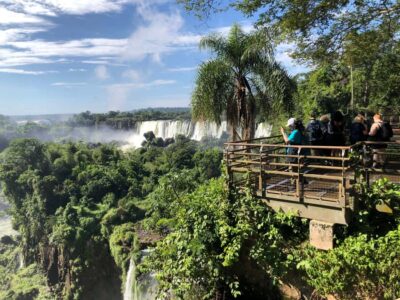
Iguassu Waterfalls: 1 Day Tour Brazil and Argentina’s sides
Read our review →
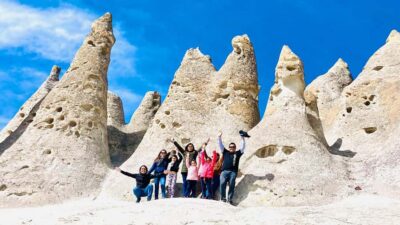
Adventure Day in Arequipa: Pillones Waterfall + Rock Forest
Read our review →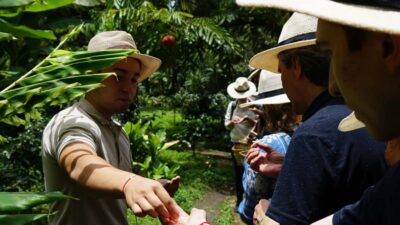
Browse the lists this tour appears in