
Reviewed · FOOD & DRINK
African Heritage: Gastronomy and Musicality Experience
Rio’s African heritage comes alive through more than monuments on this five-hour private tour. You move from a model favela and one of the world’s largest graffiti murals to the burial ground of enslaved Africans, then finish with Afro-Brazilian food and percussion at Pedra do Sal.
I like two things especially: the tour connects painful history with living culture, and its private format lets your guide adjust the pace and explain difficult subjects clearly. Isabella is often the guide, while Jaíse is also named in the experience’s guiding team. The main drawback is that drinks cost extra, and the food portion is not suited to people with dietary restrictions.
Key points at a glance
- Morrinho at MAR: See a detailed miniature of the Pereira da Silva favela that presents community life beyond familiar stereotypes.
- A serious look at slavery: The Pretos Novos Institute and Valongo Wharf place Brazil’s past in physical, human terms.
- Pedra do Sal is the centerpiece: Plan on three hours for food, cultural discussion, and a percussion workshop with an African drummer.
- A private experience: Only your group takes part, making room for questions and a more personal conversation.
- A useful ending in Saúde: The tour finishes at Largo de São Francisco da Prainha, a square known for samba, funk, jazz, chorinho, bars, and Portuguese architecture.
- Strong value for the right audience: At $110 per person, the price includes the food tasting and IPN admission, but not drinks.
Why this tour matters in Rio
Rio is often sold through beaches, samba and grand views. Those are real parts of the city, but they do not explain how much of Brazilian culture was shaped by Africans and their descendants. This experience gives you a focused way to explore that story in the Centro and Saúde districts.
The subject is not treated as a decorative side note. You hear about forced migration, slavery, community survival and the ways African traditions remain part of Brazilian life. The most effective part is the shift from historical sites to food and music. You do not simply look at the past. You see how it continues in religious practice, cooking, rhythm and public celebration.
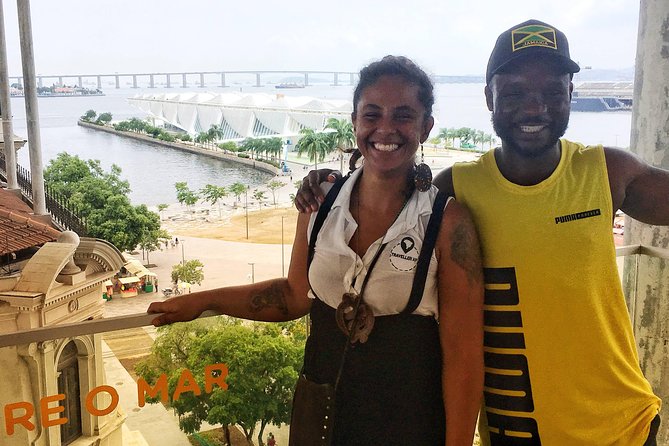
The tone is direct and personal. Isabella has guided many versions of this experience, and her approach combines city history with everyday life. She explains how Rio developed, including the social and economic forces behind both growth and inequality. Jaíse is also associated with the guiding team and has been praised for presenting Brazil from a Black diasporic point of view.
This is especially useful if you want more than a standard city tour. You will need to be open to difficult material, since the visit to the Pretos Novos Institute deals with the remains of Africans who died under slavery.
More Food Tours in Brazil
- Rio: Pub Crawl in Lapa with Cachaça Tasting and Live Samba
★ 4.7 · 881 reviews - Guided Market Fruit Tasting in Rio with 15+ Exotic Flavors
★ 5.0 · 68 reviews - A socio-educational and gastronomic experience in the Vidigal favela
★ 5.0 · 39 reviews
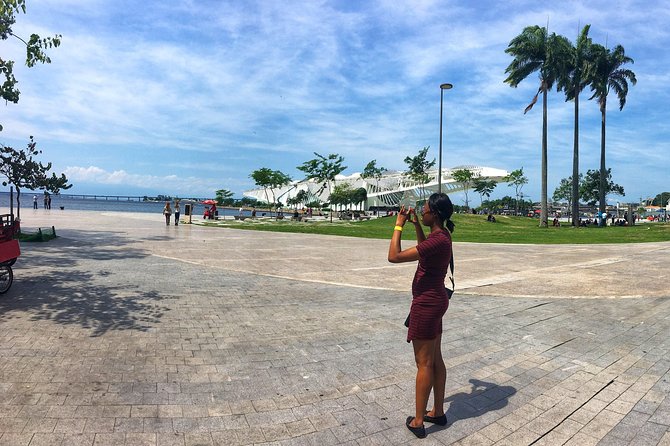
Starting at Museu do Amanhã and MAR
The meeting point is Museu do Amanhã at Praça Mauá, with a 10 a.m. start. From there, the experience brings you into Rio’s historic port area, where several stops connect naturally.
At the Rio Art Museum, or MAR, you see the permanent display of the Morrinho Project. It recreates the Pereira da Silva favela in miniature, including streets, residents and ordinary scenes. The model offers a useful correction to the usual image of favelas as places defined only by danger.
I like this opening because it begins with community life and creativity. The model encourages you to notice how people organize homes, streets and social spaces. It also gives your guide a way to explain the complexity of favela life without reducing it to a quick photo stop.
You spend about 25 minutes here, and admission is free. That is enough time for a clear introduction, though not enough for a full museum visit. If you hoped to see MAR’s wider collection, you will need a separate visit.
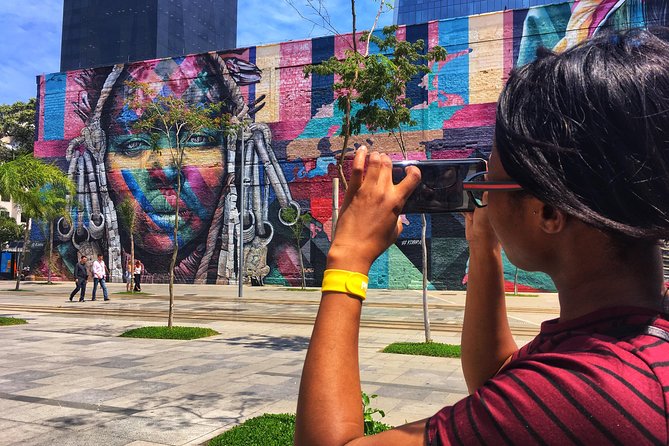
The route also includes Eduardo Kobra’s enormous graffiti mural. Its subject is connected to ancestral ethnic groups and ancient cultures that shaped Brazil directly and indirectly. The mural adds a strong visual pause after the museum, but the real value comes from the explanation around it. Without context, it is simply a large and colorful wall. With context, it becomes part of a wider discussion about ancestry and identity.
The Pretos Novos Institute and the cost of slavery
The Instituto de Pesquisa e Memória Pretos Novos, known as IPN, is the emotional center of the historical portion. The site contains an archaeological discovery involving the bones of Africans who died after being brought to Brazil. The permanent exhibition helps you understand the human cost of the slave trade in a way that a textbook cannot.
You spend about 40 minutes here. That may sound brief, but the subject is heavy, and the visit is concentrated. The admission ticket is included in the price.
This stop asks you to slow down. The remains are not presented as an abstract statistic. They point to people whose lives were cut short and whose burial place was later built over and forgotten. The site changes the way you see the surrounding port district. Streets that may first appear ordinary become part of a much larger story.
Your guide’s role matters here. The material can be upsetting, and a good explanation helps connect the archaeological evidence to Brazil’s social structure and cultural life today. Isabella has been praised for making complex facts understandable, especially for people who are learning about Afro-Brazilian history for the first time.
Valongo Wharf and Little Africa
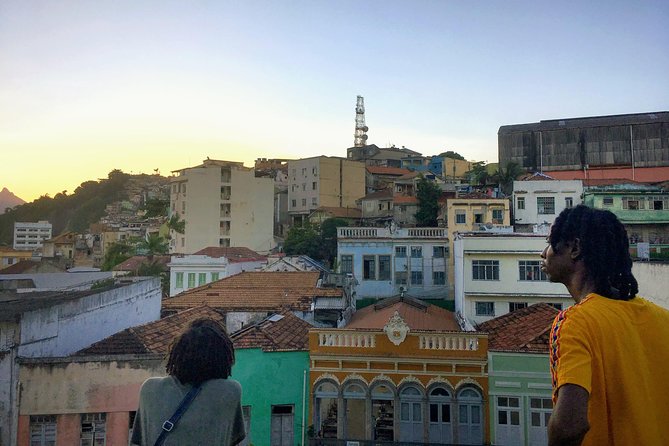
The next historical stop is Cais do Valongo, the former Valongo Wharf. This is where you learn about the port’s role in the arrival of enslaved Africans and about the district known as Little Africa.
The visit lasts around 15 minutes, so expect an outdoor explanation rather than a long museum session. That short time works because the site itself is the focus. You are standing in a place tied directly to one of the largest forced migrations in human history.
The guide also explains the traditions and importance of the surrounding area. This is one of the tour’s strengths: it does not separate slavery from later Black life in Rio. The same district became a center of religious practice, music, work and community.
You should wear comfortable shoes and be ready to walk between locations. The experience is near public transportation, but the supplied details do not specify private vehicle transfers. Treat it as a walking-based city experience and plan your day around that.
More Historical Tours in Brazil
- Rio de Janeiro: Historic Rio and Santa Teresa Half-Day Tour
★ 4.4 · 228 reviews - Rio de Janeiro: Little Africa Heritage Walking Tour
★ 4.9 · 177 reviews - Explore Little Africa : Unveiling Afro Heritage in Rio de Janeiro
★ 5.0 · 97 reviews - Learn the History of Rio with an Unforgettable City Center Walking Tour
★ 5.0 · 82 reviews
Pedra do Sal: food, music and living culture
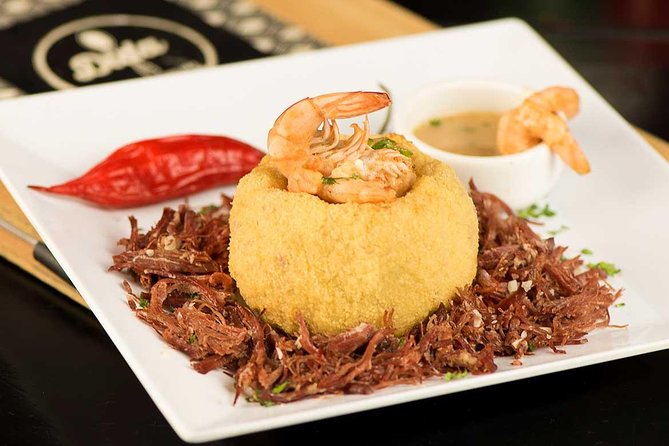
Pedra do Sal receives the longest portion of the tour, about three hours, and for good reason. This is where the history becomes physical and social through food and rhythm.
The area is connected with the remaining community of Quilombo Pedra do Sal, a place of cultural resistance and Afro-Brazilian memory. It is also known for weekly outdoor samba sessions. The setting gives you a chance to understand why music in Rio is not only entertainment. It can carry memory, identity and a sense of belonging.
The food tasting focuses on Afro-Brazilian and Yoruba dishes. These foods are linked to daily religious practice in traditions of African origin. That connection makes the tasting more than a meal break. Your guide can explain how ingredients, preparation and ritual relate to the wider story of African influence in Brazil.
Food restrictions are the clearest practical concern. The experience is specifically described as unsuitable for people with food restrictions, so ask before booking if you need a modified menu. Drinks are not included, which is easy to overlook when the tasting is part of a long cultural session. Budget separately for anything you want to drink.
The percussion workshop follows the food portion. An instructor and drummer from the African continent lead the session, giving you a hands-on way to focus on the musical traditions that continue to influence Brazil. You do not just listen to a samba explanation. You take part in rhythm and see how music can connect people across generations and continents.
The three-hour block makes this feel less rushed than a quick tasting added to a sightseeing tour. It also means you should expect a social, participatory experience rather than a formal museum visit. If you prefer quiet sightseeing with little audience participation, this may be the part you enjoy least.
Ending at Largo de São Francisco da Prainha
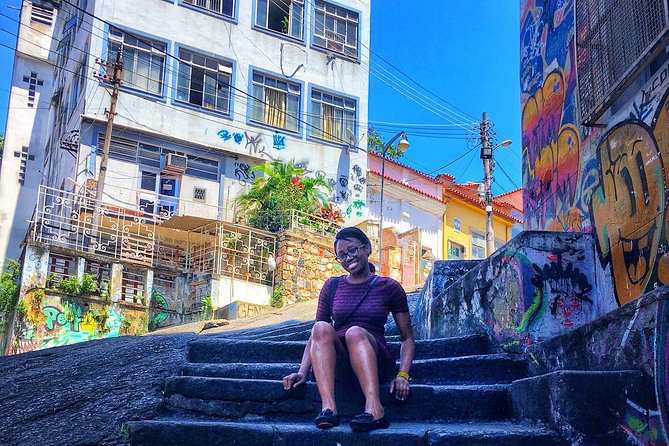
The final stop is Largo de São Francisco da Prainha, in Saúde. The tour ends here rather than returning you to the starting point, so plan your next activity from this square.
The setting brings together old Portuguese-style buildings, local bars and outdoor seating. At different times, you might hear samba, funk, jazz or chorinho. The supplied schedule gives this stop about 15 minutes, so you should not expect a full evening of music as part of the formal tour.
Still, the location is useful. You can stay afterward for a beer, snacks or more music if the square is active. Since drinks are not included, this is also the natural place to continue on your own budget.
Ending here gives the experience a good sense of place. You have moved from museums and memorial sites to a public square where Rio’s culture is lived out in the open. The contrast is intentional: history is not locked away. It remains part of the city’s sound and daily life.
What $110 buys you
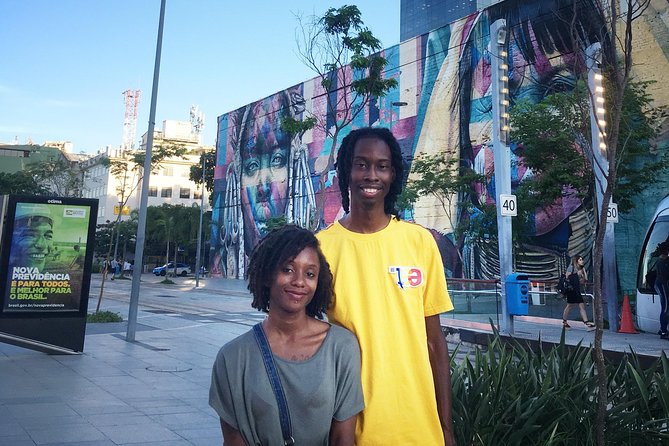
The price is $110 per person. For a private five-hour experience, that is a fair price if you want a focused guide and cultural access rather than a basic sightseeing route.
Your fee includes the Afro-Brazilian gastronomy tasting and admission to IPN. It does not include drinks. Other stops, including MAR, Cais do Valongo and Largo de São Francisco da Prainha, are listed without an admission charge.
The value depends on your interests. If you mainly want Rio’s famous viewpoints and beaches, this is not the best use of your budget. If you want clear historical context, a private conversation, food, music and places you might not find easily on your own, the cost makes more sense.
The private format is important. Only your group participates, so you can ask direct questions about race, religion, inequality, favelas and Brazilian identity without trying to keep up with a large crowd. Some past versions have ended up as a one-person tour, creating an unusually personal experience. That cannot be guaranteed, but the booking is private rather than shared.
Who should book this experience

I would choose this tour if you want to understand Brazil through its African and Black Brazilian heritage. It suits solo visitors, couples and families who enjoy discussion and are willing to face difficult history.
It is also a good choice if you have already seen Rio’s main sights and want a more focused cultural day. The route stays in the port and central districts, so it gives you a different view of the city than the usual beach-centered plan.
You should think twice if you have strict food restrictions, dislike participatory activities or want a relaxed day with little walking. The subject matter at IPN and Valongo Wharf can be emotionally demanding. The percussion session is active, and the three-hour Pedra do Sal segment takes up most of the experience.
Book ahead if you have a fixed schedule. The experience is booked an average of 69 days in advance, which suggests that last-minute availability may be limited. Confirmation is provided at booking. Free cancellation is available up to 24 hours before the start time. Poor weather or failure to reach the minimum number of participants can lead to a new date, another experience or a full refund.
My recommendation
Book this tour if you want Rio explained through memory, food and music rather than only through famous sights. The strongest parts are the Pretos Novos Institute, the Valongo Wharf context and the long Pedra do Sal session, where history turns into cooking and rhythm.
I would not book it for a food-only outing or a casual city walk. This is a serious cultural experience with a clear focus on slavery, African ancestry and Black Brazilian life. For the right person, the $110 price buys more than five hours of stops. It gives you a framework for seeing Rio with sharper eyes.
FAQ
How long does the African Heritage experience last?
The experience lasts approximately five hours.
Where does the tour begin?
It begins at Museu do Amanhã, Praça Mauá, 1, in Centro, Rio de Janeiro.
Where does the tour finish?
It finishes at Largo de São Francisco da Prainha in Saúde, Rio de Janeiro.
What time does the tour start?
The scheduled start time is 10 a.m.
Is the tour private?
Yes. Only your group participates in the activity.
Is food included?
Yes. An Afro-Brazilian gastronomy tasting is included, with dishes from Afro-Brazilian and Yoruba cooking traditions.
Are drinks included?
No. Drinks are not included in the tour price.
Is admission to the Pretos Novos Institute included?
Yes. IPN admission is included.
Can I cancel for a full refund?
Yes, if you cancel at least 24 hours before the experience’s start time. Cancellations made less than 24 hours ahead are not refunded.
More Food Tours in Rio de Janeiro
- Medellin: Comuna 13 Graffiti Tour, Cable Car & Street Food
★ 4.8 · 9,046 reviews - Medellín: Comuna 13 True Story and Street Food Tour
★ 4.9 · 1,779 reviews - From Mendoza: 3 Wineries, Olive Oil Factory Tour & Tasting
★ 4.6 · 901 reviews - Cartagena: Guided Street Food Tour with Tastings
★ 4.9 · 833 reviews
More Historical Tours in Rio de Janeiro
- Rio’s city walking tour: a glimpse of history and olympic legacy
★ 4.5 · 78 reviews - Olympic Boulevard, Museum of Tomorrow & Historical Rio
★ 4.5 · 66 reviews - Rio: Olympic Boulevard, Museum of Tomorrow & History Tour
★ 4.1 · 47 reviews - Petropolis Bohemia: Historic tour and visit to the Bohemian Brewery
★ 4.5 · 45 reviews
Just added around Rio de Janeiro
- Walking tour of the bohemian neighborhoods of Santa Teresa and Lapa★ 5.0 · 59 reviews
- Tijuca Forest Hike – Waterfalls & Caves, Nature & Wild Life!★ 5.0 · 51 reviews
- Guided Market Fruit Tasting in Rio with 15+ Exotic Flavors★ 5.0 · 68 reviews
- Rio Highlights: Christ, Sugarloaf, and More in a Private Tour★ 5.0 · 36 reviews
- Guided Tour to Favela Santa Marta★ 5.0 · 60 reviews
- Trail and Rappel on Morro Dois Irmãos★ 5.0 · 77 reviews
- Tijuca National Park and all its wonders★ 5.0 · 88 reviews
- City Tour Full VIP – Corcovado Train + Churrascaria Rodízio★ 5.0 · 43 reviews
Food & Drink, compared.
Comuna 13 Graffiti Tour, Cable Car & Street Food
Read our review →
Jolimont Winery Tour – Visitation and Tasting – Canela RS
Read our review →
Browse the lists this tour appears in