
Reviewed · MACHU PICCHU TOURS
7-Day: Inca Trail Trek to Machu Picchu Group Tour
The best part of this seven-day Inca Trail trek is the gradual approach to Machu Picchu on foot. You pass Llactapata, Runkurakay, Phuyupatamarca, Intipata, and Wiñay Wayna before seeing the citadel from the Sun Gate. I like that permits, camps, meals, porters, trains, and airport transfers are handled together. I also like the two free days in Cusco, which give you time to adjust to the altitude instead of rushing straight onto the trail.
The main caution is the physical demand. Dead Woman’s Pass reaches 4,200 meters, mornings begin early, and you carry your own personal belongings, sleeping bag, and any extra gear. The price is fair for what is bundled in, but sleeping bags, walking sticks, an inflatable mattress, some meals, and a single supplement cost extra.
Key points to know before booking
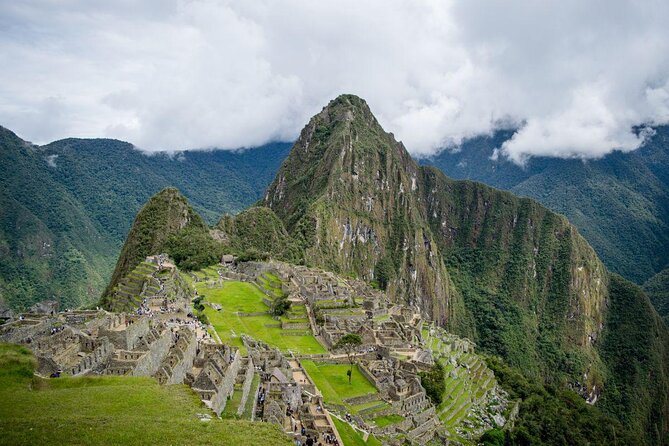
- Reach Machu Picchu through the Sun Gate: Start early on the final trekking morning and aim for Intipunku before sunrise.
- Cross Dead Woman’s Pass at 4,200 meters: This is the hardest climb and requires strong physical fitness.
- Camp at three different elevations: Wayllabamba, Runkurakay, and Wiñay Wayna each bring a different setting and nighttime temperature.
- Travel in a small group: The maximum group size is 16, with an assistant guide added for groups of nine or more.
- Most major costs are bundled: Permits, accommodation, trail meals, transport, porters for company equipment, and the return train are included.
- Allow for extra equipment costs: Sleeping bags, inflatable mattresses, walking sticks, personal porters, and a single supplement are not included.
Why this route feels different from a Machu Picchu day trip
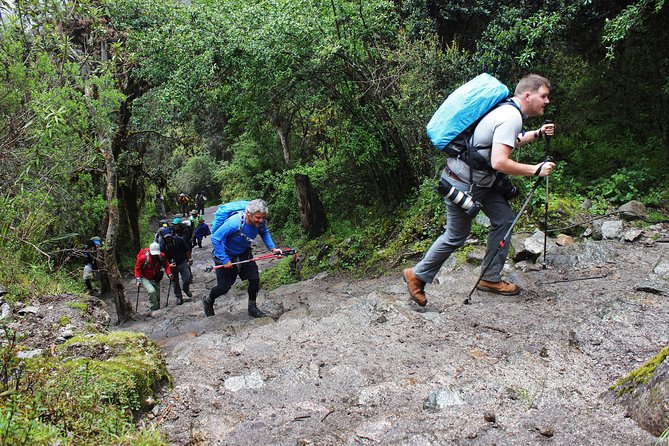
A train ride to Machu Picchu is easier. It is also quicker, cleaner, and far less demanding. This route is for you if reaching the citadel matters almost as much as seeing the citadel itself.
The trail follows an old Inca route through changing elevations and vegetation. You begin near the Vilcanota River at 2,720 meters, climb into colder high mountain country, cross passes near 4,000 meters, and later descend into cloud forest. The scenery changes because your altitude changes, not because the tour is moving you from one photo stop to another.
I particularly like the way this itinerary gives you two nights in Cusco before the trek. You arrive on the first day, meet the guide for a briefing, then have the second day free. That is useful at this altitude. You can explore Cusco at a measured pace, eat properly, organize your gear, and find out how your body feels before the hard walking begins.
The group limit of 16 is another practical advantage. You are not guaranteed a tiny private party, but the group is small enough for a guide to keep track of people on steep sections. Groups of nine or more receive an assistant guide.
More Hiking Tours in Machu Picchu
- Salkantay Trek Challenge – 3 Days / 2 Nights
★ 5.0 · 101 reviews - Choquequirao Trek 4 days and 3 nights
★ 5.0 · 81 reviews - Machu Picchu: 5-Day Salkantay Trek with Panoramic Train
★ 5.0 · 79 reviews
Cusco arrival and the two-day adjustment
Day one begins with airport pickup at Alejandro Velasco Astete International Airport and a transfer to your hotel. A guide briefing is arranged, giving you a chance to hear the plan before the trail begins.
Cusco deserves more than a quick overnight stop. It was the Inca imperial capital, and its streets still combine Spanish churches and mansions with visible Inca stonework. You can use this first afternoon for a gentle walk and a meal, though keeping the pace easy is sensible.
Day two is free. That sounds simple, but it is one of the most useful parts of the trip. The itinerary does not force you into another major excursion before the hike. Use the day to visit Cusco, rest, check your clothing, and confirm that your personal pack is manageable.
The start on day three is at 4:30 a.m. That early departure matters. You need time to reach the trailhead, complete the entry check, and begin walking before the day gets hot. Your passport and trail tickets are checked at Piscacucho, also known as Kilometer 82. Access to the Inca Trail is limited, so missing documents or a late start would be a serious problem.
Day three: from Huillca Raccay to Wayllabamba
The first trail day covers roughly five to six hours of walking. The route begins at about 2,720 meters and follows the Vilcanota River. This opening section gives you a clear sense of the route’s scale, with the Andes rising around the valley and the snow-covered peak of Veronica visible in the Urubamba range.
The first named stop is Huillca Raccay. The archaeological remains help set the tone for the route. You are not simply walking toward a famous ruin. You are following a ceremonial and practical road that once linked important Inca places.
The day ends near Wayllabamba at about 3,000 meters. This is a temperate valley, and the first camp is lower and milder than the sites that follow. Night temperatures can fall to about 5 degrees Celsius, so a proper sleeping bag is important. It is not included, and this is not the place to discover that a thin travel blanket is inadequate.
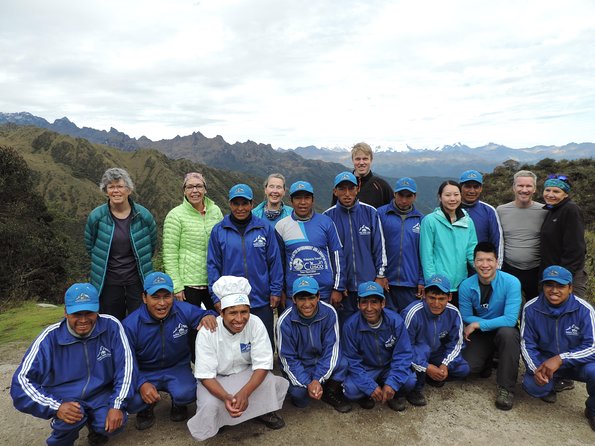
The camping setup includes a four-person tent shared by two people, foam sleeping mattresses, a dining tent with tables and chairs, and a professional chef. Porters carry company equipment. You remain responsible for your own personal items, which means you should pack with care rather than assume every bag will be carried for you.
Day four: the hard climb to Dead Woman’s Pass
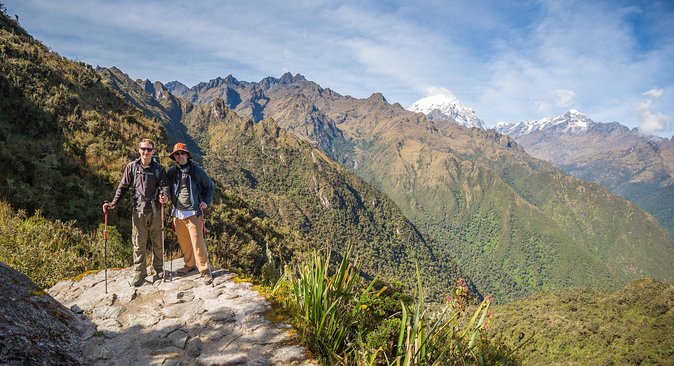
Day four is the physical test. Breakfast comes early, then you climb toward Abra de Warrmihuañusca, better known as Dead Woman’s Pass. The pass sits at 4,200 meters, or 13,779 feet.
The climb is steep and can take several hours. At this altitude, the issue is not just leg strength. Breathing is harder, and a pace that feels easy in Cusco may feel slow here. I would treat the group schedule as a guide rather than a race. Take steady steps, use the rest stops, and tell the guide if you feel unwell.
Reaching the pass is a real milestone. Afterward, you descend toward Pacaymayu at about 3,550 meters for lunch. The change in direction gives your legs a break from climbing, though downhill walking can be tiring in a different way.
You may see hummingbirds and other bird species in this section. The trail also passes polylepis trees, a high-altitude species associated with the cloud forest. These small details make the day more than a mountain endurance test.
After lunch, the route climbs again for around two hours toward Runkurakay Pass, close to 4,000 meters. Camp is set up by about 5 p.m., with nighttime temperatures around 4 degrees Celsius. This is the coldest-feeling part of the trek for many people, so keep warm layers, dry socks, and night clothes accessible.
More Hiking Tours in Peru
- Ancascocha Trek To Machu Picchu 4 Days And 3 Nights
★ 5.0 · 77 reviews - 4 Day Inca Trail Trek to Machu Picchu Multi day tour
★ 5.0 · 70 reviews - Salkantay Trek 4 Days to Machu Picchu by Glamping Sky Lodge Dome
★ 5.0 · 68 reviews - 2 Day Hiking Short Inca Trail to Machu Picchu
★ 5.0 · 66 reviews
Day five: Phuyupatamarca, Intipata, and Wiñay Wayna
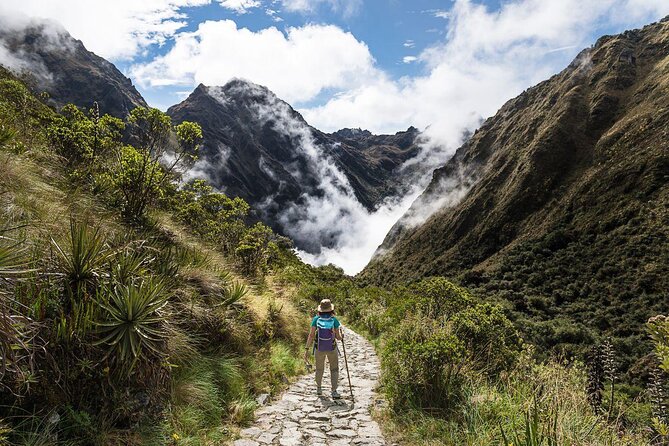
Day five is one of the most rewarding days for scenery and ruins. The total walking time is listed at about five hours, with around 10 kilometers covered. You begin with a gentler climb toward Phuyupatamarca, meaning Town in the Clouds.
At about 3,680 meters, Phuyupatamarca gives you broad views of mountains, valleys, and canyons. Its position is part of the appeal. The site sits high above the surrounding country, and the trail feels more remote and ceremonial here.
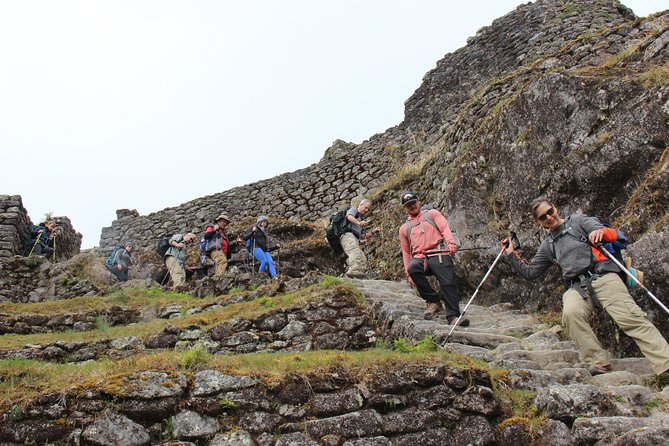
From there, you continue through cloud forest and descend a long run of Inca steps, around 3,000 in total. This is a good place to watch your footing. Stone stairs can be uneven, and tired knees may find the descent harder than expected.
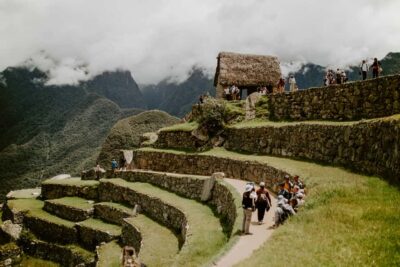
Intipata appears along the way, with its agricultural terraces built into the slopes. The scale of the terraces shows how carefully the Inca used steep ground. You do not need an elaborate lecture to appreciate the engineering. The terraces are right beside the trail, built into the terrain you are crossing.
The day finishes at Wiñay Wayna, or Forever Young, at about 2,680 meters. The campsite is close to the archaeological site, so you can visit this important ruin after arriving. The lower elevation is welcome after the previous night near 4,000 meters, and reaching camp around lunchtime gives you more time to rest and see the site.
Wiñay Wayna is a strong final evening on the trail. You have crossed the highest pass, passed through changing vegetation, and now sit close to Machu Picchu. Still, do not treat the day as easy. The stairs and accumulated fatigue can catch up with you.
Day six: entering Machu Picchu through Intipunku
The final walking day covers about five kilometers and takes around two hours. The early start is designed to bring you to Intipunku, the Sun Gate, before sunrise.
The Sun Gate is the emotional payoff of taking this route. Instead of arriving at Machu Picchu by bus and seeing the site immediately, you approach from above along the Inca Trail. Your first view of the citadel comes from Intipunku at roughly 2,730 meters, with Machu Picchu below at about 2,400 meters.
Sunrise timing depends on the season and conditions, so no view can be guaranteed. The useful point is that the schedule is built around an early arrival. Bring a warm layer for the wait and keep your camera or phone easy to reach.
After walking down toward the main viewing area, you receive a guided visit of Machu Picchu. The guide explains the archaeological site, then you have about two hours to explore independently or attempt Machu Picchu Mountain or Huayna Picchu Mountain.
Those mountain hikes are mentioned as options, but you should not assume they are included in the standard package. The tour data does not specify separate permits or availability for them. Ask before booking if one of these climbs is important to you.
Later, you meet the guide in Aguas Calientes, the town below Machu Picchu. You can get there by bus or on foot, then have lunch before beginning the return journey. The included transport uses a train from Aguas Calientes to Ollantaytambo, followed by a bus to Cusco. The stated plan refers to the first train to Poroy and then a bus to Cusco, so confirm the exact return station and timing during your briefing.
What the $1,145 price really covers
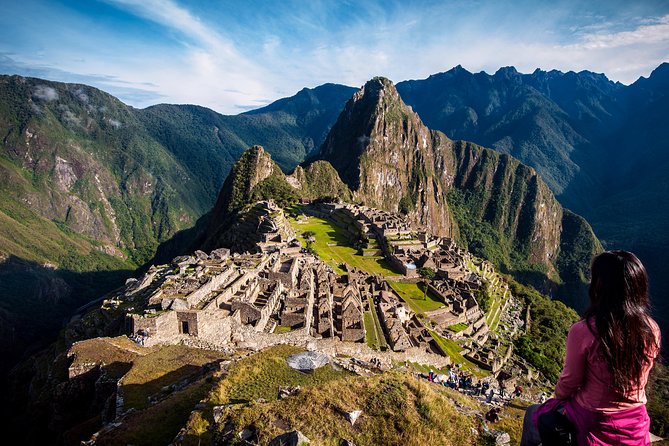
At $1,145 per person, this is not a low-cost hike. It is also not simply a guide and a campsite. The price combines the pieces that make the Inca Trail difficult to arrange independently.
Included costs cover airport pickup and drop-off, professional guiding, the bus to Kilometer 82, trail entry arrangements, camping equipment, the train from Aguas Calientes to Ollantaytambo, and the bus onward to Cusco. You also receive a professional chef, a dining tent, foam mattresses, water, porters for company equipment, oxygen bottles, and a first aid kit.
Food includes five breakfasts, three lunches, and three dinners. Your first breakfast and last lunch along the trail are not included, nor are meals outside the stated plan. Vegetarian food is available if you request it when booking.
The value is strongest if you want one booking to handle the difficult parts. Permits on the Inca Trail are limited, and coordinating accommodation, meals, transport, and entry tickets takes time. The package reduces that work.
Budget extra for a sleeping bag, walking sticks, and an inflatable mattress if you want one. An extra personal porter is also separate. If you want your own hotel room and tent arrangements, the single supplement is $180.
Food, porters, and camp comfort
The presence of a professional chef is more important than it may sound. After five or six hours of walking, a hot meal in a dining tent is a major comfort. The supplied equipment also means you are not expected to carry tables, cooking equipment, or company tents.
You still need to carry your personal belongings. Keep the day pack light, and separate clothing, toiletries, and sleeping gear so you can find them in a dark tent. Because the camping temperatures can fall to 4 or 5 degrees Celsius, warmth is a practical need, not a luxury.
The tour includes oxygen bottles and a first aid kit, but those supplies do not replace preparation. The stated fitness requirement is strong physical fitness, and that is justified by the altitude, early starts, steep climbs, and long stone stairways.
Who should book this Inca Trail tour
I would recommend it to you if you want the full trail experience and prefer a group arrangement with major logistics already handled. It suits hikers who can manage several hours of walking, camping, high passes, and changing weather.
It is also a good match if you want time in Cusco before the hike and a guided visit at Machu Picchu. The maximum of 16 people gives the trip some structure without creating a huge procession.
I would think twice if you dislike camping, struggle with steep uphill walking, or want a flexible schedule. The 4:30 a.m. meeting time, limited trail access, and fixed train arrangements leave little room for improvisation.
The minimum age is 10, but age alone does not decide suitability. Any younger hiker must be able to handle the altitude and physical demands. The booking is non-refundable and cannot be changed for personal reasons, so check your health, flights, gear, and dates carefully before paying.
Should you book it?
Book this tour if your goal is to walk into Machu Picchu, not simply visit it. The strongest features are the two-day Cusco start, the included permits and transport, the chef-supported camping, the small group limit, and the sunrise approach through Intipunku.
Do not book it casually. Dead Woman’s Pass is serious, personal gear costs extra, and the cancellation terms are strict. If you prepare for cold nights, carry only what you need, and arrive ready for high-altitude walking, the $1,145 package offers a practical way to take on one of Peru’s great routes.
FAQ
How long is the tour?
The tour lasts approximately seven days. It begins with airport pickup in Cusco and ends with an airport transfer after a final morning at leisure.
What time does the tour begin?
The meeting time is 4:30 a.m. on the first trekking day.
What is the highest point on the route?
Dead Woman’s Pass, or Abra de Warrmihuañusca, reaches 4,200 meters, or 13,779 feet.
Are sleeping bags included?
No. Sleeping bags, inflatable mattresses, and walking sticks are not included. You are also responsible for carrying your personal belongings and sleeping bag or arranging extra rentals.
How large is the group?
The maximum group size is 16 people. An assistant guide is included for groups of nine or more.
Is vegetarian food available?
Yes. A vegetarian option is available, but you need to request it when booking.
More 7-Day Trips in Machu Picchu
- Cusco 7 days Tour in Machu Picchu, Humantay Lake and Vinicunca
★ 5.0 · 64 reviews - 7-Day Tour from Cusco with Machu Picchu and Rainbow Mountain
★ 5.0 · 56 reviews - 7-Day: Sacred Valley, MachuPichu, Rainbow Mountain, Humantay Lake
★ 5.0 · 53 reviews - 7 Day Exploration Tour from Cusco to Lima
★ 5.0 · 85 reviews
More Inca Trail Treks in Machu Picchu
- Cusco: 4-Day Inca Trail to Machu Picchu with Accommodation
★ 4.8 · 432 reviews - Cusco: Machu Picchu 2-Day Inca Trail with Panoramic Train
★ 4.9 · 260 reviews - From Cusco: 2-Day Inca Trail to Machu Picchu
★ 4.2 · 244 reviews - Machu Picchu: Inca Trail 2-Day Overnight Guided Tour
★ 4.9 · 203 reviews
Just added around Machu Picchu
- 10-Day Taste Peru Experience: Lima, Nasca, Cusco & Machu Picchu★ 5.0 · 63 reviews
- Wonderful Cusco 5-Day Tour with Entrance to Machupicchu★ 5.0 · 46 reviews
- Machu picchu one day by train all included★ 4.5 · 53 reviews
- A Day at Machu Picchu, Journey to the Heart of the Andes★ 5.0 · 55 reviews
- Tour to Machupicchu By Train Full-Day★ 4.5 · 56 reviews
- Tour To Machupicchu 2 Days by Train★ 5.0 · 64 reviews
- Machu Picchu 1 Day Tour from Cusco by Train★ 5.0 · 44 reviews
- 2-Day Tour: Sacred Valley & Machu Picchu – All Tickets Included★ 5.0 · 42 reviews
Machu Picchu Tours, compared.
From Cusco: Full-Day Group Tour of Machu Picchu
Read our review →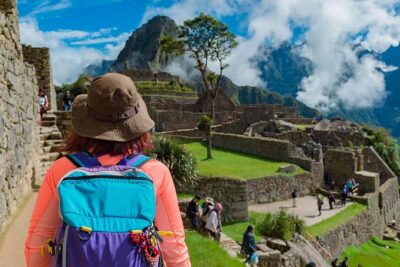
Machu Picchu: Full-Day Tour from Cusco with Optional Lunch
Read our review →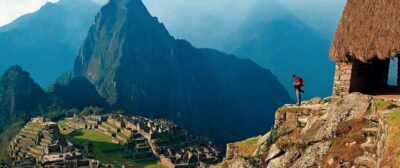
Cusco: 4-Day Inca Trail to Machu Picchu with Accommodation
Read our review →
From Cusco: 2-Day Trip to the Sacred Valley and Machu Picchu
Read our review →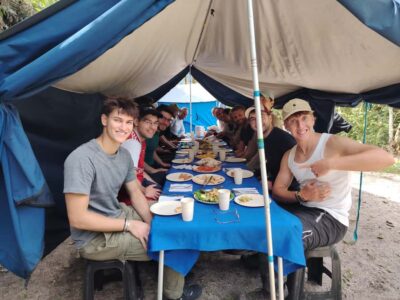
Cusco: Machu Picchu 2-Day Inca Trail with Panoramic Train
Read our review →
Machu Picchu: Inca Trail 2-Day Overnight Guided Tour
Read our review →Browse the lists this tour appears in