
Reviewed · HISTORICAL TOURS
Historical tour Bogota
Bogotá’s past comes alive best on foot, and this tour ties the city’s main stories to the streets where they unfolded. In about three hours, you move from Bolívar Square and colonial landmarks to chicha, emeralds, Gabriel García Márquez, Fernando Botero, and the violence that shaped modern Colombia.
I like the wide historical sweep, from Indigenous Bogotá and the El Dorado legend through colonization, independence, the Bogotazo, and present-day life. I also like the useful local advice at the end, including suggestions for restaurants, museums, coffee, money exchange, and getting to Monserrate.
The main consideration is the group size, which can reach 30 people. The tour also goes ahead in bad weather, so bring an umbrella and wear shoes suited to three hours on city streets.
Key points at a glance
- Eight central stops: Follow a clear route through Bolívar Square, La Candelaria, La Concordia, Las Aguas, and Rosario Square.
- History beyond old buildings: Learn about Indigenous Bogotá, El Dorado, independence, the Bogotazo, and Colombia’s later violence.
- Local culture included: Chicha, Colombian juices, emerald trading, Botero, García Márquez, food, art, and daily life all enter the story.
- Several named guides: Paula, Ricardo, Jennifer, Diane, Carlos, and Rodrigo have led tours, with particular praise for clear explanations and friendly teaching.
- Good first-day choice: The route helps you understand the center and decide which museums, restaurants, and sights deserve more time.
- Weather matters: The tour is not canceled for rain, and some stops take place in open plazas and along outdoor streets.
Why this Bogotá walking tour works as a first introduction
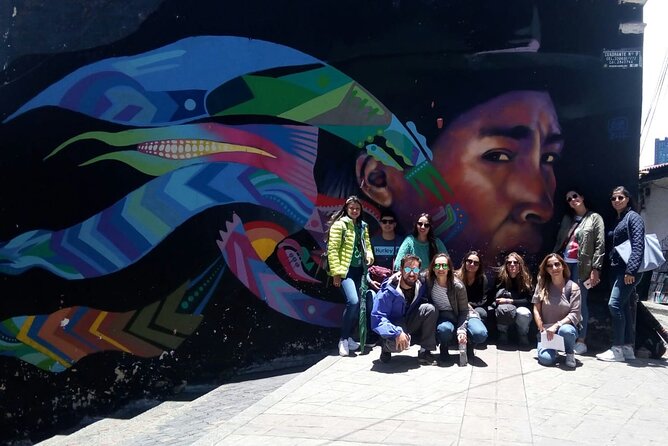
I see this experience as a city orientation with a strong history lesson built in. It does not focus on one museum or one period. Instead, it gives you a framework for understanding why Bogotá looks and feels the way it does.
That broad approach is useful because Bogotá can seem hard to read at first. The grand government buildings, colonial streets, street art, markets, churches, political monuments, and modern traffic all belong to different chapters. A guide can connect those pieces much faster than a solo walk with a map.
The route also takes you through three recognizable central districts: La Candelaria, La Concordia, and Las Aguas. These areas give you a mix of formal landmarks and ordinary city life. You are not simply looking at façades. You are hearing about food, education, art, politics, architecture, and the way people live in the capital.
The tour is listed at $19.77 per person. At that price, the value depends on what you want from a guide. If you only want to walk around and take photos, you can explore these streets independently. If you want the major stories explained in a logical order, three hours of guiding makes the price reasonable.
The group may include up to 30 people, so do not expect a private conversation at every stop. Still, the route is structured, the pace is active, and the guides use photographs and questions to keep the history from becoming a long lecture.
More Historical Tours in Colombia
- Shared Tour of Bogota’s Historic Downtown (La Candelaria)
★ 4.7 · 100 reviews - 7-hour City Tour of Historic Bogotá with Monserrate
★ 4.7 · 47 reviews - Cartagena: Historic Center and Getsemaní Shared Walking Tour
★ 4.9 · 2,716 reviews
Bolívar Square and the first chapters of Bogotá
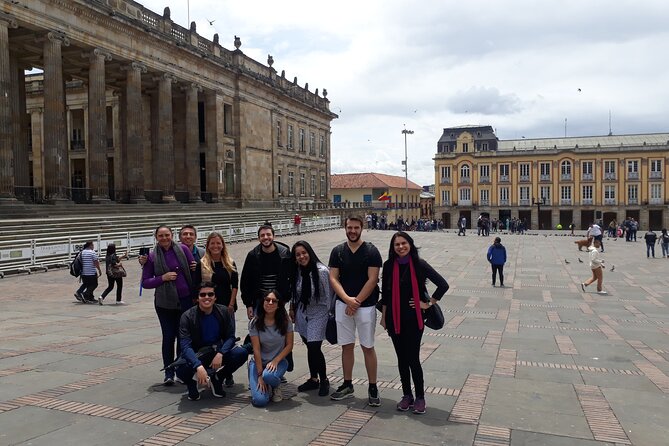
The tour begins at Cra. 7 #11-10 in La Candelaria, then heads to Plaza de Bolívar. This is the right place to start because the square gathers many of the country’s most important buildings in one view.
Here, you learn how Bogotá began and how the capital developed around its civic and religious center. The stop lasts about 30 minutes, making it the longest single pause on the route. That gives the guide time to explain the buildings, the city’s beginnings, and the role of the square in national life.
I like this opening because it gives you names and context before the walk gets more detailed. You can return later for photographs, enter nearby museums on your own, or simply recognize the square when you pass through again.
The square is open and exposed, so weather can affect your comfort. Bring water, sun protection, or an umbrella depending on the forecast. The tour operates in bad weather, and there is no indoor replacement route listed.
Teatro Colón and the Bolívar connection
Next comes Teatro Colón, where the stop lasts around 15 minutes. You will hear about the theater as one of Colombia’s important cultural buildings and about the place associated with Simón Bolívar.
This is a short stop, so think of it as a focused explanation rather than an interior theater visit. Admission is not included because the walking tour does not list paid entries. The value here is the connection between architecture, performance, and the figures linked to Bogotá’s political past.
The route’s strength is the way it places famous names in physical locations. Bolívar is not only a chapter in a textbook. The tour points to the spaces connected with his life and explains why those places matter.
Botero, museums, and La Candelaria’s cultural block
At the exterior of the Banco de la República museums, the guide introduces the cultural block of La Candelaria. The stop lasts about 15 minutes and includes discussion of Fernando Botero.
This part should help you plan the rest of your visit. If you have limited time in Bogotá, knowing where the museums sit and how they relate to one another is practical. The tour gives you a starting point, but it does not include museum admission or a full museum visit.
Botero’s name also widens the story beyond politics. The tour connects Colombian art with the city’s cultural institutions, showing that Bogotá’s identity is not only about colonial buildings and national conflict.
If Botero interests you, treat this stop as a preview and set aside separate time for the museum area. The guide’s explanation can help you decide which cultural sites to visit after the walk.
More Historical Tours in Bogota:
- Lima’s Vibrant Heritage: Exploring the City’s Landmarks Half-day
★ 4.5 · 581 reviews - Santiago: Guided Walking Tour of the Historical Old Town
★ 4.8 · 459 reviews - Maria Fumaça – Wines and History
★ 4.0 · 242 reviews - Rio de Janeiro: Historic Rio and Santa Teresa Half-Day Tour
★ 4.4 · 228 reviews
Chorro de Quevedo and the story of chicha
Plaza del Chorro de Quevedo is presented as Bogotá’s foundation square. The stop lasts around 20 minutes and focuses on the square’s importance, along with the story of chicha.
Chicha is a traditional Colombian drink, and its history offers a useful look at how culture and authority can clash. The tour explains why the drink was prohibited, giving you more than a simple food or drink recommendation. You get a glimpse of how colonial and later social attitudes shaped everyday customs.
This is one of the stops where the tour moves from official history to lived culture. A square, a drink, and a rule reveal something about identity and control that a list of dates would miss.
Chorro de Quevedo is also a good place to pause and notice the surrounding streets. The tour does not promise extended free time here, so keep your camera ready and listen closely while the guide explains the site.
La Concordia market and a taste of Bogotá
At Plaza de Mercado La Concordia, you go inside a market square for about 20 minutes. Here, you can buy a Colombian juice, try chicha, or purchase a souvenir. Food and drinks are not included, so bring money if you want to sample something.
I especially like this stop because it gives the route a sensory break. After several plazas and historical explanations, a market helps you connect the past to the city’s current routines. You can see how local products, drinks, and small purchases fit into daily life.
Keep expectations practical. This is not a meal stop, and the schedule allows only about 20 minutes. If you want to eat properly, use the restaurant suggestions given at the end or plan a separate visit.
The market is also a good reminder that the tour is not limited to monuments. It includes places where people shop, meet, eat, and sell goods. That makes the walk feel more connected to Bogotá today.
Eje Ambiental, Monserrate, and García Márquez
The route continues along Eje Ambiental, where you get a view toward Monserrate and learn how to reach the hill. The stop takes about 15 minutes.
This advice can save you time later. Monserrate is one of Bogotá’s major sights, but the tour does not include the journey up the hill. Instead, you receive directions and a first look at its position above the city. Use this moment to ask the guide about planning your own visit.
The guide also points out a square connected with Gabriel García Márquez’s social gatherings. His inclusion gives the tour a literary thread, alongside the political and artistic stories already introduced.
I like this section because it shows Bogotá through several kinds of influence: geography, literature, politics, and public life. The view toward Monserrate also gives you a sense of how the central districts fit together.
Gaitán, the Bogotazo, and Colombia’s difficult past
At the Jorge Eliécer Gaitán monument, the guide explains who Gaitán was and why he mattered to Colombia. The stop lasts around 20 minutes and covers the Bogotazo and its connection to violence in Colombia.
This may be the most important section for understanding modern Colombian history. The Bogotazo was not treated as an isolated event. The guide links it to the wider violence that followed, helping you see why political memory remains such a strong part of public life.
The subject is serious, but the route does not appear to treat history as a dry list of battles and dates. Guides such as Paula and Ricardo are praised for explaining politics and history in a clear, approachable way. That matters here, because this part benefits from careful explanation rather than quick sightseeing.
You may find this stop emotionally heavier than the earlier sections. That is not a flaw, but it is worth knowing before you book. The tour aims to explain Bogotá honestly, including conflict and loss, not just colonial charm and food.
Rosario Square and the emerald trade
The final stop is Plazoleta del Rosario, where the guide discusses Bogotá’s emerald market. You may see how this informal trade works, though the tour does not promise a purchase or a formal demonstration.
Emeralds are a useful final topic because they connect natural resources, commerce, street business, and Colombia’s international image. The stop also keeps the focus on the way Bogotá operates today, rather than ending with a colonial landmark.
The tour ends at Rosario Square, at Av. Jimenez de Quesada #6-71. Before you leave, the guide gives recommendations for restaurants and other places to visit. Past guides have also offered practical tips about coffee, money exchange, and museums.
That closing advice is one reason I would schedule this walk early in your stay. You can use the suggestions for the rest of your time instead of receiving them after you have already left the center.
Guides, language, and group size
The experience has been led by guides including Paula, Ricardo Jiménez, Jennifer, Diane, Carlos, and Rodrigo. The strongest pattern in the feedback is clear teaching, friendly interaction, punctuality, and strong command of Bogotá’s history and politics.
One useful feature is the guide’s habit of asking questions about what you have just learned. That turns the walk into a conversation instead of a speech. Paula has been especially praised for connecting politics, literature, and history, while Ricardo has been noted for patient explanations and attentiveness.
Spanish-language departures are available based on the supplied information. Several accounts describe Spanish tours with Ricardo and Jennifer, so check the language option when booking if you need a particular language.
The maximum group size is 30. That is manageable for a walking route, but it can make it harder to hear in a noisy square or ask long personal questions. Arrive on time, stay close to the guide, and move toward the front when the group gathers.
Practical details before you book
The walk lasts approximately three hours and requires a moderate level of physical fitness. You will spend the time moving between public squares, cultural areas, market streets, and open-air paths.
Wear comfortable shoes. The route is not described as difficult, but three hours on foot is enough to make poor footwear annoying. A small umbrella is a smart choice because the experience continues in bad weather.
The meeting point is in La Candelaria, and the end point is Rosario Square. The tour is near public transportation, and service animals are allowed. Snacks, drinks, meals, museum admissions, and personal purchases are not included.
The activity confirms at booking and allows free cancellation up to 24 hours before the start time. Changes or cancellations made later are not accepted for a refund.
Who should book this walk?
I would choose this tour if you have limited time in Bogotá, want a strong first look at La Candelaria, or prefer history explained by a local guide instead of reading plaques on your own.
It suits people interested in politics, art, literature, food, architecture, and Colombian society. It also works well for families or groups who want a clear route, though the serious discussion of violence may not suit very young children.
I would be more cautious if you dislike group walks, need long indoor breaks, or want extensive time inside museums. This experience visits museum areas but does not include museum entry. It also moves through many subjects quickly, so you will gain a useful outline rather than an expert study of every period.
Should you book it?
Yes, if you want to understand Bogotá before exploring it on your own. The route covers the city’s key central districts, adds useful local advice, and connects famous names such as Bolívar, Botero, García Márquez, and Gaitán to real places.
At $19.77, the value is strongest when you use the tour as a foundation for the rest of your visit. Book it early, bring rain protection, wear good shoes, and save the final restaurant and museum recommendations. If you want a private or museum-focused experience, choose something narrower. For a first look at Bogotá’s history and daily culture, this walk is a practical choice.
FAQ
How long does the Bogotá historical tour last?
The walking tour lasts approximately three hours.
Where does the tour begin?
It begins at Cra. 7 #11-10 in La Candelaria, Bogotá.
Where does the tour end?
The tour ends at Rosario Square, at Av. Jimenez de Quesada #6-71 in La Candelaria.
What places does the route visit?
The route includes Plaza de Bolívar, Teatro Colón, the Banco de la República museum area, Plaza del Chorro de Quevedo, La Concordia market, Eje Ambiental, the Jorge Eliécer Gaitán monument, and Rosario Square.
Are food, drinks, and museum tickets included?
No. Snacks, drinks, meals, personal purchases, and museum admissions are not included.
Is the tour canceled if it rains?
No. The tour operates in bad weather, so you should bring an umbrella.
How large can the group be?
The tour can have a maximum of 30 travelers.
Just added around Bogota
- Tour of Zipaquirá: Visit the Salt Cathedral and the main squares★ 4.5 · 55 reviews
- Bogota Walking Tour Teusaquillo, a different part of the city★ 5.0 · 41 reviews
- La Candelaria Walking Private Tour (3 Hrs.)★ 5.0 · 51 reviews
- Private Zipaquira Salt Cathedral and Guatavita Lagoon Tour from Bogota★ 4.5 · 44 reviews
- Tejo and Beer Tour in Bogotá★ 5.0 · 35 reviews
- Hiking to the largest paramo on earth : Sumapaz★ 5.0 · 49 reviews
- MINA CATEDRAL DE SAL ZIPAQUIRA Tour Privado★ 4.5 · 38 reviews
- Descubre la Magia: Catedral de Sal & Bogotá en 1 Día★ 4.5 · 39 reviews
Historical Tours, compared.
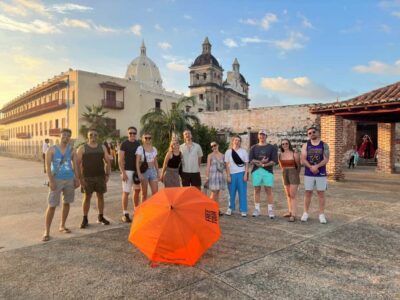
Historic Center and Getsemaní Shared Walking Tour
Read our review →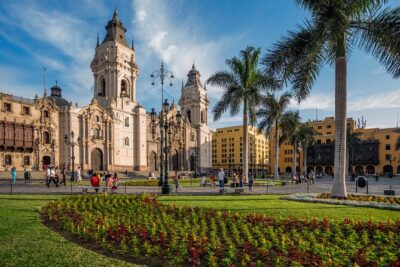
Lima’s Vibrant Heritage: Exploring the City’s Landmarks Half-day
Read our review →
Lima: Historic Center Street Food, Market, and Eateries Tour
Read our review →
Nazis in Buenos Aires: a historical walking tour
Read our review →
Browse the lists this tour appears in